25 Budget Backyard Patio Ideas: Beautiful Outdoor Spaces Under $300

Introduction
A beautiful backyard patio does not require a landscaper, a contractor, or a credit card bill that takes six months to recover from. Most of the outdoor spaces that look genuinely well-designed were built on intention and effort, not a large budget. The difference between a bare backyard and an inviting outdoor space is almost always decision-making, not spending.
These twenty-five ideas can all be achieved for under three hundred dollars — many of them for significantly less. Some require an afternoon. Some require a weekend. All of them make a real difference to how your outdoor space looks and feels.
1. Lay a Pea Gravel Base
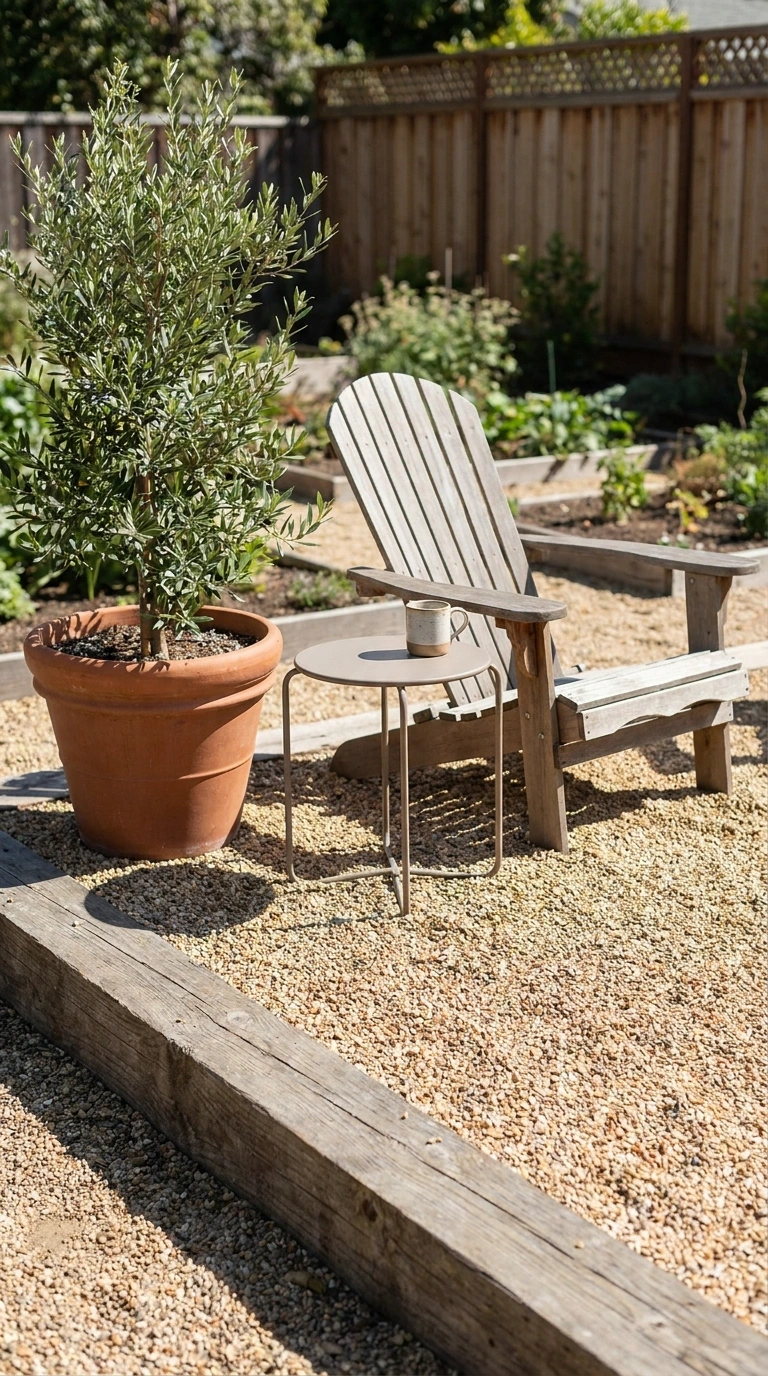
Pea gravel is one of the most affordable ways to define a patio area without pouring concrete or laying expensive pavers. A bag of pea gravel costs very little, and a defined gravel area with a simple edging border immediately creates the sense that the space was planned rather than left as bare ground.
Lay landscape fabric beneath the gravel to prevent weeds from pushing through over time. Use a simple timber, metal, or brick border to contain the gravel and give the area a clean, defined edge. A ten by ten foot gravel patio can be completed for under fifty dollars and looks significantly more intentional than bare dirt or patchy grass.
What You Need to Lay a Pea Gravel Patio
- Landscape fabric to suppress weeds
- Pea gravel — calculate depth of two to three inches across the area
- Timber, metal, or brick edging to contain the border
- Rake and tamper to level and compact the surface
- Marking paint or string line to define the area before digging
2. Use Concrete Stepping Stones as a Patio Base
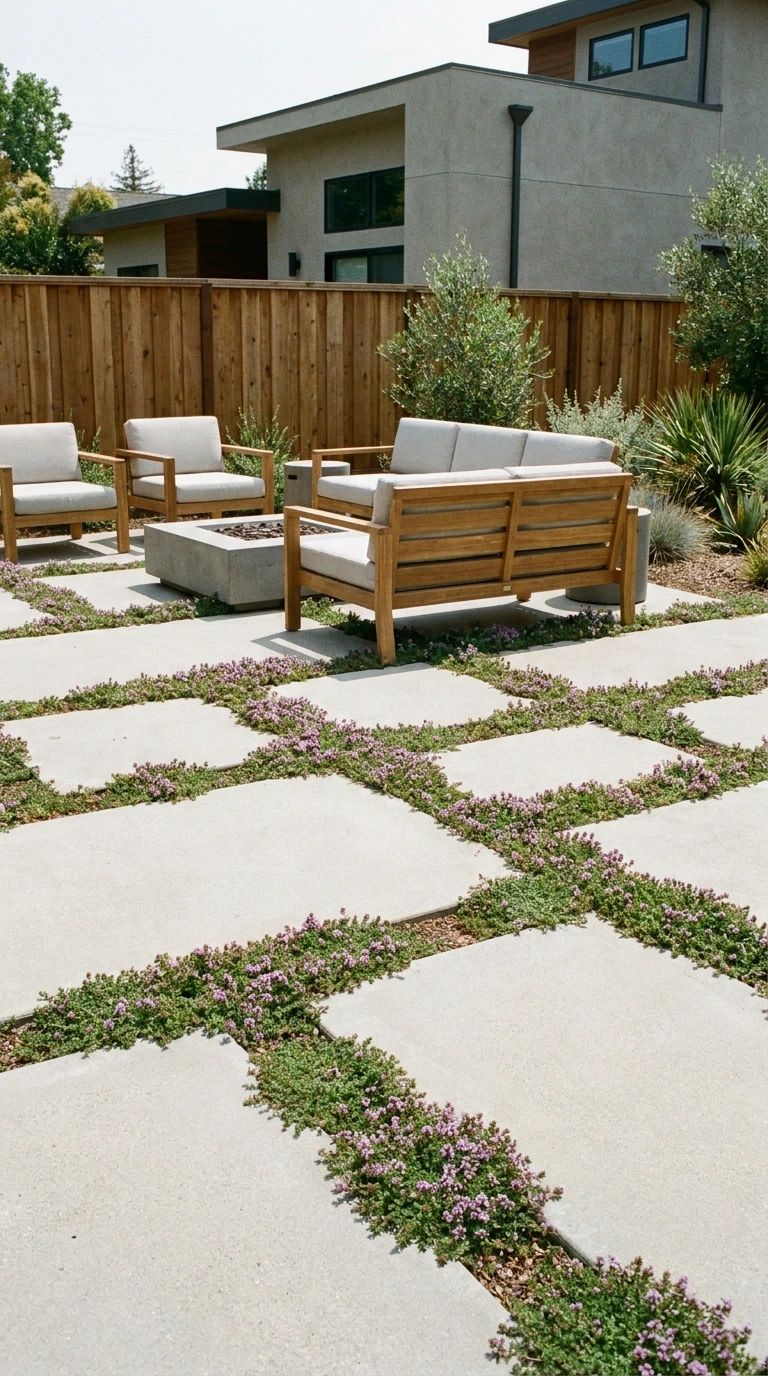
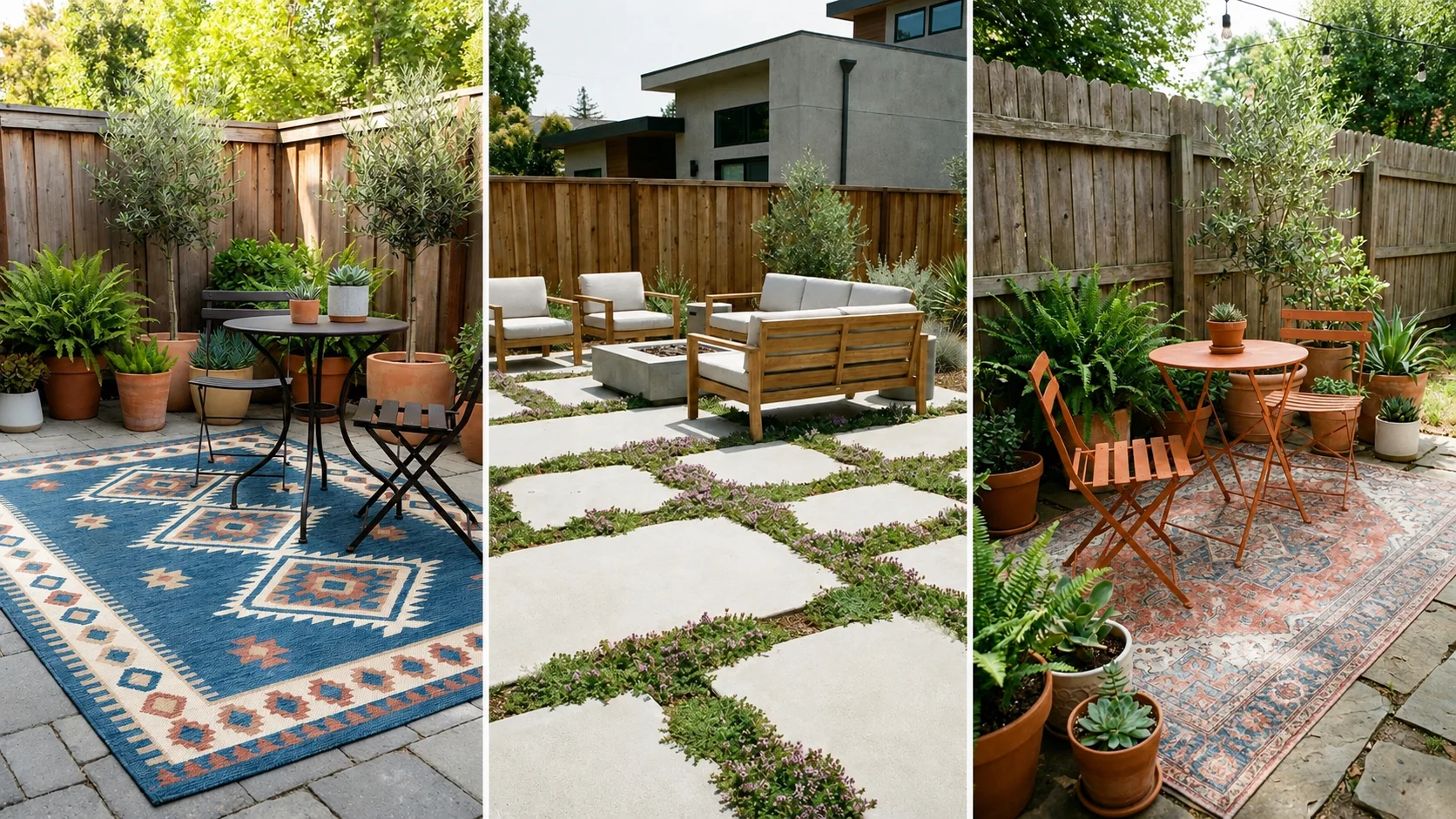
Individual concrete stepping stones laid in a grid or offset pattern create the look of a paved patio at a fraction of the cost of continuous paving. Most garden centers sell plain concrete squares for under two dollars each — a ten by ten foot patio requires approximately twenty-five to thirty stones, bringing the total cost to under sixty dollars.
Set them directly into compacted soil or a thin layer of sand for stability. Leave deliberate gaps between the stones and fill them with gravel, creeping thyme, or moss for a more organic, intentional look. This approach works beautifully in small to medium-sized backyards and requires nothing beyond basic physical effort to install.
3. Build a Simple Pallet Deck
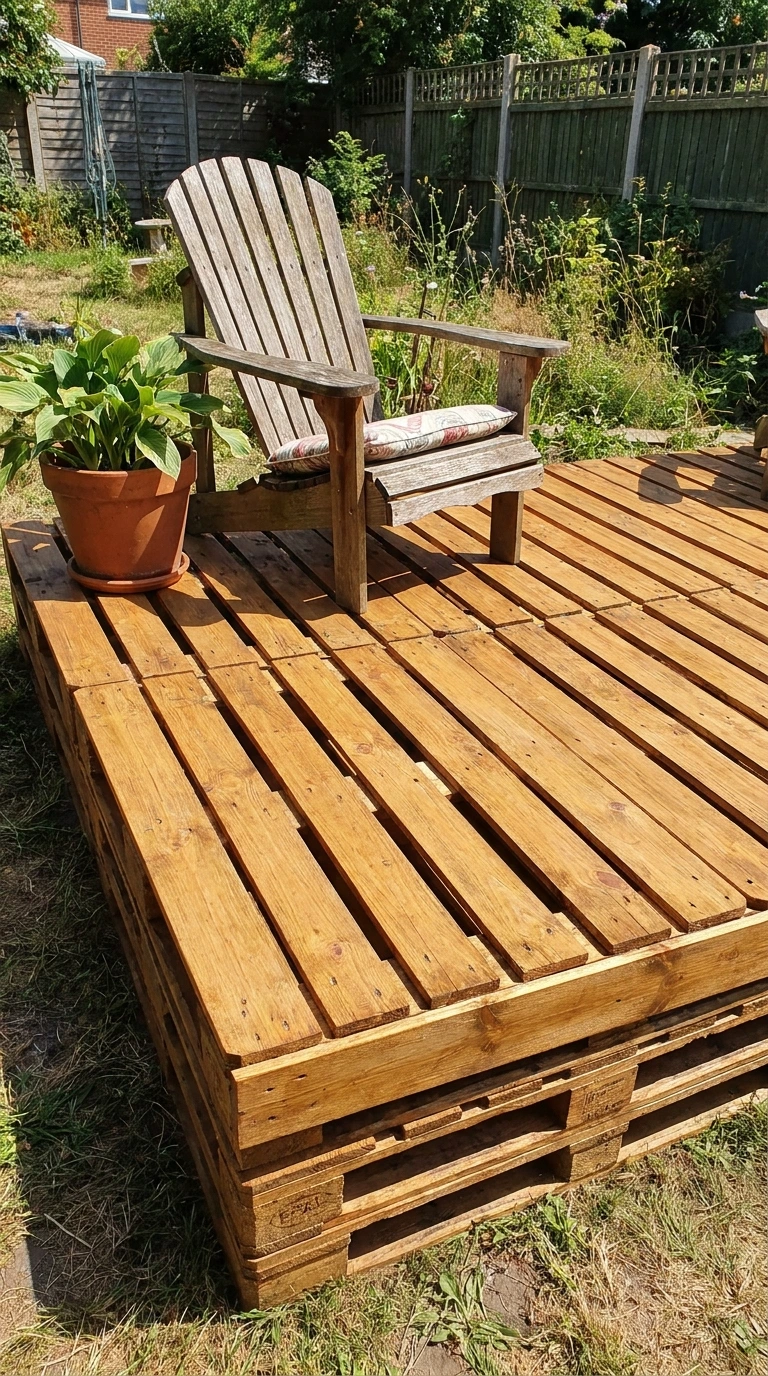
Reclaimed wooden pallets, sourced for free or very cheaply from local businesses, can be arranged into a simple raised deck surface that defines a patio area and elevates the look of the entire outdoor space. A stack of pallets treated with outdoor deck stain creates a genuinely attractive surface for a fraction of the cost of timber decking.
Source heat-treated pallets — marked with HT — rather than chemically treated ones, since the latter can off-gas harmful substances when used for surfaces people sit and stand on. Sand the surface smooth and apply two coats of outdoor deck stain in a warm wood tone. Four to six pallets arranged in a square give a comfortable patio footprint that costs almost nothing.
Pro Tip: Before building anything, photograph your backyard from the house doorway and from the far end of the garden. These two angles show you the space the way visitors see it — and often reveal proportion and placement opportunities that are invisible when you are standing in the middle of the space.
4. Add String Lights for Evening Atmosphere
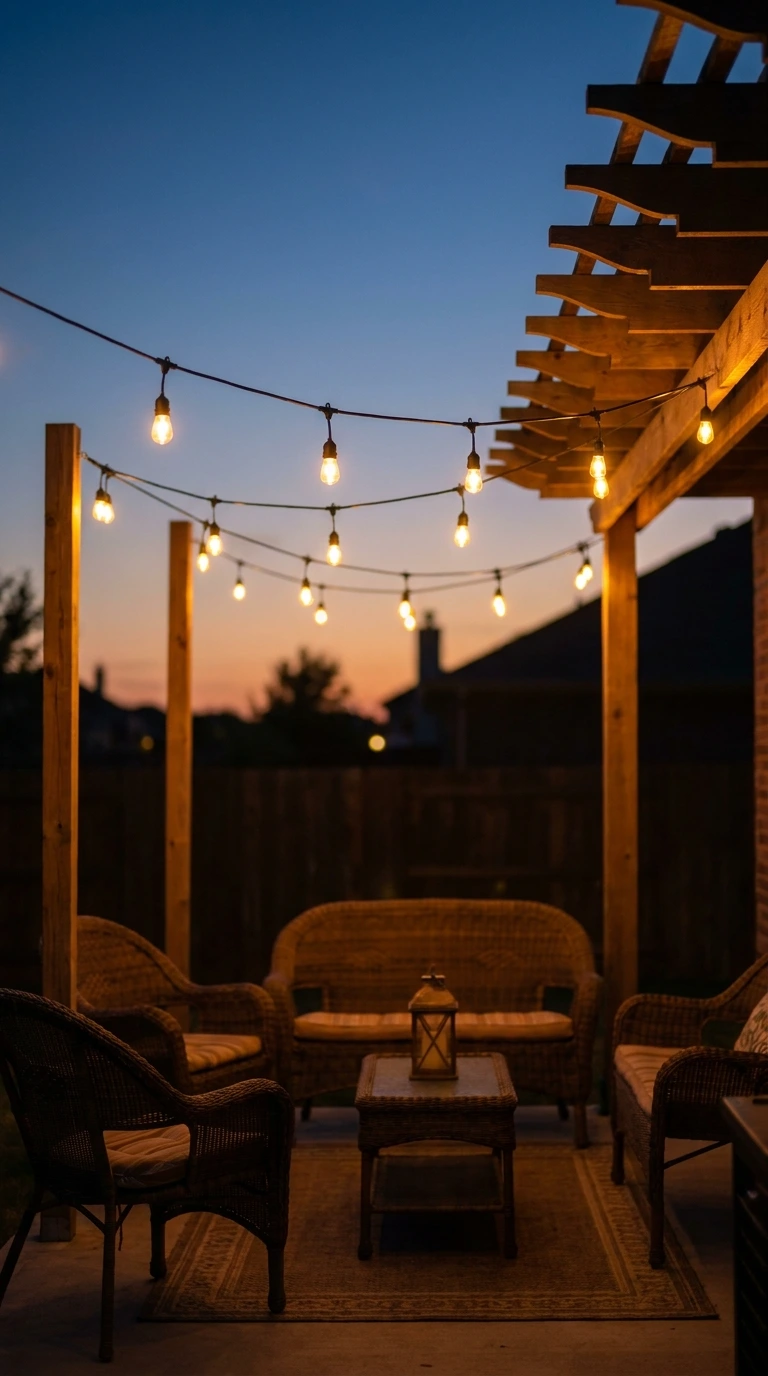
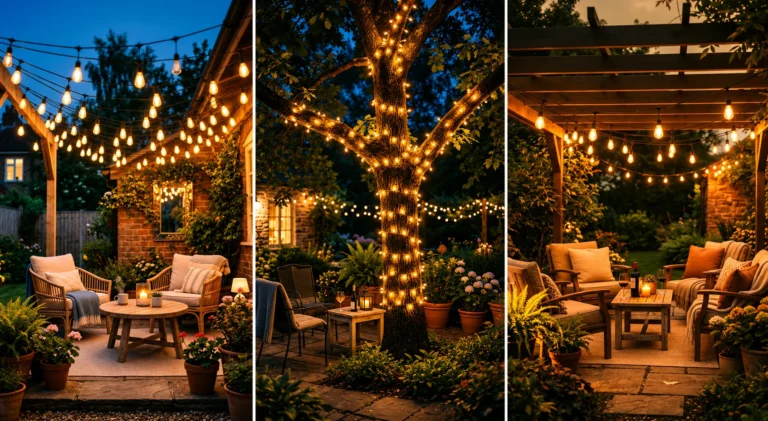
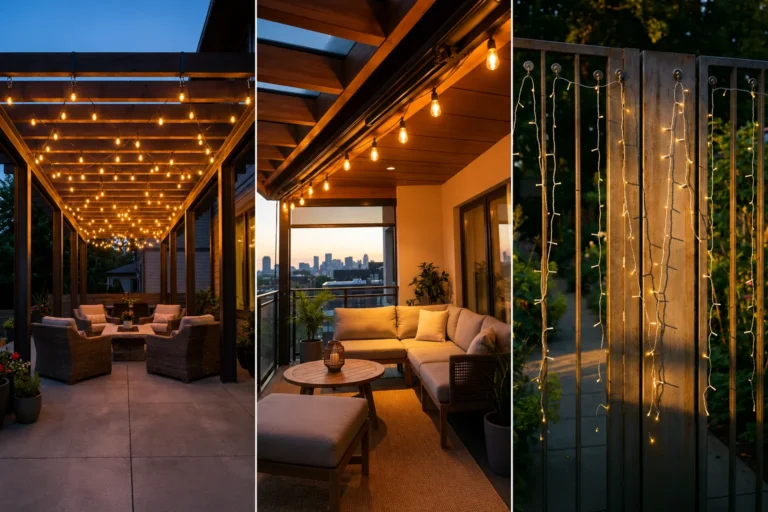
String lights are the single highest-impact, lowest-cost upgrade available for any outdoor space. A twenty-meter strand of warm Edison bulb lights draped in a canopy overhead transforms a plain backyard into somewhere you genuinely want to spend evenings. The cost for a full setup — lights, outdoor extension cord, and basic eye hooks — comes to well under fifty dollars.
Run them from a fence post to a hook on the house wall, or from post to post if your patio has multiple anchor points. Choose warm white bulbs — the color temperature matters more than the brand. Solar options remove the need for any electrical connection and cost even less to run after the initial purchase.
5. Thrift Store and Marketplace Furniture
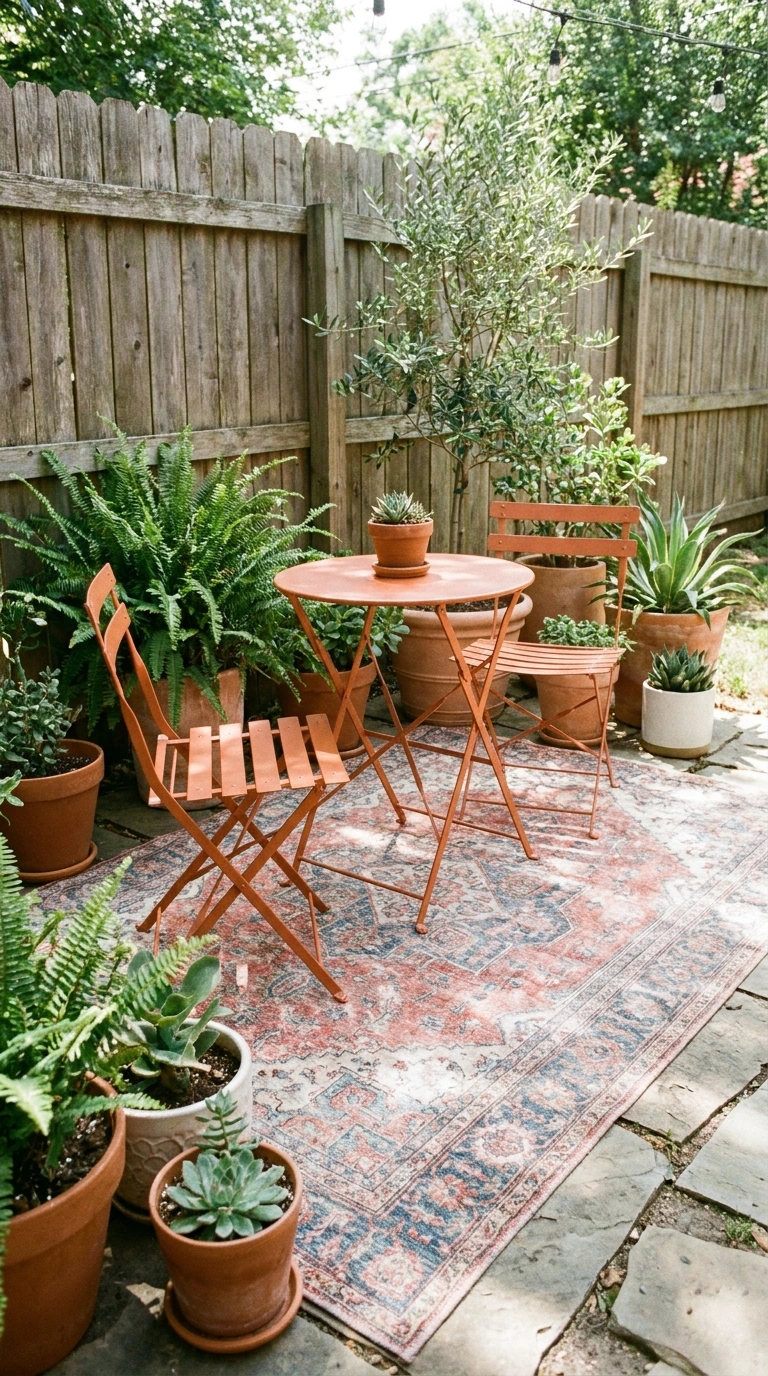
The best patio furniture for a tight budget is almost never bought new. Facebook Marketplace, Craigslist, local thrift stores, and end-of-season sales consistently yield solid outdoor chairs, tables, and benches at a fraction of retail price. A set of four metal bistro chairs and a table that would cost four hundred dollars new can often be found used for under sixty dollars total.
Sand and repaint any metal furniture with outdoor-rated spray paint for a fresh, cohesive look. Reupholster cushions with outdoor fabric from a fabric store. A mismatched set of chairs that are all painted the same color immediately looks more curated than it has any right to. Effort is the budget decorator’s most valuable resource.
| Upgrade | Approximate Cost | Time Required | Impact Level |
|---|---|---|---|
| Pea Gravel Patio | $30–$60 | Half day | High |
| String Lights | $20–$50 | 1–2 hours | Very High |
| Thrift Store Furniture | $20–$80 | Variable | Very High |
| Outdoor Rug | $20–$60 | 30 minutes | High |
| Potted Plants | $10–$40 | 1 hour | High |
6. Add a Large Outdoor Rug
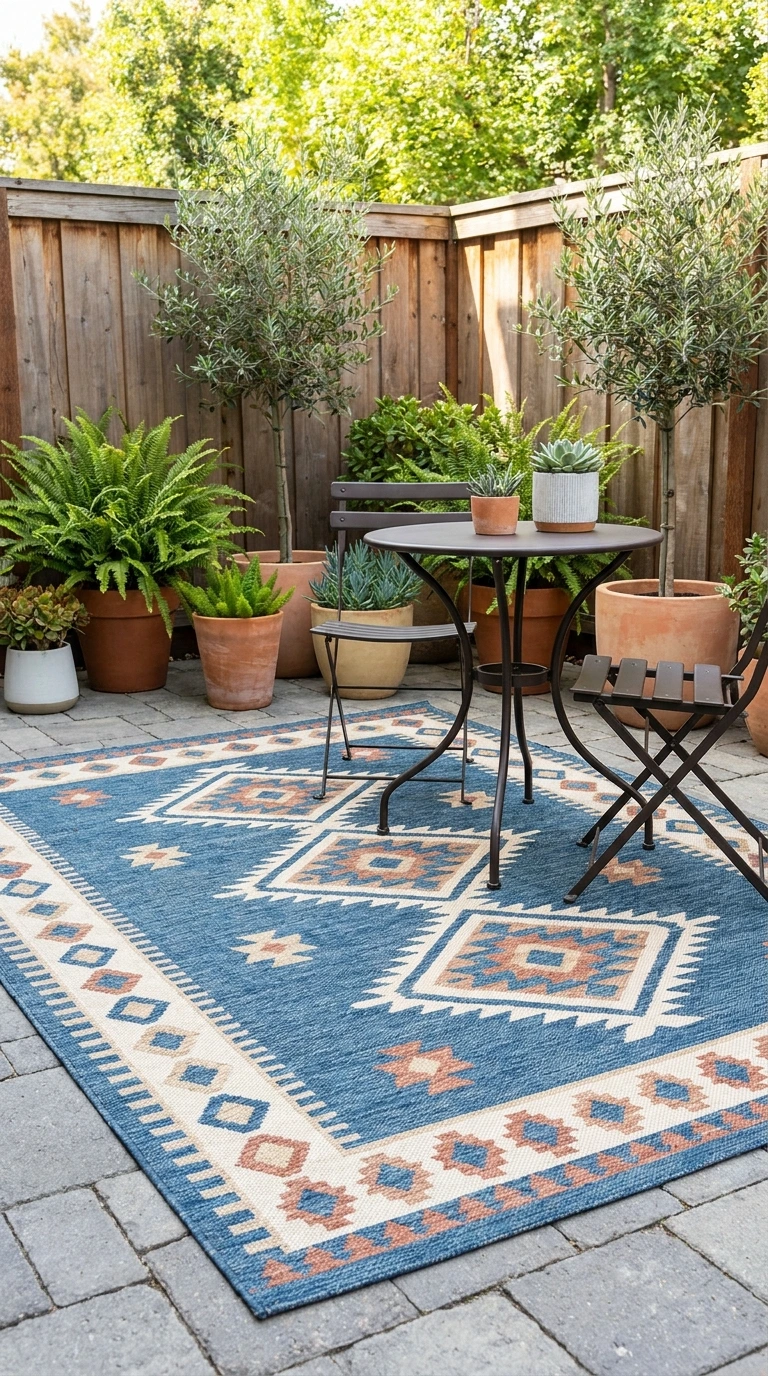
An outdoor rug defines the patio area, adds color and pattern, and immediately makes a space feel furnished rather than functional. End-of-season sales, discount home stores, and online marketplaces regularly offer outdoor rugs at under thirty dollars for a generous size. This single addition changes how the whole space reads.
Choose a rug large enough for the front legs of all your seating to rest on it — a rug that is too small looks like an afterthought rather than an anchor. A flatweave or low-pile outdoor rug handles weather and foot traffic far better than a higher pile option and tends to be more affordable as well.
7. Build a Simple Fire Pit With Cinder Blocks
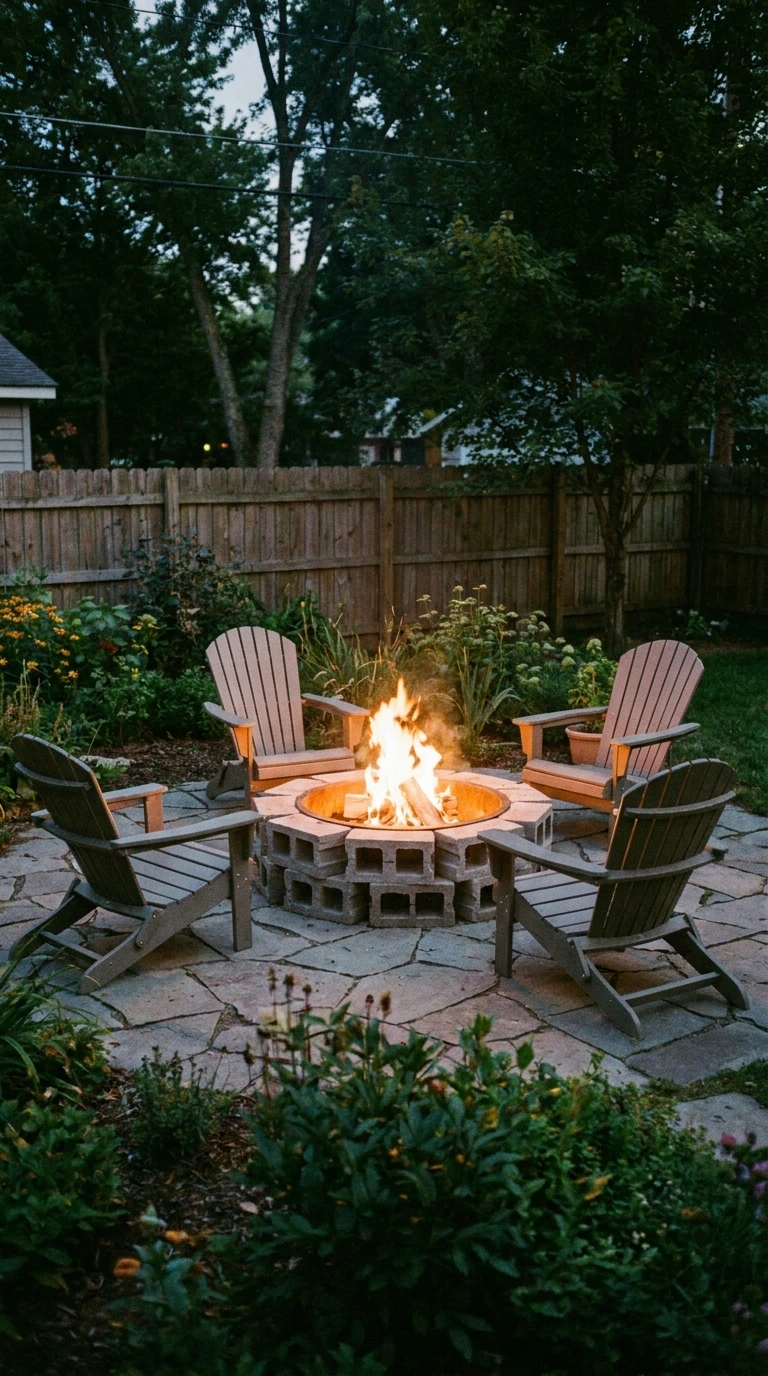
A simple fire pit built from standard cinder blocks costs under thirty dollars in materials and takes less than an hour to assemble. Arrange the blocks in a circle two layers high, leave gaps between some blocks for air circulation, and you have a functional, attractive fire pit that transforms evening gatherings entirely.
No mortar required — the weight of the blocks holds the structure together and allows you to disassemble and reconfigure if needed. Line the inside with heat-resistant bricks or simply use the cinder blocks as-is. A metal grate from a hardware store adds cooking functionality for a few dollars more.
Warning: Always check local regulations before building or using a fire pit in your backyard. Many municipalities have restrictions on open fires within residential areas, and some homeowner associations prohibit them entirely. Confirm before building, not after.
8. Create a Focal Point With a Large Potted Plant
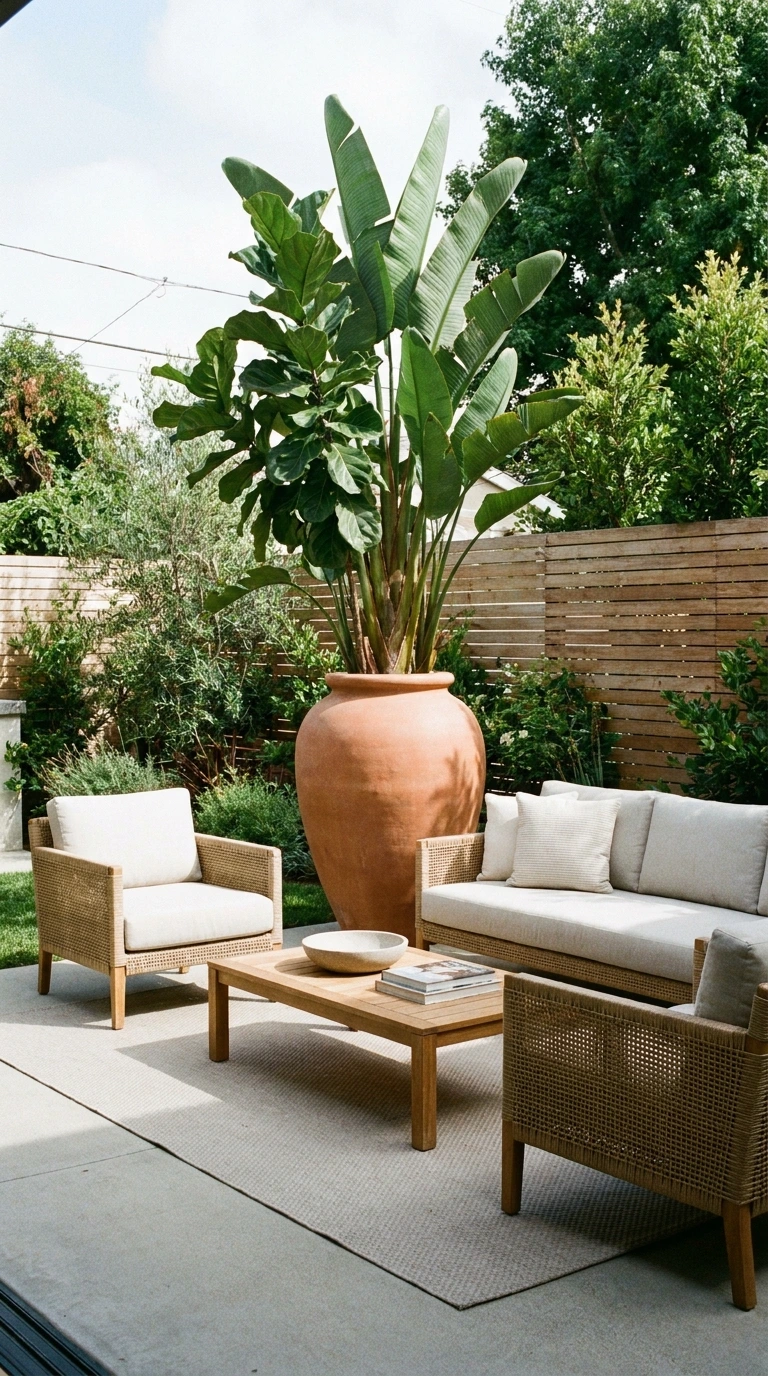
A single large potted plant — a tall ornamental grass, a small olive tree, a dramatic agave — creates a focal point that gives the patio a sense of design intent. A large statement plant in a good ceramic or terracotta pot costs between twenty and fifty dollars and does more for the overall look of a patio than multiple smaller purchases spread across the space.
Position it in the corner of the patio where it frames the space rather than obstructing it. Choose a plant suited to your climate and light conditions — a struggling plant undermines the effect entirely regardless of how good the pot looks. One healthy, well-chosen plant consistently outperforms a cluster of neglected smaller ones.
9. Build a Simple Timber Bench
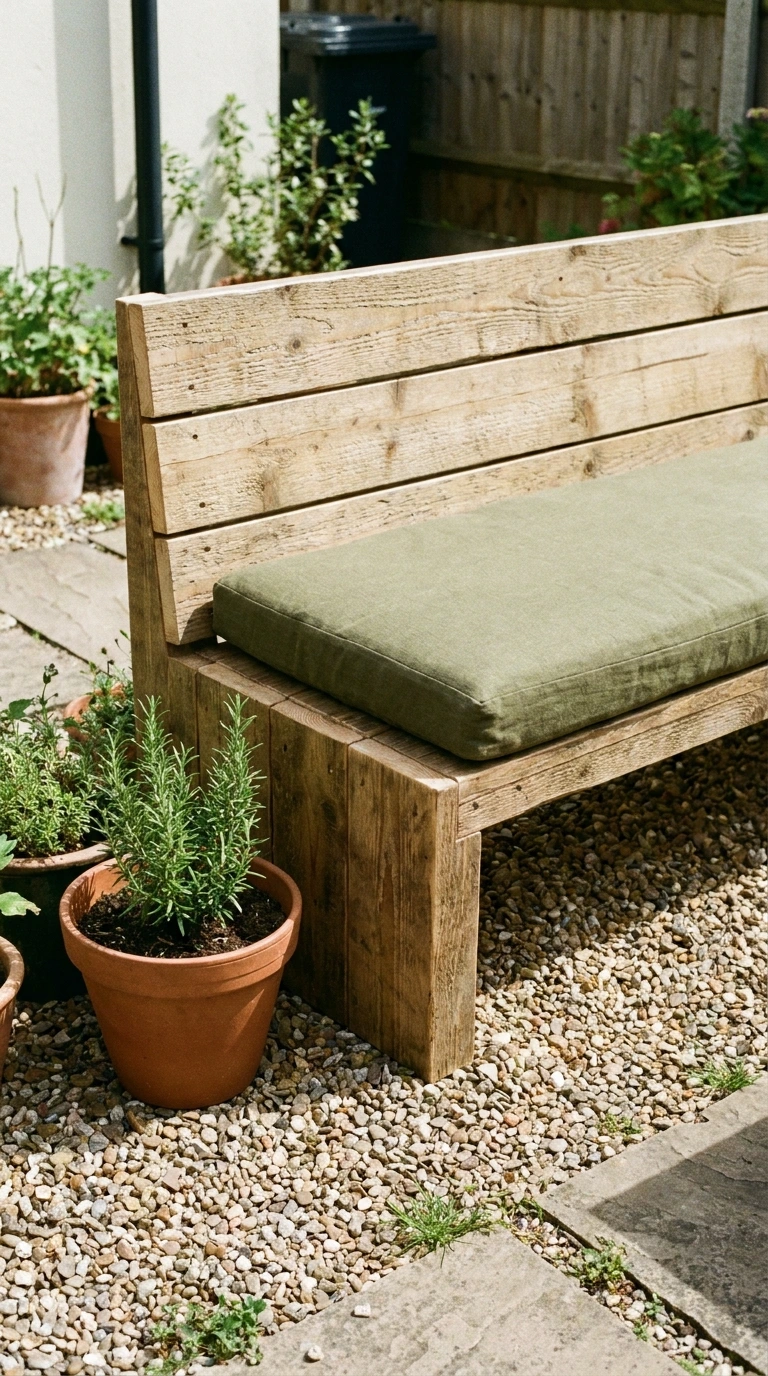
A simple timber bench — two concrete blocks and a length of untreated timber, or a basic construction from two-by-four lumber — adds seating and structure to a patio without the cost of purchased garden furniture. A basic timber bench built from materials purchased at a hardware store costs under thirty dollars and can be completed in an afternoon with minimal tools.
Sand the timber smooth and apply an outdoor wood stain or sealant to protect it from weather. Add a cushion from a discount store to make it genuinely comfortable for extended sitting. A bench also works as a surface for potted plants or lanterns when not in use as seating.
10. Use Paint to Transform Existing Surfaces
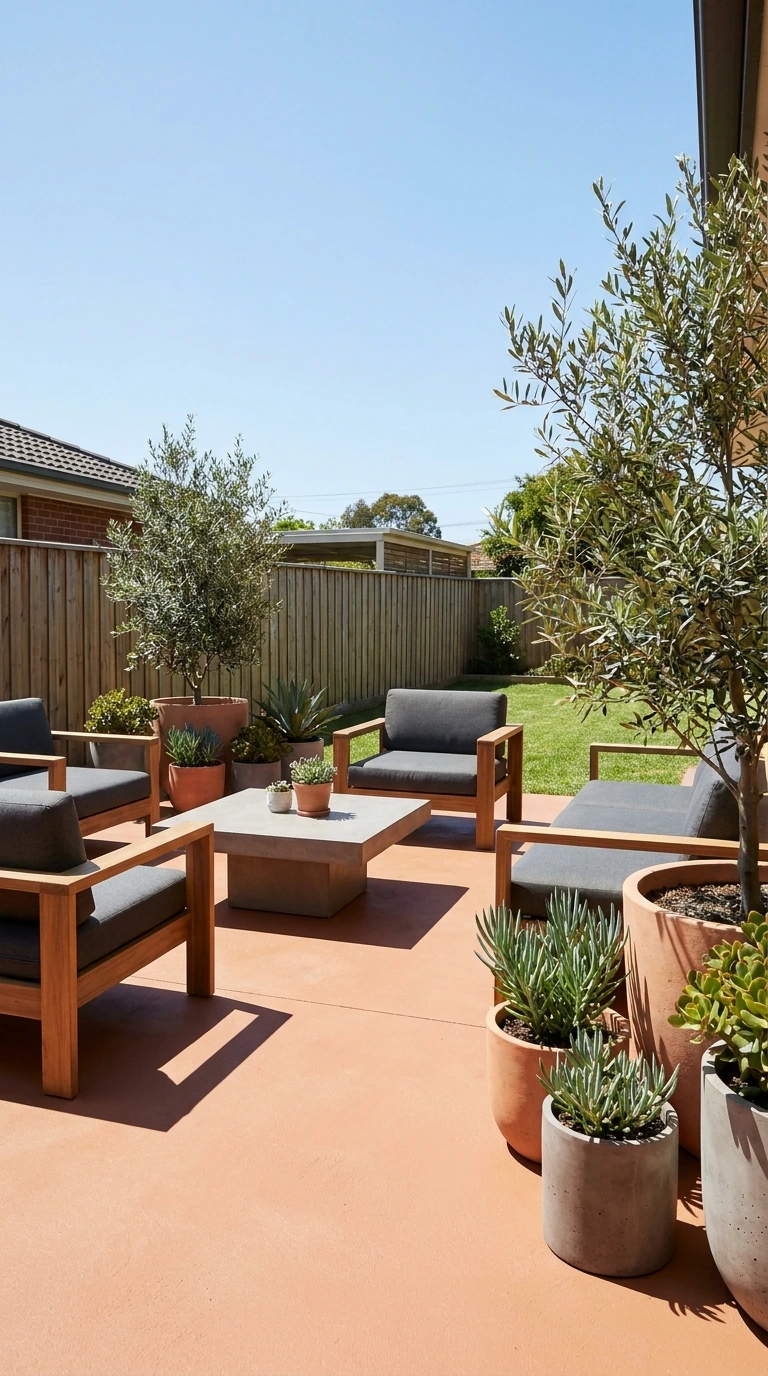
Outdoor floor paint, fence paint, and furniture paint are among the most cost-effective transformation tools available for a budget backyard. A tired concrete slab painted in a warm gray or terracotta tone looks like a deliberate design choice rather than an aged surface. A fence painted in a deep green or soft blue creates a backdrop that makes the entire patio feel more considered.
Outdoor floor paint costs under twenty dollars per can and covers a generous area. Use a primer on bare concrete before painting for better adhesion and longer life. Two coats of paint on a previously drab concrete patio takes one afternoon and costs less than any piece of furniture.
Pro Tip: Paint your fence or back wall in a dark color — deep green, charcoal, or navy — before adding any plants or furniture. Dark backgrounds make plants look lush and furniture look expensive. It is the single most cost-effective backdrop change available and costs less than fifteen dollars for a small fence panel.
11. Add a Privacy Screen From Reclaimed Materials
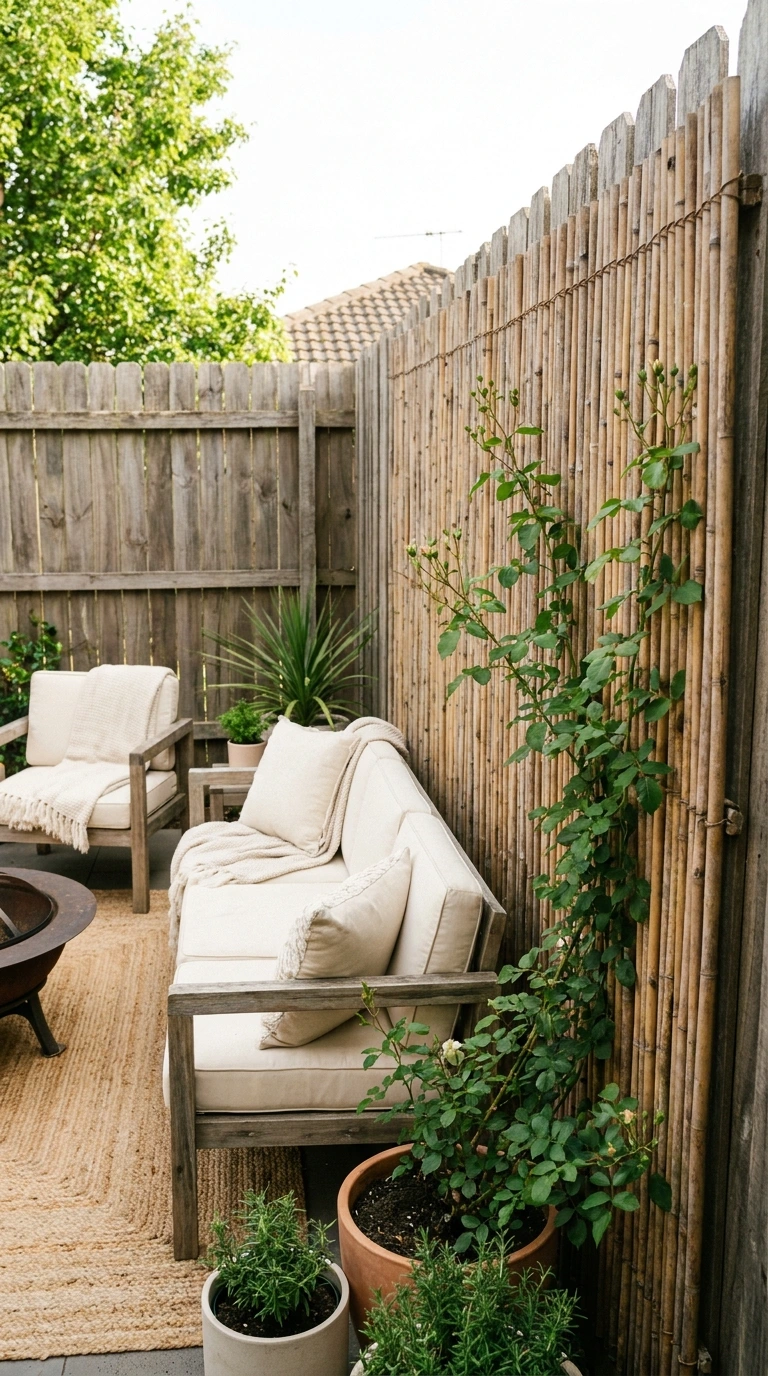
A simple privacy screen built from reclaimed timber, bamboo poles, or a repurposed pallet frame gives a backyard patio an enclosed, room-like quality that dramatically improves how the space feels. Privacy transforms a patio from somewhere you sit to somewhere you genuinely escape to. Most reclaimed materials for a simple screen can be sourced for free or under twenty dollars.
A bamboo roll screen attached to an existing fence or between two posts costs under thirty dollars and provides immediate privacy and a warm, natural backdrop. A frame built from reclaimed timber and filled with trellis allows climbing plants to eventually create a living privacy screen at almost no ongoing cost.
12. Create a Herb Garden in Repurposed Containers
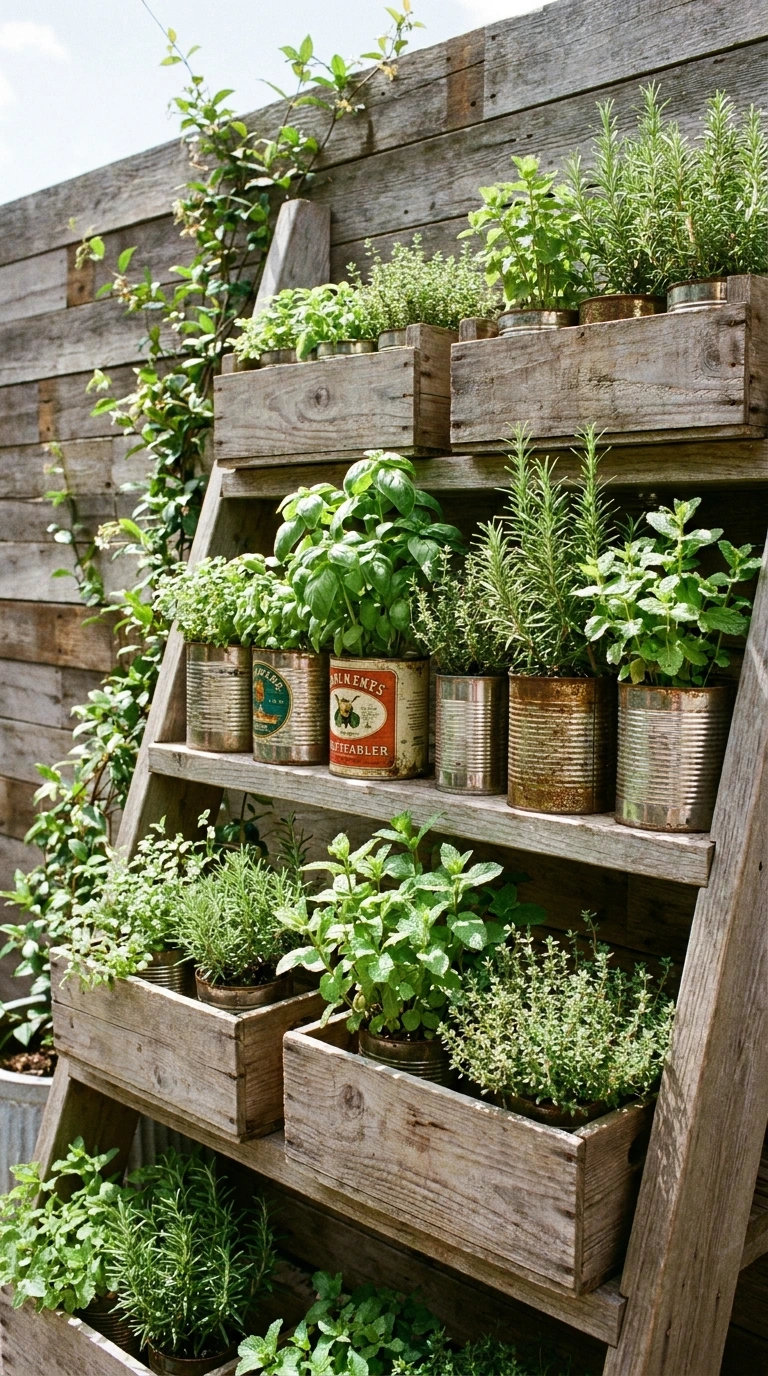
A collection of herbs planted in repurposed containers — old colanders, tin cans, wooden crates, ceramic bowls — adds life, color, and function to a small patio at minimal cost. The containers themselves can be sourced for free from around the house or for pennies at a thrift store. Herb seeds or seedlings cost almost nothing at a garden center.
Group the containers together on a surface or a simple timber shelf to create a cohesive herb garden display rather than scattering individual pots around the patio. Basil, rosemary, mint, and chives are all fast-growing, low-maintenance, and useful enough in the kitchen to justify the small amount of daily watering they require.
Best Repurposed Containers for a Patio Herb Garden
- Old colanders — drainage built in, handles for easy moving
- Wooden wine crates — line with plastic sheeting before filling with soil
- Tin cans — drill drainage holes in the base, paint for a cohesive look
- Ceramic mixing bowls — add drainage holes with a tile drill bit
- Old rubber boots or galoshes — quirky and functional for trailing herbs
13. Build a Simple Raised Garden Bed Border
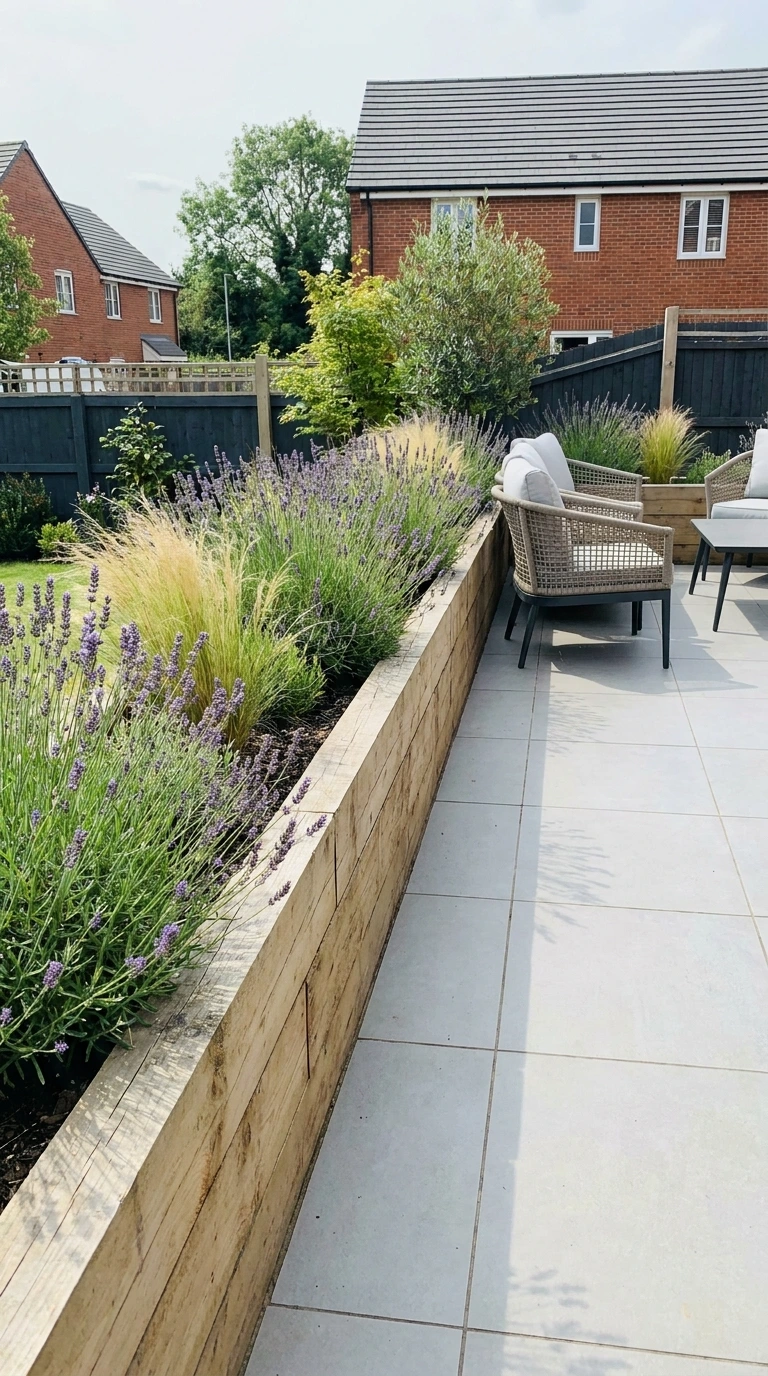
A single raised garden bed built along one edge of the patio from reclaimed timber or inexpensive landscape timbers defines the patio boundary, adds planting space, and gives the whole area a more finished, designed look. A basic raised bed built from two-by-six lumber costs under twenty dollars in materials and takes less than two hours to build.
Fill it with a mix of structural plants — ornamental grasses, lavender, rosemary — for a low-maintenance border that adds height, texture, and fragrance to the patio edge. A raised bed along just one side of the patio is enough to transform the feeling of the whole space.
14. Add Lanterns at Multiple Heights
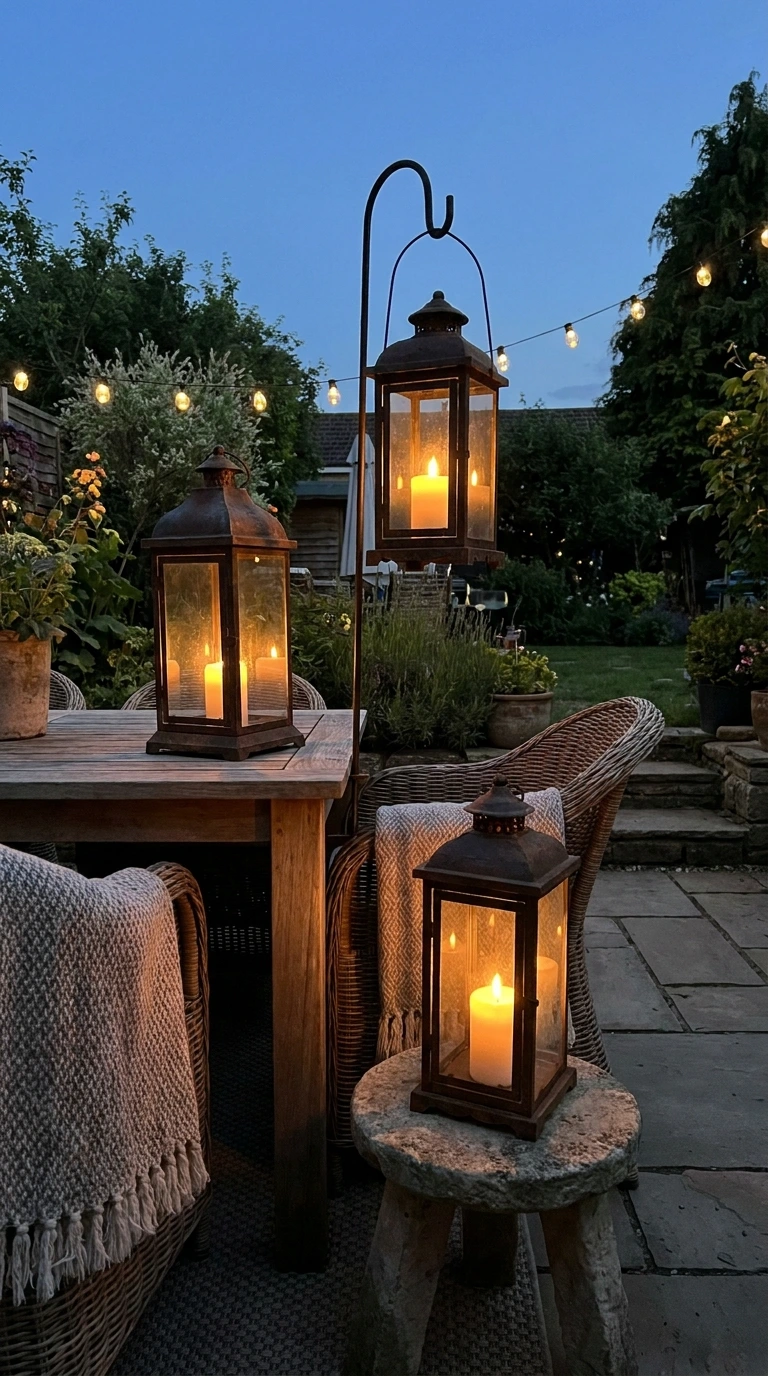
A collection of lanterns — sourced from thrift stores, dollar stores, or discount home retailers — placed at different heights around the patio creates warm, atmospheric evening lighting that costs a fraction of any installed lighting system. Three lanterns of different heights on a table, a lantern hanging from a shepherd’s hook, and one on the ground beside a plant create three distinct lighting levels from under twenty dollars of total investment.
Battery-operated LED candles inside the lanterns remove any open flame concern and last for months on a single set of batteries. A shepherd’s hook from a garden center costs under ten dollars and creates an instant hanging point for a lantern anywhere in the garden without any permanent installation.
Important: When sourcing thrift store furniture and accessories for a budget patio, look past the current color and surface condition. Solid metal or timber construction that is currently painted an ugly color or showing surface rust is almost always worth buying — sanding and repainting costs almost nothing and transforms the piece entirely. Judge the bones, not the finish.
15. Lay a Simple Stepping Stone Path
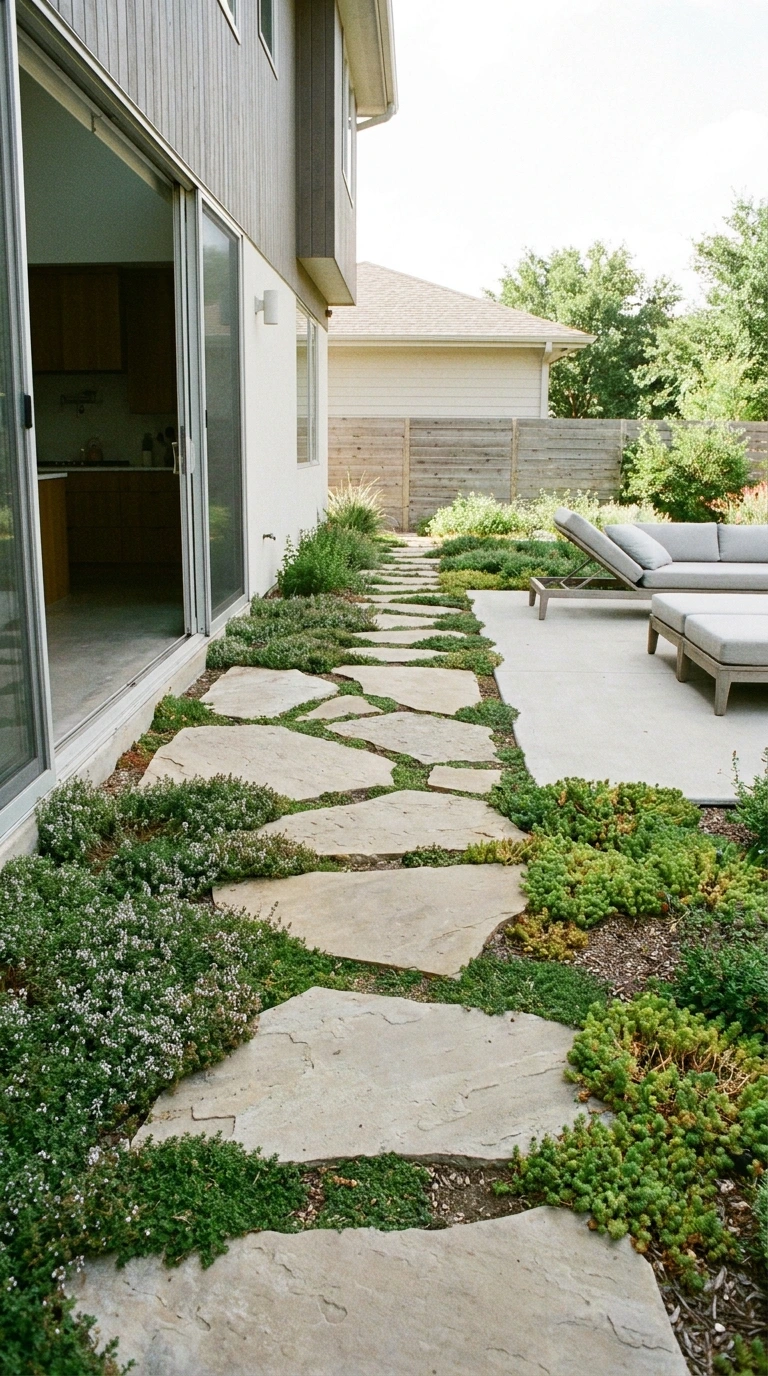
A simple path of stepping stones leading from the house door to the patio creates a sense of arrival and intention that elevates the entire outdoor space. Individual concrete stepping stones cost under two dollars each — a simple ten-foot path requires eight to ten stones, bringing the total cost to under twenty dollars.
Set the stones slightly below the surrounding soil level so a lawnmower can pass over them if needed. Space them at a natural walking stride — approximately twenty-four inches center to center — for a path that feels comfortable to walk. Fill the gaps with gravel, creeping thyme, or grass seed depending on the surrounding ground treatment.
- Start with the ground surface before buying any furniture
- String lights before any other lighting investment
- One large statement plant before multiple small ones
- Paint existing surfaces before replacing them
- Source furniture used before buying anything new
16. DIY a Simple Planter From Timber
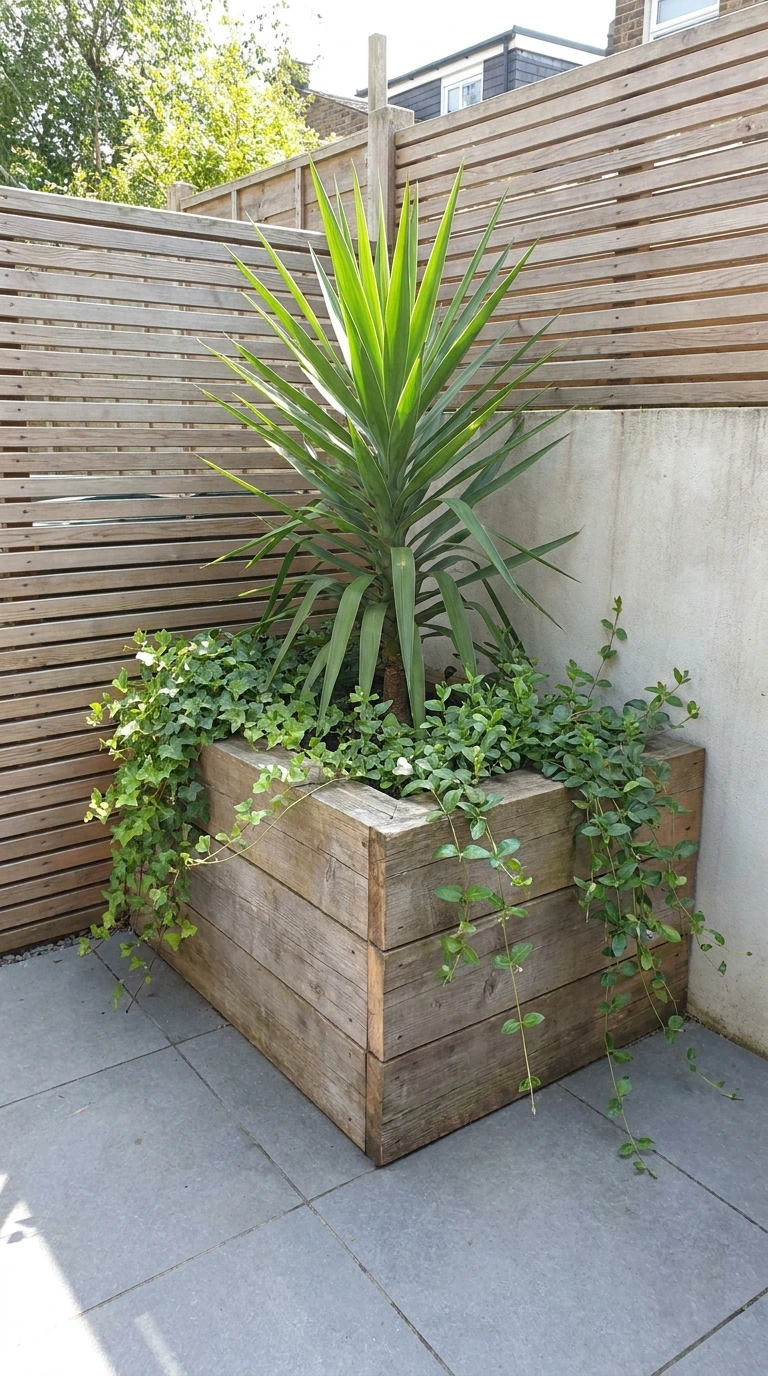
A basic timber planter box built from untreated pine boards costs under fifteen dollars in materials and takes under an hour to build with basic tools. A large planter positioned in the corner of the patio adds height, greenery, and a built quality that purchased plastic planters rarely achieve. The timber version also weathers attractively over time.
Drill drainage holes in the base before filling, and line the interior with landscape fabric to prevent soil from washing through the drainage holes. Plant with a mix of a tall structural plant in the center and trailing plants around the edges for the fullest, most professional-looking result.
17. Add an Outdoor Mirror
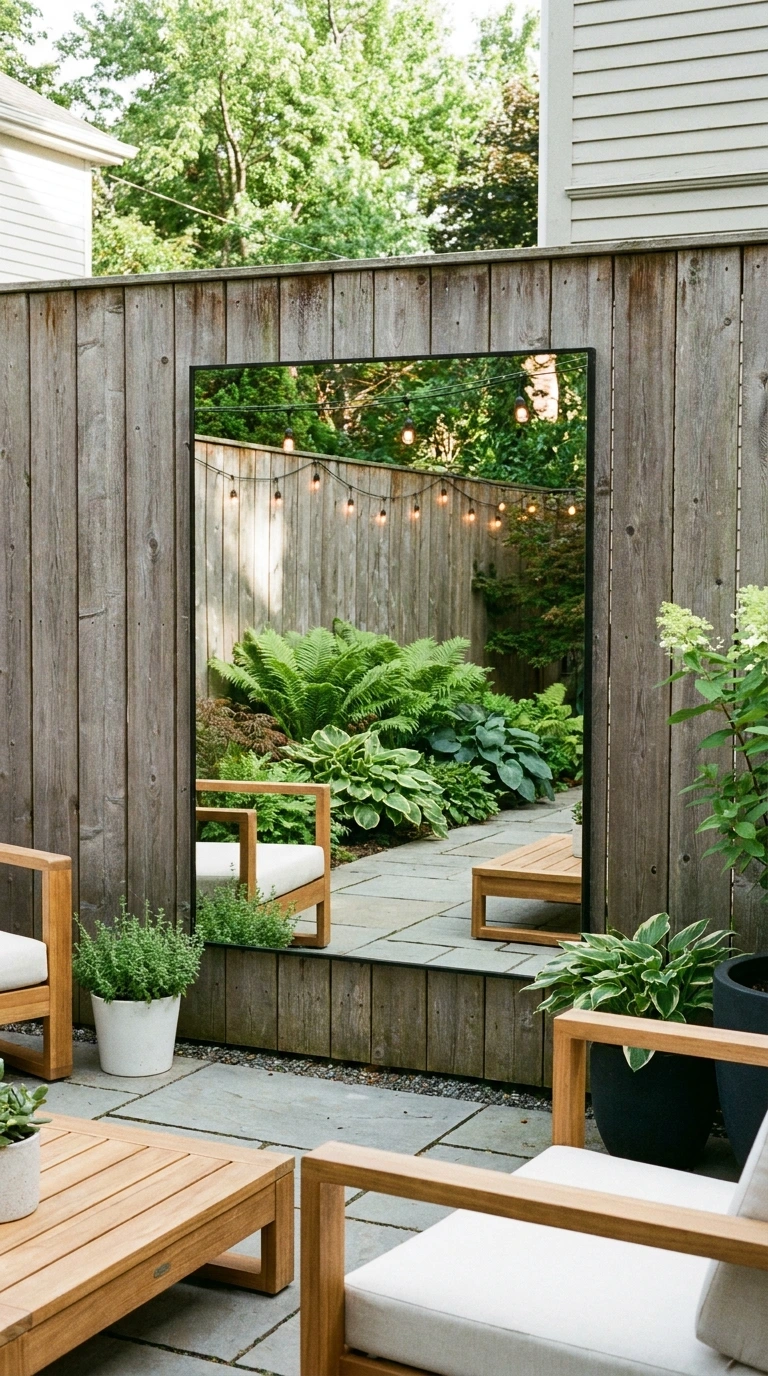
A weatherproof mirror mounted on a fence or exterior wall reflects light and greenery, making a small backyard patio feel larger and more lush. Basic outdoor mirrors from garden retailers start at under thirty dollars and deliver a spatial effect that no other budget addition can replicate. Position it to reflect the most attractive part of the garden or the string lights overhead.
Angle the mirror slightly rather than mounting it perfectly flat to the wall — this improves both the visual effect and the safety for birds that might otherwise fly into a flat-mounted mirror. A simple frame in a dark metal or timber finish suits most outdoor aesthetic directions.
18. Create a Simple Outdoor Bar From a Bookshelf
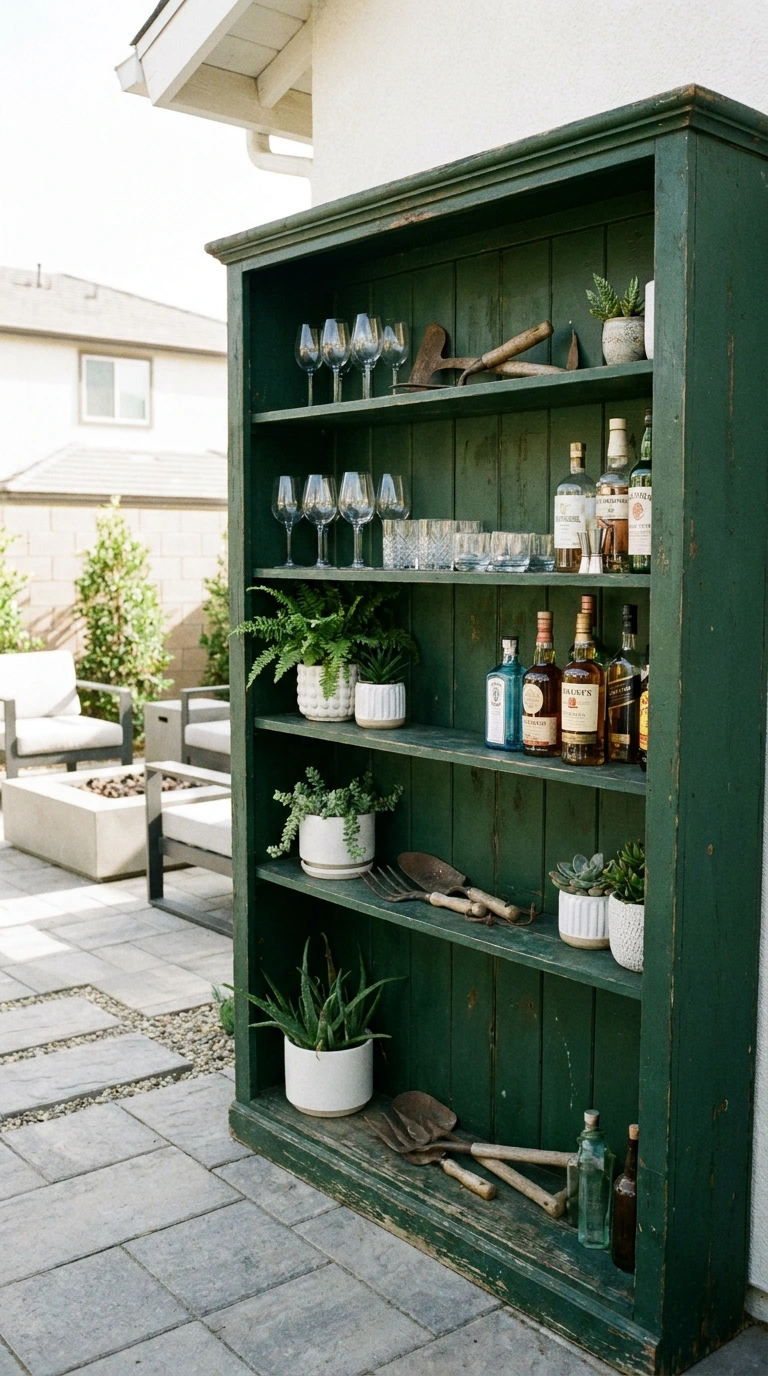
An old bookshelf — sealed with exterior wood paint or varnish and positioned under cover — creates an instant outdoor bar surface for entertaining. The shelves hold glasses, bottles, and outdoor accessories while the top surface works as a serving area. A bookshelf from a thrift store costs under ten dollars and transforms into a genuinely functional outdoor piece with one coat of outdoor paint.
Choose a bookshelf with a back panel rather than an open-backed unit — the back panel provides the structure needed for outdoor use. Paint in a color that complements the rest of the patio’s palette. Add a few potted herbs or trailing plants on the top shelf to soften the look.
19. Build a Simple Daybed From Pallets
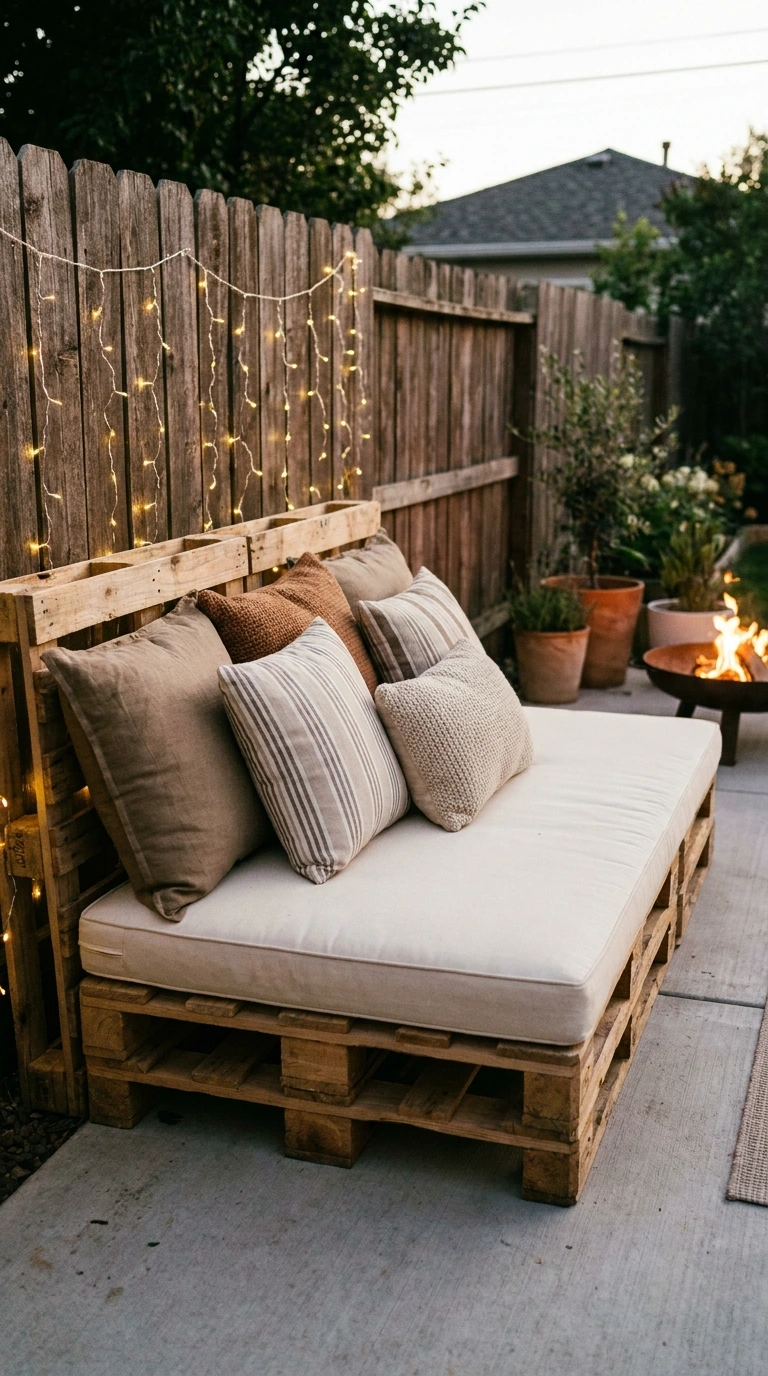
Two pallets stacked and placed against a fence or wall, topped with a thick outdoor cushion or a folded duvet in a weatherproof cover, create a patio daybed that costs under thirty dollars in total. Add a string of fairy lights behind it and a few outdoor cushions on top, and the result photographs beautifully and feels genuinely luxurious to use.
Source pallets for free from local businesses — most are happy to have them collected. Sand thoroughly to remove splinters before using as any surface that people will sit or lie on. A simple outdoor cushion cut to size or an old mattress topper wrapped in waterproof fabric completes the daybed at almost no additional cost.
Pro Tip: The fastest way to make a budget patio look expensive is a consistent color palette. Before buying anything, decide on two colors — a neutral and an accent — and use them across every purchase. Mismatched colors are the most obvious sign of a budget space. Consistent color disguises budget spending more effectively than any individual piece.
20. Use Outdoor Fabric to Make Simple Cushion Covers
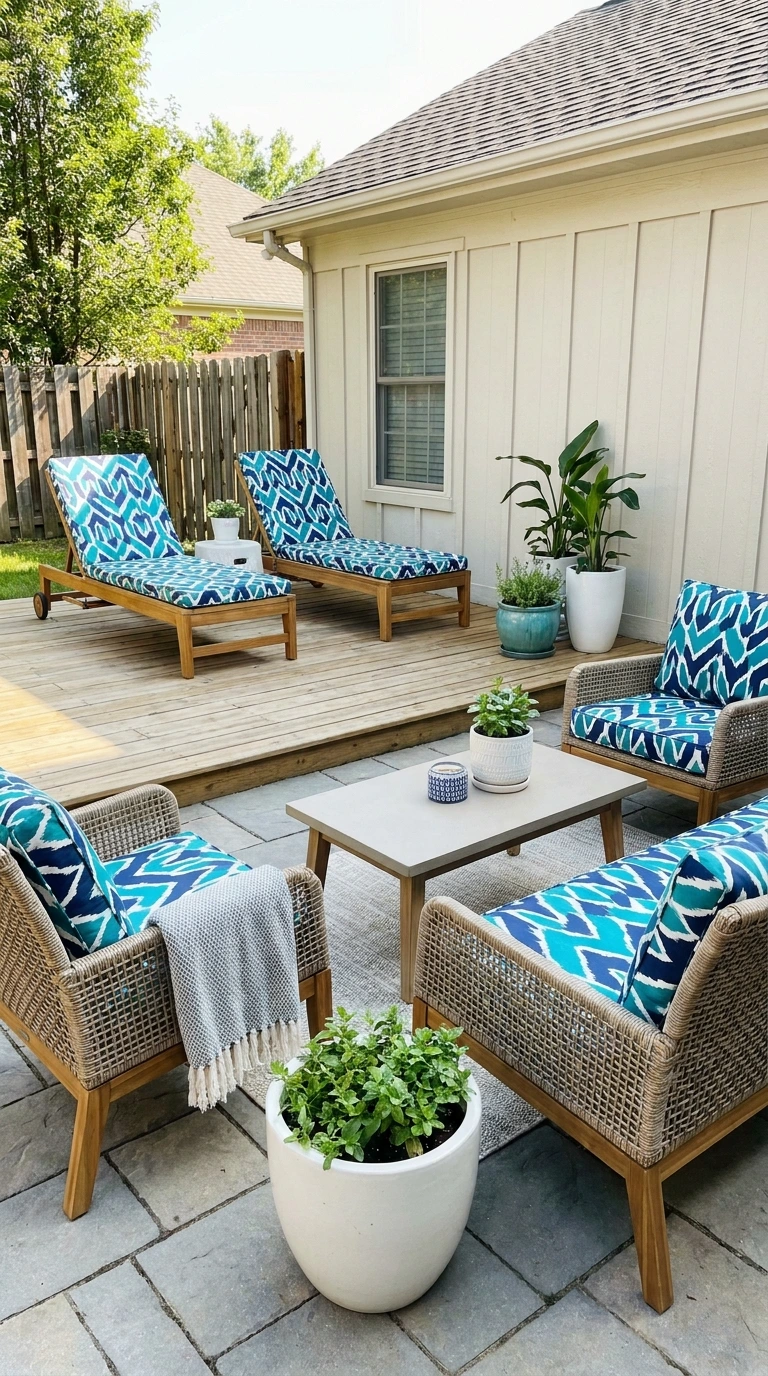
Outdoor fabric from a fabric store costs under ten dollars per meter — enough for several cushion covers that would retail for thirty to fifty dollars each if purchased ready-made. A simple envelope-style cushion cover requires no sewing machine and only basic hand stitching, making this genuinely achievable for anyone regardless of sewing experience.
Choose a fabric in the accent color of your chosen palette for cushions, a table runner, or simple seat pads for timber bench seating. Even a single yard of a bold outdoor fabric used consistently across the seating area creates a cohesive, designed look that makes the whole patio feel more intentional.
21. Add a Simple Water Feature With a Solar Pump
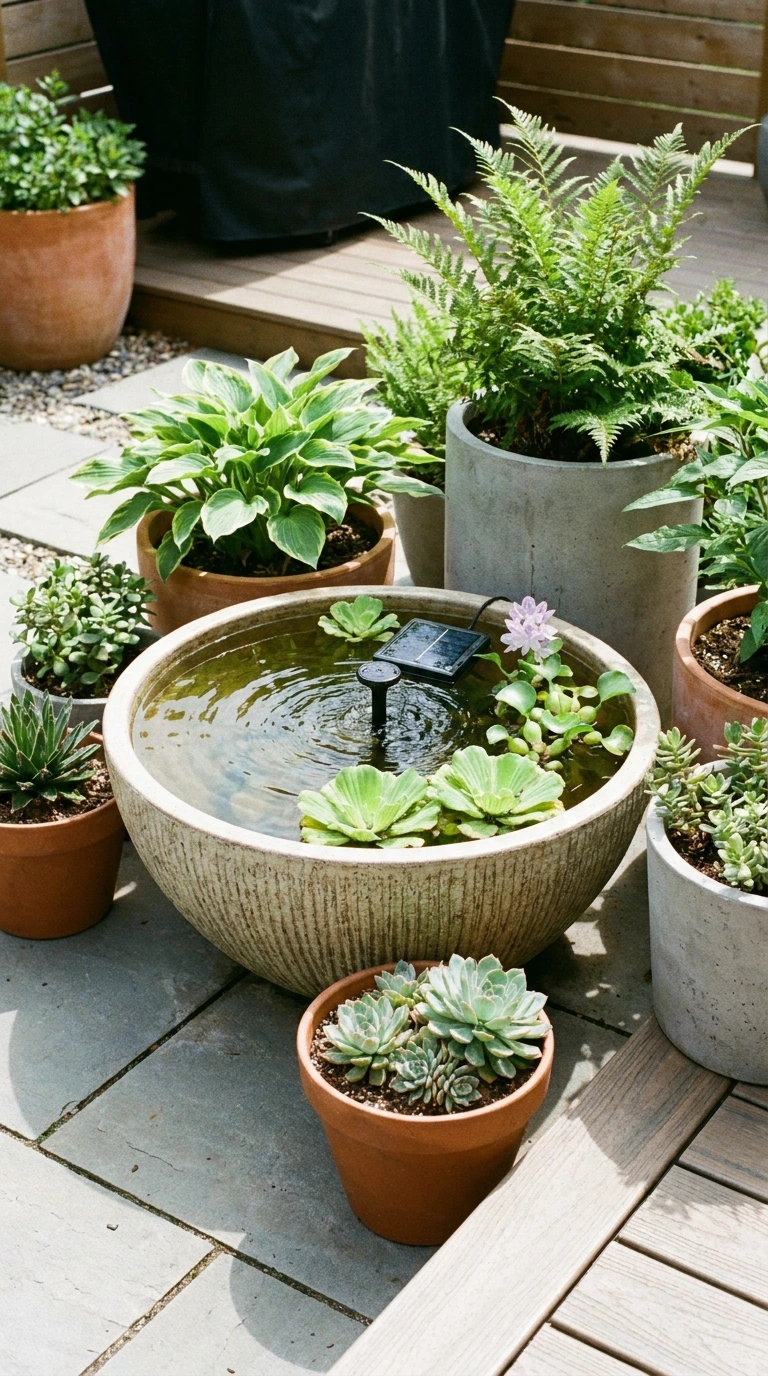
A basic solar-powered water feature — a pump placed in a large ceramic bowl or terracotta pot filled with water — costs under thirty dollars in total and adds the sound and movement of water to the patio. The sound of moving water changes the atmosphere of an outdoor space in a way that no visual element can replicate.
Choose a ceramic bowl large enough to submerge the pump head below the water surface. Add a few water plants — water hyacinth or water lettuce — to keep the water clear and add a living element to the feature. Position it where the solar panel on the pump head receives direct sunlight for at least six hours daily.
22. Build a Simple Garden Shelf From Reclaimed Timber
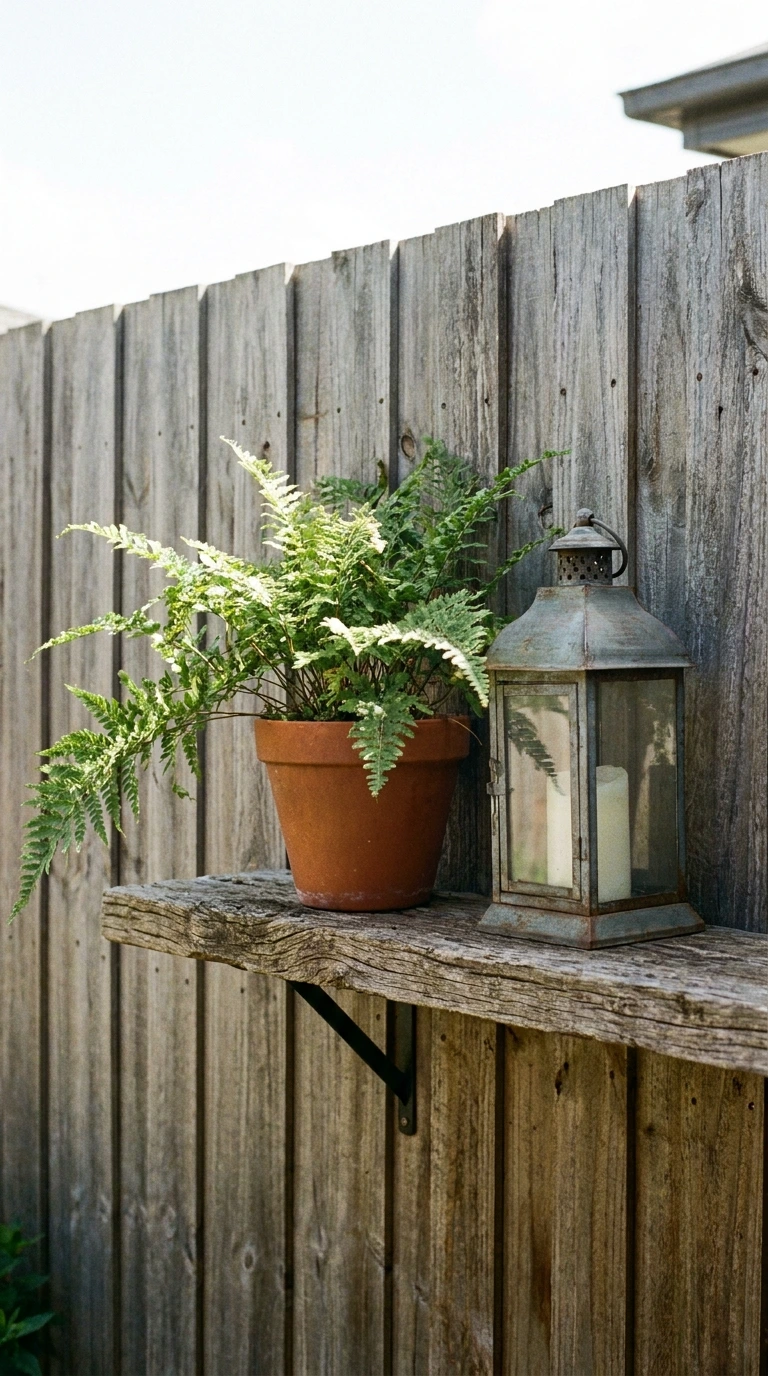
A simple wall-mounted shelf built from a reclaimed timber plank and two basic metal brackets creates an outdoor display surface for plants, lanterns, and small accessories at almost no cost. A plank from a reclaimed timber yard or a salvaged piece of wood costs almost nothing — the brackets are under five dollars each from a hardware store.
Seal the timber with outdoor wood oil or varnish before mounting. Mount to a fence or exterior wall with weatherproof screws. Style the shelf with a small potted plant, a lantern, and one or two accessories in the patio’s color palette. This single shelf adds a furnished quality to what would otherwise be a bare wall.
23. Grow a Climbing Plant on an Existing Fence
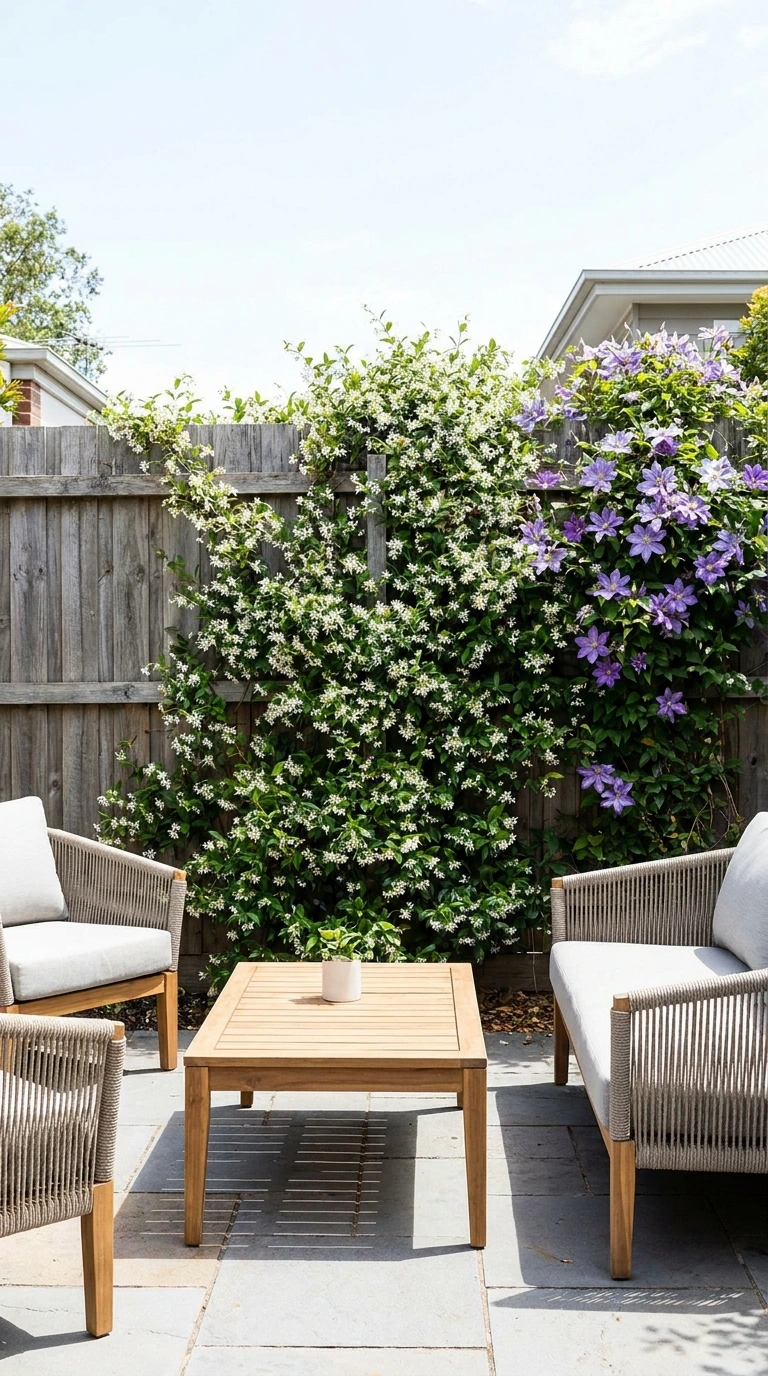
A climbing plant trained along an existing fence transforms the most visible boundary of the backyard from a plain timber or metal structure into a living, textured backdrop. Fast-growing climbing plants — jasmine, clematis, sweet peas — can cover a generous section of fence within a single growing season from a seedling that costs under five dollars.
Attach simple garden twine or wire horizontally across the fence to give the plant something to grip. Water regularly through the first season until the plant is established. A fence covered in climbing jasmine or clematis is one of the most beautiful backyard features available — and one of the cheapest to achieve.
24. Make a Simple Outdoor Dining Table From a Door
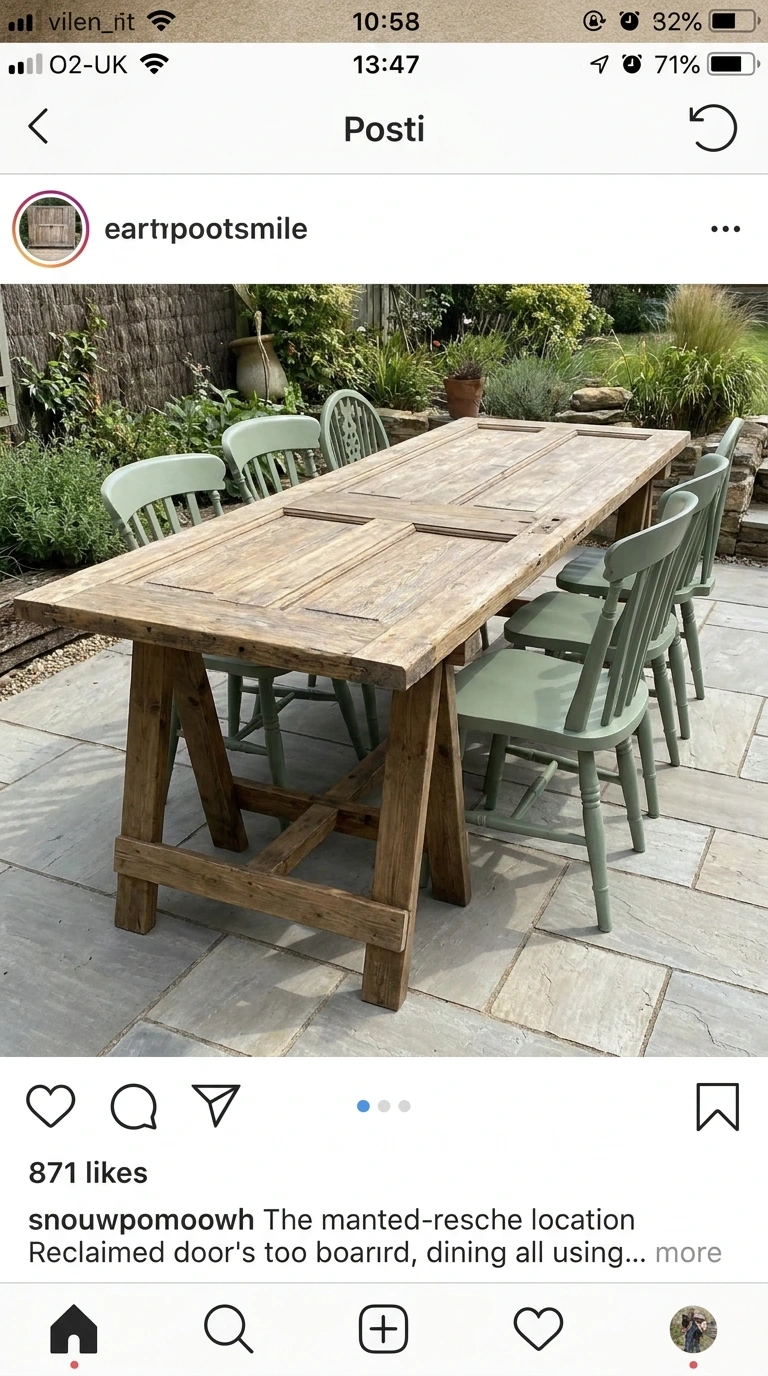
A reclaimed door — sourced for free or under twenty dollars from an architectural salvage yard — mounted on trestle legs or basic timber supports creates an outdoor dining table with genuine character. Sand it smooth, seal it with exterior wood finish, and the result is a table that looks deliberately designed rather than improvised.
Salvage yards and online marketplaces regularly list old doors for almost nothing. Internal doors are preferable since they tend to be flatter and lighter than exterior doors. Paired with thrifted chairs all painted the same color, a door table creates an outdoor dining setup that looks curated rather than budget.
25. Light the Whole Space With Solar Stake Lights
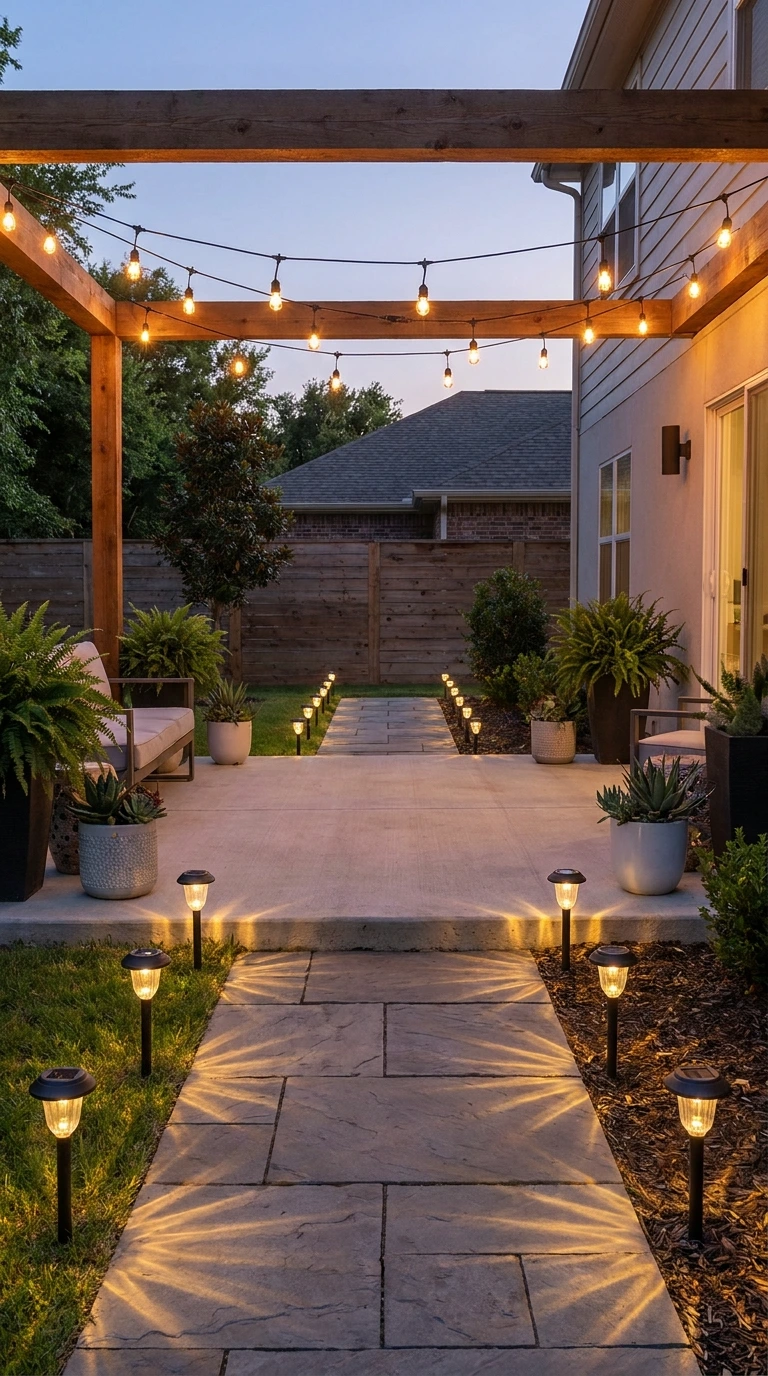
Solar stake lights pushed into the soil around the perimeter of the patio, along a path, or beside plants create a warm, ground-level glow that connects the patio to the garden beyond it. A set of ten solar stake lights costs under fifteen dollars and requires no installation beyond pressing them into the ground.
They charge during the day and switch on automatically at dusk, requiring no ongoing attention or electrical connection. Used alongside string lights overhead, they create the multi-height lighting that makes an outdoor space feel genuinely designed after dark. This final layer of ground-level lighting is the detail that pulls the whole budget patio together.
Common Budget Patio Mistakes
Mistake 1: Buying cheap furniture new instead of good furniture used
A new plastic chair set at twenty dollars looks cheap immediately and deteriorates quickly. A used metal bistro set at thirty dollars that is sanded and repainted looks genuinely attractive and lasts for years. Always choose quality used over poor quality new.
Mistake 2: Buying multiple small plants instead of one statement plant
Ten small plants in four-inch pots cost the same as one large statement plant and deliver a fraction of the visual impact. One well-chosen large plant consistently outperforms multiple small ones in any outdoor space.
Mistake 3: No lighting plan
A beautifully styled patio that has no lighting becomes completely unusable after six in the evening. String lights should be one of the first purchases, not an afterthought.
Mistake 4: Mismatched colors
Four different colored chair cushions, three different pot colors, and a rug that shares no color with anything else — this is the most common sign of a budget space. Pick two colors before buying anything and filter every purchase through them.
Mistake 5: Skipping the ground surface
Furniture placed on bare dirt or patchy grass never looks fully resolved, regardless of how good the furniture itself is. The ground surface — gravel, stepping stones, painted concrete, pallet deck — is the foundation everything else sits on. Get it right first.
Frequently Asked Questions
Can I really create a good patio for under $300?
Yes — many of the most attractive budget patios are built for significantly less. The key is prioritizing high-impact changes — ground surface, string lights, one statement plant, consistent color — over accumulating many small purchases that do not add up to a cohesive result.
What is the cheapest way to create a patio surface?
Pea gravel is the most affordable patio surface available — a basic ten by ten foot gravel area with landscape fabric underneath can be completed for under fifty dollars. Concrete stepping stones laid in a pattern cost slightly more but create a more finished, permanent result.
How do I make cheap patio furniture look expensive?
Sand it smooth, prime it, and paint it with outdoor-rated spray paint in a consistent color. A mismatched set of thrifted chairs all painted the same color looks intentional and designed. Matching color is the single most effective way to make budget furniture look deliberate.
What plants work best on a budget patio?
Fast-growing herbs are the most cost-effective — basil, rosemary, mint, and chives cost under two dollars as seedlings, grow quickly, and are useful enough to be maintained consistently. For structural plants, ornamental grasses offer the most volume and visual impact per dollar spent.
How do I add privacy to a backyard patio cheaply?
A bamboo roll screen attached to an existing fence costs under thirty dollars and provides immediate privacy. A row of tall potted ornamental grasses or bamboo creates a living privacy screen for a similar investment. A trellis with a fast-growing climbing plant costs under ten dollars and creates a beautiful living screen over a single season.
Is solar lighting good enough for a budget patio?
For accent lighting — path lights, stake lights, and small decorative fixtures — solar is entirely adequate and eliminates ongoing electricity costs. For primary overhead lighting like a string light canopy, plug-in options deliver more consistent brightness, particularly in locations with limited direct sun.
How long does it take to build a budget patio?
Most of the ideas on this list can be completed in a single weekend. The ground surface — gravel or stepping stones — takes the longest at half a day. String lights, an outdoor rug, and basic planting can all be completed in a single afternoon.
Conclusion
A beautiful backyard patio on a tight budget is not about compromise — it is about prioritization. The right ground surface, the right lighting, one statement plant, and a consistent color palette do more for an outdoor space than twice the spending spread across random purchases with no clear direction.
Work through this list in order of impact — ground first, lighting second, seating third, styling last. Do each step well before moving to the next. A patio built this way — deliberately, with intention and patience — will look and feel significantly better than one assembled quickly with a large budget and no clear plan.