25 Fall Home Decor Ideas That Make Your Entire House Feel Like Autumn

Introduction
Fall is the one season where staying inside feels like a reward rather than a retreat. The right decor does not just change how your home looks — it changes how it feels. The warmth of a well-placed candle, the texture of a chunky throw, the smell of cinnamon and cedar drifting through a room — these are the details that make a house feel genuinely autumnal rather than just seasonally decorated.
These twenty-five ideas cover every room and every budget. Some take five minutes. Some take an afternoon. All of them add a layer of warmth and intention that makes your home feel like autumn from the moment you walk through the door.
1. Swap Your Throw Pillows for Autumn Tones
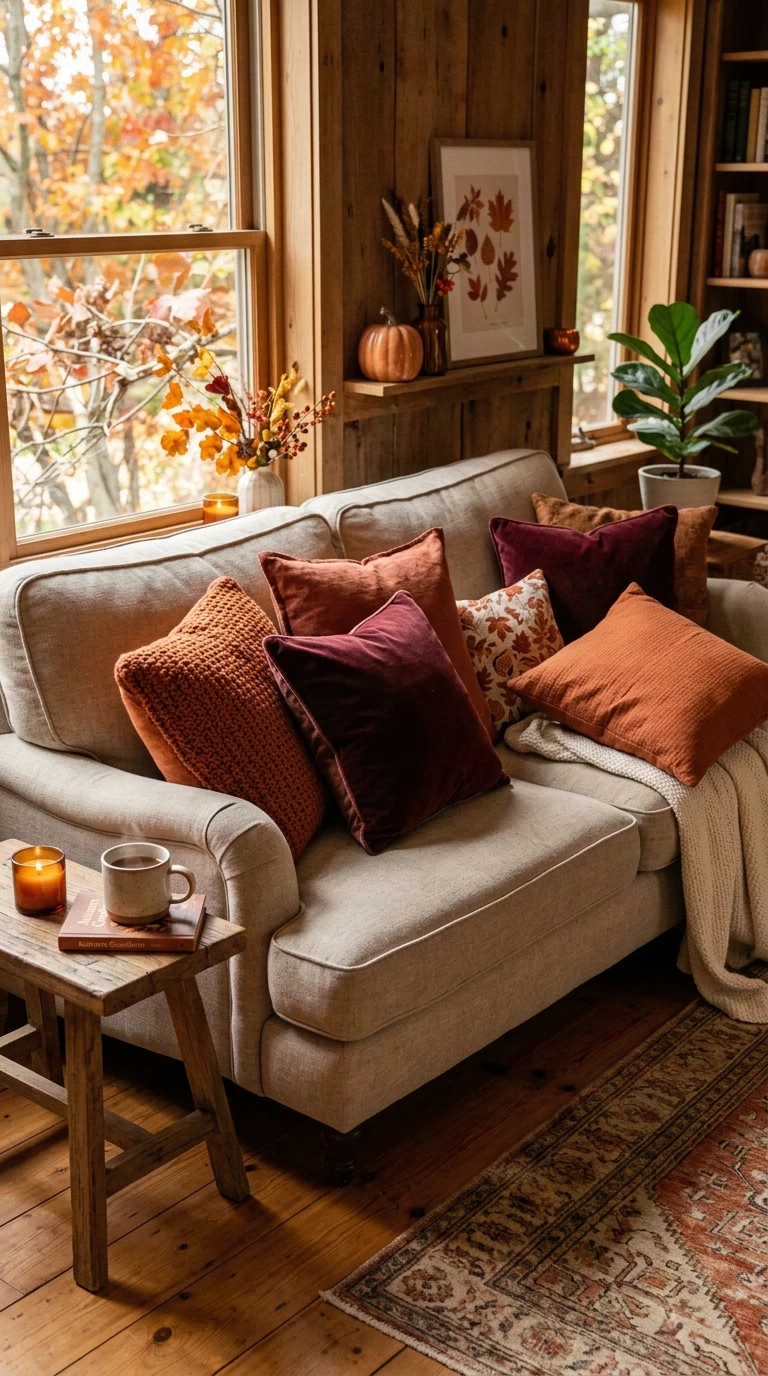
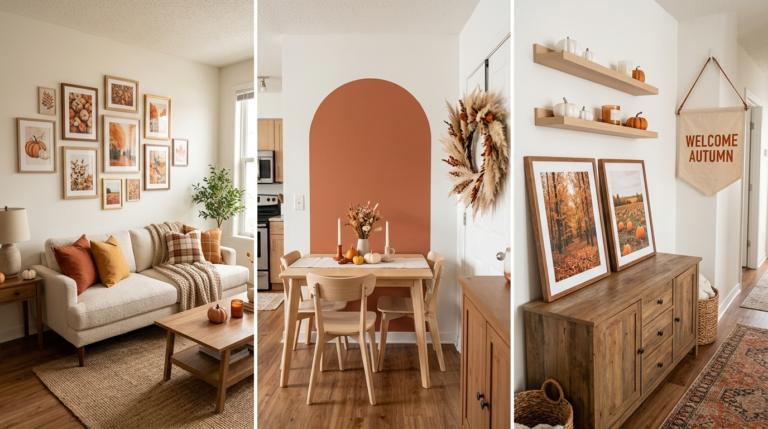
The fastest way to shift a living room into fall mode is replacing summer throw pillows with ones in the season’s palette — rust, burnt orange, deep burgundy, warm mustard, and forest green. This single swap takes ten minutes and changes how the whole room feels.
Choose pillows in varied textures rather than a matching set — velvet, chunky knit, linen, and woven all together feels more layered and intentional than a coordinated set purchased at the same time. Two or three autumn pillows added to existing neutral ones always looks more considered than a full replacement.
Pro Tip: Store your summer pillows in vacuum storage bags when you switch them out for autumn. They compress to a fraction of their size, last better than loose storage, and are easier to find again when the season turns back.
2. Layer a Chunky Knit Throw on Every Seat
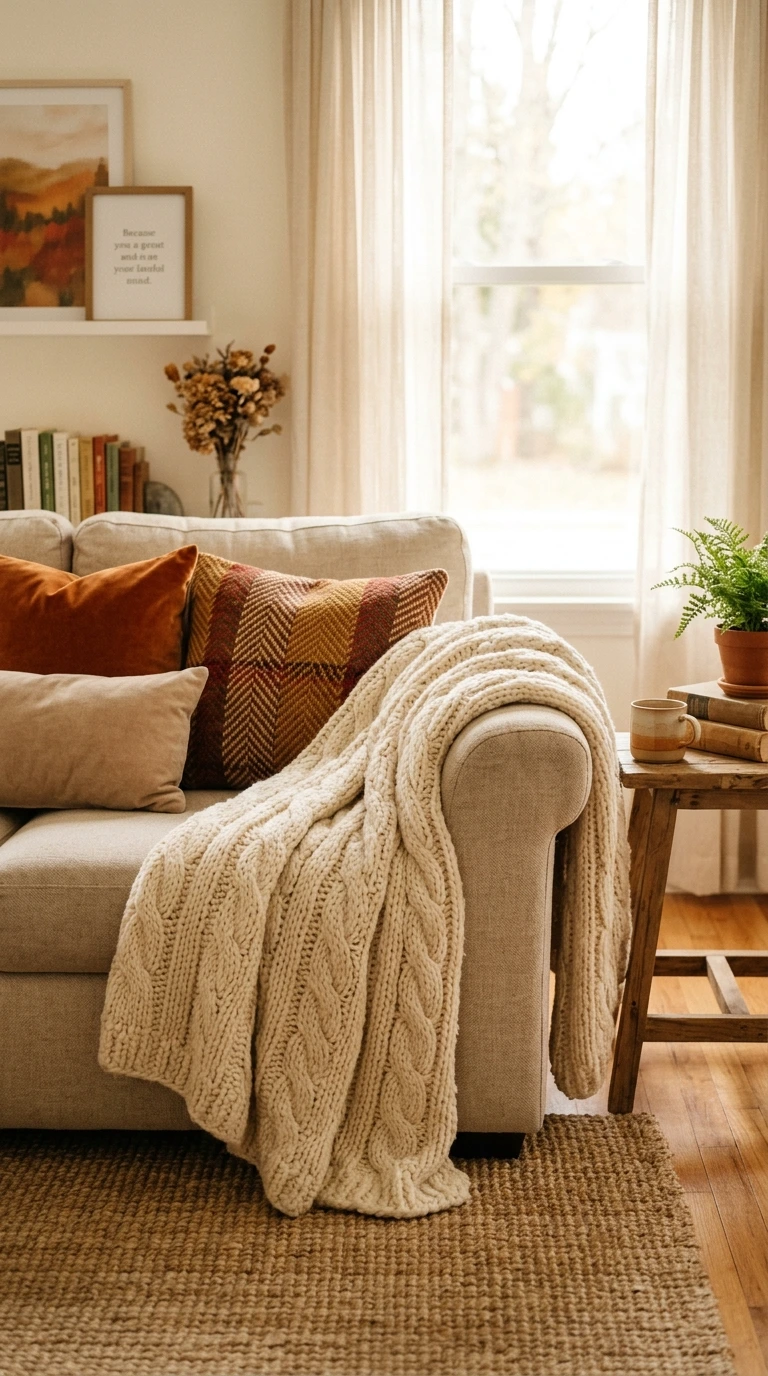
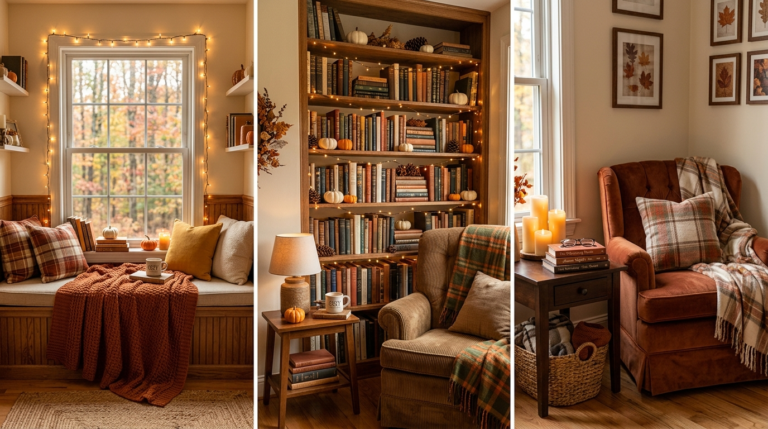
A chunky knit throw draped over the arm of a sofa, the back of a dining chair, or folded across the foot of the bed signals autumn comfort before anyone has even sat down. The texture alone — thick, warm, slightly irregular — does more for the seasonal feeling of a room than most decorative objects.
Keep one in the living room, one in the bedroom, and one in any room where people gather in the evening. Drape them loosely rather than folding too precisely — a slightly rumpled throw looks lived-in and genuinely inviting rather than staged.
3. Fill Your Home With Candles
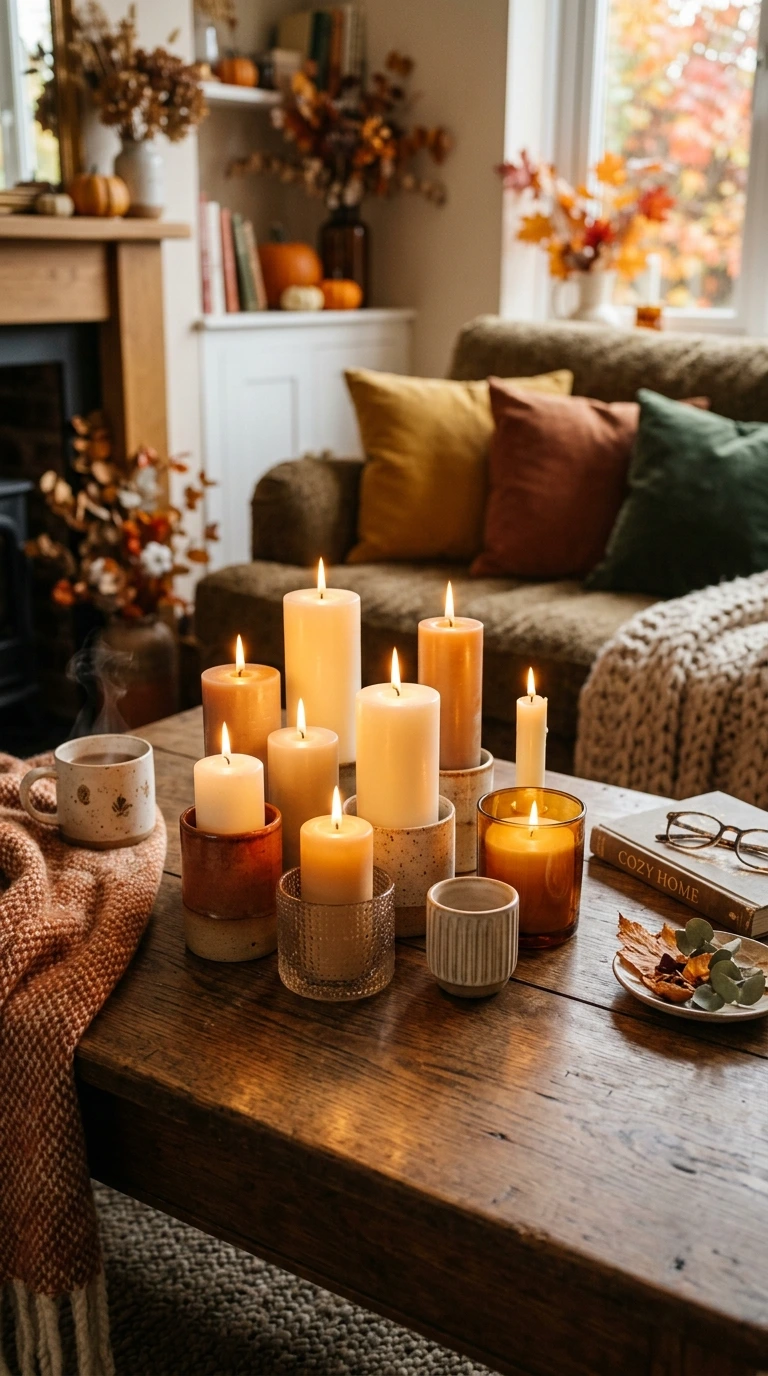
Autumn is candle season. The shorter days, the cooler evenings, the desire for warm, flickering light at six in the afternoon — everything about the season calls for candles. Group them on the coffee table, line them along the mantel, place one on the kitchen counter and one on the bathroom shelf.
Choose autumn-appropriate scents — cinnamon, cedar, amber, clove, pumpkin spice, sandalwood, or warm vanilla. The scent of your home is part of the seasonal experience in a way that visual decoration alone can never fully replicate. A room that smells like autumn feels like autumn regardless of what is on the walls.
Best Autumn Candle Scents
- Cinnamon and clove for a spiced, warming quality
- Cedarwood and sandalwood for a woody, grounded depth
- Pumpkin and vanilla for a sweet, cozy warmth
- Amber and musk for a rich, resinous evening scent
- Apple and cinnamon for a kitchen-ready, homely fragrance
4. Bring in Pumpkins — Real and Decorative
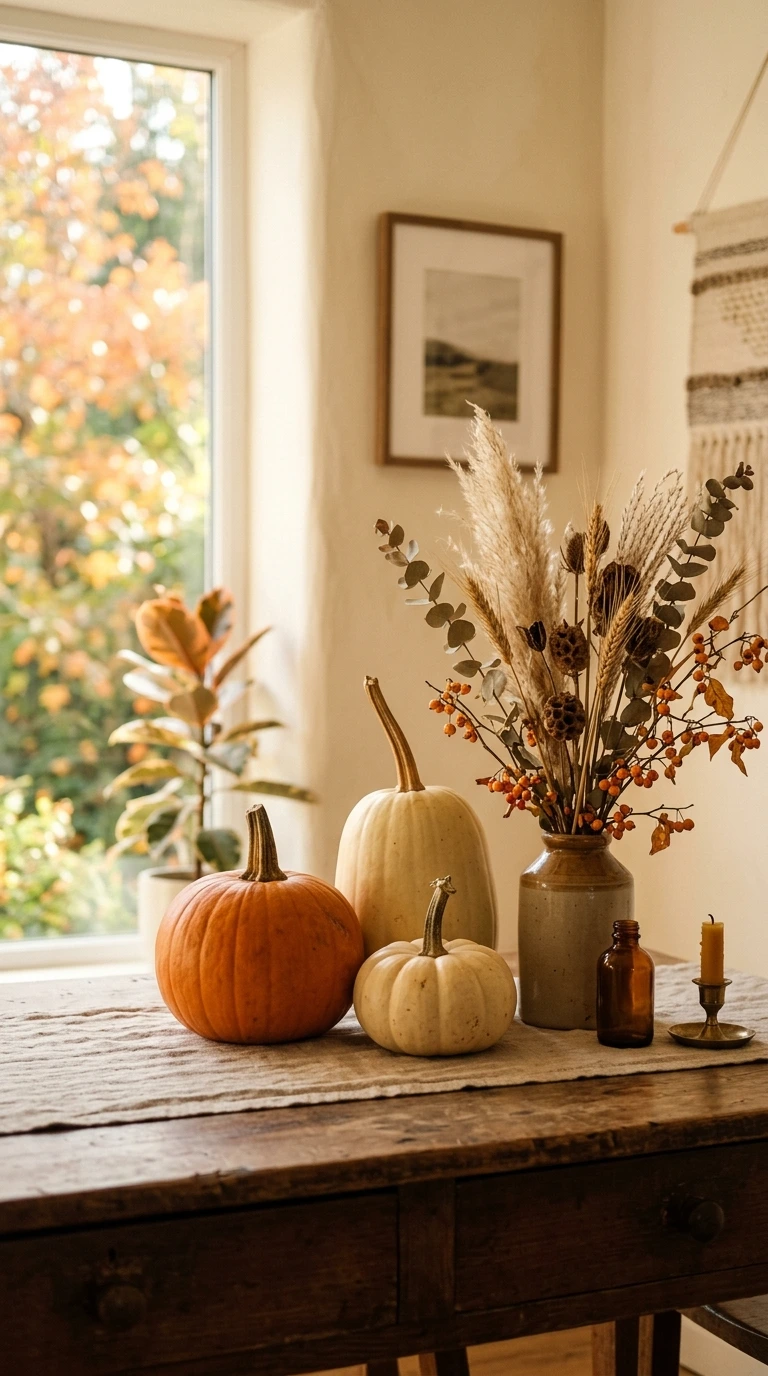
Pumpkins are the most recognizable symbol of autumn decor and genuinely earn their place when used with intention rather than abundance. Three pumpkins of varying heights and sizes grouped together on a porch, mantel, or console table always looks more considered than ten identical ones scattered around the room.
Mix real pumpkins with decorative ceramic or painted versions for a display that lasts the entire season rather than deteriorating mid-October. White, cream, and sage green pumpkins alongside traditional orange ones creates a more sophisticated palette than orange alone.
5. Switch to Warm-Toned Lighting
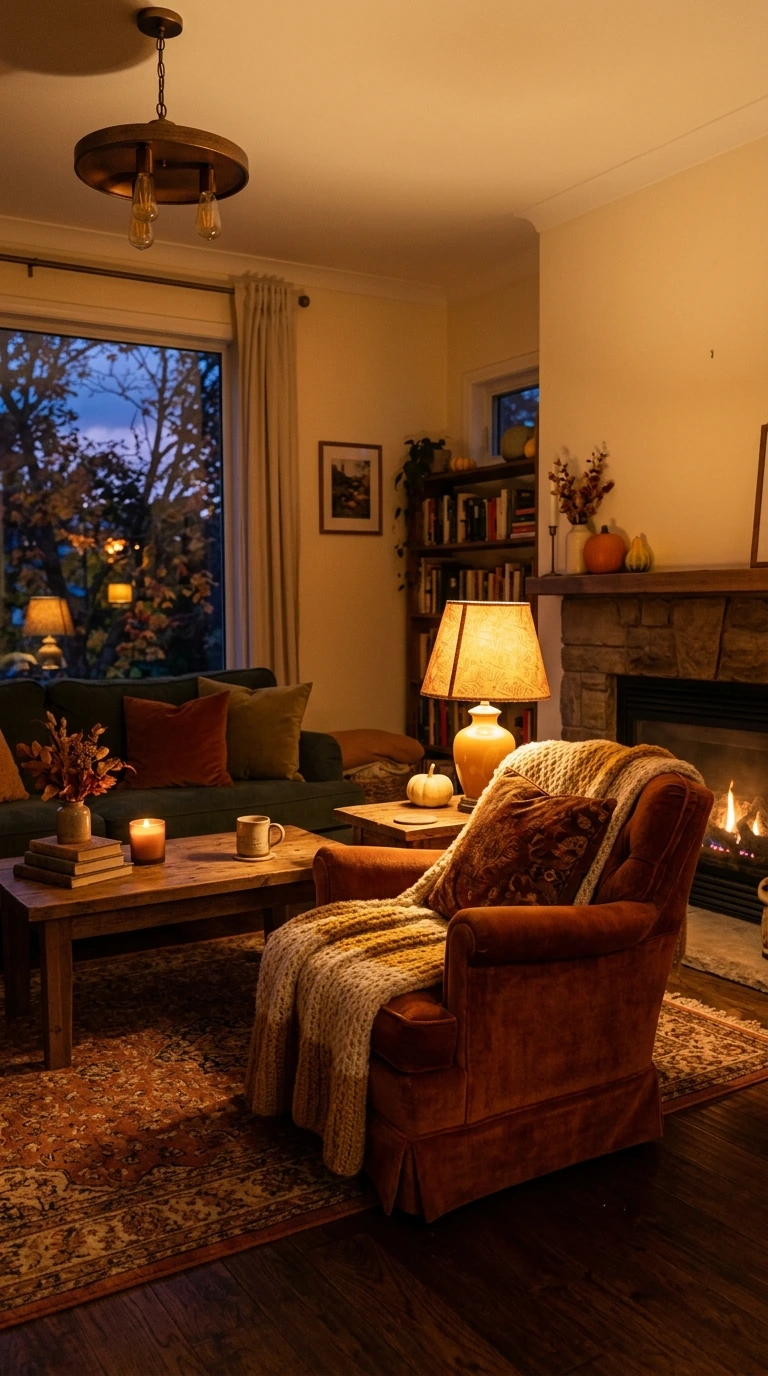
The color temperature of your light bulbs affects how autumnal a room feels more than most people realize. Cool white bulbs — above 4000K — create a bright, clinical light that works against the warm, cozy atmosphere autumn calls for. Switching to warm white bulbs — in the 2200K to 2700K range — costs almost nothing and immediately makes every room feel more seasonal.
Add a dimmer switch if you do not have one — the ability to lower the lights as the evening progresses is one of the most effective mood-changing tools available in any home. A room at thirty percent overhead brightness with a few candles lit looks and feels like autumn in a way that full overhead lighting never will.
Warning: Avoid scented candles in rooms where people sleep or in small spaces without ventilation. Even high-quality candles produce combustion byproducts that accumulate in poorly ventilated rooms. Always extinguish candles before leaving a room unattended and never sleep with one burning.
6. Create a Fall Centerpiece for the Dining Table
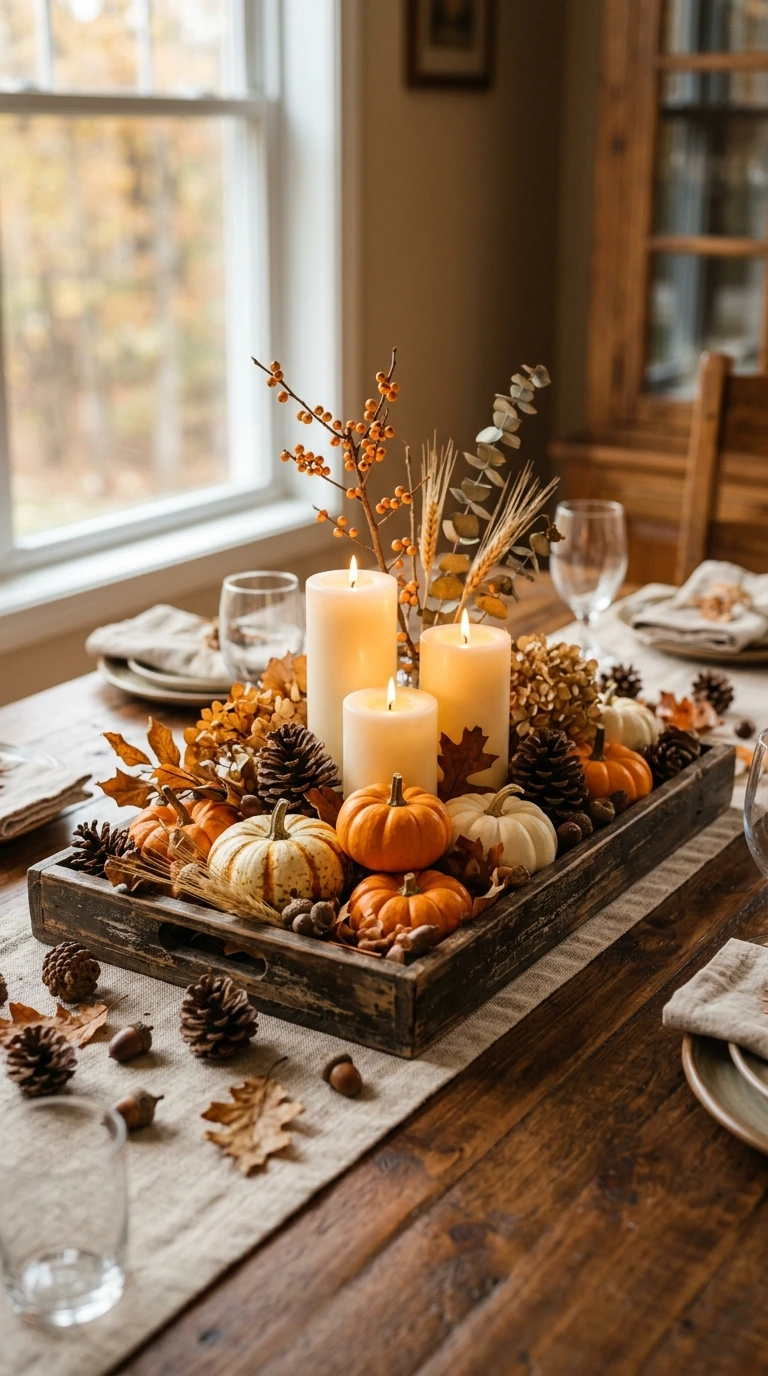
A dining table centerpiece that changes with the season is one of the simplest ways to make the whole house feel intentionally decorated. For autumn, a long wooden board or tray running down the center of the table — styled with mini pumpkins, dried botanicals, pillar candles, and autumn foliage — creates an immediate seasonal focal point.
Keep the centerpiece low enough that people can see each other across the table when seated. Use odd numbers — three candles, five mini pumpkins — for the most natural-looking arrangement. Add a handful of dried leaves, acorns, or pine cones scattered loosely around the styled objects for a gathered, organic quality.
7. Add a Fall Wreath to the Front Door
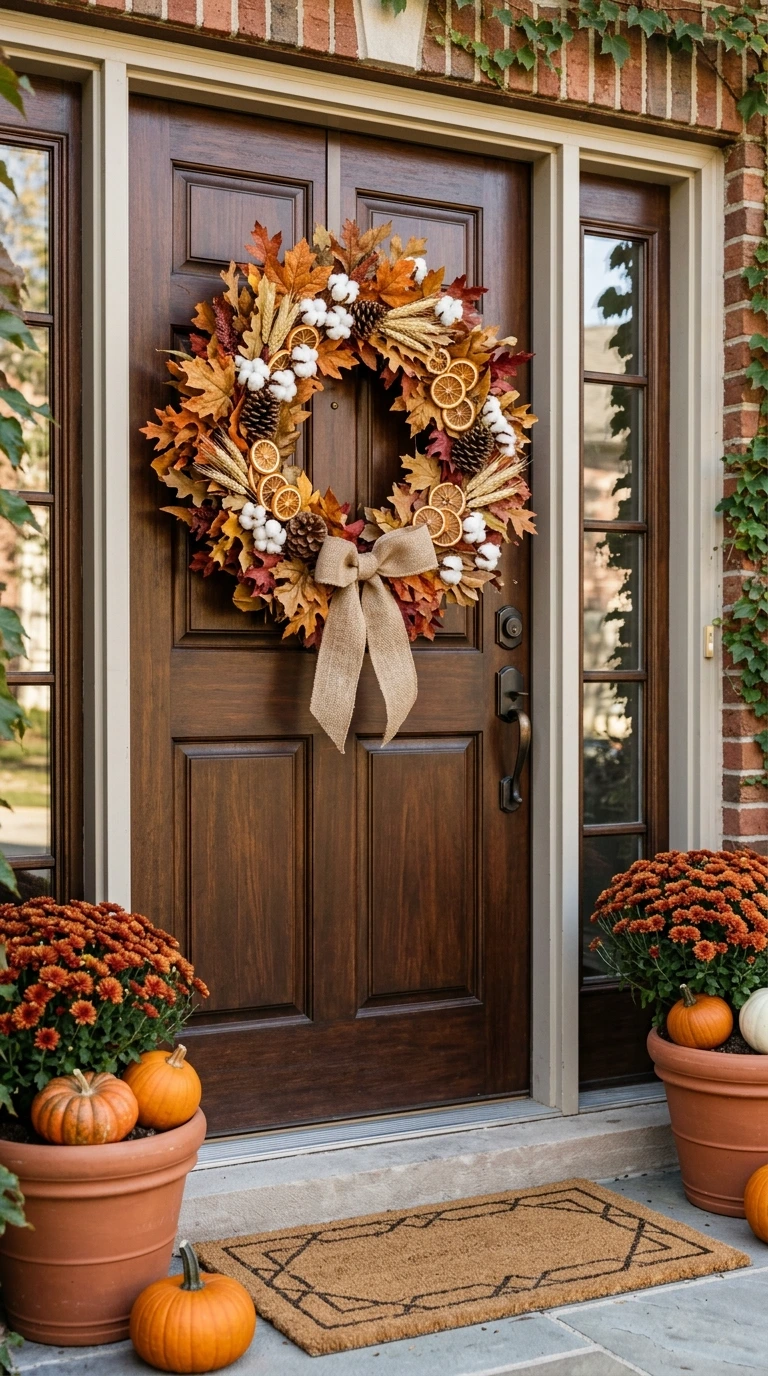
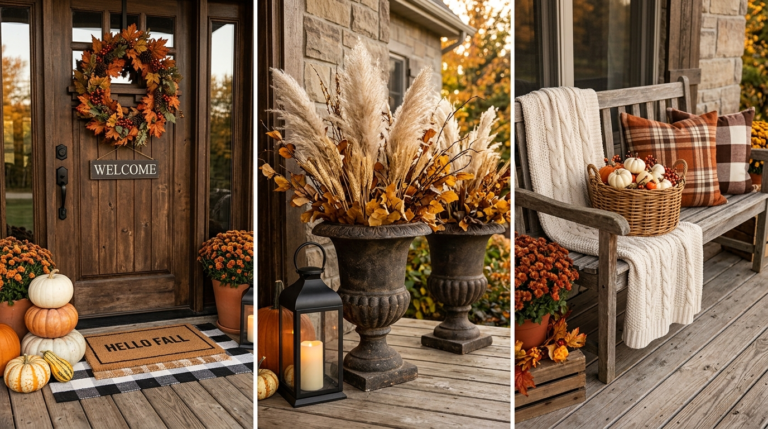
A seasonal wreath on the front door announces autumn before anyone has stepped inside. A well-chosen wreath in dried botanicals, preserved foliage, or artificial autumn leaves creates a welcoming focal point that sets the seasonal tone for the whole house from the outside in.
Choose a wreath scaled appropriately to your door — a twelve-inch wreath on a full-sized front door looks sparse, while an oversized wreath dominates. Twenty-four to thirty inches suits most standard front doors. Natural materials — dried cotton, wheat, eucalyptus, preserved oak leaves — last the entire season and look more considered than purely synthetic versions.
| Room | Easiest Fall Update | Time Required | Cost |
|---|---|---|---|
| Living Room | Swap throw pillows | 10 minutes | Low |
| Bedroom | Add chunky throw and warm lighting | 15 minutes | Low |
| Dining Room | Create a table centerpiece | 30 minutes | Low-Mid |
| Front Door | Hang a seasonal wreath | 10 minutes | Low-Mid |
| Kitchen | Add autumn produce display | 15 minutes | Low |
8. Style Your Mantel for Autumn
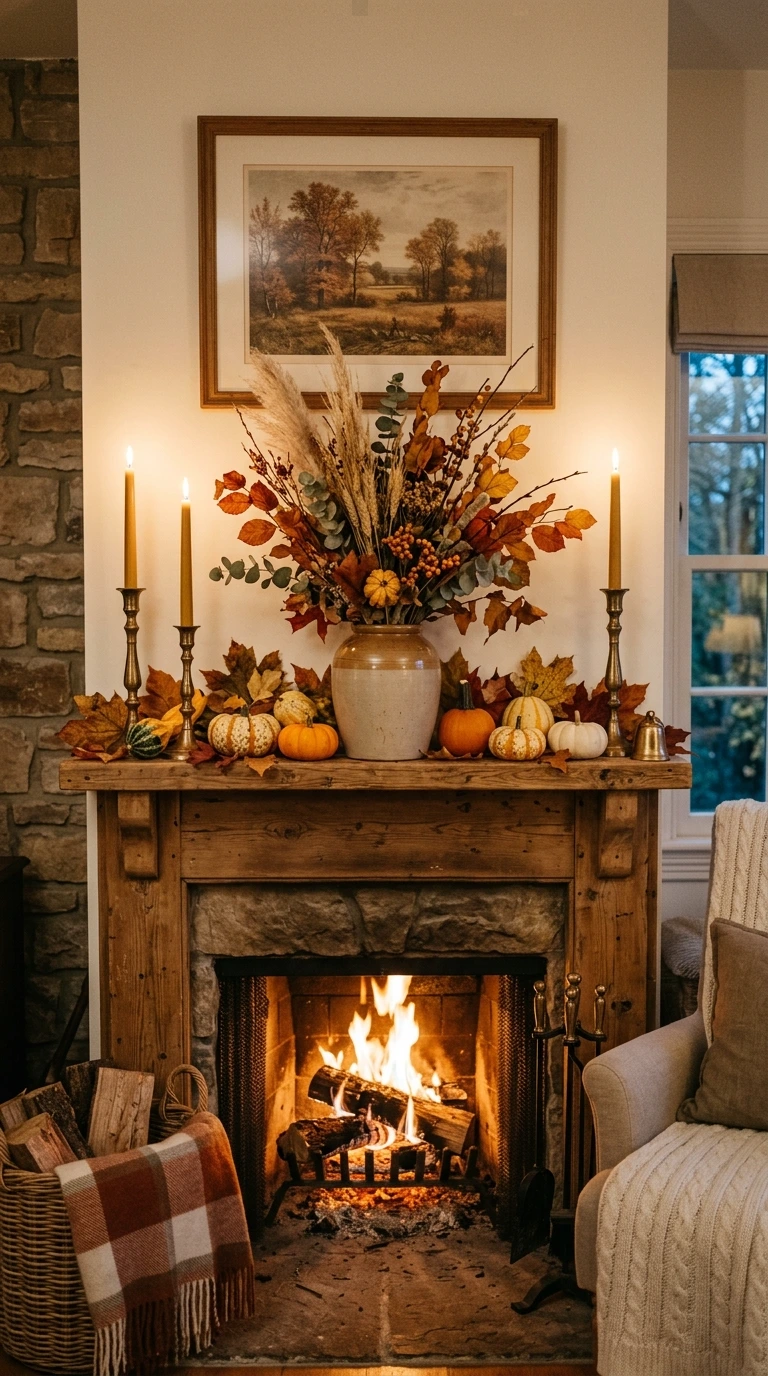
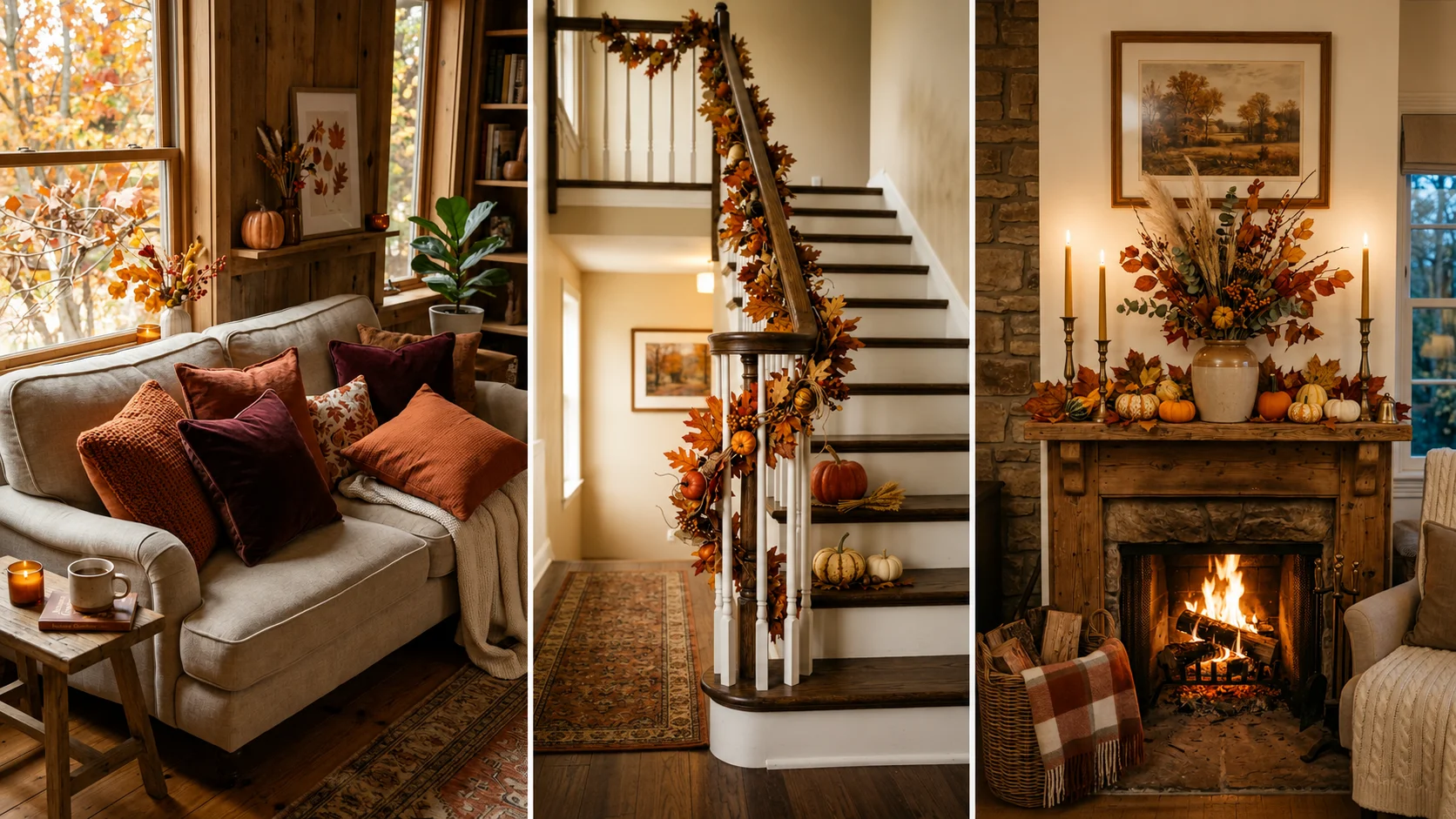
A fireplace mantel is the most visible display surface in any living room — and the one that does the most work for seasonal decoration. An autumn mantel styled with candles, pumpkins, dried botanicals, and warm-toned artwork or a mirror creates an immediate focal point that anchors the entire room’s seasonal feel.
Layer objects at different heights — a tall candlestick, a medium vase with dried stems, a small pumpkin, a few autumn leaves scattered at the base — for the most dynamic arrangement. Keep the palette within two to three colors for a cohesive look. Step back and look at the arrangement from the doorway of the room — that is the angle most people see first and it is the angle that matters most.
9. Bring in Dried Botanicals
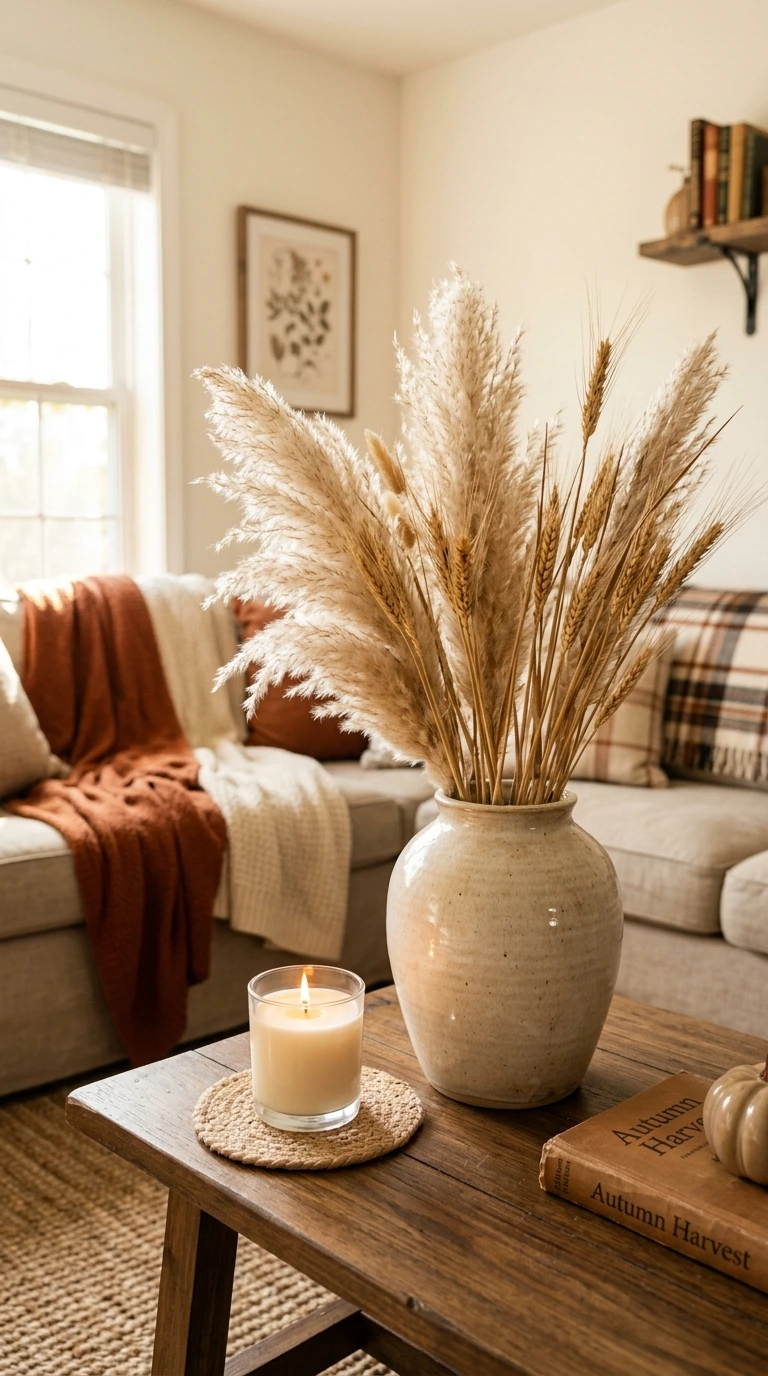
Dried botanicals — pampas grass, wheat stalks, dried lavender, cotton stems, eucalyptus, autumn seed pods — bring texture and warm, muted color to a home in a way that lasts the entire season without any maintenance. A large stem of pampas grass in a tall ceramic vase, a bunch of dried lavender on the kitchen counter, a cluster of cotton stems beside a candle on the coffee table — each adds a layer of organic warmth that fresh flowers cannot provide at this time of year.
Source dried botanicals from farmers markets, craft stores, or dry them yourself from summer garden cuttings. Their muted, neutral tones complement autumn’s earthy palette beautifully — and they look better as they continue to dry throughout the season rather than deteriorating like fresh flowers.
10. Add Autumn Foliage From Outside
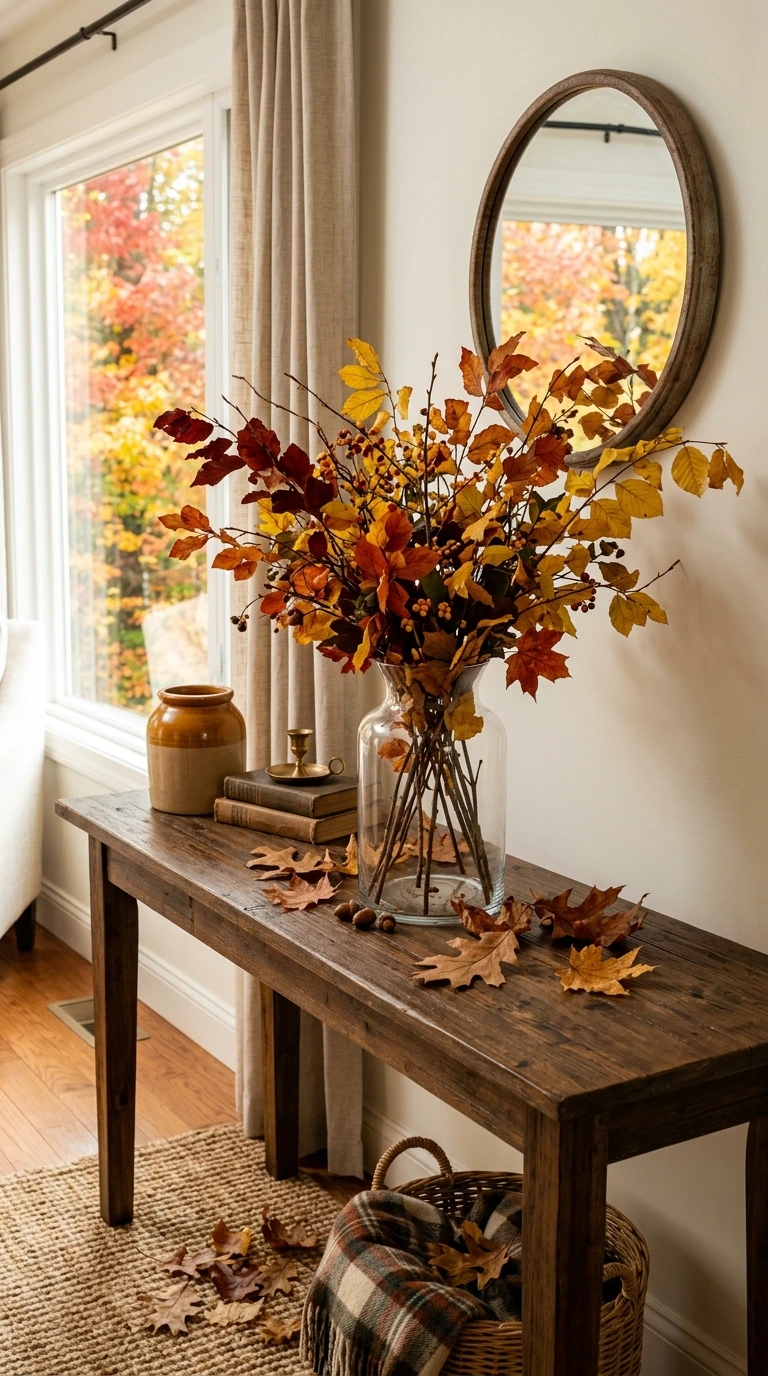
The most authentic fall decor costs nothing and is available in abundance in almost every garden or park. A handful of fallen leaves arranged on a windowsill, tucked into a vase, or scattered across a table runner adds genuine seasonal color that no artificial leaf garland can replicate.
Press the best leaves between the pages of a heavy book for a few days to flatten and preserve them. Frame a selection of pressed autumn leaves for simple, seasonal wall art. Tuck a few colorful branches cut from the garden into a tall vase for a dramatic, free centerpiece that changes as the leaves continue to dry and curl.
Pro Tip: Coat freshly fallen leaves with a light spray of hairspray or clear craft sealant to slow the drying and curling process. Sealed leaves hold their color and shape for up to two weeks, giving any autumn display significantly more longevity.
11. Switch Your Table Runner
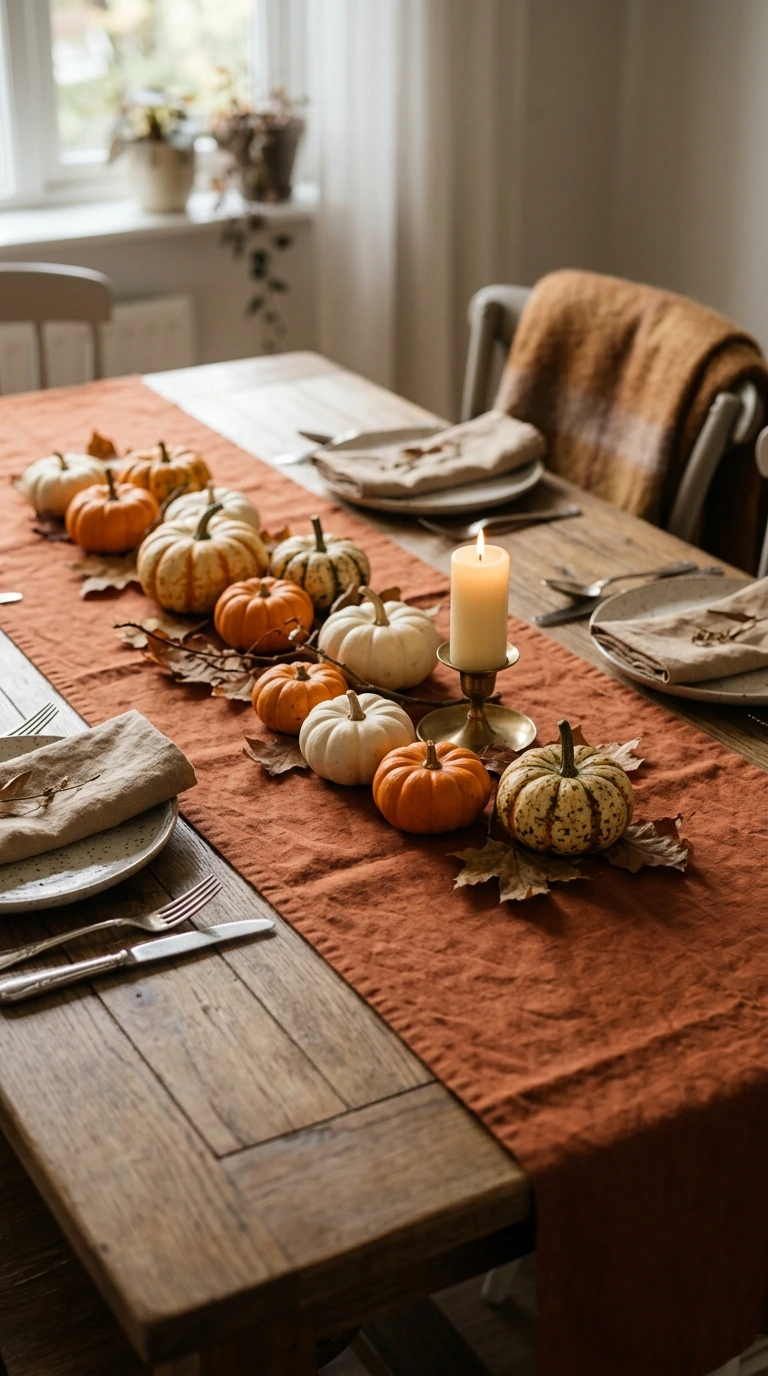
A simple table runner in an autumn-appropriate fabric — burlap, plaid, a deep tartan, or a warm linen in rust or ochre — transforms the dining table from summer to fall in minutes. This is one of the cheapest and most effective seasonal updates available for any dining room or kitchen table.
Layer the runner with a few small pumpkins, a candle, and a cluster of acorns or pine cones for an instant seasonal tablescape that requires no significant investment. The runner also protects the table surface from the candles and objects placed on top of it, combining function with decoration.
12. Add a Fall-Themed Gallery Wall Update
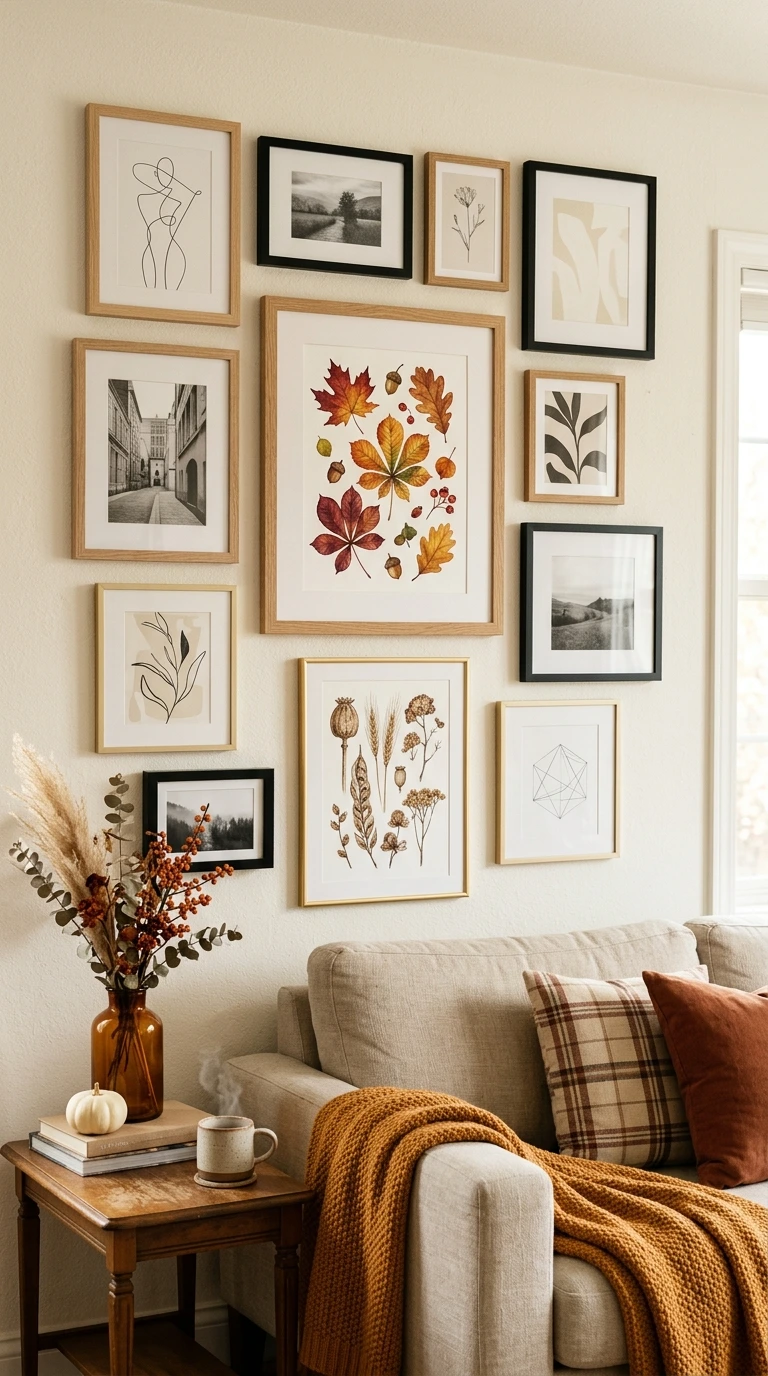
You do not need to replace an existing gallery wall to make it feel autumnal. Adding one or two seasonal prints — a botanical illustration of autumn foliage, a warm-toned abstract, a simple typographic print — to an existing display updates the whole wall without replacing everything. Frame prints in the same finish as your existing frames for a cohesive result.
Printable autumn artwork is available for free or very cheaply from numerous online sources. Print at home, pop in an existing frame, and the gallery wall shifts with the season for almost no investment. Remove and replace when spring arrives — the original artwork goes back in the same frame.
13. Display Autumn Produce in the Kitchen
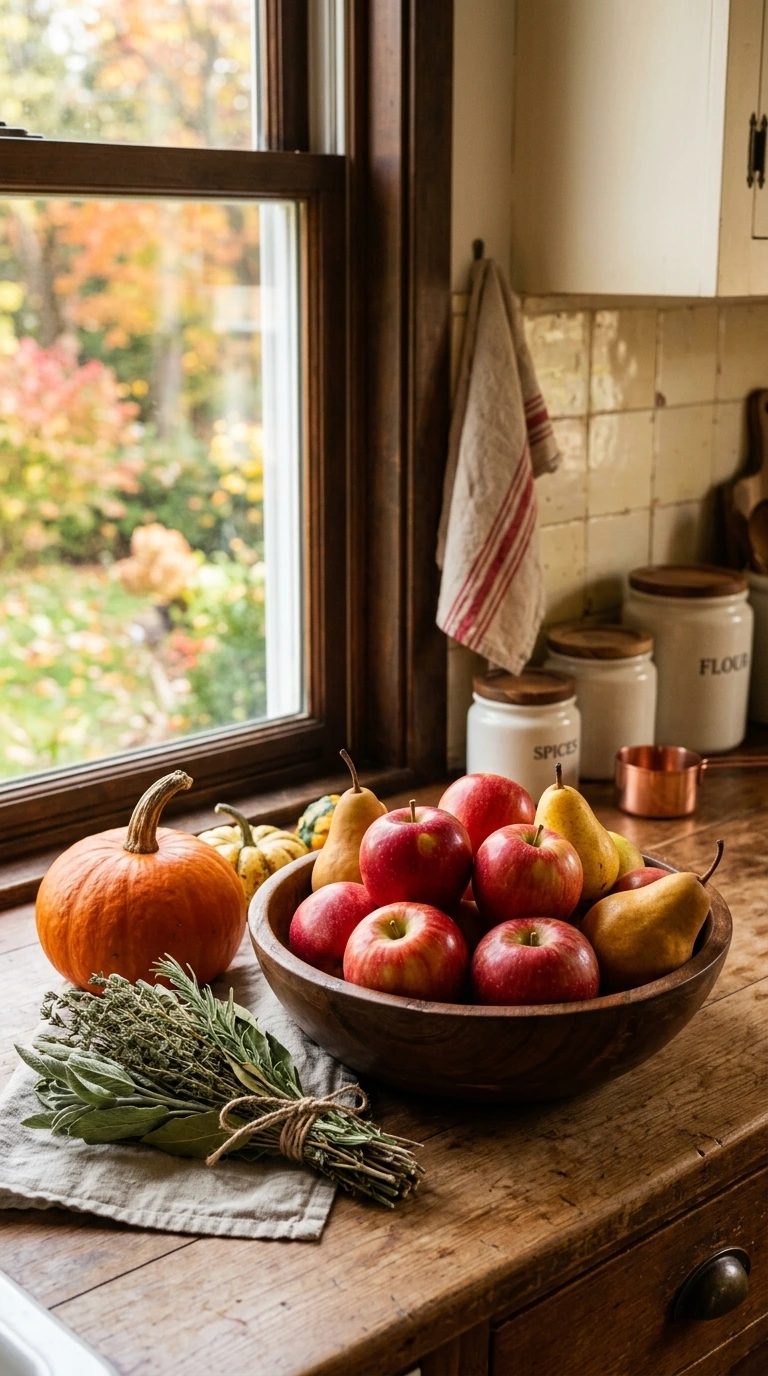
A wooden bowl of apples, a basket of gourds, a bunch of dried corn, or a cluster of small decorative pumpkins on the kitchen counter adds genuine seasonal character to the most used room in the house. This is one of the oldest forms of seasonal decoration and one of the most effective — real produce brings color, texture, and in the case of apples and herbs, scent.
Choose produce that genuinely suits the season and your climate — what is available at the local farmers market right now is the right answer. A bowl of seasonal apples on the counter serves double duty as decor and a daily snack reminder. Replace as items are used or begin to age.
14. Warm Up Your Bedroom With Autumn Bedding
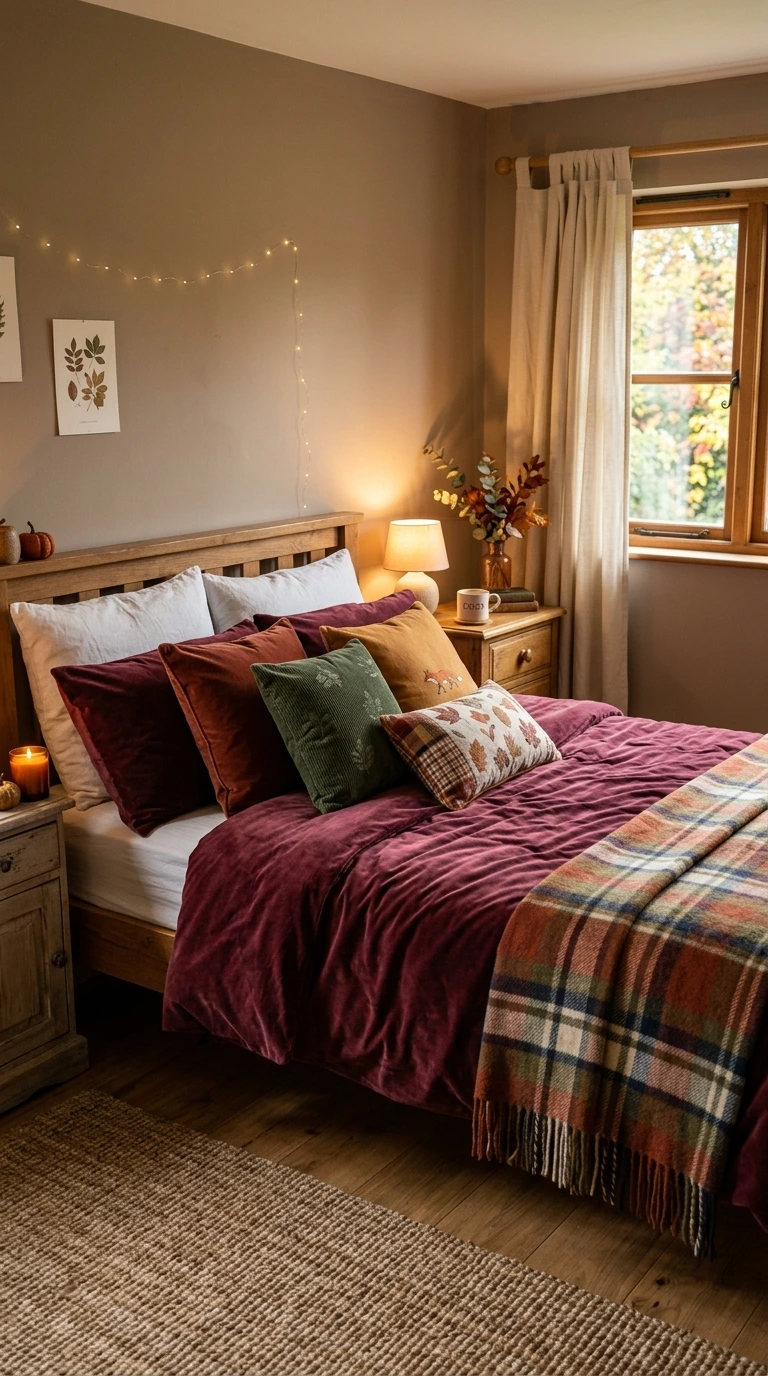
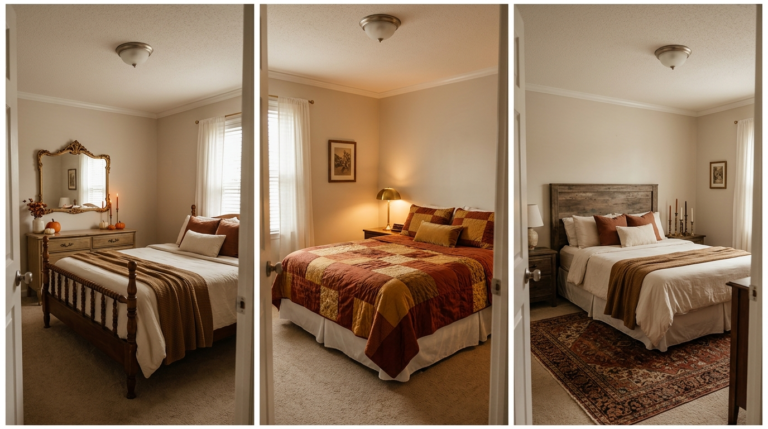
Swapping summer-weight linen or cotton bedding for heavier, warmer options — a velvet duvet cover in deep burgundy, a flannel set in warm plaid, or simply adding a weighted blanket in an autumn tone — transforms the bedroom into a genuinely seasonal space. The bedroom is where you start and end every day, making its seasonal feel disproportionately significant.
Layer bedding rather than simply swapping pieces — a lighter base sheet, a heavier duvet, a folded throw at the foot, and a few pillows in autumn tones creates the layered look that makes a bed look genuinely inviting rather than simply covered.
Important: When transitioning to heavier autumn and winter bedding, wash all stored items before putting them on the bed. Bedding stored since last winter carries dust, storage odors, and sometimes mildew from humidity fluctuations during storage. Fresh from the wash is always worth the extra effort.
15. Create an Autumn Scent Throughout the House
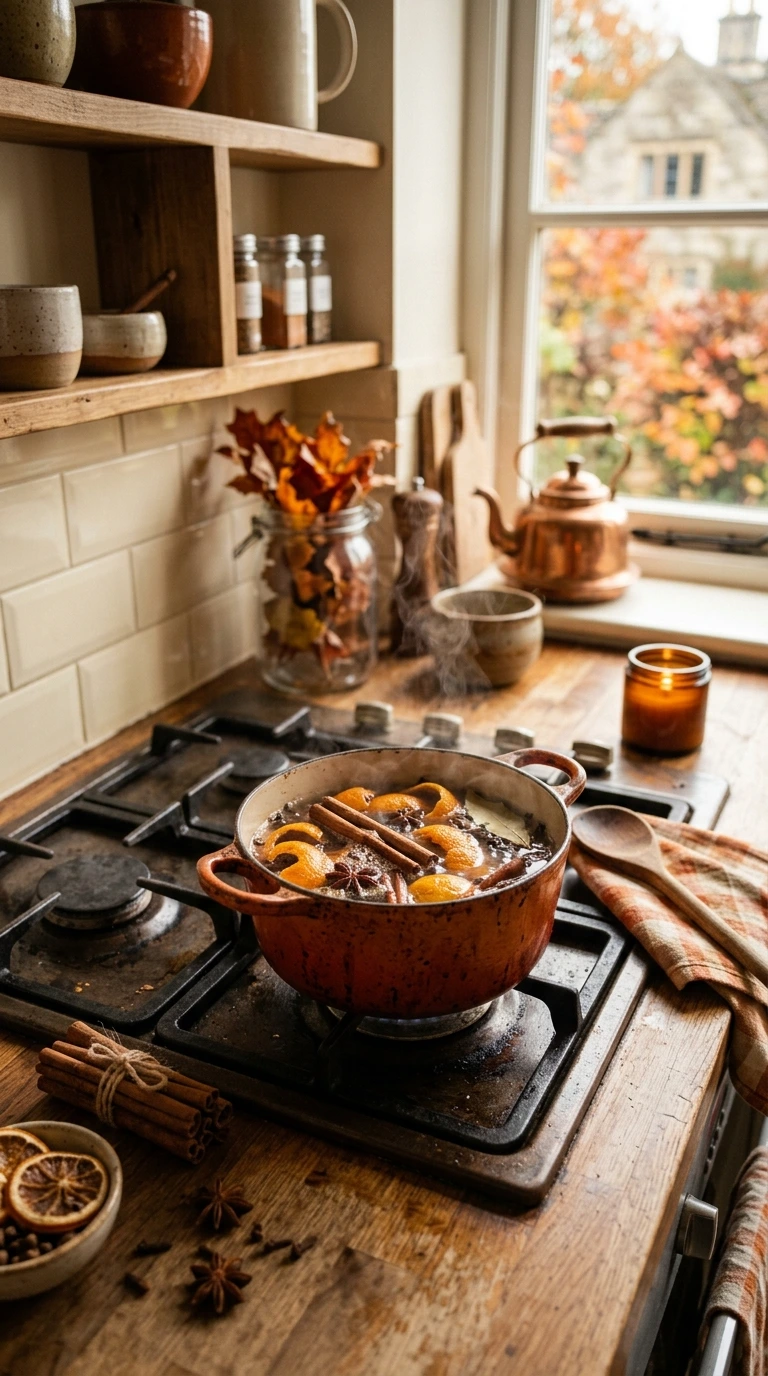
The scent of a home is its most immediate and most overlooked seasonal quality. A house that smells like autumn — warm spices, woody base notes, a hint of smoke or cedar — feels autumnal regardless of how it is decorated. Use this to your advantage by creating a consistent scent signature that runs through multiple rooms.
Simmer a pot of water on the stove with cinnamon sticks, orange peel, star anise, and cloves for a completely natural, free whole-house scent that requires no candles or diffusers. This stovetop potpourri fills the entire home within twenty minutes and costs pennies per use. Top up the water as it evaporates and replace the ingredients every few days.
- Swap throw pillows for autumn tones before any other change
- Add at least one candle in an autumn scent to every main room
- Replace cool white bulbs with warm white ones throughout the house
- Display one grouping of pumpkins — real or decorative — in a visible spot
- Add a fall wreath to the front door before decorating inside
16. Decorate Your Staircase for Autumn
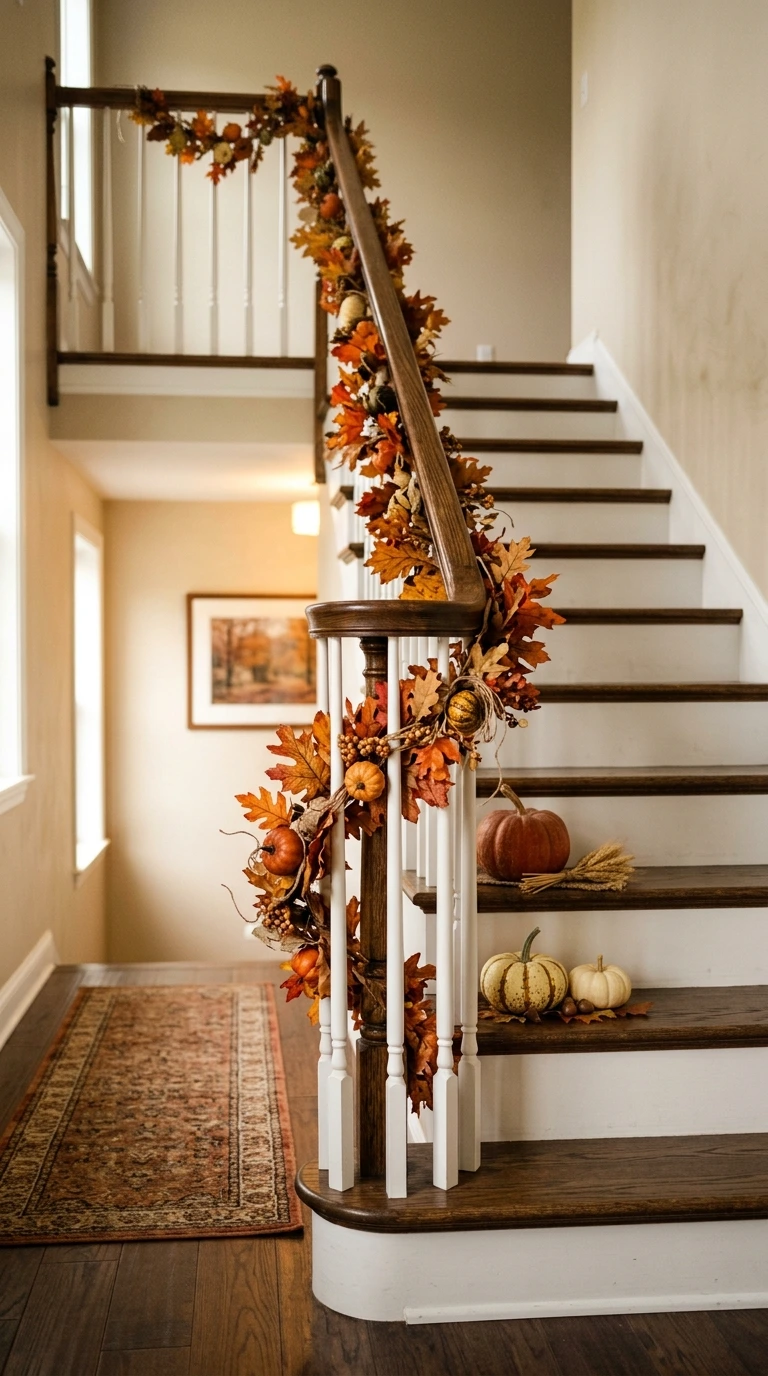
A staircase is one of the most underused display surfaces in any home — and one that is visible from multiple angles throughout the day. Winding a garland of autumn foliage or dried botanicals along the banister, placing a series of small pumpkins on each step, or hanging a cluster of mini wreaths at different heights along the staircase wall all create seasonal impact in a vertical space that most people never think to decorate.
A simple garland of preserved or artificial autumn leaves along the banister rail takes twenty minutes and costs under fifteen dollars. Secure it to the rail with small cable ties or floral wire at intervals so it holds its shape rather than slipping and bunching as people use the stairs.
17. Add Autumn Botanicals to Every Room
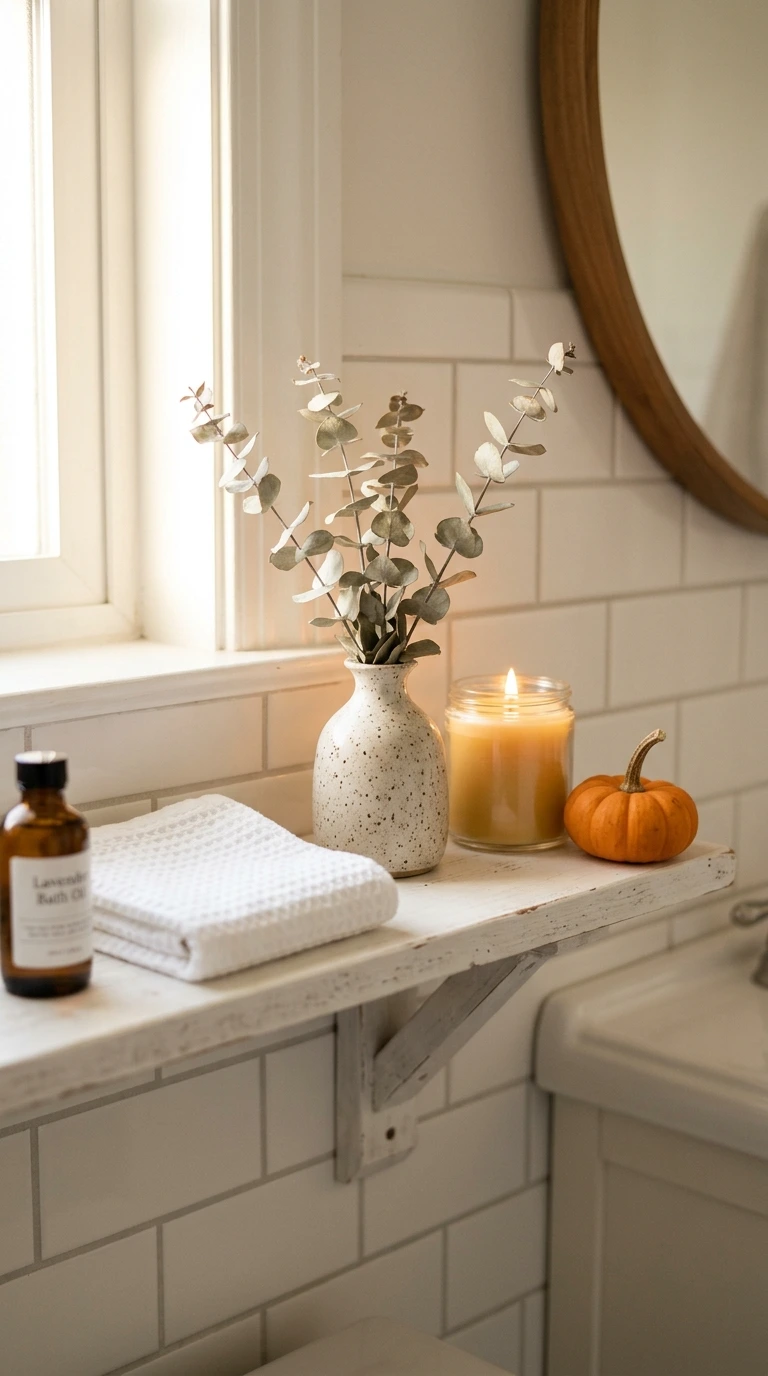
The principle of bringing natural, seasonal elements into the home applies to every room — not just the living room and dining room. A small vase of dried stems on the bathroom shelf, a sprig of eucalyptus tucked behind a bathroom mirror, a mini pumpkin on the bedroom windowsill, a bunch of dried lavender in the hallway — each small addition layers the season throughout the house rather than concentrating it in one or two rooms.
These small, room-specific touches cost almost nothing and take less than five minutes each. The cumulative effect of autumn botanicals appearing consistently throughout the house creates a sense of seasonal intention that a single heavily decorated room cannot achieve alone.
18. Use a Seasonal Doormat
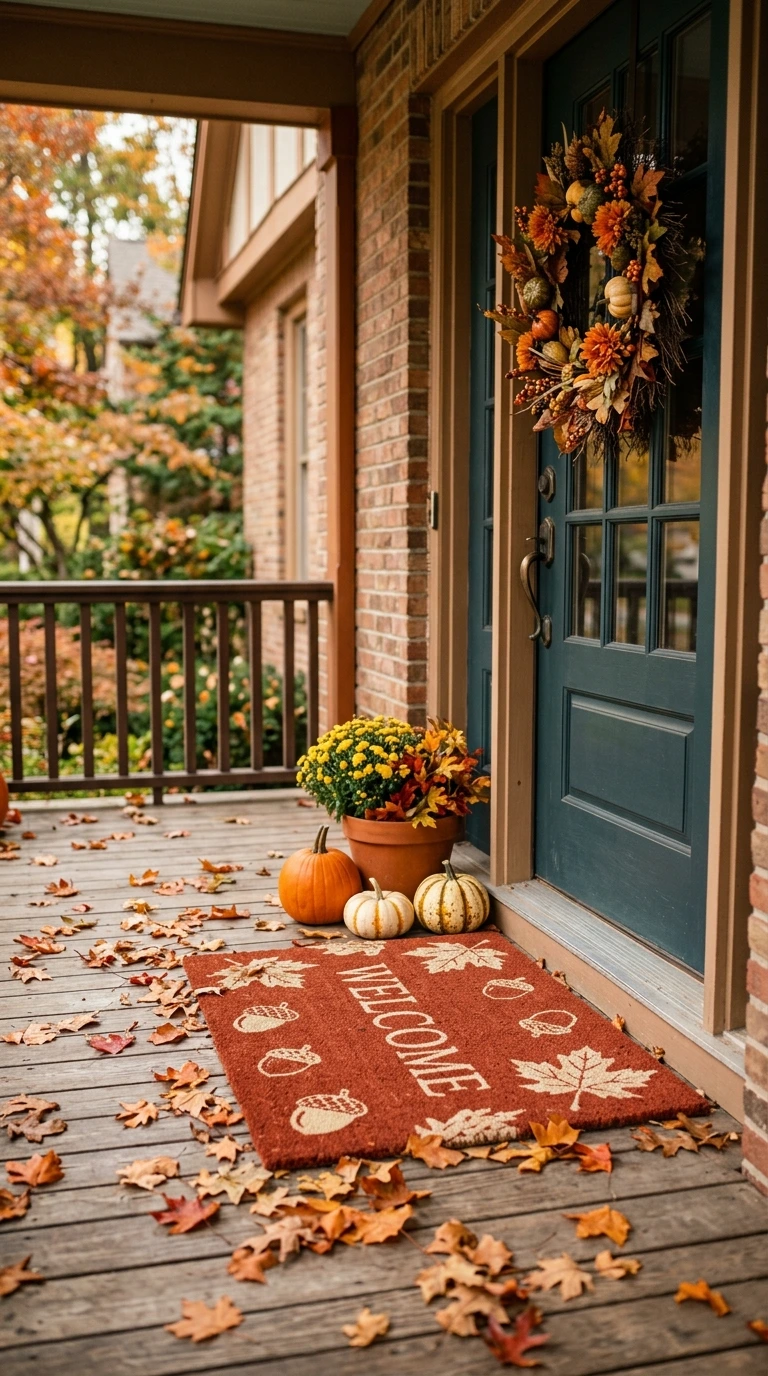
A doormat with an autumn message, motif, or simply in an autumn-appropriate color — deep burgundy, warm terracotta, forest green — extends the seasonal decoration to the threshold of the home. This detail is one of the first things visitors see and one of the last things they notice on the way out.
Choose a coir or natural fiber mat for durability in autumn weather. A simple mat in a warm, solid color works just as well as one with an explicit autumn message — and tends to look more considered and less seasonal-themed. Replace seasonally or simply choose a neutral mat that works through multiple seasons.
19. Style Your Coffee Table for Autumn
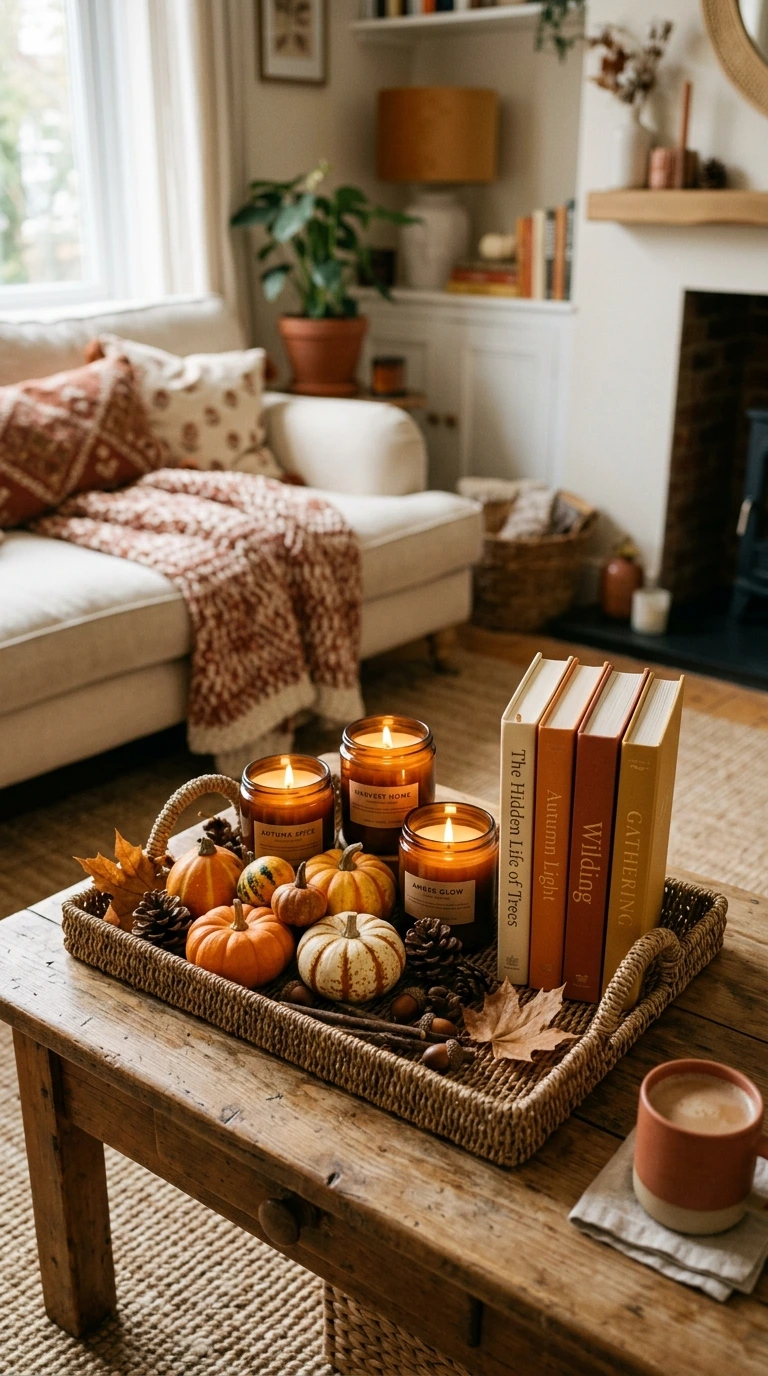
The coffee table is the most visible horizontal surface in the living room and the one that gets the most daily attention. An autumn coffee table arrangement — a cluster of candles at varying heights, a small pumpkin or two, a bowl of pine cones or acorns, a stack of books with warm-toned spines, and a single trailing plant — creates a seasonal focal point that works from every angle.
Keep the arrangement contained to one side or one tray rather than spreading objects across the whole table surface. The empty half of the table serves a practical function — it is where drinks get put down and remote controls get left. A beautiful coffee table that leaves no room for daily life quickly becomes an irritation rather than a pleasure.
20. Hang Autumn-Toned Artwork
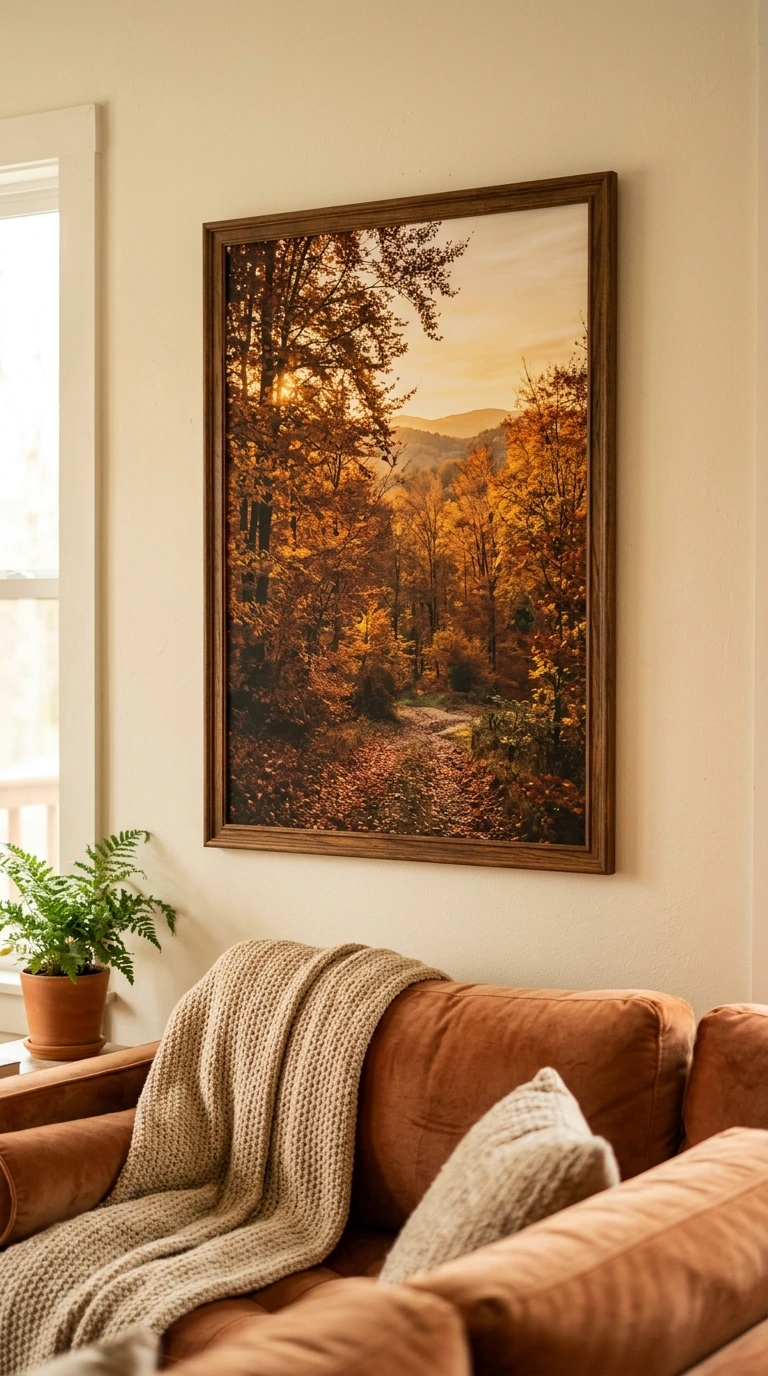
A simple print or painting in autumn tones — a landscape in warm amber and rust, a botanical illustration of seasonal foliage, an abstract in ochre and brown — adds seasonal color to a wall without any permanent change. Swap an existing piece for a seasonal one, or add a new print in an existing gallery wall arrangement.
Frame seasonal prints in the same finish as your existing frames rather than buying new frames — this integrates the seasonal artwork into the existing wall arrangement rather than making it look like a temporary addition. A well-framed autumn print in a consistent frame family looks like a permanent part of the decor rather than a seasonal decoration.
21. Add a Fall-Scented Reed Diffuser
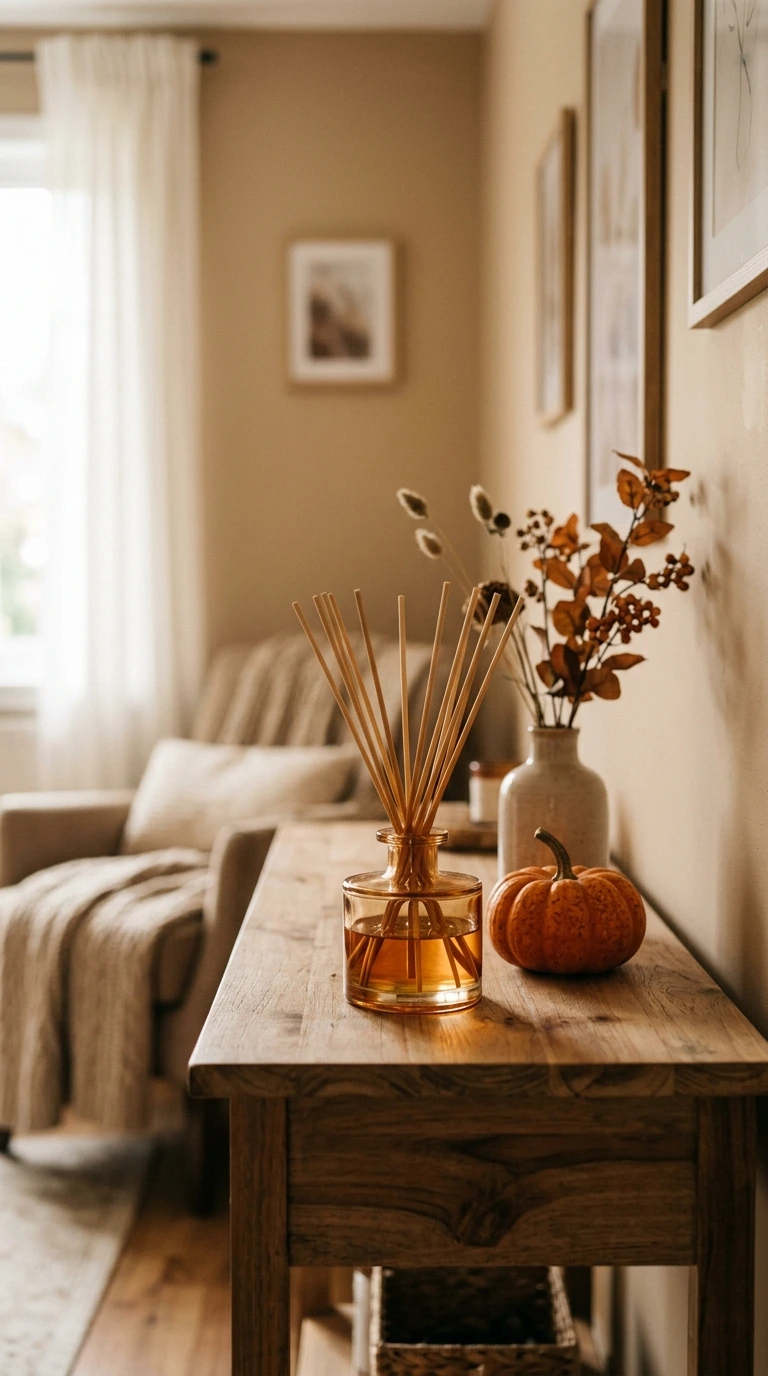
A reed diffuser in an autumn scent — placed on a console table, a bathroom shelf, or a bedside table — provides a consistent, maintenance-free scent layer that complements candles without requiring the same attention. The diffuser works while you sleep, while you are at work, and in rooms where an open flame is impractical.
Choose a scent that complements rather than duplicates your candle choice — if your candles are warm and spiced, choose a diffuser in a woodier or more resinous scent to add depth rather than repetition. This layering of complementary scents throughout the house creates a more sophisticated overall fragrance than a single scent used everywhere.
Pro Tip: Flip the reed sticks in your diffuser every few days rather than waiting until the scent fades. Regular flipping keeps the scent throw consistent throughout the life of the diffuser rather than starting strong and fading quickly. This simple habit extends the effective life of a diffuser significantly.
22. Create an Autumn Vignette in the Hallway
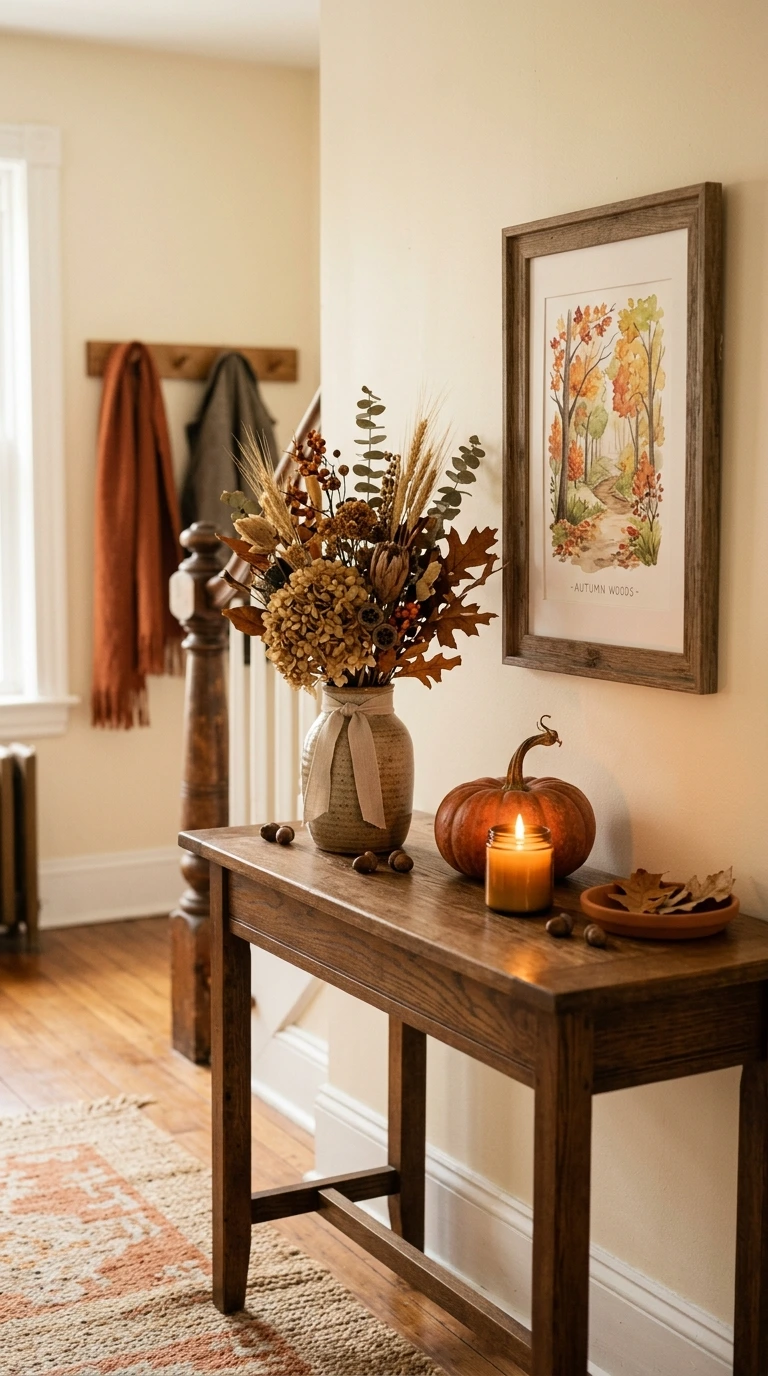
The hallway is the first interior space anyone enters — and the one most often overlooked when decorating. An autumn vignette on the hallway console table — a pumpkin, a candle, a small bunch of dried botanicals, and a framed seasonal print or a small mirror — creates an immediate seasonal welcome that sets the tone for the whole house.
Keep hallway vignettes proportional to the available surface space — a narrow console table in a small hallway needs two or three objects at most, not a full autumn tablescape. One strong element — a large ceramic pumpkin, a dramatic bunch of pampas grass, a tall candle in a beautiful holder — always reads better than multiple competing small objects in a tight space.
23. Display a Autumn Fruit Bowl in the Kitchen
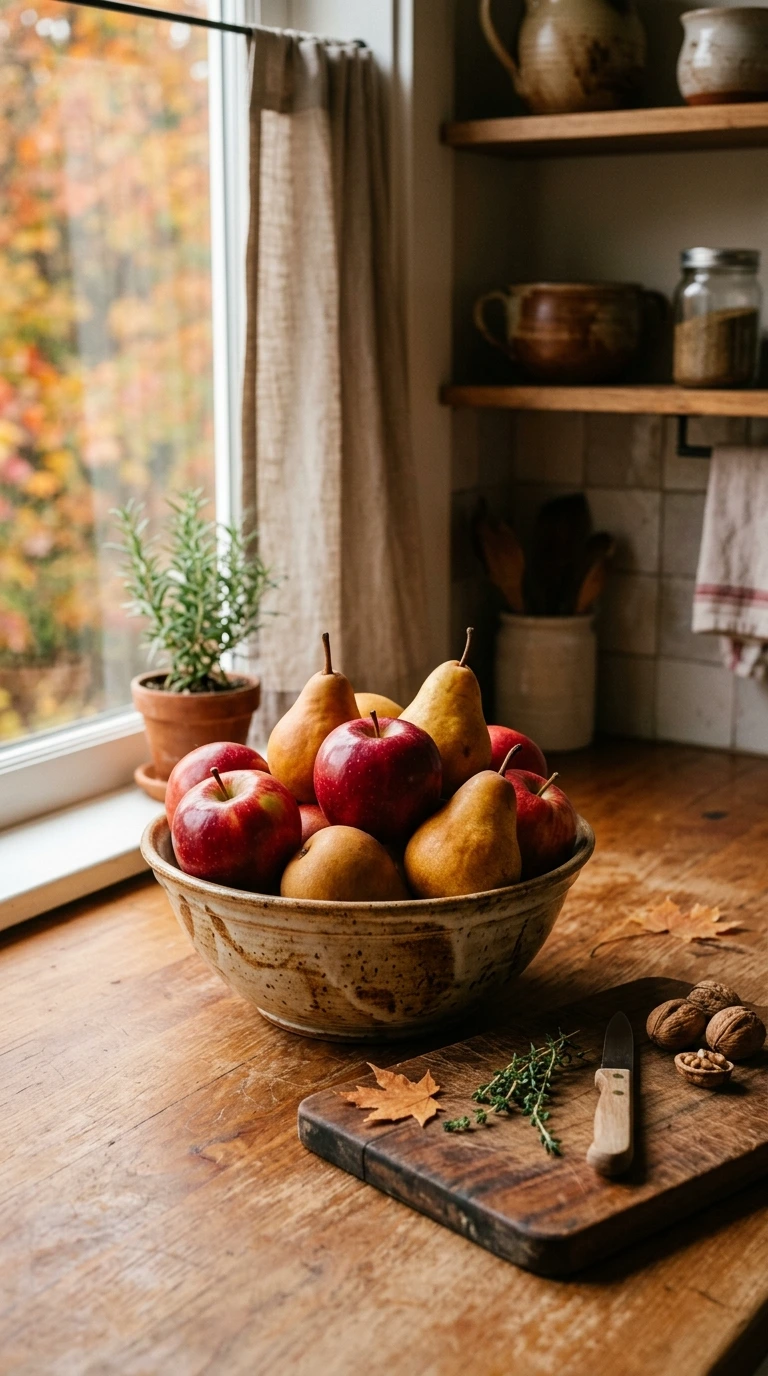
A ceramic or wooden bowl filled with seasonal fruit — deep red apples, golden pears, purple figs, or a mix of all three — adds color and organic texture to the kitchen counter while serving the practical purpose of keeping fruit accessible and at room temperature. This is seasonal decoration that costs nothing beyond the fruit itself.
Choose a bowl in a neutral material — ceramic, wood, or woven rattan — that does not compete with the color of the fruit it holds. Replace fruit as it is eaten or begins to age. The bowl itself stays in place all season; the contents refresh naturally as you shop and cook.
24. Add a Plaid or Tartan Accent
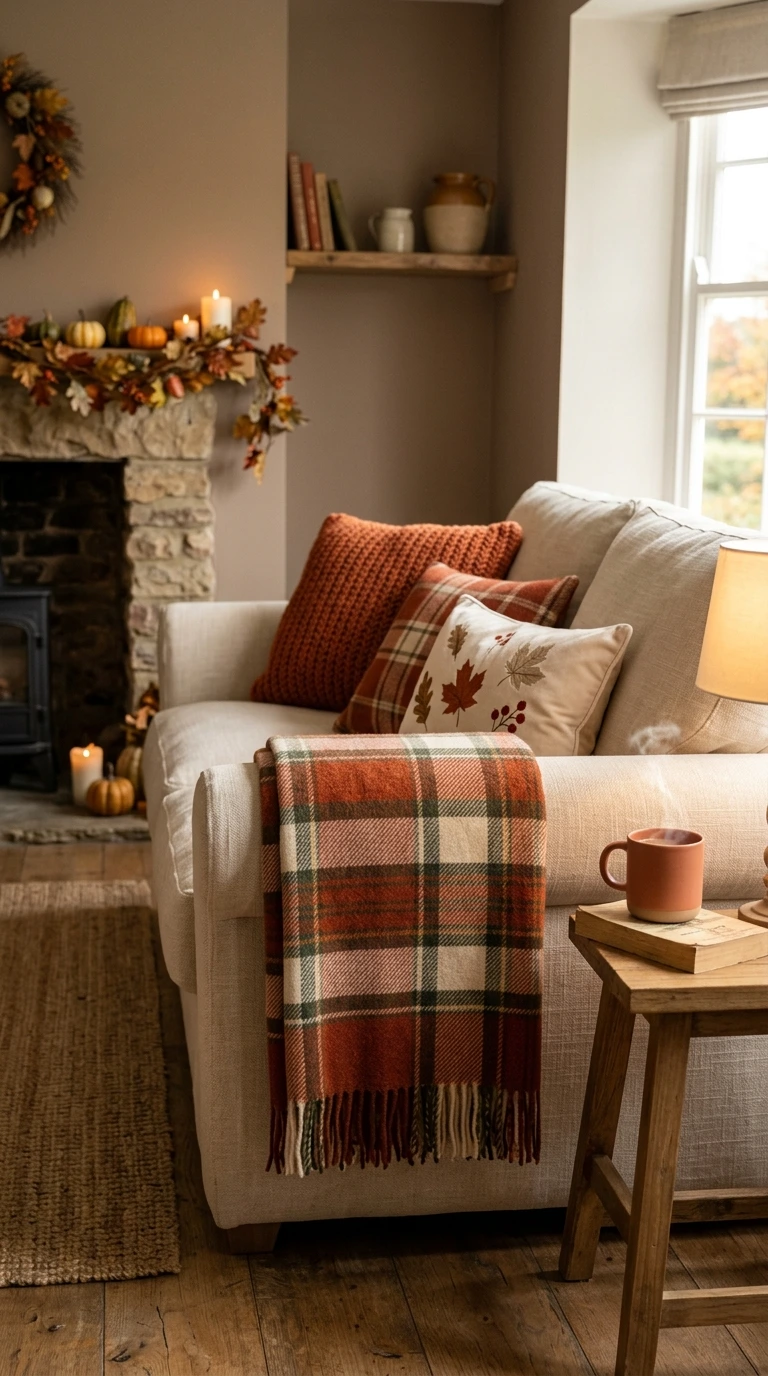
Plaid and tartan have an almost instinctive association with autumn and winter — warm, traditional, and immediately cozy. A plaid throw on the sofa, a tartan cushion on a chair, a plaid table runner on the dining table, or even a plaid ribbon tied around a vase of dried botanicals all add a classic autumn touch that is recognizable without being literal.
Choose a plaid in the colors of your existing autumn palette rather than introducing an entirely new color family. A rust and cream plaid alongside terracotta and neutral decor, or a forest green and navy tartan alongside a woodland-inspired palette, integrates better than a clashing pattern added for its own sake.
25. Light a Fire — Real or Faux
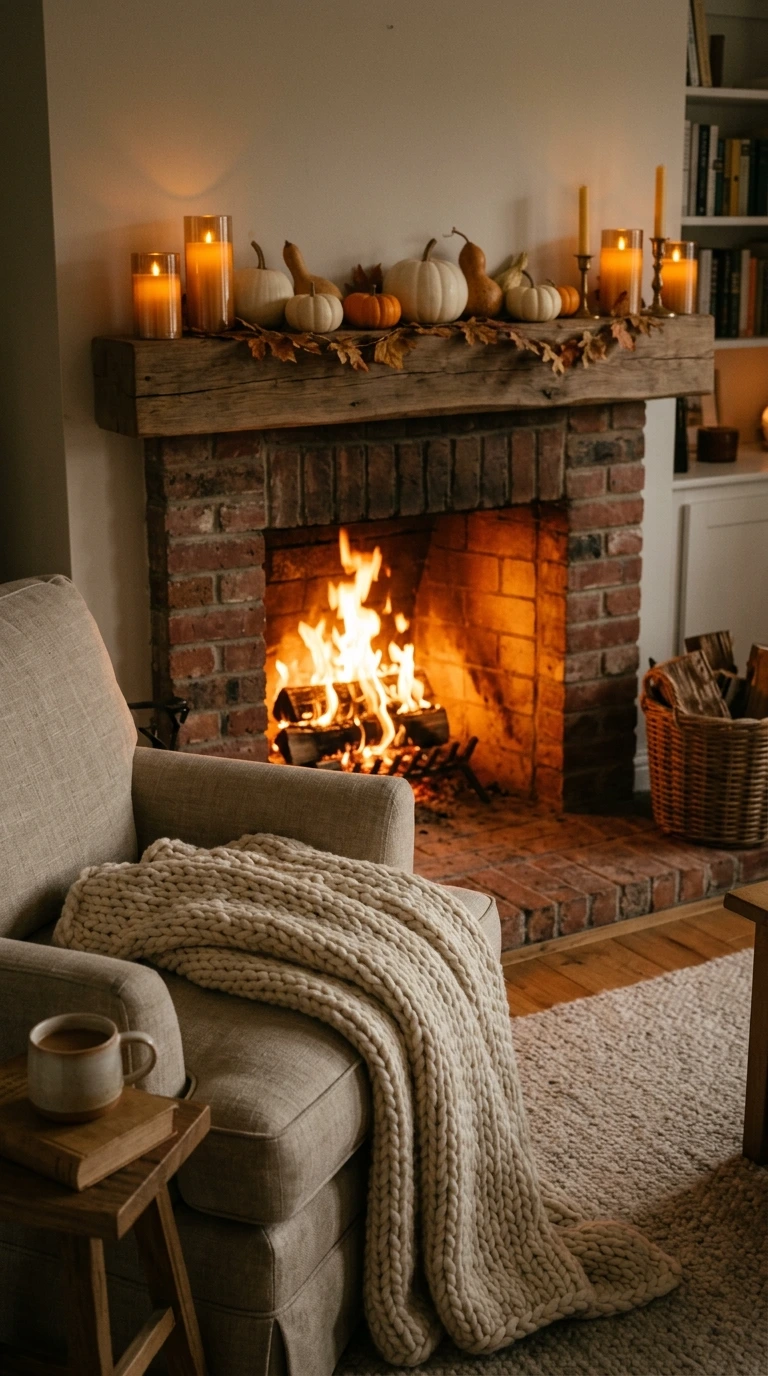
Nothing signals autumn more completely than a fire. A real wood fire in a hearth, an electric log-effect fire, a fire pit on the patio, or even a looping fireplace video on a screen — the visual and physical warmth of a fire changes how an entire room feels in a way that no amount of styling can fully replicate.
If you have a real fireplace, use it. If you do not, an electric fireplace insert or a high-quality electric log burner creates a convincing and genuinely warm alternative. For apartments and spaces without any fireplace option, a cluster of pillar candles in a fireplace-height grouping on the hearth creates a similar visual effect at a fraction of the cost or commitment.
Frequently Asked Questions
When should I start decorating for fall?
Most people find that early to mid-September feels right — the days are shortening, the temperature is dropping, and the seasonal shift is palpable even before the leaves have fully turned. There is no wrong time, but decorating before the season arrives tends to feel more deliberate than rushing to catch up with it.
How do I make my home smell like autumn without candles?
Stovetop potpourri — a pot of simmering water with cinnamon sticks, orange peel, cloves, and star anise — fills the whole house with autumn scent within twenty minutes and costs almost nothing. Reed diffusers in autumn scents provide a consistent, flameless alternative for everyday use.
What are the key autumn decor colors?
Rust, burnt orange, deep burgundy, warm mustard, ochre, forest green, warm cream, and chocolate brown are the core autumn palette. Introducing one or two of these through textiles and accessories is enough to shift the seasonal feel of any room.
Can I decorate for fall without spending much money?
Yes — the most effective autumn decor updates are almost free. Swapping throw pillows, adding candles from the grocery store, collecting foliage and pine cones from outside, and switching light bulbs to warmer tones all create significant seasonal impact for minimal cost.
How do I keep real pumpkins from rotting too quickly?
Keep pumpkins out of direct sunlight and away from heat sources. Wipe the exterior with a diluted bleach solution — one tablespoon of bleach per quart of water — to kill surface mold spores that accelerate deterioration. Kept cool and dry, an uncarved pumpkin can last two to three months.
What is the most impactful single autumn decor change?
Switching to warm-toned lighting — either by replacing bulbs or adding dimmer switches — consistently delivers the most dramatic change for the least effort and cost. Warm light transforms how every other element in the room reads, making existing furniture and decor look warmer and more autumnal without changing anything else.
How do I store autumn decor between seasons?
Use labeled, lidded storage boxes — one per room or one per category — and store in a dry, temperature-stable location. Photograph each arrangement before dismantling so you can recreate it the following year without starting from scratch. Wrap fragile ceramic pieces in newspaper or bubble wrap before boxing.
Conclusion
Autumn decor is not about filling your home with seasonal objects — it is about shifting its atmosphere. Warmer light, richer textures, organic materials, and the right scent do more for a home’s seasonal feeling than any amount of pumpkin-themed accessories. The best fall homes feel like autumn from the moment you walk in — before you have consciously registered a single decoration.
Start with the light and the scent. Add a throw and a candle. Bring in something from outside — a handful of leaves, a branch, a pine cone. Build from there. Your home will find its autumn feeling faster than you expect.