25 Small Bathroom Decor Ideas That Feel Bigger and More Luxurious

Introduction
A small bathroom does not have to feel cramped, dated, or purely functional. With the right design choices, even the tightest bathroom can feel open, polished, and genuinely luxurious. The trick lies in understanding which details make a space feel larger and which ones make it feel smaller, then leaning into the former at every opportunity.
These twenty-five ideas cover everything from tile choices to lighting to clever storage, giving you a complete toolkit for transforming a small bathroom without necessarily knocking down a wall. Whether you are renting or renovating, there is something here that will work for your space.
1. Use Large Format Tiles
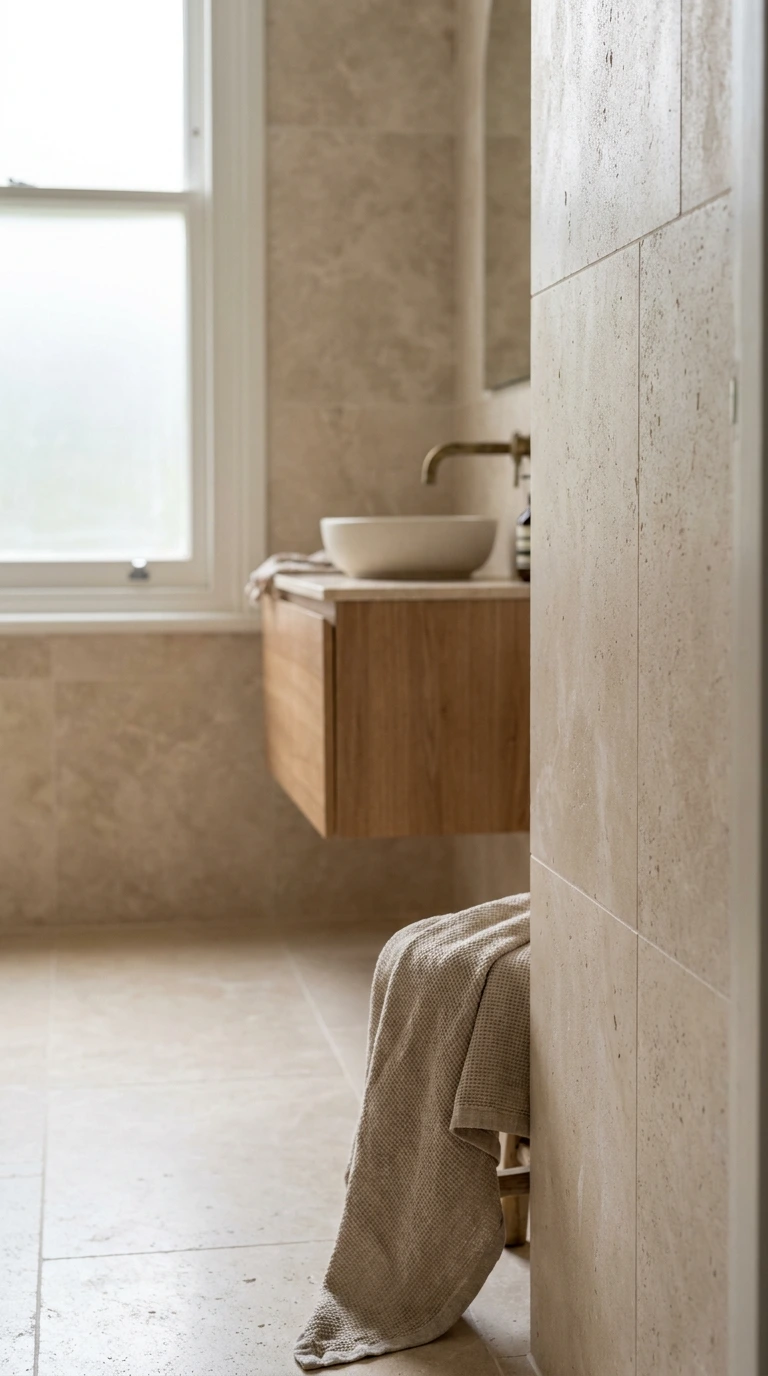
Large tiles, rather than small mosaic or standard-sized options, reduce the number of grout lines visible in a small bathroom, which makes the floor and walls appear more continuous and expansive. This single choice has a dramatic effect on how spacious the room feels. It is one of the most recommended upgrades for small bathrooms by interior designers.
Choose tiles in a light, warm tone for the most space-enhancing effect. Extending the same tile from floor to wall amplifies the feeling even further. It is a renovation-level change with one of the highest visual returns available.
Why Large Format Tiles Work
- Fewer grout lines create a more seamless, continuous surface
- Light-toned large tiles reflect more light throughout the room
- Same tile on floor and wall removes visual breaks that shrink space
- Creates a high-end, hotel-like aesthetic
2. Install a Frameless Glass Shower Screen
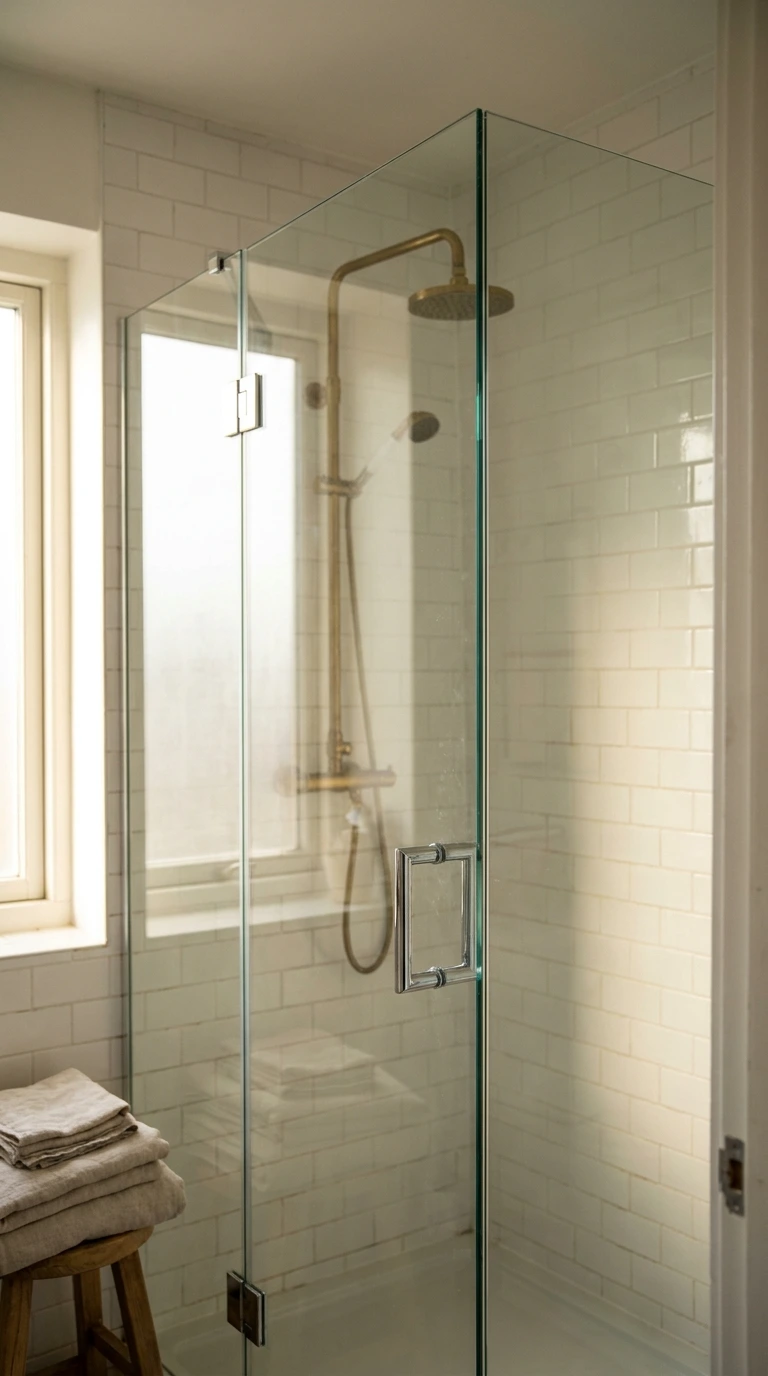
A frameless glass shower screen, rather than a solid door or curtain, allows the eye to travel uninterrupted through the entire bathroom. This transparency makes the room feel like one continuous space rather than two separate zones. It is one of the most effective visual tricks for small bathrooms.
Choose low-iron glass for the clearest, most transparent result, since standard glass has a slight green tint. A single fixed panel works even better than a hinged door for maximum openness. It is an investment that consistently makes small bathrooms look and feel significantly larger.
3. Mount the Vanity to the Wall
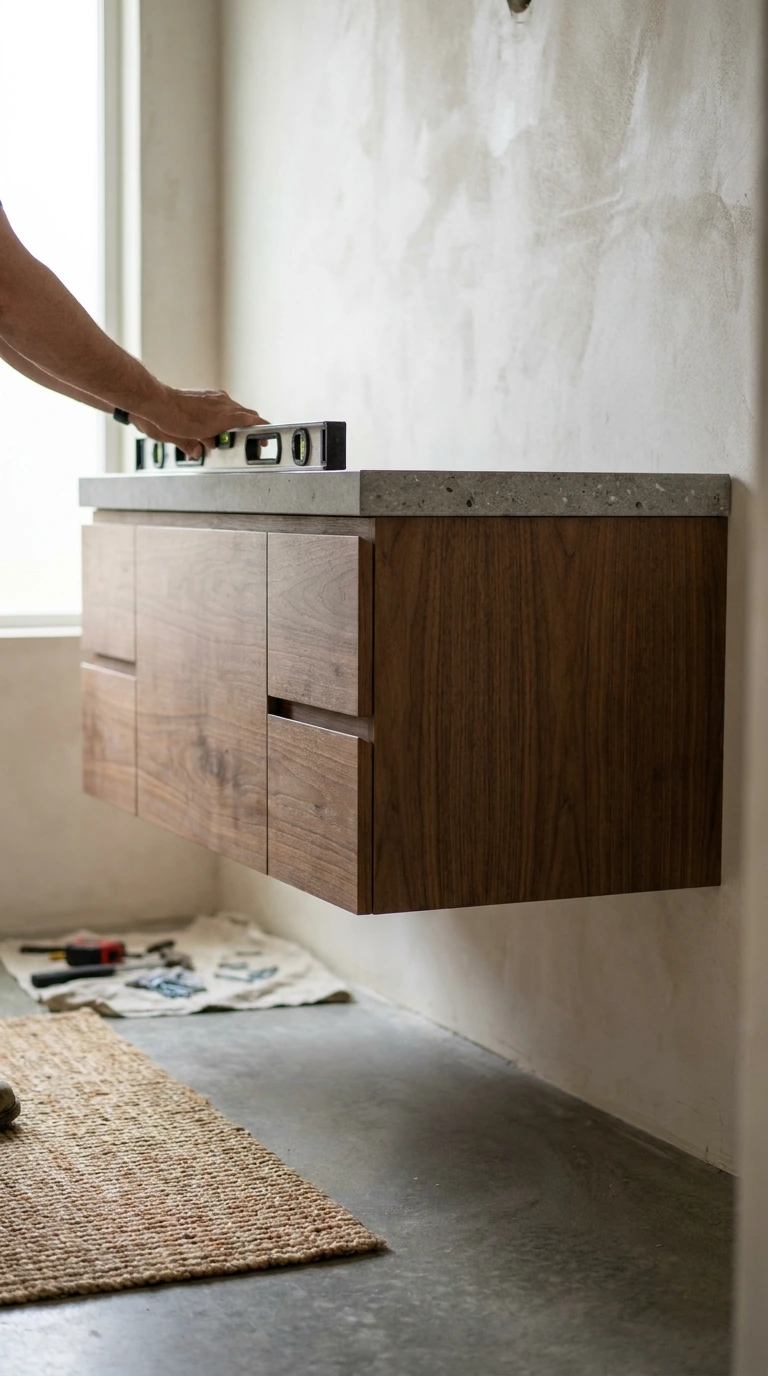
A wall-mounted, floating vanity reveals the floor beneath it, which makes the bathroom feel more open and spacious than a floor-standing cabinet would. This detail is common in boutique hotel bathrooms specifically because it creates a sense of airiness in compact spaces. It also makes cleaning the floor significantly easier.
Choose a vanity with a slim profile to maximize the floor space visible beneath it. Pair it with a simple, undermount or vessel sink in a material that complements the rest of the room. It is a furniture choice that makes a measurable difference in how large the room appears.
Pro Tip: Extend the vanity countertop slightly wider than the sink basin itself. This small addition creates more usable counter space in a small bathroom without requiring a full vanity replacement.
4. Use a Large Mirror or Full Mirror Wall
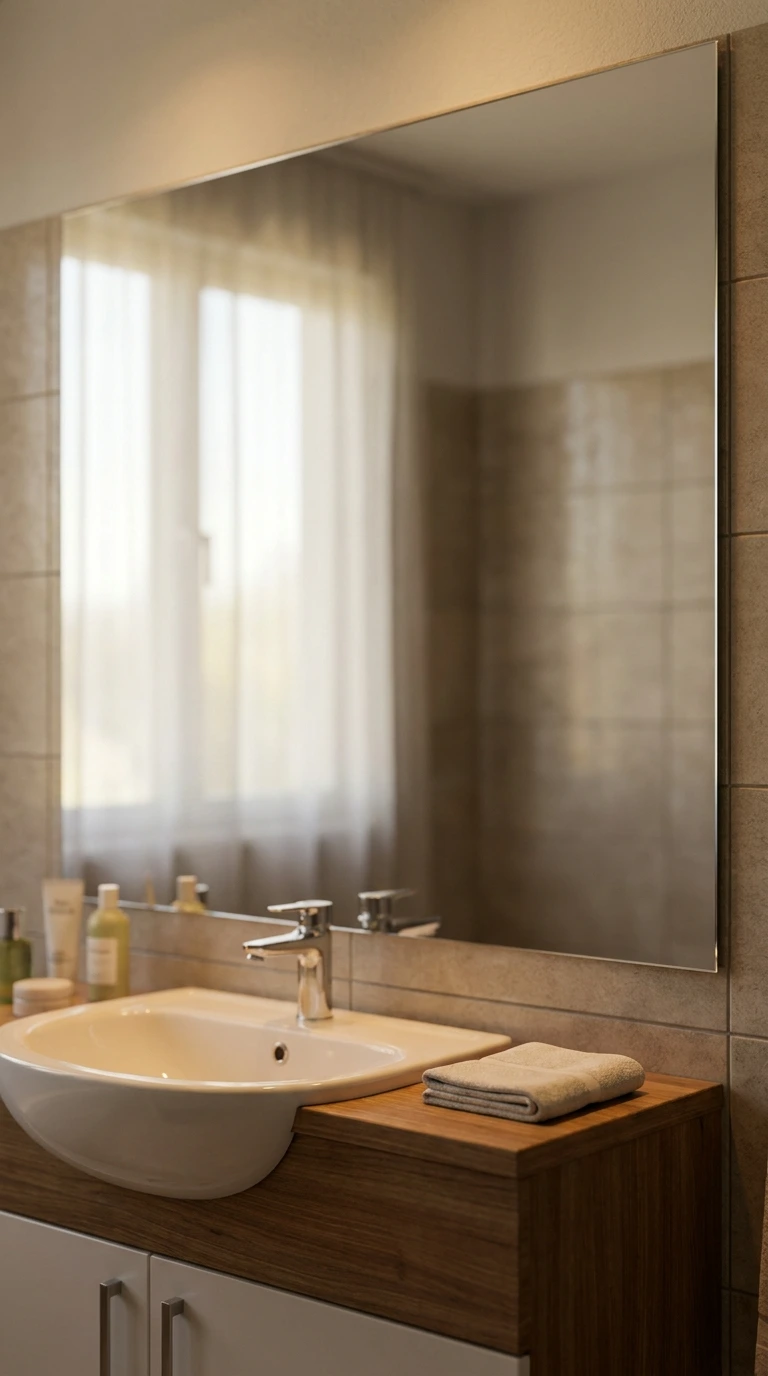
A large mirror, or even a full mirror wall, reflects both natural and artificial light throughout a small bathroom while creating the illusion of doubled space. This is one of the oldest and most reliable tricks for making any small room feel larger. In a bathroom, it also serves a clear practical function.
Choose a frameless mirror or one with a very slim frame to avoid adding visual weight to the wall. Extending the mirror across the full width of the vanity maximizes both the light reflection and the spatial illusion. It is a detail that works in every bathroom style and at every budget level.
5. Choose a Pedestal Sink Instead of a Vanity Cabinet
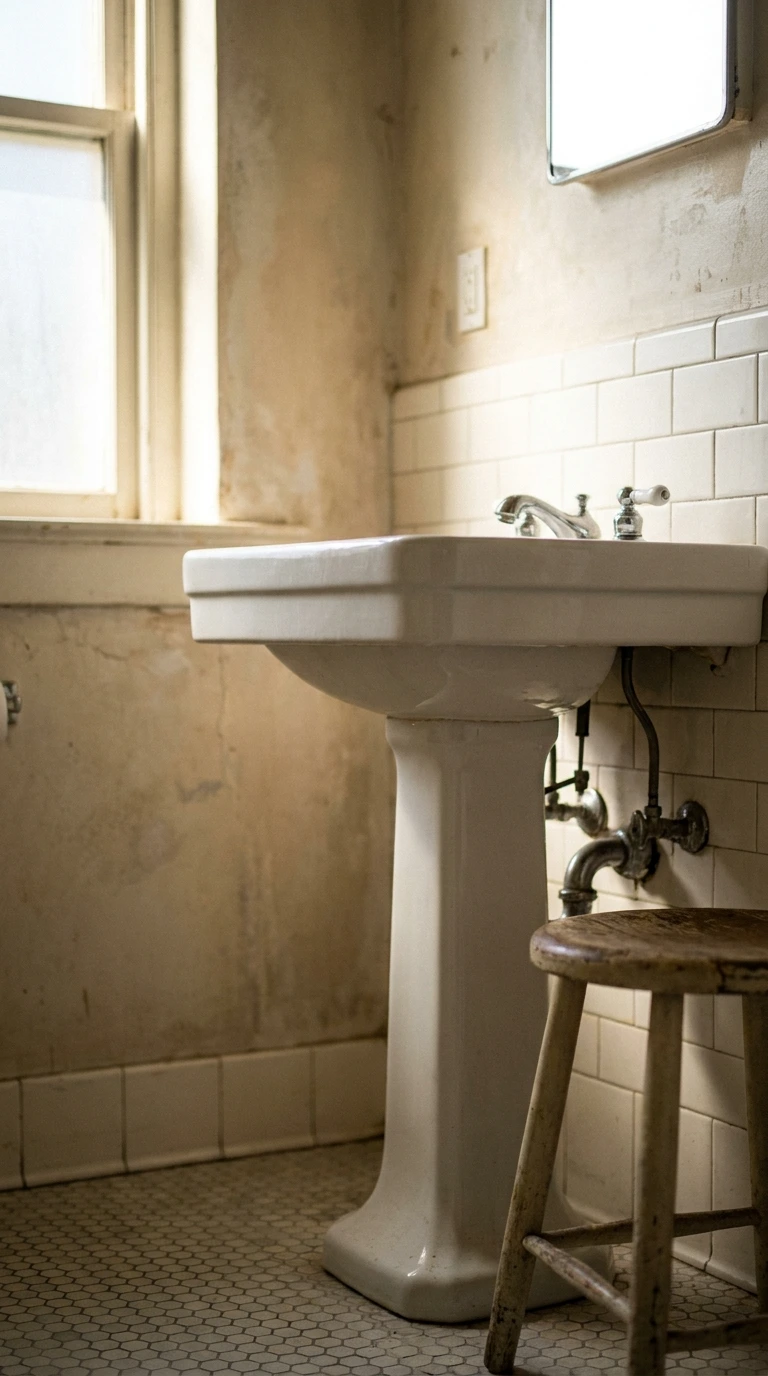
A pedestal sink takes up significantly less visual space than a full vanity cabinet, revealing the floor and walls around it and making the room feel more open. This approach works particularly well in very small bathrooms where a bulky cabinet would dominate the space. It trades storage for visual airiness.
Pair a pedestal sink with wall-mounted storage or a small shelf nearby to compensate for the lost cabinet space. Choose a slim, simple pedestal shape rather than an ornate one for the most modern, space-conscious look. It is a clean, classic choice that consistently makes small bathrooms feel bigger.
Pedestal Sink Benefits for Small Bathrooms
- Reveals more floor area, making the room feel larger
- Available in compact sizes suited to very tight spaces
- Works with almost any design style from classic to modern
- Pairs well with wall-mounted mirrors and storage solutions
6. Add a Backlit Mirror
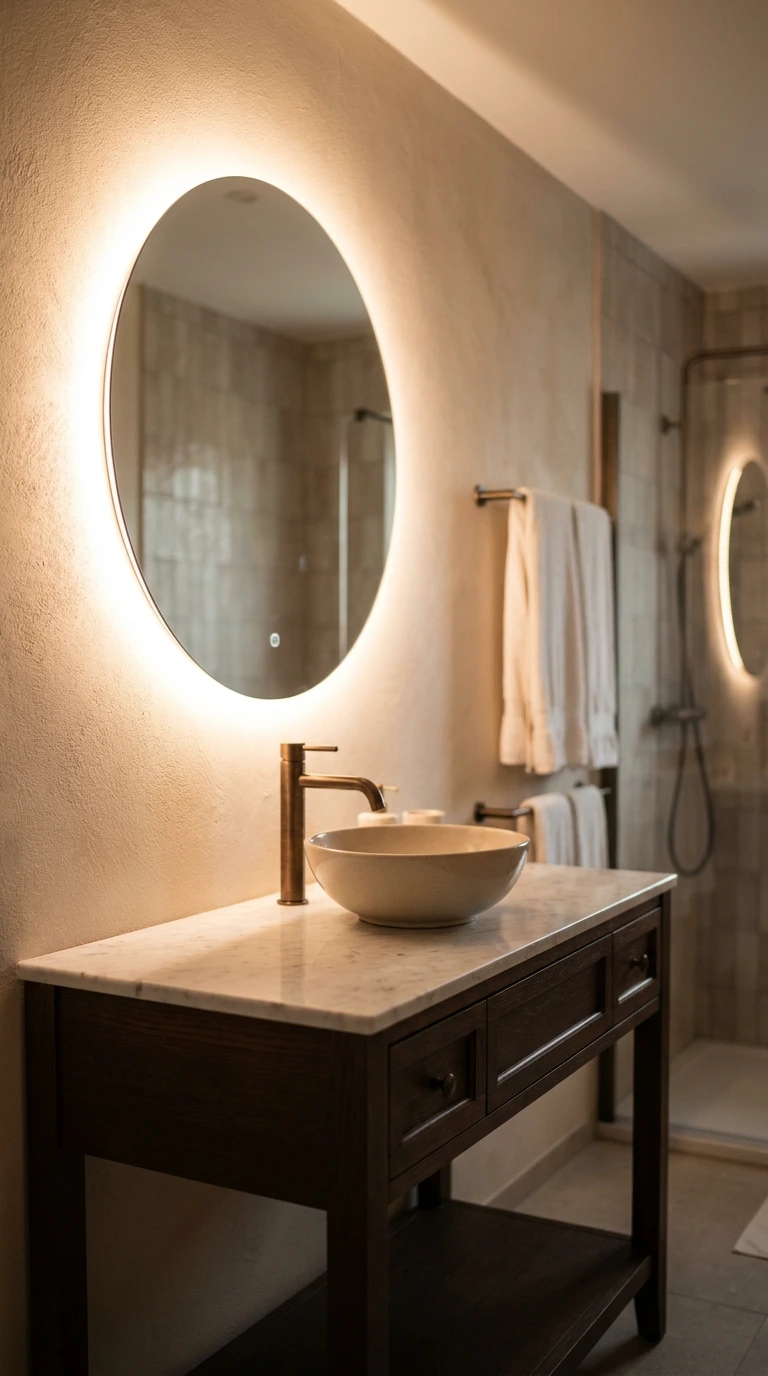
A mirror with integrated backlighting adds a soft, even glow around the vanity area without requiring separate sconces or overhead fixtures. This lighting approach is space-efficient and adds a modern, spa-like quality to even the smallest bathroom. The light also makes the mirror itself look larger by softening its edges.
Choose a backlit mirror with a warm color temperature for the most flattering, inviting glow. Many models also include anti-fog technology, which is particularly useful in compact bathrooms with limited ventilation. It is an upgrade that improves both aesthetics and daily function.
7. Use Vertical Storage
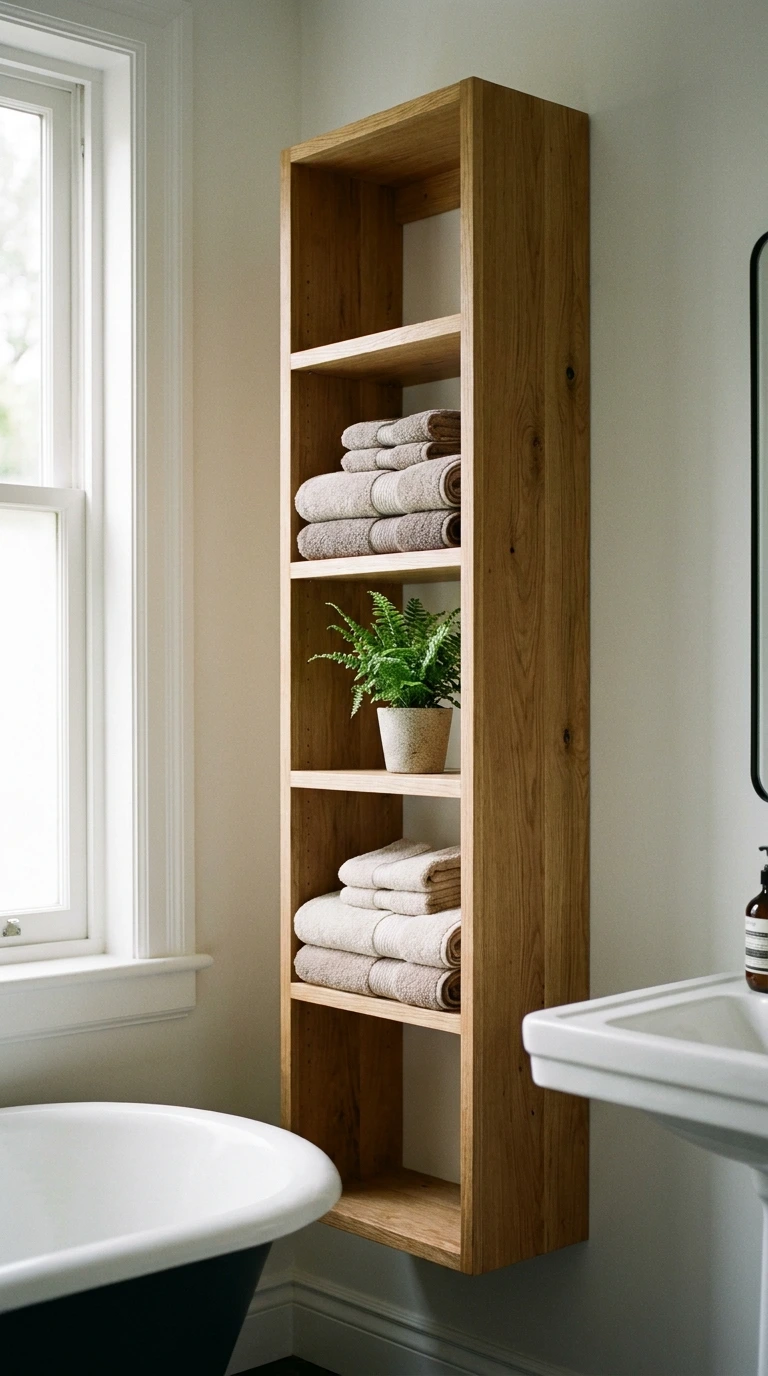
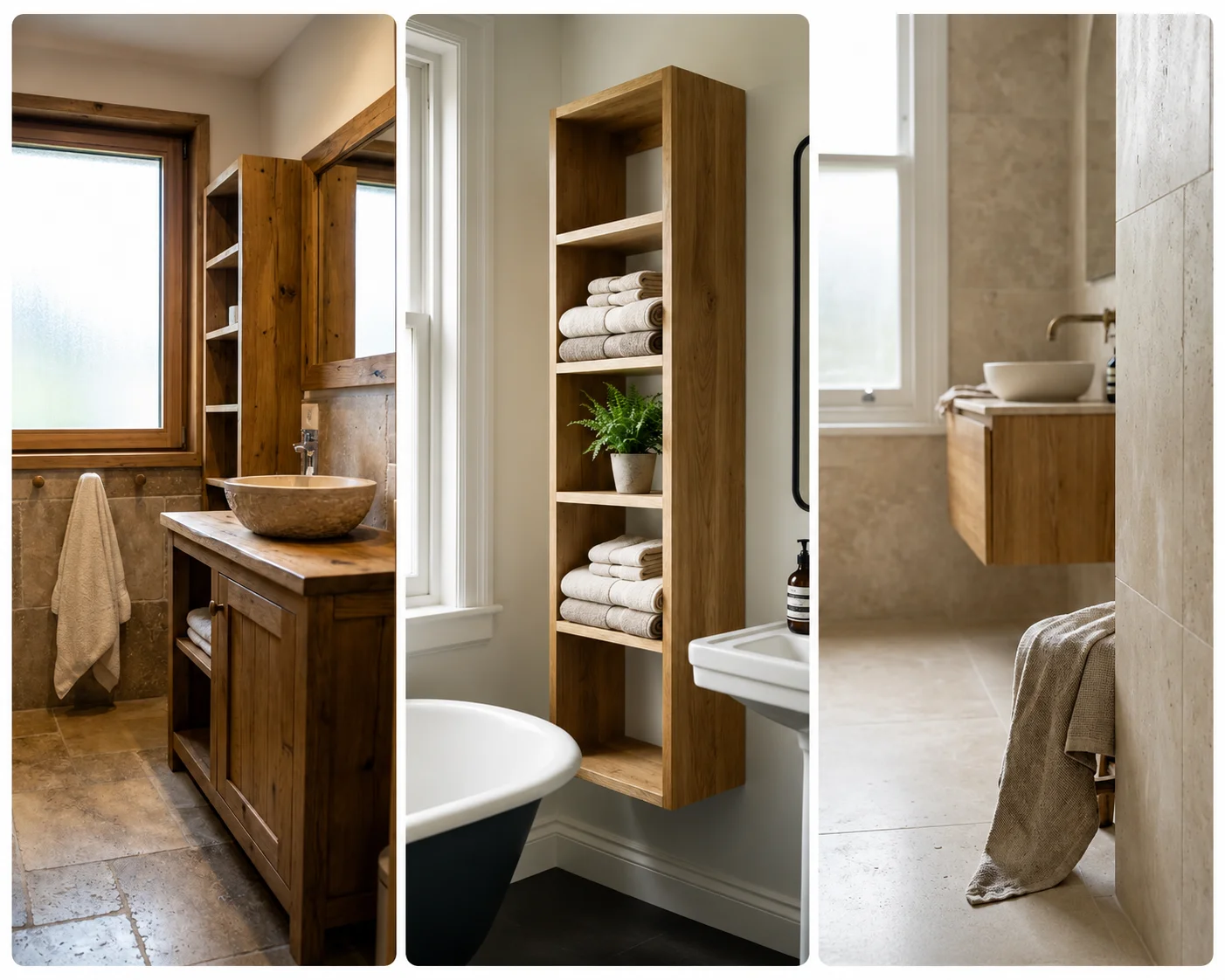
In a small bathroom where floor space is limited, vertical storage draws the eye upward and uses wall height that would otherwise go to waste. Tall, slim storage units or a series of wall-mounted shelves keep everyday items organized without consuming the precious floor area. This approach also makes ceilings appear higher.
Choose storage in a finish that blends with the wall rather than contrasting sharply, since a matching or tonal finish reads as less bulky. Keep the styling minimal on visible shelves to avoid visual clutter. It is a storage strategy that actively makes the room feel larger while solving a practical problem.
Warning: Avoid mounting too many shelves or hooks on every available wall surface in a small bathroom. Too many objects competing for attention can make a tight space feel cluttered and even smaller than it actually is.
8. Choose a Light, Neutral Color Palette
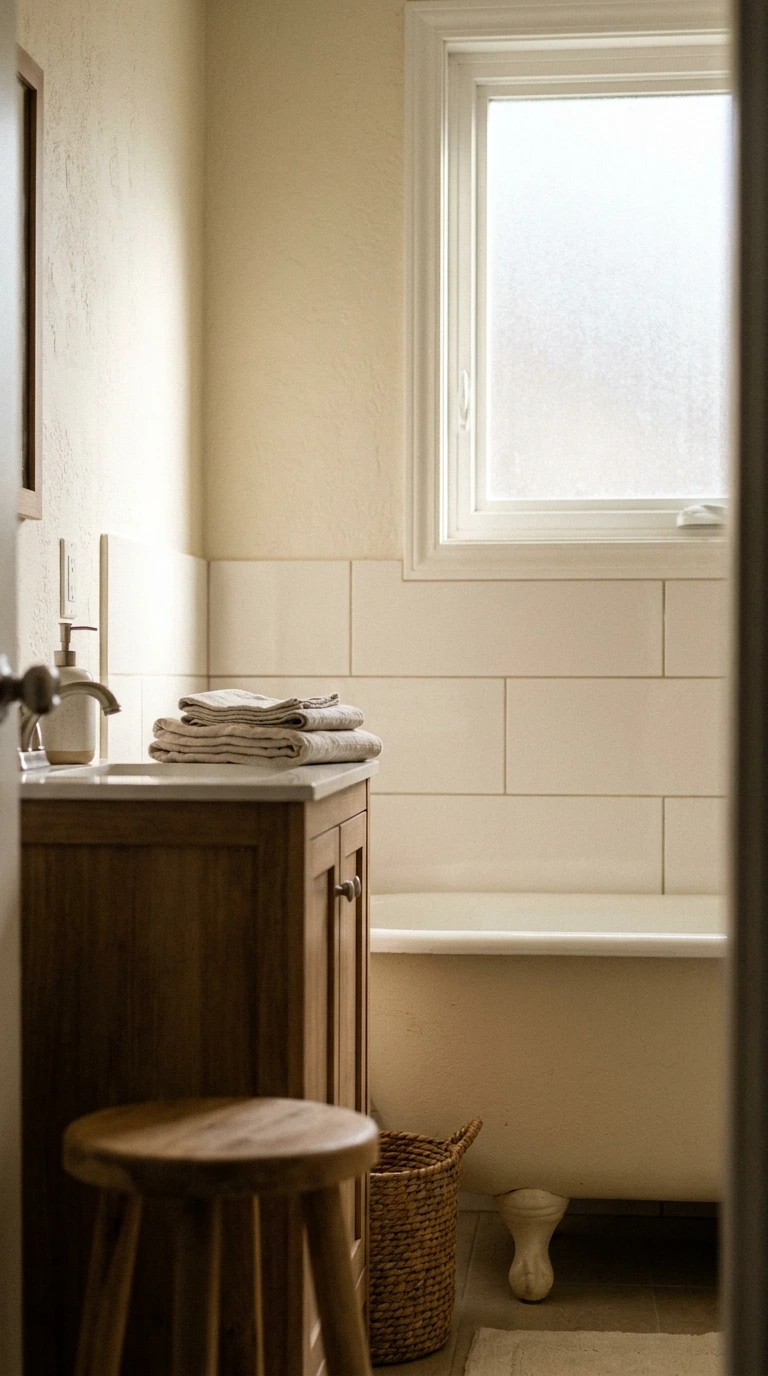
Light, warm neutral colors on the walls, ceiling, and floor reflect more light than darker tones and make the boundaries of the room feel less defined, which creates a sense of expanded space. This is the most foundational color principle for small bathroom design. It works regardless of the room’s existing architecture.
Choose a single neutral tone and use it consistently across walls, grout, and accessories for the most seamless effect. Adding texture through materials like stone or linen keeps the neutral palette from feeling flat. It is a paint-level change that has one of the highest impacts on perceived space.
9. Install Recessed Shelving in the Shower
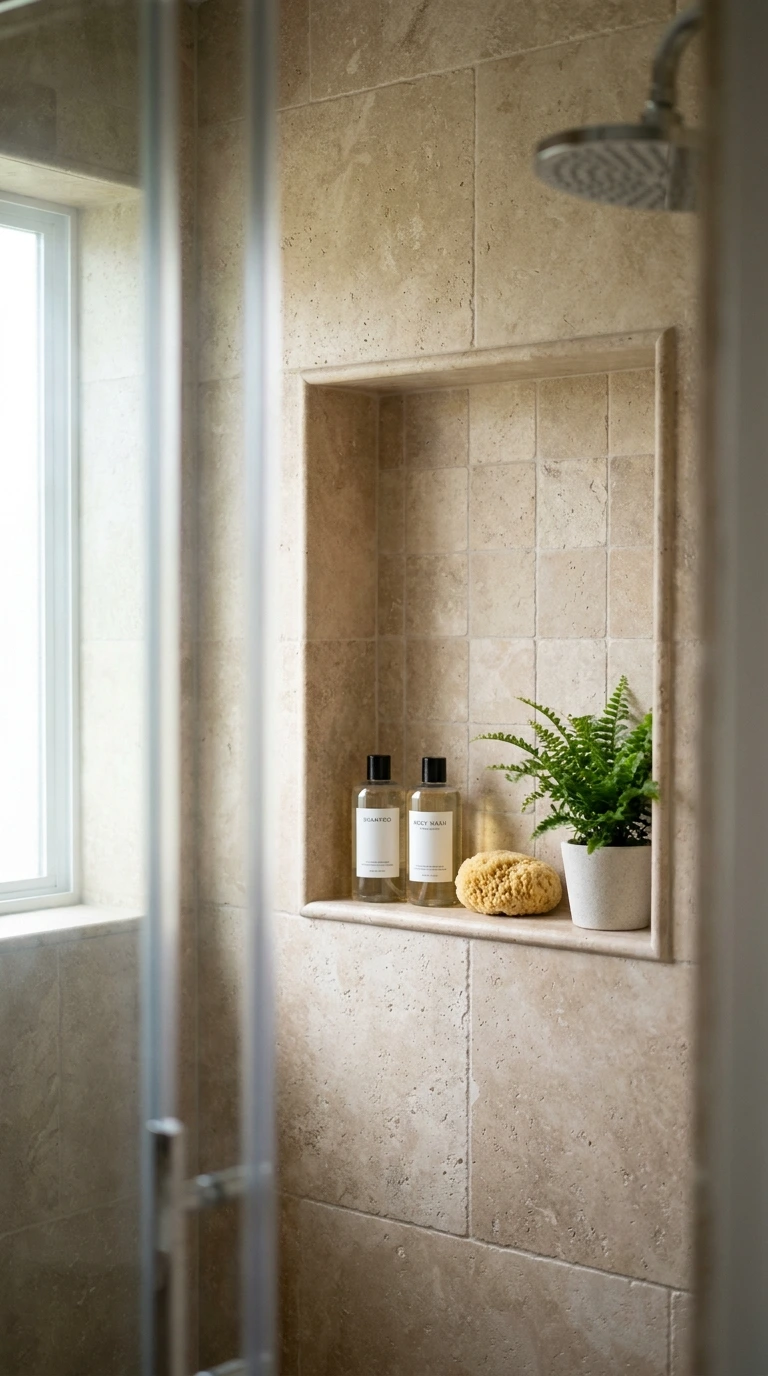
A recessed niche built into the shower wall provides storage for products without protruding into the shower space itself. This approach keeps the shower visually clean and uncluttered while solving the storage problem that plastic caddies and hanging baskets create. It also adds a custom, built-in quality to the room.
Plan the niche placement during any tile work, since cutting into an existing wall is significantly more disruptive. Tile the interior of the niche in a contrasting material for added visual interest. It is a detail that signals a thoughtfully designed bathroom.
10. Use a Vessel Sink on a Slim Console
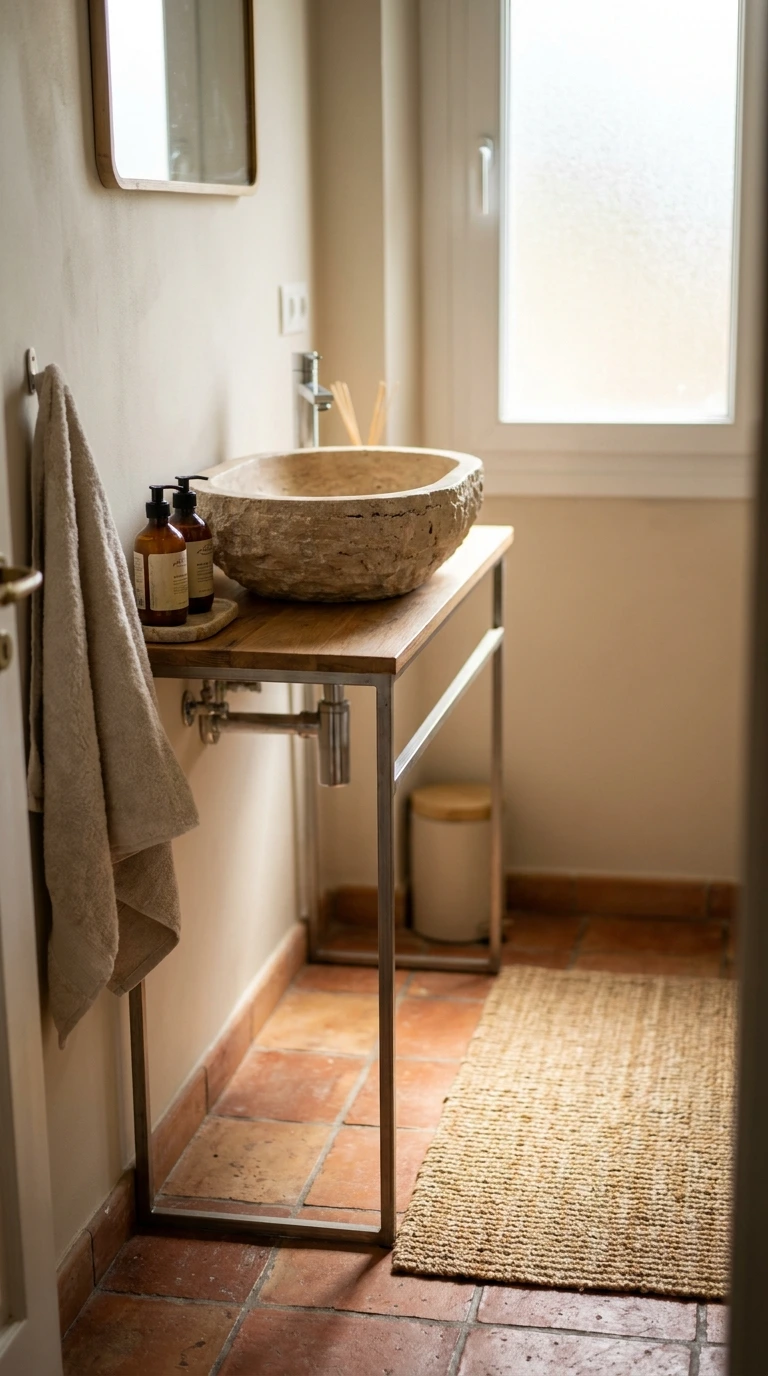
A vessel sink placed on a slim, open console table or wall-mounted shelf creates an airy, sculptural vanity that takes up far less visual space than a traditional enclosed cabinet. The open space beneath the console keeps the floor visible and the room feeling unenclosed. This setup works particularly well in bathrooms with a more minimal or boutique aesthetic.
Choose a console in a slim metal or wood finish for the most elegant look. Keep the area beneath the console clear or add a simple basket for hidden storage. It is a vanity setup that prioritizes openness and visual sophistication.
| Style Name | Best For | Maintenance Level | Footprint Saved |
|---|---|---|---|
| Large Format Tiles | Floors and walls | Low | None |
| Frameless Glass Screen | Any shower | Medium | Small |
| Floating Vanity | Any bathroom | Low | Medium |
| Full Mirror Wall | Vanity walls | Low | None |
| Recessed Shower Niche | Any shower | Low | Small |
11. Add a Round Mirror Instead of a Rectangular One
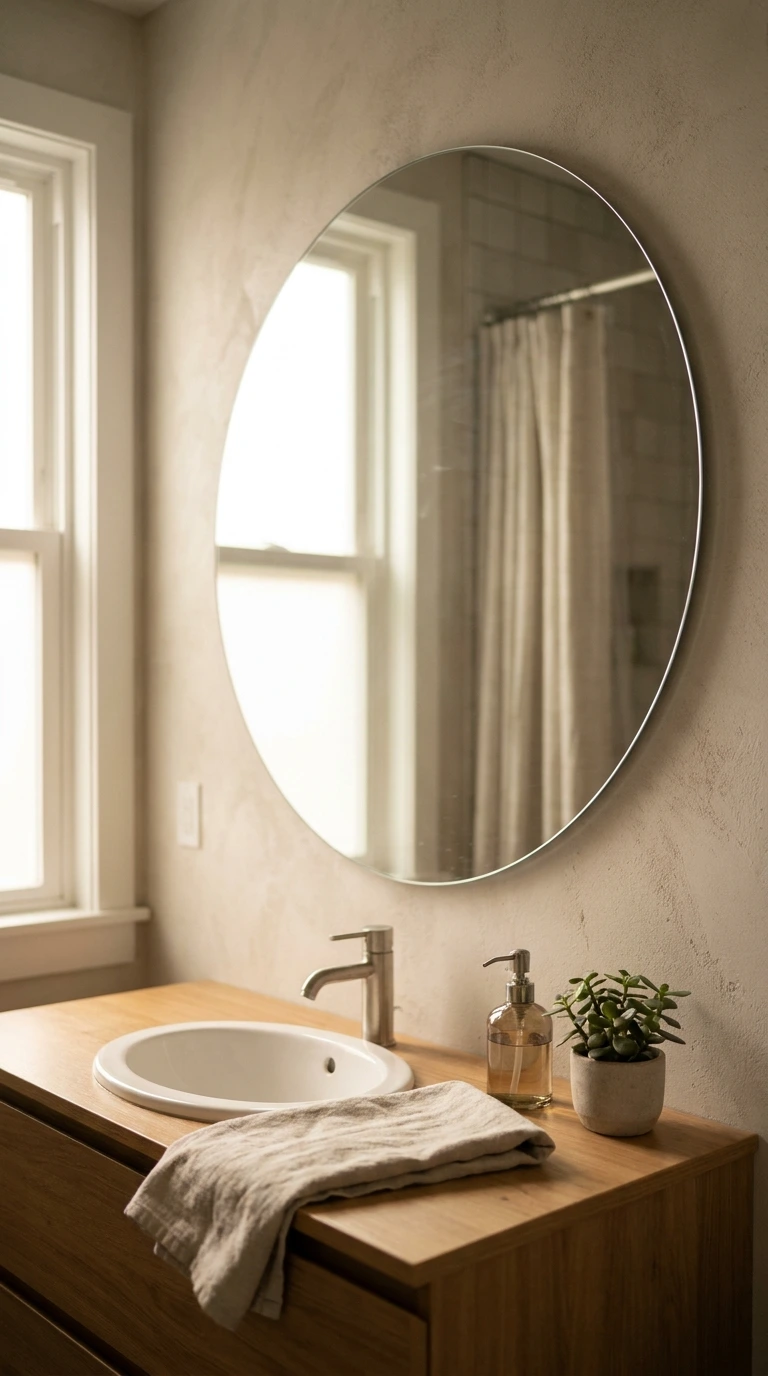
A round mirror above the vanity softens the angles of a small bathroom and creates a more open, less boxy feel than a standard rectangular mirror. The curved shape also draws the eye in a different way, making the room feel more considered and less constrained. This swap requires no installation beyond a single hook or anchor.
Choose a round mirror sized generously relative to the vanity beneath it for the most balanced look. A frameless or thin-framed version adds less visual weight. It is a simple swap that changes the feel of the vanity area immediately.
12. Use the Same Material on Floors and Walls
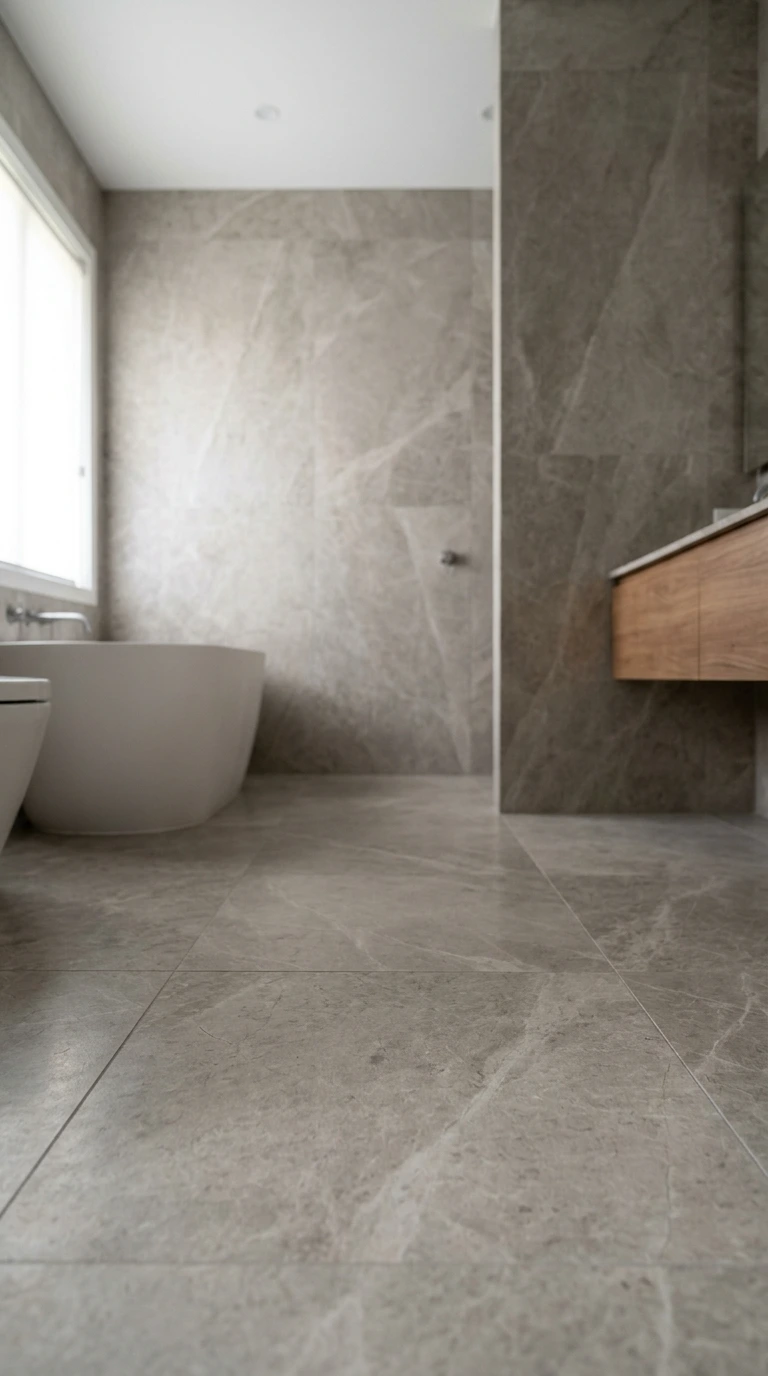
Continuing the same tile or material from the floor up onto the walls removes the visual interruption that a change of surface creates. This continuity makes the room feel taller and more expansive, since the eye does not stop at the point where materials change. Many boutique hotel bathrooms use this exact approach.
Choose a large format tile in a warm neutral tone for the most seamless effect. Lay the floor tile in the same direction as the wall tile to reinforce the continuous feel. It is a design choice that consistently expands the perceived size of a bathroom.
13. Install Pocket or Barn Doors
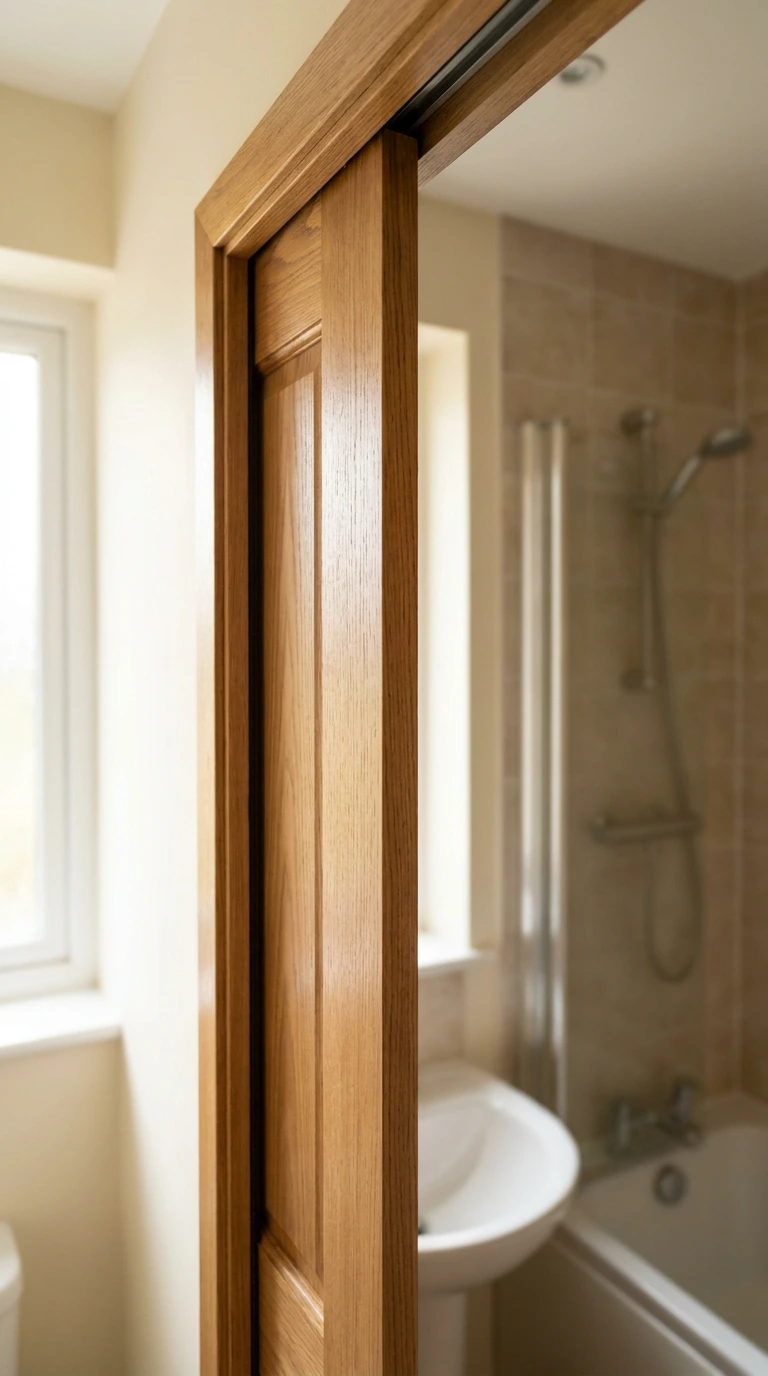
A standard swing door requires clearance space inside or outside the bathroom, which consumes floor area in a small room. A pocket door that slides into the wall, or a barn door that slides across it, eliminates this wasted clearance entirely. This can meaningfully increase usable floor space in a very tight bathroom layout.
Choose a pocket door for the most seamless result, since it disappears entirely when open. A barn door requires some wall space alongside the doorway but is easier to retrofit than a pocket door. It is a structural change that frees up floor space without removing any furniture.
Door Options for Small Bathrooms
- Pocket door slides into the wall for zero clearance requirement
- Barn door slides across the wall, freeing interior floor space
- Folding door uses less clearance than a standard swing
- Curtain panel works in casual or rental-friendly situations
14. Add Metallic Accents for Reflected Light
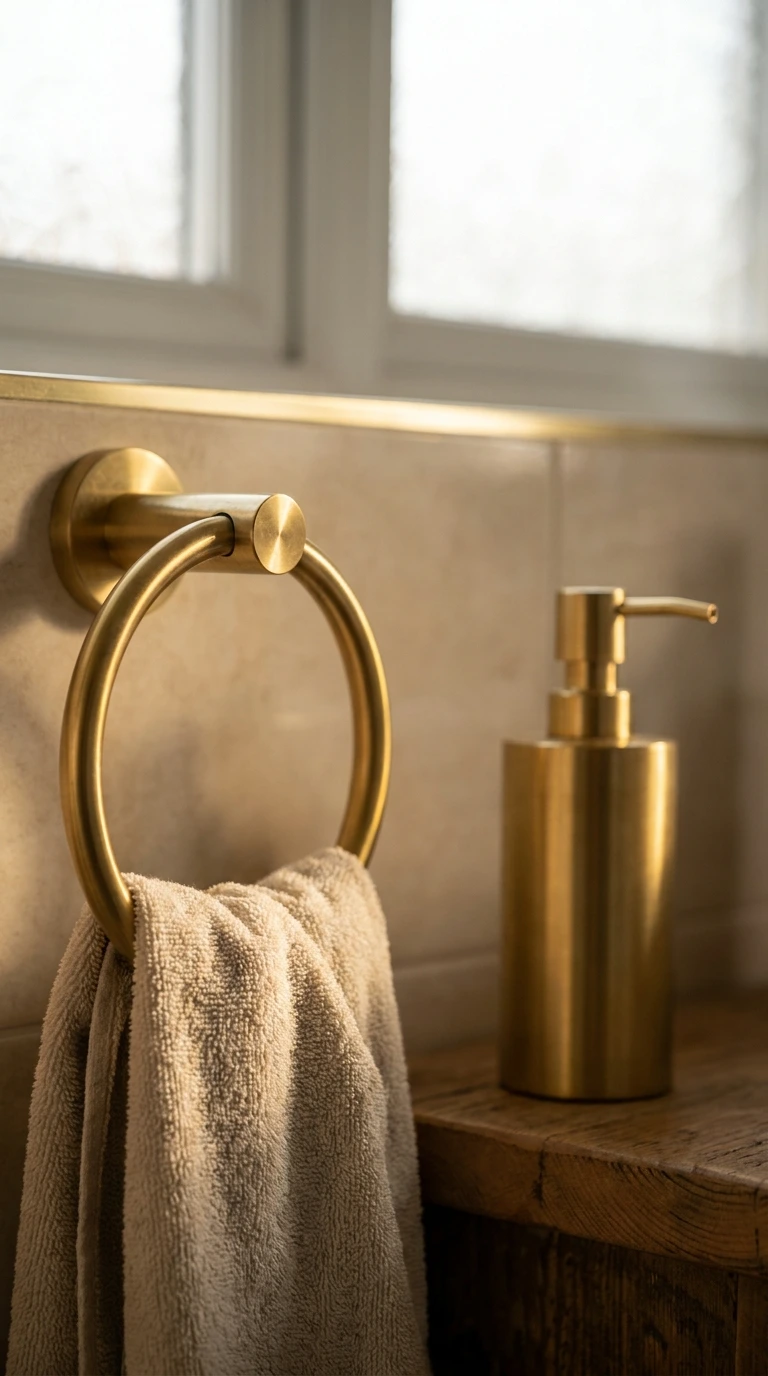
Small metallic accents, like brass towel rings, chrome soap dispensers, or a mirrored tray, catch and reflect light throughout a small bathroom in a way that matte surfaces do not. This reflected light makes the room feel brighter and more dynamic. It is a detail that adds luxury without adding bulk.
Choose a consistent metal finish for all hardware and accessories to avoid a disjointed look. Even a few metallic elements go a long way in a small space. It is an affordable way to add both visual richness and light to a compact bathroom.
15. Use a Curtain Instead of a Door on Storage
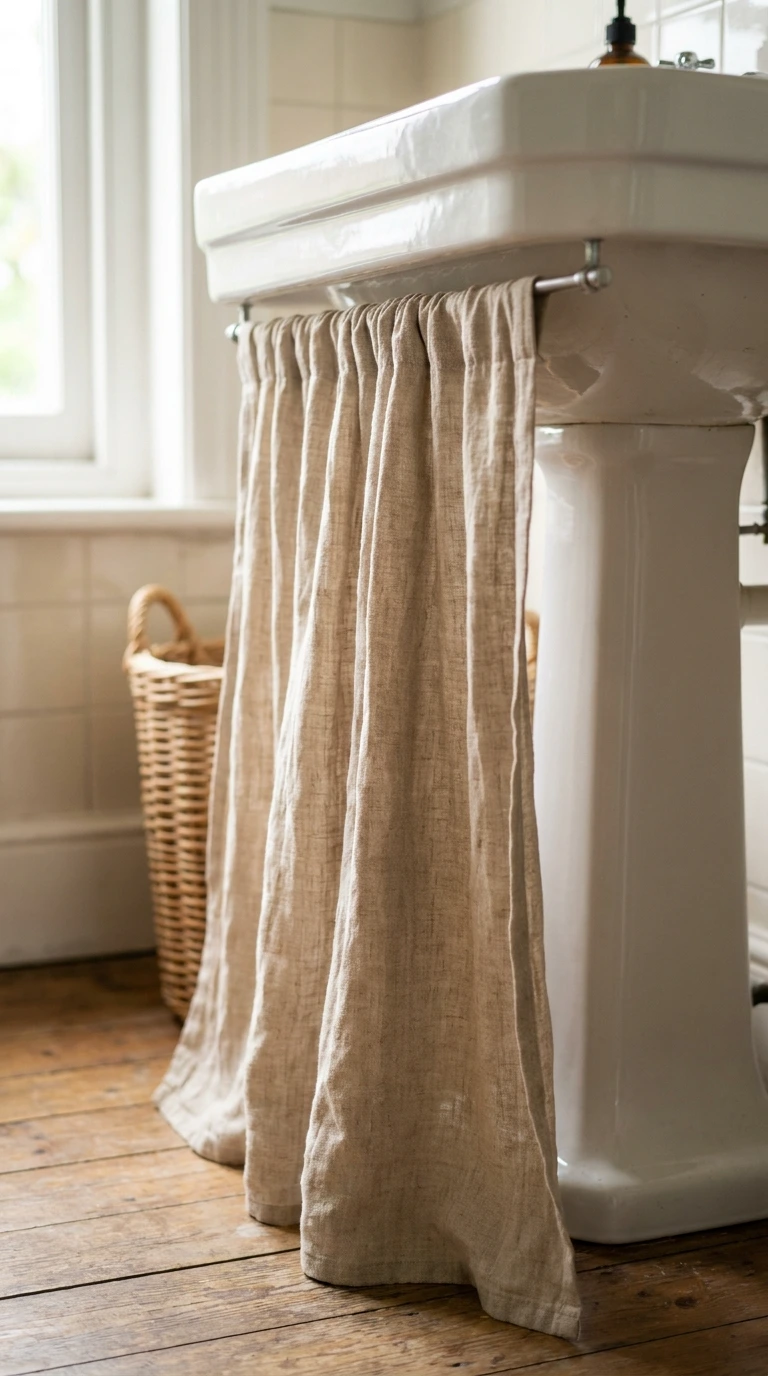
Replacing a cabinet door with a simple curtain panel on a slim rod softens the look of bathroom storage while keeping the space feeling less boxy and enclosed. This approach works particularly well under a pedestal sink or open console, where a curtain can hide storage while adding a soft, textile element. It also costs very little to implement.
Choose a fabric in a neutral or lightly patterned tone that complements the rest of the bathroom. Keep the fabric simple and un-ruffled for the most modern look. It is a small swap that adds softness to a room that typically has very few soft elements.
Important: In small bathrooms, every design decision should serve at least two purposes. A shelf that also reflects light, a mirror that also includes storage, or a tile that also adds warmth all make the most of limited space and budget.
16. Add a Single Statement Plant
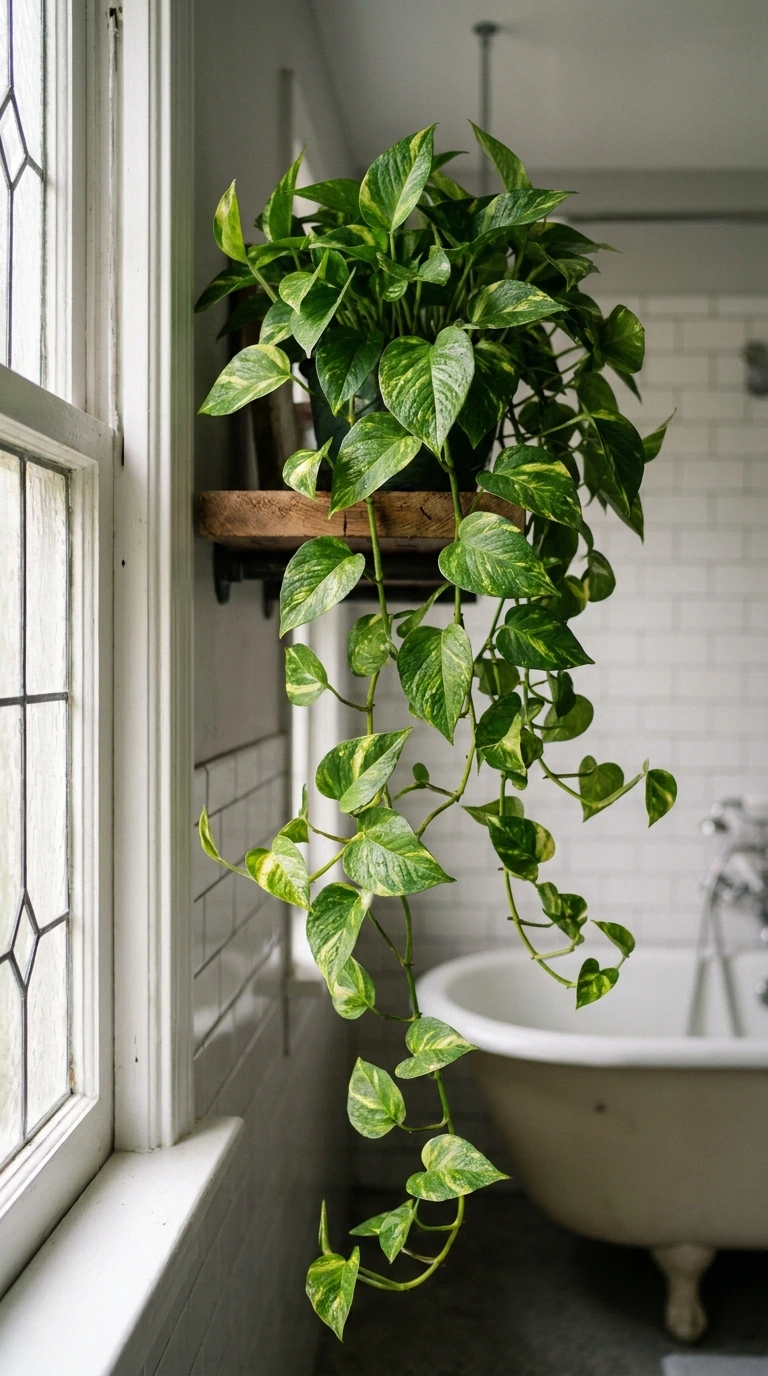
A single plant, positioned thoughtfully in a corner or on a shelf, adds a natural, organic element to the bathroom without taking up significant space. This detail breaks up the hard surfaces typical of most bathrooms and adds a sense of life that makes the room feel less clinical. Choosing the right plant for the available light makes all the difference.
Choose a pothos, peace lily, or snake plant for their tolerance of bathroom humidity and variable light. Keep the planter simple and proportional to the space available. It is a detail that costs very little but consistently elevates how a bathroom feels.
17. Install a Corner Shelf or Corner Sink
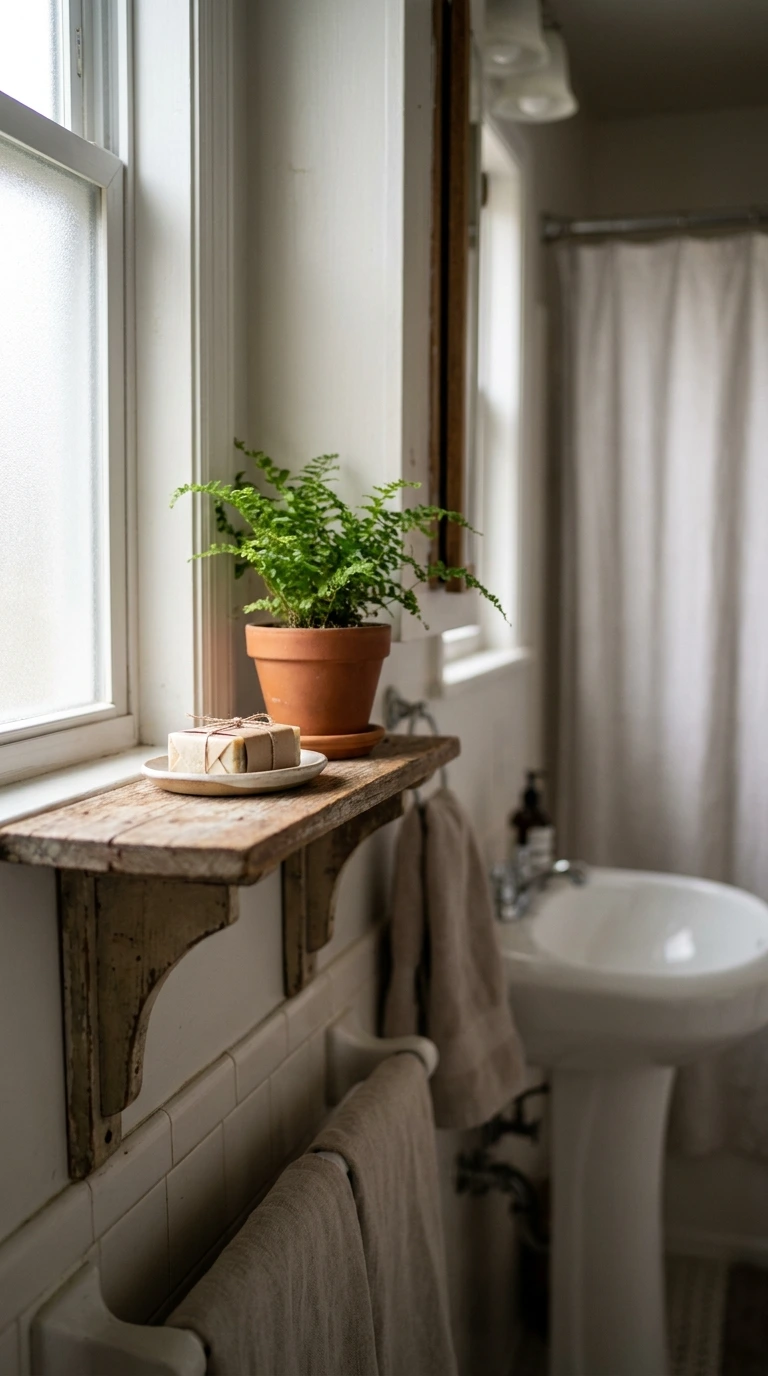
Corner fixtures, whether a shelf or a sink, use space that typically goes to waste in a small bathroom layout. A corner sink in particular can free up the main wall for other storage or fixtures. This approach requires some planning but can meaningfully improve the flow and function of a tight room.
Choose a corner shelf in a material that complements your tile for the most cohesive look. A corner sink works best in very small bathrooms where maximizing every inch is essential. It is a layout solution that improves both the function and the feel of the room.
18. Use Slim, Recessed Medicine Cabinets
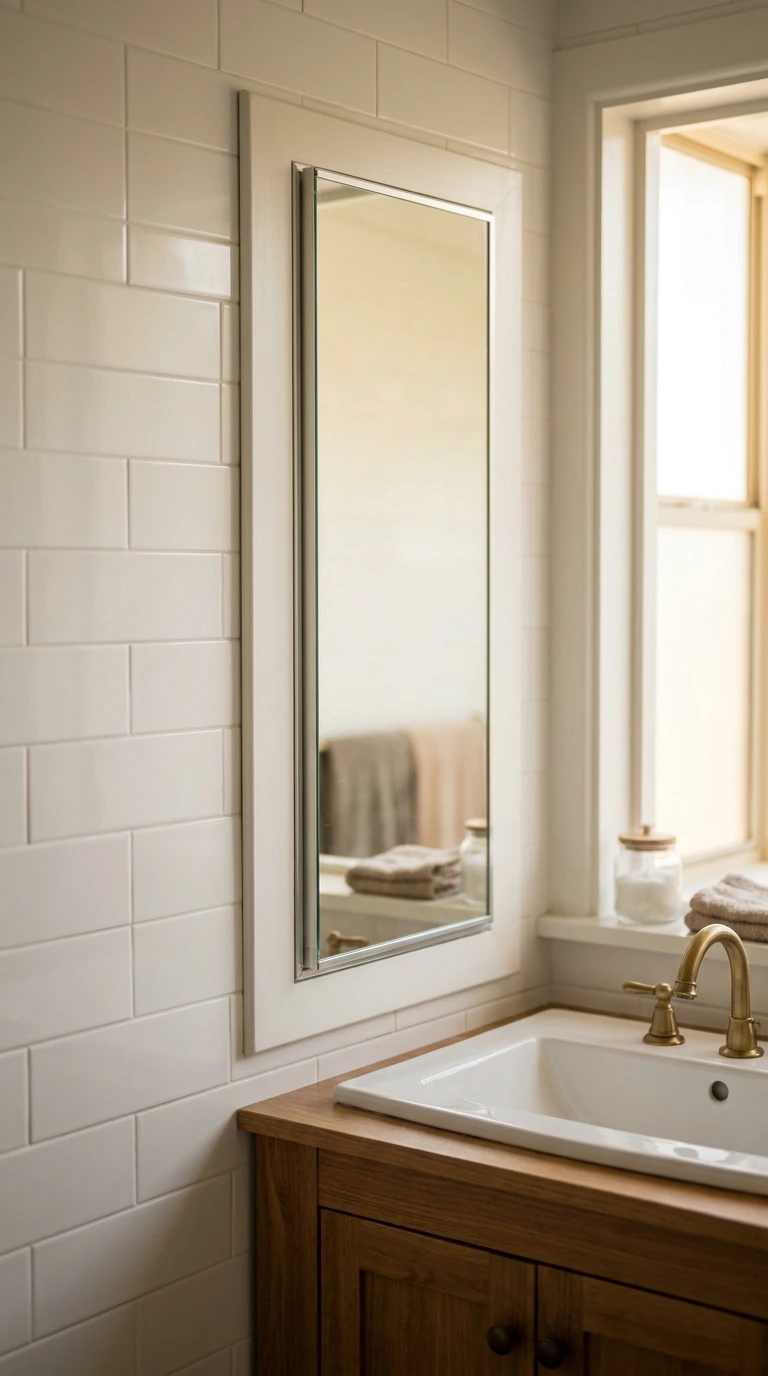
A recessed medicine cabinet sits within the wall rather than protruding from it, which keeps the vanity area feeling open and unencumbered. This approach also provides hidden storage for everyday items that would otherwise clutter the counter. It is a storage solution that improves the room’s function and its visual openness simultaneously.
Choose a cabinet with a mirrored front to double as both storage and a reflective surface. Look for models with interior lighting for added functionality. It is a renovation detail that solves multiple problems with a single fixture.
What to Store in a Recessed Medicine Cabinet
- Daily skincare products for easy morning access
- Medications and first aid items out of sight
- Razors, cotton rounds, and small grooming tools
- Extra toothbrushes and dental care products
19. Paint the Ceiling the Same Color as the Walls
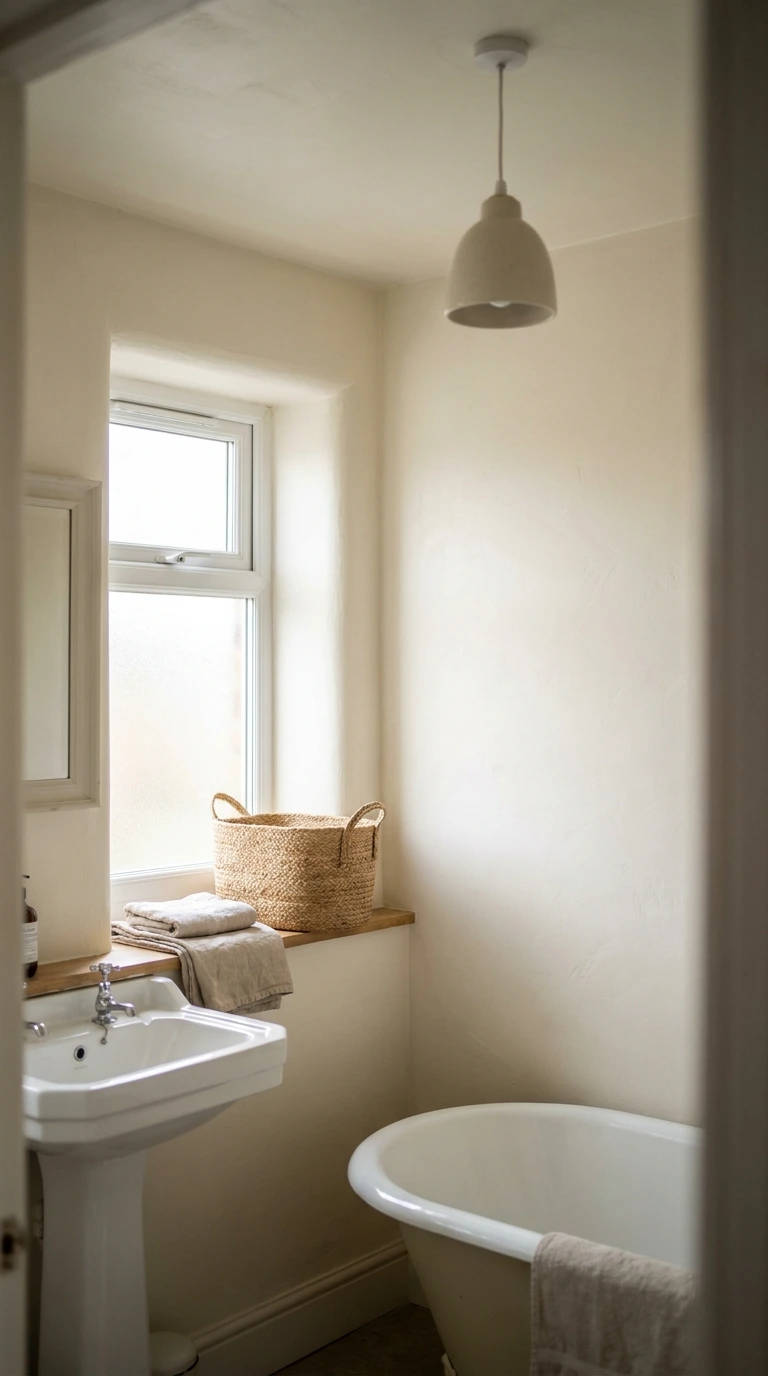
Painting the ceiling the same color as the walls removes the visual boundary at the top of the room, making the space feel taller and more continuous. This technique is particularly effective in small bathrooms where low ceilings can already feel oppressive. It is a paint-level change with a surprisingly significant spatial impact.
Choose a soft, light neutral for both surfaces to maximize the light-reflecting benefit alongside the continuity effect. A matte finish on both surfaces reinforces the seamless look. It is a simple, affordable change that visually expands a small bathroom upward.
20. Add Under-Cabinet or Toe-Kick Lighting
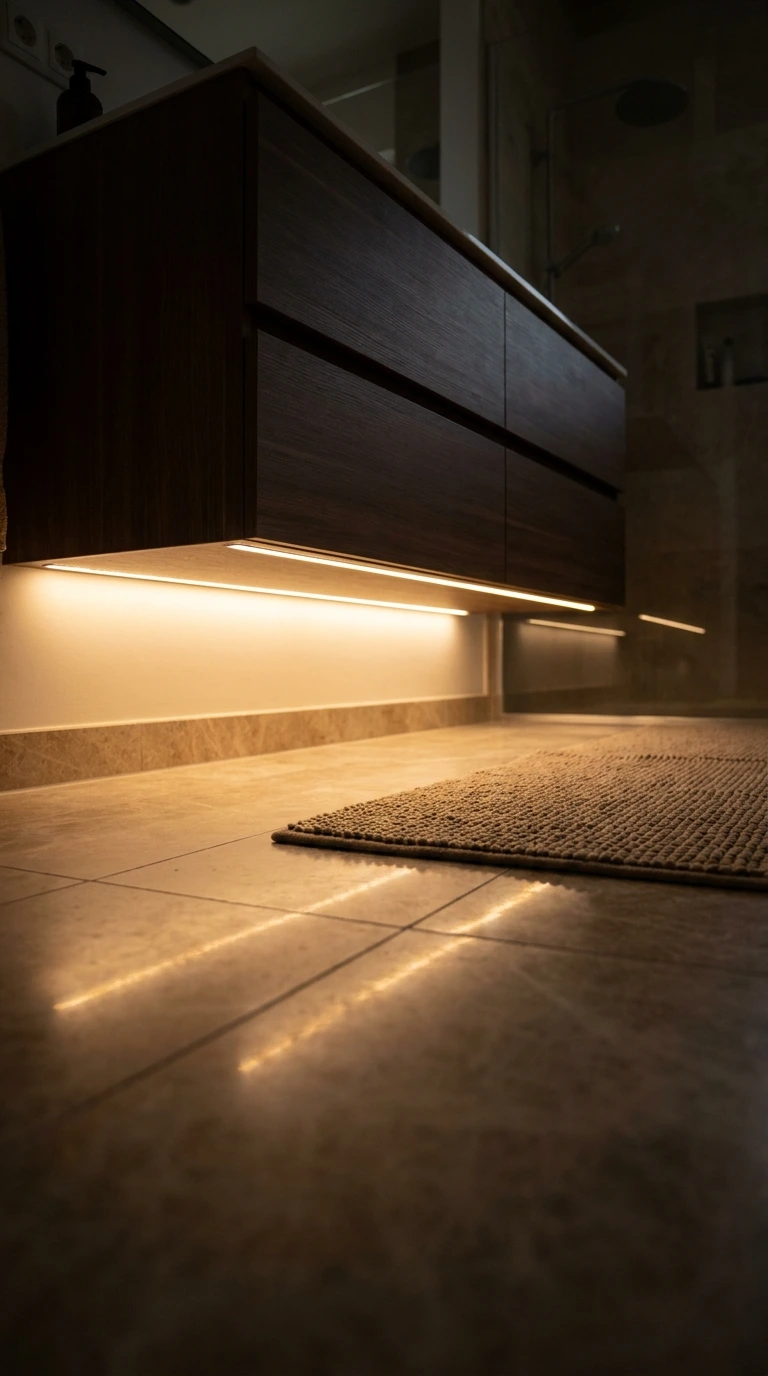
Soft lighting installed beneath the vanity cabinet or along the toe-kick creates a gentle ambient glow at floor level that makes the bathroom feel like it is floating and expanded. This detail is used in high-end bathroom design to add depth and dimension to compact spaces. It also serves as a practical nightlight.
Choose warm-toned LED strips for the most flattering glow. Install them set back from the front edge of the cabinet so the strip itself stays hidden. It is a low-cost detail that adds a significant sense of luxury and spaciousness.
- Use the same tile on floors and walls for a seamless, expansive feel
- Choose a floating vanity or pedestal sink to keep the floor visible
- Add a large or full-width mirror to reflect light and double the visual space
- Keep surfaces clear and storage hidden to avoid visual clutter
- Stick to a light, consistent color palette across all surfaces
21. Choose a Compact, Deep Soaking Tub
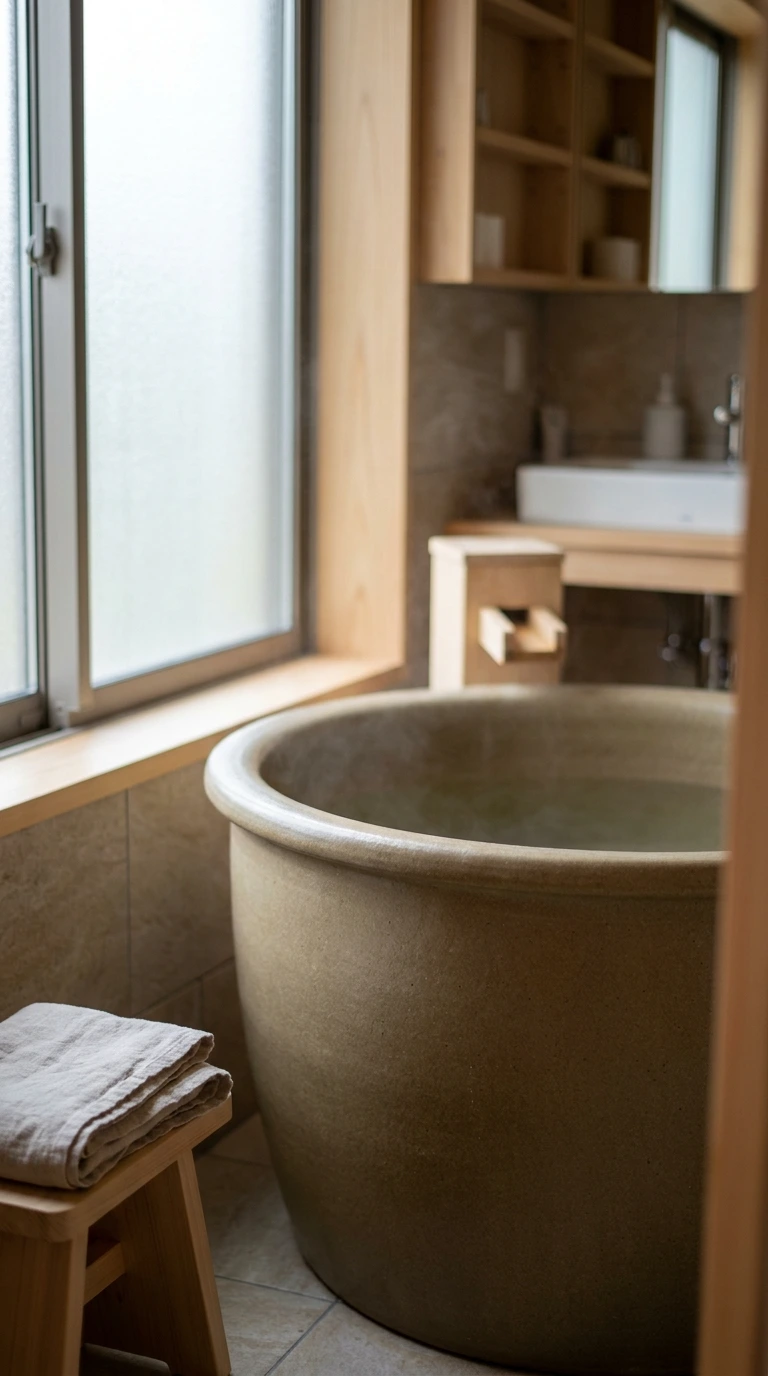
In bathrooms where space is limited but a tub is desired, a compact Japanese-style soaking tub offers the luxury of a deep soak in a smaller footprint than a standard Western tub. These tubs are shorter in length but deeper, making them genuinely comfortable to soak in. They also add a distinctive, spa-like character to the bathroom.
Choose a freestanding version for the most visual impact, or a drop-in model if your existing tub surround allows for it. A simple, neutral finish keeps the tub from overwhelming the room. It is a niche but worthwhile option for anyone who genuinely uses their bathtub regularly.
22. Use Hooks Instead of Towel Bars
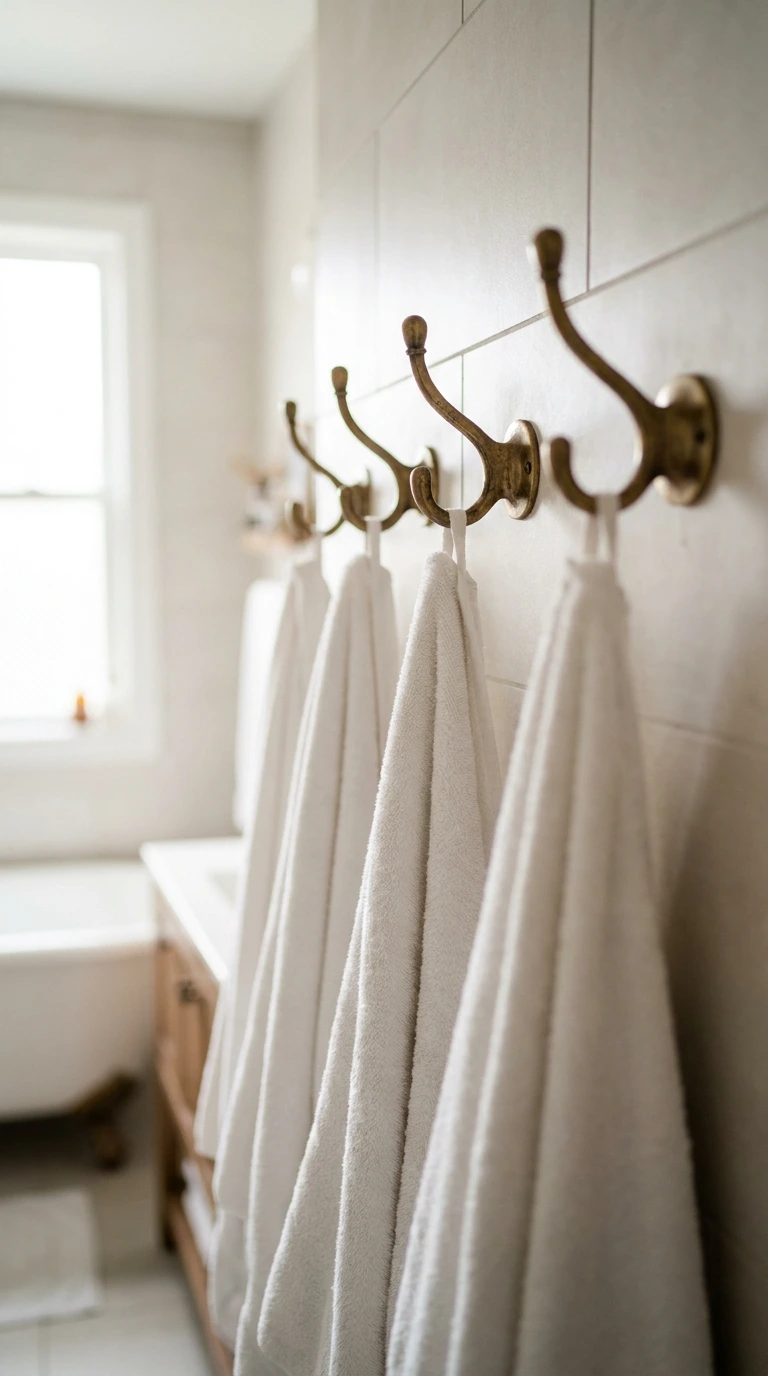
Slim, individual hooks for towels take up less wall space than a traditional towel bar while keeping towels accessible and loosely displayed rather than tightly folded. This approach works particularly well in small bathrooms where a full bar would crowd the wall. A row of three to five hooks is both practical and visually interesting.
Choose hooks in a consistent metal finish that matches your other hardware. Spacing them evenly along a single wall creates a neat, intentional look. It is a simple hardware change that solves a storage problem while contributing to the overall styling.
23. Add a Small Window or Maximize Existing Light
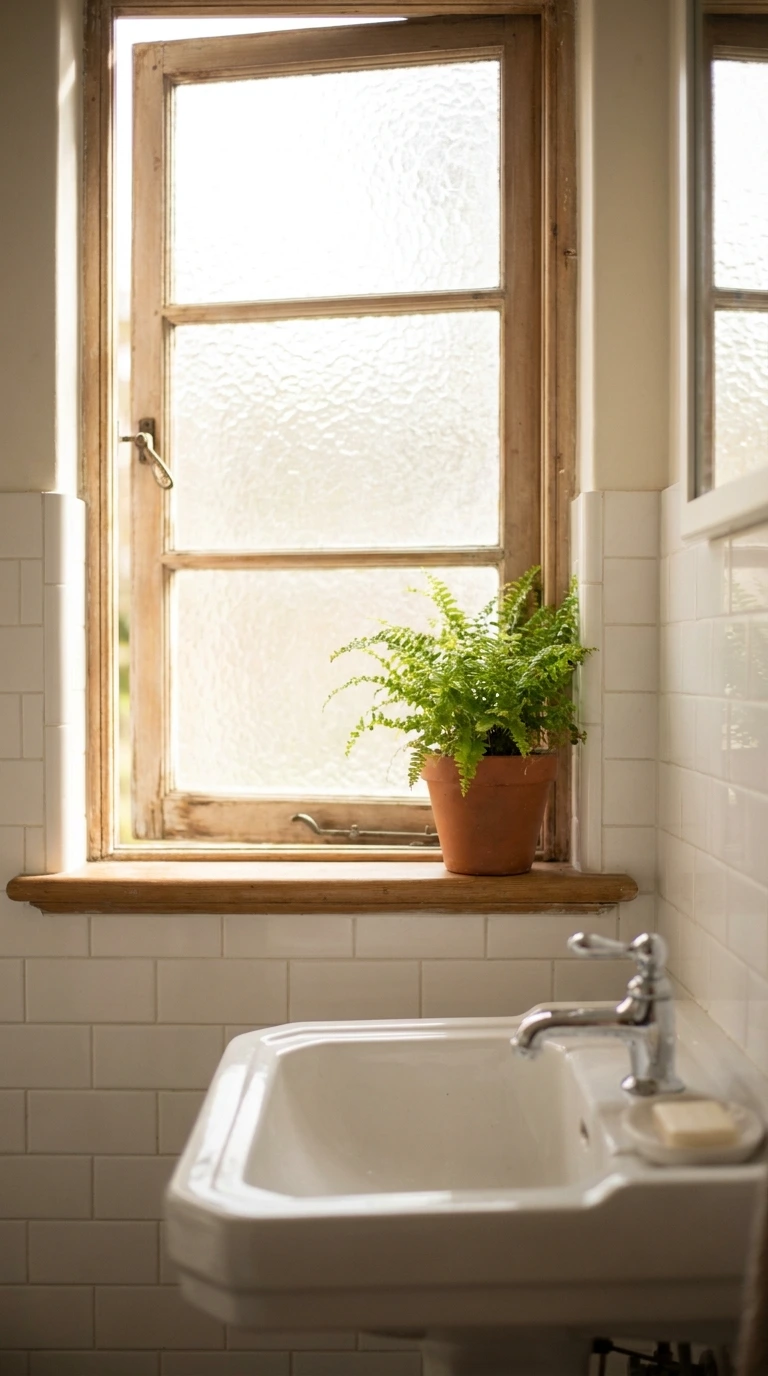
Natural light is one of the most powerful tools for making a small bathroom feel larger and more luxurious. If your bathroom has a window, maximizing its light by using sheer or no window treatments keeps the room feeling bright and open. If adding a window is possible, even a small one can transform the space.
Choose frosted glass for privacy without sacrificing light if the window faces a neighboring property. Keep the window treatment minimal, with a simple sheer or no covering at all if privacy is not a concern. It is a structural consideration that has one of the highest impacts on overall spatial perception.
24. Use a Monochromatic Color Scheme
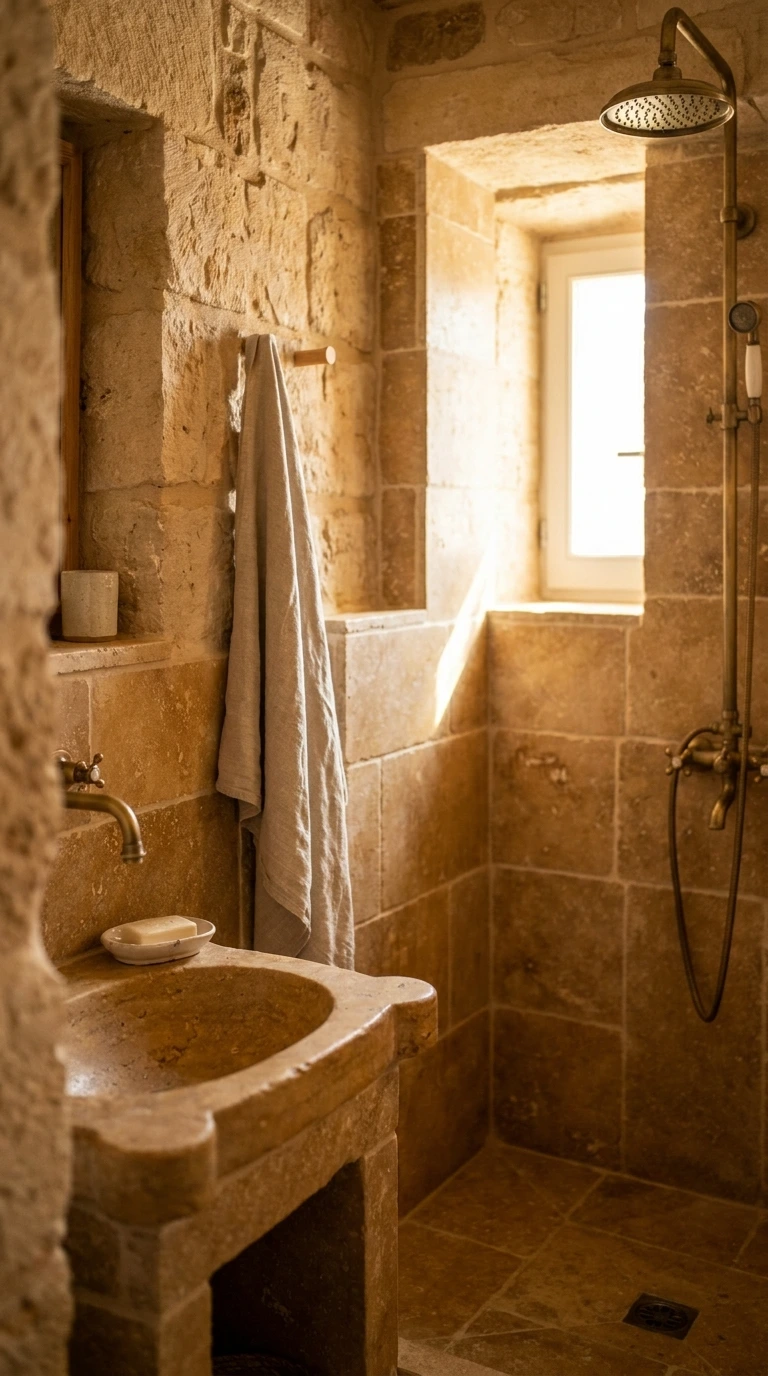
A monochromatic bathroom, where walls, grout, fixtures, and accessories all share a similar tone, creates a seamless, enveloping quality that makes the space feel larger and more considered than a room with multiple competing colors. This approach is particularly effective in small bathrooms where every color contrast acts as a visual boundary that reduces perceived space.
Choose a warm neutral or soft stone tone as your monochromatic base for the most inviting result. Vary the textures within that single color family to keep the room from feeling flat. It is a color strategy that consistently reads as sophisticated and intentional.
25. Keep the Color Palette to Two Materials Maximum
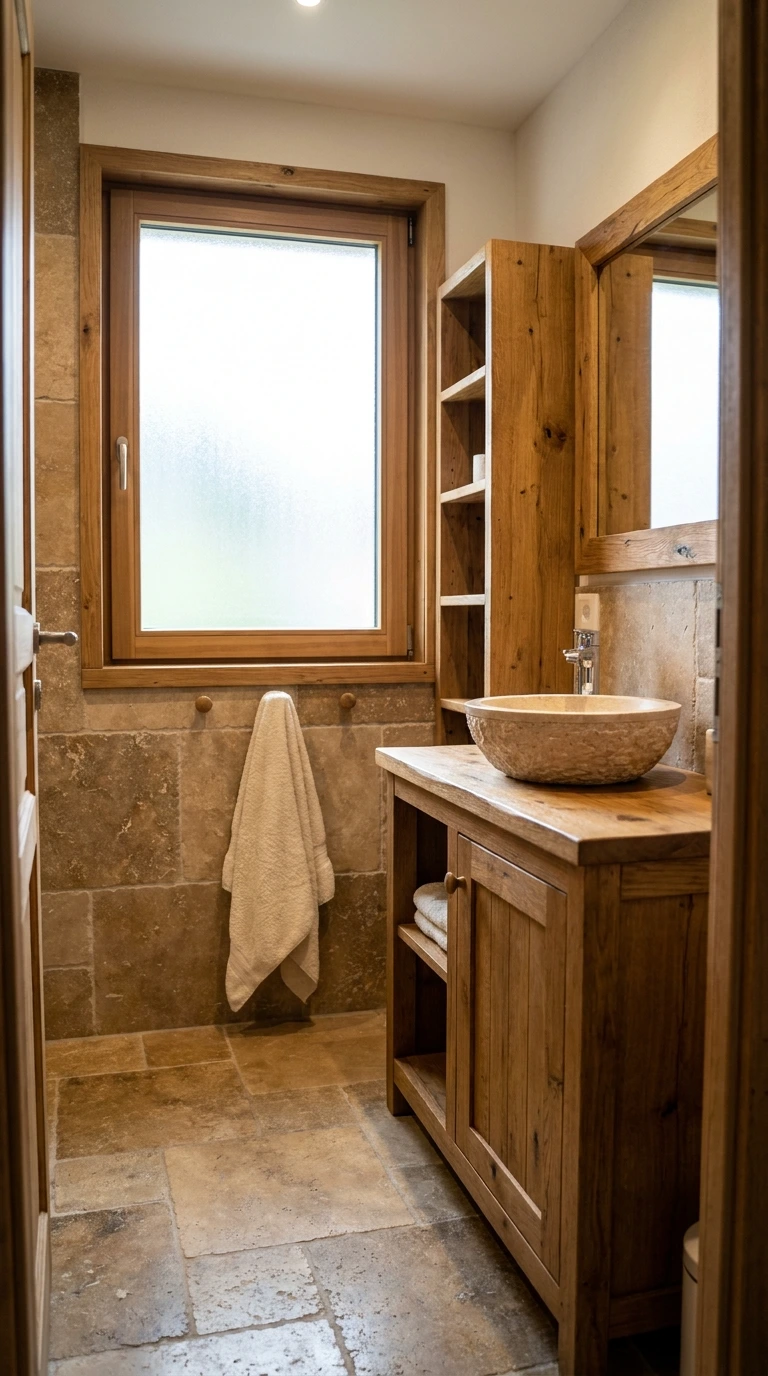
Limiting the number of materials in a small bathroom to just two, such as stone and wood, or tile and brass, creates a cohesive, calm visual environment that does not feel cluttered or overly busy. This restraint is a hallmark of high-end bathroom design, where simplicity signals confidence rather than limitation. It also makes the room easier to style and maintain over time.
Choose your two materials carefully, ensuring they complement each other in both tone and texture. Repeat each material at least twice throughout the room for cohesion. It is a design principle that makes every other decision in the bathroom easier and more coherent.
Frequently Asked Questions
What is the single most effective way to make a small bathroom feel bigger?
Using large format tiles on both the floor and walls, combined with a large frameless mirror, creates the most dramatic sense of expanded space. These two changes together work better than either one alone.
Can I make a small bathroom feel luxurious without renovating?
Yes, switching to plush towels, adding a backlit or large mirror, introducing warm lighting, and keeping surfaces clear all create a more luxurious feel without any construction. These changes are among the most accessible on this list.
What color makes a small bathroom look bigger?
Light, warm neutrals like soft white, warm cream, and pale stone consistently make small bathrooms feel larger by reflecting more light and creating less visual contrast at the room’s boundaries.
Should I use a shower curtain or glass screen in a small bathroom?
A frameless glass screen is almost always the better choice for a small bathroom, since it allows the eye to travel uninterrupted through the whole space. A curtain closes off the shower visually and makes the room feel smaller.
Is a floating vanity worth the extra cost in a small bathroom?
Yes, the visual impact of a floating vanity on a small bathroom’s perceived size is significant enough to justify the higher cost in most cases. The visible floor beneath the vanity consistently makes rooms appear larger.
How do I add storage to a small bathroom without making it feel cluttered?
Recessed storage, like a medicine cabinet or shower niche, adds storage without protruding into the room. Vertical storage and curtained undersink areas also add capacity without visual bulk.
Do plants work in small bathrooms with no natural light?
Some plants, like pothos and peace lilies, tolerate low light reasonably well. However, even these plants benefit from occasional time near a light source. Faux plants are a lower-maintenance alternative for very dark bathrooms.
Conclusion
A small bathroom has more potential than its square footage suggests. With the right combination of tile choices, lighting, mirrors, and a few thoughtful details, even the most compact bathroom can feel open, polished, and genuinely luxurious. The key is understanding which design choices visually expand a space and committing to them consistently.
Start with the changes that fit your current budget and situation, then layer in additional upgrades over time. A small bathroom that feels bigger and more luxurious is not a matter of space, it is a matter of intention.