15 Open Shelving vs. Closed Cabinets: Which is Better for Small Apartments?

Introduction
Walk into any small apartment renovation debate, and this question comes up almost immediately: open shelving or closed cabinets? Both have passionate advocates, and both genuinely work well in the right circumstances, which is exactly why the debate never seems to settle.
The truth is that neither option is universally better, since the right choice depends heavily on your habits, your storage needs, and how much visual clutter you’re comfortable living with day to day. Someone who cooks constantly and owns beautiful dishware might thrive with open shelving, while someone juggling mismatched containers might find the same setup stressful within a month.
In this guide, you’ll find 15 specific angles to consider when deciding between open shelving and closed cabinets in a small apartment. By the end, you should have a much clearer sense of which approach, or which combination of the two, actually fits your life.
1. Visual Perception of Space
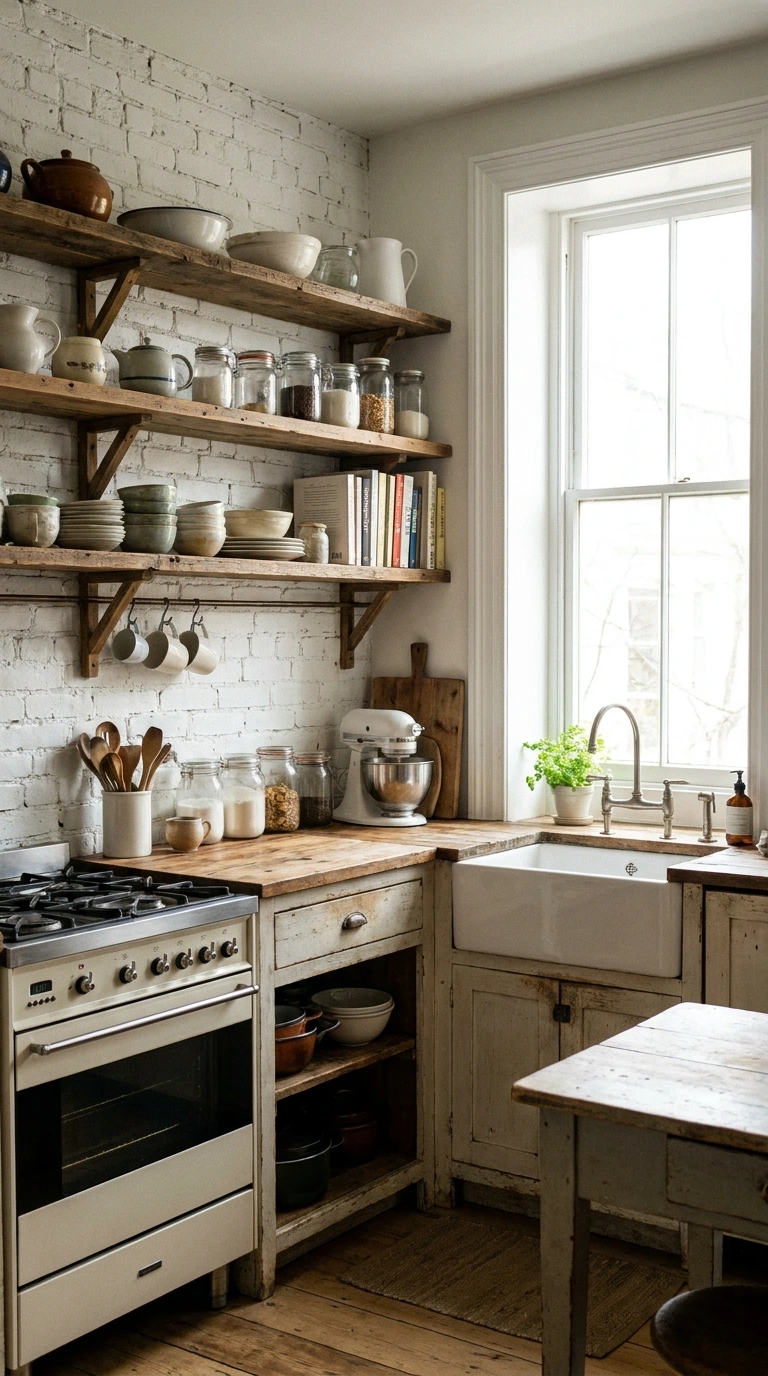
Open shelving tends to make a small kitchen or living area feel more expansive, since the eye can see straight through to the wall behind rather than hitting a solid cabinet front. This visual continuity is part of why so many small-space design guides lean toward open storage as a default recommendation.
Closed cabinets, on the other hand, can actually work in favor of a small room when they’re painted the same color as the surrounding walls, creating a seamless, uninterrupted surface that reads as calm rather than boxy. Matching cabinet color to wall color is a trick many designers use specifically to counteract the boxed-in feeling cabinets can otherwise create in a tight space.
2. Everyday Maintenance and Dust
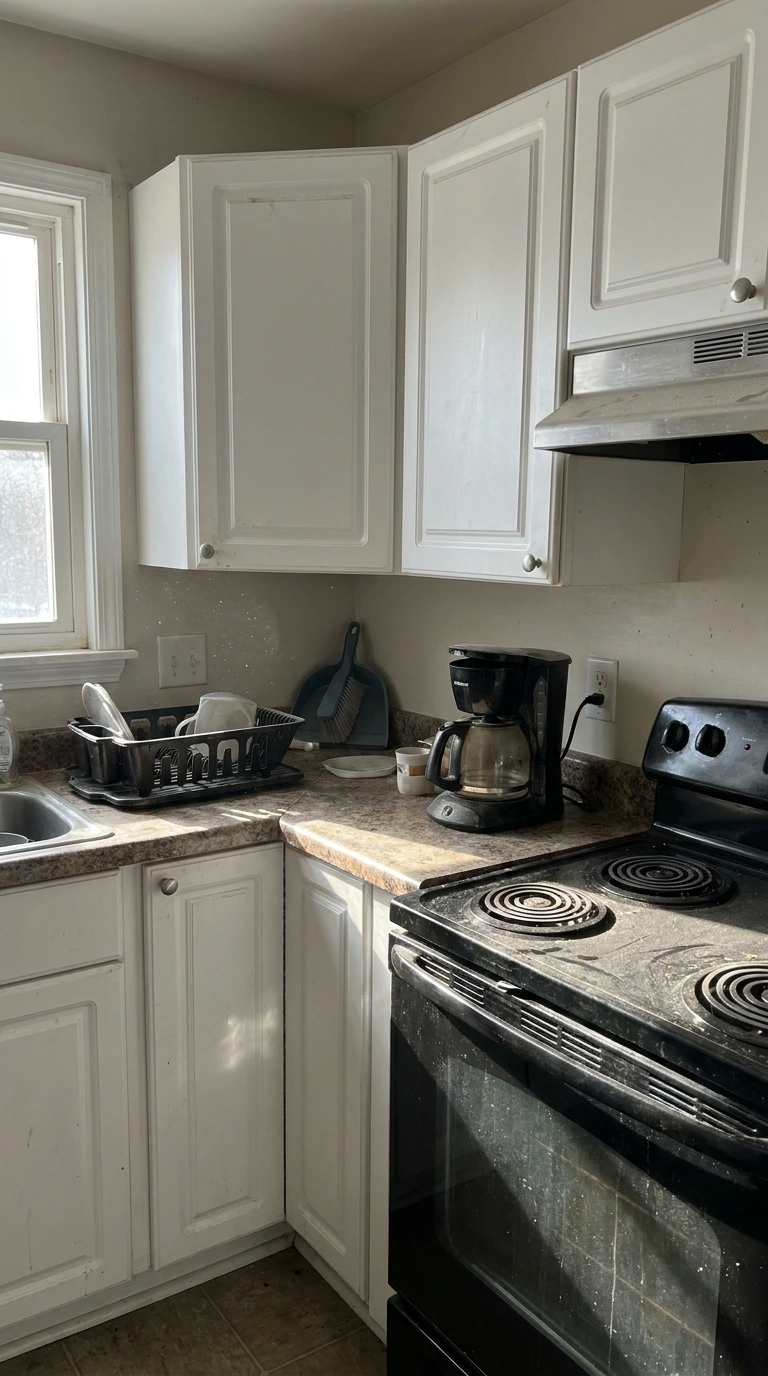
Open shelves collect dust and kitchen grease noticeably faster than enclosed cabinets, especially anywhere near a stove or a frequently opened window. Anyone who dislikes frequent wiping down of dishes and glassware should factor this reality in before committing to open storage throughout a whole kitchen.
Closed cabinets shield their contents from airborne dust and cooking residue almost entirely, which matters considerably more in a small apartment kitchen where the stove and storage often share close quarters. Items tucked behind solid doors can go months without needing a wipe-down, a genuine advantage for anyone with a busy schedule.
3. Forced Organization and Discipline
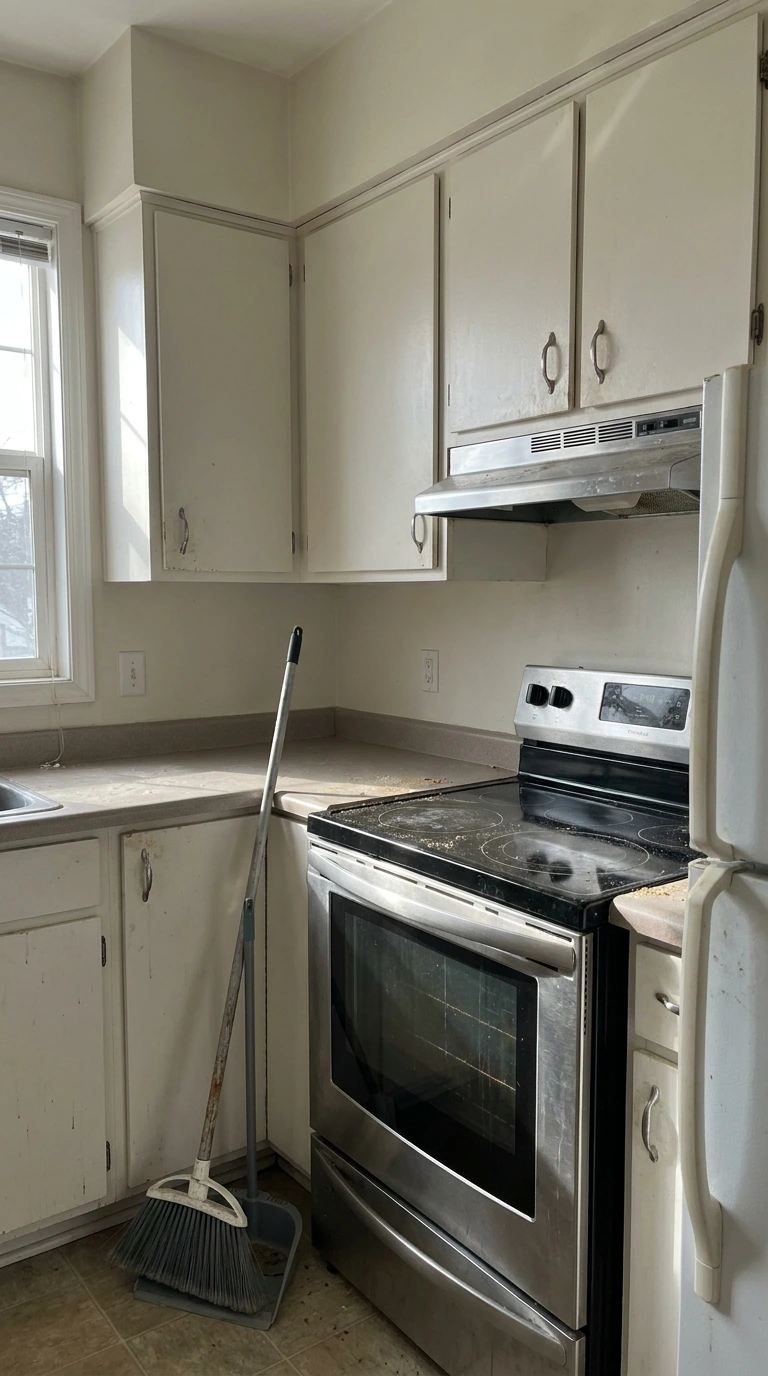
Open shelving essentially demands a level of organization that closed cabinets never require, since every mismatched container, chipped mug, or random appliance box becomes part of the room’s visual display. This can be a genuine motivator for some people, pushing them to curate and edit their belongings more thoughtfully.
For others, this same requirement becomes a constant low-grade stressor, since maintaining a styled, cohesive shelf takes ongoing effort that a cabinet door simply doesn’t demand. Someone who already struggles to keep surfaces tidy is likely better served by cabinets, which forgive a bit of mess the moment the door swings shut.
4. Cost of Installation
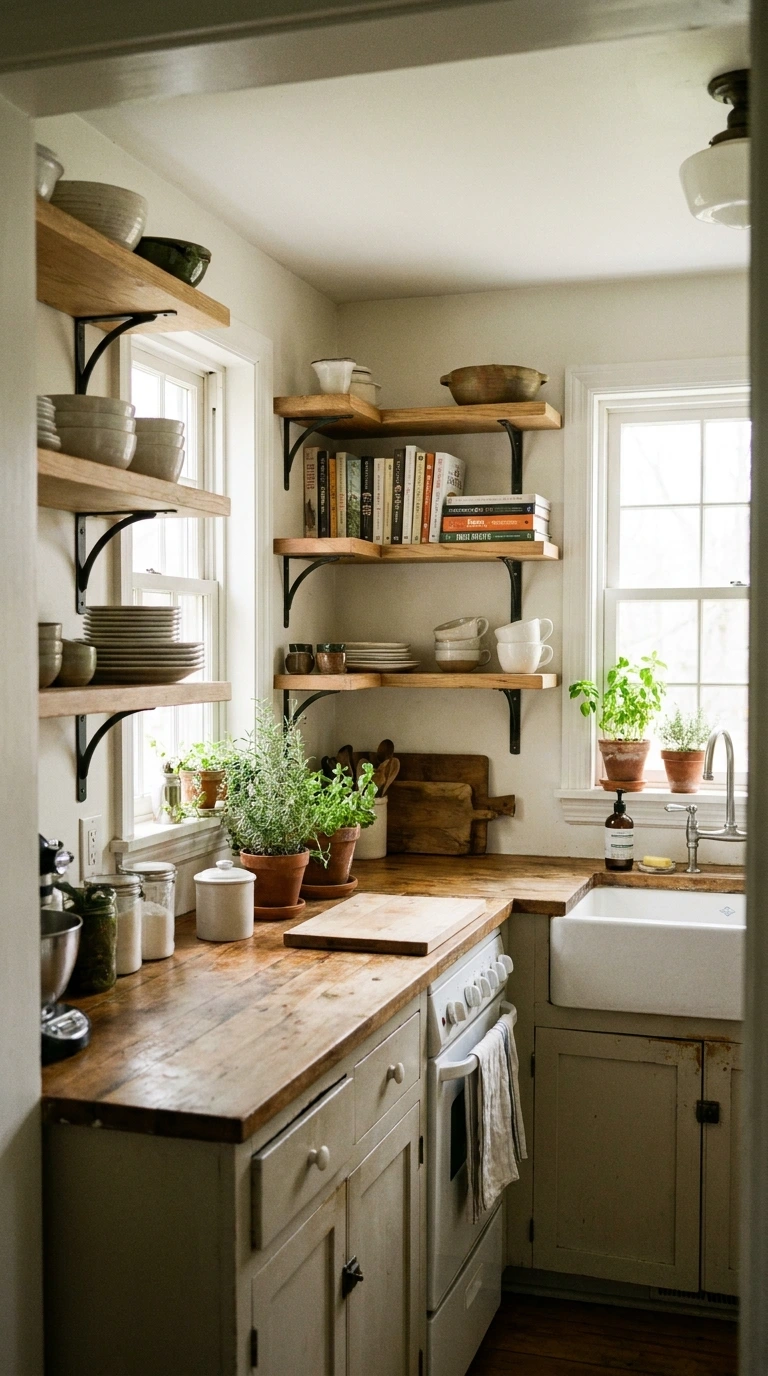
Open shelving is almost always cheaper to install than a full run of cabinetry, since it requires just brackets and a board rather than boxes, doors, hinges, and hardware. This cost difference matters significantly for renters or anyone renovating on a tighter budget, since open shelves can be added, removed, or repositioned with minimal investment.
Cabinets, while more expensive upfront, often add more resale value to a home and provide a more finished, built-in look that many buyers specifically look for. Weighing your budget against your timeline in the space matters here, since a rental apartment rarely justifies the same cabinet investment a long-term home would.
5. Concealing Mismatched or Imperfect Items
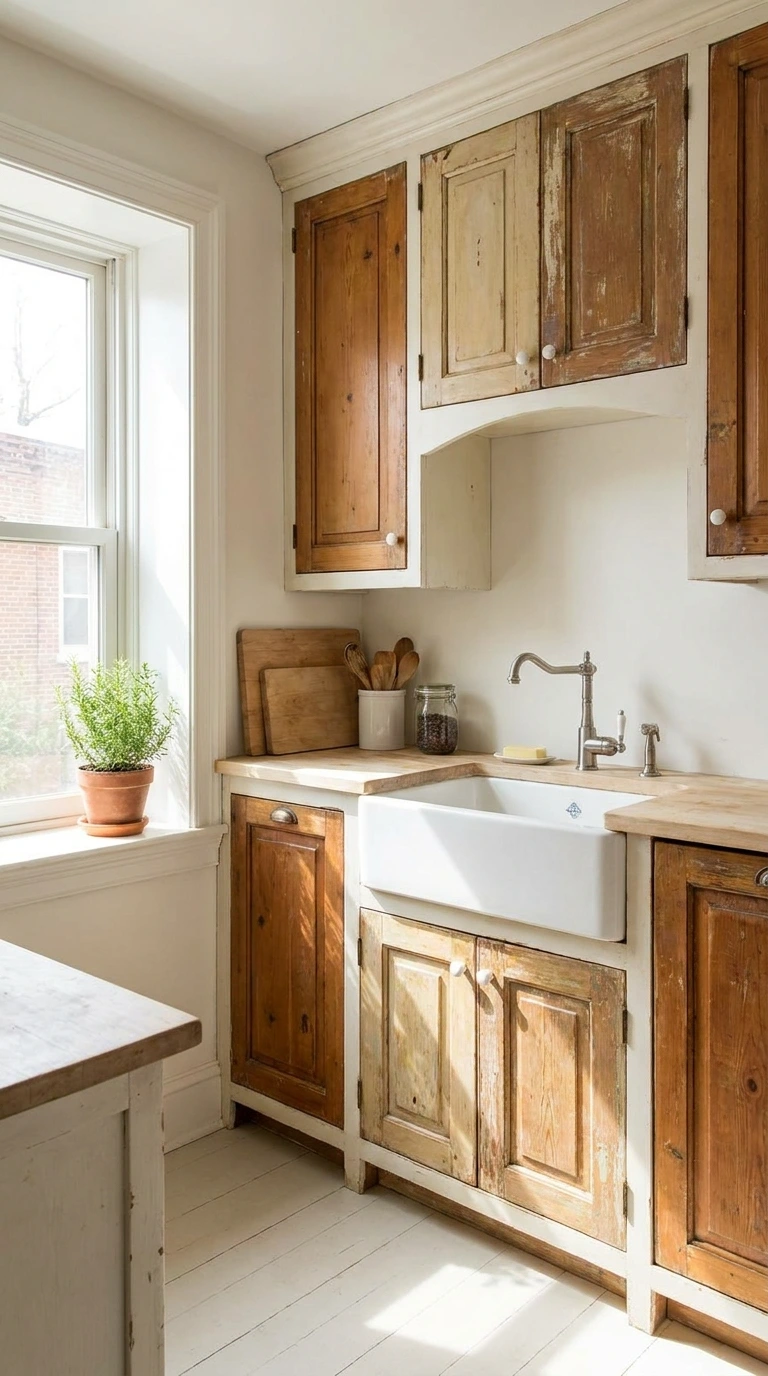
Cabinets hide a multitude of storage sins, mismatched Tupperware, that one ugly appliance you never use but can’t throw away, or dishes that don’t quite match your aesthetic. This concealment is genuinely valuable for anyone whose actual kitchen contents don’t reflect a curated, magazine-worthy collection.
Open shelving offers no such cover, meaning every item on display needs to either match your intended look or get relegated elsewhere in the apartment. Someone with a beautifully coordinated set of dishware benefits from showing it off, while someone with a hodgepodge collected over years of moves probably prefers a door to close on that reality.
6. Accessibility During Cooking
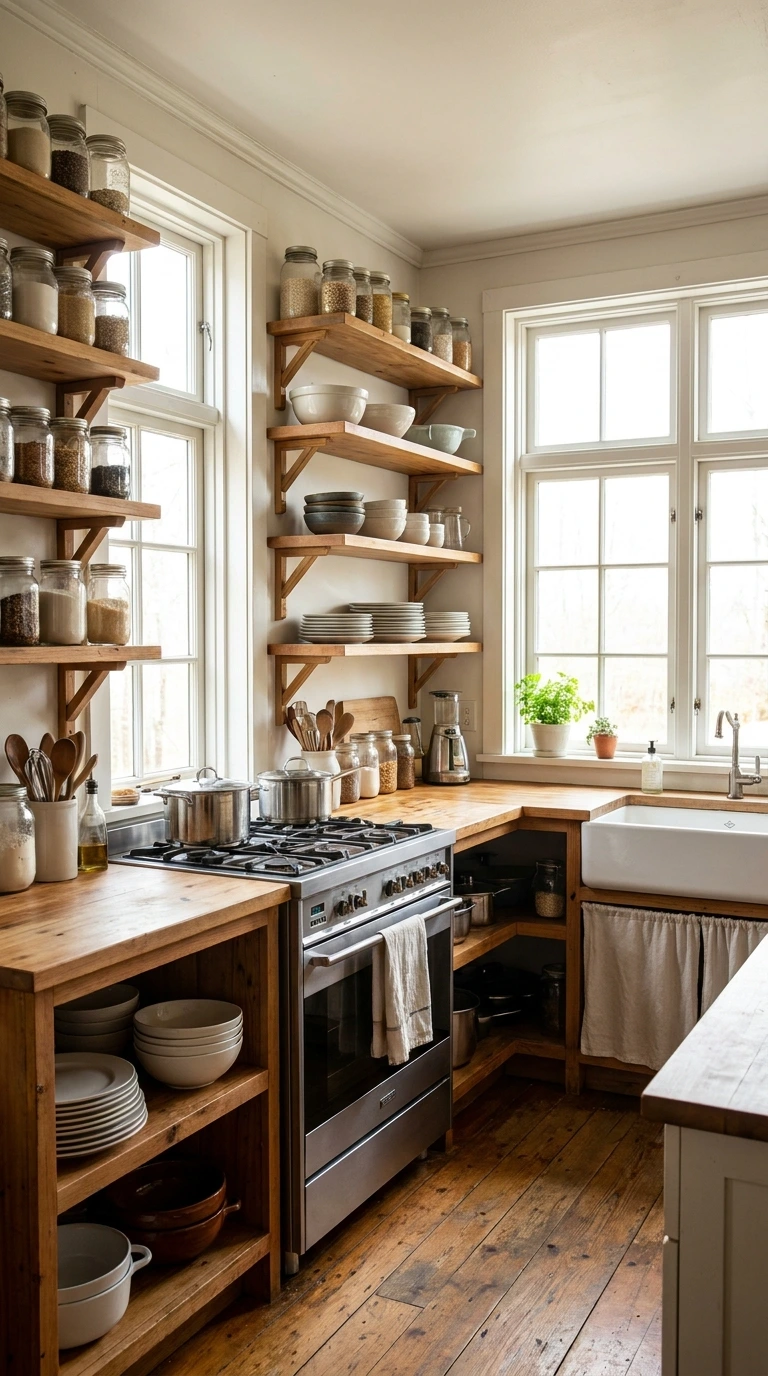
Open shelves put everything within immediate view and reach, which speeds up cooking considerably since there’s no door to open and no need to remember which cabinet holds the cumin. This immediate accessibility is part of why professional kitchens often favor open storage for frequently used items.
Cabinets require an extra motion, opening the door, before you can grab what’s inside, and over years of daily cooking that small delay does add up. Still, many people find the trade-off worthwhile for the sake of a tidier-looking kitchen, especially if their storage habits lean toward clutter rather than curated display.
7. Noise and Kitchen Sounds
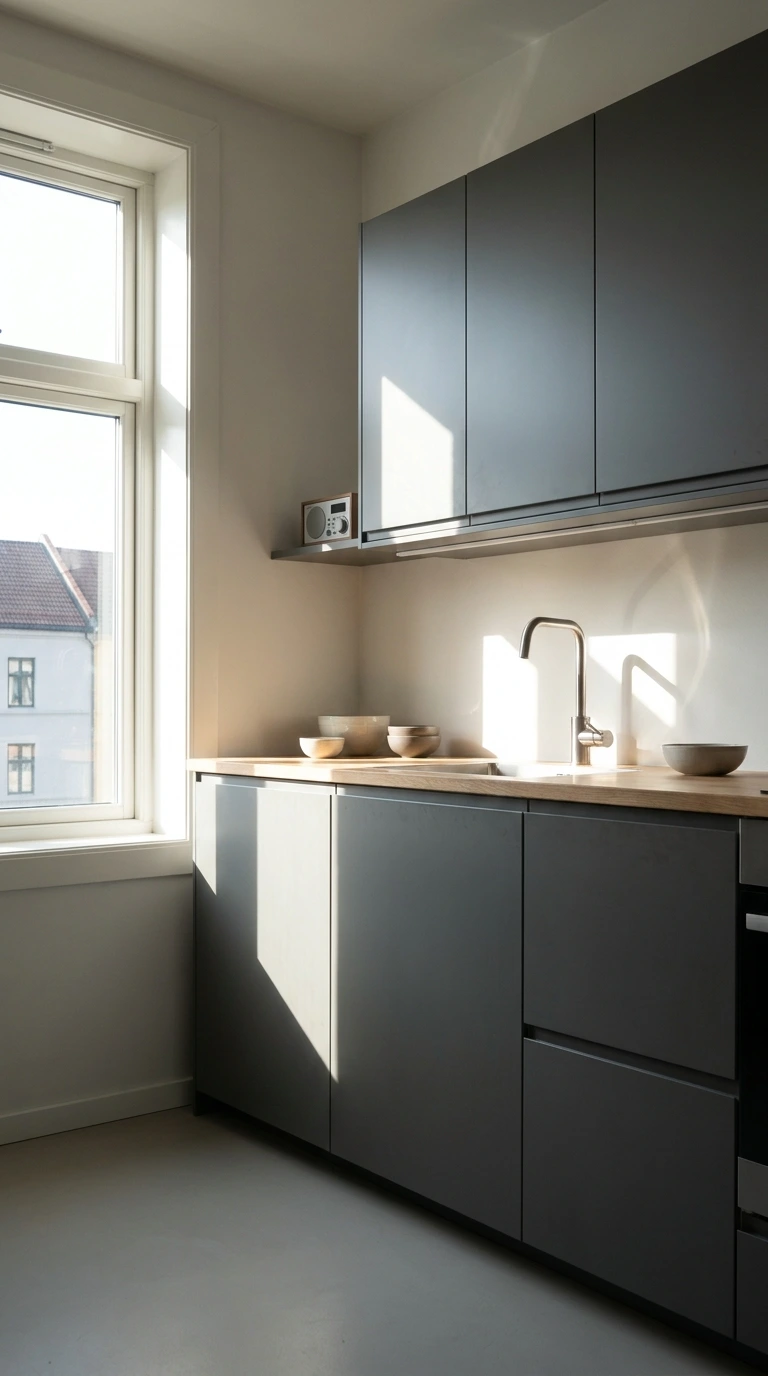
Cabinet doors and drawers inevitably add some noise to a kitchen routine, the click of a door closing, the soft thud of a drawer sliding shut, sounds that repeat dozens of times during meal prep. In a small apartment, especially one with roommates or a nearby sleeping area, this repeated noise can become a subtle daily irritant.
Open shelving eliminates this entirely, since there’s no door or drawer mechanism to operate at all. Anyone living in tight quarters where kitchen noise travels easily into a bedroom or shared living space might find this a surprisingly meaningful point in open shelving’s favor.
- Consider how much daily maintenance you’re realistically willing to do
- Factor in your lease terms before installing permanent shelving
- Match cabinet color to walls if choosing closed storage in a small space
- Assess whether your current dishware collection is display-worthy
- Think about noise levels if you share close quarters with others
8. Flexibility to Change Your Mind
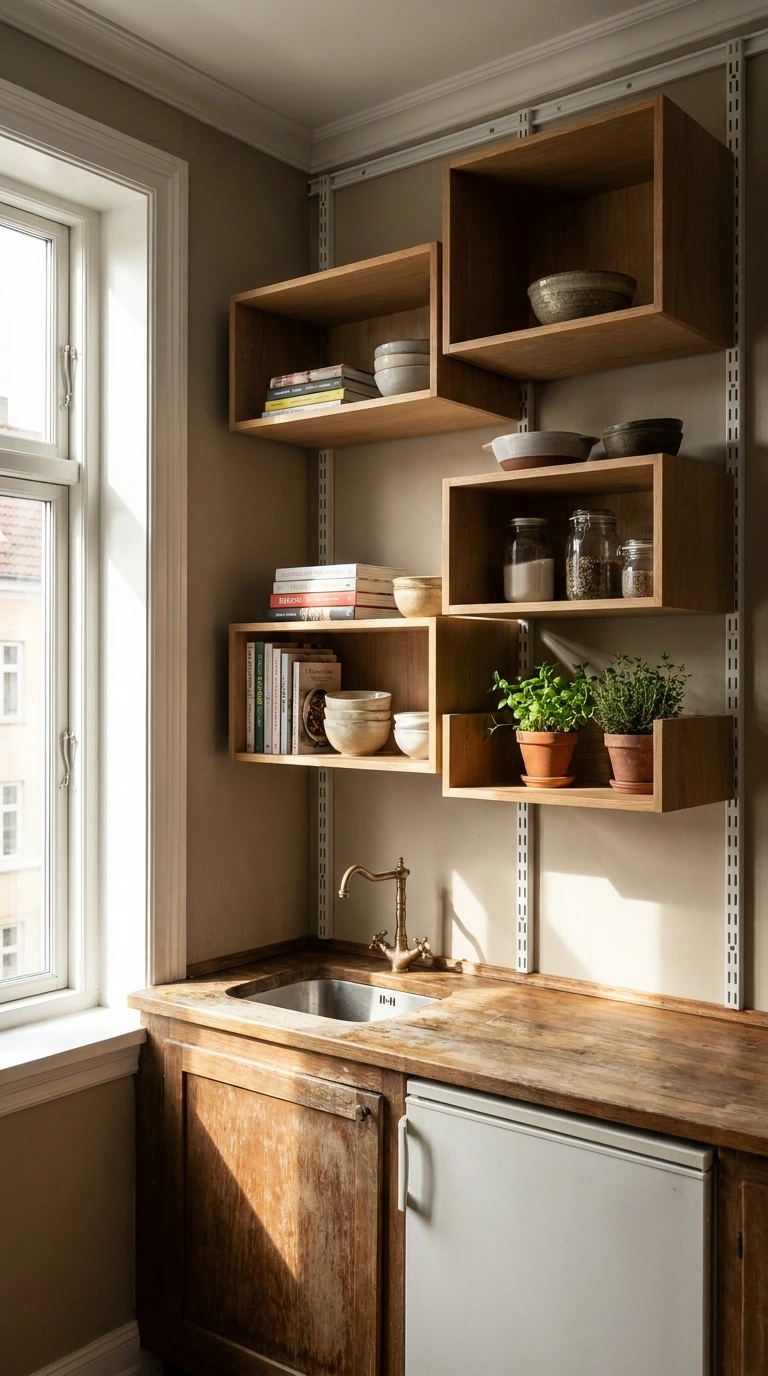
Open shelving is remarkably easy to reconfigure, add a shelf, remove one, or shift brackets to a new height in an afternoon without any major disruption. This flexibility suits anyone whose storage needs shift over time, whether that’s a growing collection of cookbooks or a change in what needs frequent access.
Cabinets are considerably more permanent once installed, and changing their configuration usually means a genuine renovation project rather than a quick weekend adjustment. Someone who values the ability to adapt their space regularly will likely find open shelving’s flexibility outweighs its downsides, while someone who prefers to set up a system once and leave it will lean toward the stability cabinets provide.
9. Perceived Value and Resale Considerations
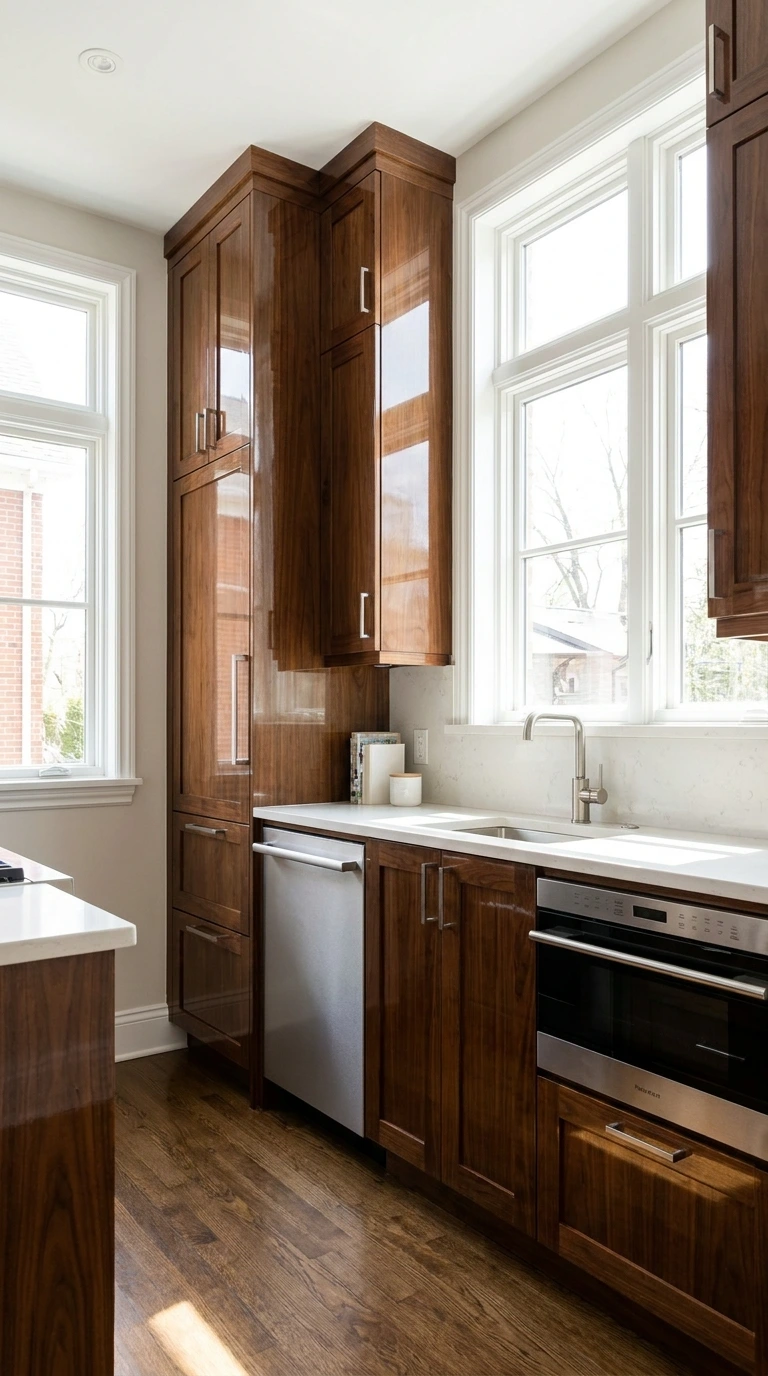
Closed cabinetry, particularly higher-quality builds, tends to be viewed as a more substantial, permanent upgrade by potential buyers or future renters touring a space. This perception can matter if you’re renovating with resale or re-rental value in mind, since open shelving sometimes reads as a trendy, temporary choice rather than a lasting investment.
Open shelving, while beloved in design circles, doesn’t always carry the same universal appeal, since not every future occupant wants their belongings on constant display. If you’re decorating purely for your own enjoyment with no resale considerations, this factor matters far less than it would for someone flipping or preparing to sell.
10. Storage Capacity for Bulky Items
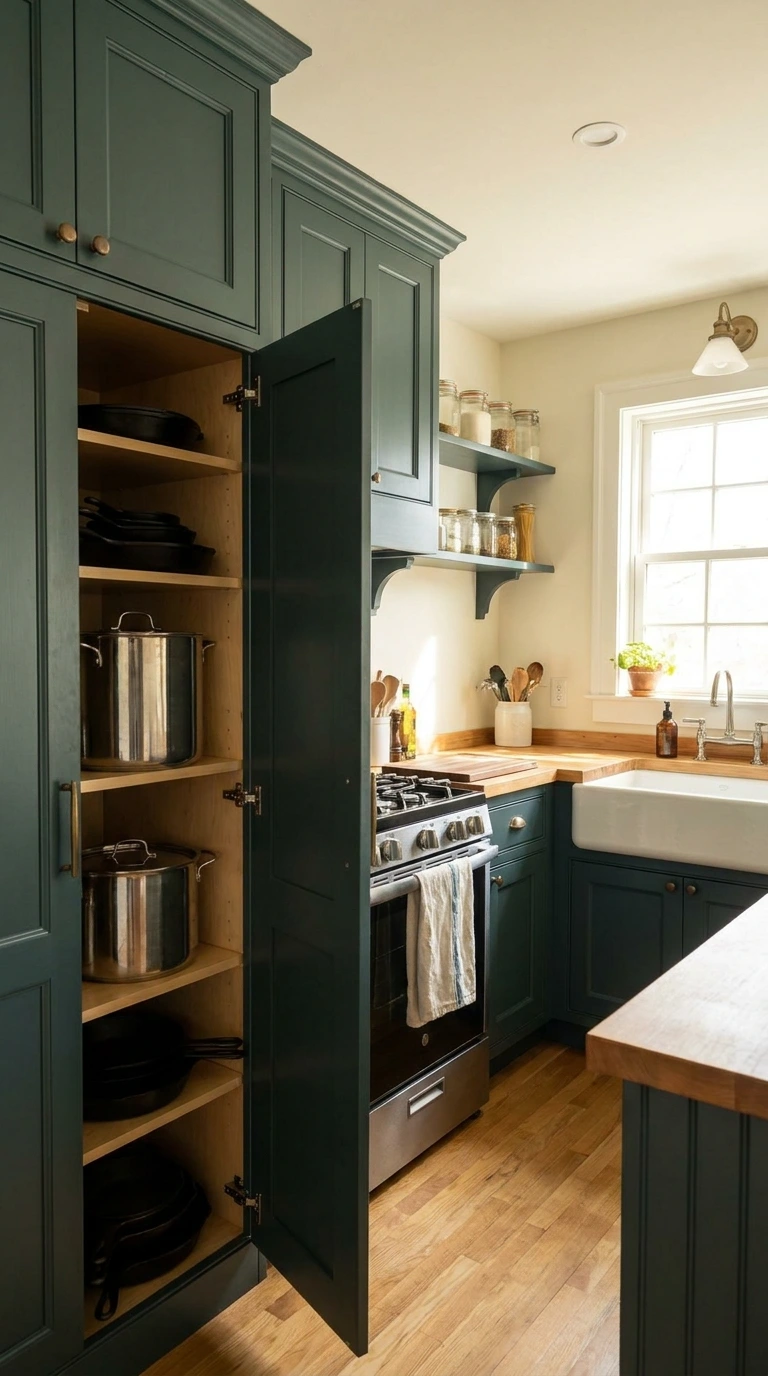
Cabinets, especially those with adjustable shelving or deep drawers, generally accommodate bulky, irregularly shaped items, large pots, small appliances, or bulk pantry goods, more gracefully than open shelves ever could. A door hides the awkward shapes and varying sizes that would otherwise clutter an open display.
Open shelving works best with items that have a pleasing, uniform shape, like matching dishware or neatly stacked bowls, and struggles considerably with the genuinely bulky, mismatched items most kitchens actually contain. Anyone with a lot of large cookware or bulk-buy pantry staples will likely find cabinets far more practical for this specific category of storage.
| Factor | Open Shelving Wins | Closed Cabinets Win |
|---|---|---|
| Perceived Space | Yes, creates visual openness | No, can feel boxier |
| Maintenance | No, needs frequent dusting | Yes, contents stay protected |
| Cost | Yes, cheaper to install | No, more expensive upfront |
| Hiding Clutter | No, everything is visible | Yes, doors conceal mess |
| Bulky Item Storage | No, struggles with odd shapes | Yes, accommodates more easily |
11. Combining Both for a Balanced Approach
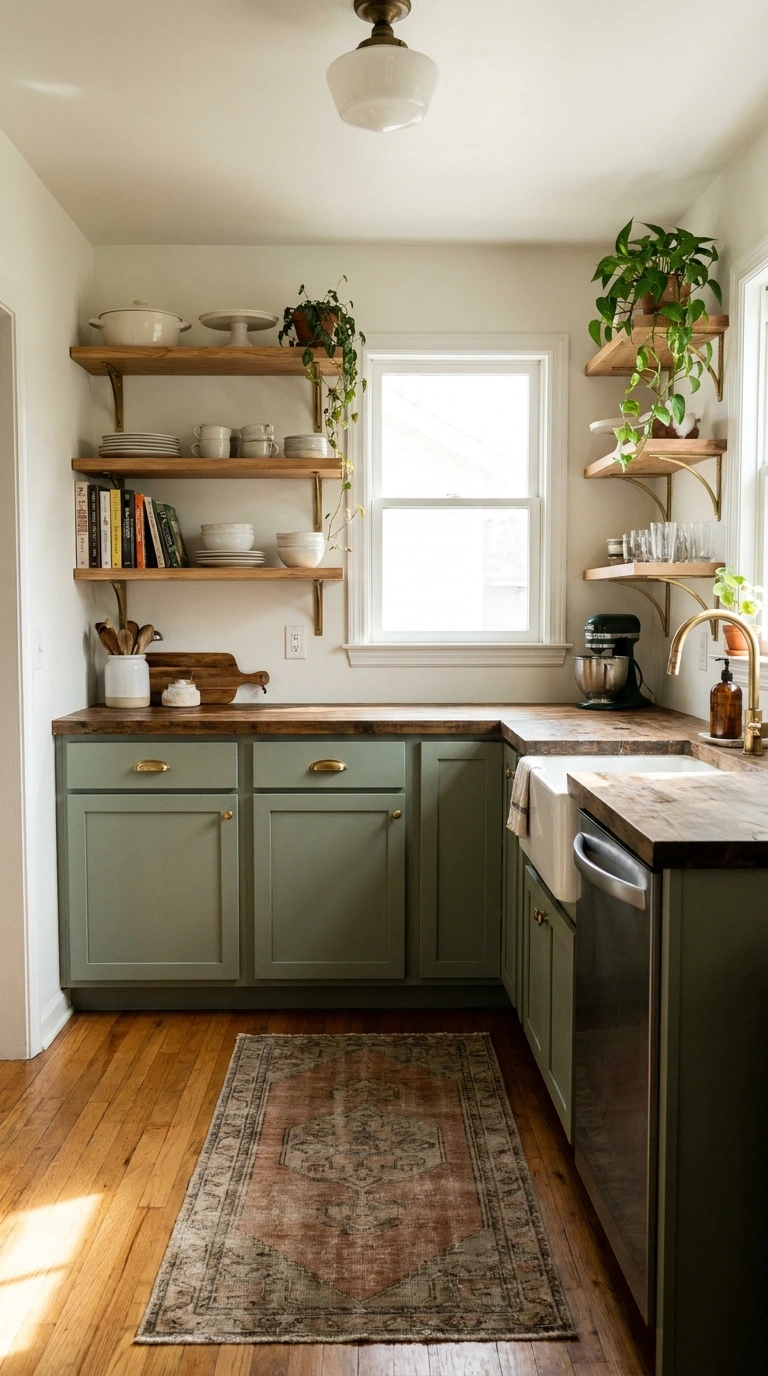
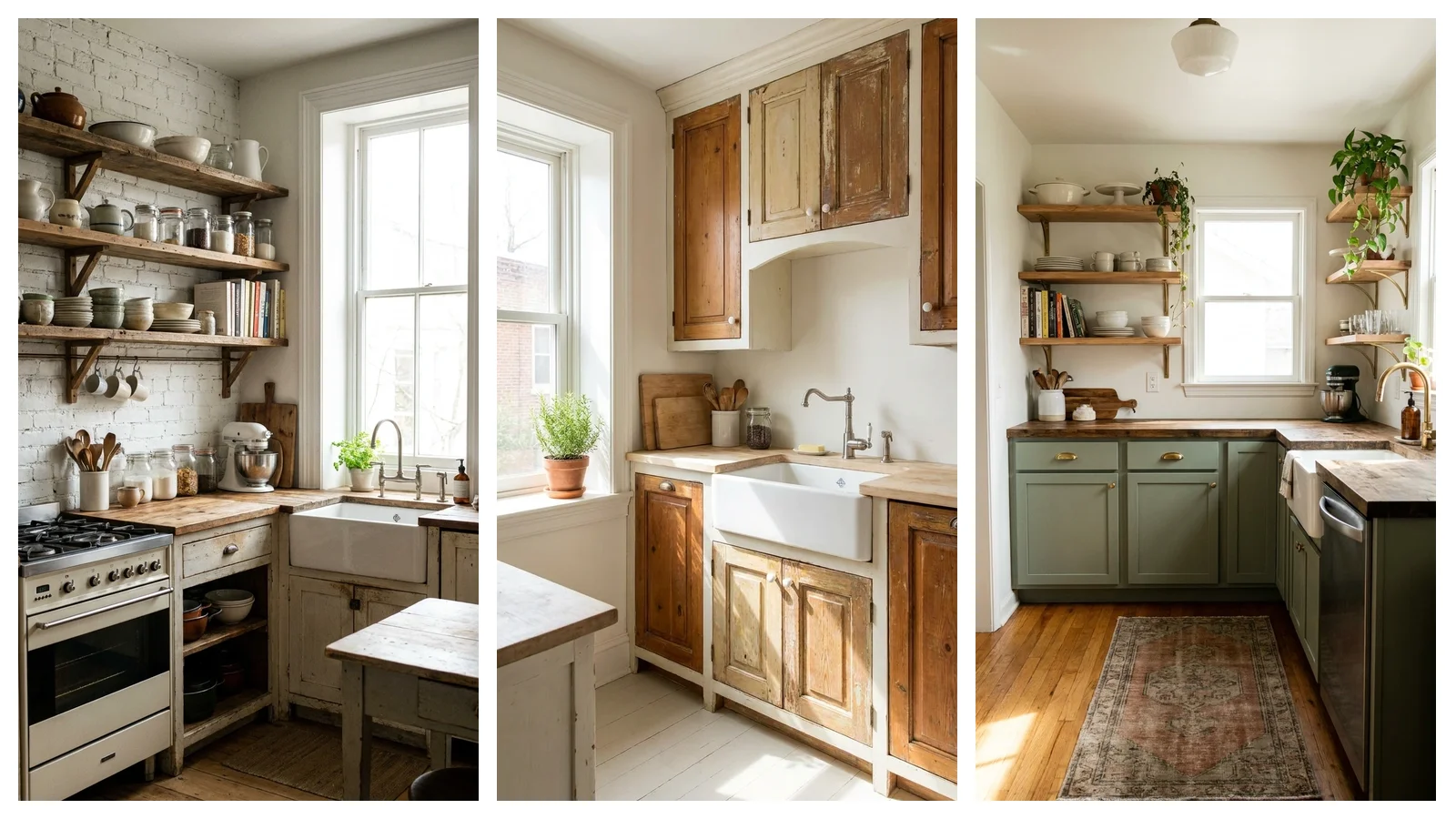
Many of the most functional small apartments actually use a mix of both, open shelving for a curated display of everyday dishware or cookbooks, paired with closed cabinets for less attractive bulk storage and awkward items. This hybrid approach lets you enjoy the visual openness of shelving without sacrificing genuine practical storage.
A common layout places open shelves at eye level for frequently used, attractive items, while lower or less visible cabinets handle everything else. Approaching the decision as “both, strategically placed” rather than an all-or-nothing choice often produces the most livable result in a genuinely small space.
12. Lighting Considerations for Each Option
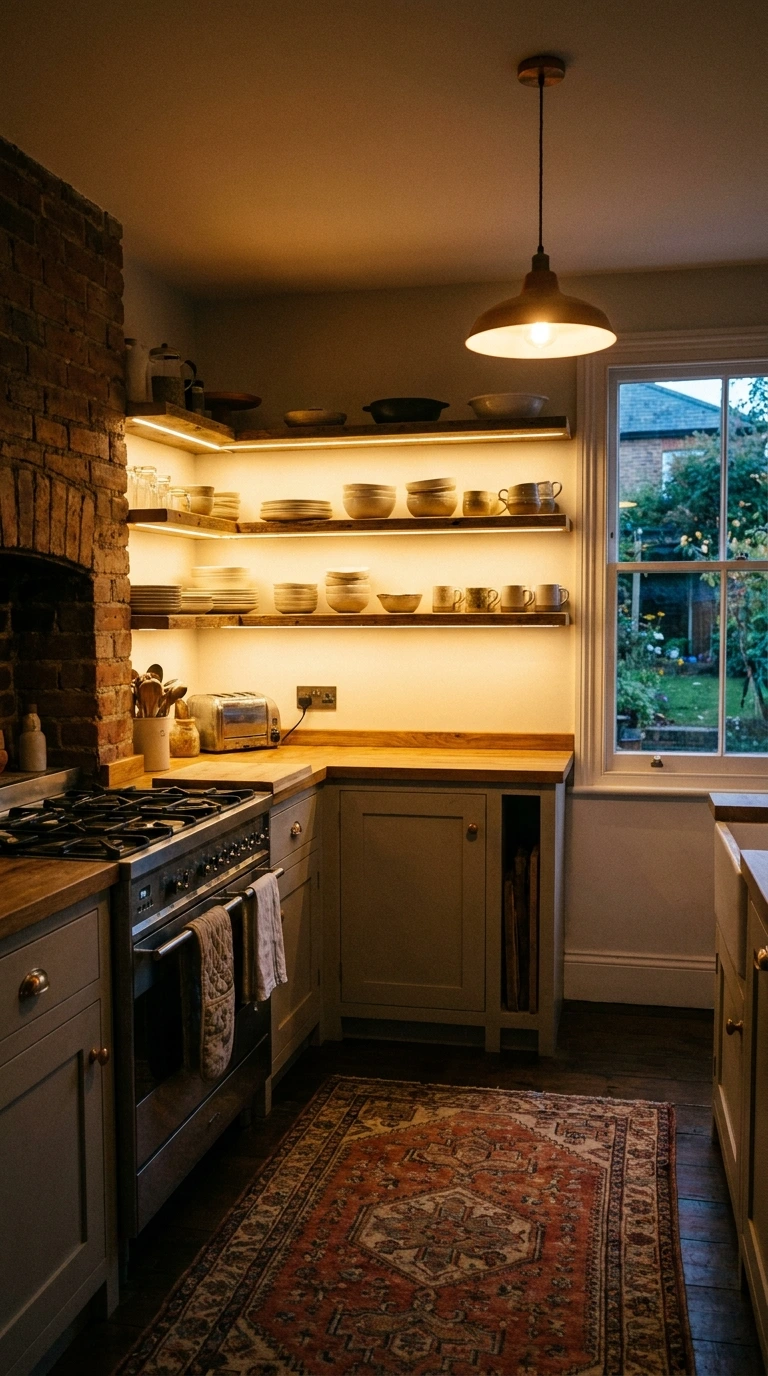
Open shelving benefits considerably from a bit of built-in or under-cabinet lighting, since it turns a simple storage solution into a genuine design feature that highlights your dishware or decor after dark. This lighting investment is a relatively small addition that meaningfully elevates the overall look of open shelves.
Cabinets don’t require this same lighting consideration for their interiors, since contents stay out of sight regardless of the room’s overall lighting. If you’re drawn to open shelving specifically for its display potential, budgeting for a strip of warm LED lighting underneath is well worth the modest additional cost.
13. Ease of Cleaning the Storage Itself
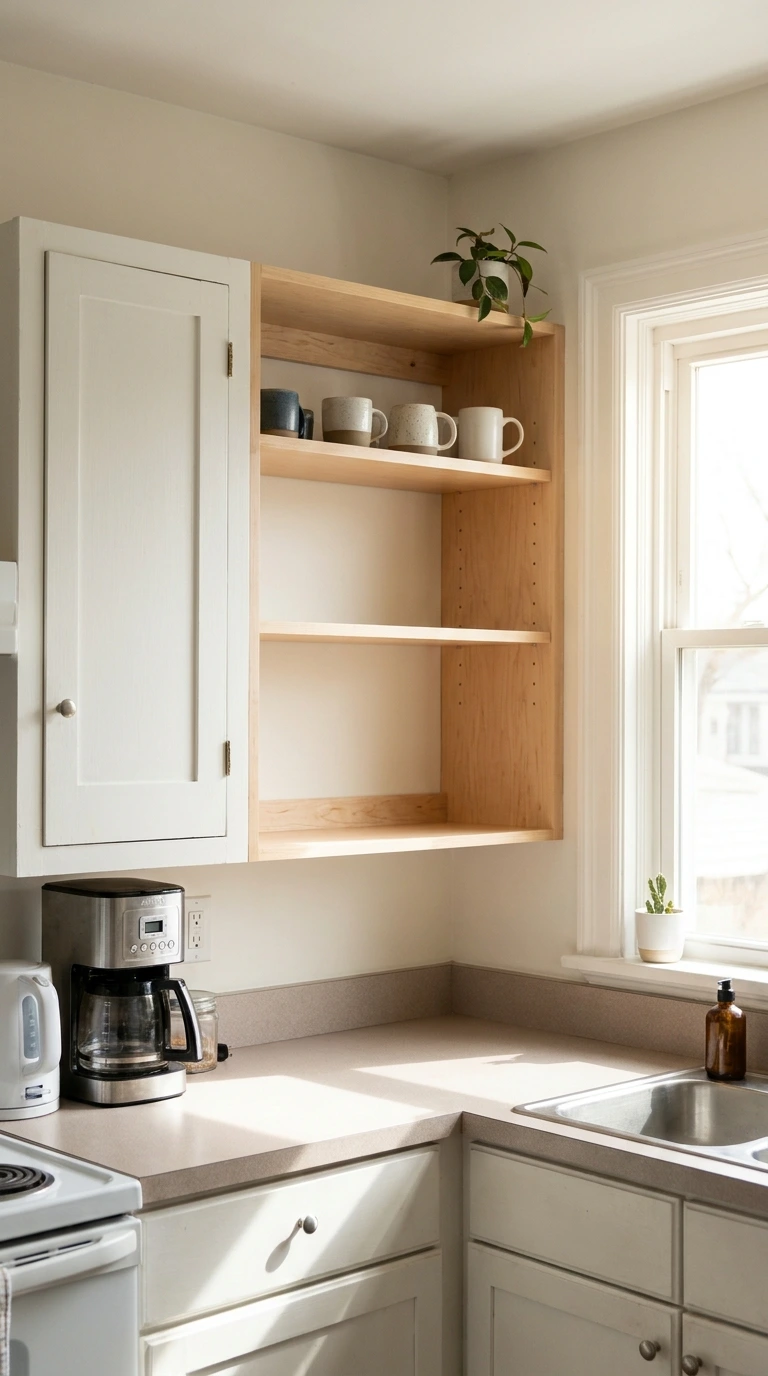
Wiping down an open shelf takes just a few seconds, a quick pass with a cloth across an exposed surface, compared to the more involved process of clearing out a cabinet, wiping the interior, and replacing everything before closing the door again. For anyone who prioritizes low-effort maintenance, this speed genuinely matters over years of regular use.
Cabinets, while slower to clean thoroughly, don’t require nearly as frequent attention in the first place, since their contents stay protected from daily dust and airborne particles. Weighing frequency against thoroughness here often comes down to personal preference, since some people would rather clean often but quickly, while others prefer infrequent but more involved cleaning sessions.
14. Impact on Small Kitchen Layouts Specifically
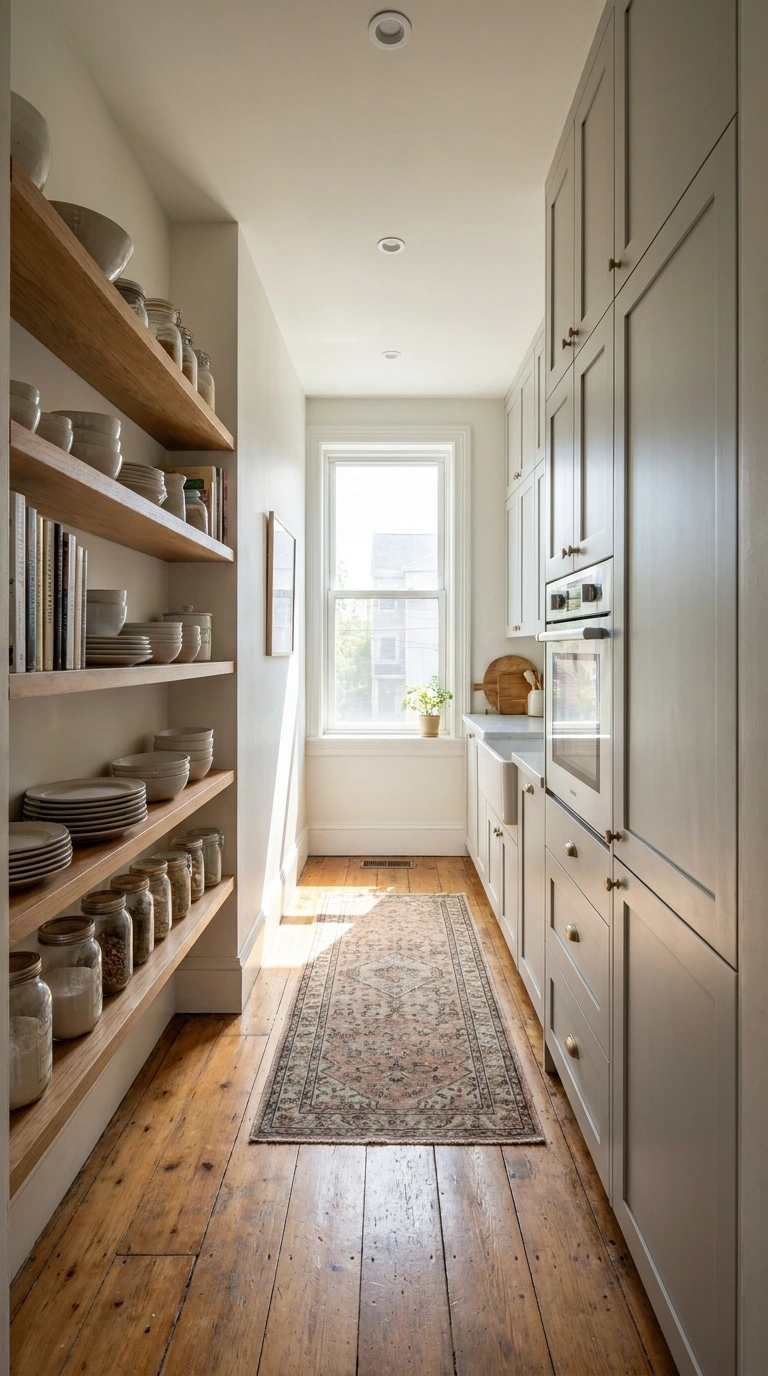
In a particularly tight galley or one-wall kitchen, open shelving on at least one wall often makes the whole cooking space feel considerably less cramped, since it avoids the boxy, tunnel-like feeling that a full run of upper cabinets can create in a narrow layout. This effect becomes especially noticeable in kitchens where counter space and walking room are already at a premium.
Closed cabinets, meanwhile, provide crucial concealed storage precisely in the layouts where every inch of visible space matters most for keeping the room feeling calm rather than cluttered. Testing both in your specific floor plan, even temporarily with a removed door or a simple ledge, reveals far more about what actually suits your particular kitchen’s proportions than general design advice ever could.
15. Making the Final Decision for Your Specific Life
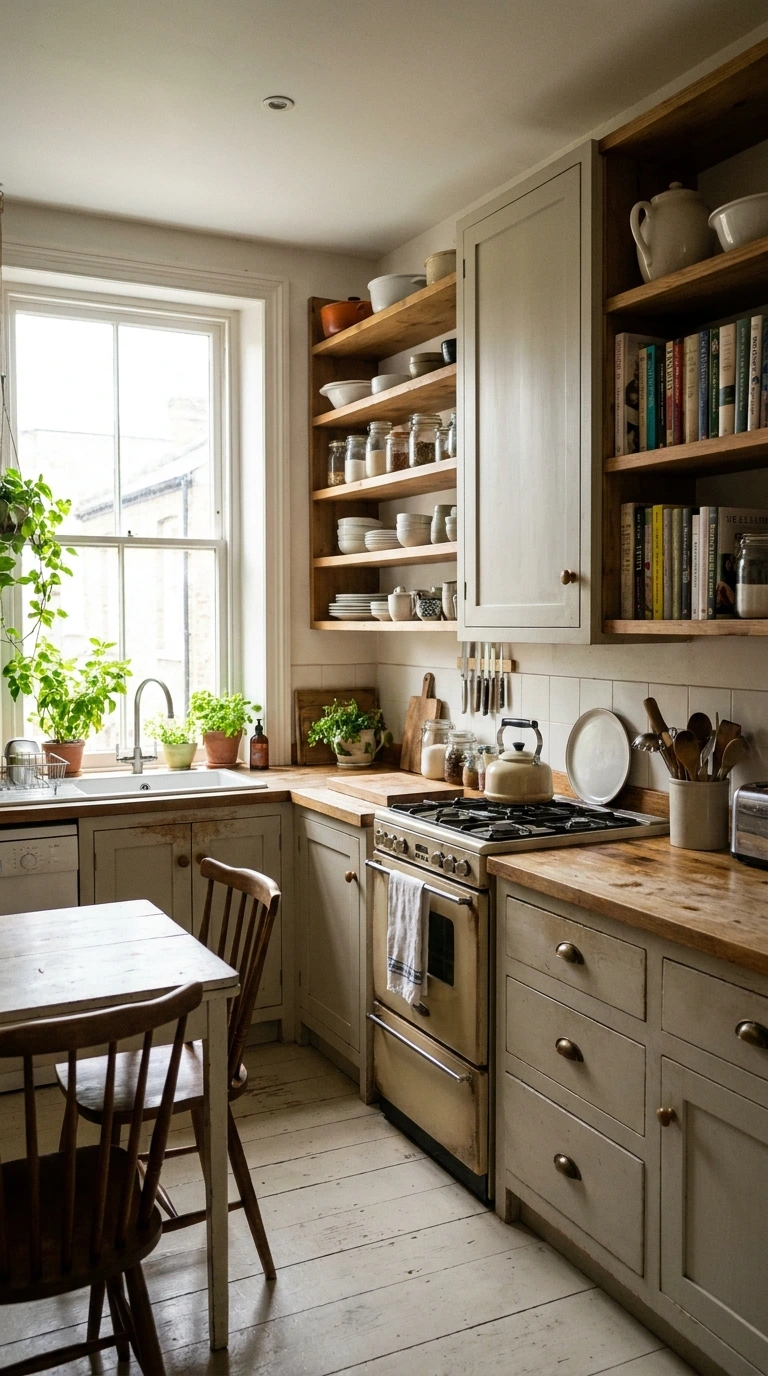
Ultimately, the right choice comes down to being honest about your actual habits rather than the aspirational version of yourself you might picture using a beautifully styled open shelf. If you genuinely enjoy organizing, own attractive dishware, and don’t mind occasional dusting, open shelving can be a genuine joy to live with daily.
If your reality involves grabbing whatever container is closest, owning a mismatched collection accumulated over years, or simply preferring a low-maintenance kitchen, closed cabinets will almost certainly serve you better long term. Neither choice is inherently superior, and the best small apartment kitchens are the ones designed around how their specific occupant actually lives, not how a design magazine suggests they should.
Frequently Asked Questions
1. Is open shelving actually cheaper than closed cabinets?
Yes, in most cases, since open shelving requires just brackets and boards rather than the boxes, doors, and hardware involved in cabinetry. This cost difference makes open shelving particularly appealing for renters or anyone working with a tighter renovation budget.
2. Do open shelves really make a small kitchen look bigger?
Generally yes, since the eye can see through to the wall behind rather than hitting a solid cabinet front, creating a sense of visual continuity. This effect is strongest when the shelving itself is kept relatively minimal and uncluttered.
3. How often do open shelves actually need cleaning?
Most people find weekly dusting sufficient for shelves not directly above a stove, though shelves near cooking areas may need attention every few days due to airborne grease. This maintenance frequency is worth considering honestly before committing to open storage throughout an entire kitchen.
4. Can I mix open shelving and closed cabinets in the same small kitchen?
Absolutely, and many designers consider this hybrid approach the most practical solution for real-life small kitchens. Open shelving for attractive, frequently used items paired with cabinets for bulkier or less visually appealing storage often works better than committing fully to either extreme.
5. Are closed cabinets better for resale value than open shelving?
Generally yes, since cabinets tend to read as a more permanent, universally appealing upgrade to potential buyers or future renters. Open shelving, while trendy, doesn’t appeal to everyone, since not all future occupants want their belongings on constant display.
6. What’s the biggest mistake people make when choosing open shelving?
Underestimating the ongoing organizational effort required, people often install open shelves expecting a one-time styling project rather than an ongoing commitment to keeping the display curated and dust-free. Being honest about your actual daily habits before installing is the best way to avoid this regret.
7. Is it expensive to switch from open shelving back to closed cabinets later?
It depends on the scope, but switching back typically costs more than the original open shelving installation, since you’re now adding full cabinetry rather than simple brackets. This is worth factoring in if you’re genuinely unsure which option suits you, since testing with a temporary or lower-cost version first can save money in the long run.
Conclusion
Open shelving and closed cabinets each solve different problems, and the better choice really depends on your specific habits, budget, and how much daily maintenance you’re willing to commit to. Neither option is a universal upgrade, despite what design trends might suggest at any given moment.
Consider testing a small version of whichever option you’re leaning toward before committing to a full installation throughout your space. Your small apartment kitchen will function best when its storage matches how you actually live, not how a trend suggests you should.