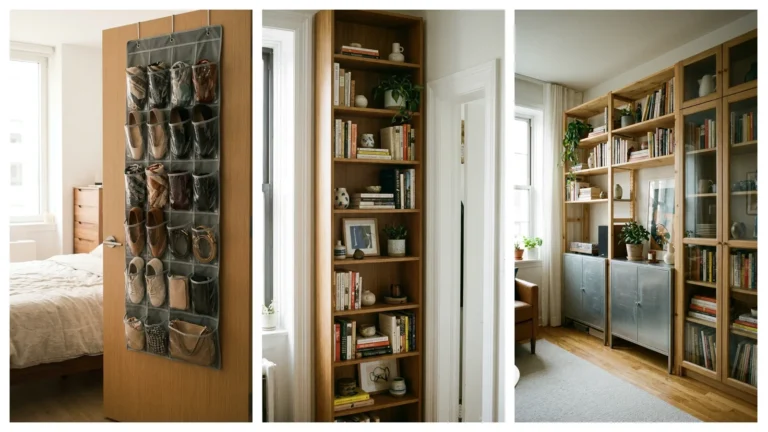
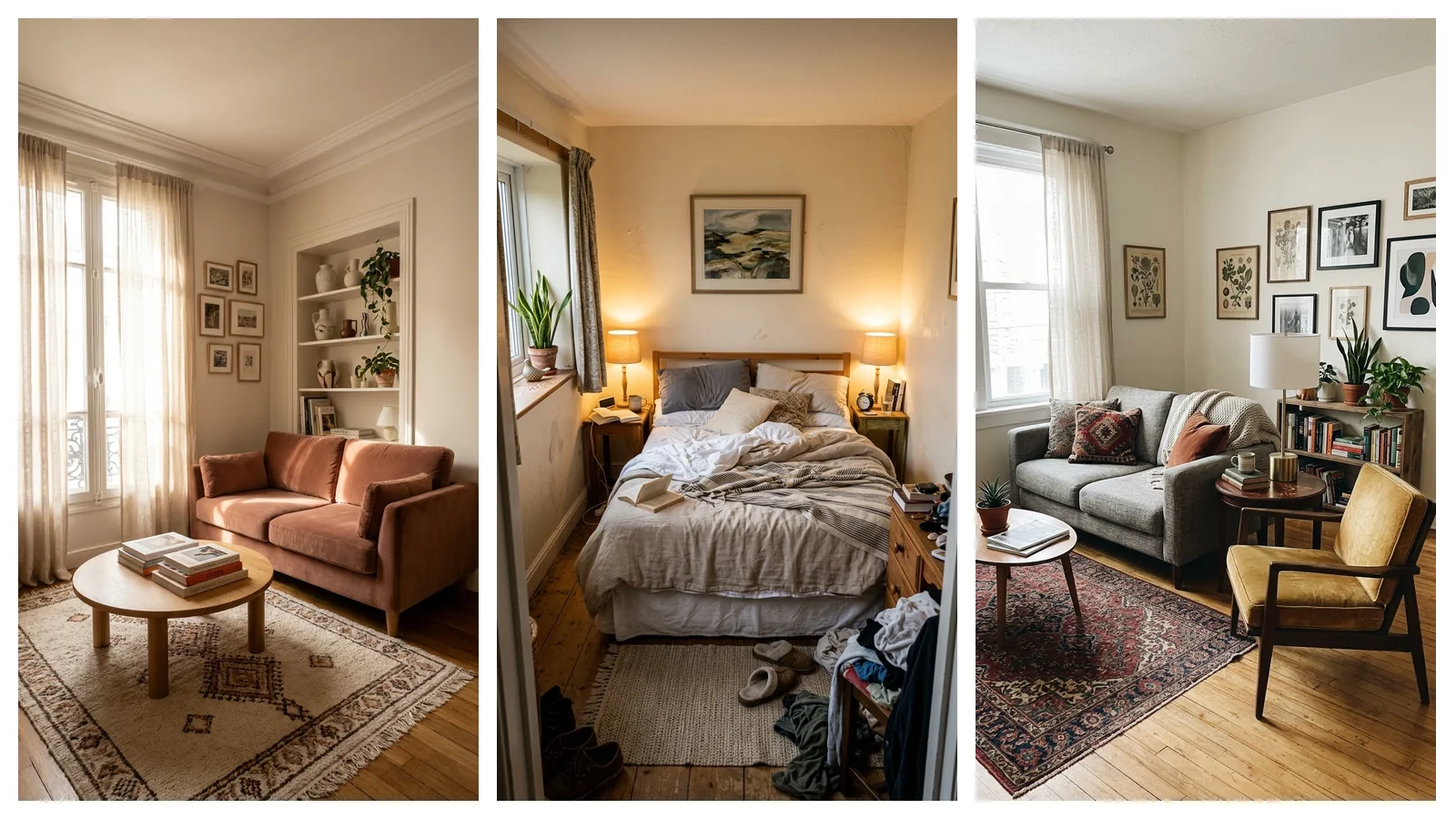
20 Small Apartment Decorating Mistakes Beginners Make (and How to Fix Them)

Introduction
Every small apartment has more potential than it looks like on moving-in day. The problem is not the square footage — it is the decisions made in the first few weeks, when furniture gets pushed against walls, rugs get bought too small, and overhead lights get left as the only light source in the room.
These twenty mistakes are the ones that appear most consistently in small apartments decorated without a clear plan. Each one has a straightforward fix. Work through them in order and the difference between where you started and where you end up will be significant.
1. Buying Furniture Before Measuring
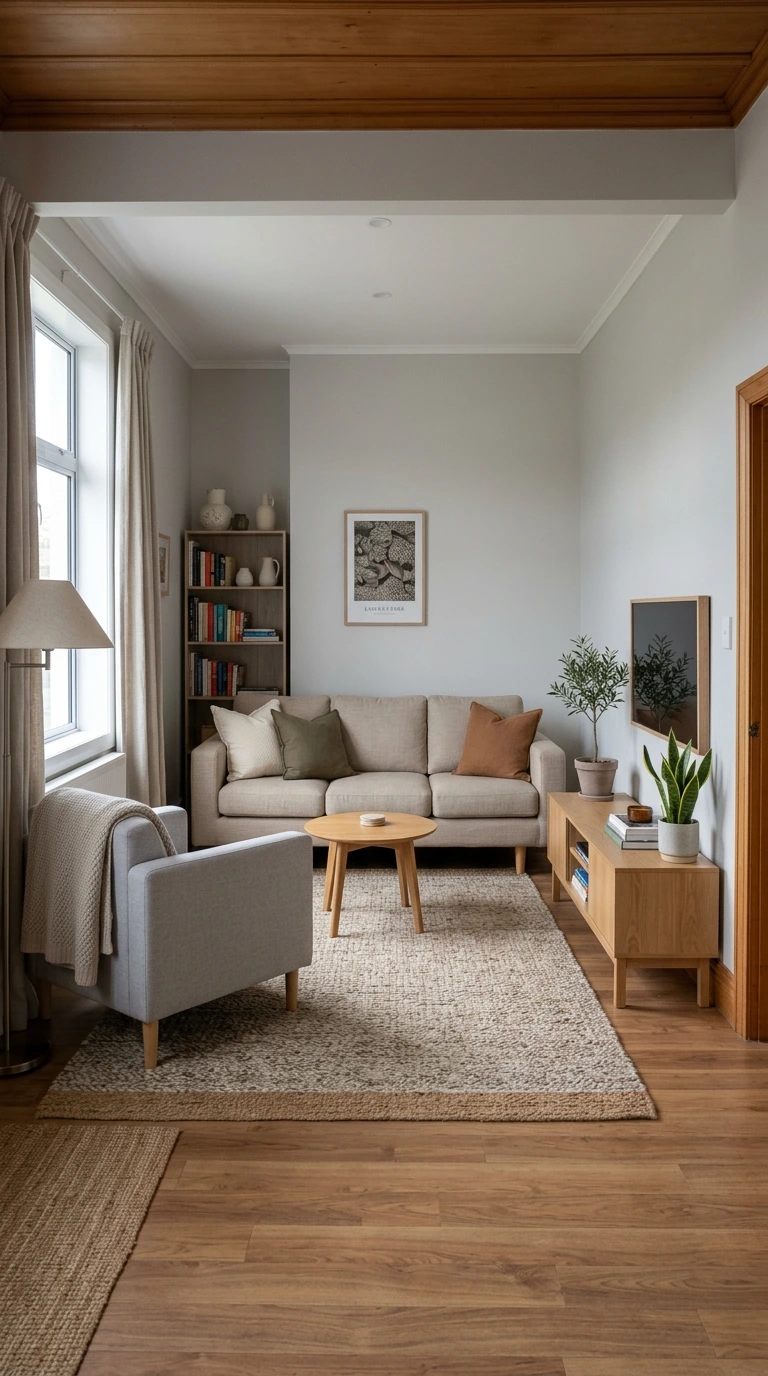
This is the mistake that causes every other mistake. A sofa that is six inches too wide, a bed that leaves no walking clearance, a dining table that blocks the kitchen doorway — all of these are avoidable with a tape measure and twenty minutes before any purchase is made.
Measure the room in both directions. Measure every doorway and corridor the furniture needs to pass through. Sketch the room to scale on paper — even a rough sketch — and cut out paper rectangles representing the furniture you are considering. Move them around until the layout works before spending a single dollar.
The Measurements You Need Before Buying Any Furniture
- Room dimensions in both directions
- Every doorway height and width the piece will pass through
- Ceiling height for any tall units
- Walking clearance — at least 36 inches on main paths, 24 inches on secondary paths
- Distance from sofa to coffee table — 18 inches is the comfortable minimum
2. Buying a Rug That Is Too Small
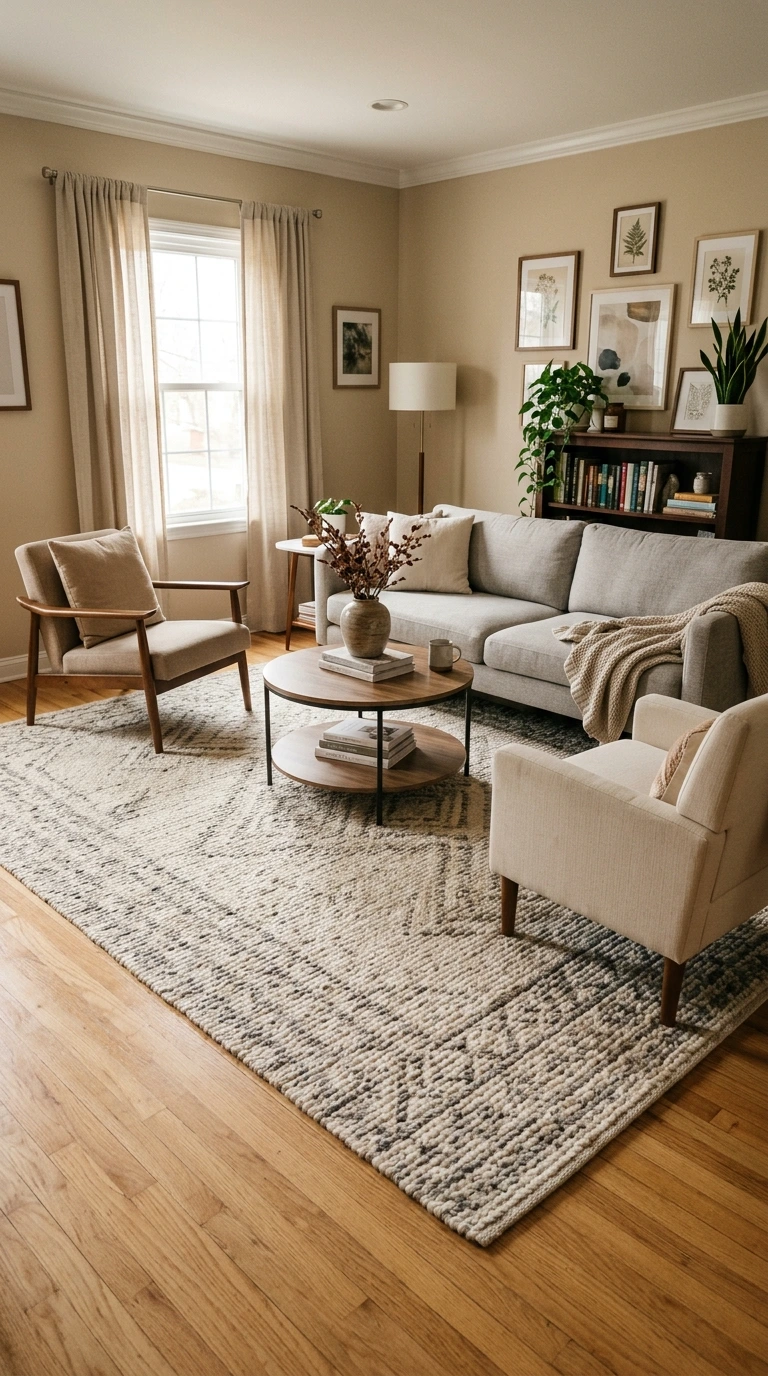
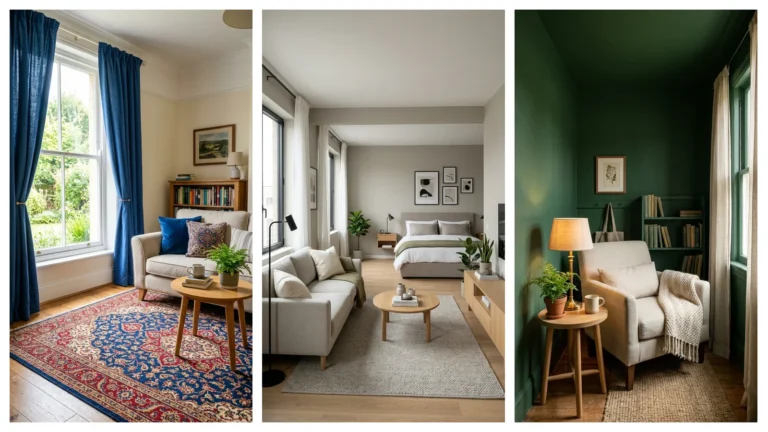
A rug that is too small is one of the most common and most visually disruptive mistakes in any small apartment. A rug sized only for the coffee table, leaving the sofa and chairs floating on bare floor beside it, looks like a decorative afterthought rather than an anchoring decision.
The front legs of every sofa and chair in the seating group should sit on the rug. In a bedroom, the rug should extend at least eighteen inches beyond each side of the bed so both feet land on it when getting up. When in doubt, go one size larger than feels instinctively right — the larger rug almost always looks better.
Pro Tip: Before buying a rug, use painter’s tape on the floor to mark out the exact dimensions of the rug you are considering. Live with the taped outline for twenty-four hours before purchasing. Most people discover the rug they were planning to buy is too small and size up before spending the money.
3. Pushing All Furniture Against the Walls
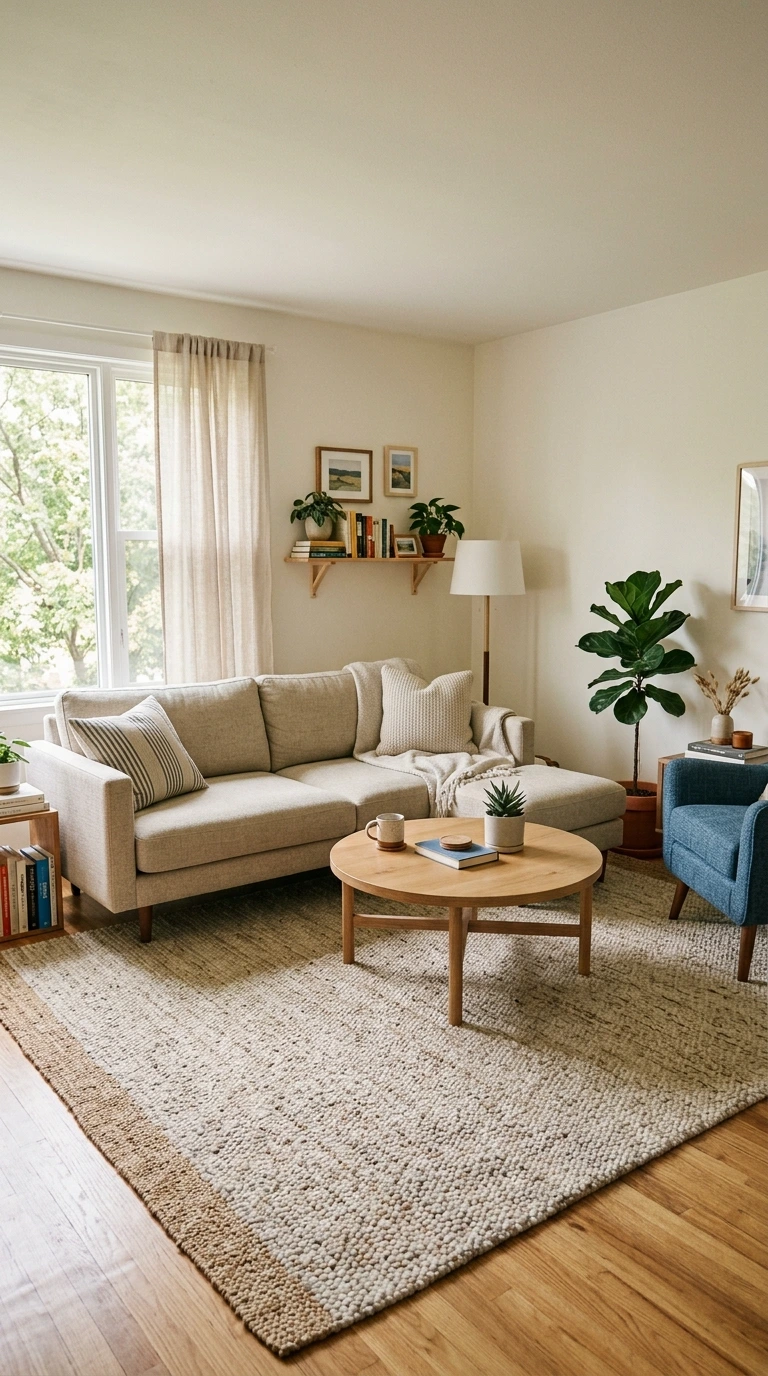
This is the instinctive layout choice in a small room and almost always the wrong one. Furniture pushed against every wall creates a hollow, awkward center space and a room that feels like a waiting room rather than a living space. It also pushes the seating so far from the center of the room that conversation becomes difficult.
Pull the sofa at least a few inches away from the wall. Angle an accent chair slightly rather than placing it flat against a surface. Float the bed away from side walls where possible. This creates a more natural, gathered feeling in the seating area and makes the room feel larger, not smaller.
4. Using Only Overhead Lighting
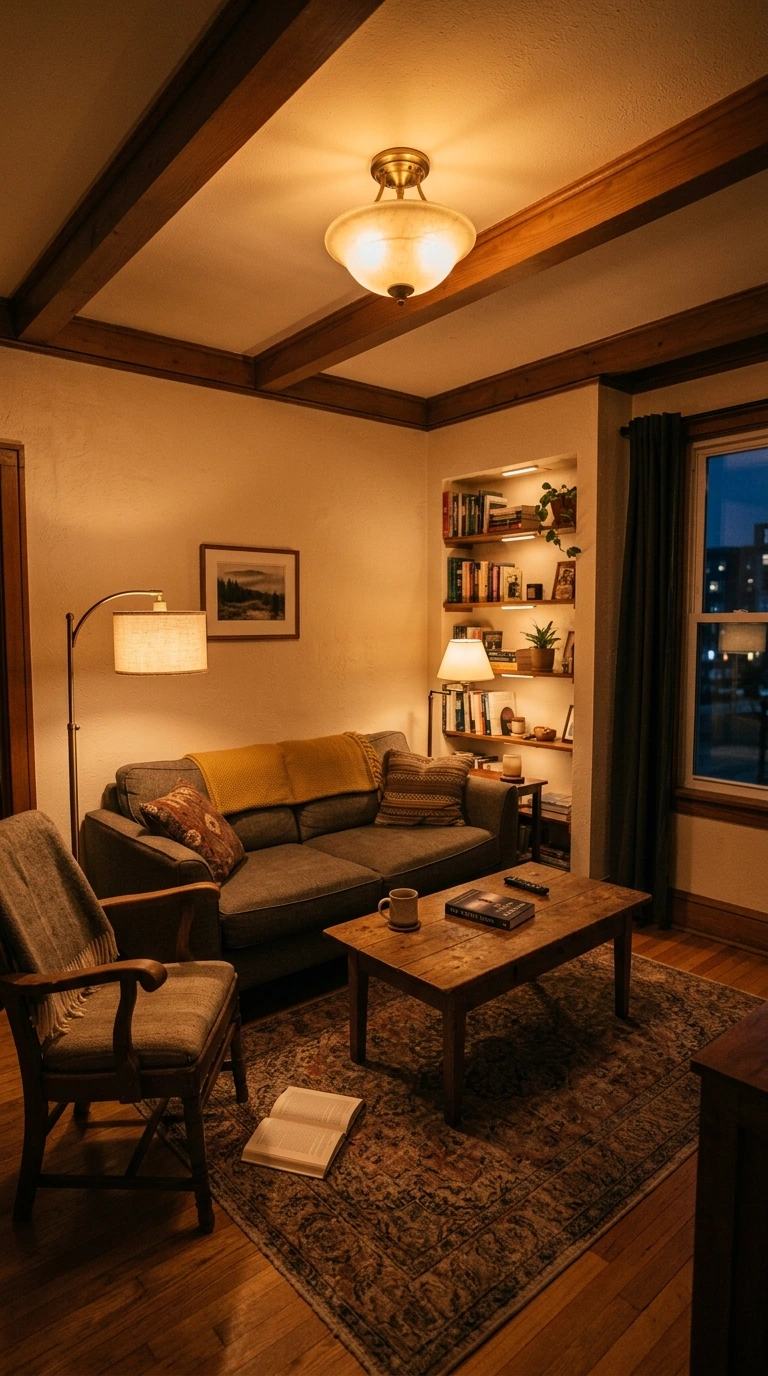
A single overhead light in a small apartment living room or bedroom creates flat, unflattering illumination that works against the warm, layered atmosphere good interior design creates. It also eliminates all shadow and depth from the room, making everything look two-dimensional.
Add at least one floor lamp and one table lamp to the living room. Add bedside lamps in the bedroom. Switch to warm white bulbs throughout — 2700K is the standard for a cozy residential feel. The overhead light becomes a functional supplement rather than the primary source, and the room transforms in the evening.
Warning: Never rely on a single bare overhead bulb as the only light source in a living or sleeping space. Beyond the aesthetic problem, flat overhead lighting creates eyestrain during reading and screen use, and the harsh downlight is unflattering for anyone in the room. Layer lighting — it is one of the highest-impact, lowest-cost changes available.
5. Hanging Artwork Too High
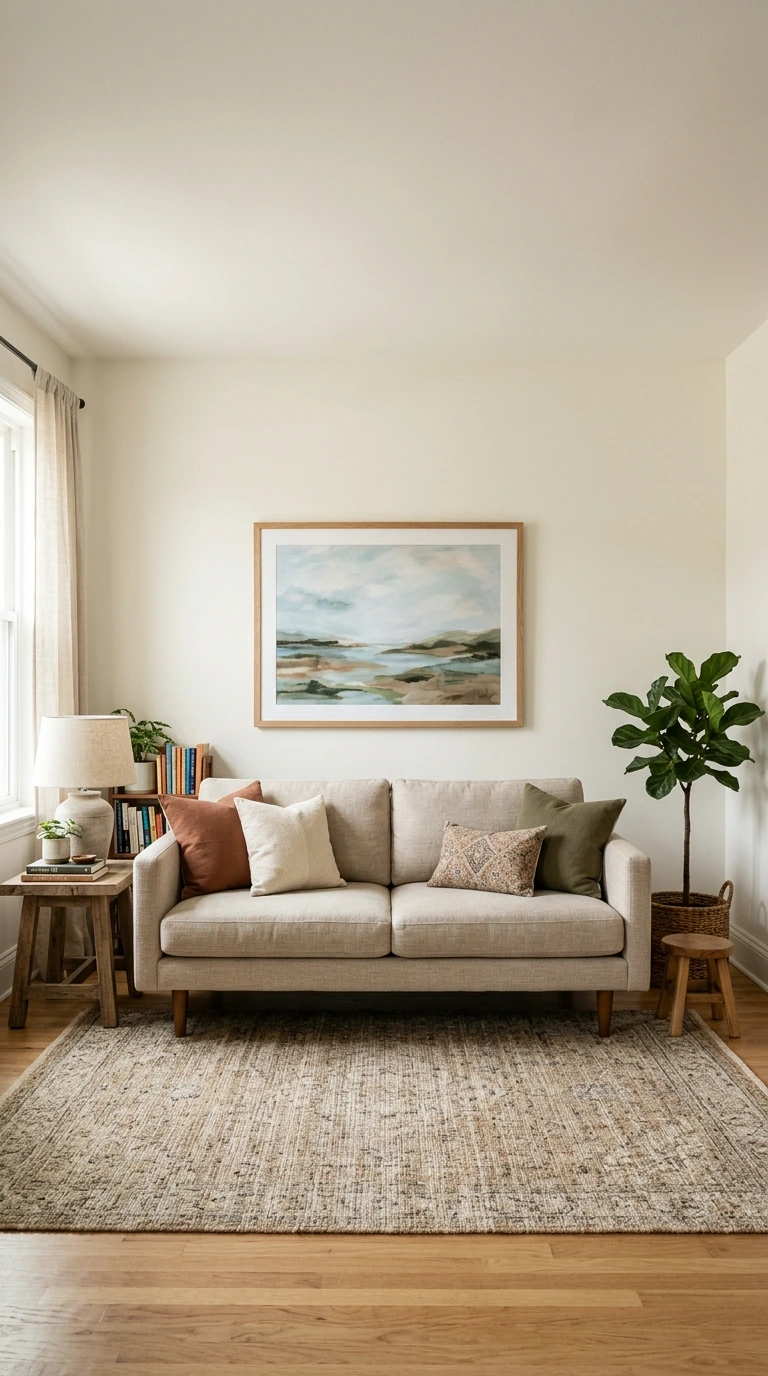
Walk into most apartments and the artwork is hung at a height that suggests it was placed by someone standing on tiptoe. Standard interior design guidance puts the center of a piece of art at approximately 57 to 60 inches from the floor — eye level for a standing adult. Most beginners hang artwork significantly higher than this.
The result is art that floats disconnected from the furniture below it and a room that feels visually unresolved. Lower existing artwork to the correct height — often a drop of six to twelve inches is needed — and the whole wall immediately reads as more considered. In a gallery arrangement, the center of the overall arrangement should sit at 57 to 60 inches, not the center of the top piece.
6. Ignoring the Entryway
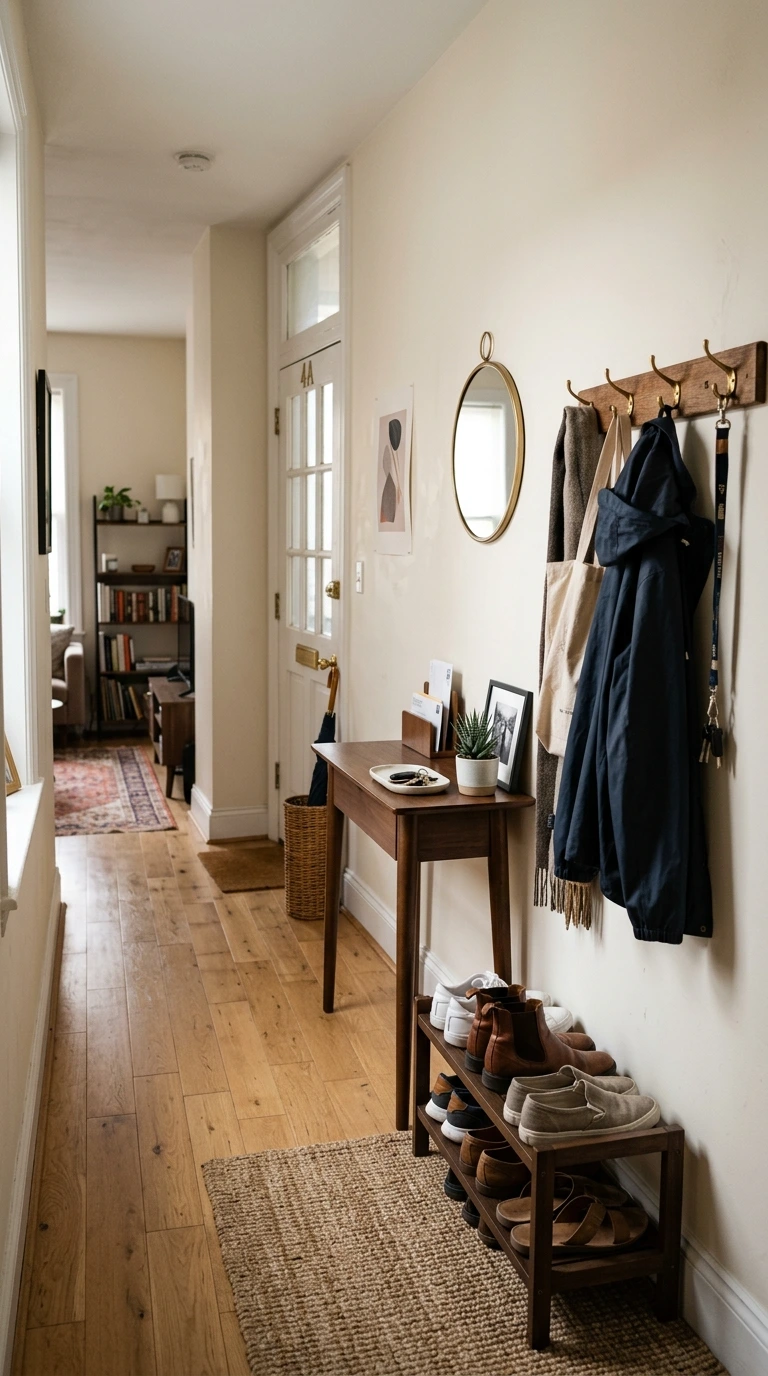
The entryway is the first interior space anyone experiences and the one most often left completely undecorated in a small apartment. A bare wall, a door that opens directly onto an unadorned space, and shoes scattered across the floor create an immediately negative first impression that affects how the rest of the apartment feels.
Even a small hook rail for coats, a narrow console table, a small mirror, and a mat for shoes creates an entryway that feels intentional. The entire setup can fit in less than twelve inches of depth along one wall. A well-organized, styled entryway makes the rest of the apartment feel more considered by association.
| Mistake | Quick Fix | Time Required | Cost |
|---|---|---|---|
| Rug too small | Size up one dimension | Shopping trip | Mid |
| All furniture against walls | Pull sofa 4–6 inches out | 10 minutes | Free |
| Artwork hung too high | Lower by 6–12 inches | 20 minutes | Free |
| Only overhead lighting | Add one floor lamp | Shopping trip | Low-Mid |
| No entryway setup | Add hooks, console, mirror | Half day | Low-Mid |
7. Buying Everything From the Same Store
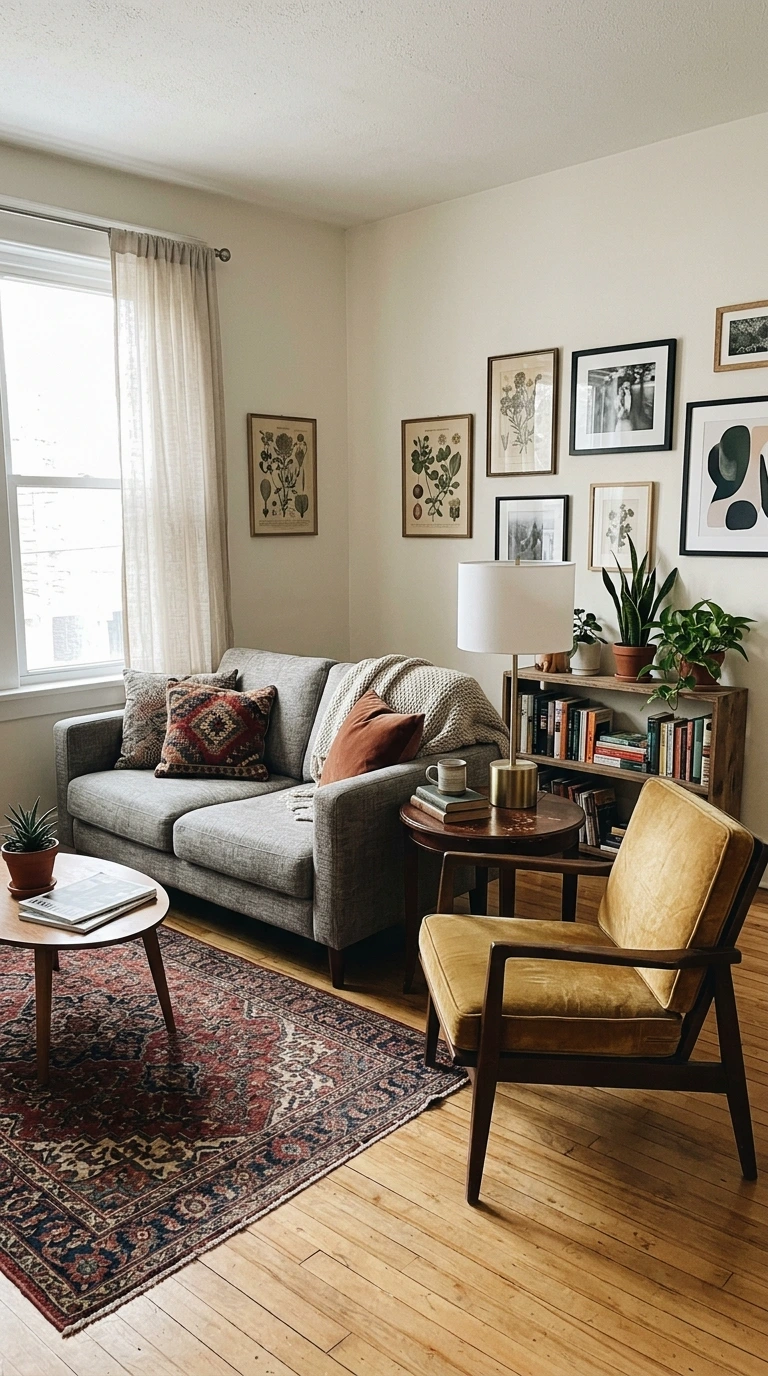
A room furnished entirely from a single retailer in a single shopping trip has a showroom quality that no amount of styling can disguise. Everything matches too precisely. Nothing has accumulated. Nothing has personality. The room looks like a set rather than a home.
Mix sources deliberately — a vintage chair alongside a new sofa, a thrifted side table beside a retail lamp. Buy things at different times as you find them rather than completing the room in one session. Introduce at least one object with a history — a family piece, a flea market find, something with a story. This mix is what gives a room the quality of having been lived in rather than designed.
8. Choosing the Wrong Scale Furniture
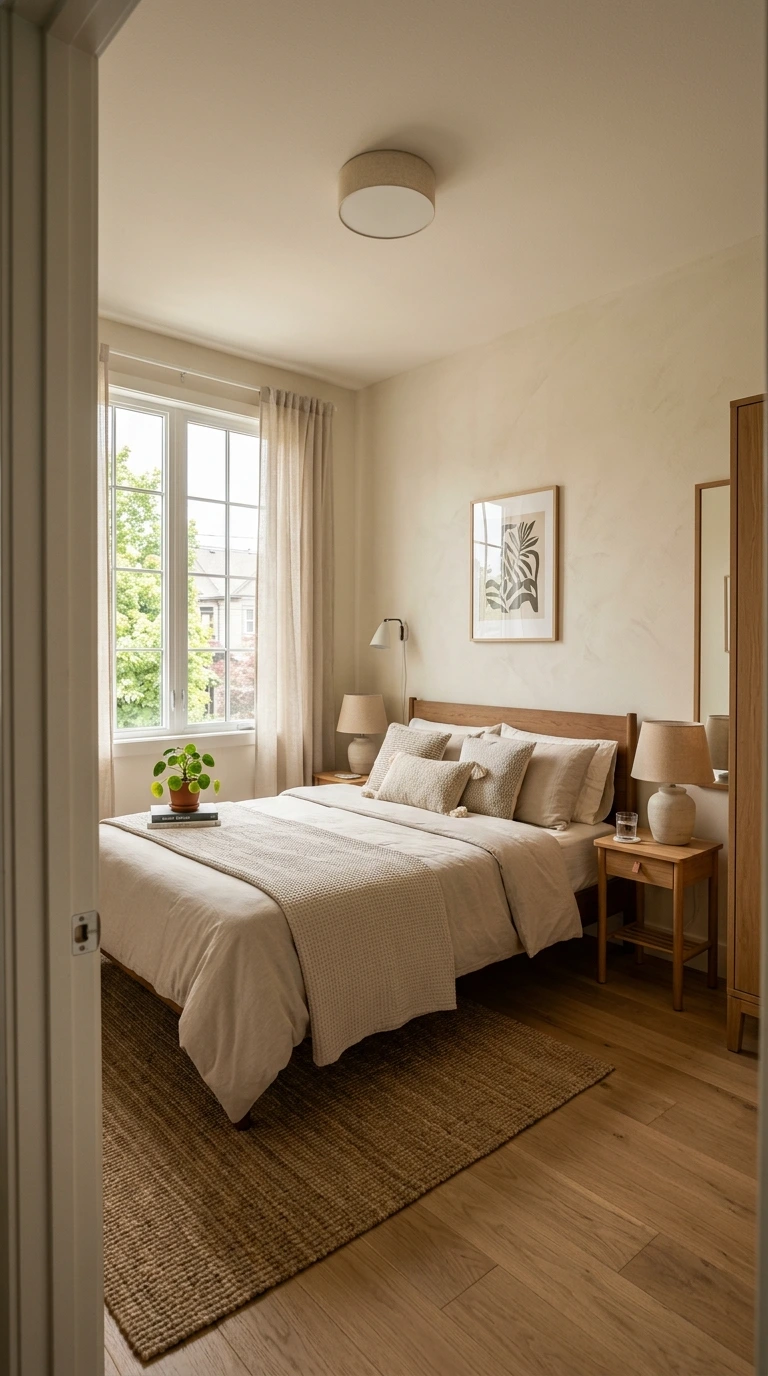
Oversized furniture in a small room is the most common scale mistake — the king-size bed that leaves twelve inches of clearance on each side, the three-seater sofa in a room that only suits a two-seater, the dining table that seats six in a space suitable for four. Each of these choices compromises the room’s function and livability.
But undersized furniture is an equally common mistake in the opposite direction — the loveseat that looks lost in a living room that could handle a standard sofa, the single bedside table in a room that has space for two, the small rug in a large-enough room. Scale should be calibrated to the actual space rather than defaulting in either direction.
9. No Clear Focal Point
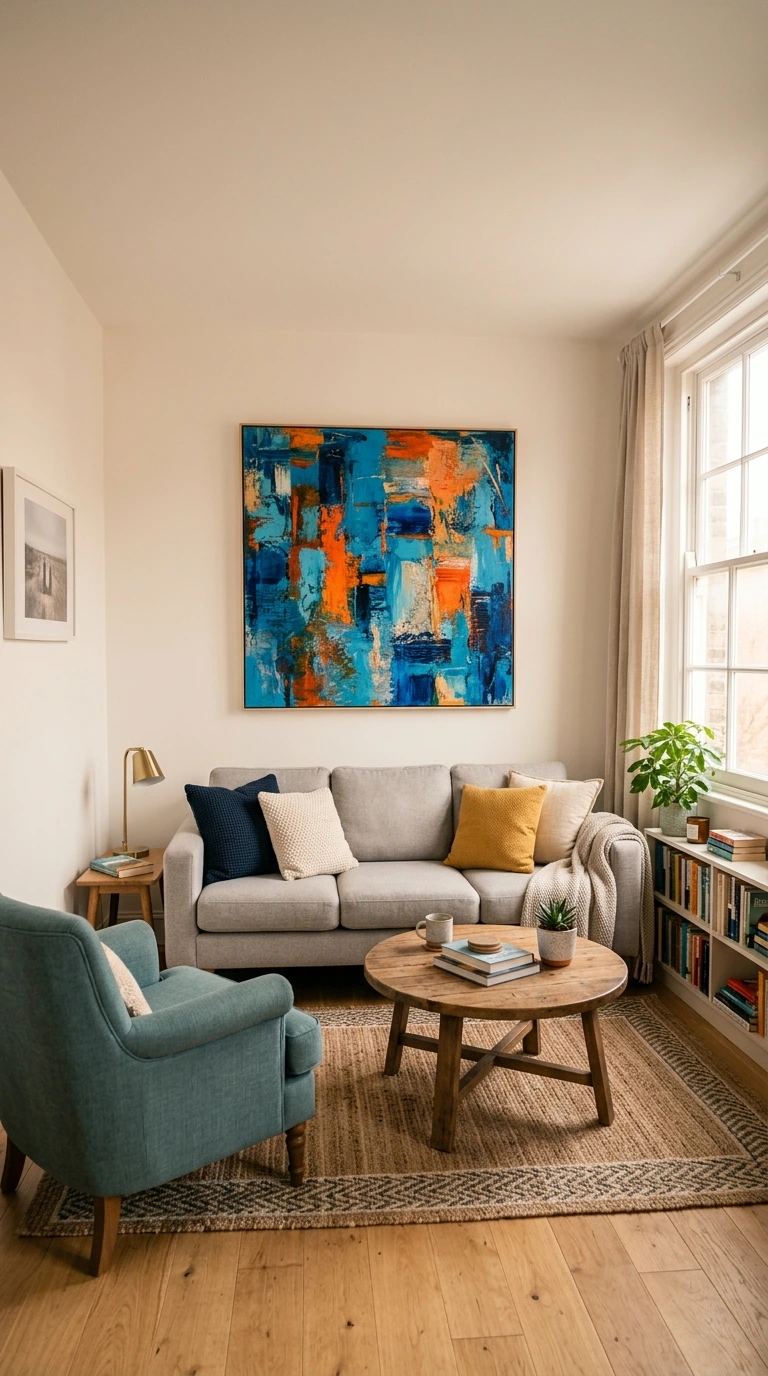
Every room needs a focal point — a single element that draws the eye when you walk in and gives the space a clear center of gravity. Without one, the eye moves around the room without finding anywhere to land, creating a vague sense of disorder even when the room is tidy.
In a living room, the focal point is usually a fireplace, a media wall, or a large piece of artwork above the sofa. In a bedroom, it is almost always the bed and headboard wall. If the room lacks a natural focal point, create one — a large piece of art, a statement piece of furniture, a dramatically styled shelving unit. Then arrange everything else around it.
Pro Tip: Stand in the doorway of each room and identify what your eye goes to first. If the answer is nothing in particular, or something you did not intend — a pile of laundry, the blank wall above the TV — the room needs a focal point. Add one before styling anything else.
10. Underestimating the Power of Curtains
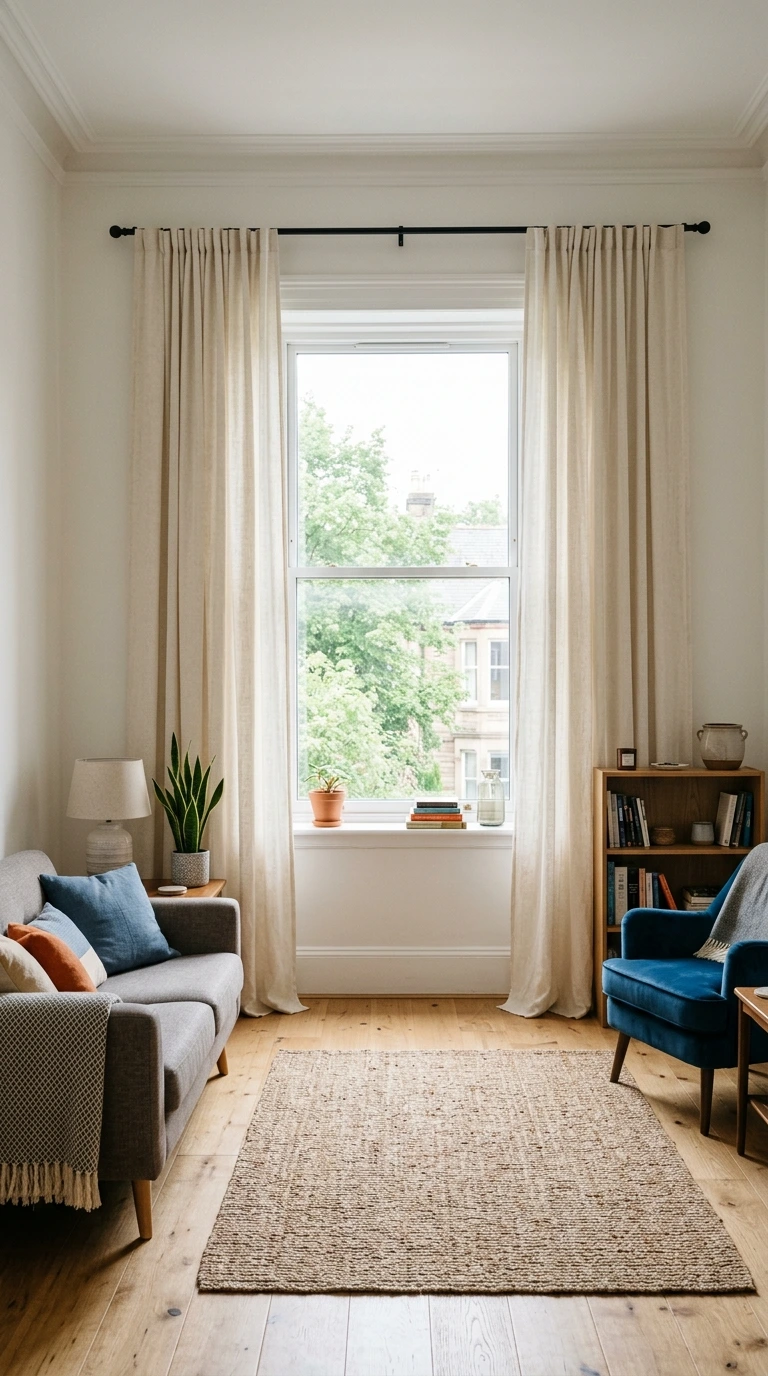
Most small apartments have curtains hung directly above the window frame, stopping at the window sill, in a width that matches the window exactly. This is the approach that makes ceilings feel low, windows feel small, and rooms feel confined.
Hang curtain rods as close to the ceiling as possible. Extend the rod at least twelve inches beyond the window frame on each side. Use floor-length curtains that puddle slightly or graze the floor. The result is a window that looks twice its actual size and a ceiling that feels significantly higher. This single change — which costs almost nothing if you already own curtains — dramatically transforms how a small room feels.
11. Neglecting the Bedroom
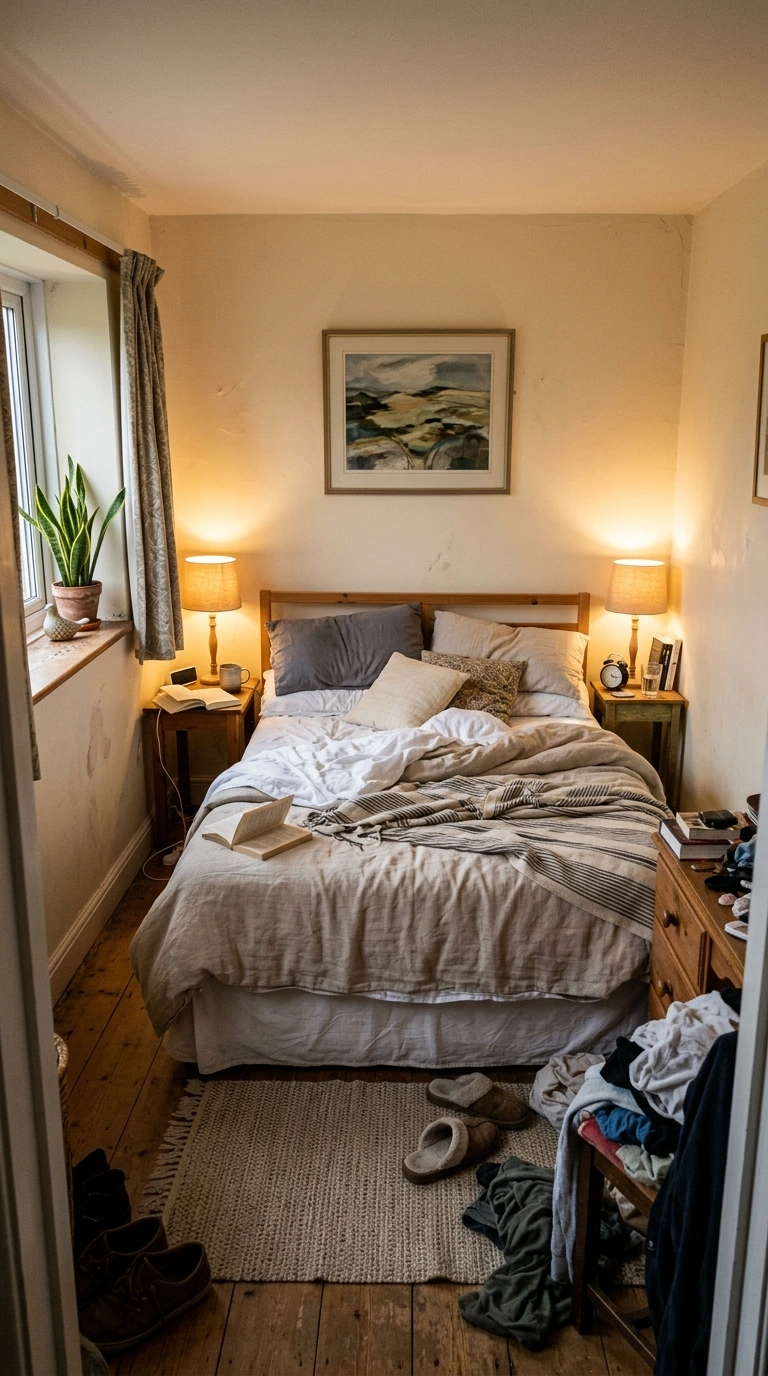
In a small apartment, the bedroom is often the least decorated room — treated as functional rather than personal, furnished with a bed and perhaps a dresser and left at that. This is a missed opportunity, since the bedroom is where you begin and end every day.
Add bedside lamps rather than relying on overhead lighting. Layer the bedding rather than using a single duvet cover. Add one piece of art above the headboard. A plant on the windowsill. A small rug beside the bed. Each of these takes minutes and costs very little but transforms the bedroom from a room you sleep in to a room you actually enjoy being in.
12. Too Many Small Decorative Objects
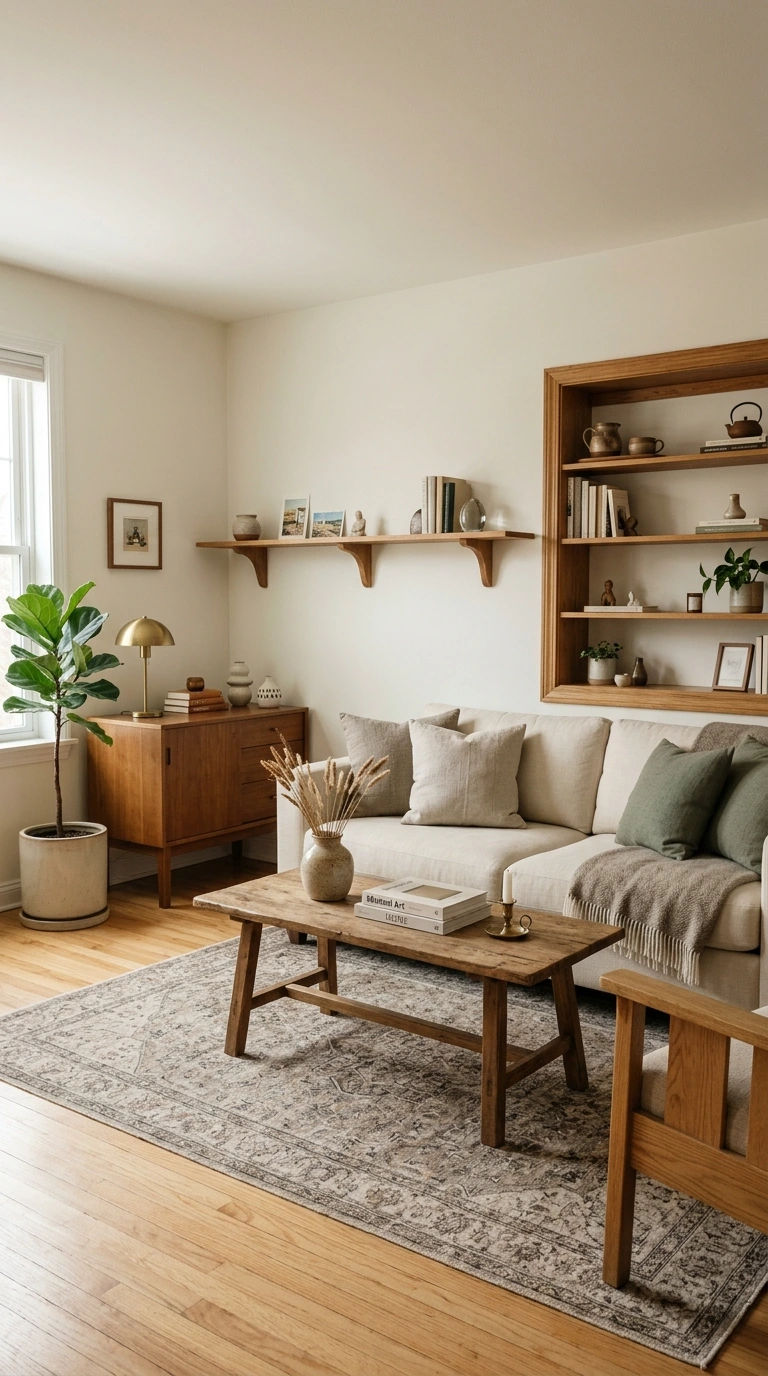
A collection of small decorative objects scattered individually across surfaces — a small candle here, a small vase there, a tiny figurine beside it — creates visual clutter that makes a room feel busy and small even when the individual objects are attractive. This is one of the most common decorating mistakes at every level.
The fix is grouping and editing. Remove two thirds of the objects currently on display and group what remains into deliberate arrangements of three to five related pieces. A single curated grouping on one shelf reads as far more sophisticated than the same objects scattered across every surface. When in doubt, remove rather than add.
Important: Before adding any new decorative object to a small apartment, identify what it will replace or where it will go without adding to surface clutter. A room that gets one new object without losing an old one accumulates clutter over time regardless of how attractive the individual purchases are. Every addition should come with a removal.
13. Choosing Paint Colors Without Testing
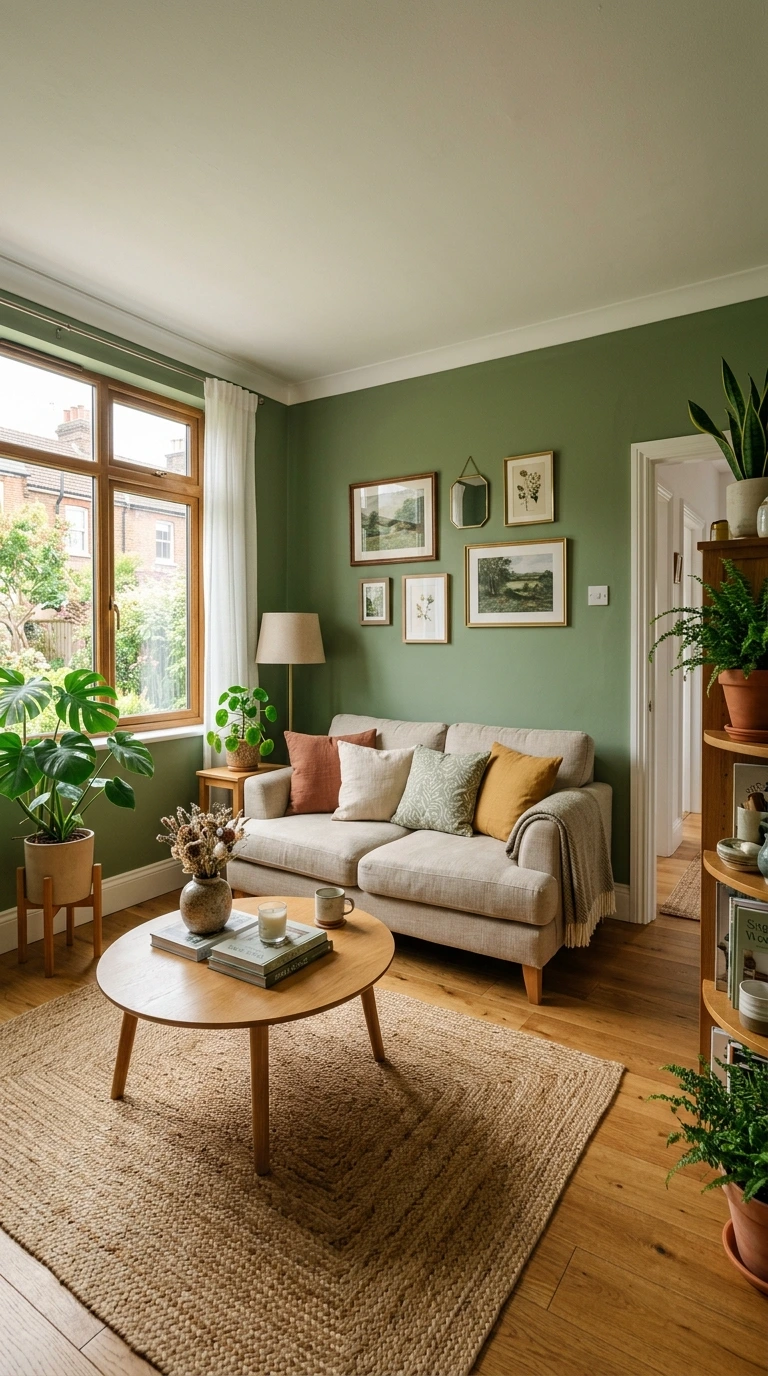
Paint colors look dramatically different on a wall than they do on a paint chip — and dramatically different at different times of day, under different light sources, and against different furniture. Choosing a paint color from a chip and applying it directly to four walls without testing is one of the most expensive beginner mistakes available.
Buy sample pots and paint large swatches — at least A3 size — on the actual wall. Observe them at different times of day, with the overhead light on and off, and against the furniture that will be in the room. Live with the swatches for forty-eight hours before making any final decision. The cost of a few sample pots is a fraction of the cost of repainting four walls in the wrong color.
14. Leaving Cable Clutter Visible
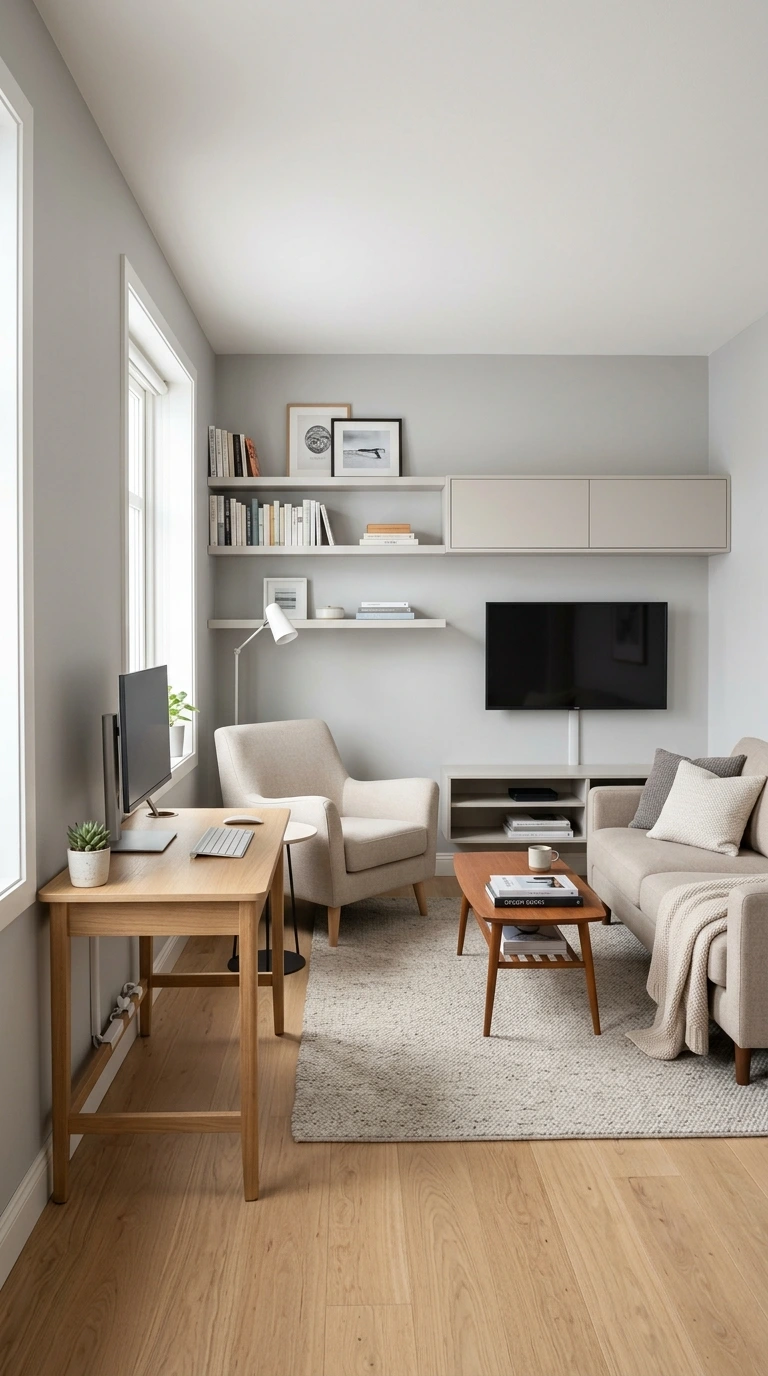
A beautifully furnished room undercut by a tangle of cables running from the television across the floor, charger cables draping from every surface, and extension cords visible from every angle — this is one of the most common finishing-stage failures in small apartments. Cable clutter creates a low-level visual disorder that the brain registers as mess even when everything else is tidy.
A cable management box hides power strips and excess cable length beneath a desk or behind a television stand. Cable clips running along the back edge of furniture keep individual cords neat. A cable channel running from a desk to a wall outlet eliminates the floor-level cable drop entirely. These three solutions together cost under twenty dollars and take one afternoon.
15. No Plants or Natural Elements
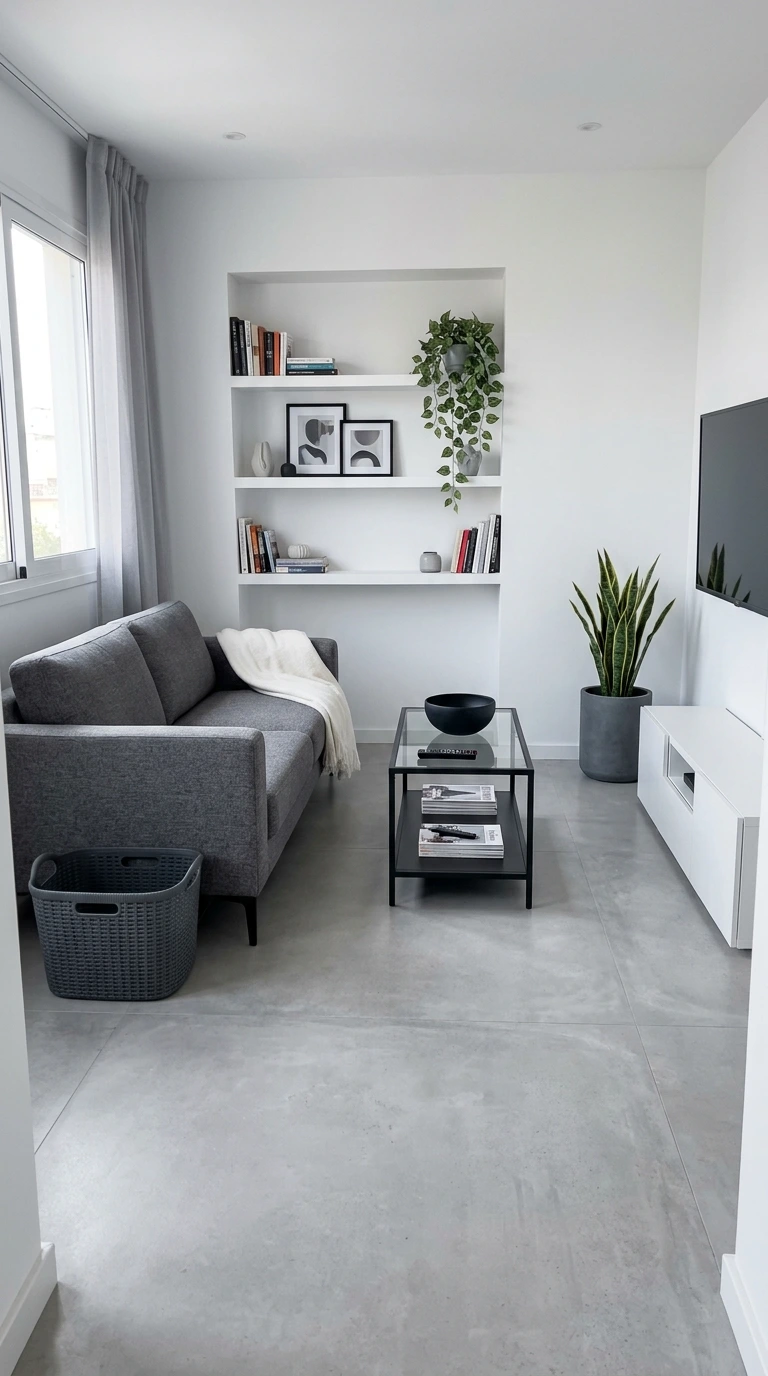
A small apartment with no plants, no natural materials, and no living elements has a quality that most people can feel but struggle to name — it feels static, slightly sterile, and not quite finished. Plants bring life and organic texture that no amount of furniture or decoration can replicate.
Start with one or two low-maintenance plants — a pothos, a snake plant, or a ZZ plant — positioned where they get appropriate light. Add a plant to the bedroom windowsill and one to a living room shelf. Include natural materials in the styling — a wooden bowl, a rattan basket, a stone object. These additions are inexpensive and make a measurable difference to how livable the space feels.
- Measure before every furniture purchase — room, doorways, and clearances
- Size your rug up until the front legs of all furniture sit on it
- Add at least two additional light sources beyond the overhead fixture
- Lower your artwork to 57–60 inches center height from the floor
- Group decorative objects in odd numbers and remove everything that does not belong
16. Ignoring the Ceiling
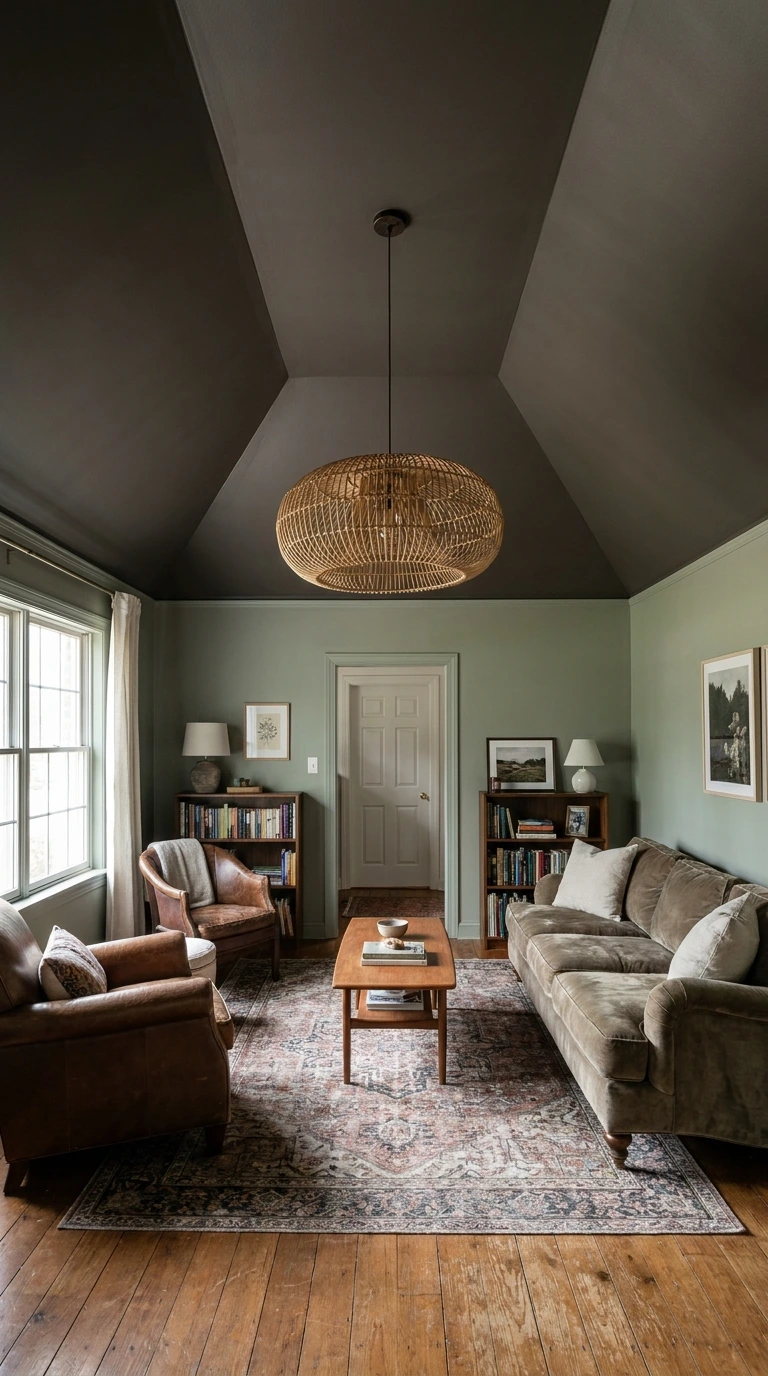
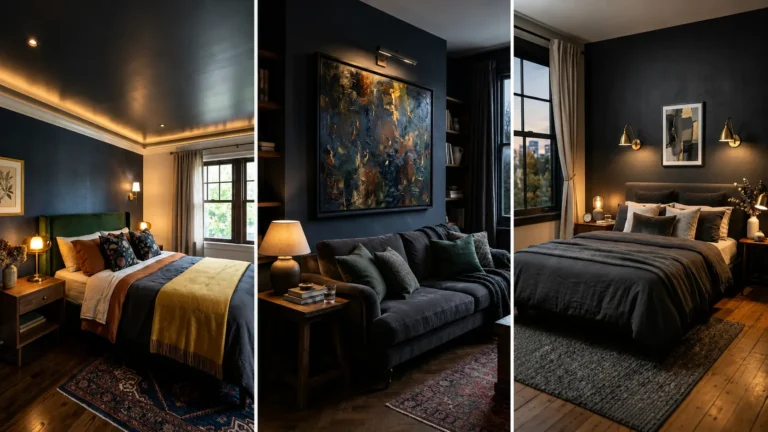
The ceiling is the most consistently overlooked surface in any small apartment. A plain white ceiling in a plain white room makes the space feel unfinished and generic. A ceiling treated with intention — a different color, a simple molding, a statement light fixture, or even just a carefully chosen pendant — adds a dimension that most apartments completely lack.
A dark ceiling in an otherwise light room creates an enveloping, cozy quality that low ceilings can actually enhance rather than hinder. A simple adhesive crown molding strip along the ceiling perimeter adds an architectural detail that reads as built-in from below. These are not expensive or permanent changes — but they add a layer of consideration that distinguishes a designed apartment from an assembled one.
17. Copying a Look Without Adapting It
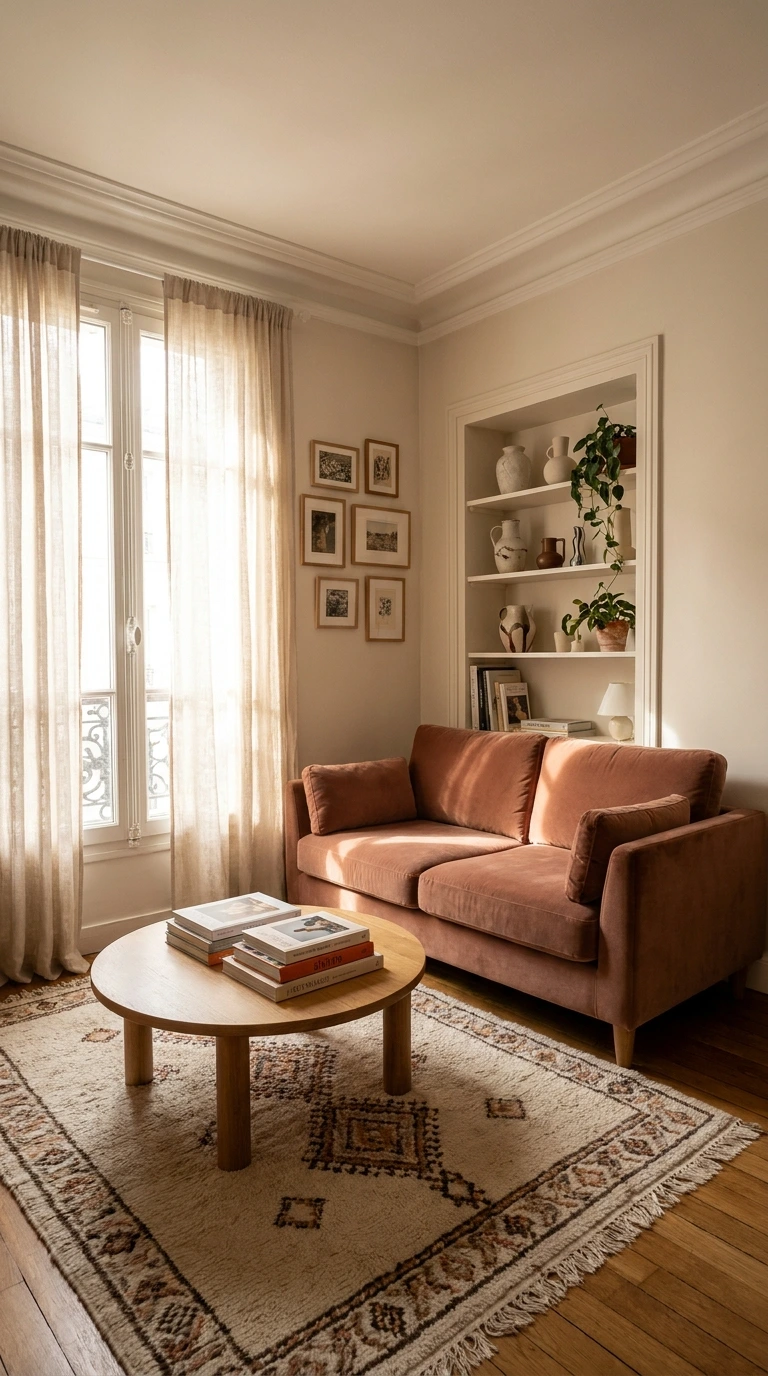
Pinterest and Instagram make it easy to find rooms that look exactly the way you want your apartment to look. The mistake is trying to replicate those rooms exactly without adapting the proportions, color palette, and furniture choices to the actual dimensions and light conditions of your space.
A dark, moody living room that photographs beautifully in a large, well-lit space can feel oppressive in a small, north-facing room. A minimalist bedroom that looks serene in a large space can look sparse and unfinished in a small one. Use inspiration images as direction rather than specification — adapt the mood, color, and general approach rather than treating the image as a shopping list.
18. Buying Cheap Furniture That Needs Replacing Quickly
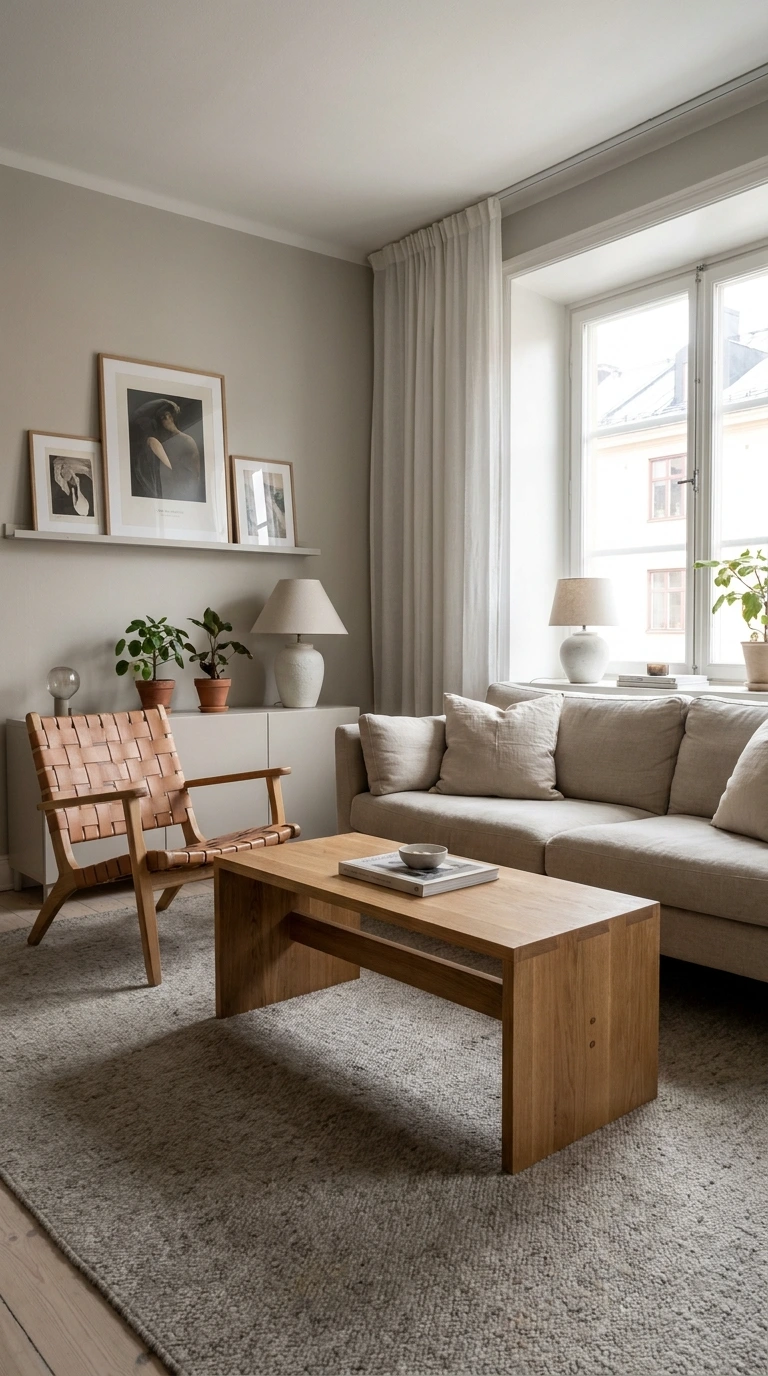
The impulse to furnish a small apartment as cheaply as possible at the start — with the intention of replacing things later — almost always costs more than buying fewer, better pieces from the beginning. A sofa purchased cheaply that deteriorates within two years costs double what a better sofa would have cost, plus the inconvenience and disruption of replacing it.
Prioritize spending on pieces that are used daily and difficult to replace — the sofa, the bed, the dining chairs — and economize on pieces that are more easily updated, like cushions, throws, and decorative objects. One well-made sofa in a neutral fabric that lasts ten years is a better investment than three cheap sofas replaced over the same period.
Warning: The cheapest option is almost never the best value in furniture. Particleboard furniture that deteriorates quickly, cheap upholstery that pills and stains within months, and poorly constructed frames that lose their shape — these are false economies in a small apartment where furniture is used intensively every day. Spend more on fewer pieces and buy used if budget is the constraint.
19. Not Having a Color Story
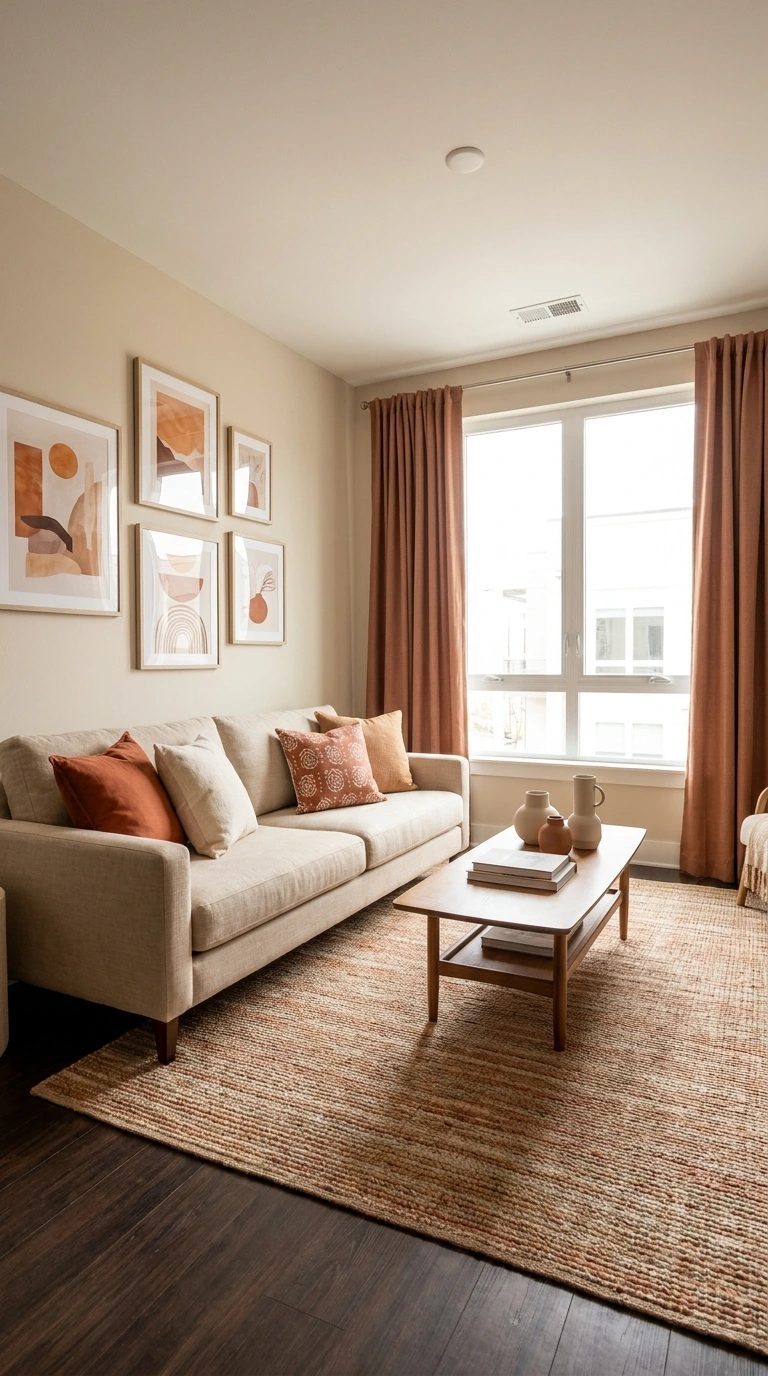
A small apartment decorated without a clear color story — where each room has different colors chosen independently, and even within a single room the colors were chosen individually rather than as a palette — looks unresolved and accidentally assembled rather than deliberately designed.
Choose two or three colors before purchasing anything and use them consistently throughout the apartment. A neutral base, one secondary color, and one accent is the simplest palette that consistently works. Repeat each color at least three times — in the cushions, the rug, and a piece of art, or in the curtains, the throw, and a decorative object. Repetition is what creates cohesion.
20. Declaring the Apartment Finished Too Quickly
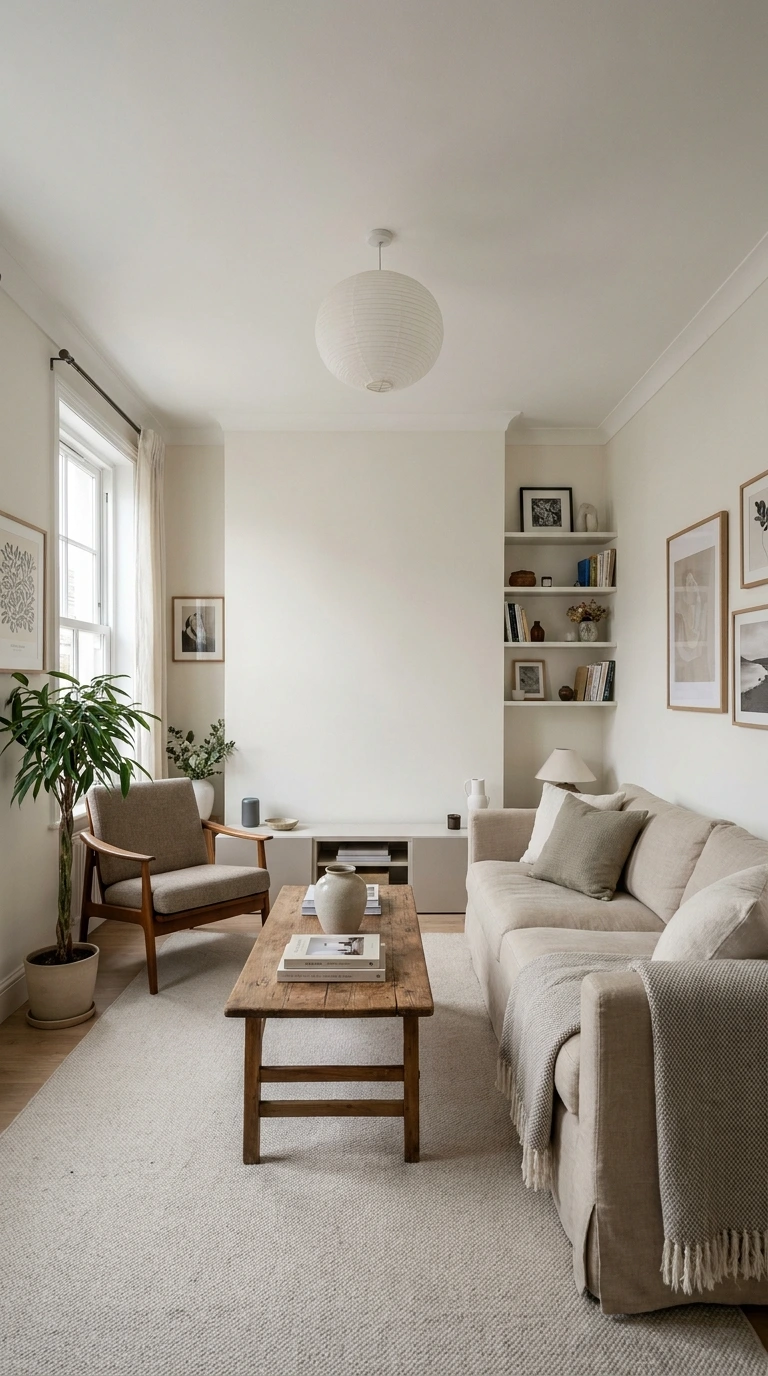
The final and most forgivable mistake is deciding the apartment is done before it actually is. The initial furniture is in place, the basic styling is complete, and the impulse is to call it finished and stop looking at it with a decorator’s eye. But the best apartments are not assembled — they are accumulated over time.
Leave spaces intentionally unfilled. Buy things slowly, as you find the right pieces rather than filling every gap immediately with whatever is available. A room with one deliberately empty wall that is waiting for the right piece of artwork looks more considered than a room where every surface has been hastily filled. The apartment should grow gradually more itself over the months and years you live in it.
Common Beginner Decorating Questions
How do I know if my rug is the right size?
The front legs of every piece of seating in the group should sit on the rug. If any chair or sofa leg is floating on bare floor beside the rug, the rug is too small. Use painter’s tape to mark out dimensions before purchasing.
Should furniture touch the walls in a small room?
No — floating furniture even a few inches away from the walls creates a more natural, gathered feeling and actually makes the room feel larger. Furniture pushed against every wall creates a hollow center and a waiting-room quality that works against the room.
How high should I hang my artwork?
The center of the artwork — or the center of a gallery arrangement — should sit at approximately 57 to 60 inches from the floor. This is standing eye level and the standard used by galleries and professional designers. Most beginners hang artwork four to six inches too high.
What is the most common small apartment decorating mistake?
A rug that is too small is the single most common and most visually disruptive mistake. It affects the perceived size of the room, the anchoring of the furniture, and the overall cohesion of the space. Sizing up is almost always the right decision.
How do I create a focal point in a room that does not have one?
A large piece of artwork above a sofa or bed, a dramatically styled shelving unit, or a statement piece of furniture all work as created focal points. The key is scale — the focal point needs to be large enough to actually draw the eye from the doorway.
How many decorative objects is too many?
If you cannot identify a clear, intentional grouping on each surface — if objects are scattered individually rather than arranged deliberately — there are too many. Edit down to groupings of three to five related objects and leave remaining surfaces clear.
Is it worth spending more on furniture in a small apartment?
Yes — significantly so. Small apartments use furniture intensively because the same pieces serve multiple functions and are used by everyone in the household all day. Quality furniture that lasts ten years is almost always better value than cheap furniture replaced every two years.
Conclusion
Decorating a small apartment well is not about spending more money or finding more space. It is about making better decisions — measuring before buying, sizing up the rug, layering the lighting, lowering the artwork, and building a color story before purchasing anything. Each of these is free or nearly free. Each one makes a measurable difference to how the apartment looks and feels.
Work through this list one mistake at a time. Fix the biggest one first — probably the rug or the lighting — and build from there. A small apartment that has been thoughtfully decorated feels significantly larger, more personal, and more livable than its square footage suggests it should. That gap between the size of the space and the quality of the experience of living in it is exactly what good decorating creates.