20 String Light Patio Ideas: How to Create a Magical Outdoor Atmosphere

Introduction
String lights are the one outdoor upgrade that works in every space, at every budget, and in every season. A single strand of warm bulbs changes how a patio feels after dark more dramatically than almost any other change you can make — and it does it for less money than a new chair cushion.
The difference between a patio that looks nice and one that feels genuinely magical is almost always lighting. These twenty ideas show you exactly how to use string lights to create the outdoor atmosphere you have been looking for — whether you have a sprawling terrace or a single apartment balcony.
1. The Overhead Canopy
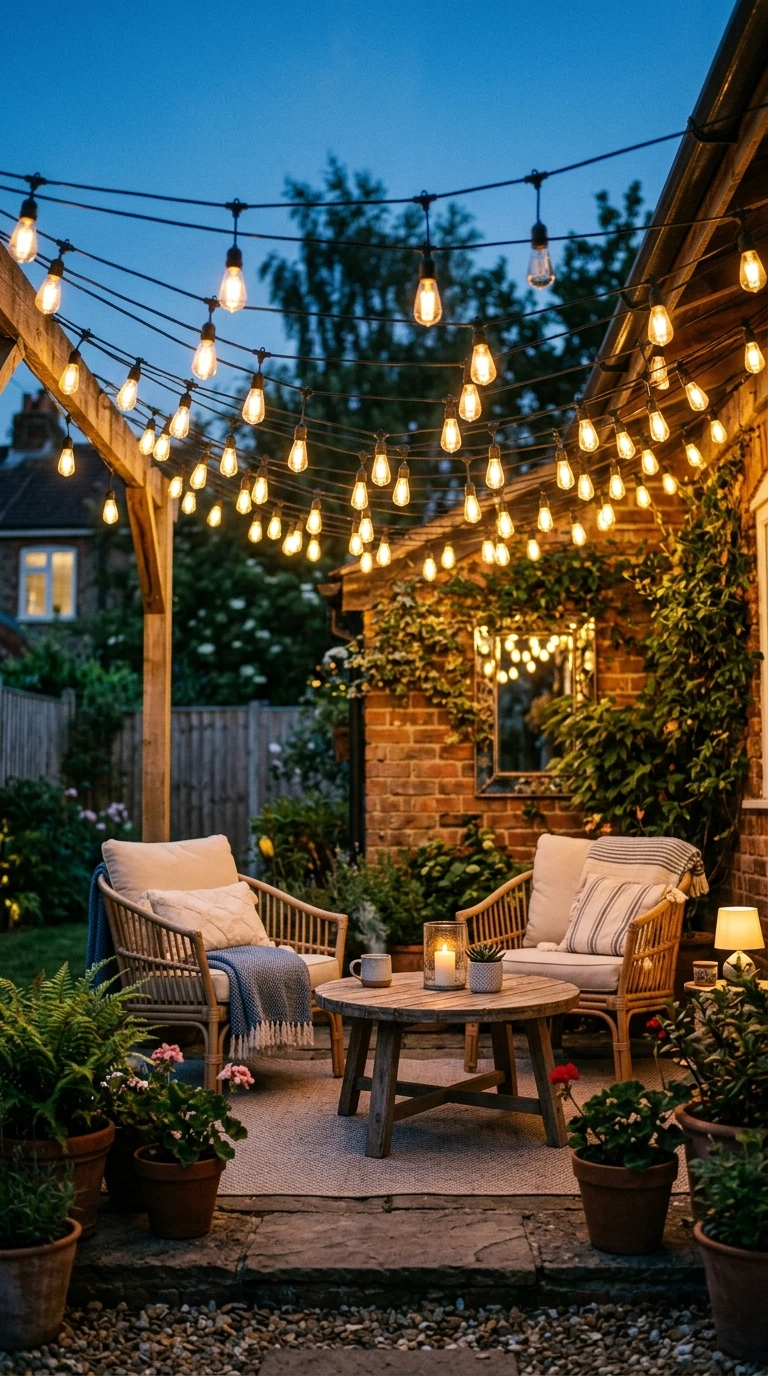
Draping string lights overhead in a canopy formation is the most transformative thing you can do to a small patio. When the lights run from one side of the space to the other in parallel lines above the seating area, they create an enclosed, room-like feeling that makes even a plain concrete patio feel like somewhere special.
Use eye hooks screwed into opposite walls, fences, or posts to support the lines. Space the strands six to twelve inches apart for a dense, generous canopy. Warm Edison bulbs work best for this formation — they have enough weight to hang naturally and enough warmth to create genuine atmosphere rather than just illumination.
Pro Tip: Run your canopy strings slightly closer together in the center of the formation than at the edges. This creates a gentle curve that looks more organic and intentional than perfectly parallel straight lines across the whole span.
2. The Fence Line
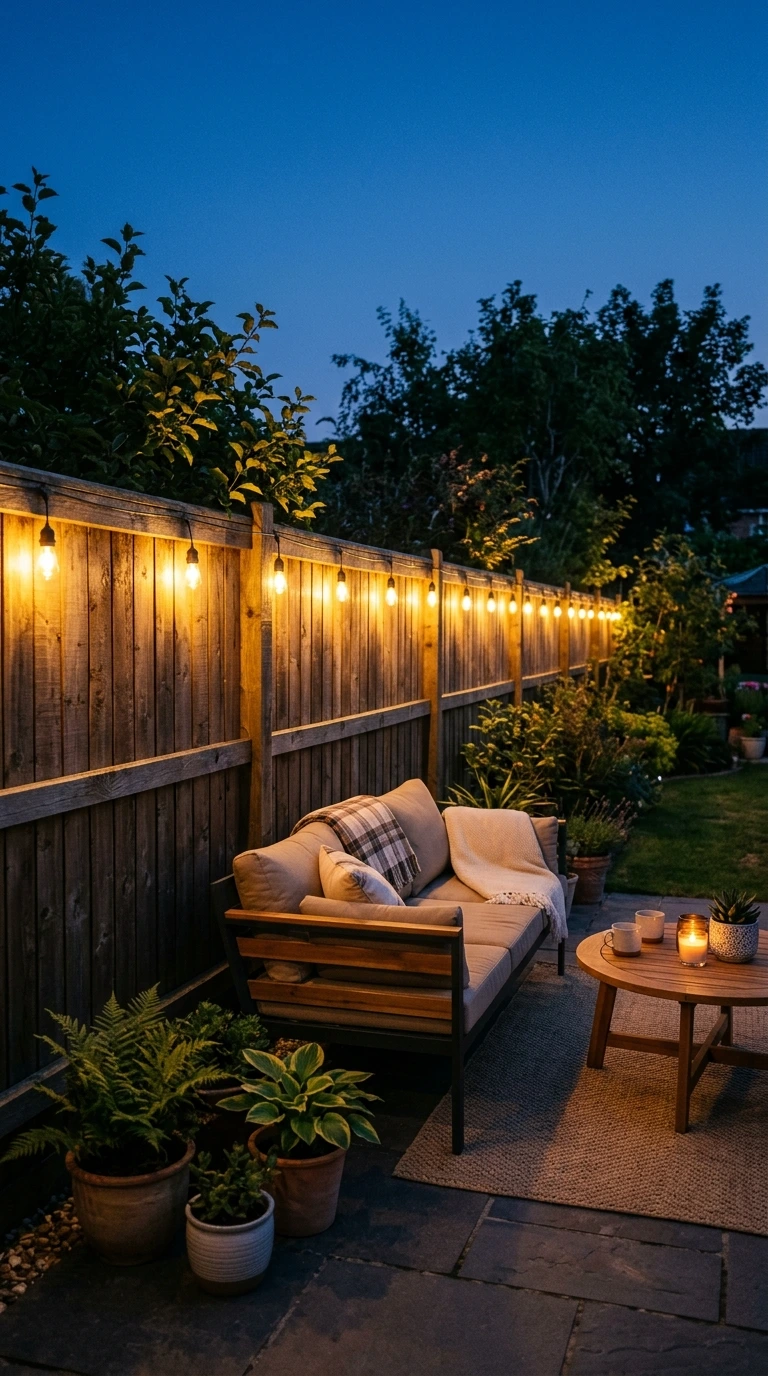
Running string lights along the top of a fence or along a wall at head height creates a warm perimeter glow that defines the edge of the outdoor space without requiring any overhead structure. This approach works particularly well on patios where overhead attachment points are limited or where a full canopy would feel too enclosed.
Attach the lights with outdoor-rated cable clips or staples spaced every twelve to eighteen inches for a clean, even run. Choose a cord color that blends with your fence — black cord against dark timber, white cord against a painted fence — so the cable itself disappears and only the bulbs remain visible after dark.
3. Through a Pergola
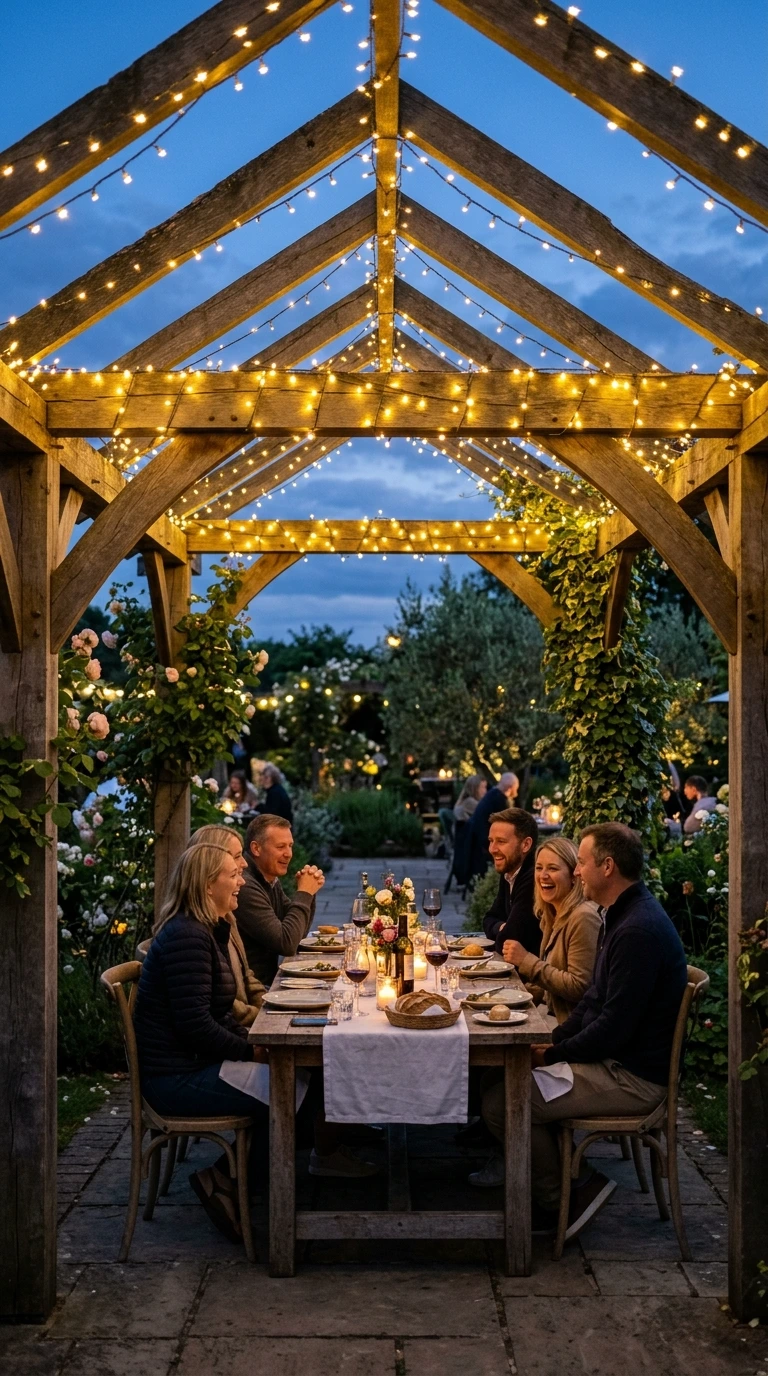
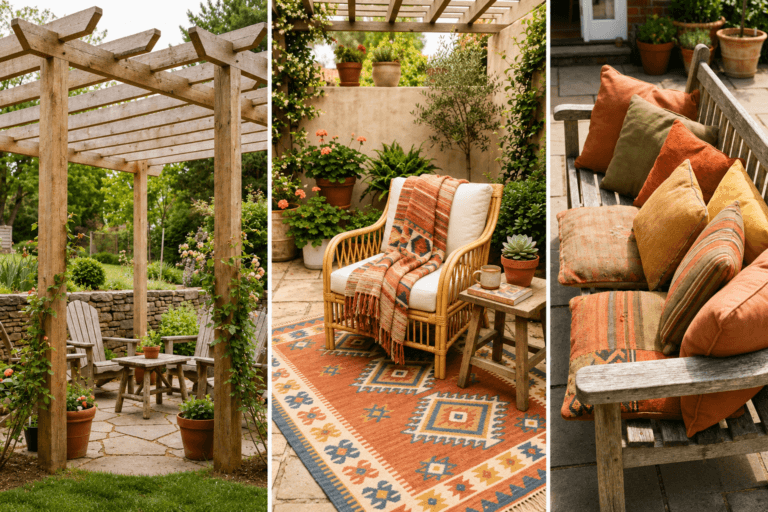
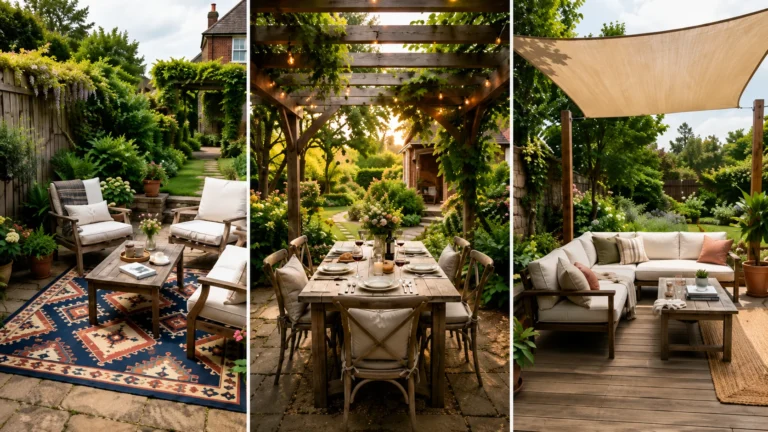
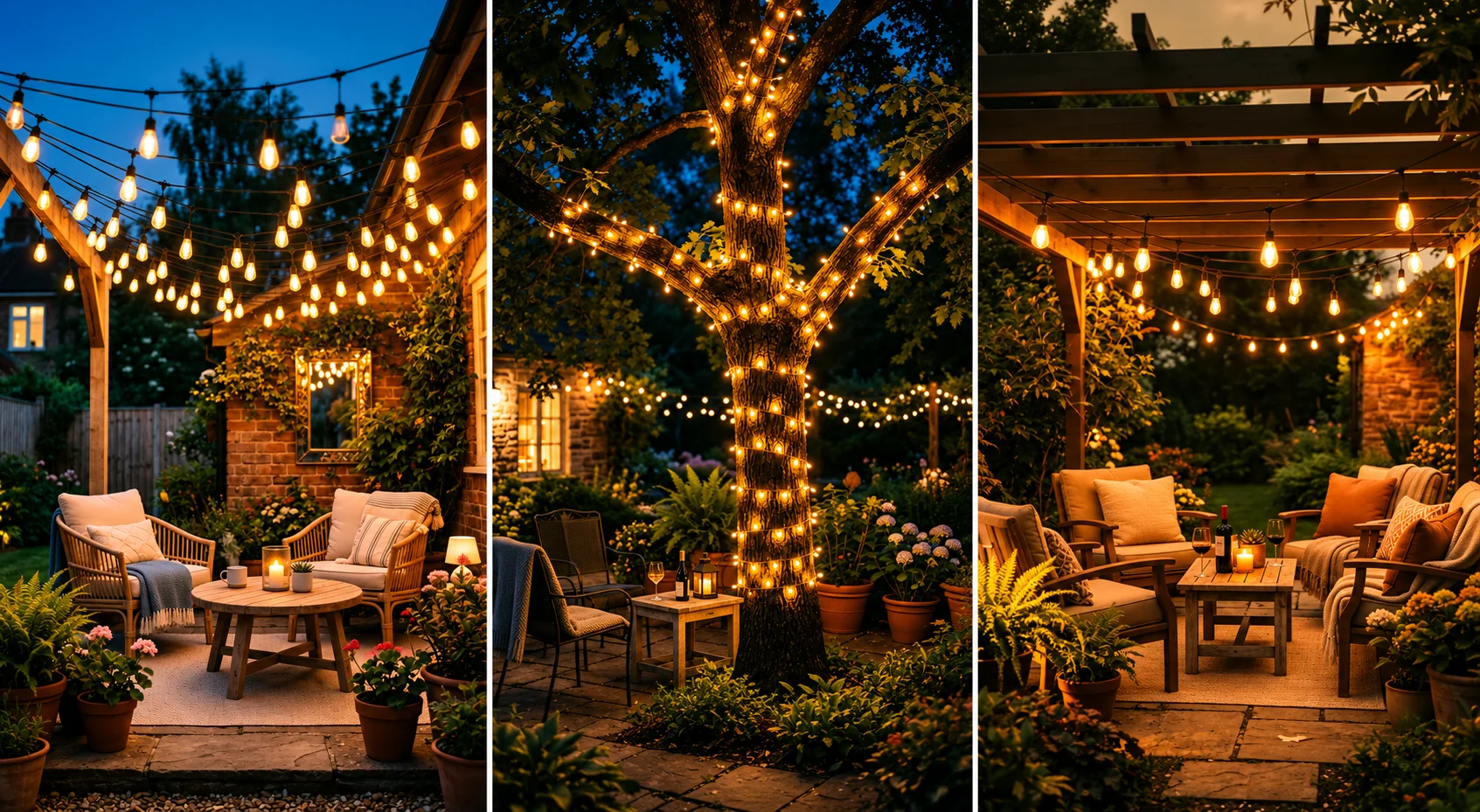
A pergola with string lights woven through its overhead beams is one of the most beautiful patio lighting setups available. The structure does the support work, the lights fill the gaps between the beams, and the result feels genuinely architectural rather than decorative. This is the setup that photographs most beautifully and looks most deliberate in person.
Weave the lights through the rafters perpendicular to the beams for the cleanest look. Use enough strands to create a consistent glow across the whole span rather than leaving dark patches between strands. Connect each strand with a single extension cord hidden along one beam so there is no visible cable dropping to the outlet.
4. Around a Shade Sail
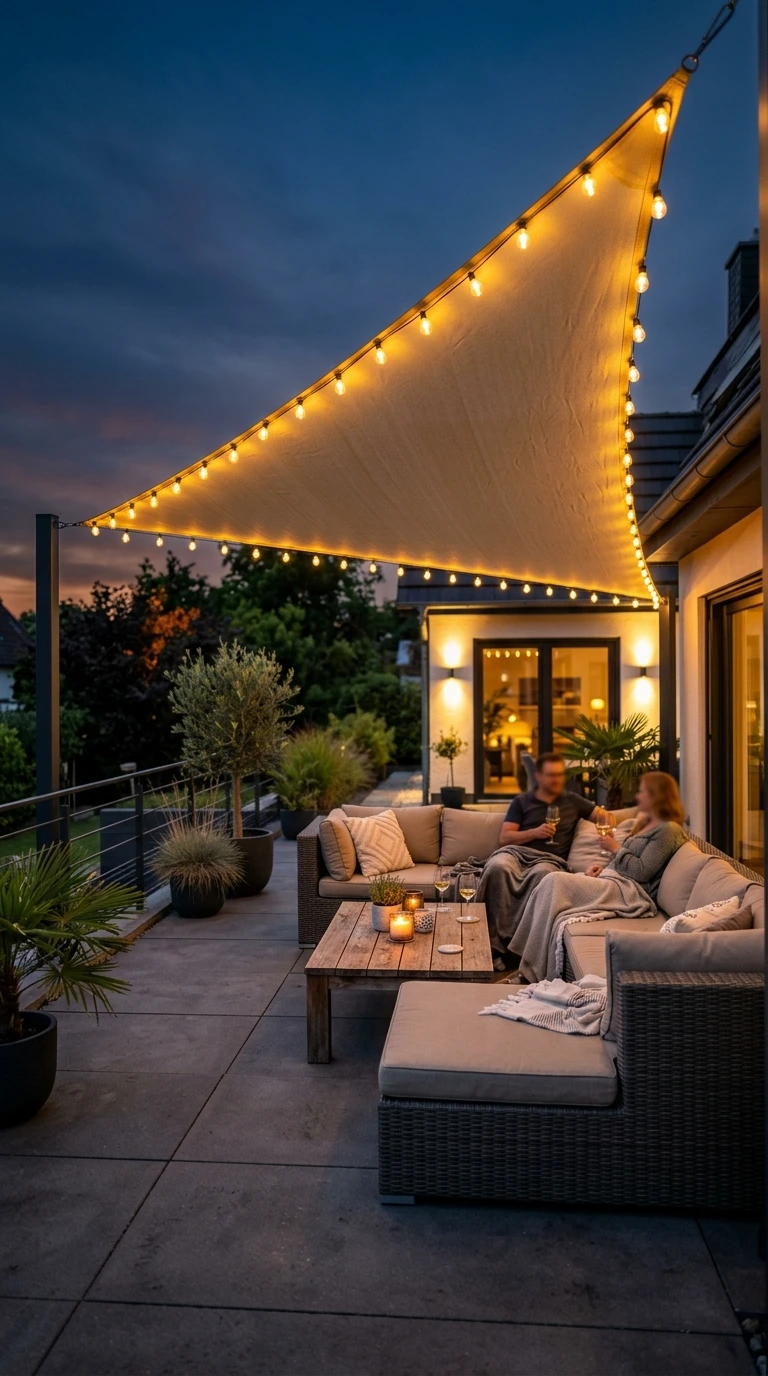
Outlining the edge of a shade sail with string lights creates a defined, glowing boundary overhead that makes the covered area feel intentional after dark. During the day the sail provides shade — at night the lights make it a destination. This combination of shade and light creates outdoor spaces that are genuinely usable at any hour.
Attach the lights to the sail’s edge hardware rather than the fabric itself, which can hold moisture and create mildew around attachment points. Choose lights with a cord length that matches the sail’s perimeter so no extension is visible. The glow around the sail’s edge reads as a design feature rather than an addition.
Warning: Never staple or pierce string light cords through any surface. Damaged insulation from staples or nails is a fire hazard. Use outdoor-rated cable clips, cable ties, or purpose-made light hooks for every attachment point.
5. Wrapped Around Tree Trunks and Branches
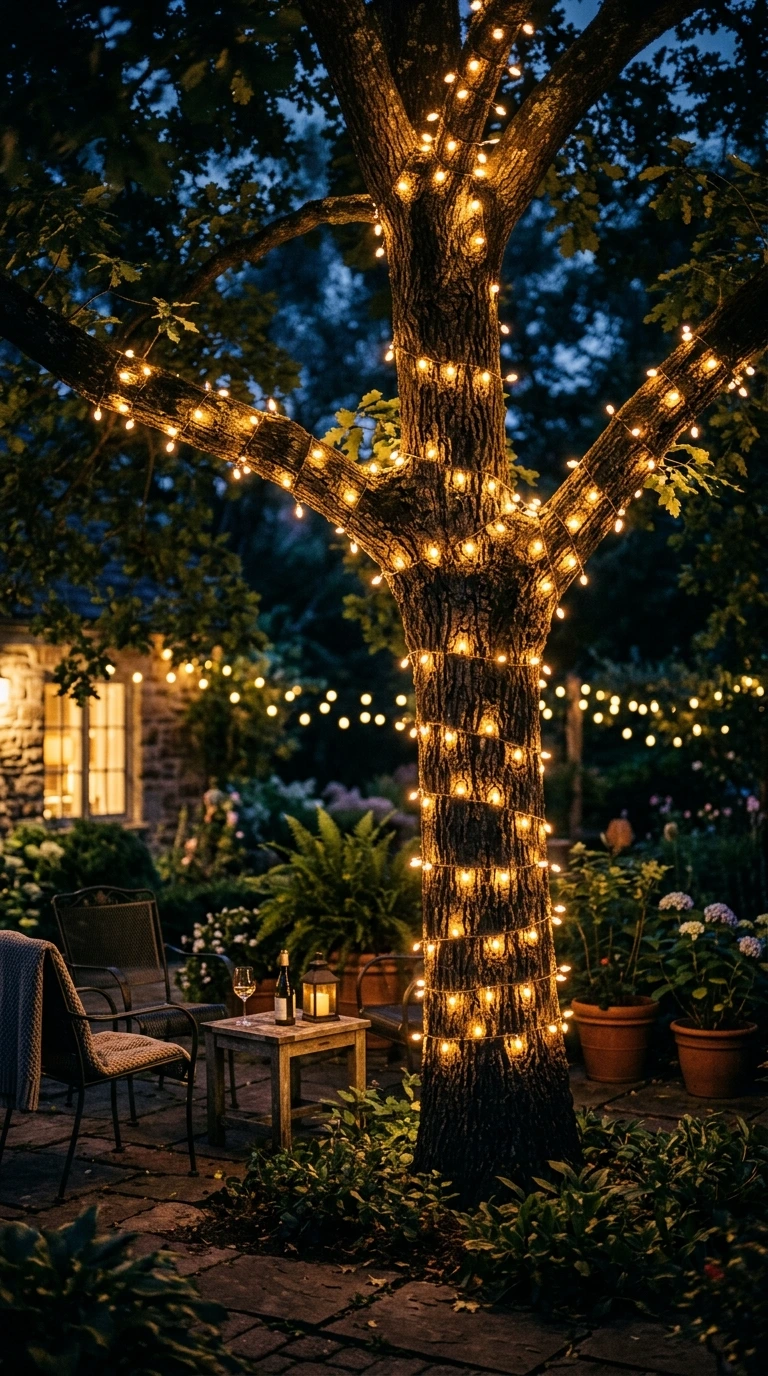
Trees in or beside a patio become entirely different design elements after dark when wrapped with string lights. The lights follow the natural form of the trunk and branches, creating an organic glow that has a quality no manufactured light fixture can replicate. This approach works with trees of any size — a small ornamental tree wrapped with one strand is just as effective as a large oak with five.
Wrap from the base of the trunk upward, then out along the main branches as far as the strand reaches. Avoid wrapping too tightly, since trees grow and tightly wrapped lights can eventually damage the bark. Solar-powered strings are ideal for trees positioned away from outdoor power outlets.
6. Along Railings and Balustrades
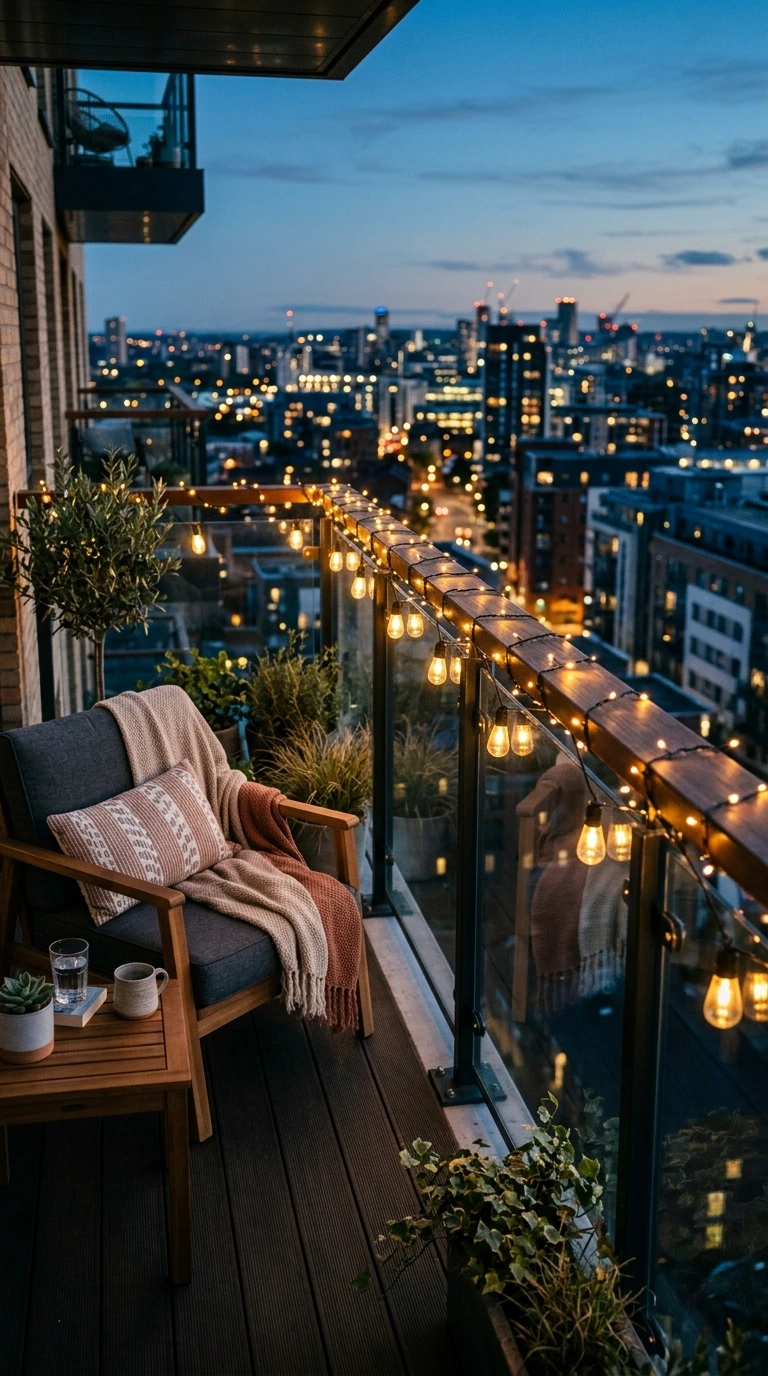
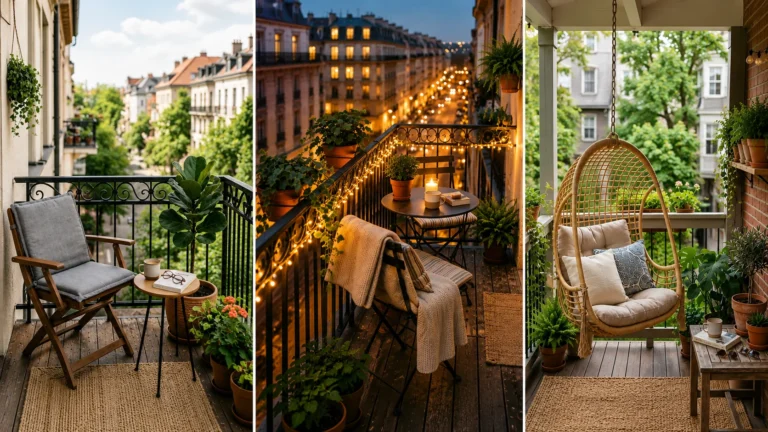
A balcony or raised deck with string lights wound through or along its railing becomes a completely different space after dark. The lights define the edge of the space, add warmth at a height that is directly visible from the seating area, and create a glow that is reflected back from the floor and furniture below.
Weave the lights through the railing balusters rather than simply running them along the top rail — this creates a more diffused, softer glow than a single line of bulbs at one height. For metal railings, use small cable ties rather than hooks or clips that might scratch the finish.
| Setup Style | Best For | Difficulty | Fixture Required |
|---|---|---|---|
| Overhead Canopy | Any patio with two opposing walls | Medium | Eye hooks |
| Fence Line | Patios with perimeter fencing | Easy | Cable clips |
| Pergola Weave | Covered pergola structures | Easy | None |
| Tree Wrap | Patios with trees nearby | Easy | None |
| Railing Wind | Balconies, raised decks | Easy | Cable ties |
7. In Glass Jars and Lanterns
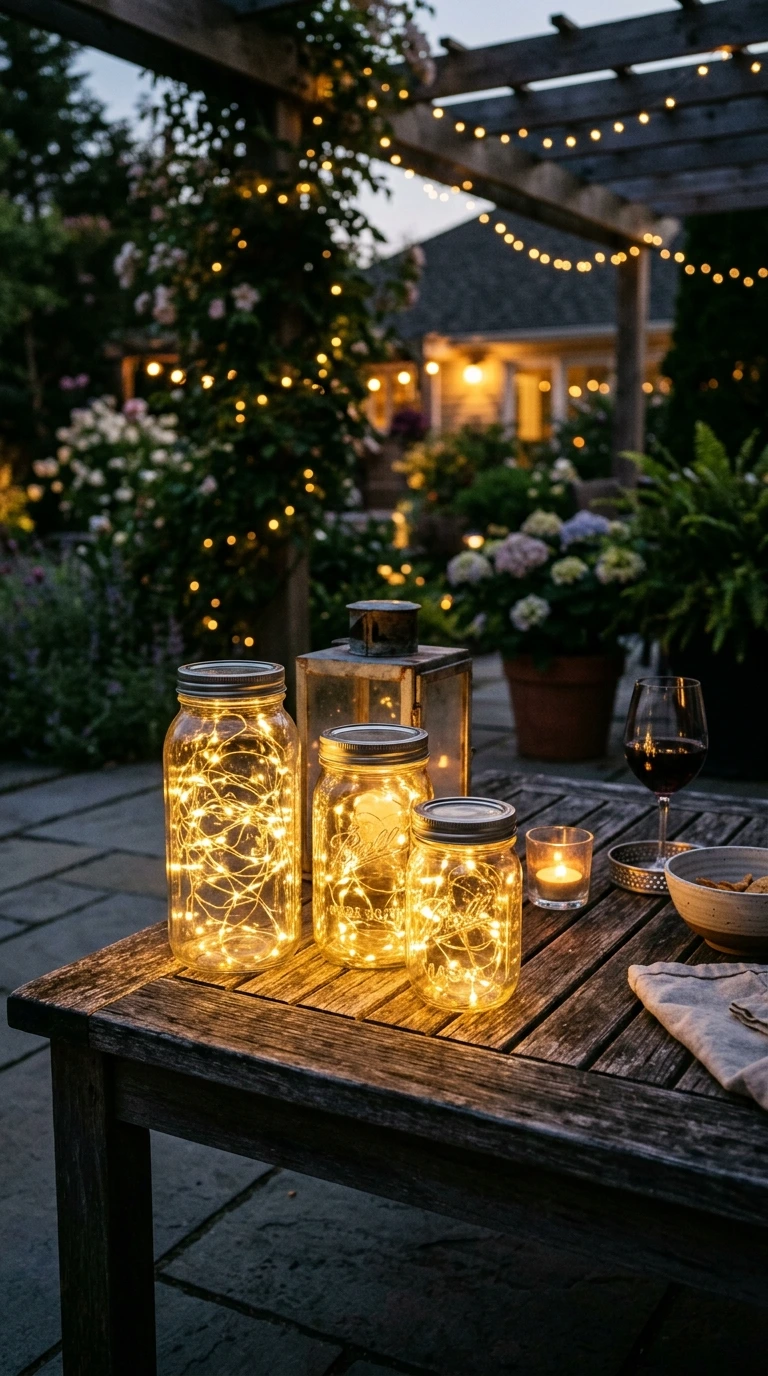
Coiling string lights inside large glass jars or open-top lanterns creates individual pools of warm light that work as table centerpieces, floor accents, or shelf displays. This is the most flexible string light application on this list — no installation required, no fixed position, infinitely rearrangeable.
Use battery-operated fairy lights for this application since they require no cord to an outlet. A large glass jar with a coil of copper wire fairy lights inside costs almost nothing to put together and creates a warm, intimate table light that rivals any purchased lantern. Group three jars of different heights together for the most effective display.
8. Behind Sheer Curtains
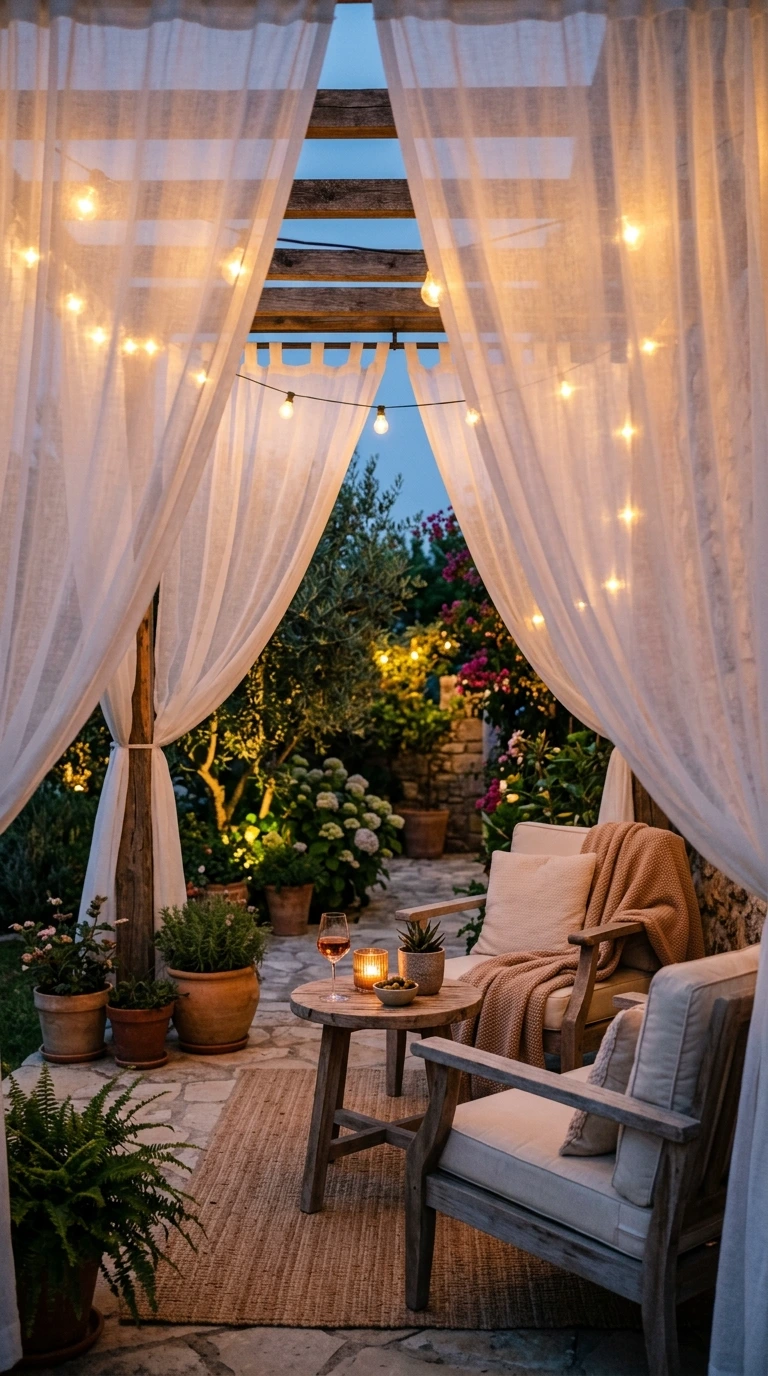
Hanging string lights behind sheer outdoor curtains creates a diffused, glowing wall of light that has an almost theatrical quality. The curtains soften the individual bulbs into a warm haze that feels more like candlelight than electric light. This setup works particularly well as a backdrop for a dining or seating area.
Use a tension rod or curtain wire to hang the sheer fabric panels, and run the lights between the curtain and the wall behind it. White or ivory sheer fabric diffuses the light most beautifully — darker fabrics absorb too much of the glow. This approach also adds a layer of privacy screening to the patio in addition to the lighting effect.
Pro Tip: Choose curtain panels that are slightly wider than the space they hang in so they gather softly rather than hanging flat. Gathered curtains diffuse string light more evenly than panels pulled taut, creating a warmer, more ambient effect.
9. Along a Garden Path
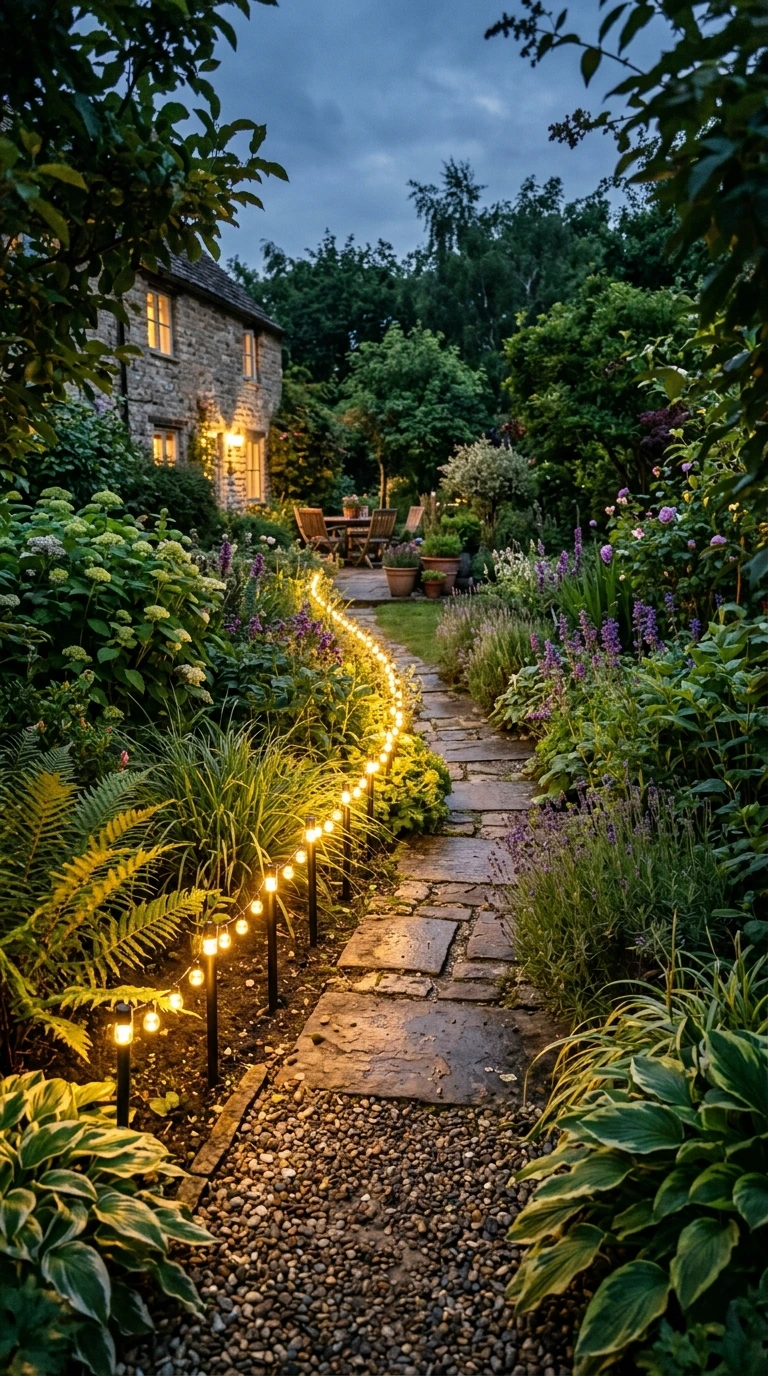
String lights staked along a garden path or patio border at ground level create a runway effect that is both practical and beautiful. They mark the edges of the path clearly after dark while adding a warm, inviting glow at floor level that complements overhead lighting rather than competing with it.
Use solar-powered string lights with built-in stakes for a path application — no cords, no installation, simply press into the soil and they charge during the day and glow at night. Space the stakes every twelve to eighteen inches for a consistent line of light. This ground-level layer of lighting is one of the most overlooked details in outdoor design.
10. On a Freestanding Frame or Copper Pipe Structure
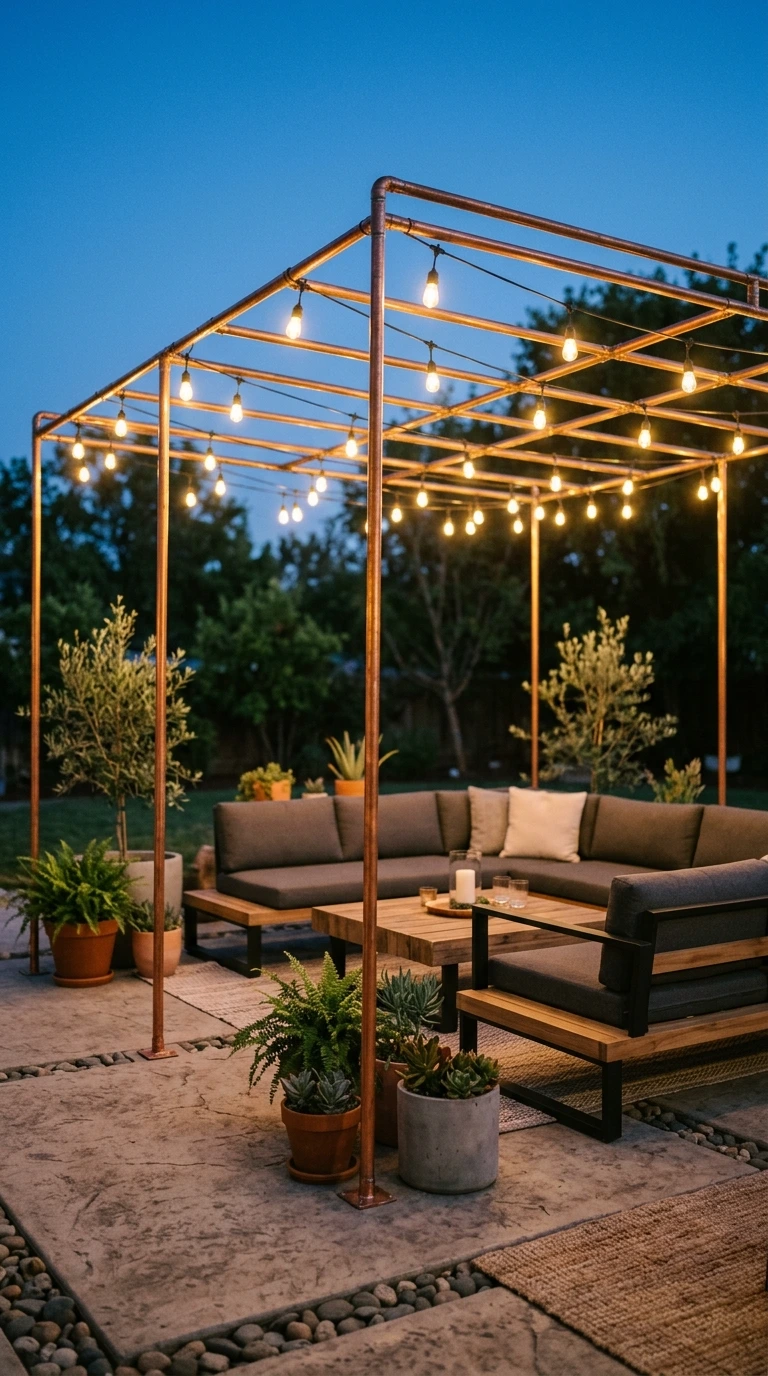
A freestanding frame — built from copper pipe, timber posts, or welded metal — gives you complete control over your string light canopy without requiring any existing walls, fences, or trees to attach to. This is the solution for patios where attachment points simply do not exist, or where you want the flexibility to move the whole structure.
A simple four-post frame with crossbars is all you need. Run the lights across the top in parallel lines and anchor each post with a heavy planter or ground spike. Copper pipe frames look particularly beautiful since the material patinas over time into warm green tones that complement the warm white glow of the lights beautifully.
11. Zigzag Across a Narrow Balcony
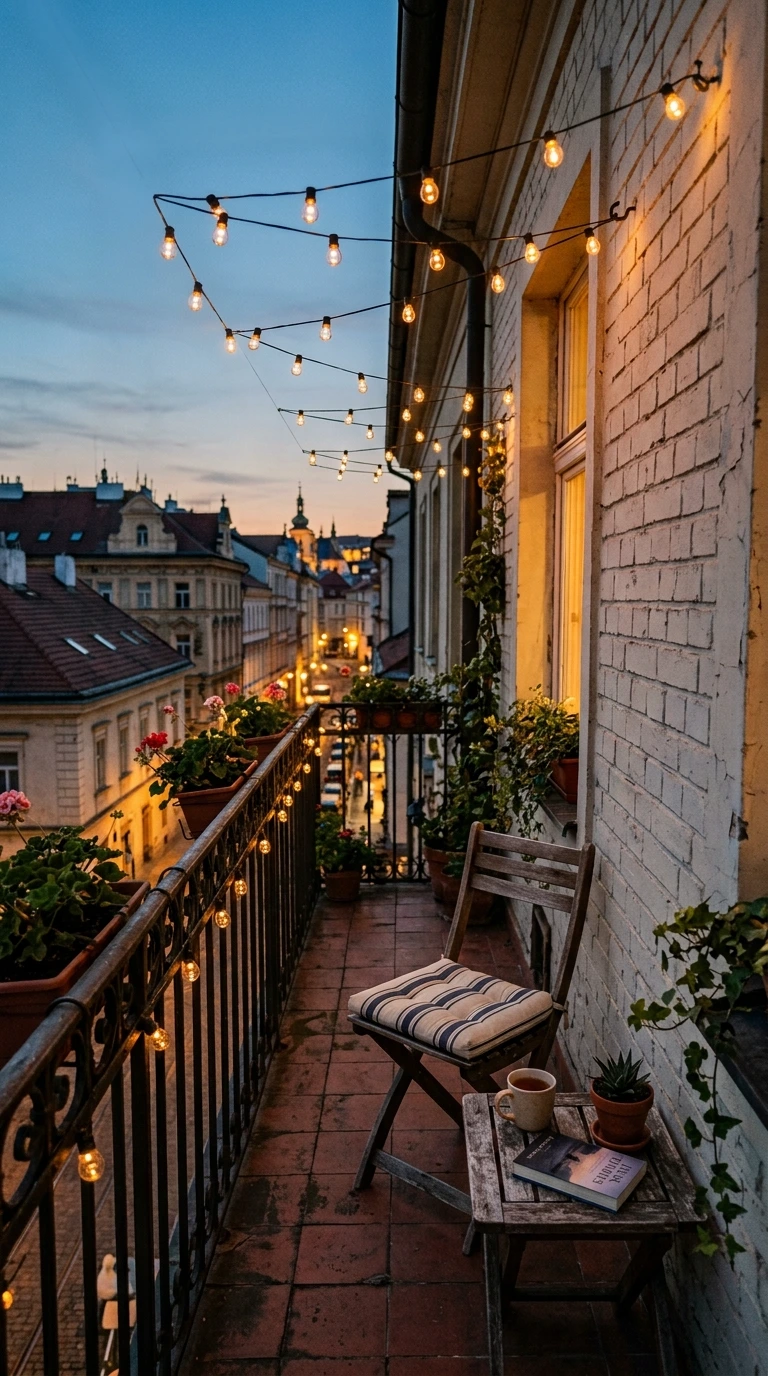
A narrow balcony does not have enough width for a full overhead canopy but works beautifully with a zigzag pattern — lights attached to one railing, crossing to the opposite wall, back to the railing, and repeating to the end of the balcony. The diagonal lines created by the zigzag make the narrow space feel wider and more dynamic than parallel lines would.
Attach one end to the outer railing and alternate anchor points between the railing and the interior wall of the balcony building. The zigzag angle creates interesting geometric shadow patterns on the floor and walls of the balcony after dark. Use lightweight bulbs for this application — heavier Edison bulbs can cause a narrow zigzag to sag unattractively.
Important: Check your lease agreement or building regulations before installing any permanent hooks, screws, or anchors for string lights on a balcony or rented property. Command outdoor hooks or tension cable systems work for most balcony applications without requiring any permanent installation.
12. Draped Through Outdoor Shelving
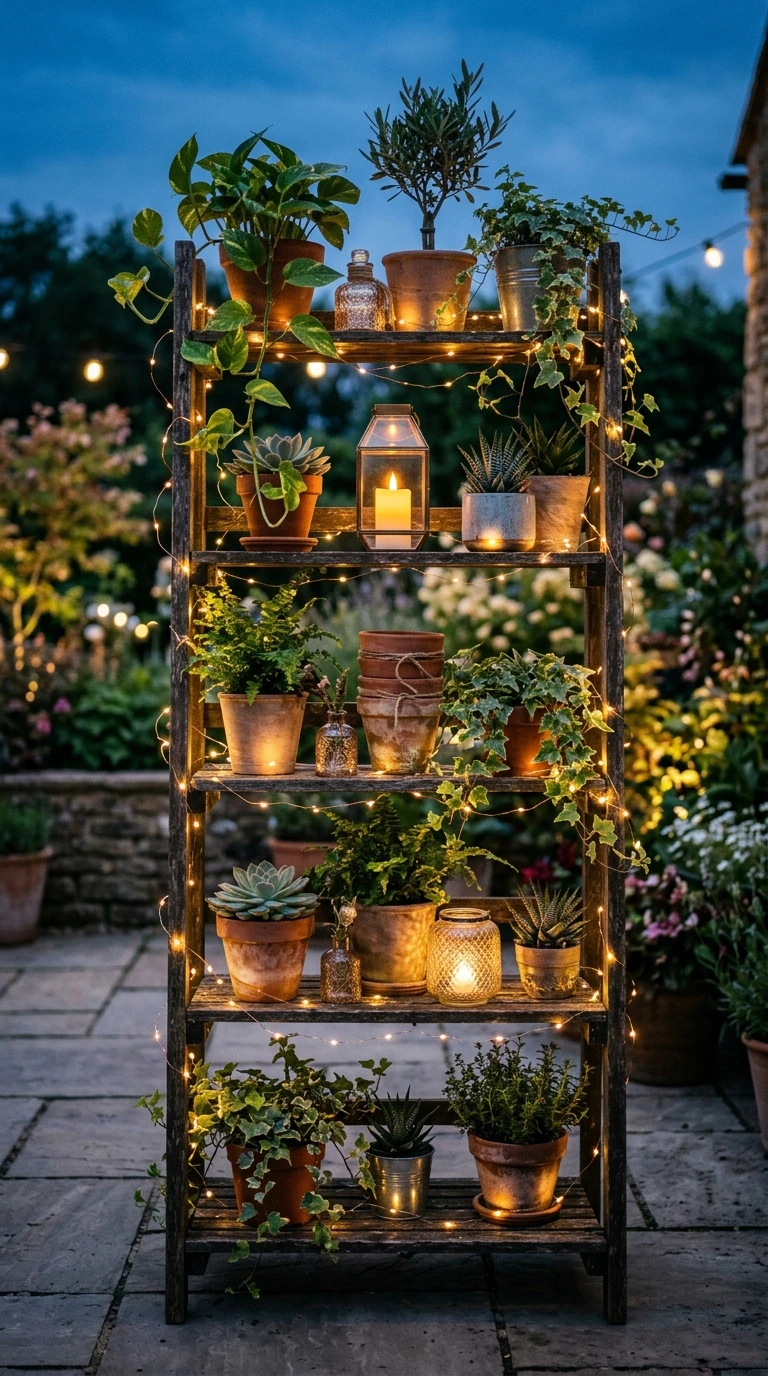
An outdoor shelving unit with string lights woven through it becomes a display piece that works in both daylight and after dark. During the day the shelves hold plants, lanterns, and styling objects. After dark the string lights illuminate the display from within, creating warm pockets of light at eye height.
Use battery-operated or plug-in fairy lights with a thin, almost invisible cord for the most seamless look. Weave them loosely through the shelving rather than securing them tightly so the cord follows the natural lines of the shelves. This application works particularly well with open-sided shelving where the lights are visible from both front and back.
13. As a Backdrop for an Outdoor Dining Area
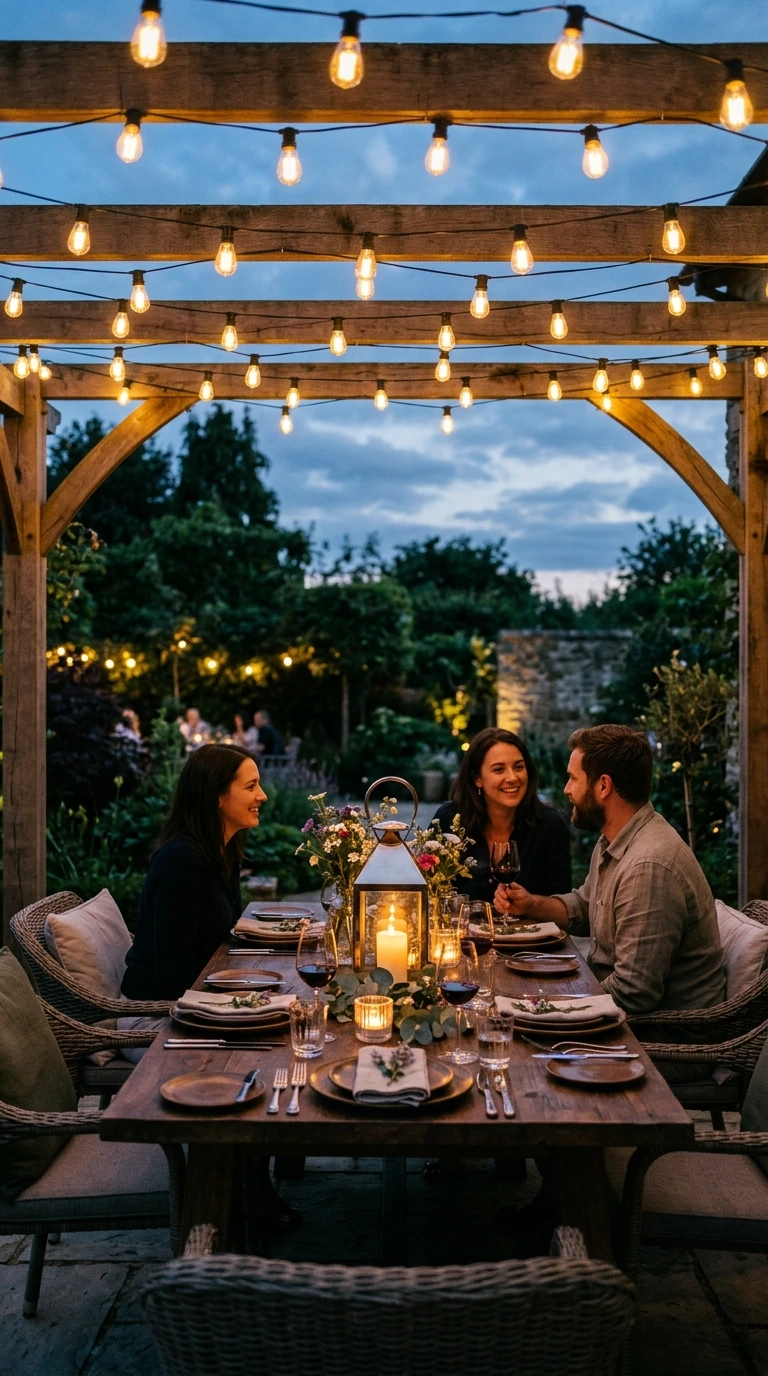
String lights positioned specifically to backlight an outdoor dining area — running in a canopy just above the table, or draped on the wall directly behind the seating — create a dedicated dining atmosphere after dark that makes outdoor meals feel like events rather than necessities.
Position the lights so they illuminate the table surface from above without shining directly into the eyes of the diners. A canopy directly above the dining table at a height of seven to eight feet provides excellent table illumination without glare. Add a lantern at the center of the table for lower, warmer supplementary light.
14. Wrapped Around Outdoor Furniture
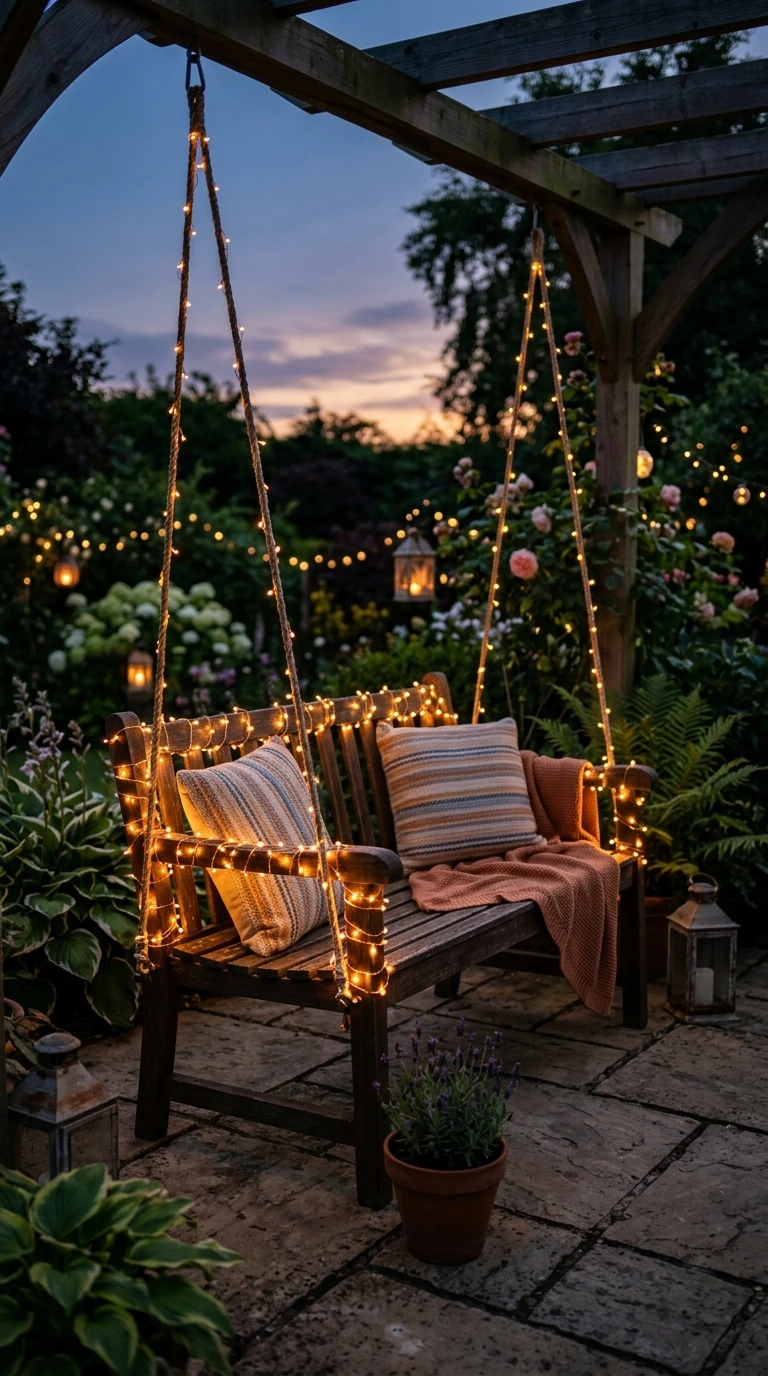
String lights wound around the legs and frame of outdoor furniture — a bench, a daybed, a swing — create a glowing centerpiece that makes individual pieces of furniture feel like design features after dark. This approach works best with simpler furniture shapes where the lights follow clean lines rather than complex forms.
Use battery-operated fairy lights for furniture wrapping since cords to outlets would limit how the furniture can be positioned. Wrap the lights loosely so they can be unwrapped easily when the furniture needs to be moved or stored. This application looks particularly beautiful on a porch swing or hanging chair where the lights move gently in the breeze.
- Always use outdoor-rated string lights — indoor lights are not weatherproofed
- Choose warm white bulbs for atmosphere, cool white only for task lighting
- Test the full length of lights before installation, not after
- Use a timer or smart plug so lights turn on automatically at dusk
- Add a second layer of lighting at table level alongside any overhead setup
15. Solar Versus Plug-In — Choosing the Right Power Source
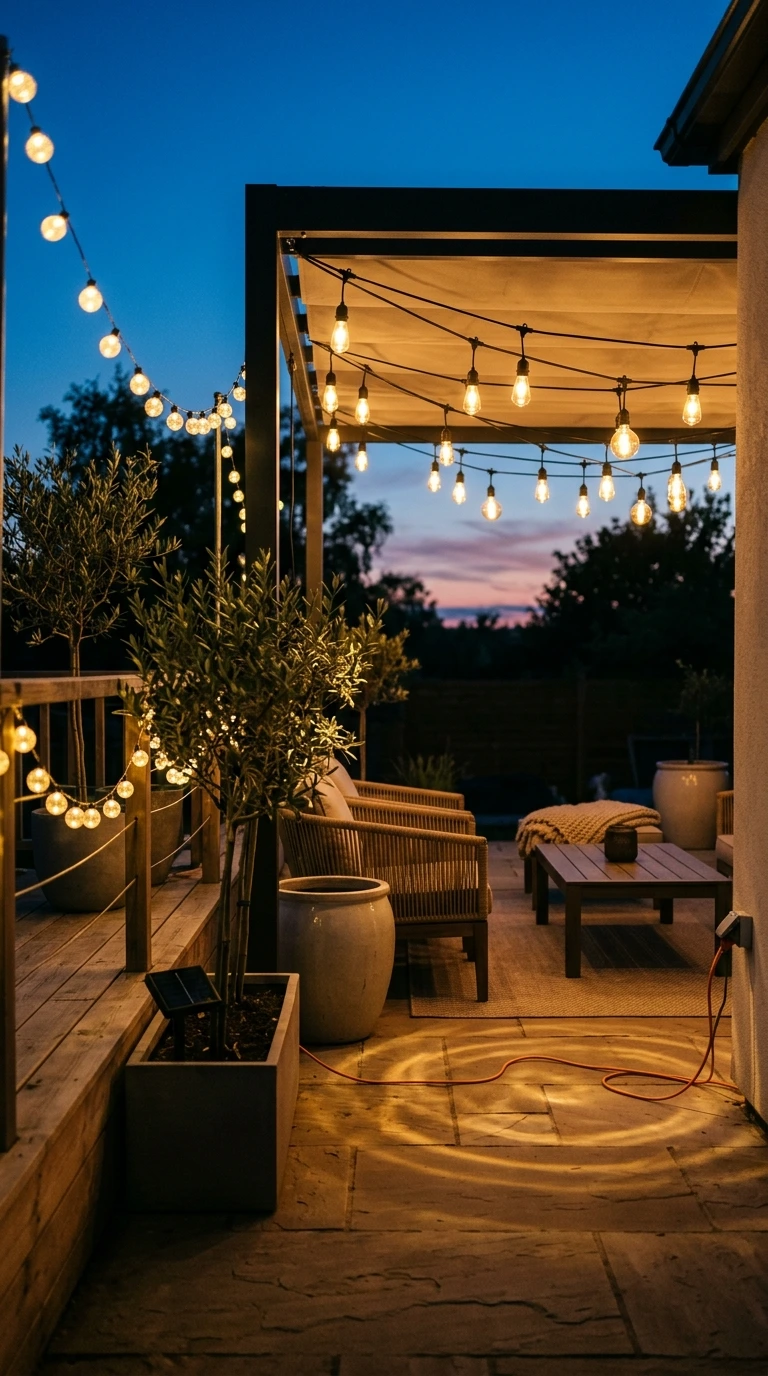
Before installing any string lights, the power source decision shapes everything else — where the lights can go, how bright they will be, and how much ongoing maintenance they require. Solar lights have improved dramatically in recent years but still cannot match the consistent brightness of plug-in alternatives. Choosing the wrong power source for your specific situation is the most common string light mistake.
Solar lights work best in full sun locations where the panel receives at least six hours of direct sunlight daily. In shaded patios or locations with limited direct sun, solar panels never fully charge and the lights will dim or fail to stay on through the evening. Plug-in lights require a weatherproof outdoor outlet within reach, but deliver consistent, reliable brightness regardless of weather or sun exposure.
When to Choose Solar
- No outdoor outlet available or accessible
- Lights positioned in full sun for six-plus hours daily
- Temporary or seasonal installation
- Trees, path lighting, or other non-essential accent lighting
When to Choose Plug-In
- Primary patio lighting rather than accent
- Shaded patio with limited sun exposure
- Year-round installation in any climate
- Brighter, more consistent illumination required
16. Edison Bulbs Versus Fairy Lights — Choosing the Right Bulb
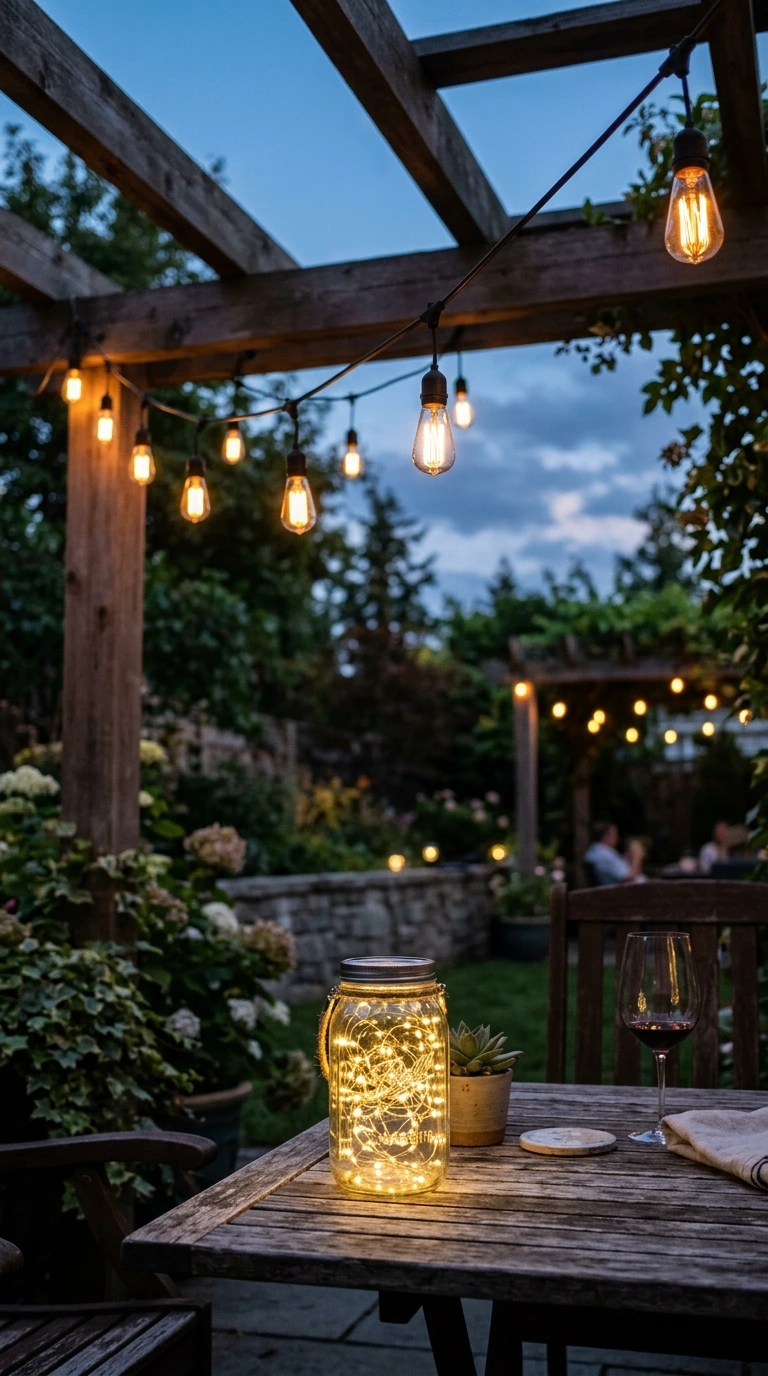
The bulb type determines the character of the light more than any other single decision. Edison bulbs — larger, visible filament, warm amber glow — create a restaurant or bistro quality that reads as deliberate and sophisticated. Fairy lights — tiny, delicate, more numerous — create a softer, more romantic quality that suits intimate settings and decorative applications.
Edison bulbs need spacing — they work best when each bulb is clearly visible and has room around it. Fairy lights work best in clusters or dense arrangements where the individual bulbs blur into a warm haze. Choosing Edison bulbs for a tightly spaced application or fairy lights for a large overhead canopy are both mismatches that reduce the quality of the result.
Pro Tip: For an outdoor dining area, combine Edison bulb strings overhead with a cluster of fairy lights in a jar or lantern on the table. The two bulb types at two heights create a layered, dimensional lighting effect that is significantly more atmospheric than either type used alone.
17. Color Temperature — Why Warm White Matters
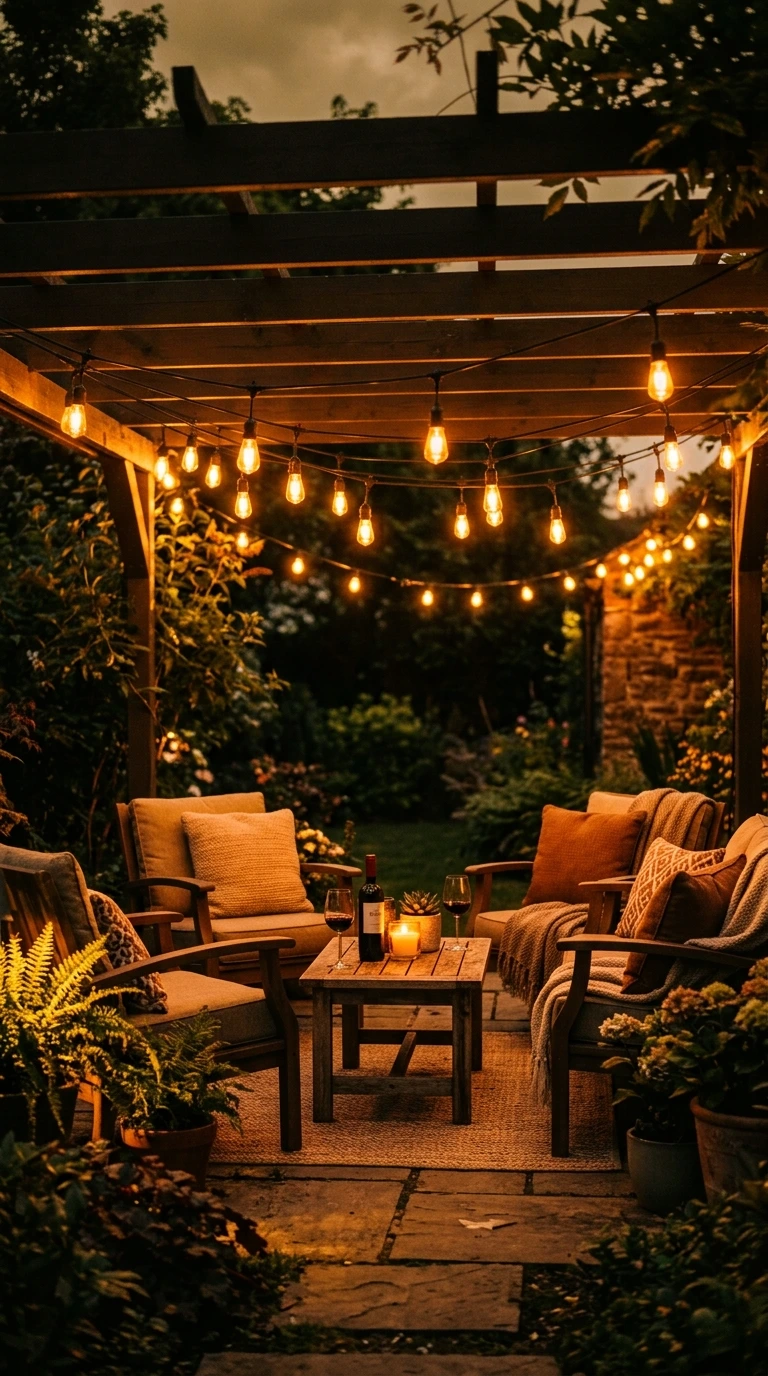
The color temperature of your string lights affects the atmosphere of your outdoor space more than most people realize before they see it in person. Warm white lights — in the 2200K to 2700K range — create a golden, inviting glow that flatters both people and spaces. Cool white lights — above 4000K — create a blue-toned light that reads as clinical and harsh outdoors.
Always check the color temperature on the packaging before buying. Many string light packages simply say “white” without specifying warm or cool. If the temperature is not specified, look at the bulbs in person before buying — warm white should look visibly amber or golden, not bright white or blue-white.
18. Timer and Smart Controls
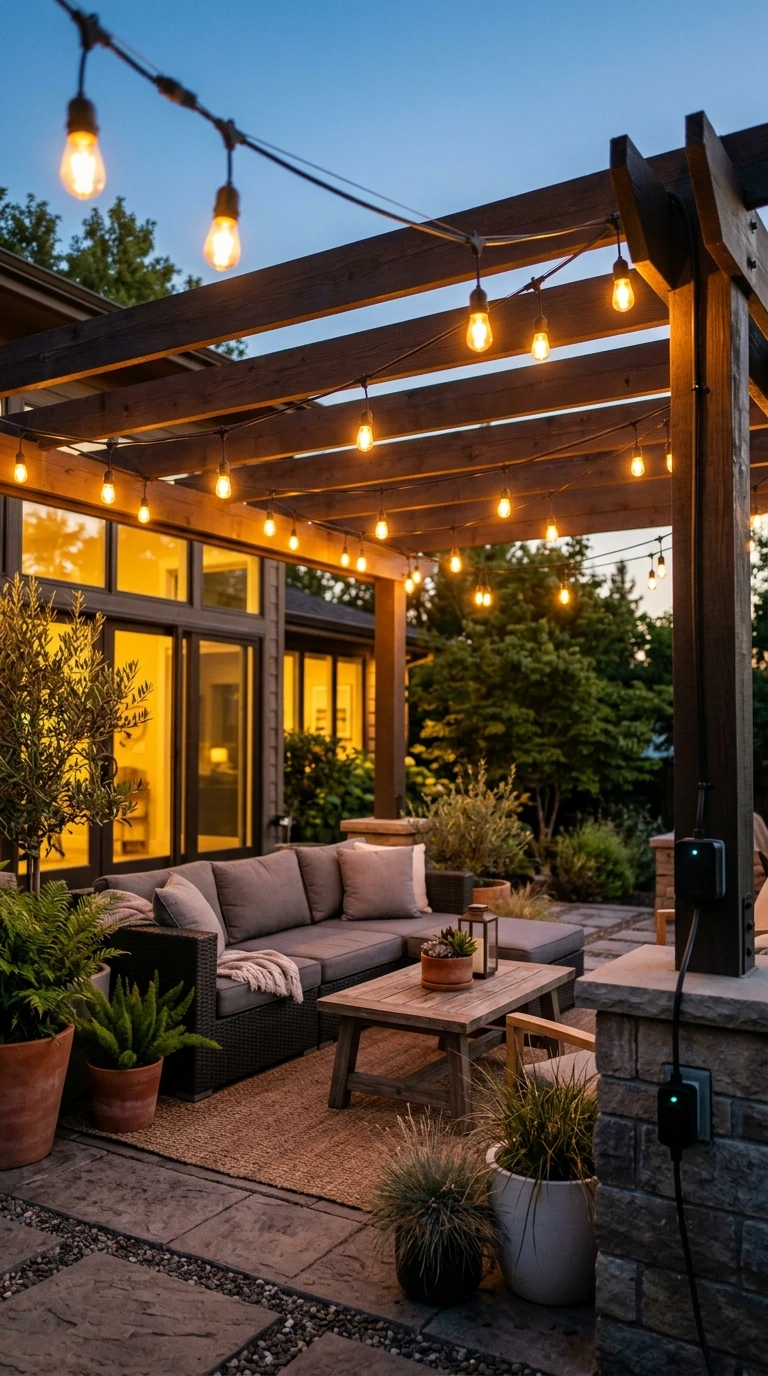
A string light setup that requires manually switching on and off every evening quickly becomes an afterthought — and a patio that is not lit is a patio that does not get used after dark. A simple timer or smart plug that turns the lights on automatically at dusk and off at a set time removes this friction entirely and ensures the patio is always ready when you step outside.
Basic plug-in timers cost very little and require no setup beyond setting the on and off times once. Smart plugs add voice control and remote operation from a phone, which is useful for adjusting timing seasonally as the sunset shifts. Either option transforms string lights from a deliberate choice into an automatic, effortless part of the evening.
19. Mixing String Lights With Other Outdoor Lighting
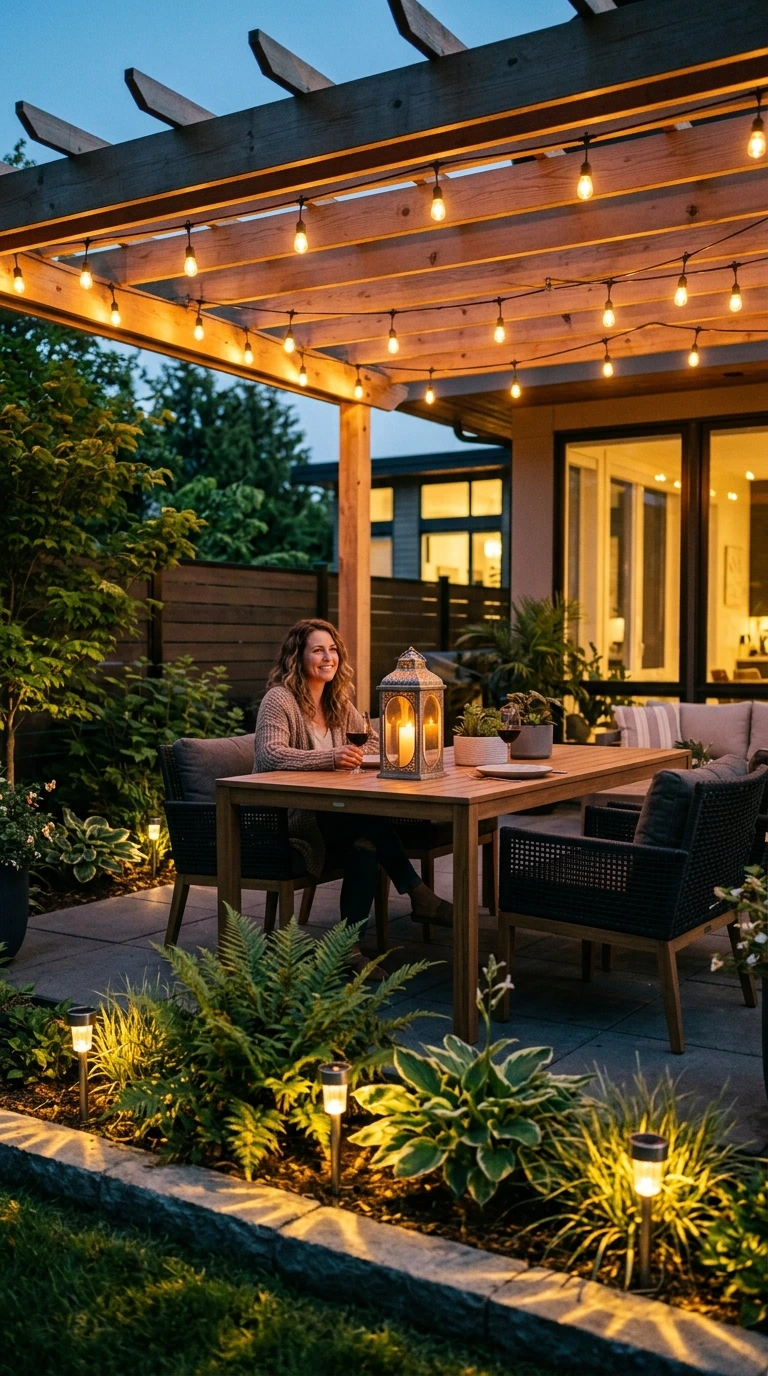
String lights work best as part of a layered lighting scheme rather than as the only light source on a patio. Used alone, even a beautiful overhead canopy can feel flat and insufficient for activities like dining, reading, or entertaining after dark. Combining string lights with other sources at different heights creates a genuinely functional and atmospheric outdoor space.
Add a solar stake light or two at ground level to illuminate plants and pathways. Place a lantern or battery-powered table lamp at table height for task lighting during meals. Let the string lights provide the ambient overhead layer that connects everything else. These three levels — ground, table, and overhead — create the same layered quality indoors that makes a well-designed room feel warm and considered.
20. Storing and Maintaining String Lights
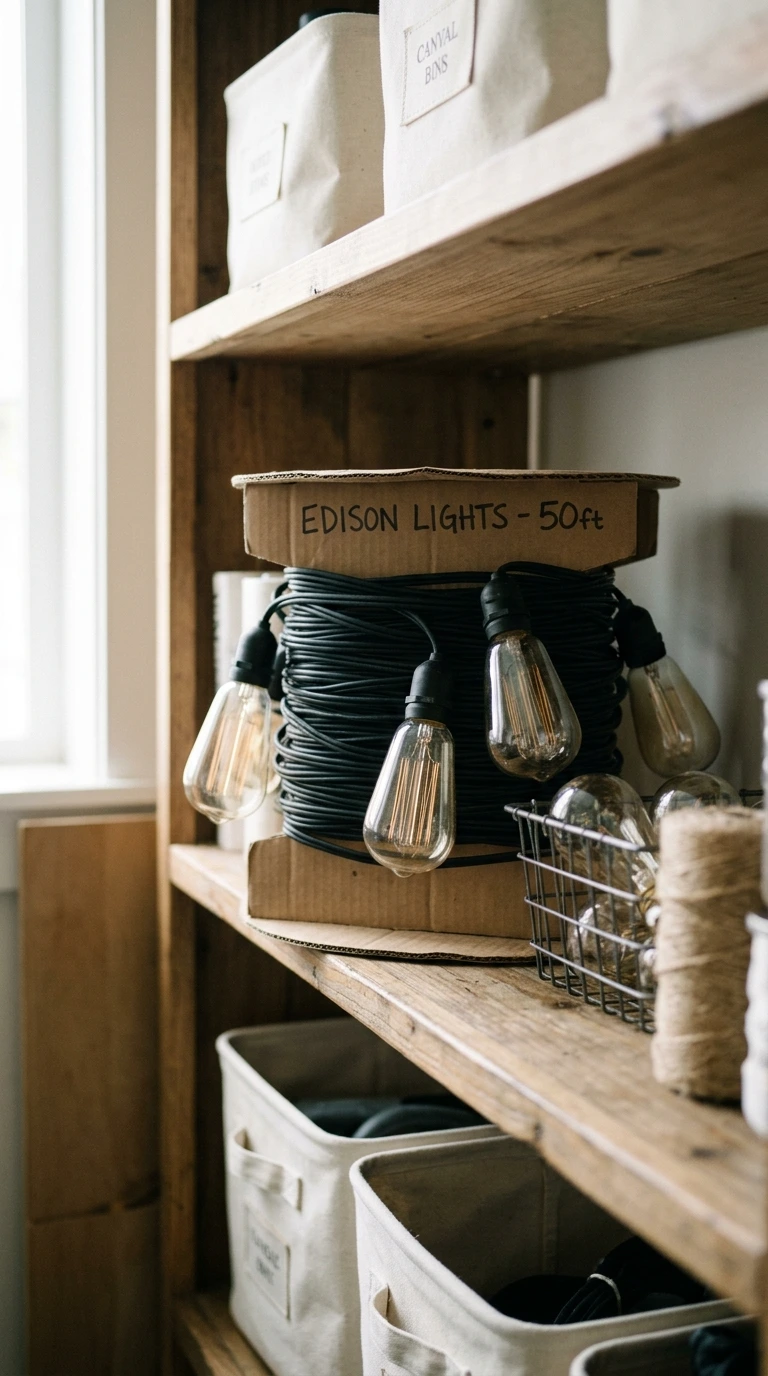
The way you store and maintain your string lights determines whether they last one season or ten. Most string light failures — broken bulbs, tangled cords, corroded connections — are the direct result of poor storage rather than low quality. A fifteen-dollar set of lights stored properly will outlast a fifty-dollar set left tangled in a box.
Wrap lights around a piece of cardboard, a pool noodle, or a purpose-made cord reel to prevent tangling. Store in a dry indoor location rather than a damp garden shed or garage where moisture can corrode connections. Test all bulbs before installation each season and replace individual bulbs rather than discarding a full strand for one failed light.
Warning: Never leave string lights connected to power during a thunderstorm or extreme weather event. Surge damage from lightning is one of the most common causes of string light failure — and a power surge that damages your lights can also damage whatever socket or extension lead they are connected to.
Common String Light Mistakes
Mistake 1: Using indoor lights outdoors Indoor string lights are not weatherproofed. Even a single rain event can cause shorts, corrosion, and fire hazards. Always check for an IP44 or higher weatherproofing rating on any string lights intended for outdoor use.
Mistake 2: Not enough lights The most common aesthetic mistake. A sparse string light canopy with visible dark patches between strands looks unfinished. Double the number of strands you think you need before buying — you can always use fewer, but running out mid-installation means a second trip.
Mistake 3: Visible cords and connections A beautiful string light setup ruined by a bright orange extension cord running across the patio floor. Plan the cord route before installation and use an outdoor-rated extension cord in a color that blends with your fence, wall, or floor surface.
Mistake 4: Wrong bulb spacing Bulbs spaced too far apart look sparse and create uneven light. Bulbs spaced too close together look cluttered and generate more heat than necessary. For an overhead canopy, six to eight inches between Edison bulbs and two to three inches between fairy lights tend to give the best results.
Mistake 5: No backup power plan Solar lights that run out of charge at nine in the evening, or plug-in lights connected to an outlet with no weatherproof cover — both leave you in the dark at the worst possible time. Always have a backup — a lantern, a battery-powered light, or a second power source — so the patio stays usable when the primary system fails.
Frequently Asked Questions
What are the best string lights for a patio?
Look for lights with an IP44 or higher weatherproofing rating, warm white bulbs in the 2200K to 2700K range, and a cord length suited to your space. Edison bulb strings for overhead canopies and fairy lights for decorative applications are the two most versatile choices.
How do I hang string lights without nails or screws?
Command outdoor hooks, tension cable systems, and outdoor adhesive clips all work for most patio surfaces without permanent installation. Tension rods between two walls or posts remove the need for any wall attachment at all.
How many string lights do I need for a patio?
Measure the perimeter of your patio and add thirty percent for a canopy formation. For a ten by twelve foot patio, you would need approximately sixty to seventy feet of lights for a basic canopy with strands spaced twelve inches apart.
Are solar string lights good enough for a patio?
Yes, in the right conditions. Solar lights in a location with six or more hours of direct daily sunlight deliver adequate brightness for atmospheric lighting. In shaded locations, plug-in lights are more reliable.
What is the difference between fairy lights and Edison bulb strings?
Edison strings have larger, individually visible bulbs with a warm filament glow — better for overhead canopies and statement lighting. Fairy lights have tiny, delicate bulbs better suited to decorative applications, jars, curtains, and shelving displays.
How do I stop string lights from tangling?
Wrap them around a piece of cardboard or a purpose-made cord reel before storing. Never drop them loose into a box. Untangling string lights in spring is entirely avoidable with thirty seconds of careful wrapping in autumn.
Can I leave string lights out in winter?
Outdoor-rated lights can handle most weather, but sustained freezing temperatures, ice, and snow put additional stress on connections and bulbs. Bringing them inside for winter significantly extends their lifespan — and a patio that is unused in winter does not need to be lit.
Conclusion
String lights are not a trend — they are a permanent feature of outdoor spaces that work. The warmth they create after dark, the way they define a space, the atmosphere they build with nothing more than a strand of bulbs and a power source — no other outdoor upgrade delivers as much for as little.
Start with one setup from this list. Get the power source right, choose warm white bulbs, and put the lights exactly where people will see them. The rest is detail. A patio with good string lights is a patio that gets used — and that is the whole point.