30 Small Patio Decor Ideas to Create Your Dream Outdoor Escape

Staring out at a cramped, bare concrete floor or a narrow balcony can make you feel like giving up on your outdoor space entirely. It is easy to look at standard backyard designs and think your small footprint just cannot compete. Most design advice tells you to buy miniature furniture that nobody actually enjoys sitting in, leaving you with a setup that feels more like an afterthought than a functional getaway.
You do not need a sprawling green lawn to create a private oasis where you can comfortably unwind at the end of a long day. The real trick lies in treating your footprint exactly like an indoor room, maximizing your vertical space, and using smart styling layers to trick the eye into seeing more room.
This collection of practical small patio decor ideas will show you how to turn even the tightest corner into a highly functional retreat. By focusing on rich textures, clever layouts, and warm ambient lighting, you can build an inviting escape right outside your back door without any major structural renovations.
1. Hang a Tiered Vertical Pocket Planter
Lush green leaves cascading down a bare brick wall instantly soften a cramped patio layout. When floor space is limited, shifting your garden upward keeps the ground clear for comfortable seating. Soft felt pocket planters hang easily from simple hooks and create a living wall effect without the heavy weight of traditional ceramic pots.
Choosing a variety of plant shapes makes the arrangement look full and natural.
- Top rows: Trailing ivy or pothos to drape downward naturally
- Middle rows: Soft, bushy ferns to create structural volume
- Bottom rows: Fragrant kitchen herbs like rosemary and thyme
2. Install a Fold-Down Wall-Mounted Drop Table
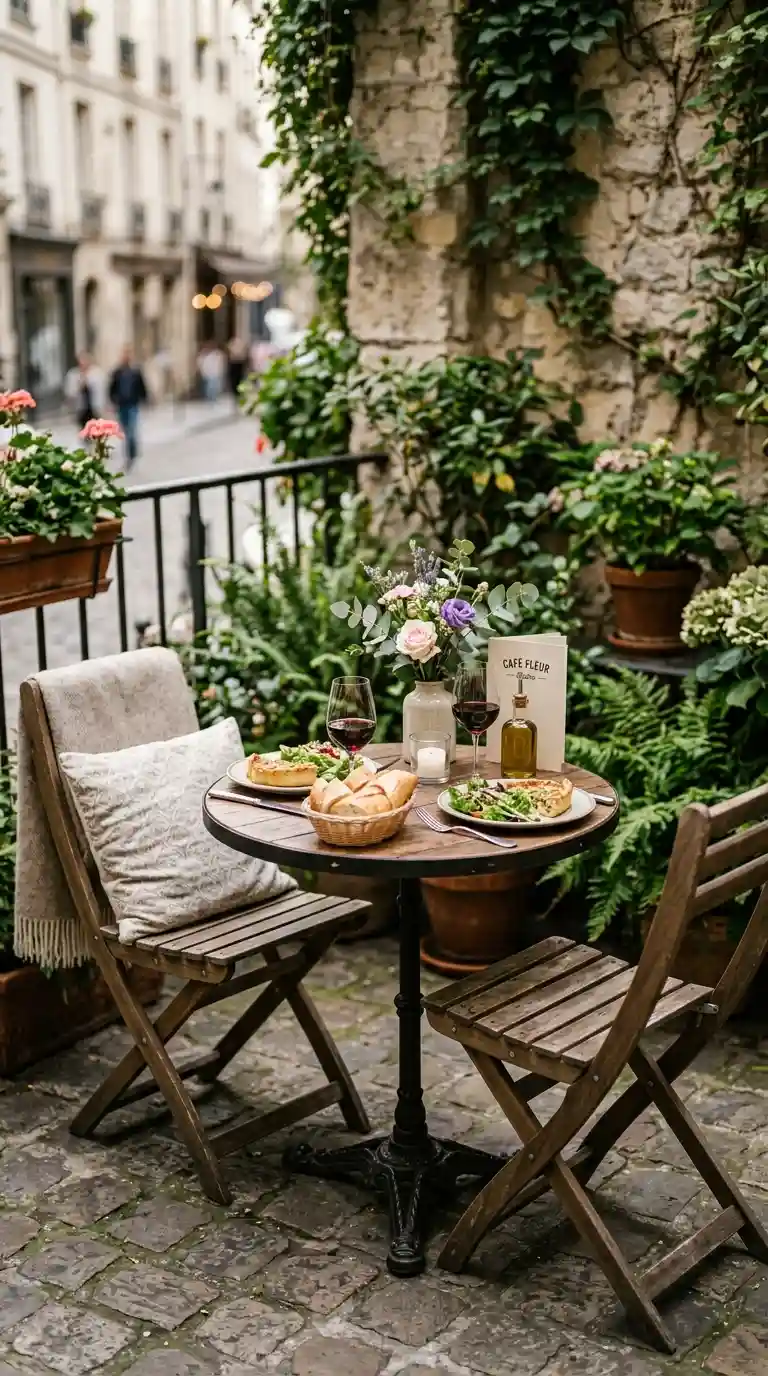
Squeezing a full-sized dining table onto a narrow balcony often blocks your walking path completely, making the area feel claustrophobic. A wall-mounted drop-leaf table fixes this frustration by providing a sturdy surface that completely disappears when you finish your morning routine.
Mounting this piece takes only a few quick steps. Secure the folding brackets directly into structural wall studs using heavy-duty, weather-resistant exterior screws. Always measure your chair height ahead of time to ensure comfortable legroom when the table panel is extended out.
💡 Clearance Rule of Thumb
Leave at least thirty inches of clear floor space behind your seating area so you can easily pull chairs out without hitting railings.
3. Lay Down a Bold Geometric Outdoor Rug
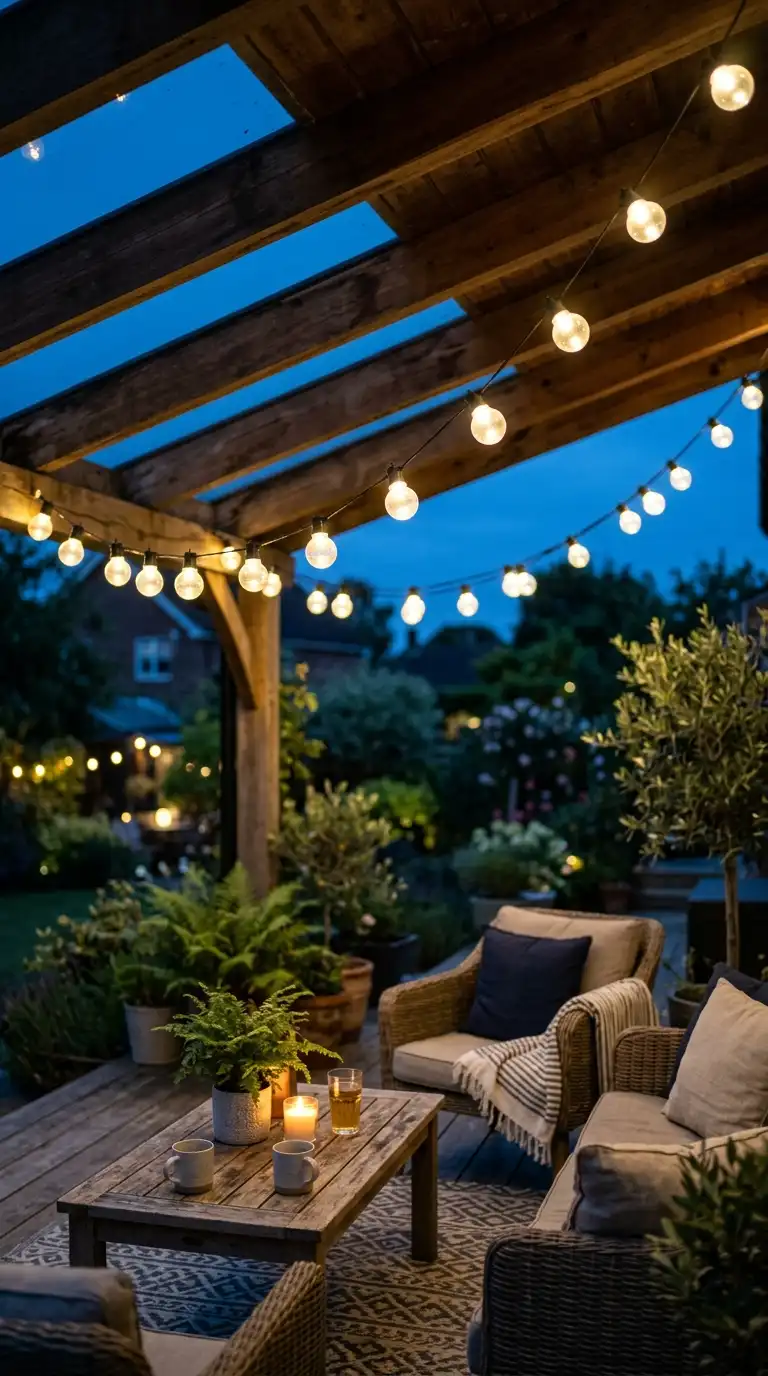
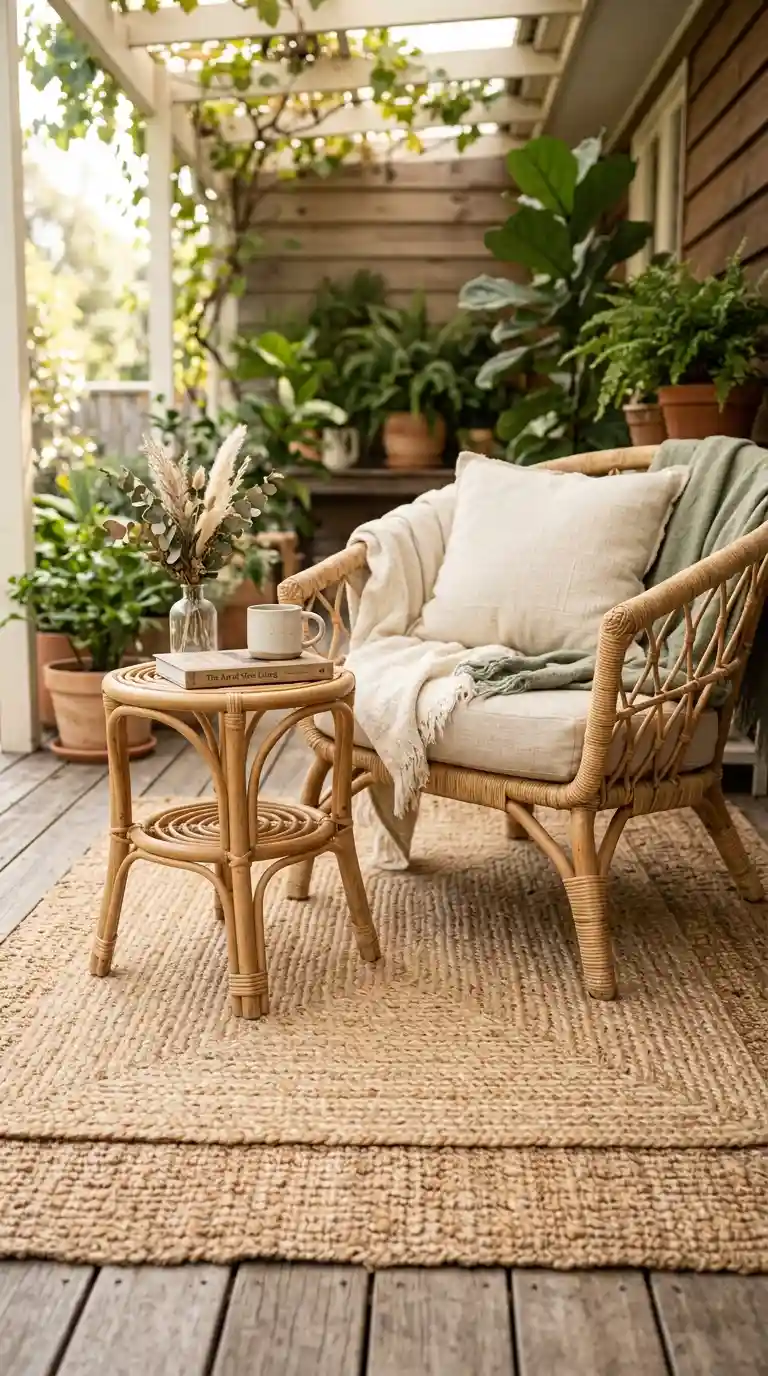
An outdoor rug instantly defines your seating zone and hides stained concrete or worn wooden decking. Choosing a bold geometric pattern draws the eyes downward, visually expanding the outer boundaries of the floor.
Make sure to select a flat-weave polypropylene material. This specific fabric dries quickly after heavy rain, resists fading in direct sunlight, and can be rinsed clean with a garden hose in minutes.
Cold, industrial bare concrete flooring that makes the patio look unfinished, small, and uninviting.
A cozy, defined outdoor living room perimeter that anchors your furniture pieces and visually extends the walls.
4. String Warm Bistro Lights in a Zig-Zag Pattern
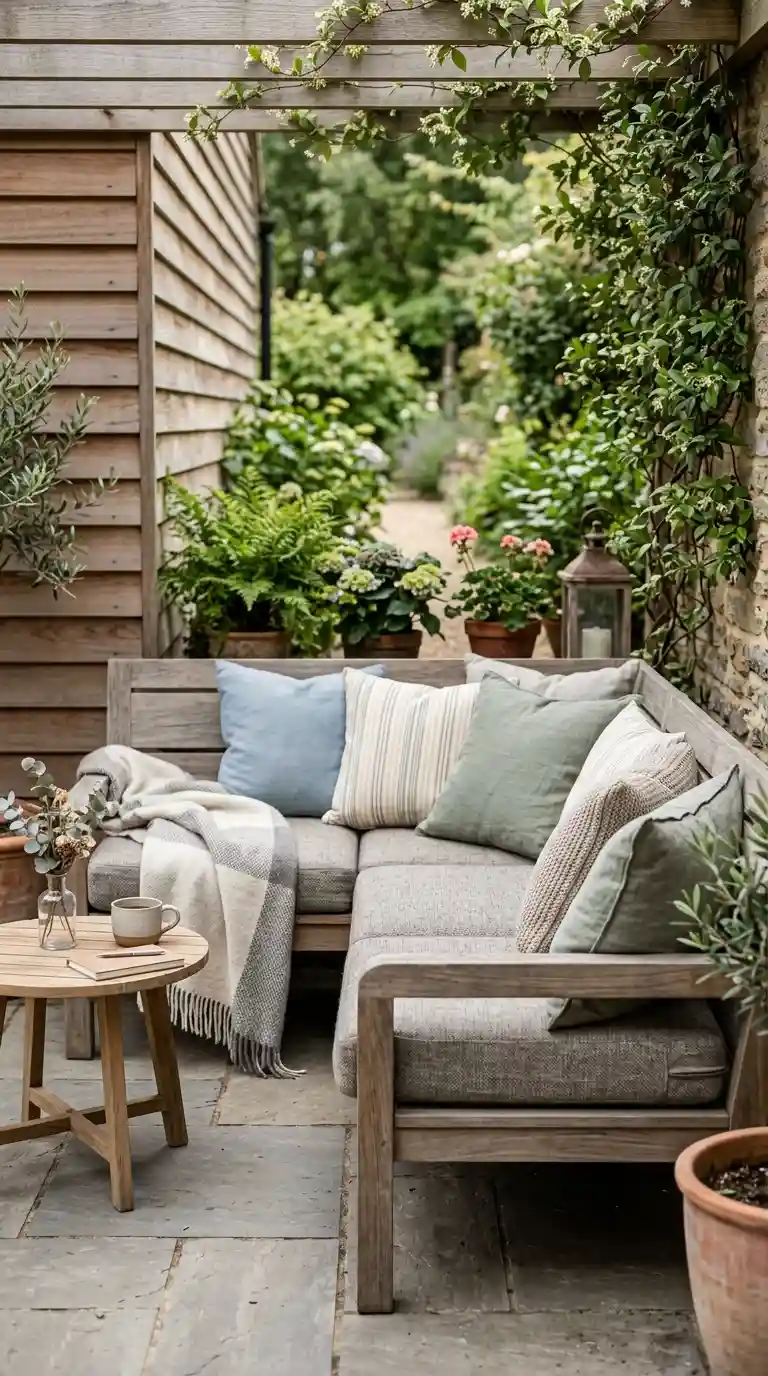
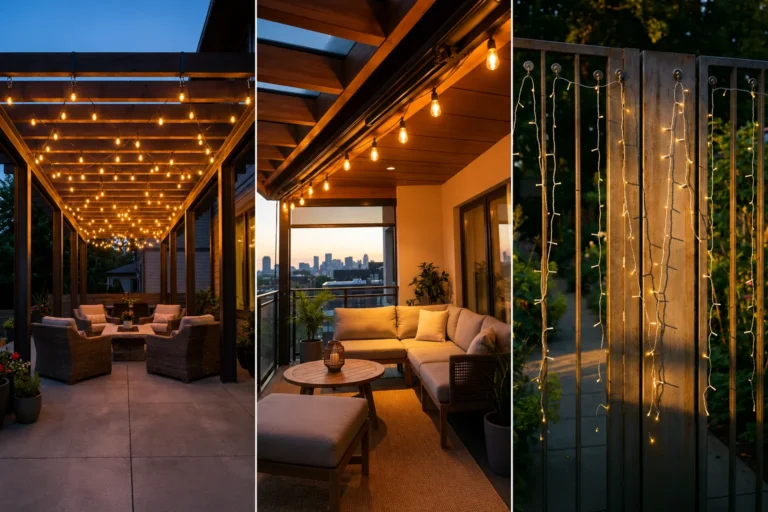
As dusk settles, harsh overhead building lights can ruin the cozy mood of your outdoor retreat. Hanging heavy-duty bistro strands overhead creates a soft glow that makes the space feel like a secluded evening cafe. Looping the cords across the ceiling in a tight zig-zag pattern distributes the light evenly rather than leaving dark corners.
Hanging Hardware Checklist
5. Tuck in an L-Shaped Corner Storage Bench
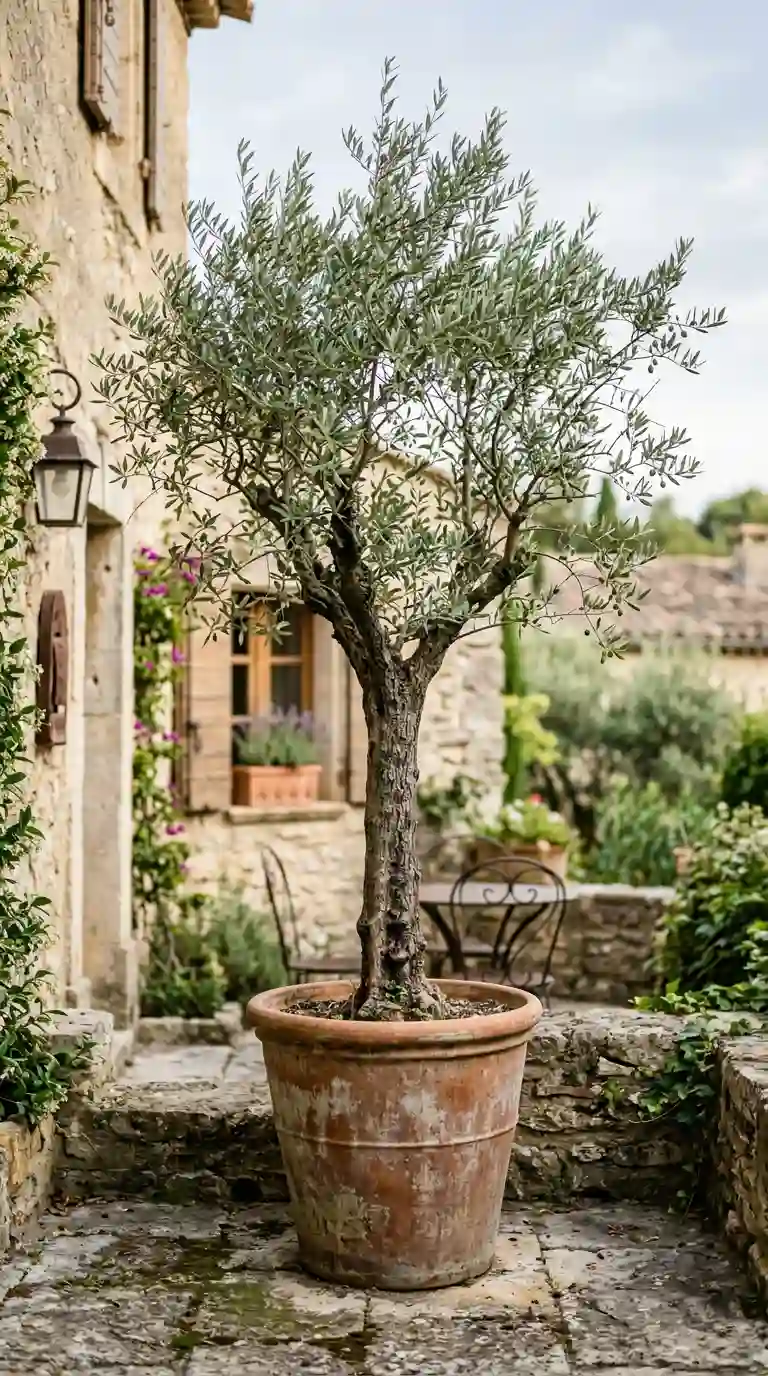
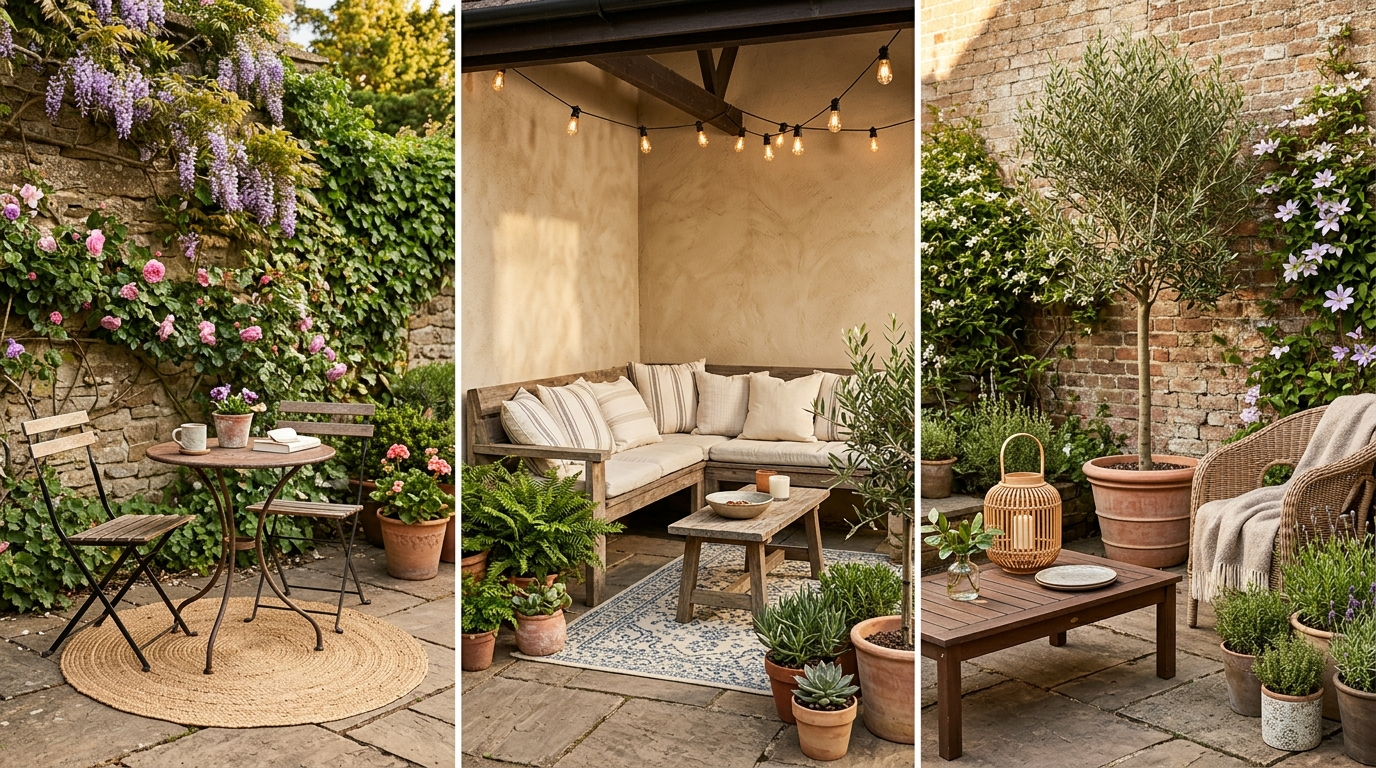
Dead corners are a luxury a small footprint simply cannot afford to waste. An L-shaped bench utilizes tight corner angles perfectly, maximizing the seating capacity without cluttering the center of your floor plan.
Choosing a model with a lift-top seat solves your storage problems instantly. You can keep plush cushions, watering cans, and extra throws dry and hidden completely away from sight when bad weather rolls in.
6. Mix Woven Lanterns of Different Heights
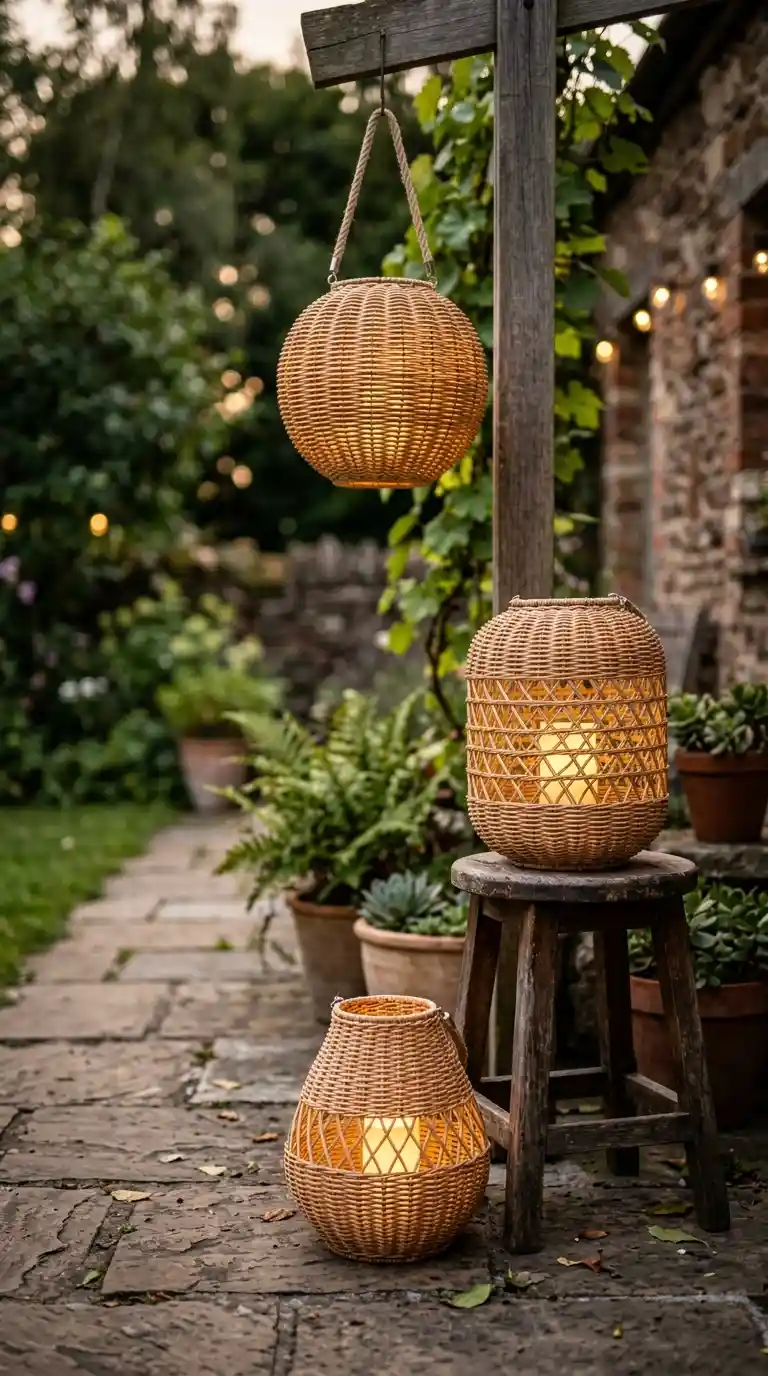
One lantern on the floor looks like an afterthought. Three lanterns at staggered heights, one hanging, one on a stool, one on the ground, create a cluster that feels styled instead of scattered. This works especially well in a corner that has no room for a full light fixture.
Hang the tallest lantern from a hook or pergola beam, about eye level or slightly above.
Set a medium lantern on a plant stool or side table, roughly knee height.
Place the smallest lantern directly on the floor, tucked near a plant pot.
Use flameless candles if the lanterns sit near fabric cushions or dry leaves. It looks the same at night and skips the fire risk entirely.
7. Cover a Bare Wall With a Woven Disc
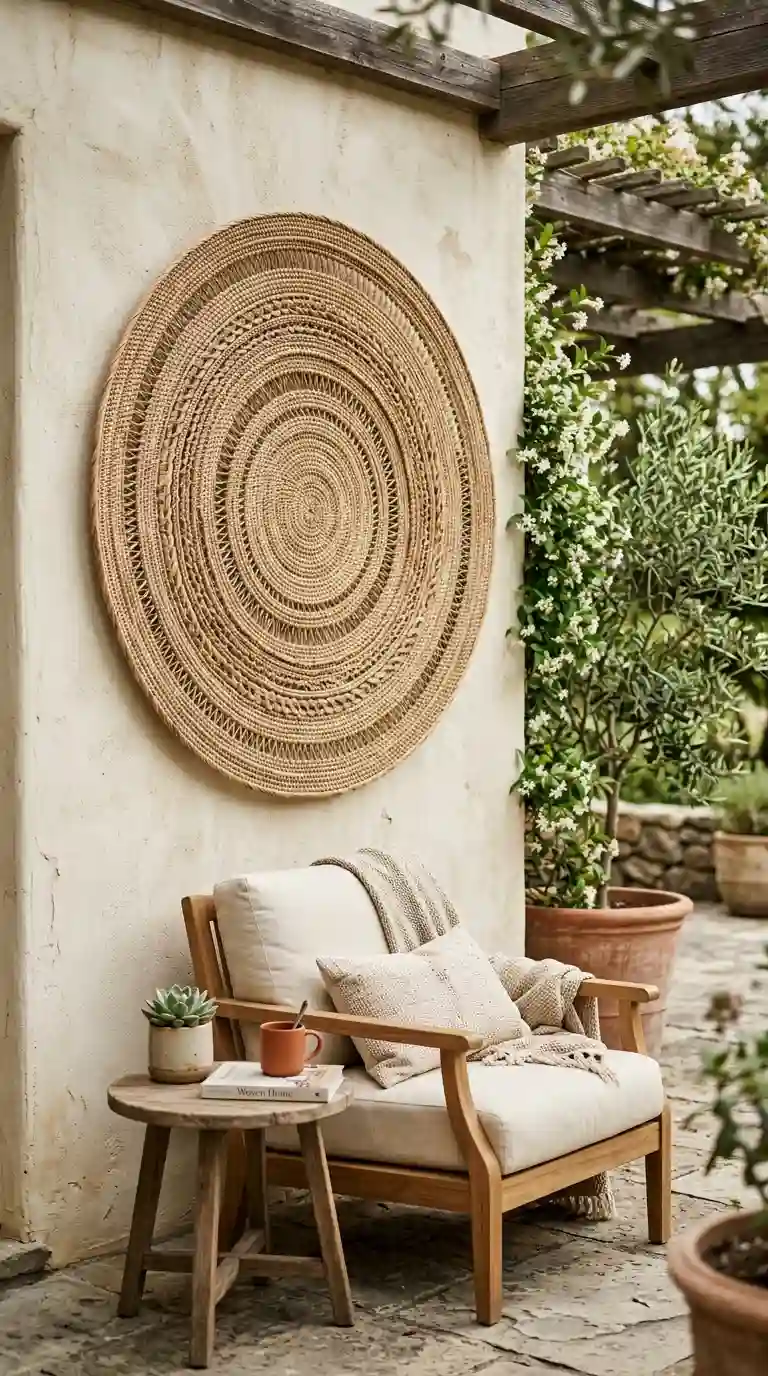
A blank wall next to seating always pulls the eye away from the space, not toward it. A large woven disc, rattan fan, or plate wall grouping fills that gap with texture instead of another framed print, and it holds up outdoors far better than paper or canvas art.
Hang one large piece, 24 inches or wider, as a single statement.
Choose weather resistant rattan or resin weave.
Paper or canvas prints that warp in humidity.
Too many small pieces that look cluttered on a tight wall.
Center it slightly above eye level from the seated position, not standing height. It changes how the whole wall reads once you sit down.
8. Choose Folding Chairs That Vanish When Not in Use
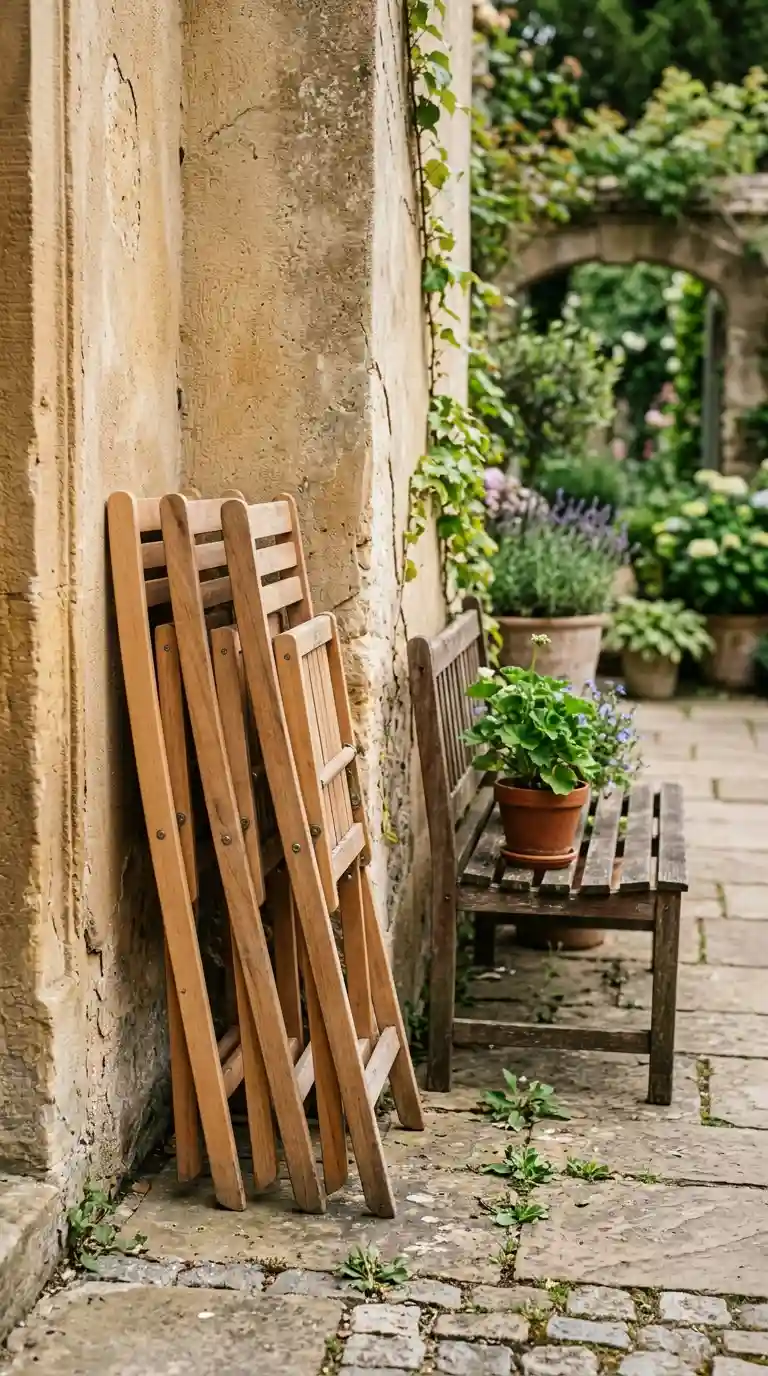
Small patios get used differently depending on the day. Sometimes it is one person with coffee, sometimes four people for dinner. Folding chairs that lean flat against a wall or slide under a bench solve this without permanent furniture eating up daily walking space.
📌 Good To Know
Look for chairs under 2 inches thick when folded flat. Bulkier folding frames still take up real storage room, which defeats the purpose.
Metal bistro folding chairs cost less, but wood folding chairs with a slight curve to the seat are more comfortable for anyone staying more than twenty minutes.
9. Layer Throw Pillows in Two Textures, Not Five
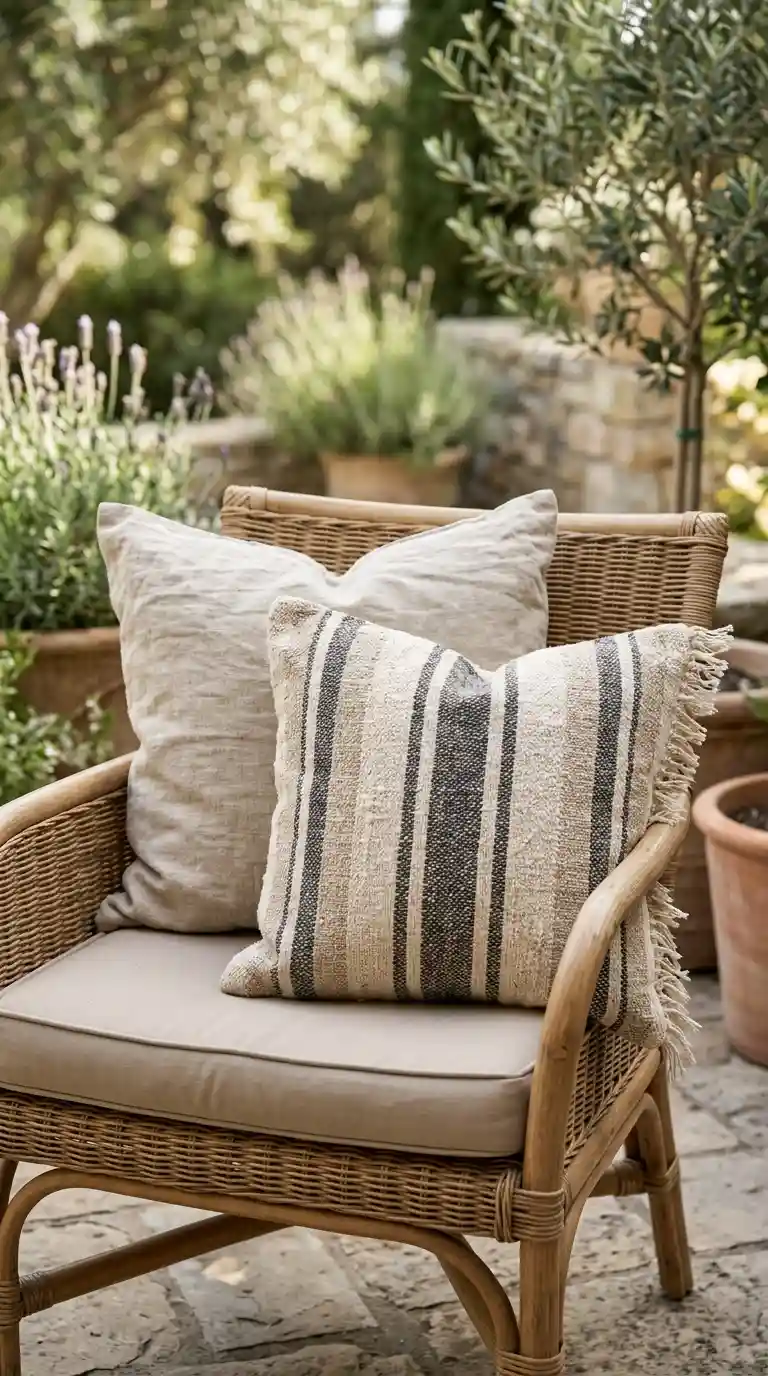
A pile of five different pillow patterns looks busy on a small patio because there is less negative space to absorb the visual noise. Two textures, like a woven stripe and a solid linen, give contrast without competing for attention.
Stick to outdoor rated fabric even under a covered patio. Regular indoor pillows fade and mildew faster than most people expect.
10. Add a Low Coffee Table With Storage Underneath
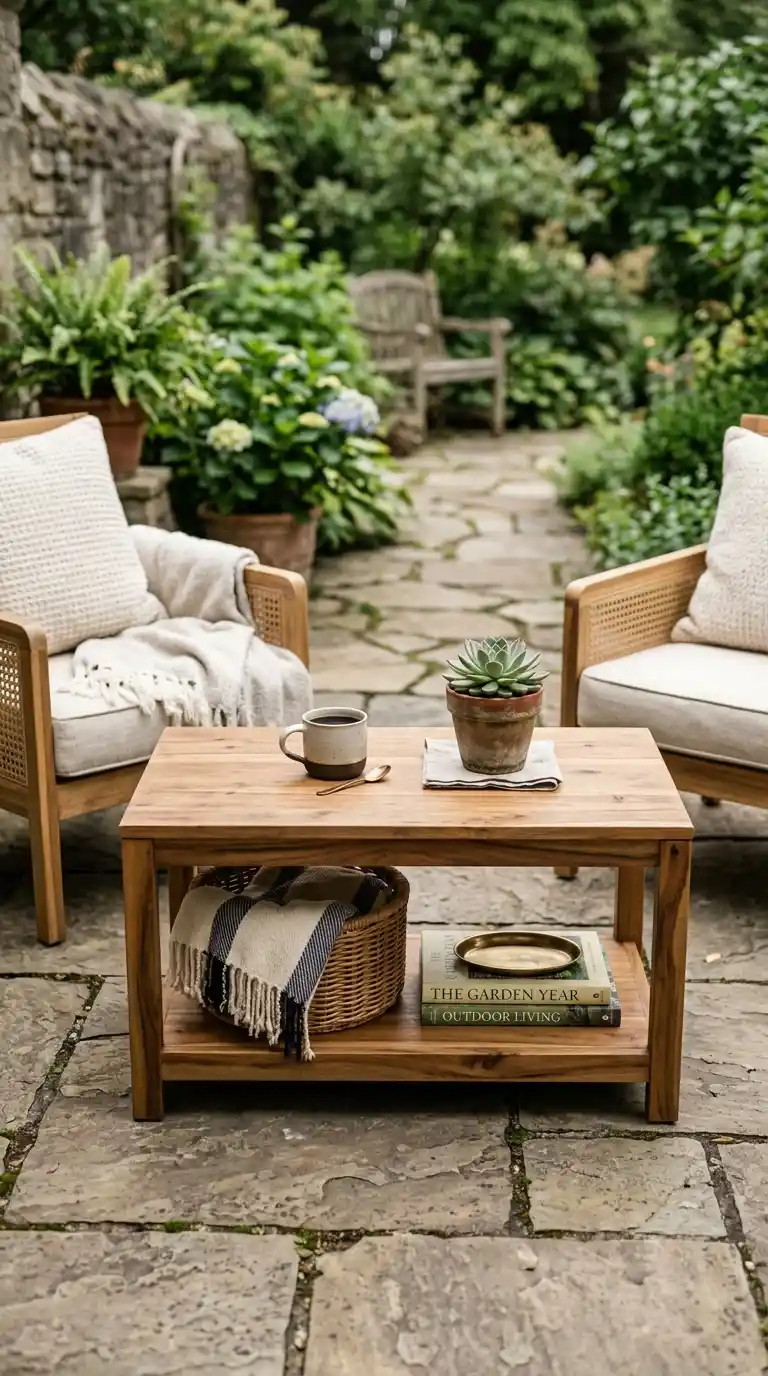
The table height matters more than most people think on a small patio. A low table, around 16 to 18 inches, keeps sightlines open across the space, while a standard height table visually chops the area in half.
| Open Shelf Table | Closed Storage Table |
|---|---|
| Good for baskets and stacked books on display. | Keeps cushions and citronella candles hidden from rain. |
| Lighter, easier to move for cleaning. | Better if the patio is fully exposed to weather. |
Pick a top surface that can take a hot mug without a coaster. Sealed wood or a small tile inlay both hold up better than raw wood on a table that gets full sun.
11. Tuck a Snake Plant Into the Shadiest Corner
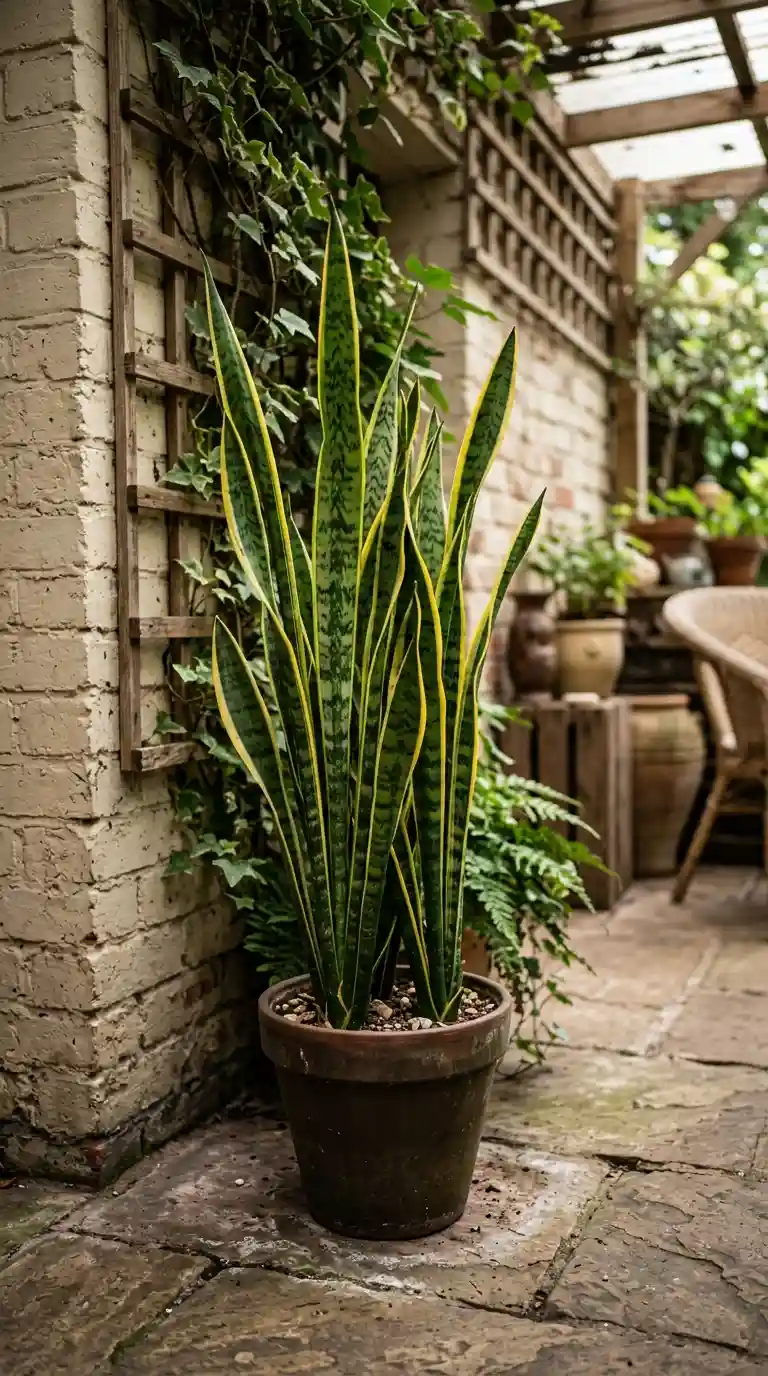
Every small patio has one spot that barely gets light, usually behind a chair or against a north facing wall. Most plants struggle there, but a snake plant thrives in low light and needs almost no attention, which makes it the obvious pick for that dead corner.
A shaded corner sits empty because nothing seems to survive there.
A tall snake plant fills the gap with vertical green, no direct sun required.
Water it once every two to three weeks, less in cooler months. Overwatering is the only real way to hurt this plant.
12. Use Candle Lanterns Instead of Overhead Light
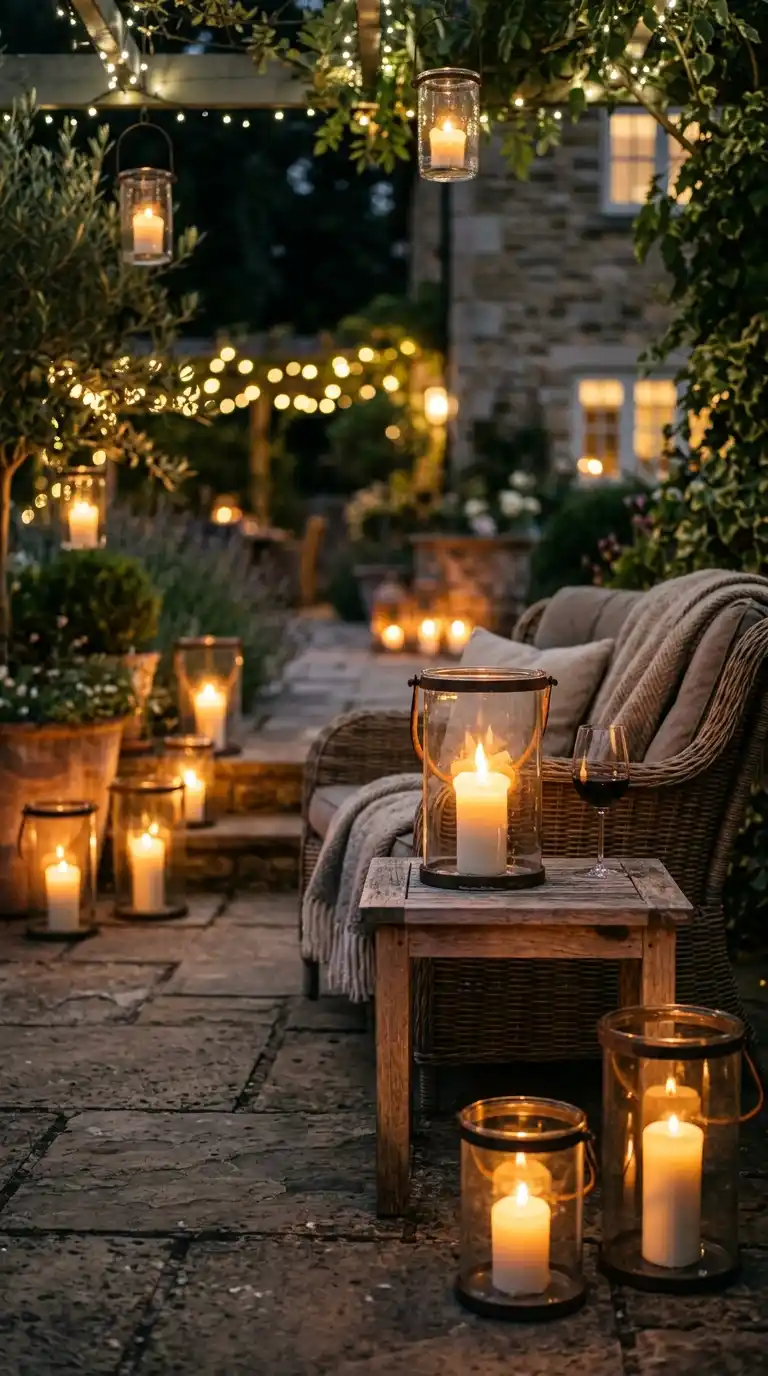
A single bright overhead bulb flattens a small patio and makes it feel more like a hallway than a retreat. Candle lanterns placed at different spots around the seating area throw soft, uneven light that makes the whole space feel warmer once the sun goes down.
💡 Quick Tip
Place lanterns at three different heights, floor, table, and hanging, instead of lining them up on one surface. It reads far more layered at night.
Glass hurricane lanterns handle wind better than open flame candles. Skip citronella scented ones near the dining spot if you plan to eat outside, since the smell competes with food.
13. Build a Mini Shelf for Plants on a Blank Wall
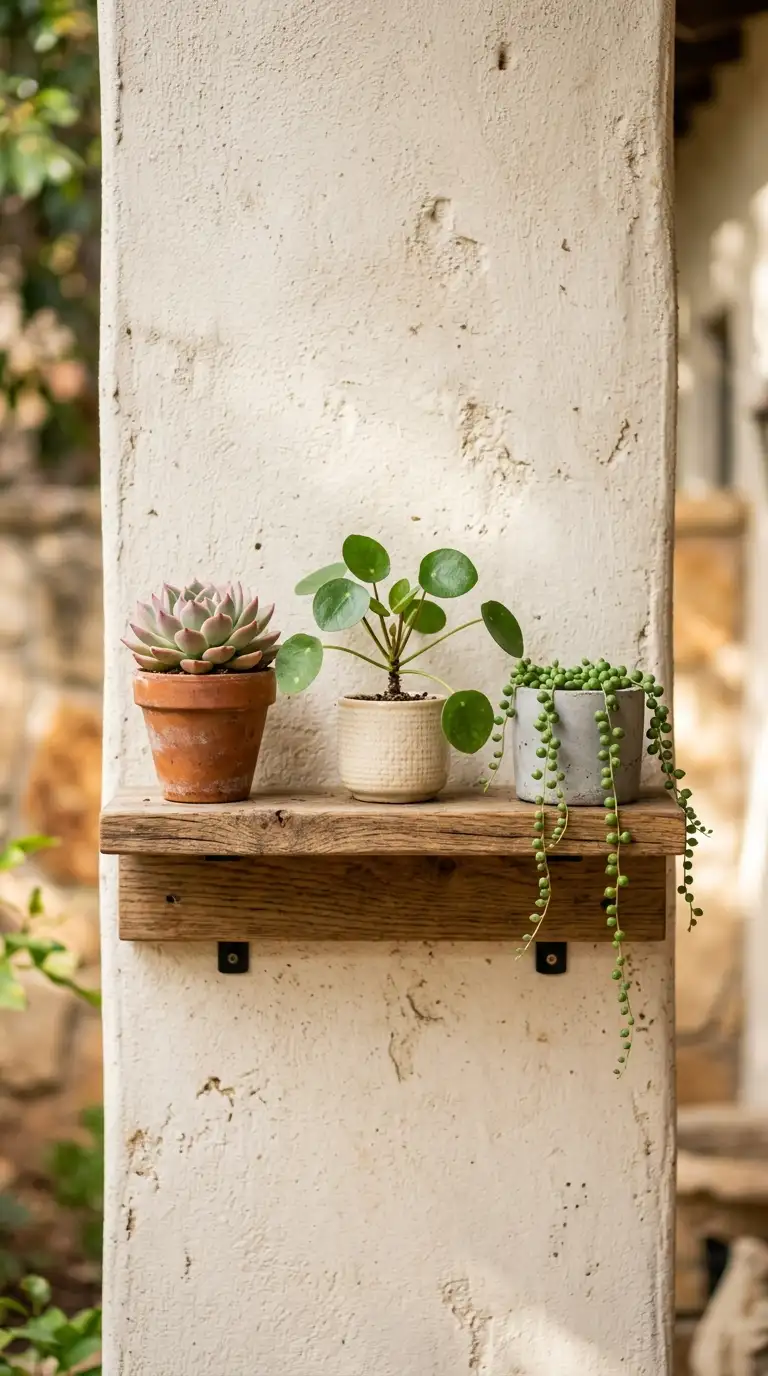
Floor space runs out fast on a small patio, but wall space almost never does. A single floating shelf, even just 24 inches long, gives you room for three or four small pots without touching the ground at all.
Choose pots with drainage saucers attached, since dripping water on a wall mounted shelf can stain siding or stucco underneath it over time.
14. Pick One Bold Cushion Pattern and Repeat It
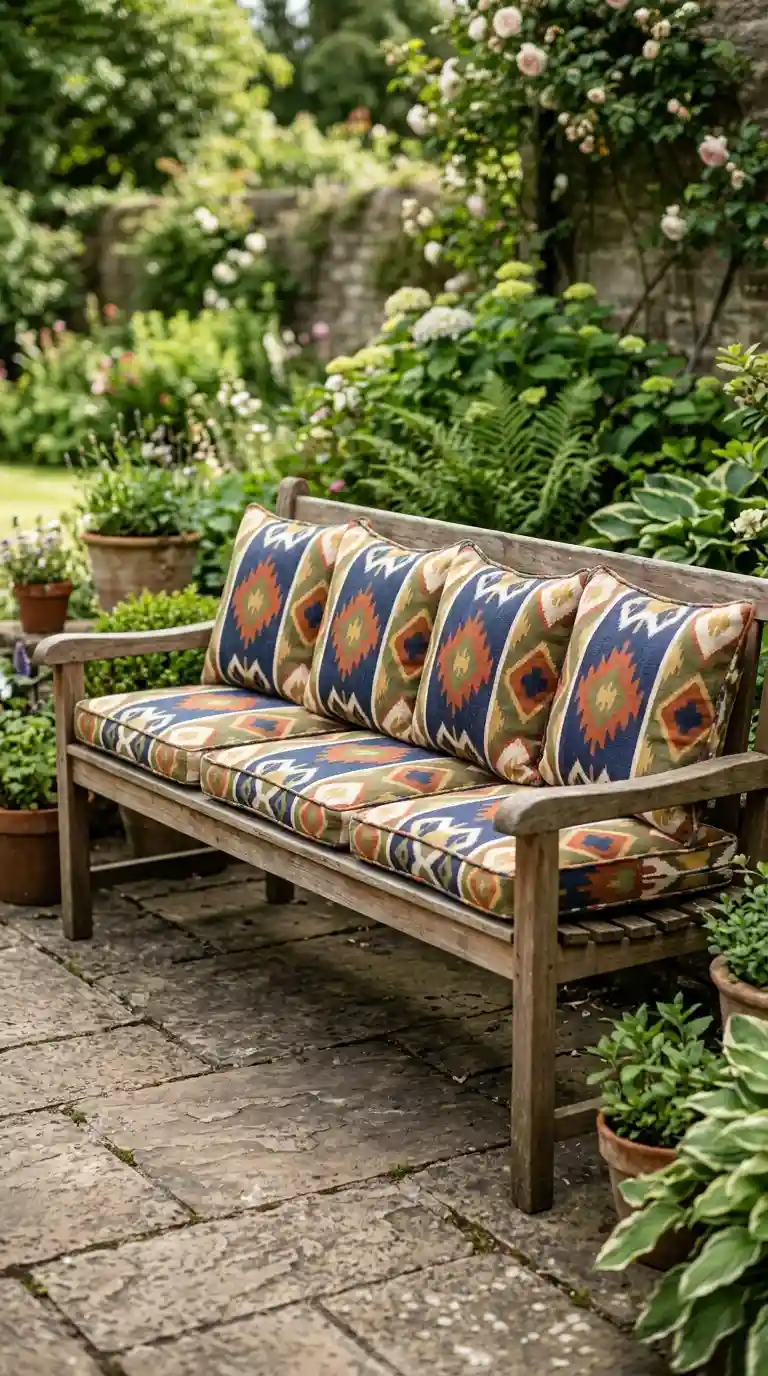
Mixing five different patterns on a small patio makes the whole space feel chaotic, since there is not enough room to let each pattern breathe. Picking one strong pattern and repeating it across two or three cushions gives the eye a rhythm to follow instead.
- ▸Choose one pattern with a scale you actually like, stripe, block print, or geometric.
- ▸Pair it only with solid colors pulled from the pattern itself.
- ▸Keep the pattern off the rug if it is already on the cushions, so nothing competes.
This works best for renters too, since swapping one pattern is a lot cheaper than replacing an entire furniture set later.
15. Hang a Pendant Light Over the Seating Area
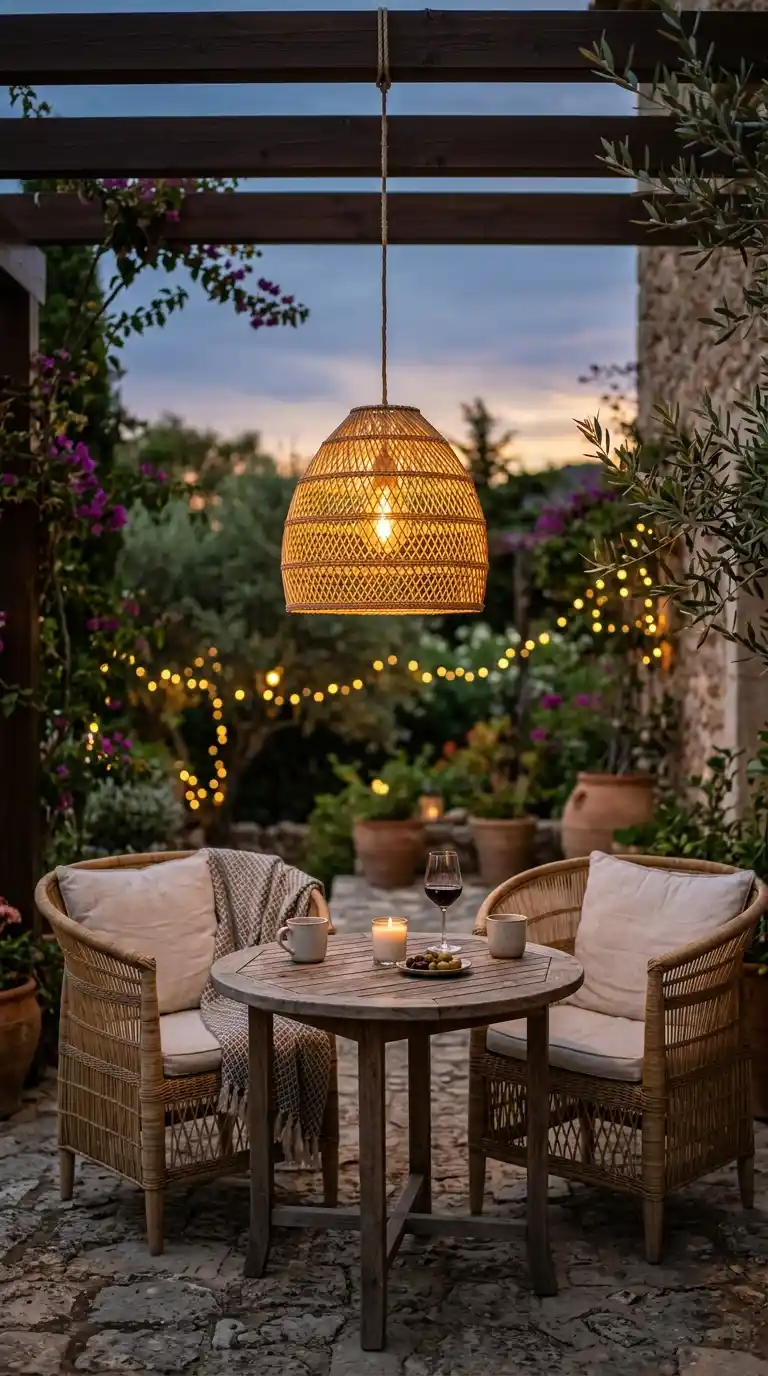
A pendant light gives a small patio a defined center the way a chandelier does indoors. It signals that this exact spot is the gathering point, which matters when the rest of the patio has no walls to define the space naturally.
Hang the pendant so its base sits about 30 inches above the table. Too high and it loses the cozy effect completely.
Battery powered or solar pendant lights skip the need for an electrician, which matters most on rented balconies or patios without existing wiring.
16. Skip the Runner Rug for a Round One in Tight Corners
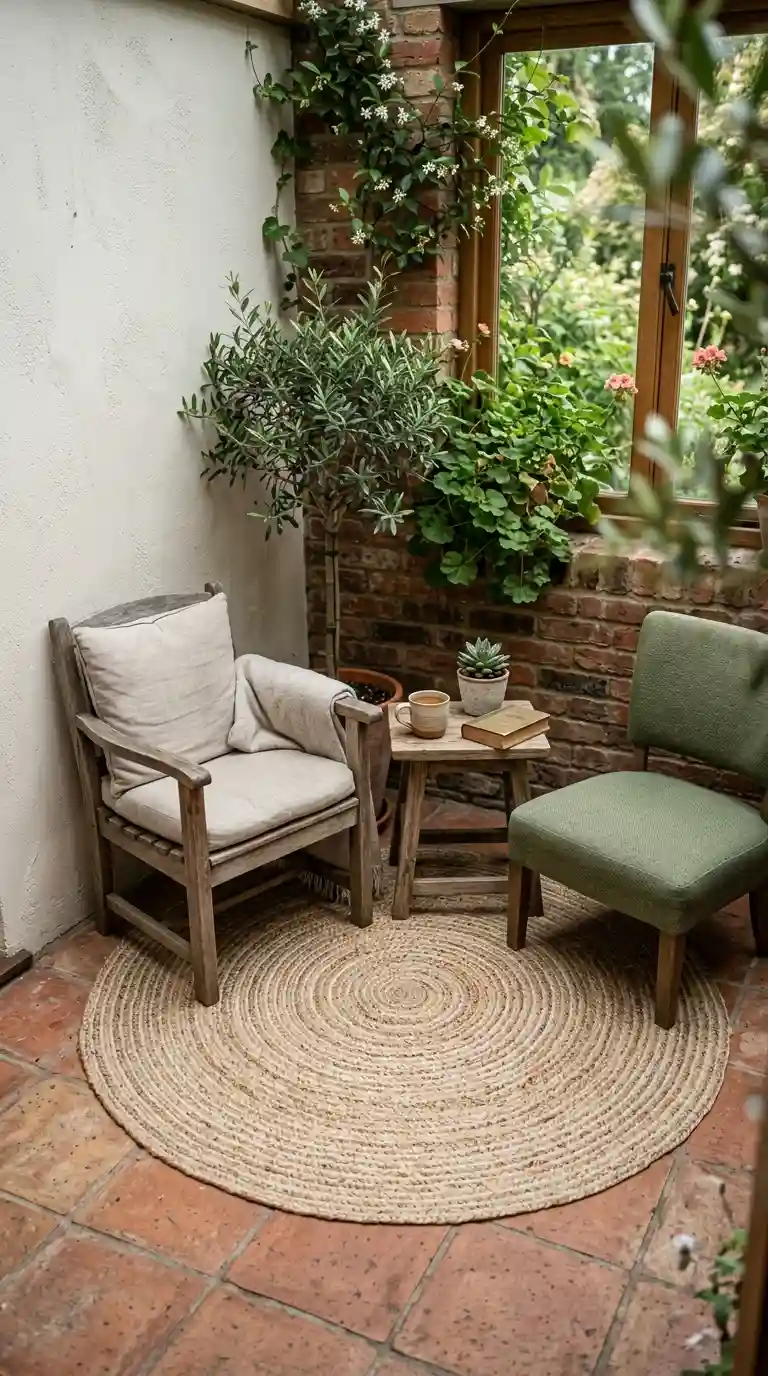
Long rectangular rugs look natural in a hallway, but on an L-shaped or corner patio they often hang off the edge or cut across furniture legs awkwardly. A round rug sized to fit the seating cluster solves that without any custom trimming.
📌 Good To Know
Measure the widest point of your seating cluster first, then add 12 inches on each side. That gives you the round rug diameter to shop for.
Round rugs also make a square patio feel less boxy, since the curve softens all those straight edges from the walls and furniture.
17. Let a Vine Trail Along the Railing
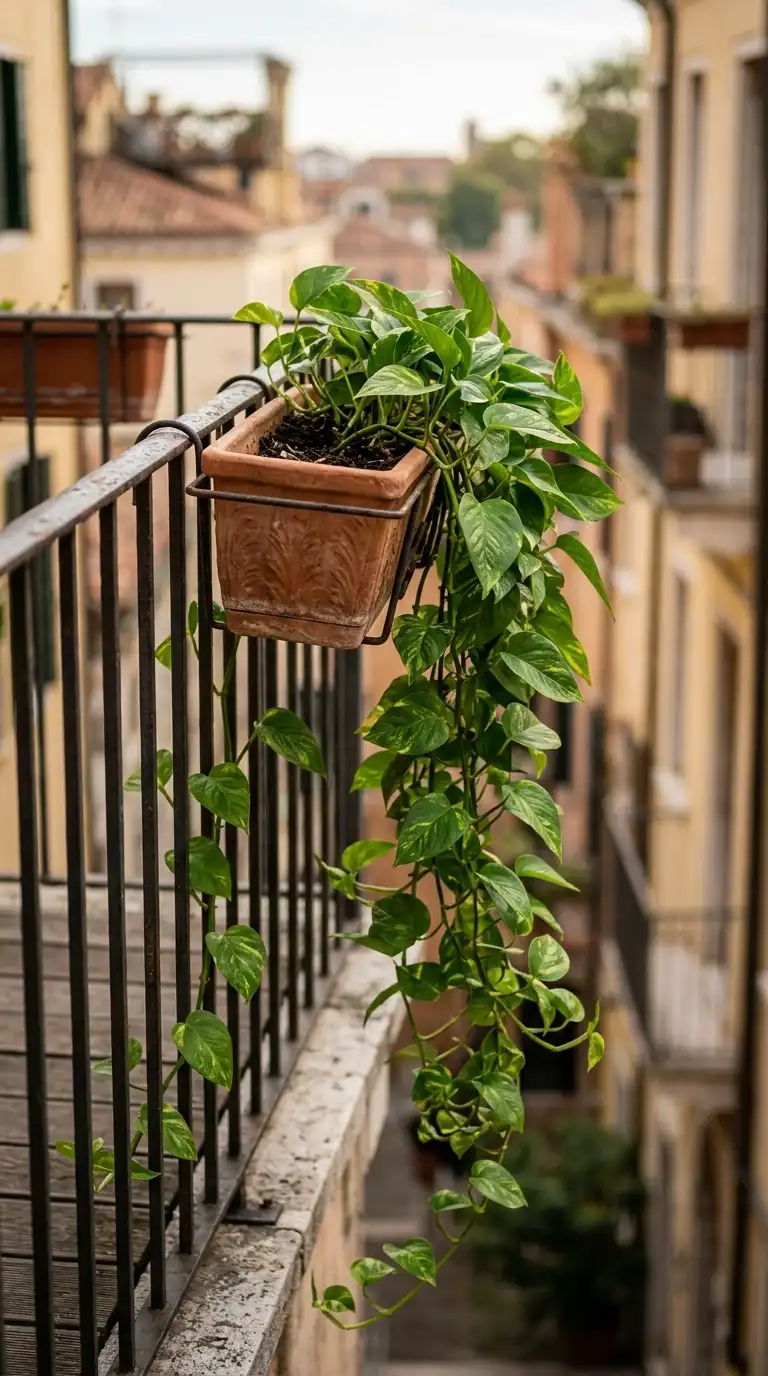
A bare metal or wood railing is one of the most overlooked spots on a small balcony. A trailing vine, like pothos or ivy in a rail-mounted planter, softens that hard edge and adds a layer of green without taking up any floor space.
A plain metal railing with a clear view straight through to the neighbor’s balcony.
A trailing vine softens the line and adds gentle privacy without blocking airflow.
Rail-mounted planters with a self-watering reservoir are worth the extra cost, since a railing box dries out faster than a ground pot in full sun.
18. Add a Wood Slat Panel for Instant Privacy
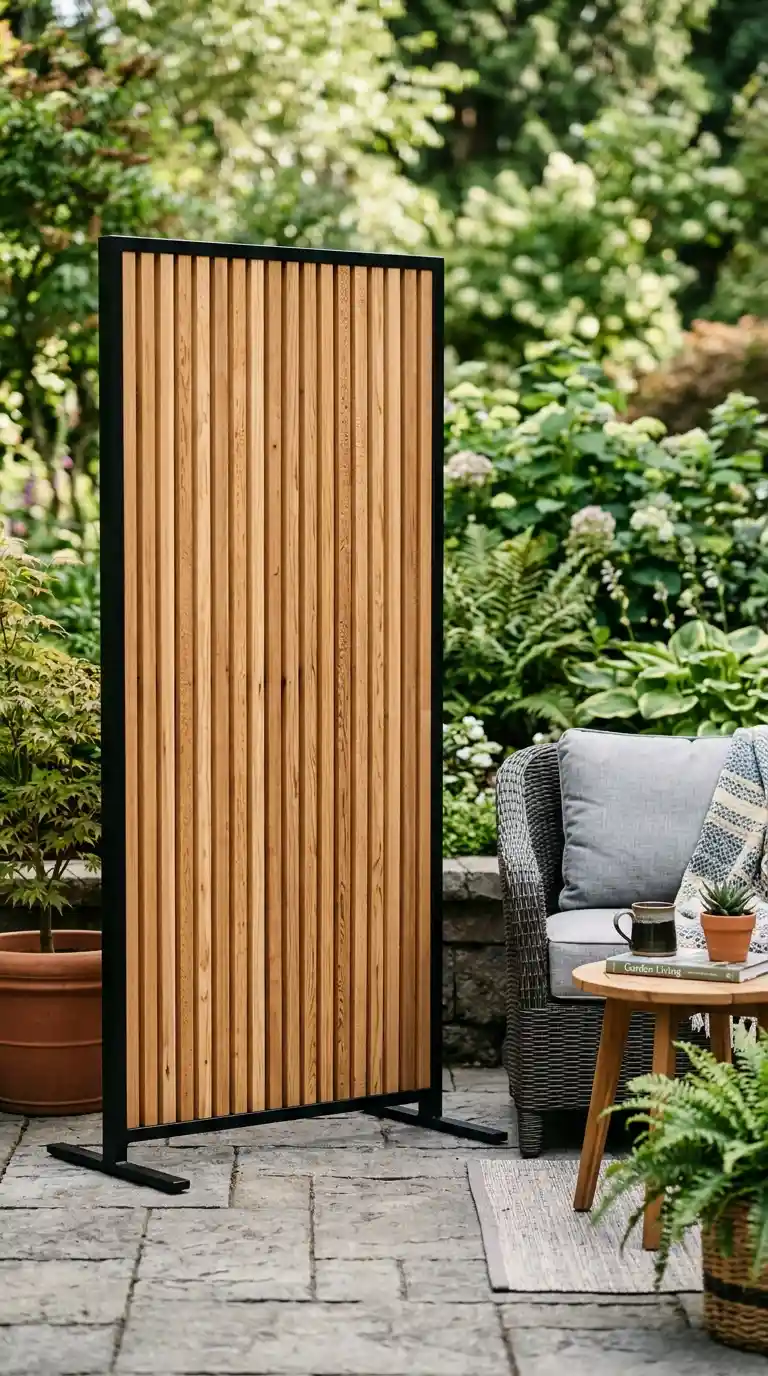
A slat panel leaned or mounted against one open side does more for a small patio than most people expect. It blocks the direct sightline from a neighbor’s window while still letting light and air move through the gaps.
Measure the exact gap you need to cover before buying a panel size.
Choose a freestanding panel with a stand if you cannot drill into the flooring or railing.
Add a small planter box or hooks directly onto the slats for extra function.
A panel that doubles as a display wall for hanging plants or lanterns earns its space twice over on a patio this size.
19. Use a Tray to Style the Coffee Table Like a Vignette
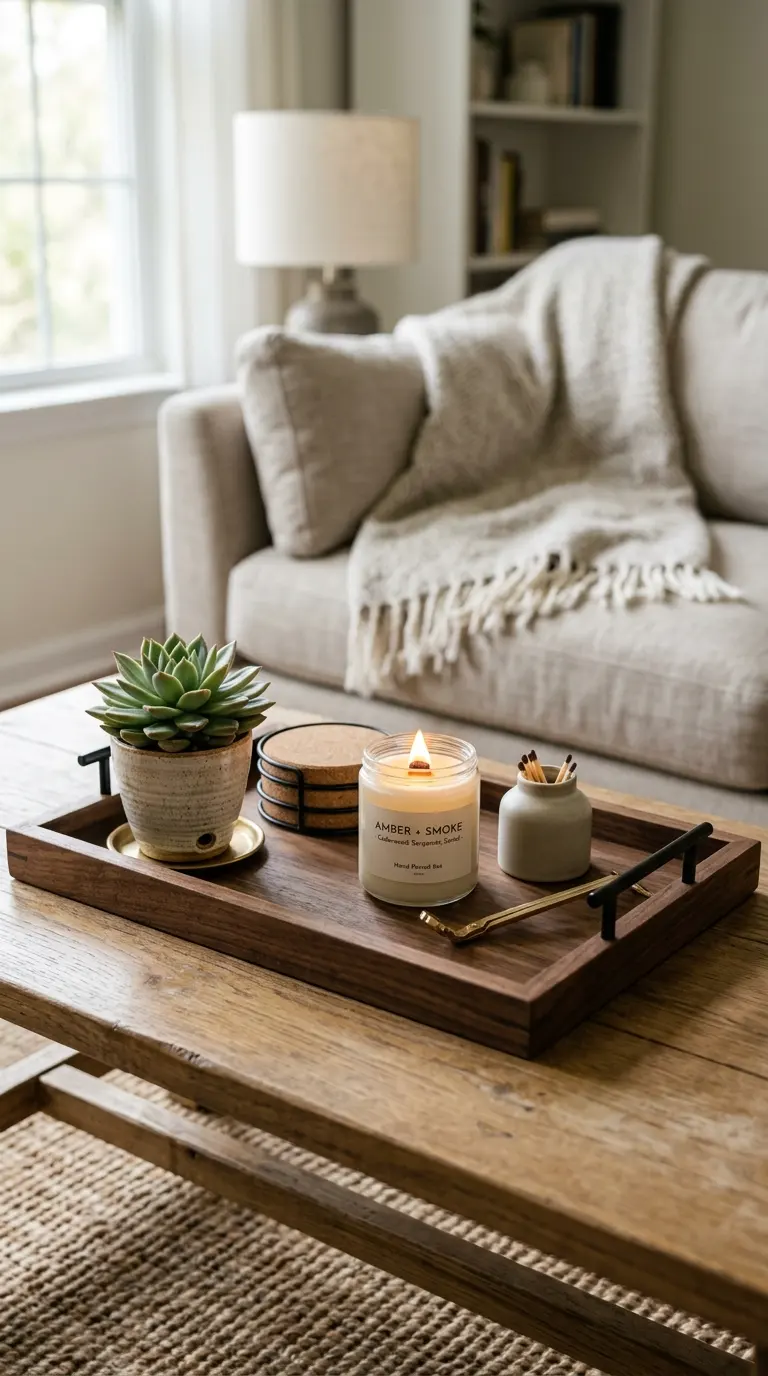
An empty coffee table looks unfinished, but scattered items across it look messy. A single tray groups everything, a candle, a small plant, a coaster stack, into one tidy zone that reads as styled instead of cluttered.
Keep it to three items max on the tray. Anything more starts to look like storage instead of styling.
20. Choose Warm Bulb String Lights Over Cool White
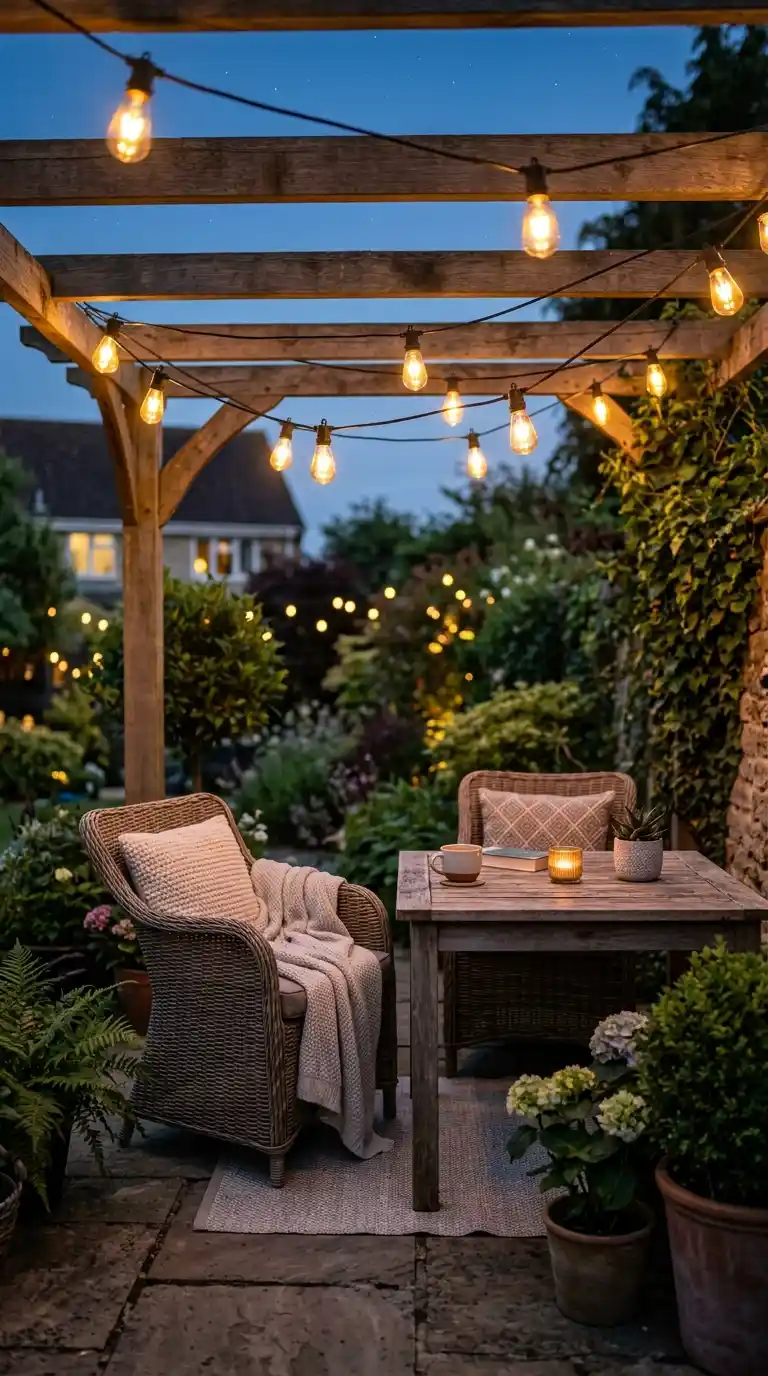
The color temperature of string lights changes the entire mood of a patio, and this gets overlooked more than any other lighting decision. Cool white bulbs read like a parking lot at night, while warm bulbs, closer to candlelight, make the same space feel like somewhere you want to linger.
💡 Quick Tip
Look for a color temperature around 2200K to 2700K on the packaging. Anything labeled daylight or cool white will feel harsh outdoors at night.
Dimmable plug-in sets give you more control than solar strings, which is worth the extra cord if you have an outdoor outlet nearby.
21. Add a Floor Cushion or Pouf for Flexible Seating
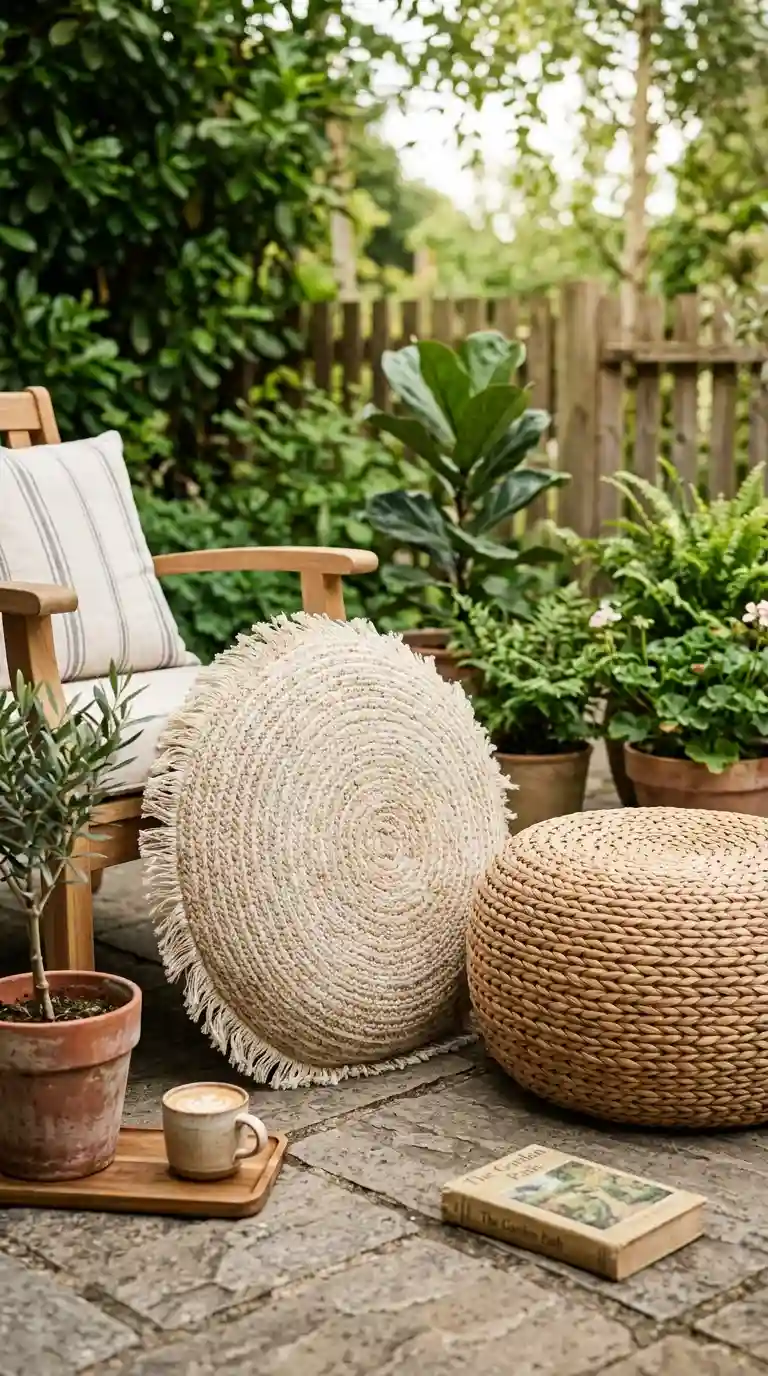
A patio only has so many fixed seats, and floor cushions or a low pouf fill the gap when extra guests show up. They tuck away easily against a wall or under a bench when not needed, so they never crowd the space on a normal day.
Pick outdoor rated fabric that wipes clean and resists mildew.
Store poufs upright in a corner when not in use.
Indoor foam cushions that soak up moisture and never dry out.
Leaving them flat on the ground where rain pools underneath.
Round poufs read softer in a tight corner than square ones, since there is no sharp edge for anyone to bump into while moving around.
22. Stack Planters at Different Heights Near the Door
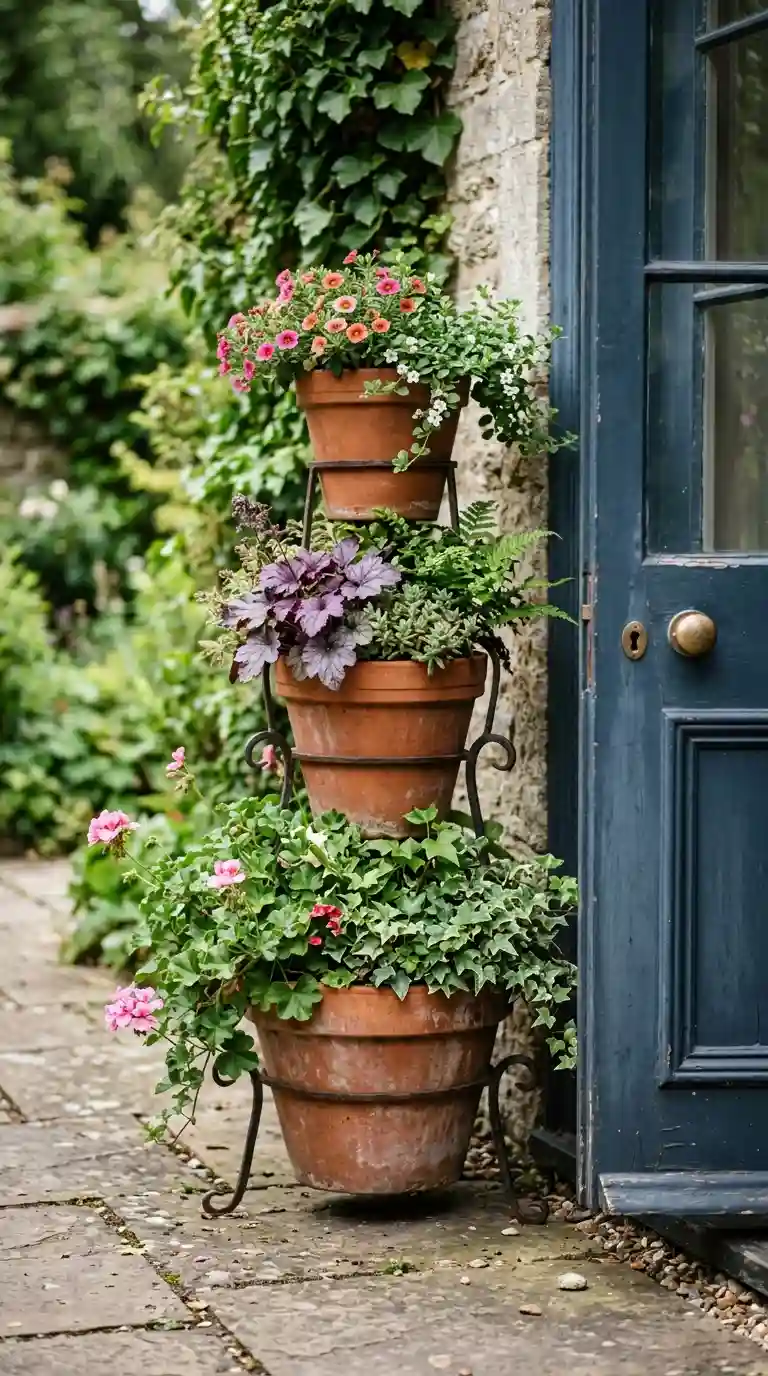
The entry point to a patio sets the tone before anyone even sits down. Stacking two or three planters at staggered heights right by the door creates a small welcome moment without blocking the actual walkway.
Before you stack, check for:
Three pots is usually the sweet spot. Two looks incomplete and four starts to block the door swing on most small patios.
23. Drop a Small Fire Pit Table if Space Allows
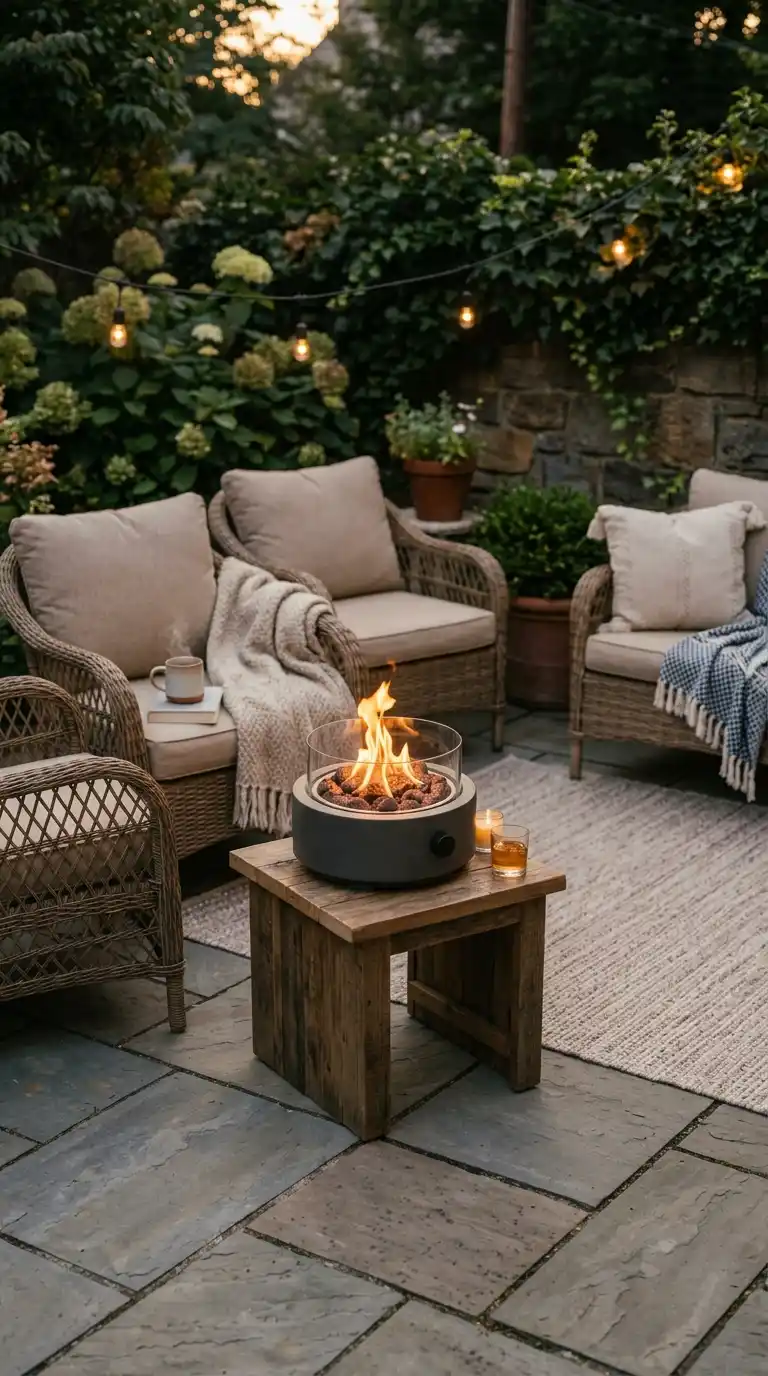
A fire pit table does double duty as a heat source and a surface for drinks, which matters when there is no room for a separate coffee table plus a heater. Even a compact 24 inch tabletop model makes a small patio feel usable well after sunset.
Check local rules on open flame before buying, since some balconies and covered patios restrict anything beyond a fully enclosed tabletop unit.
24. Hang a Wall Sconce Instead of a Floor Lamp
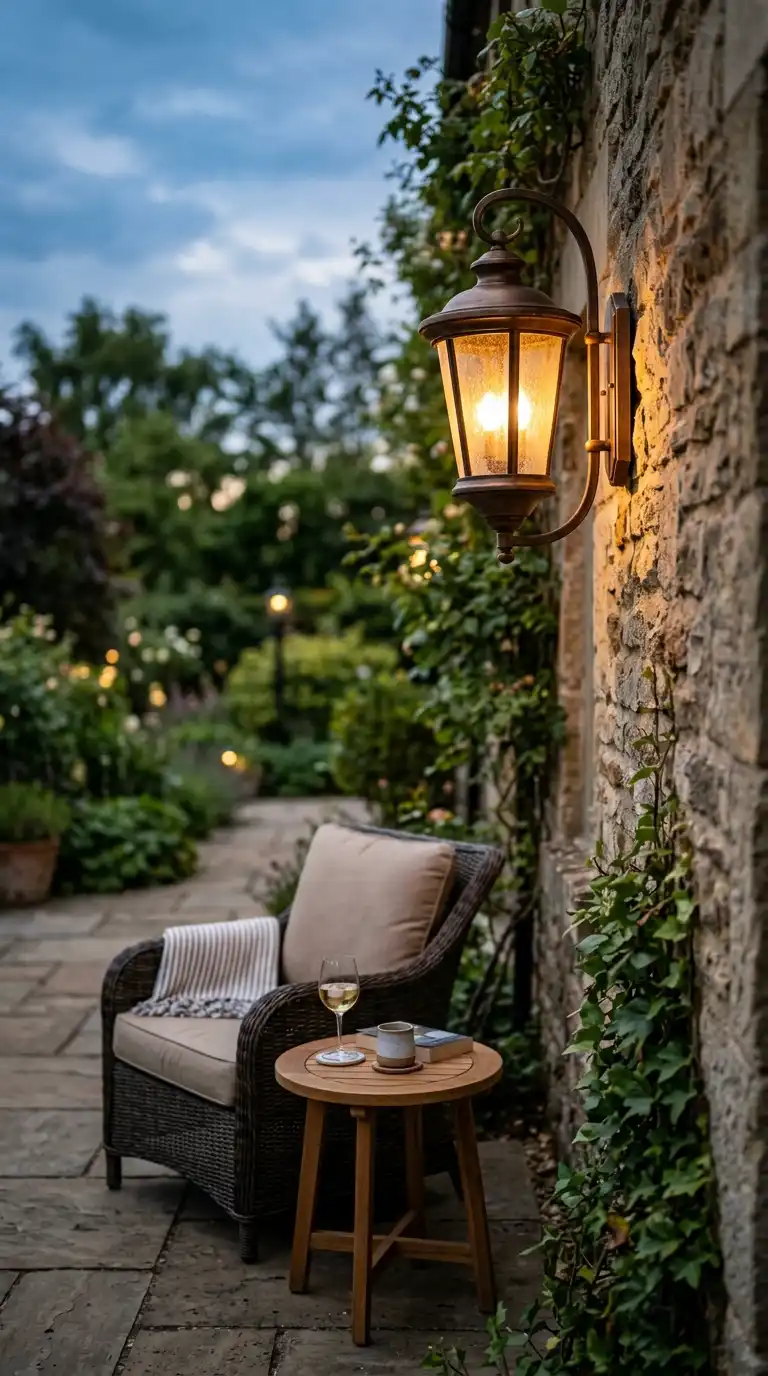
Floor lamps take up ground space a small patio cannot spare, and they tip over easily in wind. A battery powered or solar wall sconce gives the same warm pool of light while keeping the floor completely clear.
💡 Quick Tip
Mount the sconce at shoulder height when seated, not standing height. It throws light across the table instead of straight down at the wall.
Look for an IP44 rated fixture at minimum if the sconce sits anywhere it could get rained on directly.
25. Fold a Blanket Over the Chair Arm for a Lived-In Look
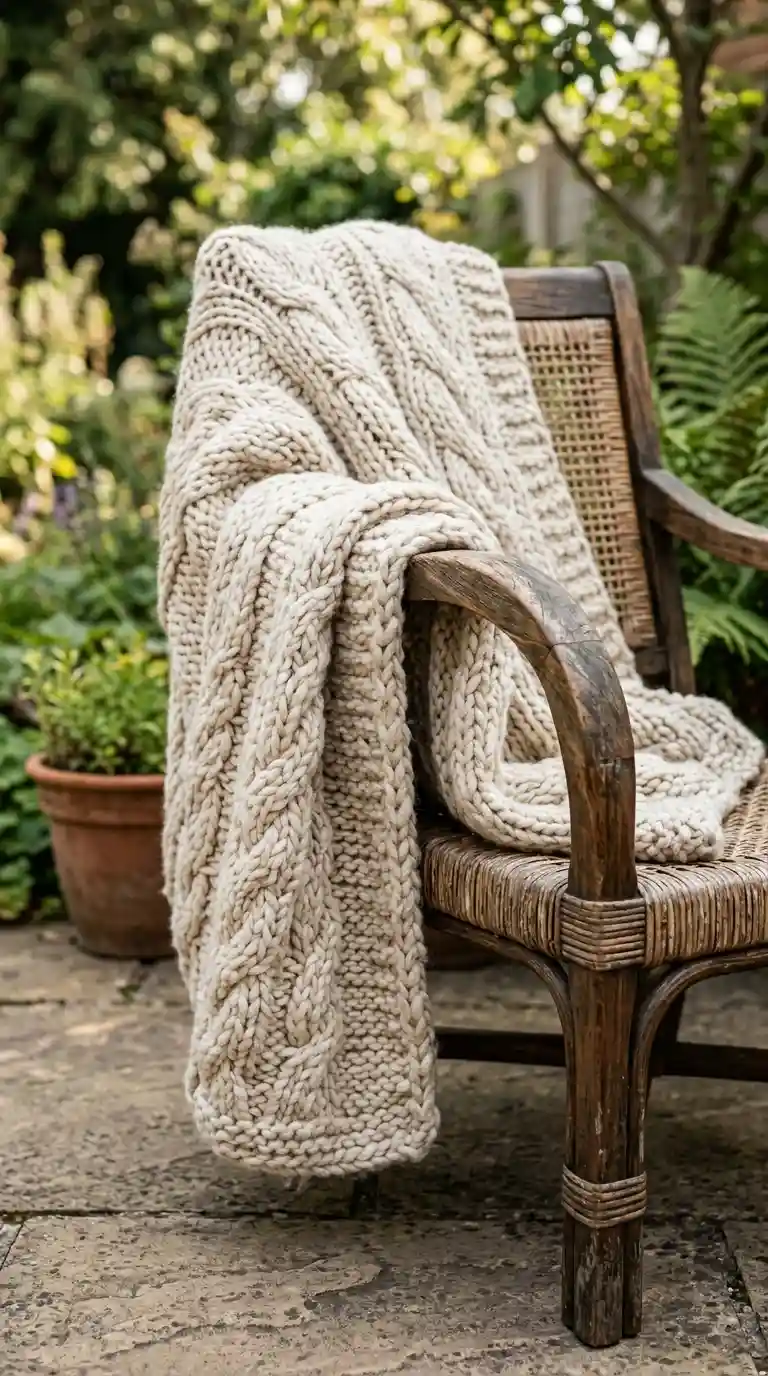
A patio that looks too staged rarely feels inviting. Draping a folded throw blanket over one chair arm signals that the space actually gets used, and it gives you something warm to grab once the evening cools down.
One blanket, one chair, folded loosely rather than perfectly. A too-neat fold reads staged instead of lived-in.
Choose a chunky knit or waffle weave over a thin throw. It photographs better and actually holds up to being folded and unfolded daily.
26. Group Small Terracotta Pots Instead of One Big Planter
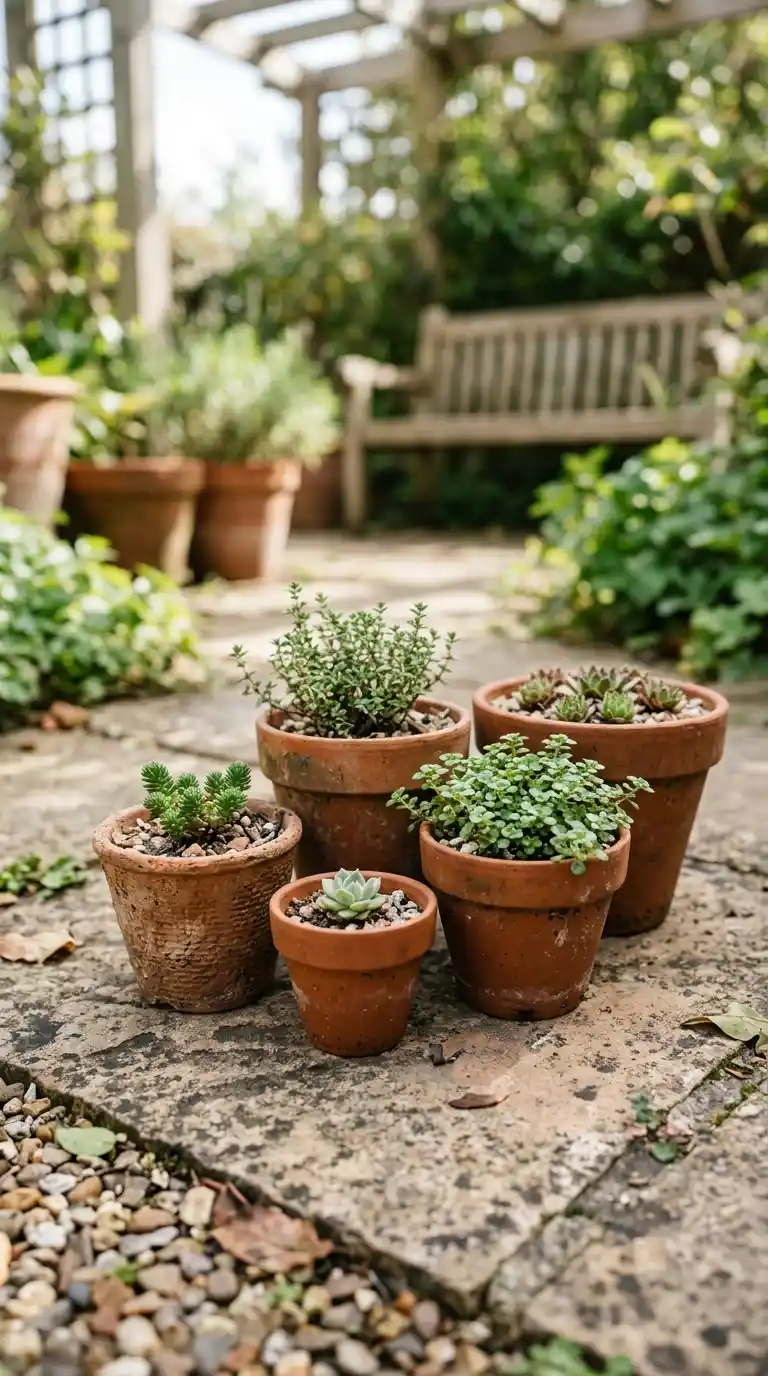
One oversized planter can overwhelm a small patio the moment it goes in, and it is hard to reposition once it is full of soil. A cluster of small terracotta pots gives the same greenery impact but stays flexible, since you can rearrange or swap any single pot without disturbing the rest.
- ▸Use odd numbers, three or five pots, since even groupings tend to look like a matched set instead of a collection.
- ▸Vary the pot diameter slightly so the cluster has a natural, unplanned rhythm.
- ▸Keep the plant varieties similar in care needs so watering stays simple across the group.
Terracotta also weathers into a softer, chalky patina over time, which most people end up liking more than the original glossy finish.
27. Add a Vertical Herb Box Near the Cooking Zone
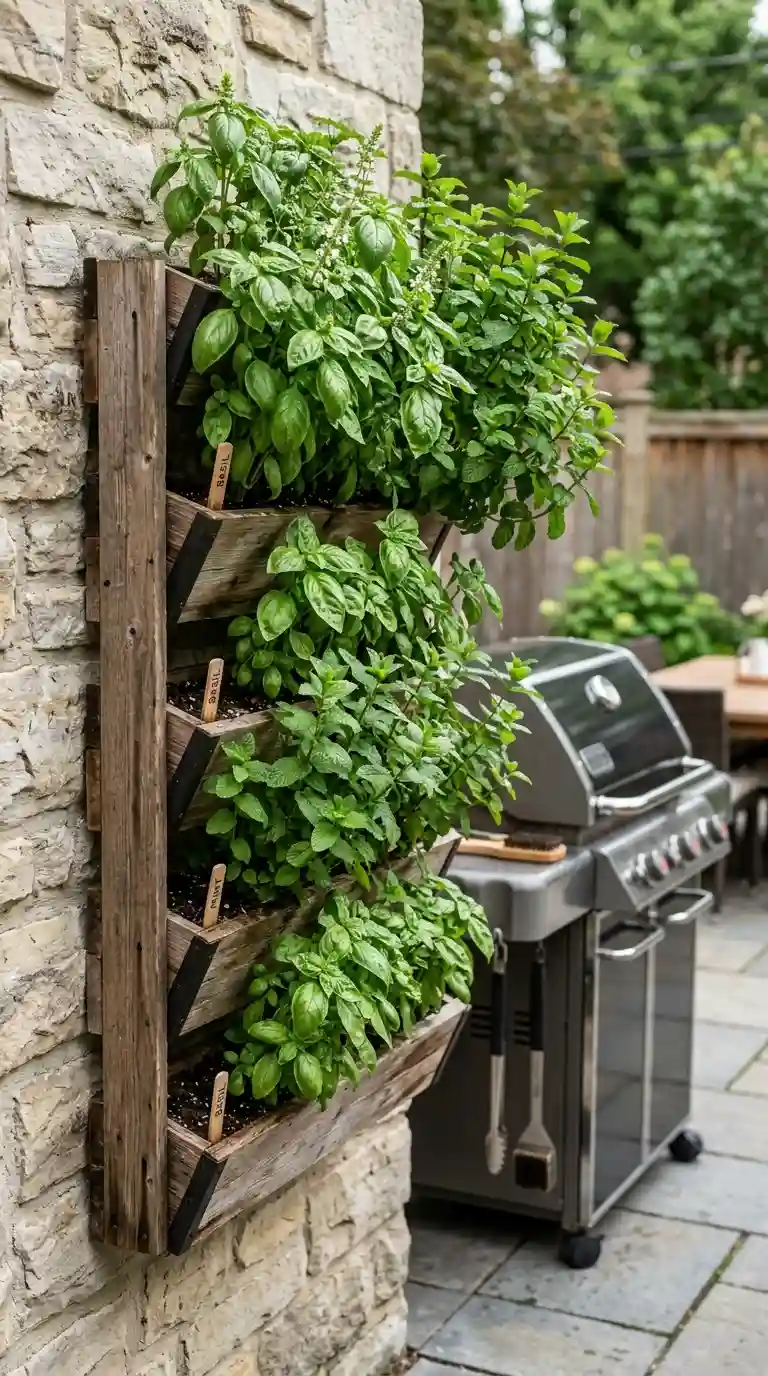
If the patio doubles as an outdoor cooking spot, ground level pots eat up the exact floor space you need for movement. A vertical herb box mounted on a wall or railing keeps basil, mint, and rosemary within arm’s reach of the grill without stealing an inch of walking room.
Herb pots crowd the floor right where you need to stand to grill or plate food.
A vertical box on the wall puts the herbs at hand height and clears the floor completely.
Position it a step or two away from direct grill heat. Herbs dry out fast if they sit too close to the cooking surface all season.
28. Use a Patterned Vintage Rug at the Entry Point
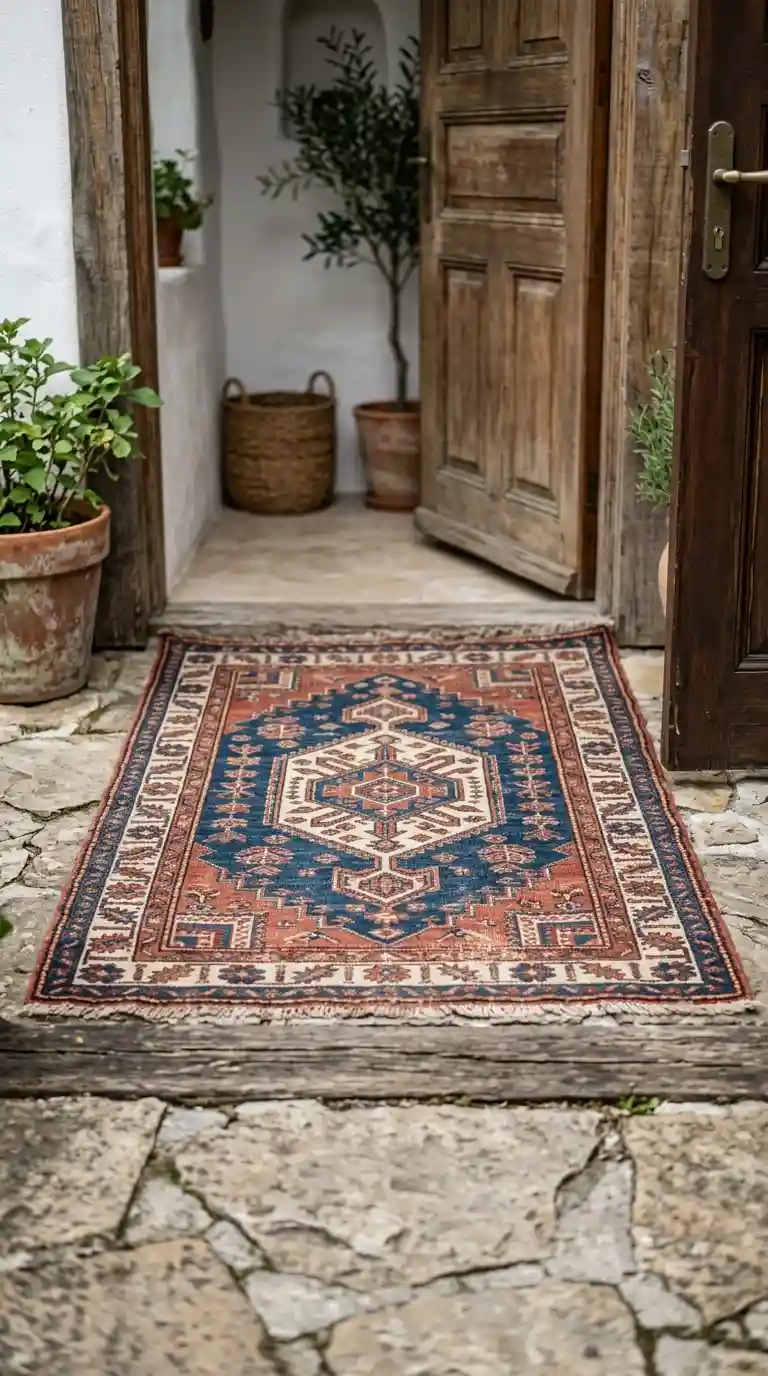
The threshold between indoors and the patio is an easy spot to overlook, but a small vintage-style rug right there does a lot of quiet work. It signals a transition into a different, more relaxed zone before a guest even reaches the seating area.
📌 Good To Know
Choose a low pile, flat weave rug for the entry. A thick pile catches on the door and becomes a tripping hazard right at the threshold.
A faded, distressed pattern hides dirt and foot traffic far better than a bright solid color in this exact spot.
29. Hide Cords and Clutter Behind a Small Console
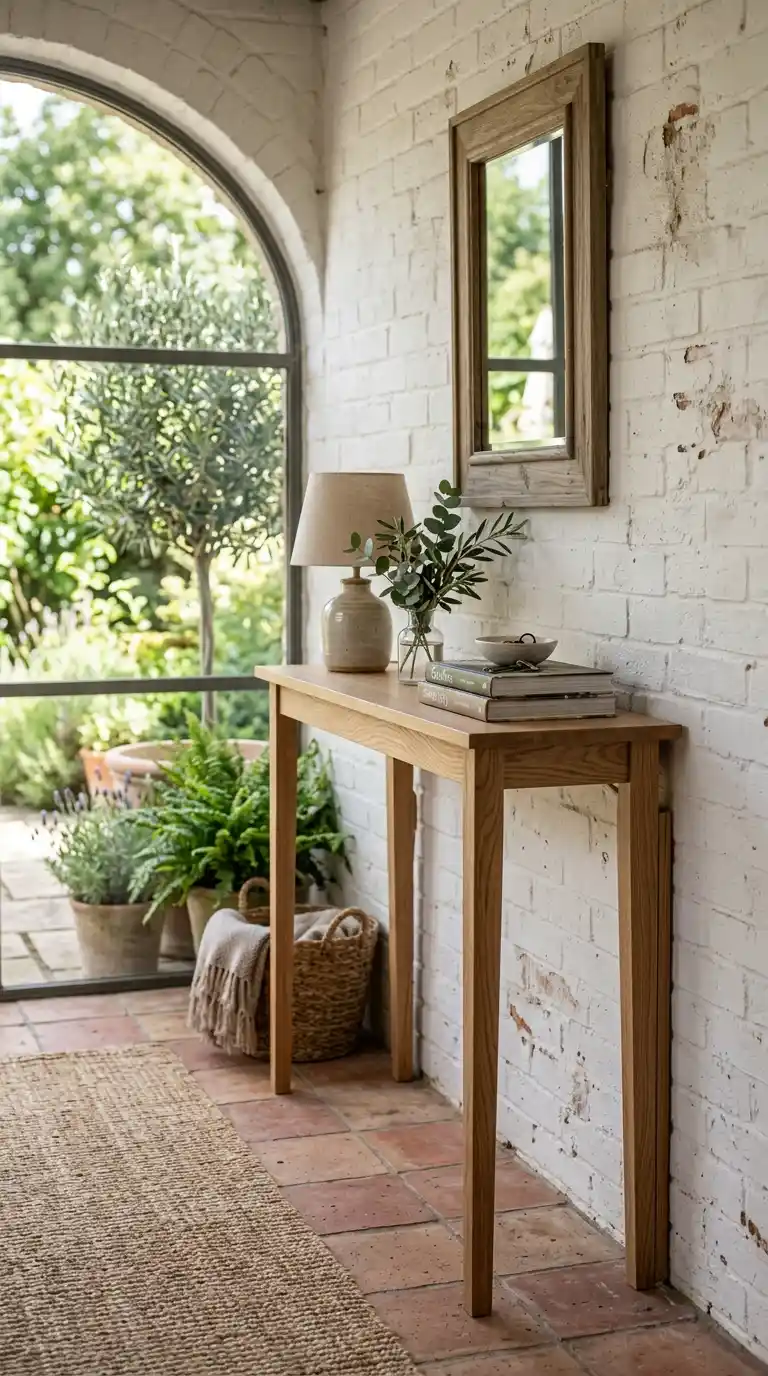
String lights, extension cords, and phone chargers pile up fast on a patio, and a tangle of cords by the seating area undercuts every other styling choice you have made. A slim console table against the wall gives you a place to route cords out of sight while still holding a lamp or small decor.
A cord clip strip along the back leg of the console keeps everything routed neatly instead of pooling in a visible tangle on the floor.
30. Finish With Fresh Flowers in a Small Vase
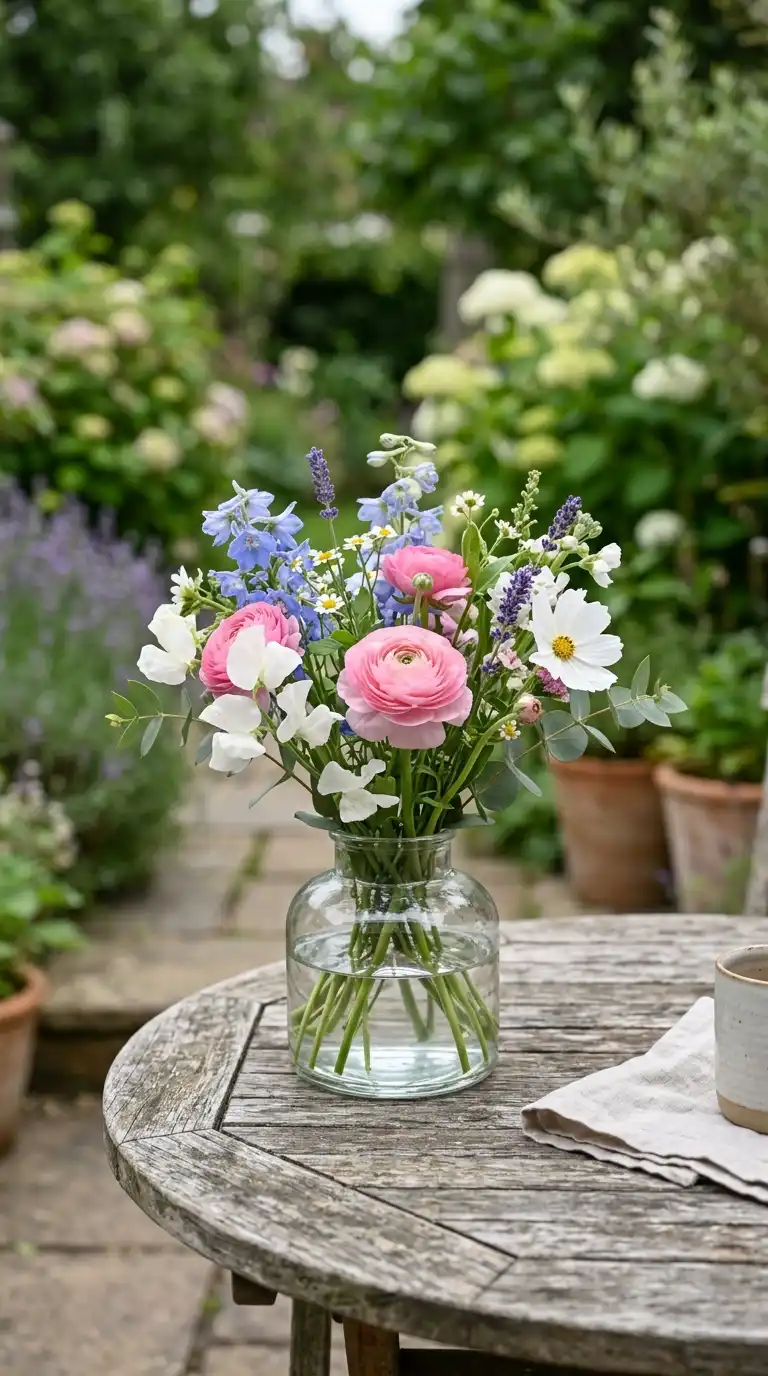
A patio can have every piece of furniture and lighting right and still feel unfinished without one small, changeable detail. Fresh flowers in a low vase on the table do exactly that, and swapping them out weekly keeps the whole space feeling current instead of static.
Choose a vase under 8 inches tall so it does not block sightlines across the table.
Pick one or two flower types instead of a mixed bouquet for a cleaner look.
Change the water every two to three days so the flowers last through the week.
Dried or faux stems work just as well if fresh flowers are not practical, as long as the arrangement stays loose rather than stiff and symmetrical.
Bringing It All Together
A small patio does not need more furniture. It needs the right pieces placed with intention, layered lighting that changes how the space feels after dark, and a few plants that do the heavy lifting without crowding the floor. Start with one or two ideas from this list, the ones that solve the exact problem your space has right now, and build from there.
You do not need to tackle all thirty at once. A jute rug and a string of warm bulb lights alone can change how a patio feels within a single weekend. Add the rest as you go, and let the space grow into itself instead of trying to finish it in one trip to the store.
The best small patios feel collected over time, not decorated all at once.