35 Pantry Organization Ideas That Make You Actually Want to Cook

Introduction
A messy pantry does not just look bad, it costs you time every single day. You open the door, shove aside three half-empty boxes, and still cannot find the cumin. Pantry organization is not about buying every basket at the store. It is about building a system that survives real grocery runs and real weeknight chaos.
Most pantries fail because they are organized once, right after a big cleaning day, and never designed to be maintained. The baskets look great in the after photo, but nobody labeled them, so within a month everything is back where it started. A pantry that stays organized needs zones, labels, and containers that make putting things away just as easy as pulling them out.
This list covers exact container types, lighting choices, layout zones, and small finishing touches that turn a pantry from a dumping ground into a space you actually enjoy opening. Some ideas take an afternoon with a label maker. Others take a full weekend. Start with whichever one solves your biggest daily frustration.
1. Decant Dry Goods Into Matching Clear Canisters
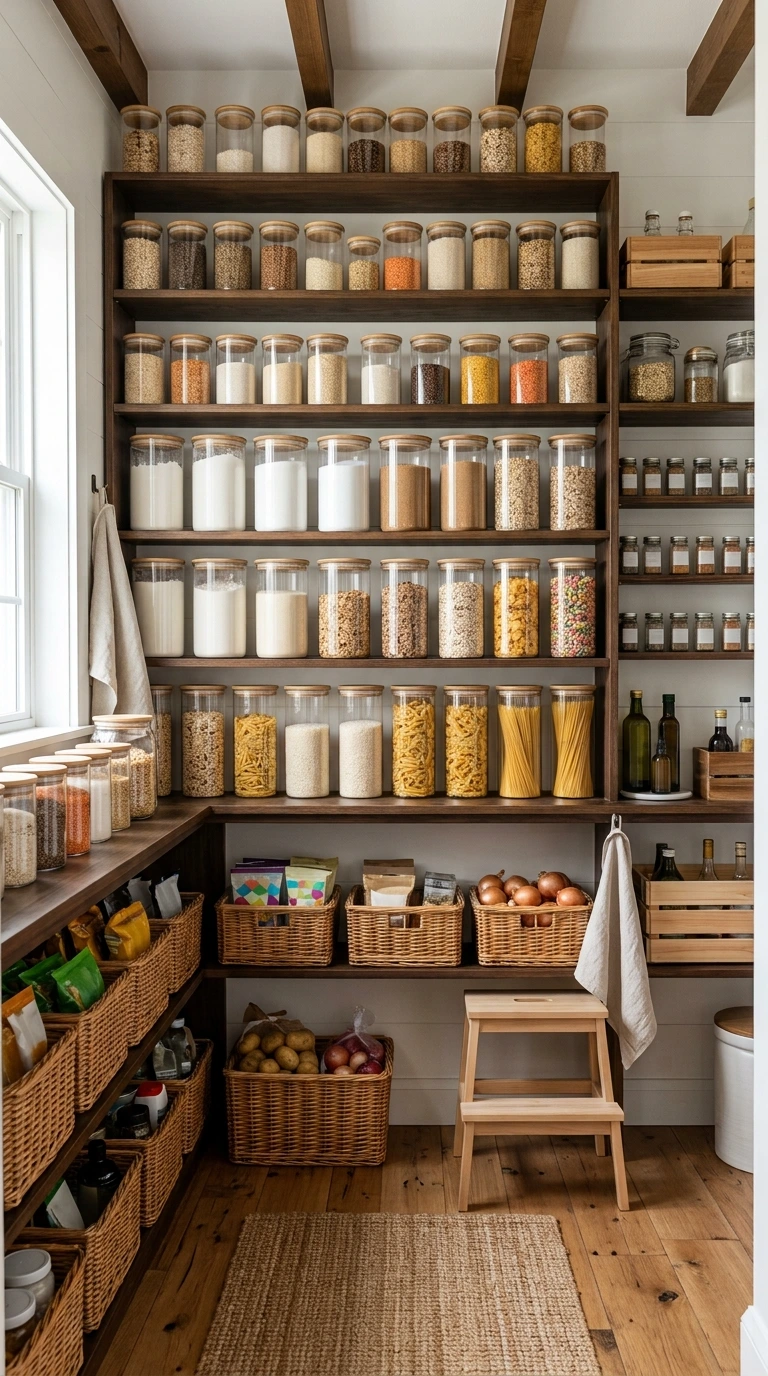
Cereal boxes, half-used flour bags, and open pasta packages take up more visual and physical space than the food inside them actually needs. Clear matching canisters compress everything into a uniform, stackable system, and you can see exactly what is running low without opening a single lid.
Buy canisters in two or three sizes only, not one of everything. A shelf of matching heights looks intentional, while five random sizes looks like leftover storage.
2. Label Every Basket So Everyone Puts Things Back
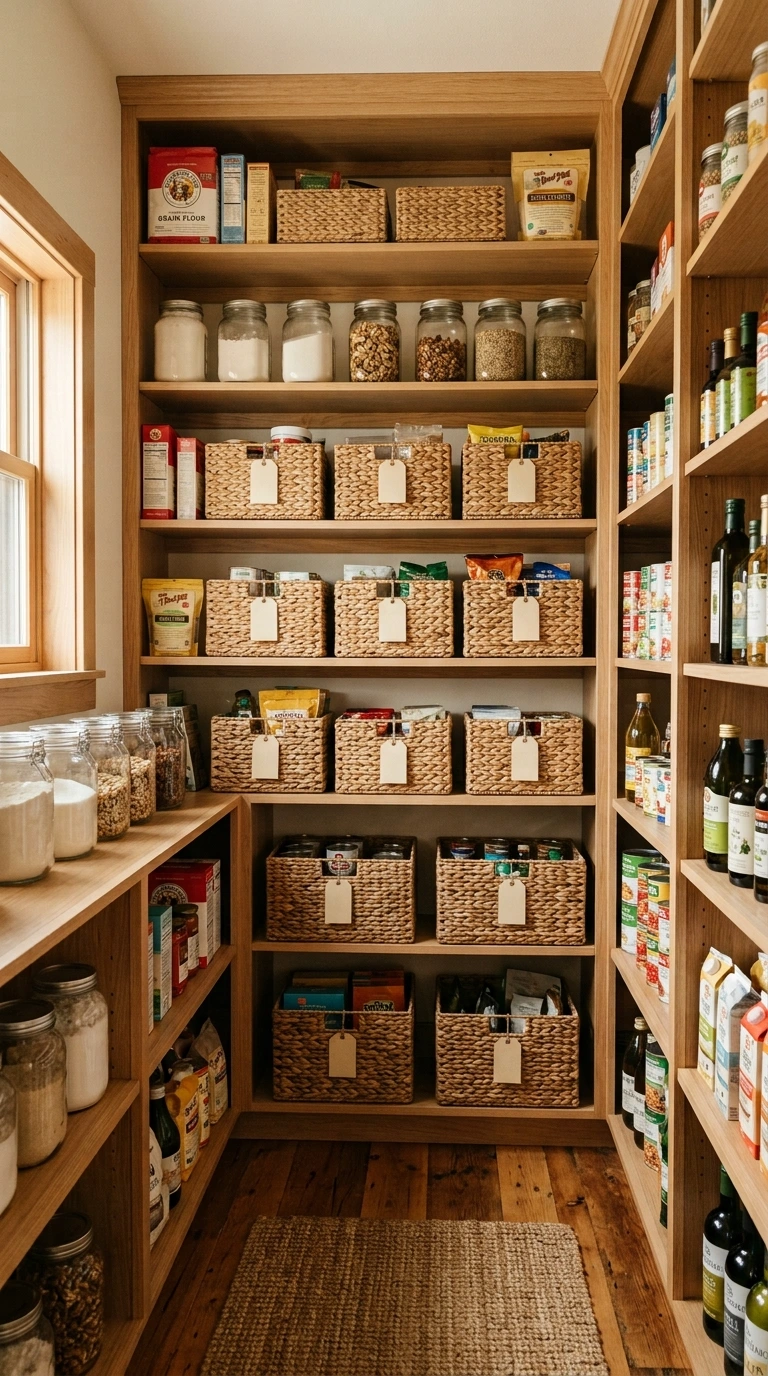
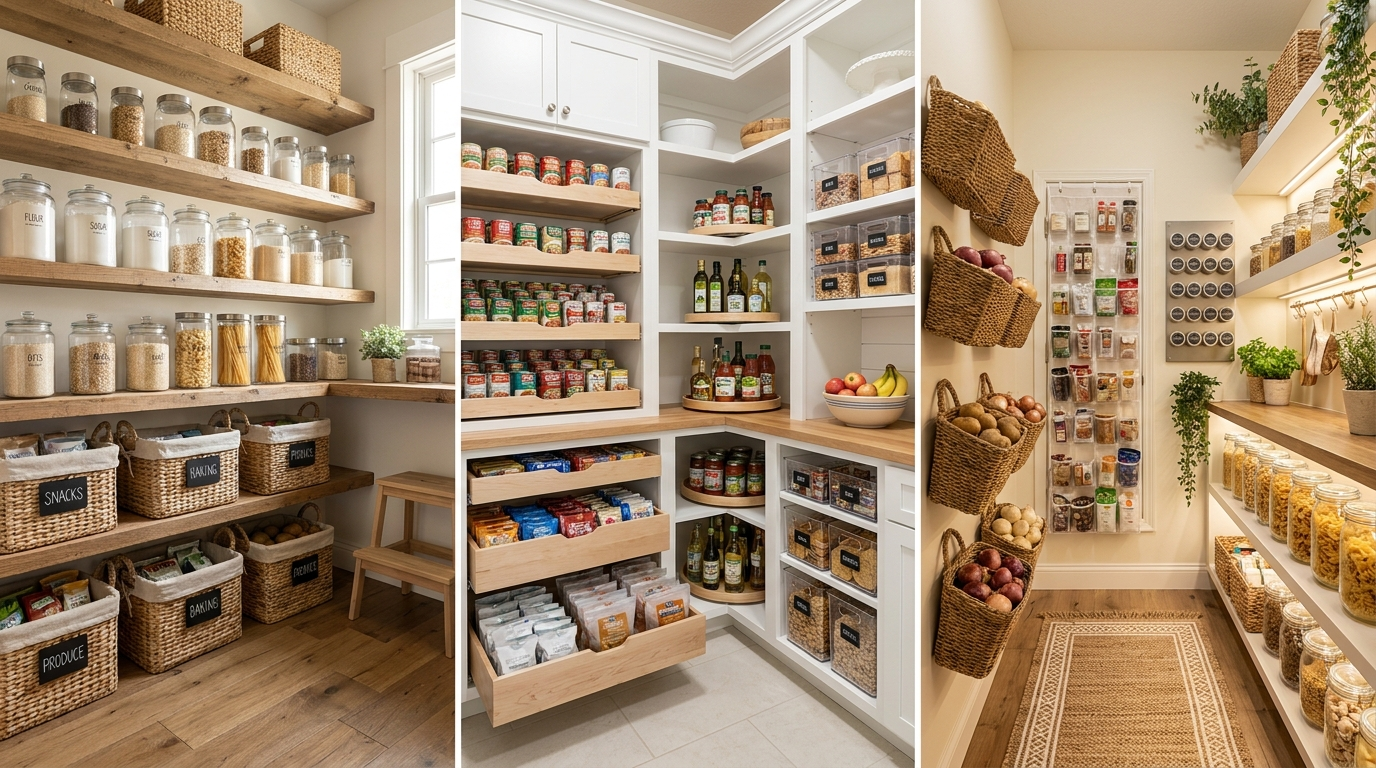
A basket without a label only stays organized as long as the person who filled it remembers what goes where. Labels remove the guesswork for everyone else in the house, kids included, so items actually make it back to the right spot instead of getting shoved onto whatever shelf is closest.
💡 Quick Tip
Use a printed label maker instead of handwriting. It looks more finished and holds up far longer than marker on tape, which smudges within weeks.
Label the basket itself, not just the shelf edge. If the basket ever gets pulled out and swapped between shelves, the system still holds.
3. Add a Lazy Susan for Oils, Sauces, and Jars
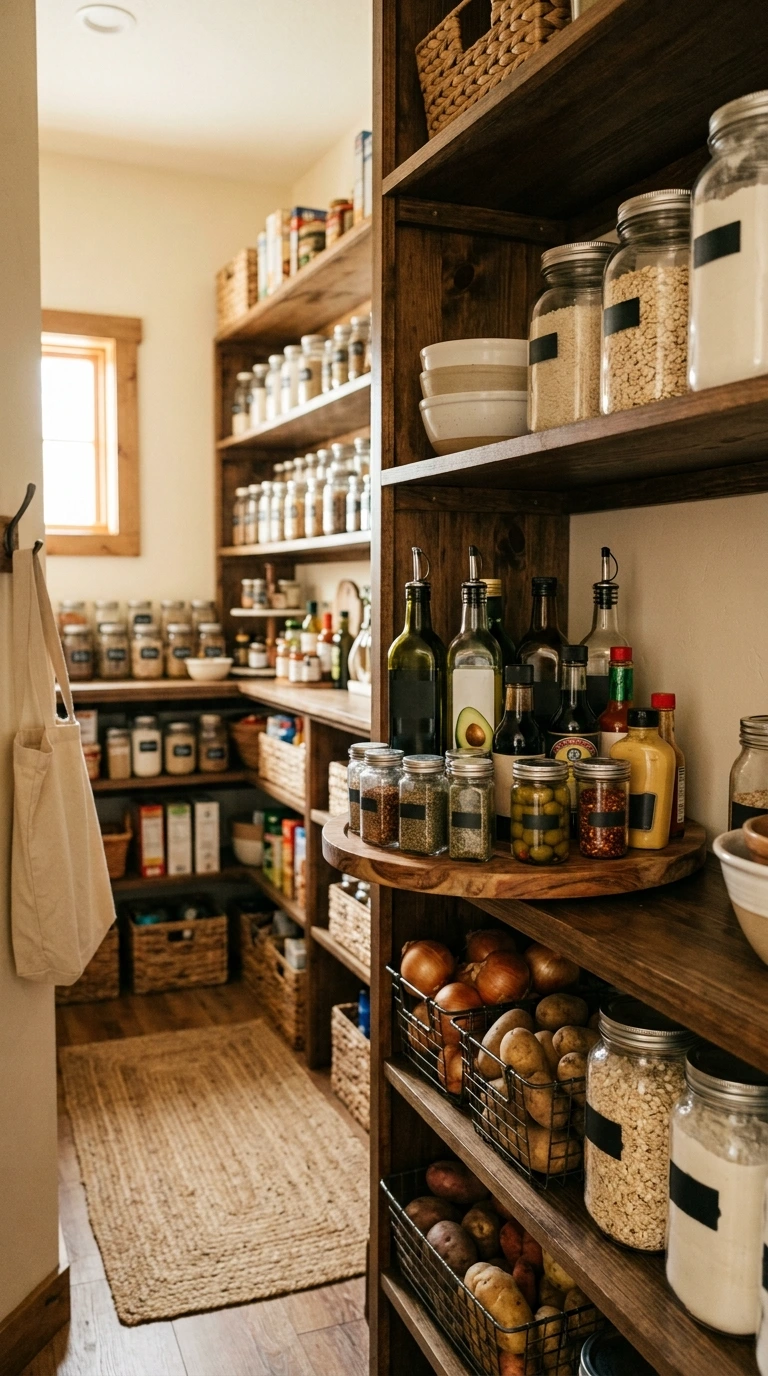
Deep shelves swallow bottles at the back, and most people forget they even own a second bottle of soy sauce until it expires. A lazy susan turns that wasted depth into a single spin away from anything you need, which matters most for oils, vinegars, and condiment jars that get used constantly.
Corner shelves benefit the most from this trick, since a lazy susan solves the exact spot where items usually get lost behind the door frame.
4. Use Wire Baskets for Anything That Comes in a Loose Bag
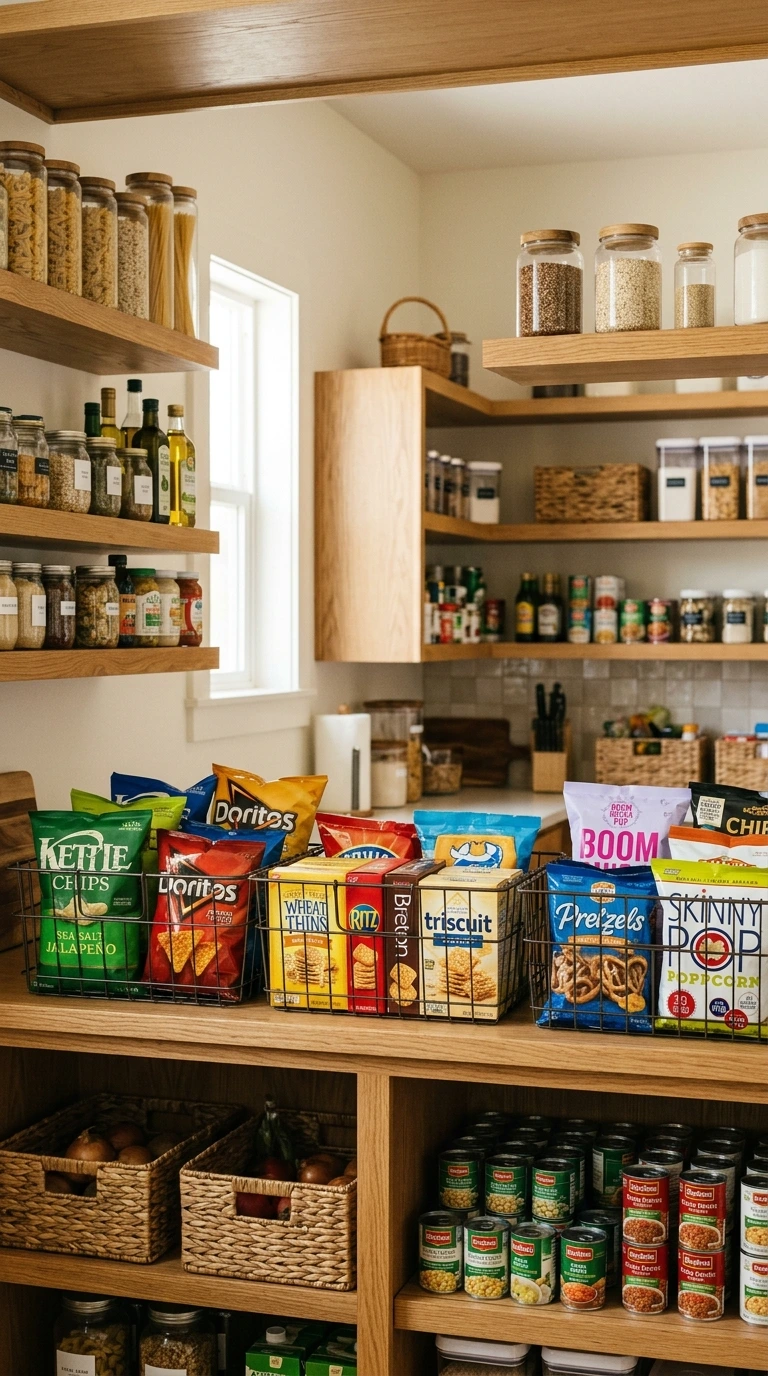
Chip bags, snack packs, and bread all slouch and collapse once they are opened, which turns a shelf into a mess within a day. Wire baskets keep loose bagged items upright and contained without needing to decant every single snack into a separate container.
Good candidates for wire baskets:
Choose open weave wire over solid metal bins for anything that needs airflow. Sealed bins trap moisture and speed up spoilage for bread and produce.
5. Install a Riser Shelf So Cans Never Hide in the Back
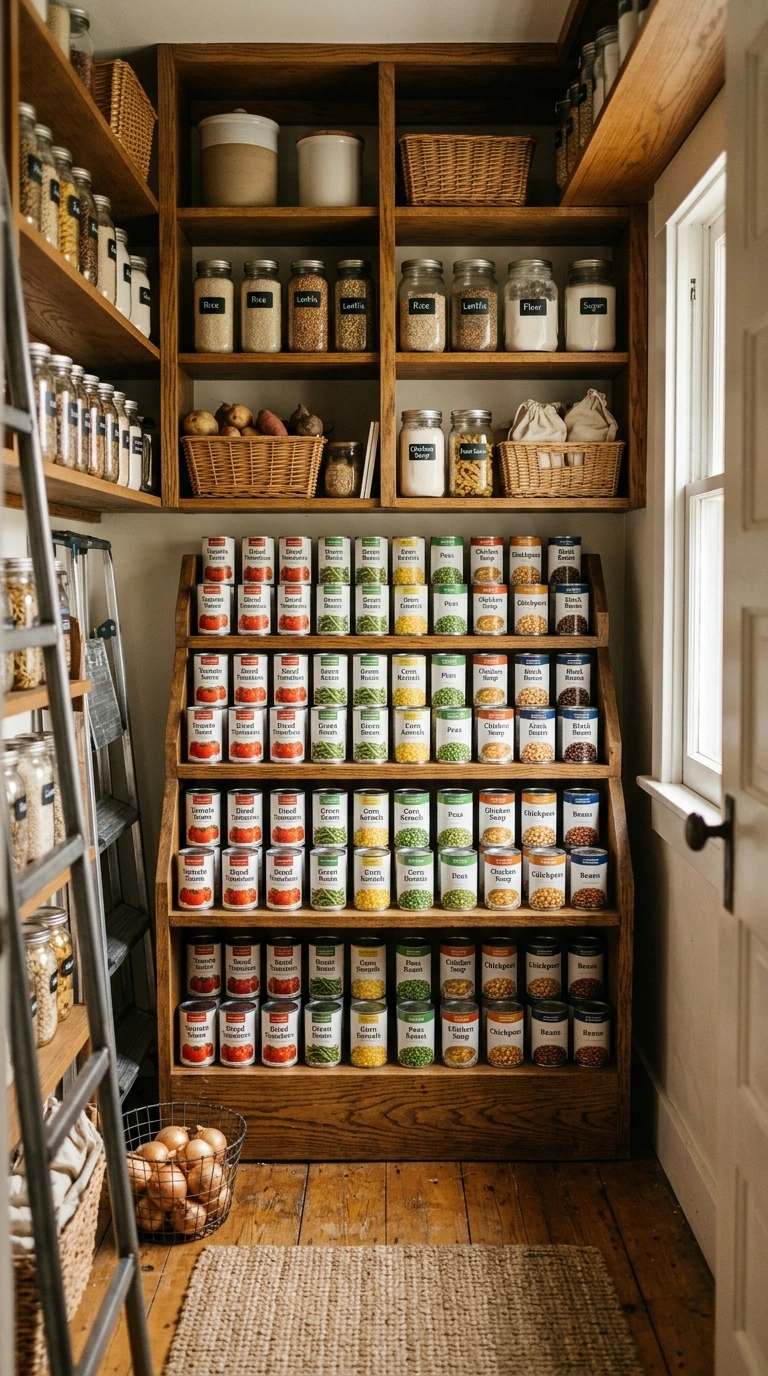
A flat shelf packed with canned goods always ends up with a forgotten row hiding behind the front line. A tiered riser shelf tilts everything forward so every single can is visible at a glance, which also makes it obvious when you are down to your last one.
Cans lined up flat, three rows deep, with the back row completely hidden.
A tiered riser lifts the back row so every can is visible from the front.
Load new cans into the back row and pull from the front. It keeps stock rotating naturally instead of letting the oldest cans sit untouched for years.
6. Group Snacks Into a Grab-and-Go Basket for Kids
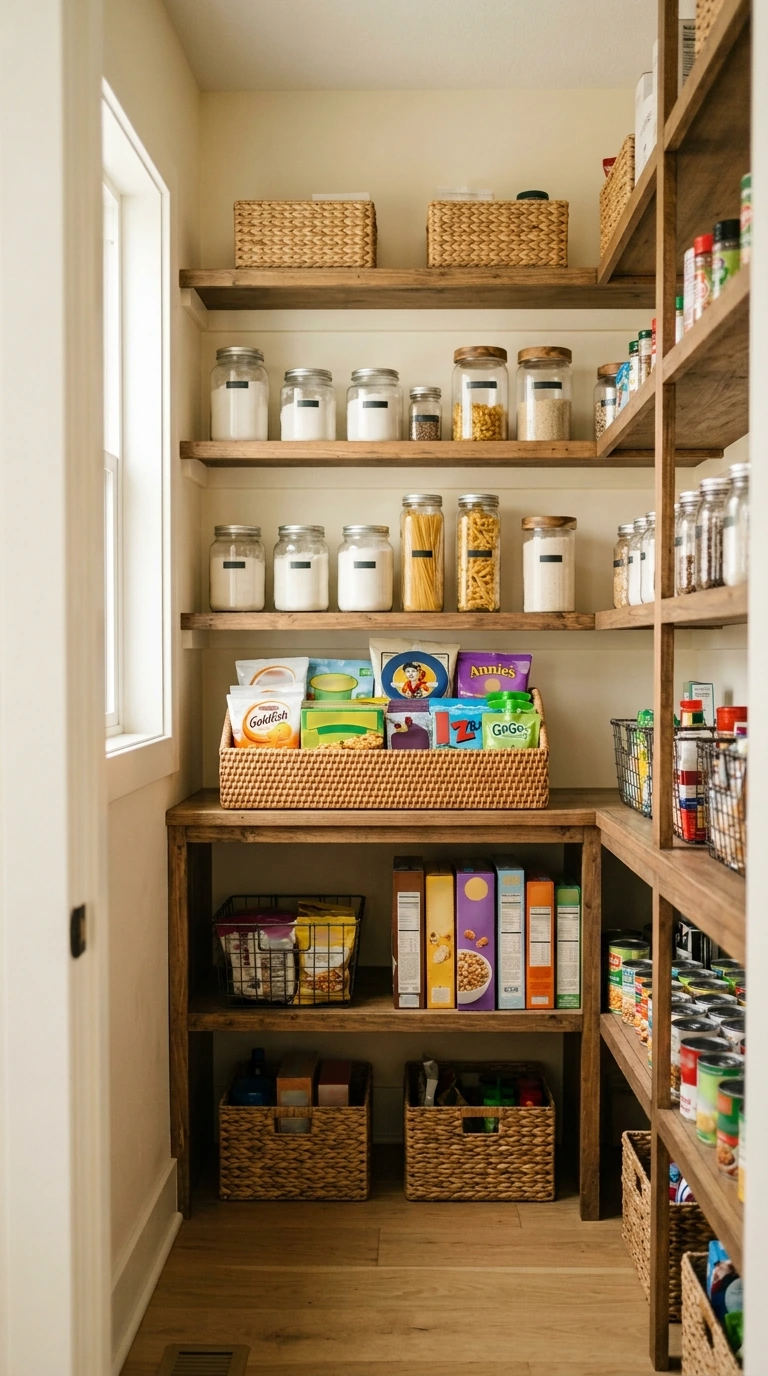
Kids raiding the pantry for snacks tend to open every container looking for what they want, leaving a trail of half-closed lids behind them. One dedicated basket at reachable height, filled only with kid-approved snacks, gives them a spot to grab from without touching anything else on the shelf.
Place the basket on a lower shelf, within easy reach for the shortest person in the house.
Fill it only with individually portioned snacks, nothing that needs a bowl or utensil.
Refill it during your weekly grocery unload so it never sits empty.
Keeping this one basket stocked cuts down on kids opening every canister on the shelf just to see what is inside.
7. Add LED Strip Lighting Under Every Shelf
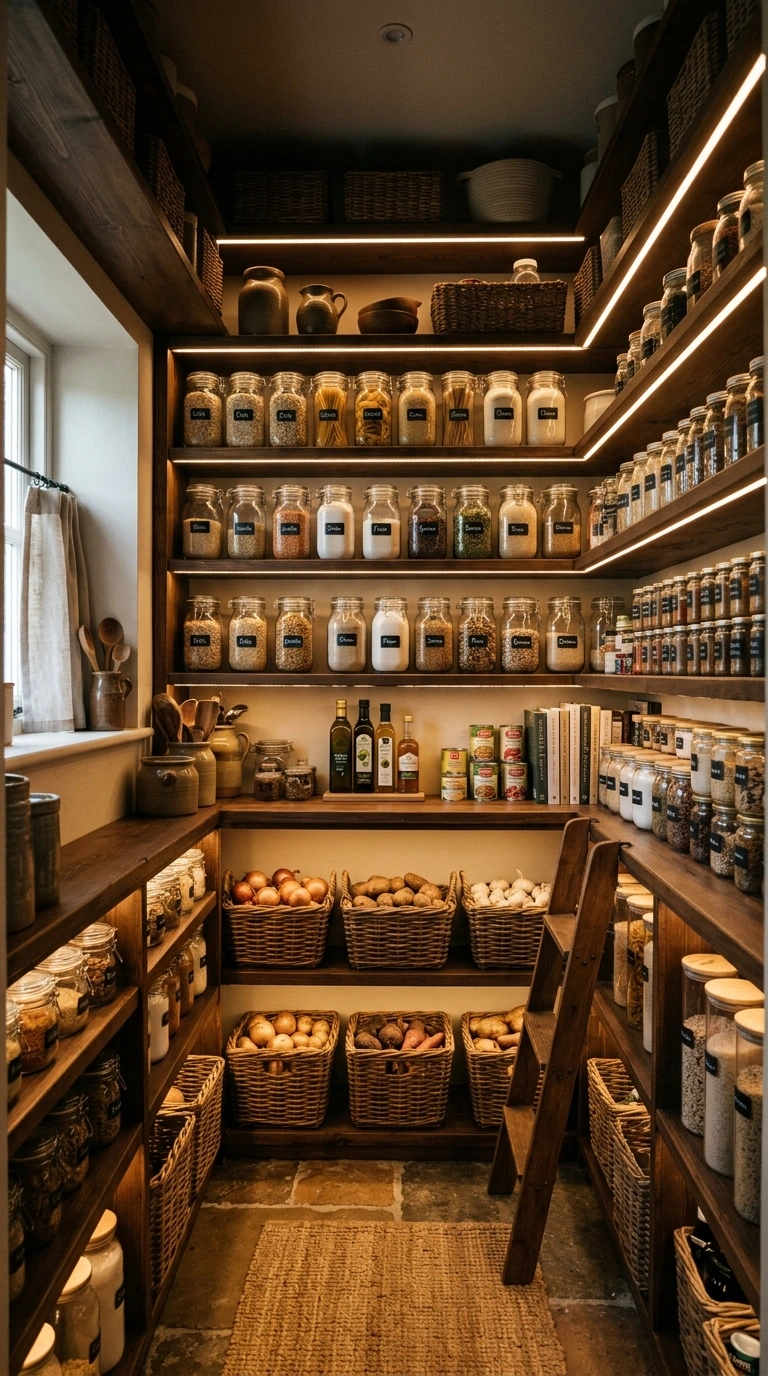
Deep pantries and closed-door closets rarely get enough natural light, and a single ceiling bulb leaves the bottom shelves in shadow. Battery powered or plug-in LED strips tucked under each shelf edge light the exact spot where you are actually looking for something.
Use warm white LED strips under the front lip of each shelf.
Choose motion-activated strips if the pantry has no wall switch nearby.
Cool white or blue-toned strips that make food look unappetizing.
Running cords across open shelves where they get tangled with items.
Stick-on battery strips are the easiest fix for a rental, since they skip any wiring and can move with you to the next place.
8. Turn a Blank Corner Into a Vertical Storage Zone
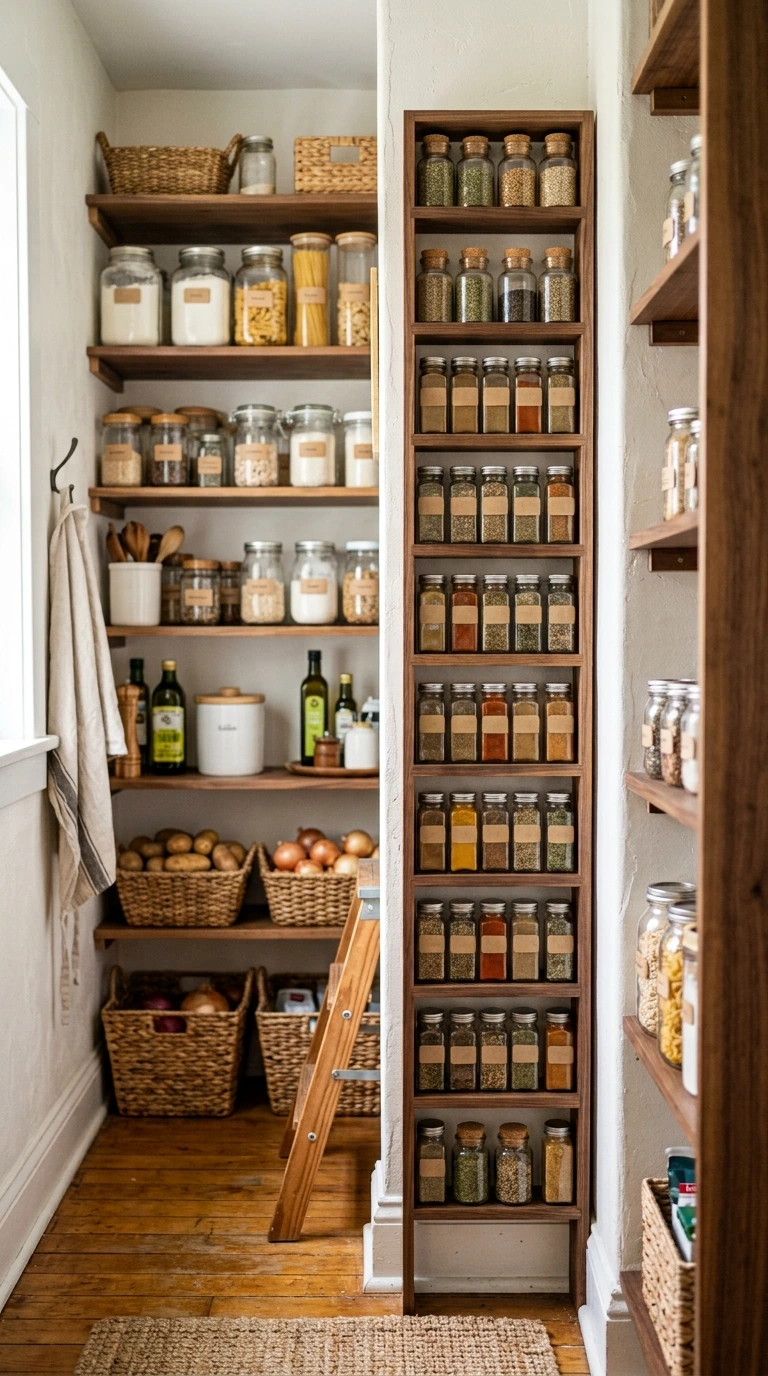
Corner space in a pantry is usually the most wasted square footage in the whole room, either left empty or stuffed with whatever does not fit elsewhere. Stacking narrow shelving or a slim rolling cart into that corner turns dead space into real storage for oils, spices, or overflow canned goods.
📌 Good To Know
Measure the corner depth before buying anything. A narrow rolling cart, usually 6 to 10 inches wide, fits gaps that a standard shelving unit never will.
A slim rolling cart in this spot also doubles as extra counter space when you are unloading groceries, since it can be pulled forward and pushed back when done.
9. Use Uniform Bin Sizes Instead of Mismatched Containers
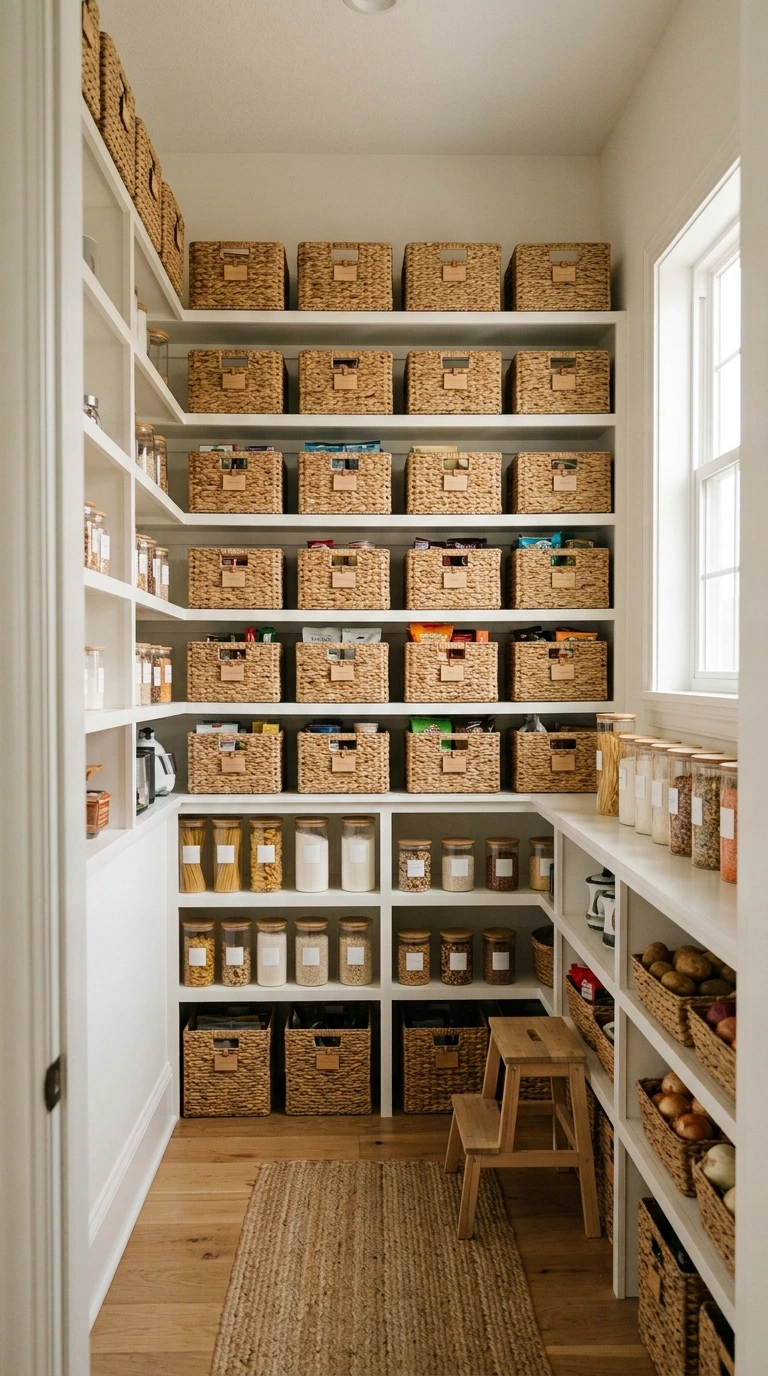
A shelf full of random sized boxes and bags never looks finished, no matter how neatly it is arranged, because the eye keeps tripping over uneven edges. Sticking to two or three matched bin sizes across the whole pantry creates a clean grid that reads as organized even before you look at what is inside.
Order all bins from the same retailer in one batch. Buying piece by piece over months almost always results in slightly mismatched shades or weave patterns once they sit side by side.
10. Sort by Zone: Baking, Snacks, Drinks, Canned Goods
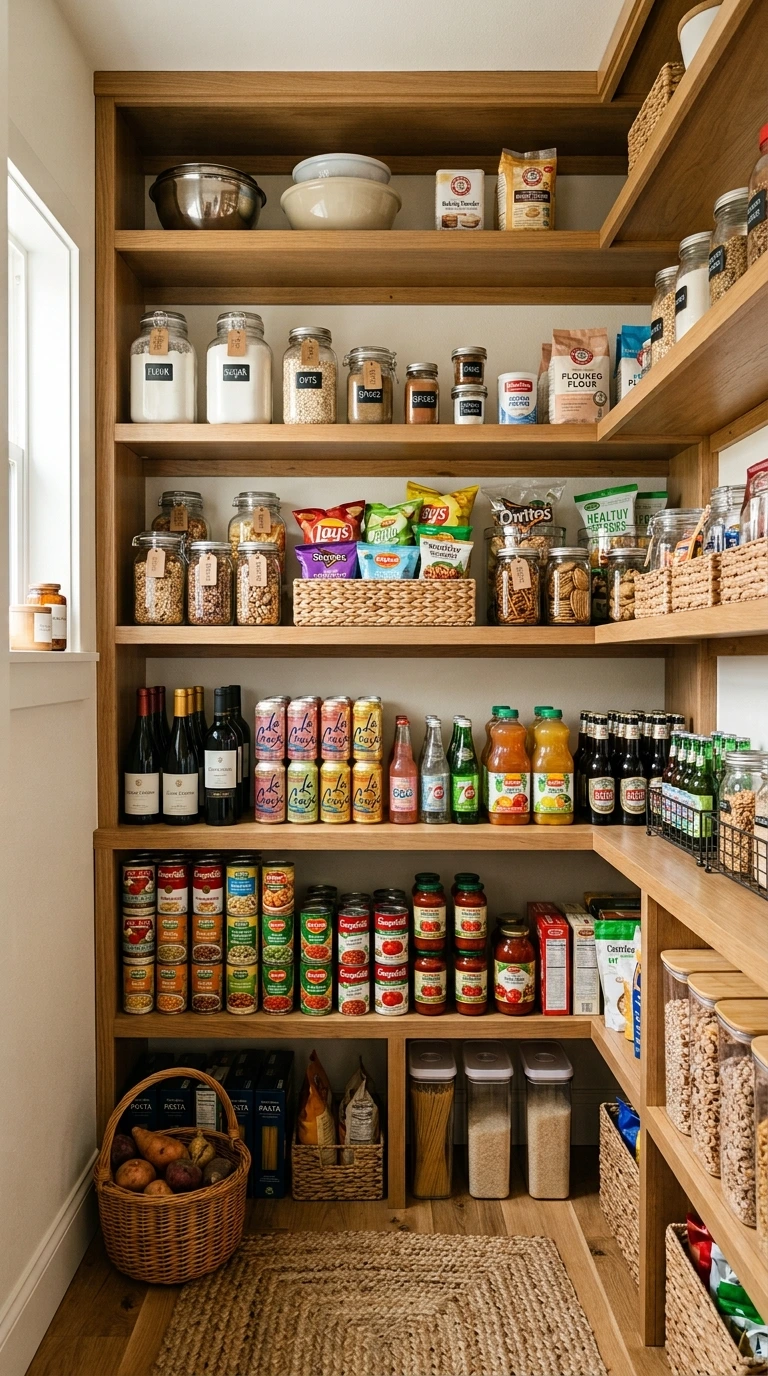
Digging through mixed shelves for one ingredient wastes more time than the actual organizing would ever take. Grouping items into clear zones means you always know which shelf to check first, whether you are grabbing a snack or pulling out everything for a baking project.
| Zone | What Goes There |
|---|---|
| Baking | Flour, sugar, extracts, mixes, baking pans |
| Snacks | Chips, crackers, granola bars, kid snacks |
| Drinks | Bottled water, soda, juice boxes, coffee pods |
| Canned Goods | Vegetables, beans, soups, sauces |
Keep the heaviest zone, usually canned goods, on a lower shelf. It saves your back and keeps the pantry from feeling top heavy.
11. Hang a Door Rack for Spices or Foil and Wrap
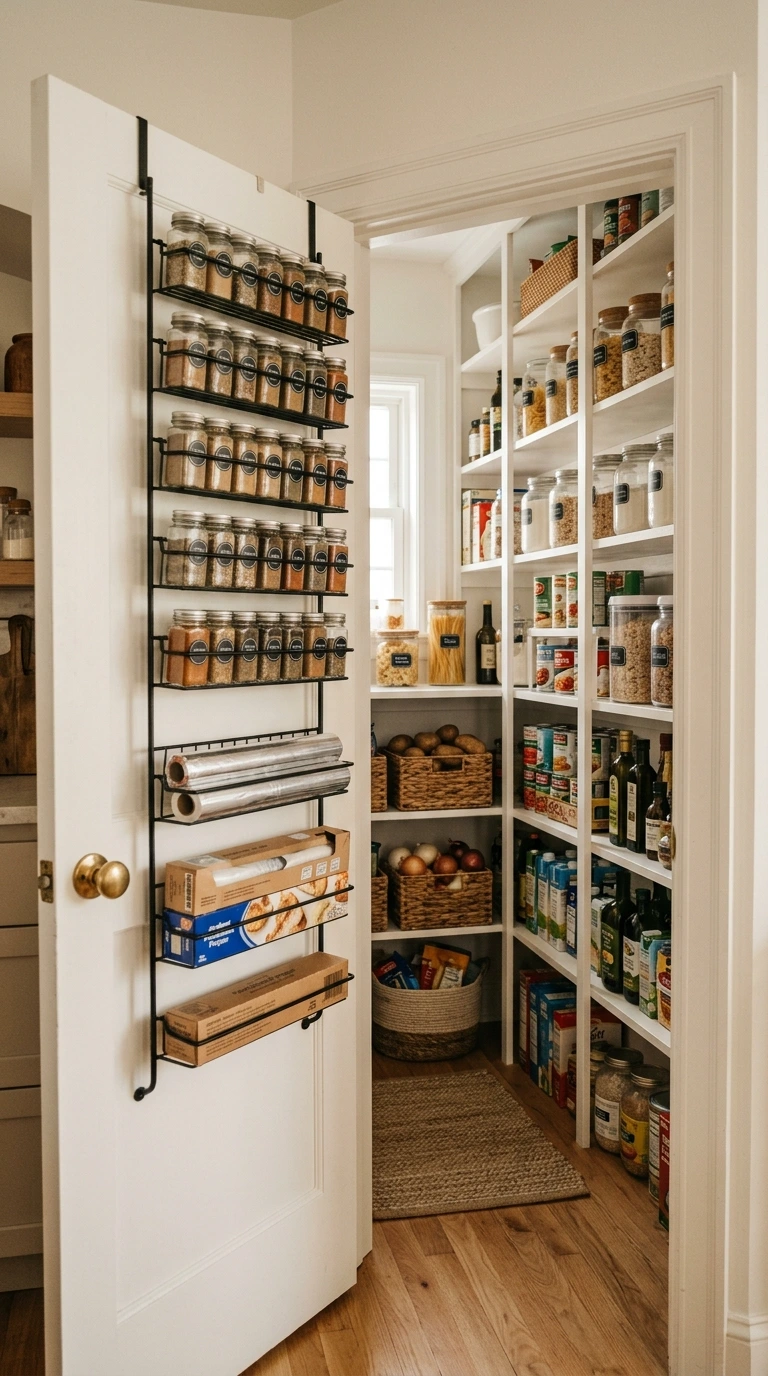
The back of the pantry door is one of the most overlooked spots in the entire room, and it usually sits completely empty. A slim over-the-door rack turns that flat surface into extra storage for spice jars, foil rolls, or plastic wrap, without touching a single inch of shelf space.
A blank pantry door with unused space and spice jars crowding a shelf inside.
A hanging door rack holds spices at eye level and frees up a full shelf inside.
Check the door swing and hinge clearance before installing. A rack that is too deep will hit the door frame every time it closes.
12. Add a Small Pendant Light Over an Open Pantry
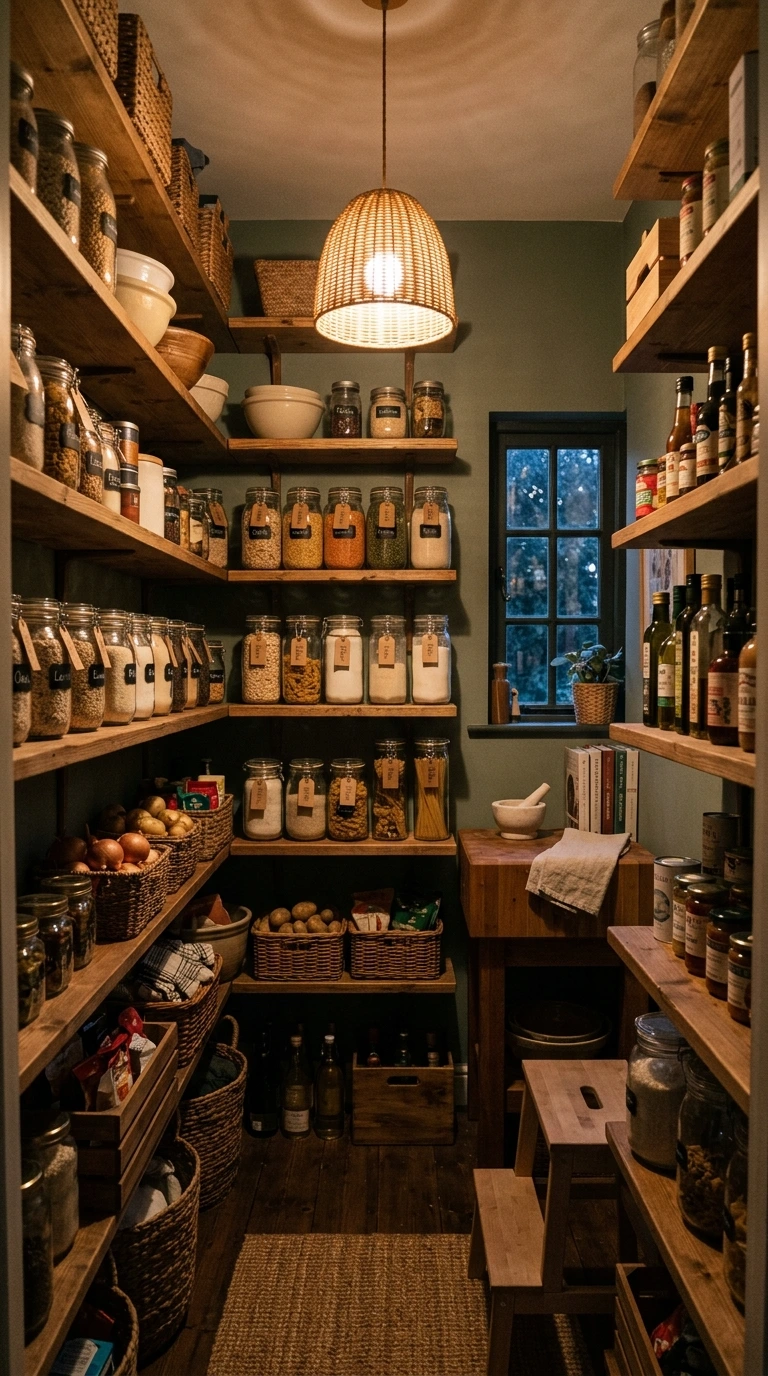
An open shelving pantry without its own light source usually relies on spillover from the kitchen, which leaves it dim and flat looking. A single small pendant hung above the space gives it a defined glow and makes it feel like an intentional room, not just extra shelving off the kitchen.
💡 Quick Tip
Choose a woven or rattan pendant shade over a bare bulb fixture. It softens the light and matches the natural texture of baskets and jars underneath it.
Keep the pendant small, under 12 inches wide, so it does not compete visually with everything already on display below it.
13. Build a Coffee and Tea Station on One Shelf
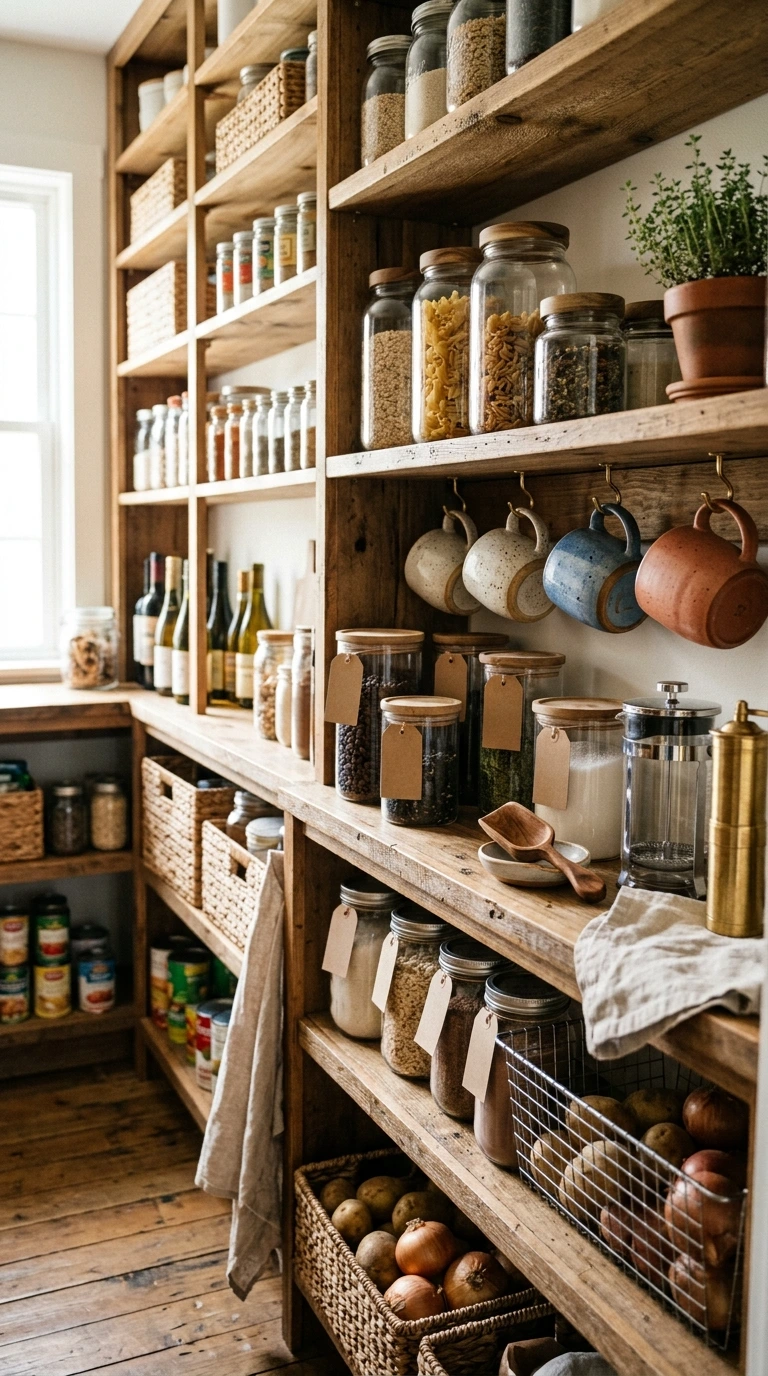
Coffee, tea, mugs, and sweeteners scattered across different shelves means a slower morning every single day. Dedicating one shelf entirely to a coffee and tea station keeps everything you need for that first cup within one reach, no searching required.
Place this shelf at standing eye level rather than up top or down low, since it is the one zone in the pantry you will reach for every single morning.
14. Keep a Chalkboard or Printed Label System Consistent
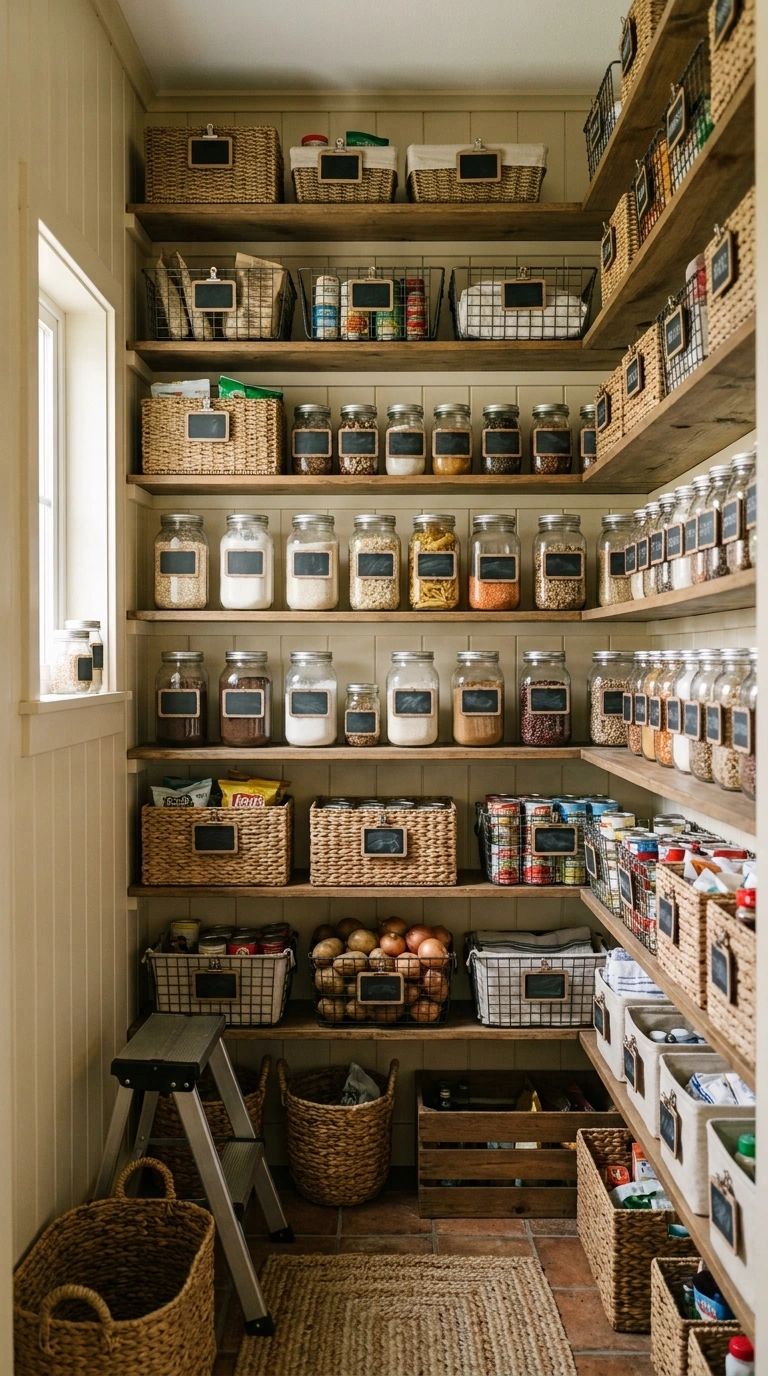
Mixing handwritten labels with printed ones, or chalkboard tags with sticker labels, makes even a well-organized pantry look pieced together. Picking one label style and using it everywhere ties the whole space together visually, no matter how many different baskets or jars are involved.
- ▸Choose one label material, chalkboard tag, printed sticker, or engraved clip, and stick with it across every shelf.
- ▸Match the font style if using printed labels, since mixed fonts read as cluttered even at small sizes.
- ▸Reprint or replace faded labels right away instead of letting a few mismatched ones slide.
A label maker with a matching tape color across the whole pantry is the fastest way to get this consistency without much extra effort.
15. Store Onions and Potatoes in Ventilated Baskets on the Floor
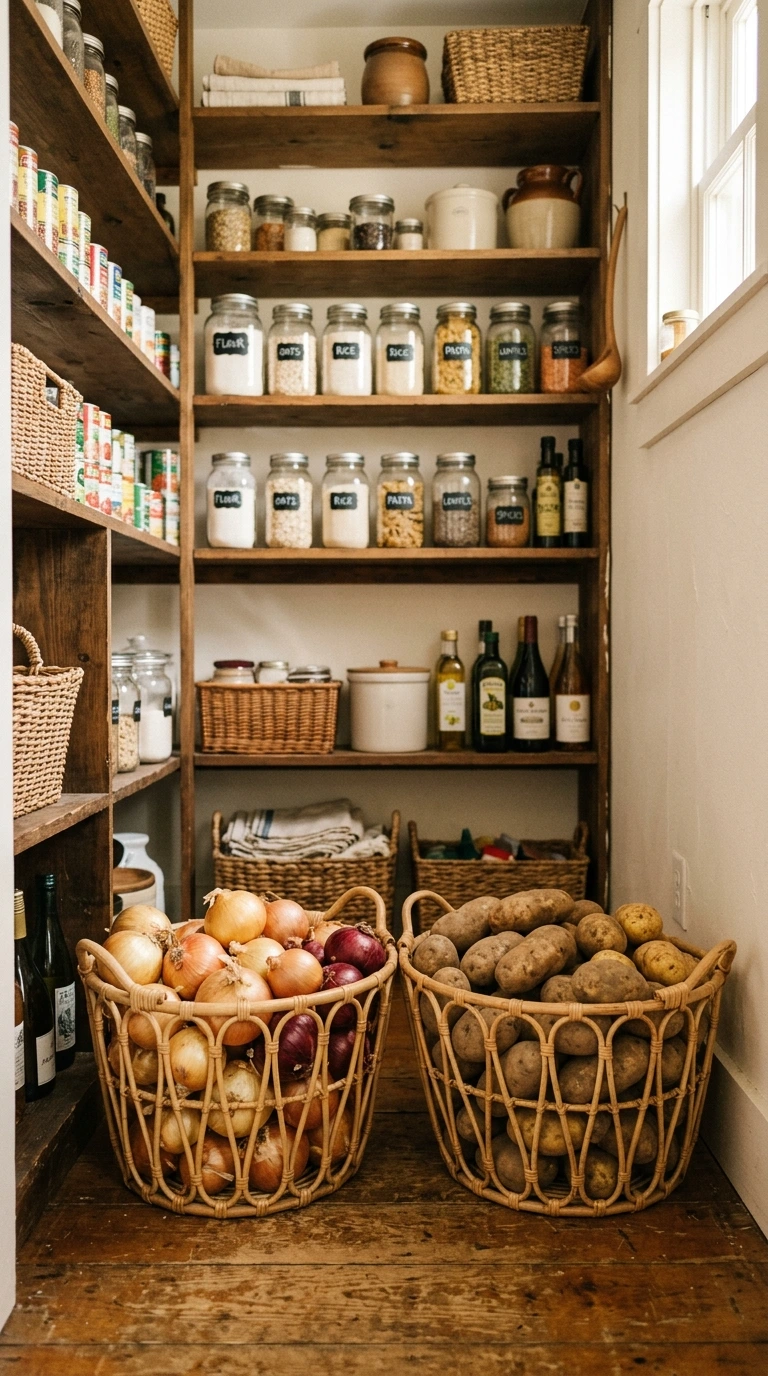
Onions and potatoes sprout and soften fast when they sit in a sealed bin or plastic bag, and most people do not realize the container is the actual problem. Open weave baskets on the floor or a low shelf let air circulate around them, which noticeably extends how long they stay fresh.
Keep onions and potatoes in separate baskets, never the same one. Onions release gases that make potatoes sprout faster when they sit together.
A low shelf near the floor works better than a high one for these baskets, since it keeps the heaviest, bulkiest produce out of the way of daily reach zones.
16. Use Stackable Bins to Double Shelf Capacity
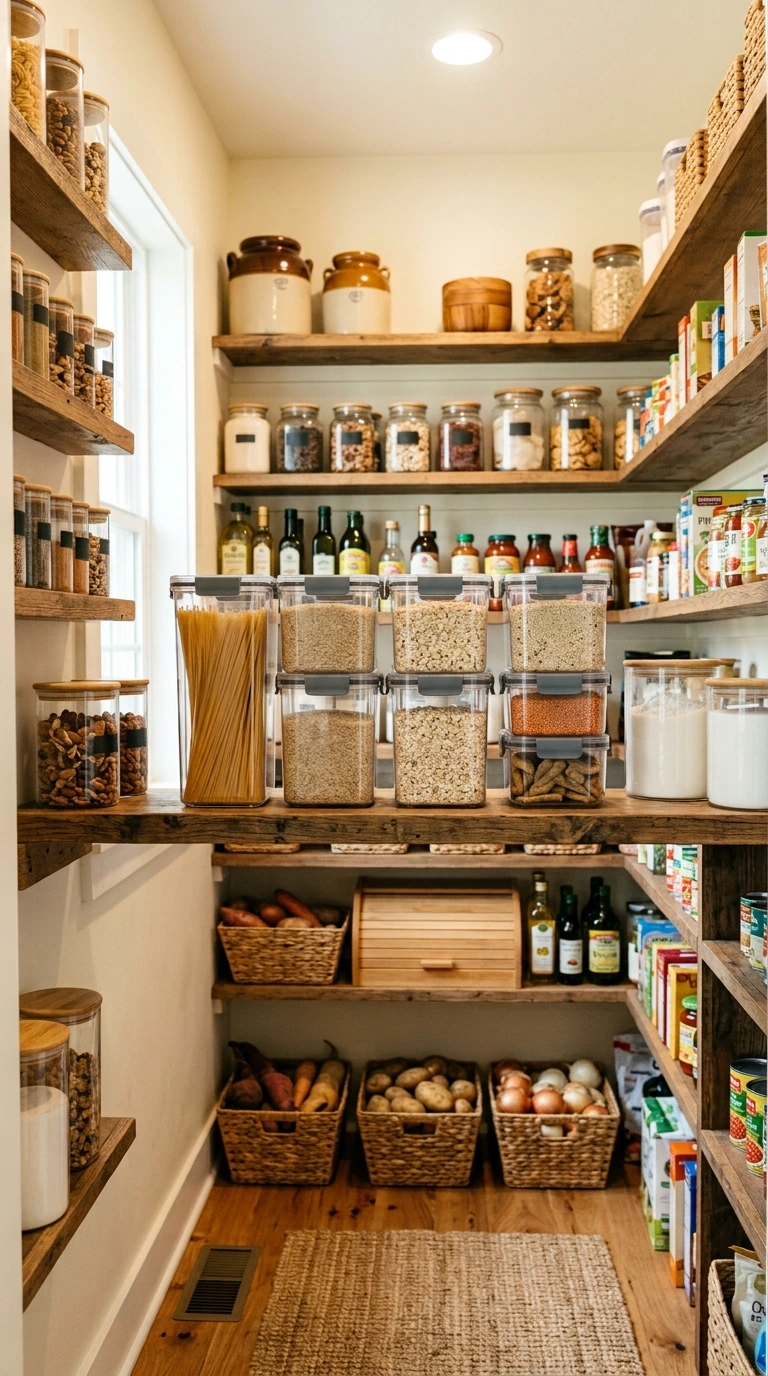
A single layer of boxes on a shelf leaves the entire vertical gap above them unused, which is wasted space on every shelf in the pantry. Stackable bins with flat, sturdy tops let you build a second layer on top without crushing what is underneath, effectively doubling how much a shelf can hold.
Put the bin you reach for most often on top, not bottom. Stacking traps the lower bin, so it should hold backstock rather than daily items.
17. Add a Small Rug for a Finished, Lived-In Look
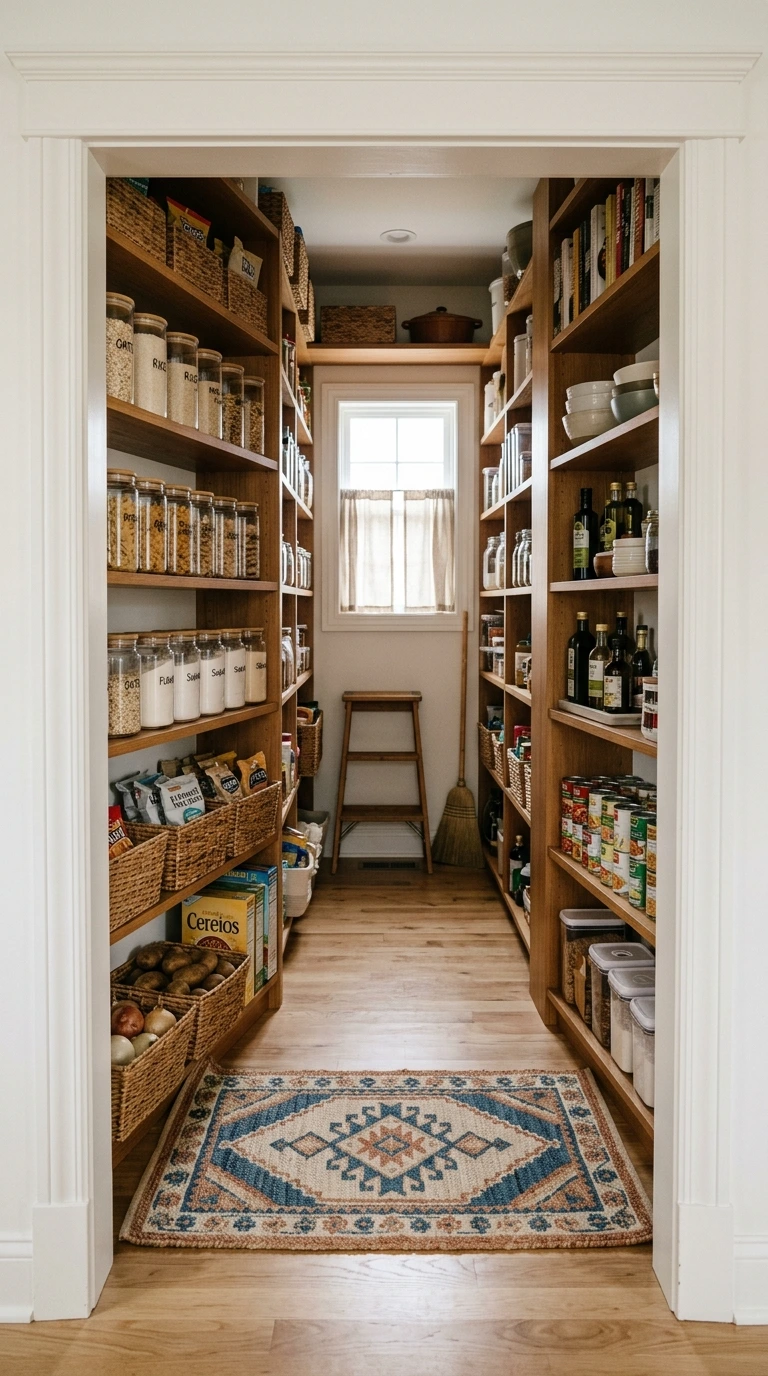
A pantry with bare flooring, even a well organized one, can still feel more like a utility closet than a real room. A small rug at the entrance softens the space underfoot and signals that this room was actually designed, not just used for overflow storage.
Bare flooring that makes an otherwise organized pantry feel unfinished and utilitarian.
A small patterned rug grounds the space and makes it feel like a real room.
Choose a low pile, washable rug rather than a plush one, since flour and spilled grains are almost guaranteed in a working pantry.
18. Set Up a First In First Out Row for Canned Goods
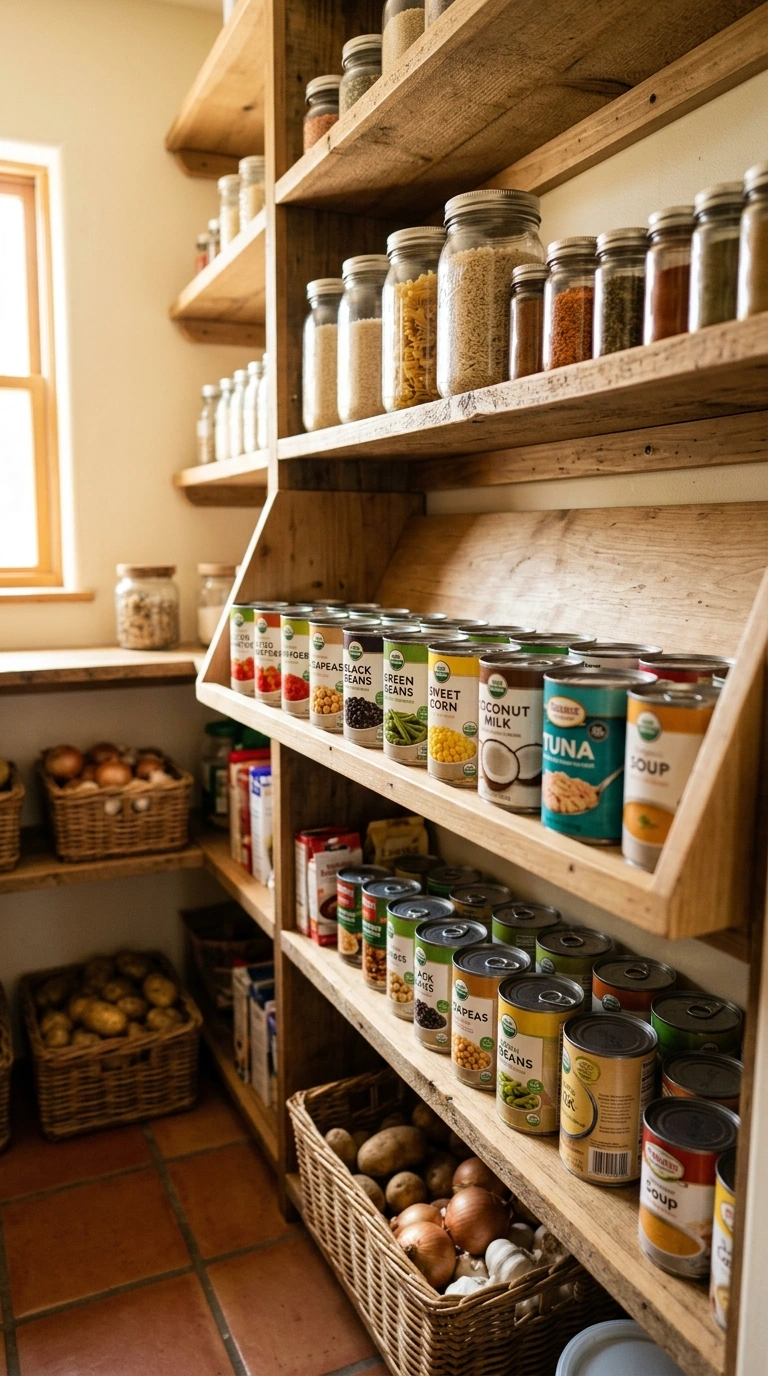
Cans get pushed to the back and forgotten long past their best date when there is no system for rotation. Setting up a shallow, angled row where new cans load from the back and roll forward keeps the oldest stock always in front, so nothing sits untouched for years.
Group cans by type first, beans, vegetables, soups, so each row holds one category.
Load every new can from the back of the row, never the front.
Always grab from the front row when cooking, so the oldest can gets used first.
A dedicated can riser shelf makes this system almost automatic, since the slight tilt naturally pushes older cans forward on its own.
19. Use a Tray to Corral Oils and Vinegars on the Counter
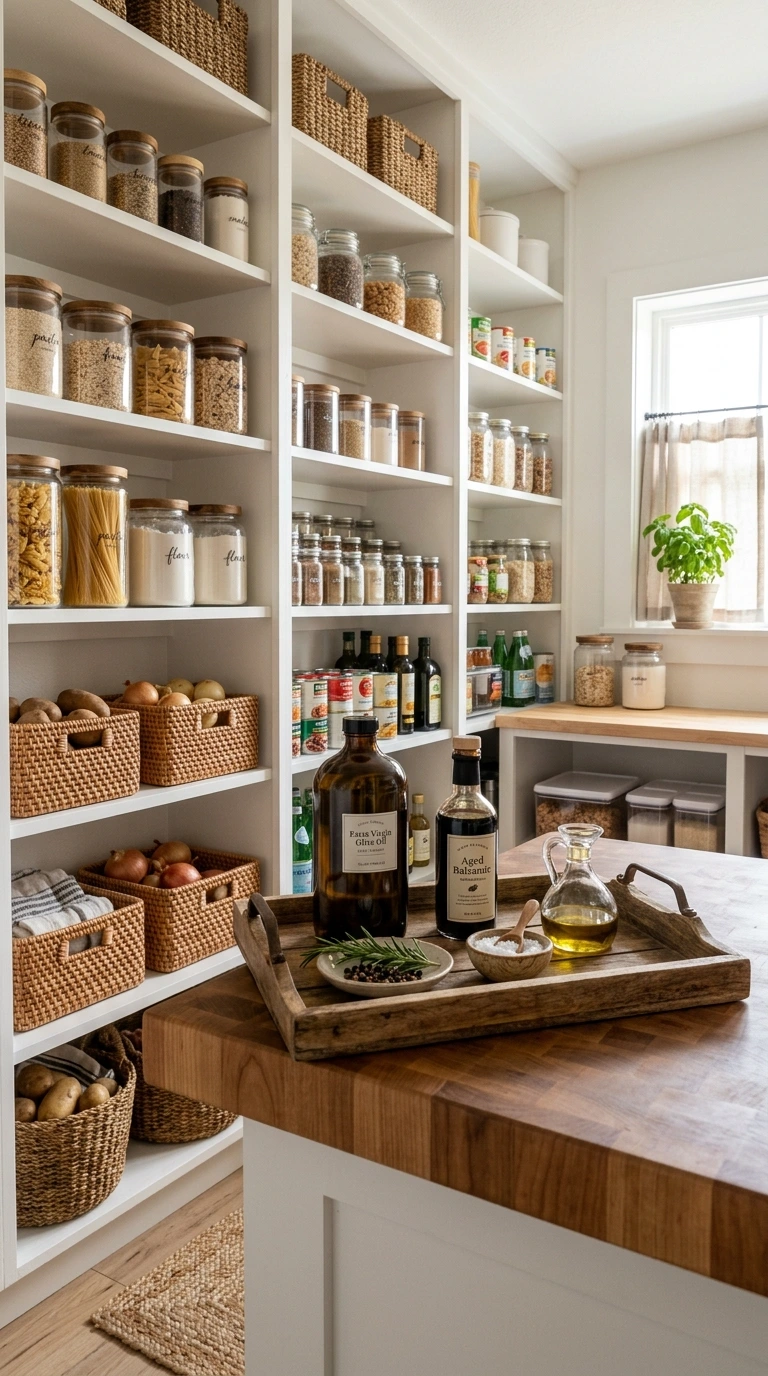
Bottles left loose on a shelf or counter tend to drip and leave rings that build up over time, which makes the whole area look neglected even when it is technically clean. A single tray under oils and vinegars catches the mess and turns a cluster of bottles into a styled little station.
A tray with a slight raised edge does the best job of catching drips before they spread to whatever is sitting nearby.
20. Choose Warm White Labels Over Stark Black and White
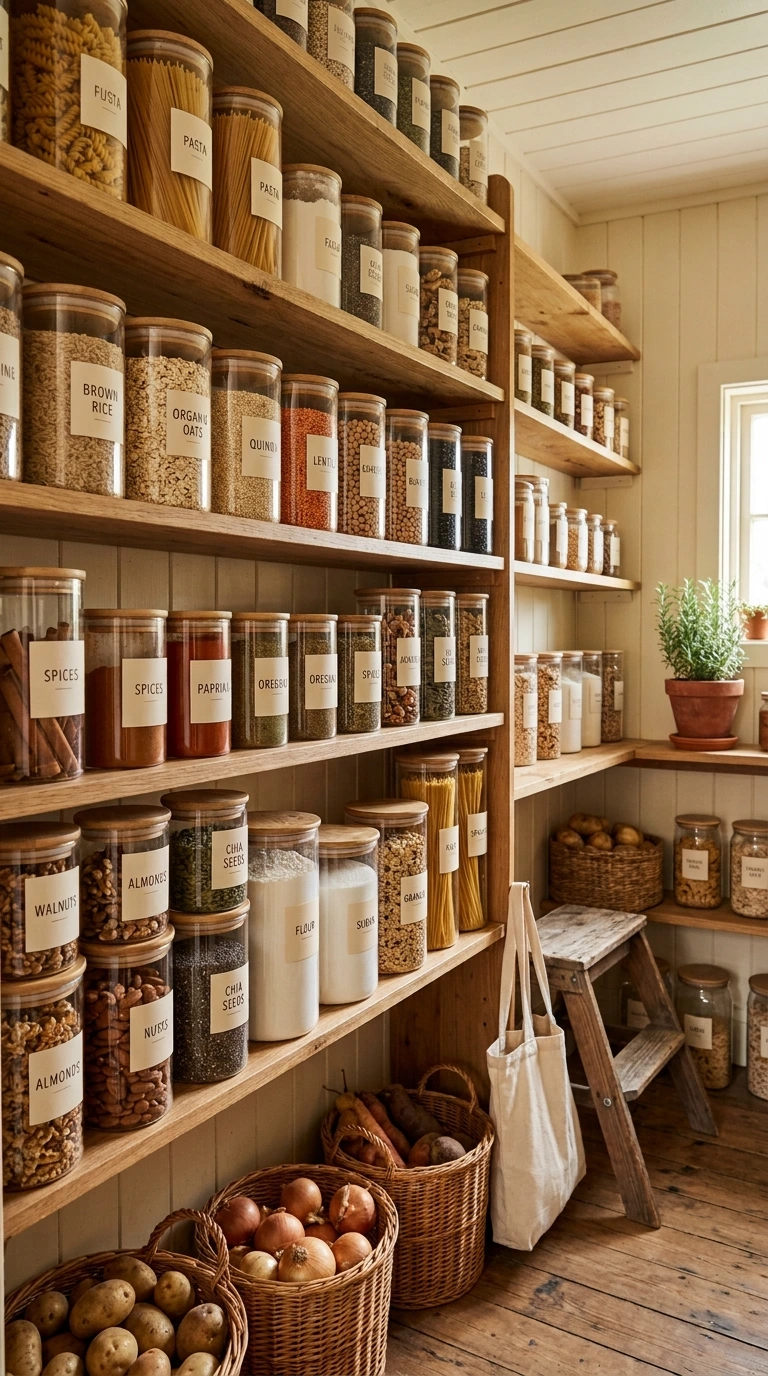
Bright white labels with harsh black text can make a pantry feel more like a warehouse than a warm, everyday space. Cream backgrounds with soft brown or charcoal text blend into wood and woven textures instead of standing out sharply against them.
💡 Quick Tip
Test one label in the actual pantry lighting before ordering a full set. Warm LED strips can shift how a label color reads compared to how it looks in daylight.
A slightly serif or script font on the labels also softens the overall look, especially next to rustic wood shelving or woven baskets.
21. Add Pull-Out Drawers for Deep Corner Shelves
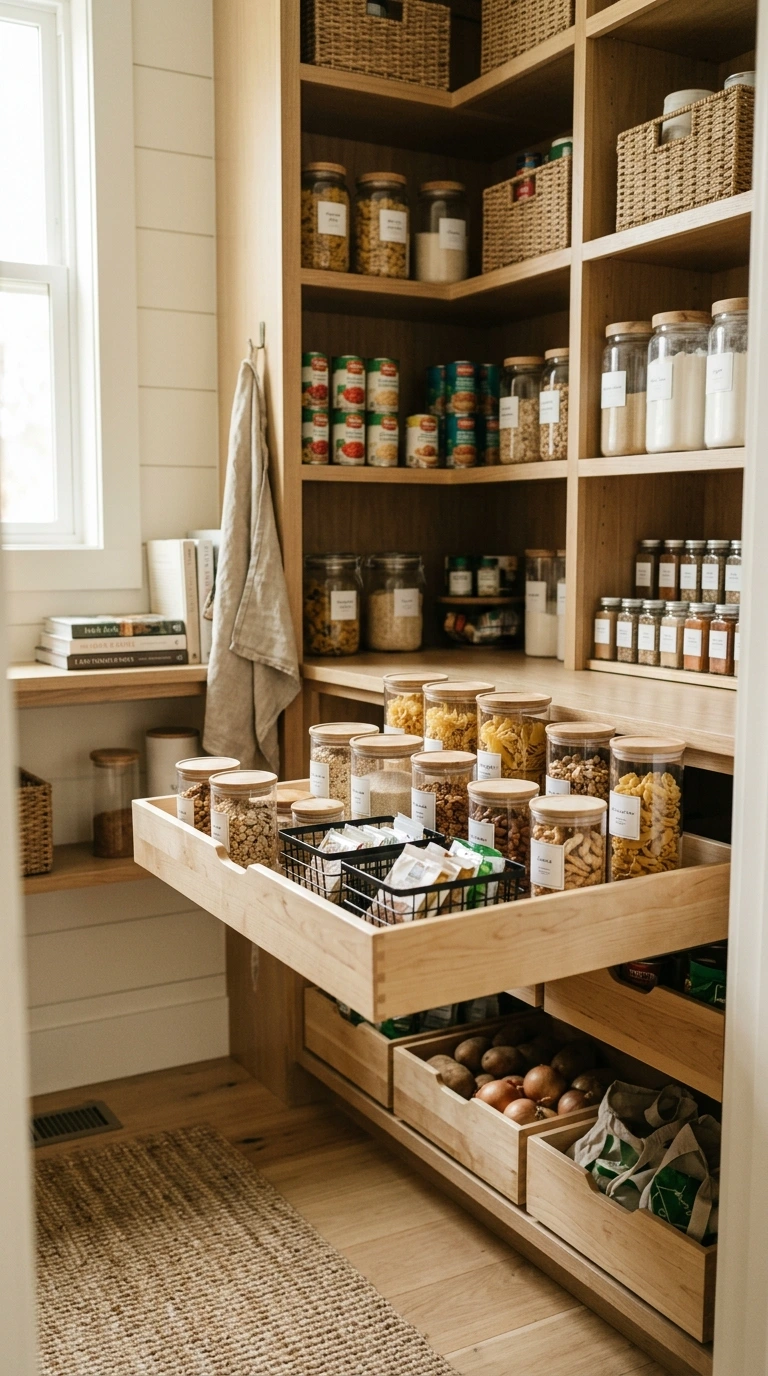
Fixed shelves in deep corners force you to reach and dig, and something always ends up knocked over in the process. Pull-out drawers or sliding baskets bring the entire contents forward to you instead, so nothing gets left forgotten in the back where you cannot see it.
Install pull-out drawers on deep shelves over 16 inches.
Choose a smooth glide track rated for the drawer’s loaded weight.
Fixed shelving on any shelf deeper than arm’s reach.
Overloading a drawer past its rated weight, which causes sagging over time.
Retrofitting a rental with a slide-out basket kit is usually easier than a full drawer install, and it does not require permanent changes to the shelving.
22. Store Pasta and Grains in Matching Tall Jars
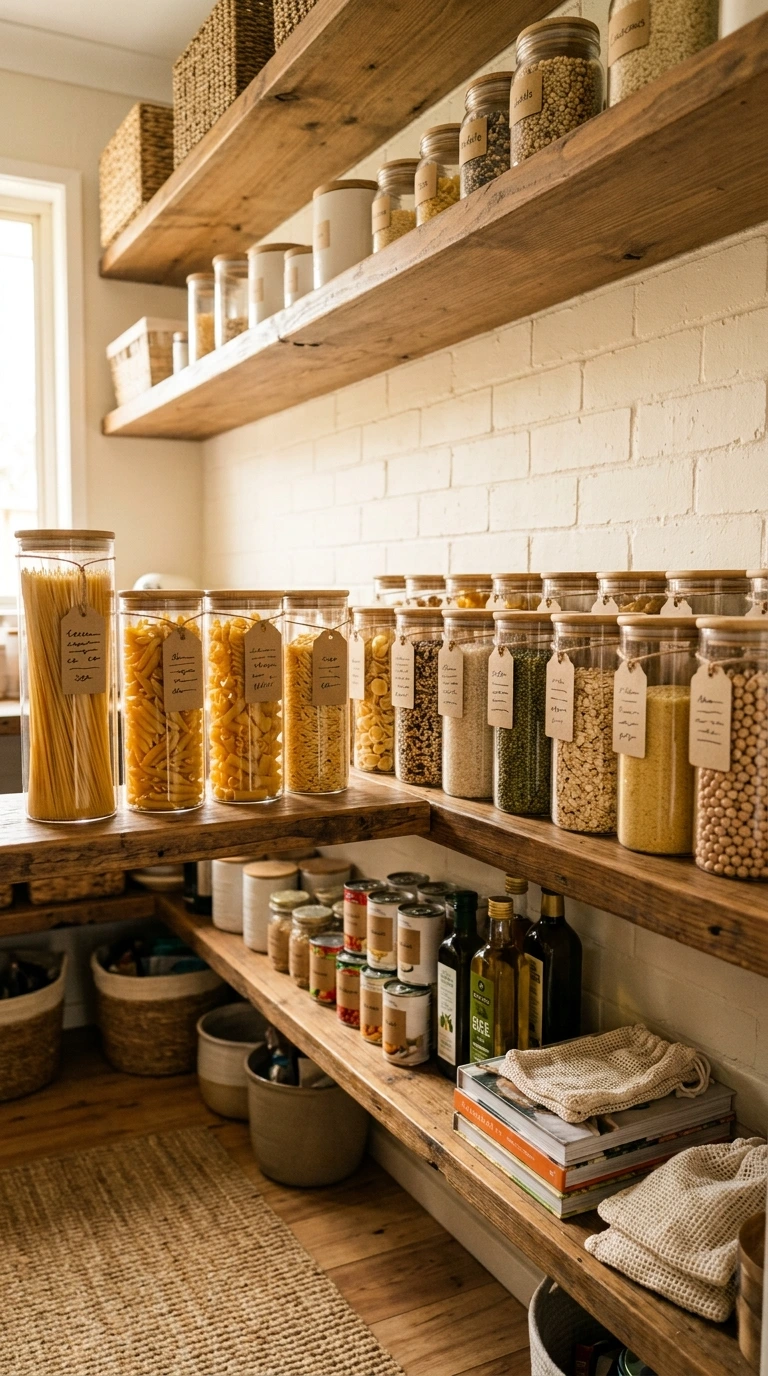
Boxed pasta and bagged grains take up awkward, uneven space and tend to spill once the box gets torn open. Tall matching jars standardize the shape of every dry good on the shelf, which frees up more usable space and keeps everything visible at a glance.
Before filling the jars, check for:
Keep the original box’s cooking instructions taped inside a cabinet door nearby, since that detail is the one thing people miss most after decanting.
23. Drop in a Small Lamp for Ambient Evening Light
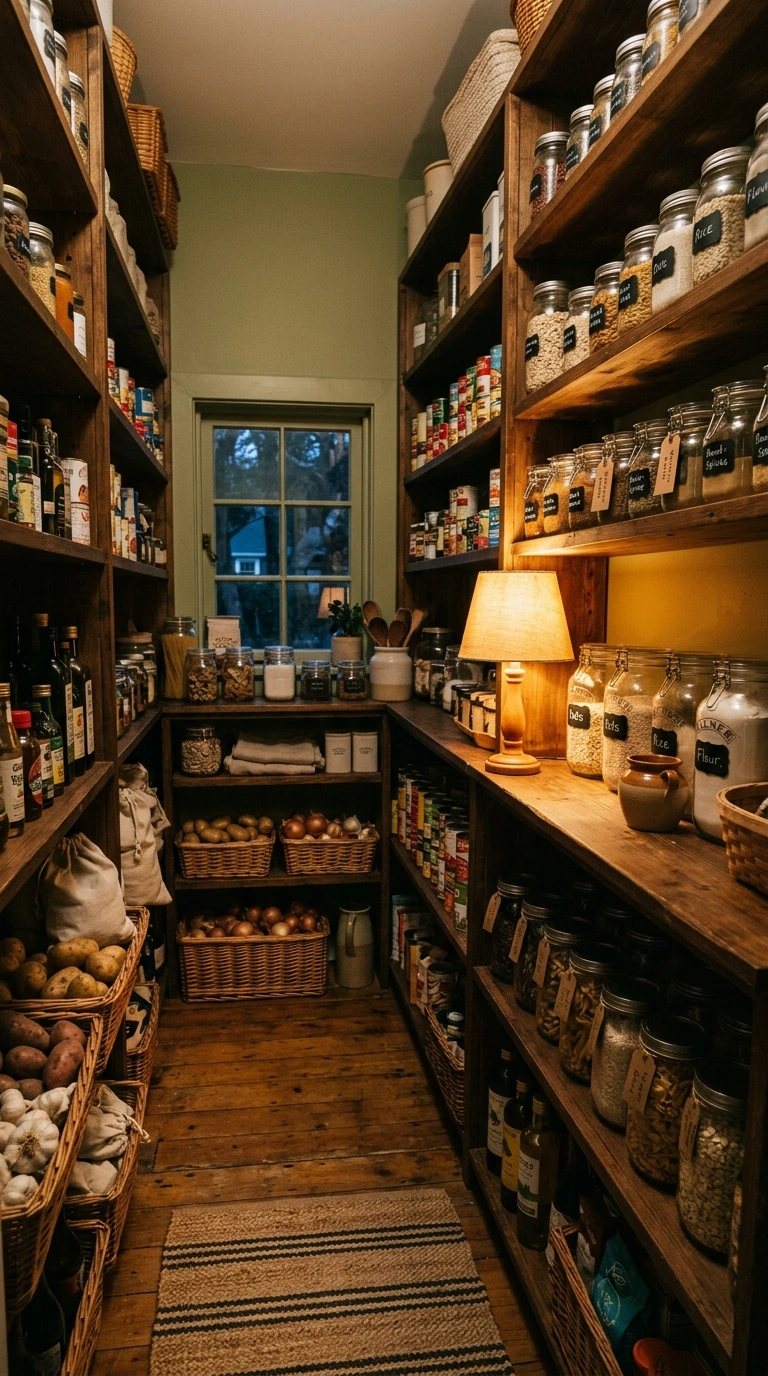
Overhead lighting alone can feel harsh and clinical, especially in a pantry someone might duck into for a quick snack after dark. A small plug-in lamp on a low shelf adds a softer, warmer glow that makes the space feel more like part of the home and less like a stockroom.
A lamp with a fabric shade softens the light more than an exposed bulb, and it doubles as a small decorative object even when it is switched off.
24. Add a Wall-Mounted Rack Instead of Wasting Floor Space
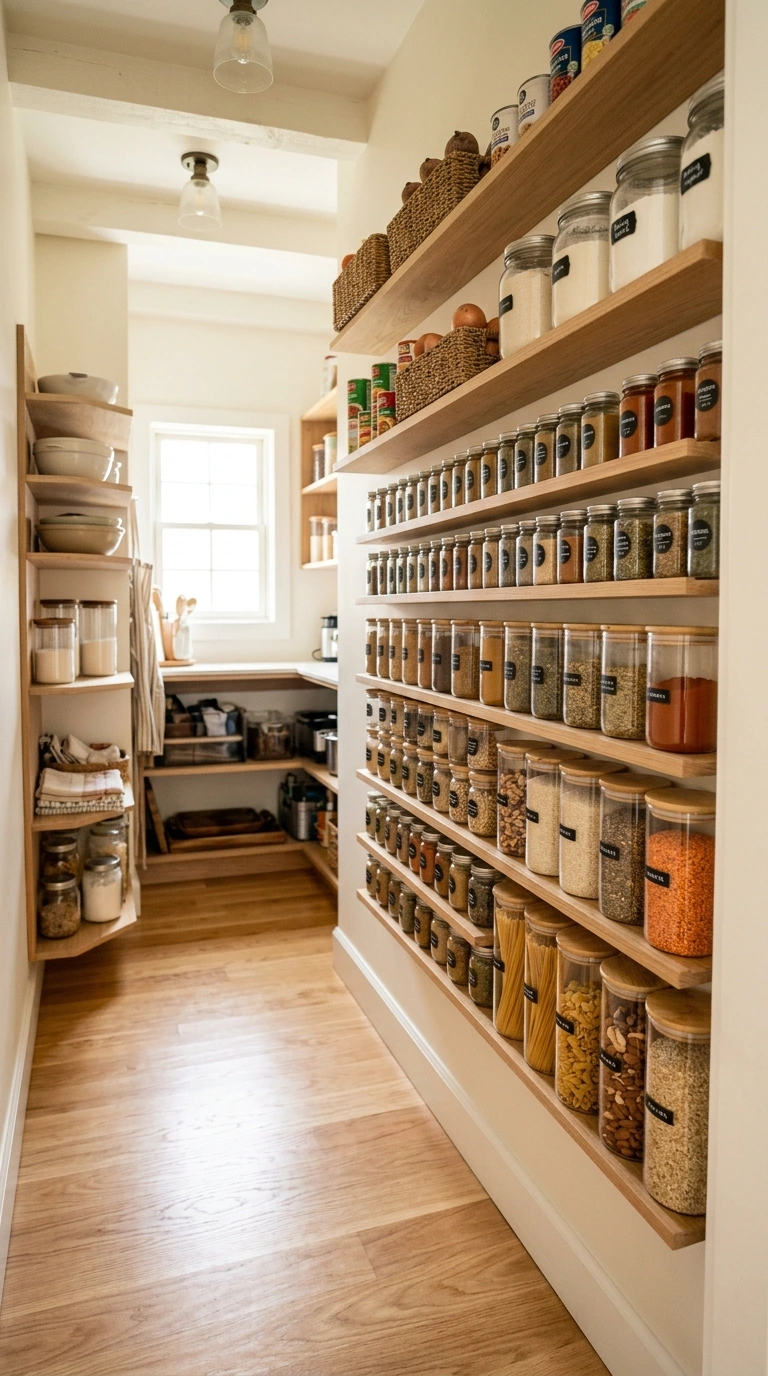
Floor space in a small pantry is too valuable to give up to a freestanding rack that could just as easily hang on the wall. Mounting a slim rack for jars, spices, or utensils reclaims that floor area for baskets or a rolling cart instead.
📌 Good To Know
Use wall anchors rated for the loaded weight, not just the rack itself. A shelf full of glass jars is far heavier than it looks once it is mounted.
Mount it at a height where you can read labels without craning your neck, usually just below eye level for the average person in the household.
25. Finish One Shelf With a Framed Quote or Small Sign
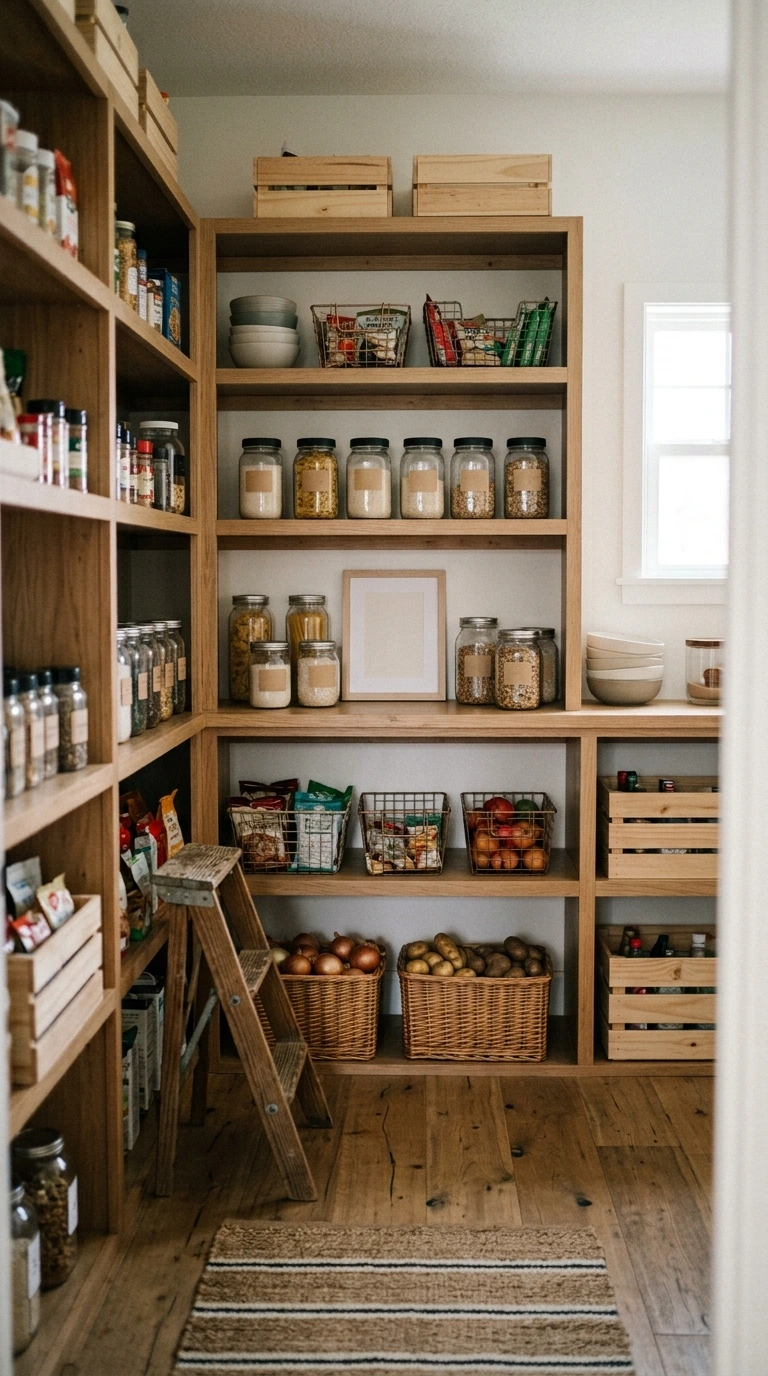
A pantry that is only about storage can start to feel purely functional, with nothing to make it feel personal. One small framed sign or printed quote tucked among the jars gives the eye a resting point and signals this space was styled with care, not just filled.
Keep it to one sign per pantry, on the most visible shelf. More than one starts competing with the labels and baskets around it.
A simple wood or thin metal frame blends in better than anything glossy, since it should sit quietly in the background rather than pull focus from the storage system itself.
26. Group Baking Supplies Into One Labeled Zone
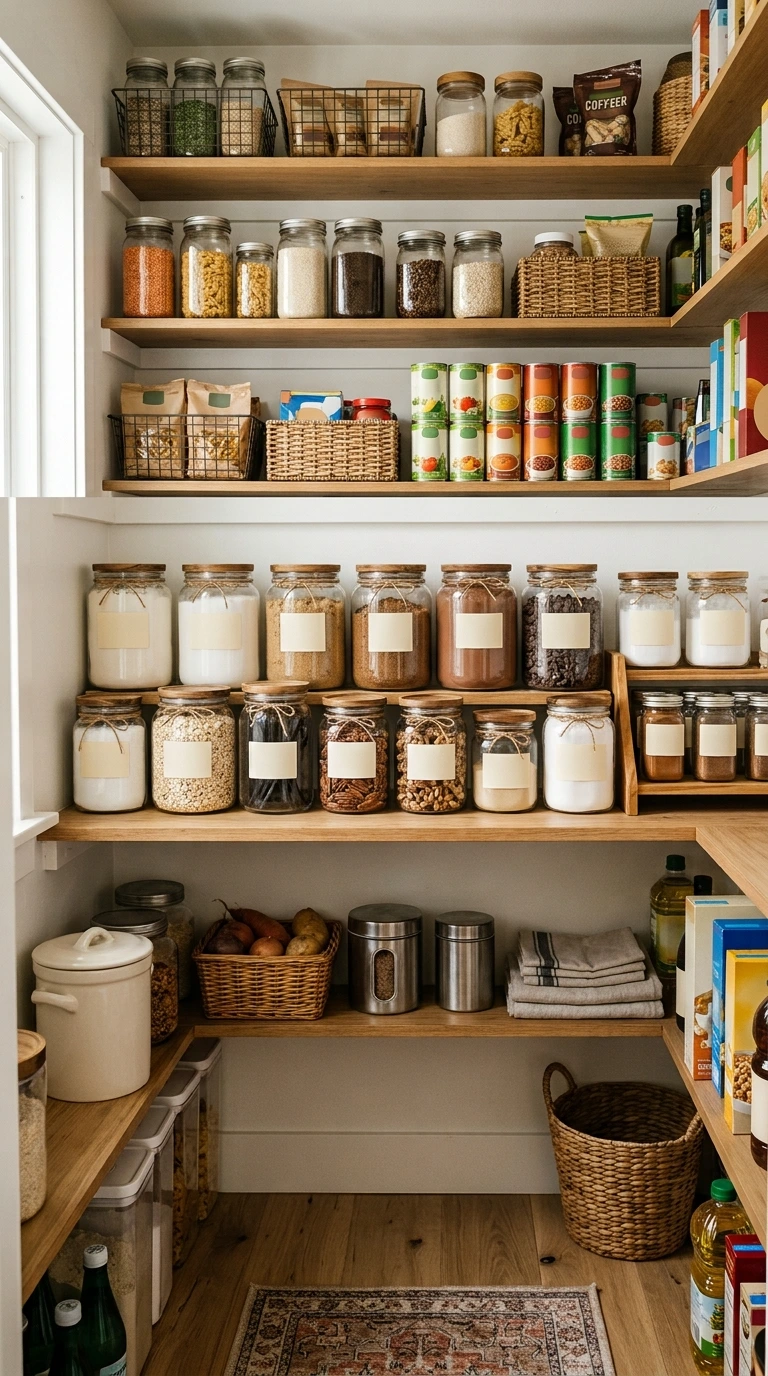
Flour, sugar, baking soda, extracts, and mixing bowls scattered across different shelves turn a simple recipe into a scavenger hunt. Keeping every baking essential in one labeled zone means you can pull out everything you need for a project in a single trip.
- ▸Keep flour, sugar, and brown sugar together in matching jars on the same shelf.
- ▸Store extracts, baking powder, and baking soda in a small labeled basket within that zone.
- ▸Add mixing bowls or measuring cups on the shelf directly below, so tools stay near ingredients.
Choose a shelf at standing eye level for this zone if you bake often, since it is one of the more frequently visited sections in an active kitchen.
27. Add a Mini Herb or Plant for a Softer Feel
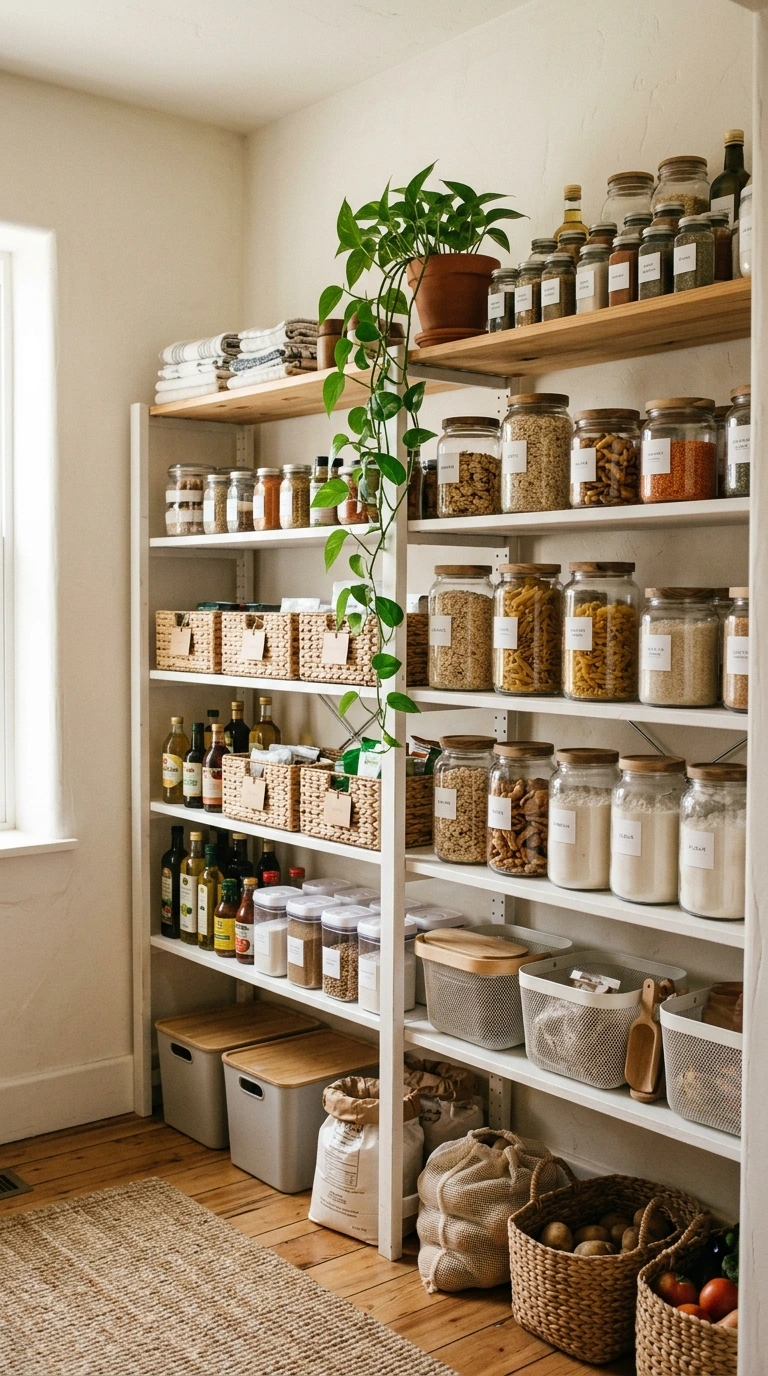
A pantry lined entirely with jars, bins, and cans can start to feel sterile, no matter how nicely everything is arranged. One small potted herb or trailing plant on an open shelf softens all those hard edges and adds a bit of life to an otherwise purely functional space.
Rows of jars and baskets with no softness or greenery to break up the hard lines.
A small trailing plant on the top shelf softens the whole wall of storage below it.
Choose a low light tolerant plant like pothos if the pantry has no window, since most herbs need more direct sun than a closed pantry can offer.
28. Use an Over-the-Door Organizer for Small Packets
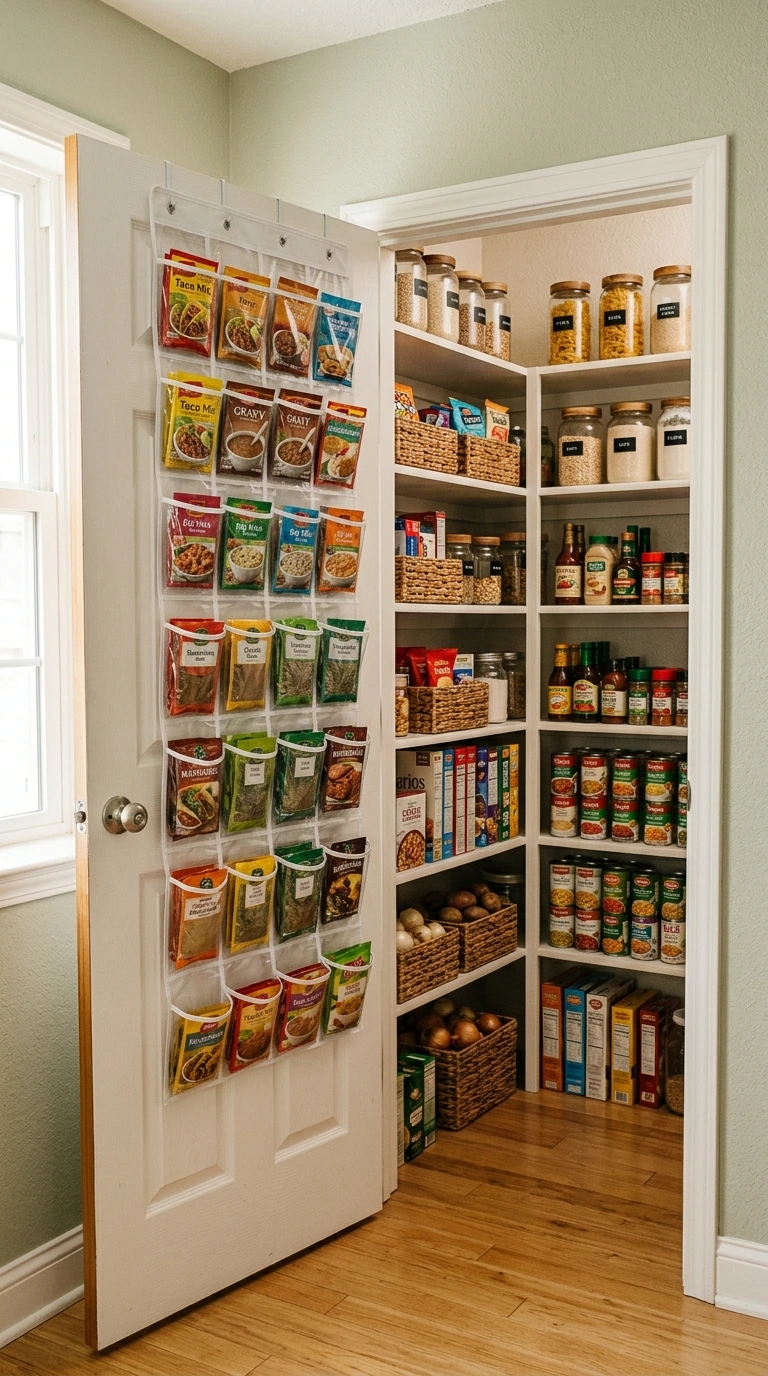
Seasoning packets, snack bars, and small pouches are the items most likely to get buried and forgotten in a regular basket. A clear pocket organizer hung on the inside of the door keeps every small item visible and separated, so nothing gets lost behind bigger boxes.
Check the door swing clearance before mounting, especially on narrower pantry doors.
Sort pockets by category, seasoning packets in one row, snack bars in another.
Relabel individual pockets if the organizer does not come with tags built in.
Clear vinyl pockets work best here since you can see the contents at a glance without unhooking anything from the door.
29. Hide Bulky Appliances on the Top Shelf, Out of Sight
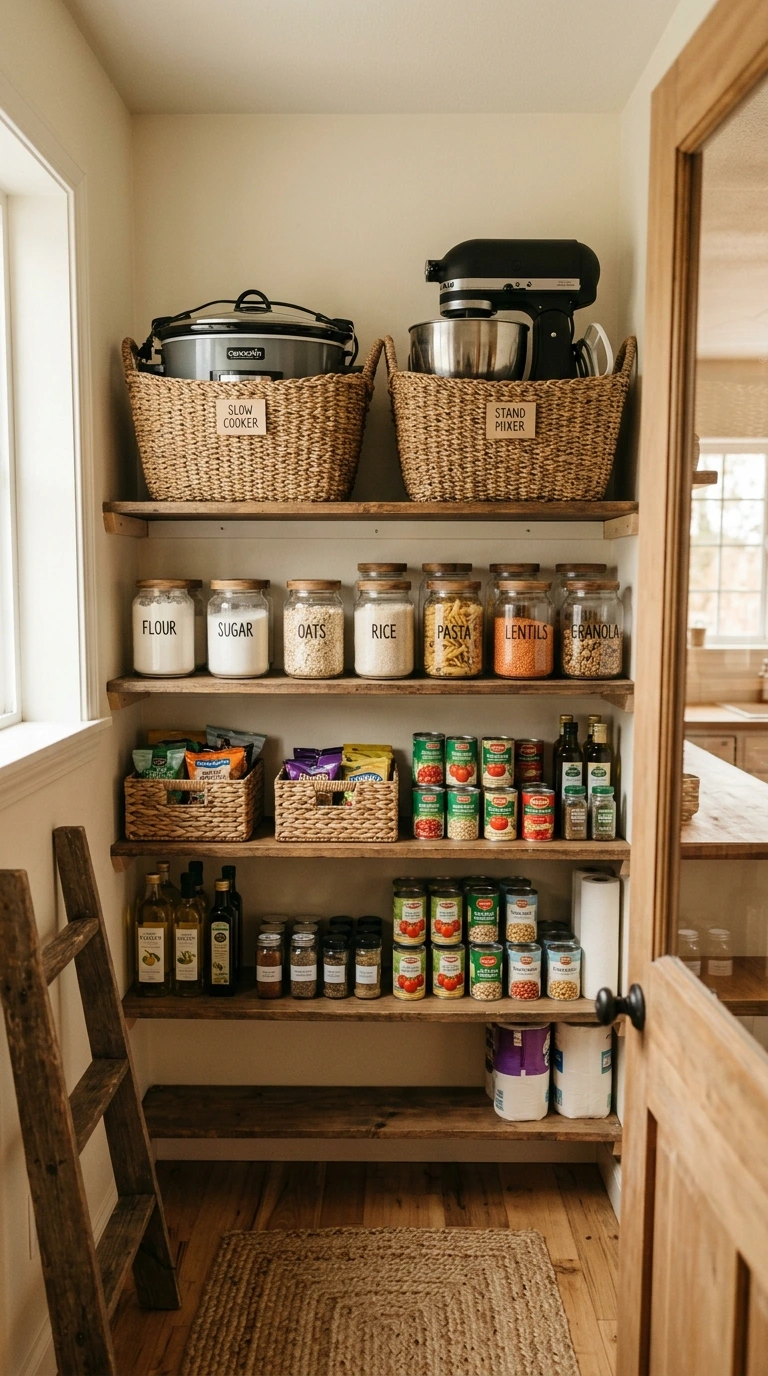
Slow cookers, stand mixers, and other bulky appliances used only occasionally do not need to sit at eye level taking up prime shelf space. Moving them to the top shelf keeps the everyday zones clear for items you actually reach for daily, while still keeping the appliances accessible when needed.
Line the top shelf with a large flat basket under each appliance, so you can slide the whole thing out at once instead of wrestling it down piece by piece.
30. Finish With Fresh Fruit in an Open Basket on the Counter
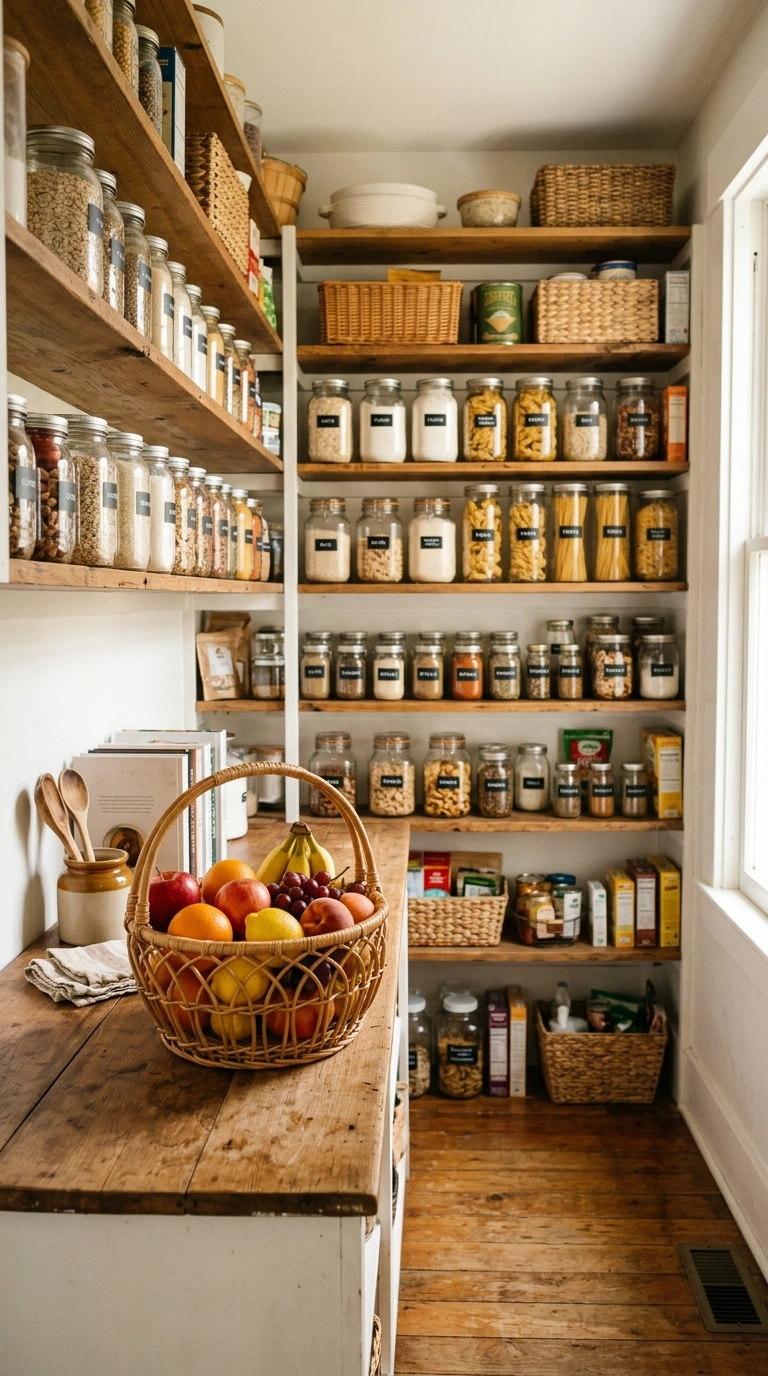
A pantry can be perfectly organized and still feel incomplete without one small, changeable detail near the entrance or counter. A basket of fresh fruit does exactly that, adding real color and life while also encouraging fruit to actually get eaten instead of forgotten in the fridge.
💡 Quick Tip
Keep bananas and apples in separate baskets. Bananas release gas that speeds up ripening in whatever fruit sits next to them.
An open weave basket at counter height keeps fruit visible and within easy reach, which makes it far more likely to get grabbed as a snack instead of a wasted purchase.
31. Add a Mini Chalkboard for a Running Grocery List
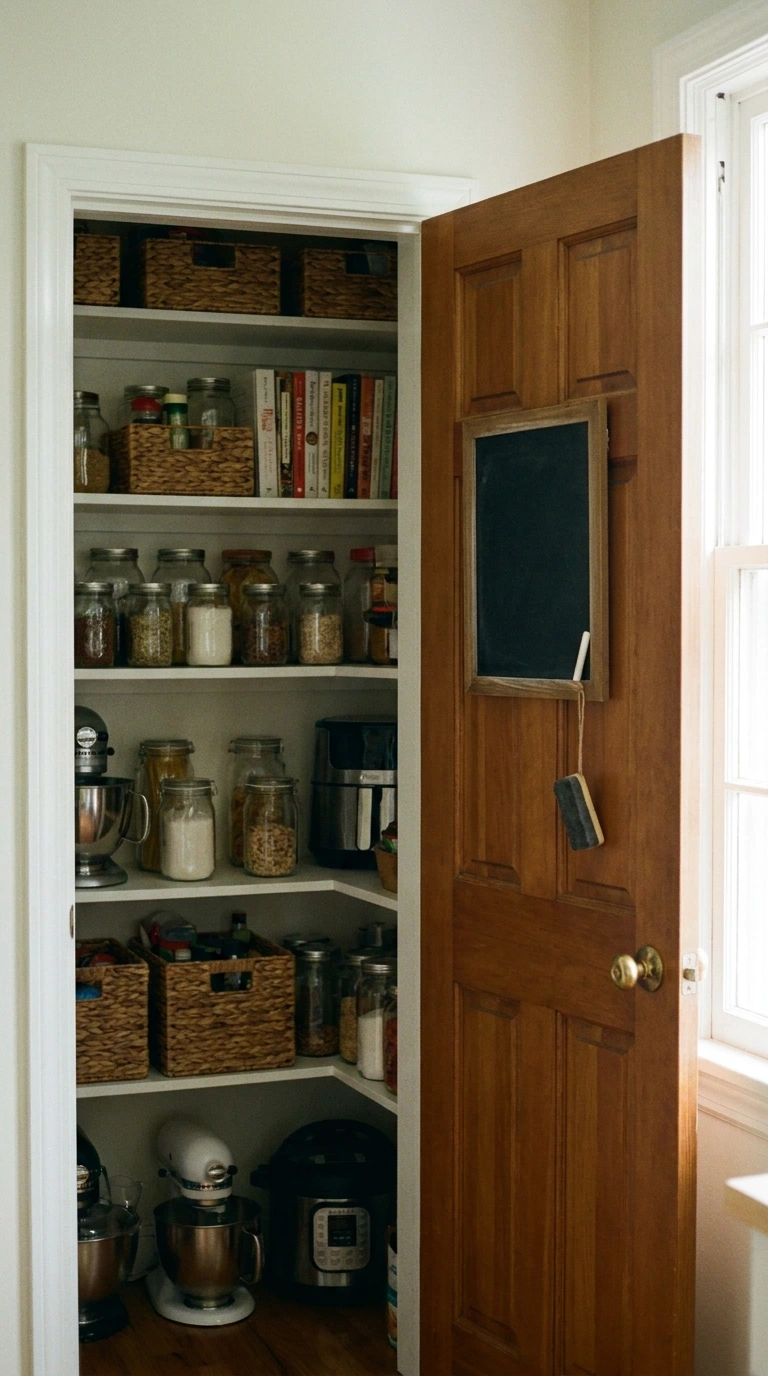
Running out of an ingredient mid-recipe usually means it gets forgotten by the time you actually make it to the store. A small chalkboard mounted inside the pantry door gives everyone in the house a spot to jot down items the moment they notice something is low.
Running out of an item quietly, then remembering only once it is needed for dinner.
A mounted chalkboard catches it the moment someone notices, ready for the next store run.
Keep a piece of chalk on a string tied directly to the board, since a loose piece tends to disappear within the first week.
32. Store Eggs in a Dedicated Tray Instead of the Carton
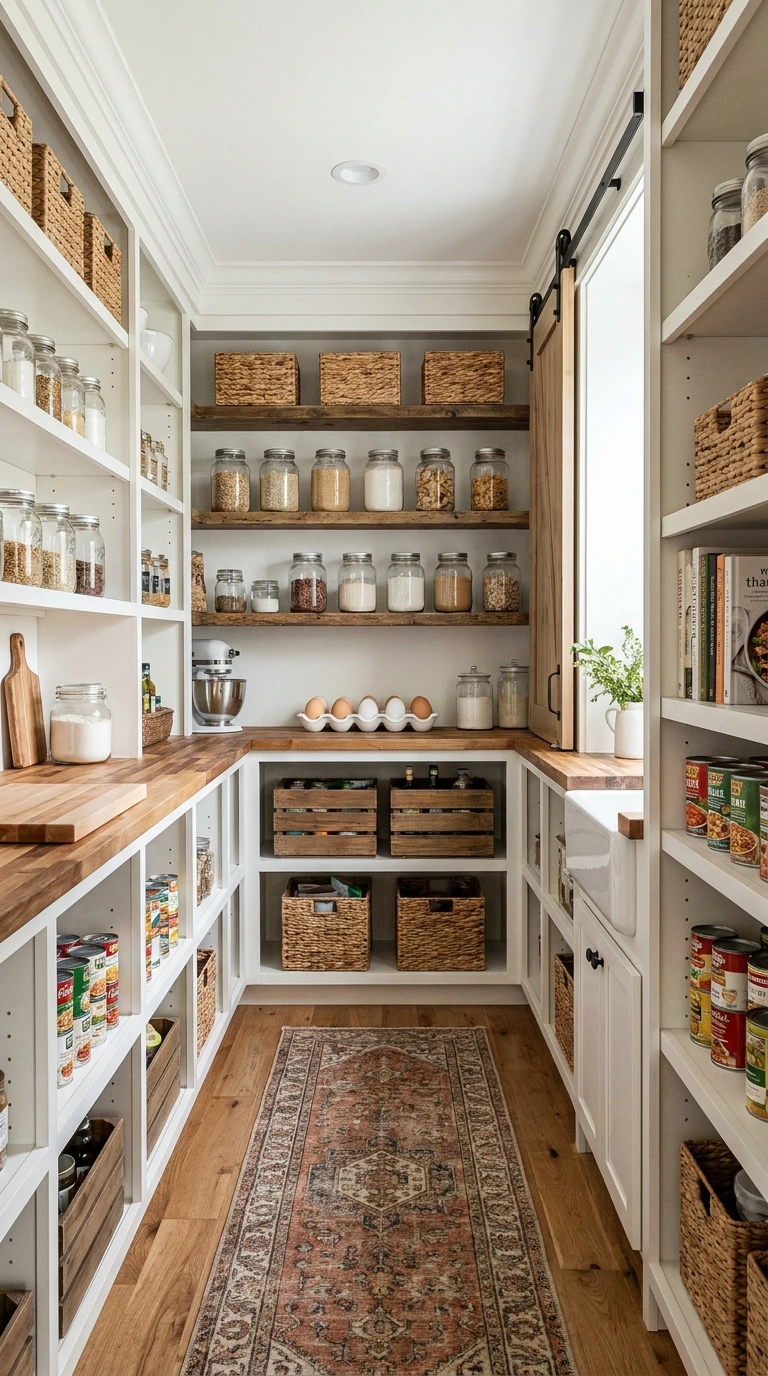
The original carton takes up more space than it needs to and does not stack well with other pantry items. A dedicated wire or ceramic egg tray holds the same amount in a smaller footprint and looks intentional sitting out on an open shelf.
💡 Quick Tip
Store the tray on a middle shelf, not the door or top shelf, since eggs hold up best with a stable temperature rather than the shifting air near an opening door.
A wire tray also makes it easy to see at a glance how many eggs are left, which the closed carton never allows without opening it.
33. Use Magnetic Tins for Spices on a Metal Backsplash
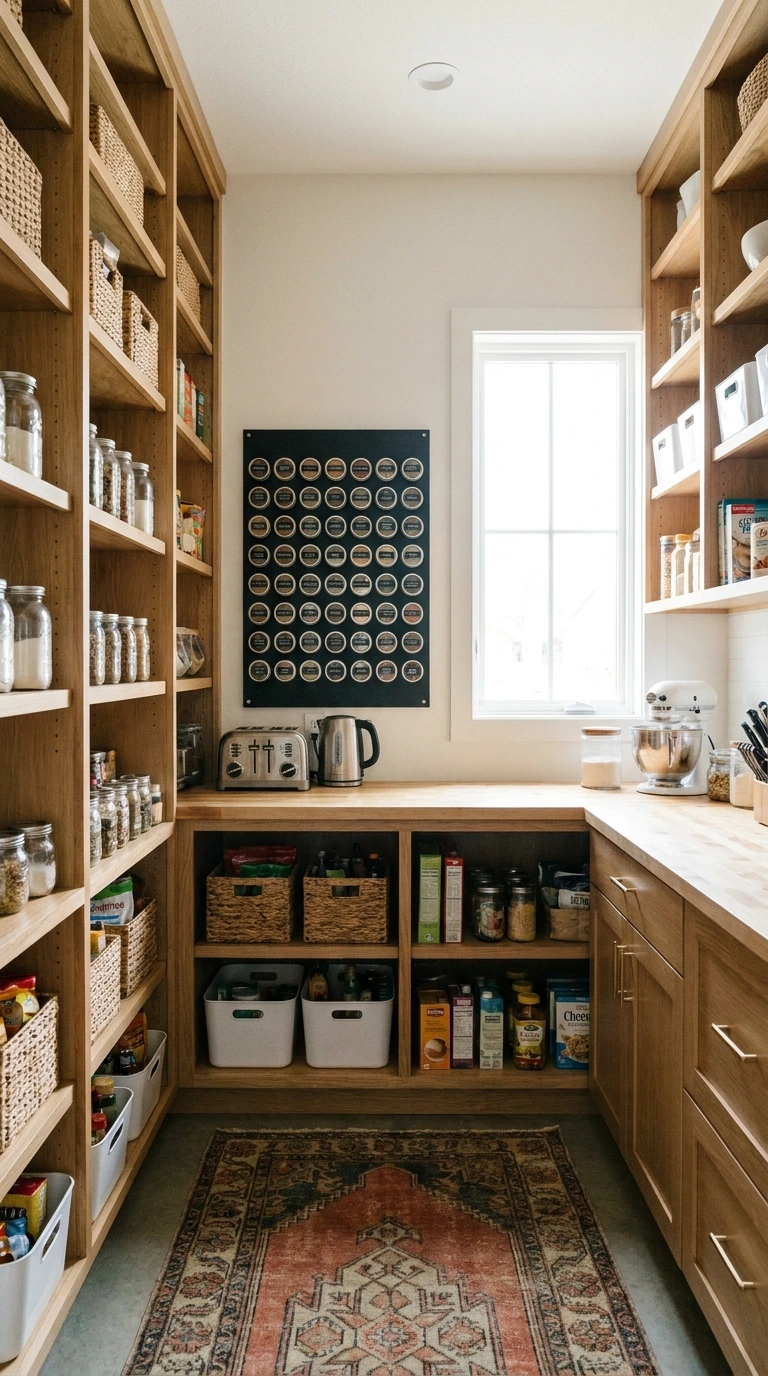
Spice jars crammed into a drawer or shallow bin usually end up stacked, which means digging through the pile for the one at the bottom. Small magnetic tins stuck to a metal backsplash or a mounted steel sheet put every spice in view at once, arranged however makes sense for how you actually cook.
Label the lid rather than the side of the tin, since these are stored flat and viewed from above, unlike a jar on a shelf.
34. Keep a Small Step Stool Tucked in the Corner
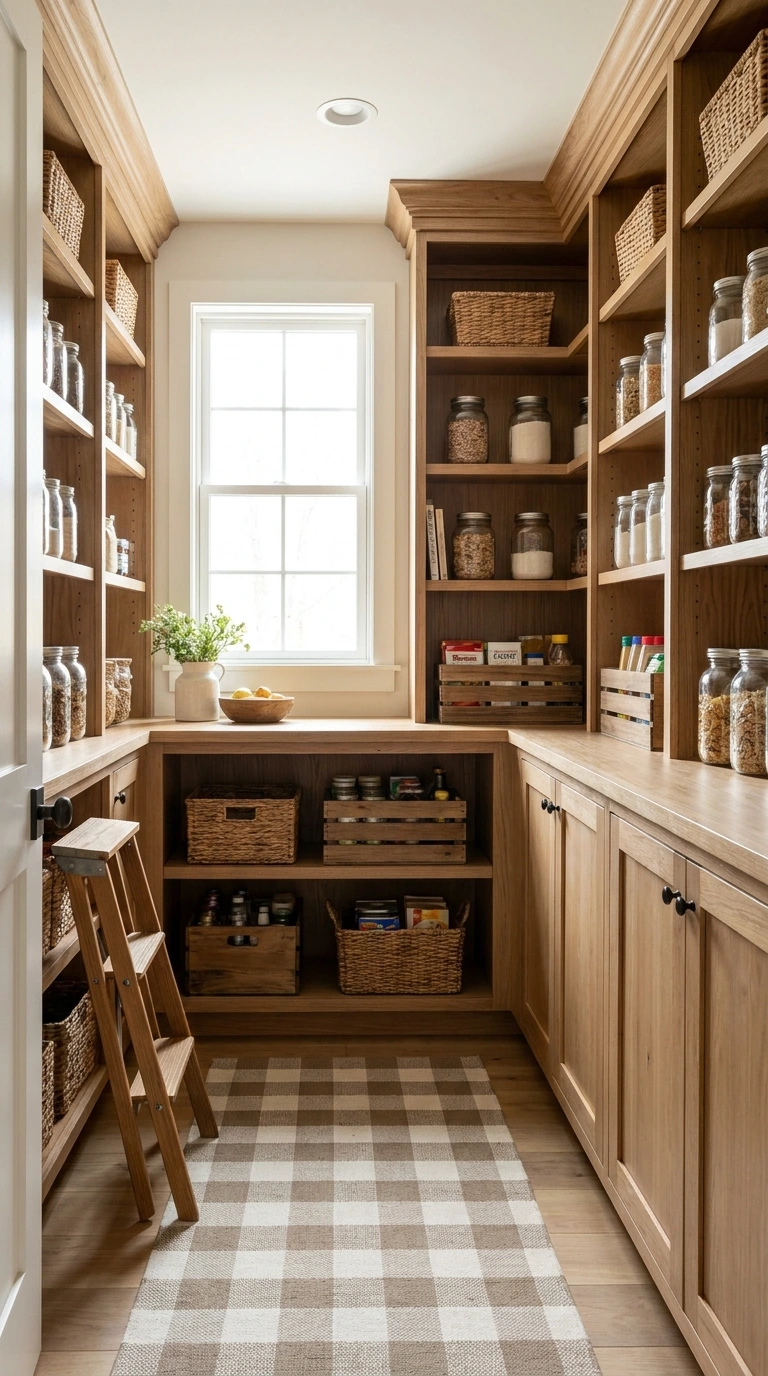
Top shelves become dead storage the moment they are out of comfortable reach, and most people stop using them entirely rather than dragging a chair over each time. A slim folding step stool tucked into a corner keeps the highest shelves just as accessible as the rest of the pantry.
Before you buy, check for:
A wood step stool tends to blend in better with pantry shelving than a plastic one, so it reads as part of the decor rather than a spare tool leaning in the corner.
35. Add a Woven Basket Wall for Garlic and Root Vegetables
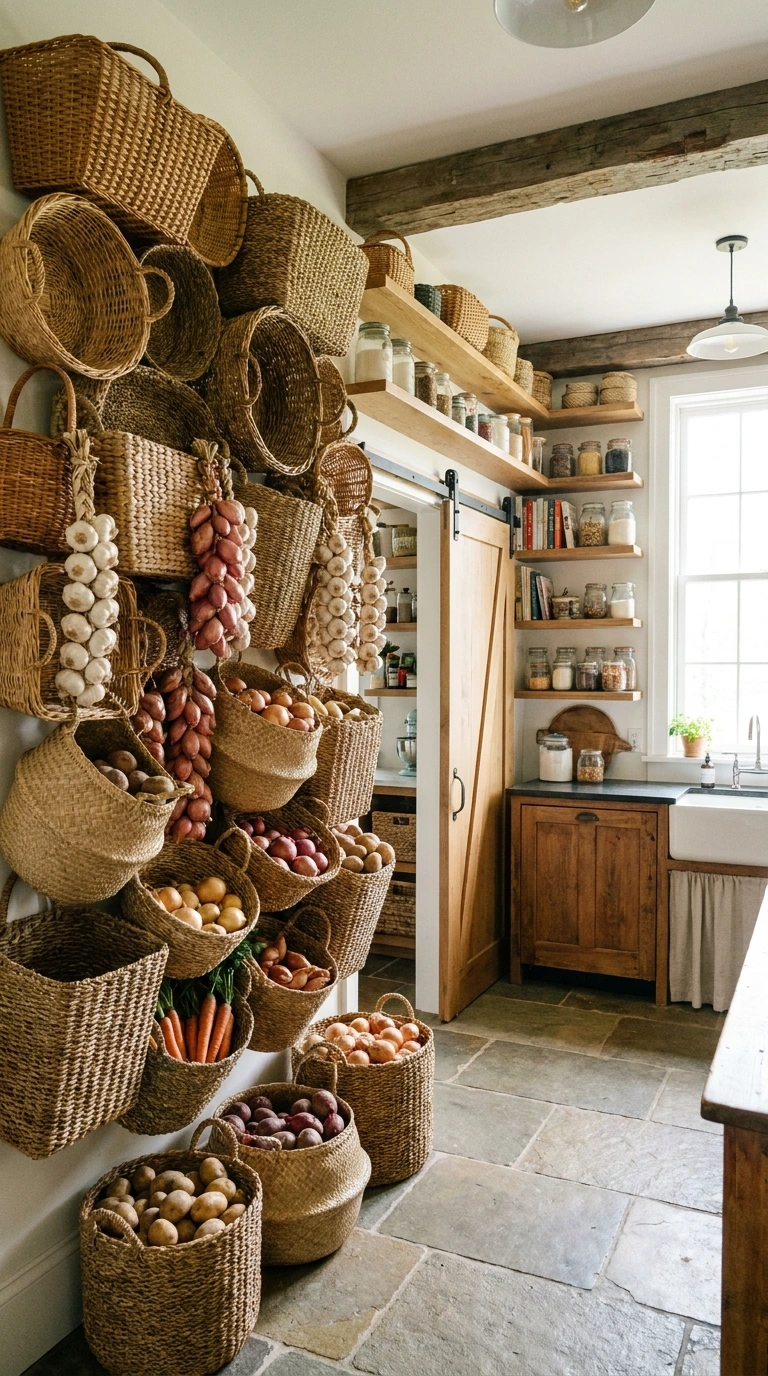
Garlic, ginger, and other root vegetables need ventilation just like onions and potatoes, and a solid drawer or sealed bin speeds up spoilage. A small wall-mounted grid of woven baskets keeps them off the shelf entirely, out of the way, and getting the airflow they need to last.
Group two or three baskets in a simple grid pattern for the wall, rather than a single large one, since it is easier to sort produce types once they are split across separate baskets.
Bringing It All Together
A well organized pantry does not happen from one big cleaning weekend. It comes from a system that keeps working long after the labels are fresh and the jars are full. Start with the zones that solve your biggest daily frustration, whether that is a chaotic snack shelf or cans hiding in the back, and build outward from there.
You do not need every idea on this list to see a difference. A set of matching canisters and a few labeled baskets can transform how a pantry feels within a single afternoon. Add lighting, risers, and finishing touches over time, and let the system grow as your kitchen habits do.
The best pantries are not the ones that look perfect on day one. They are the ones that stay easy to use on day two hundred.