25 Best Bedroom Lighting Ideas: Lamps and Fixtures for Every Aesthetic

Introduction
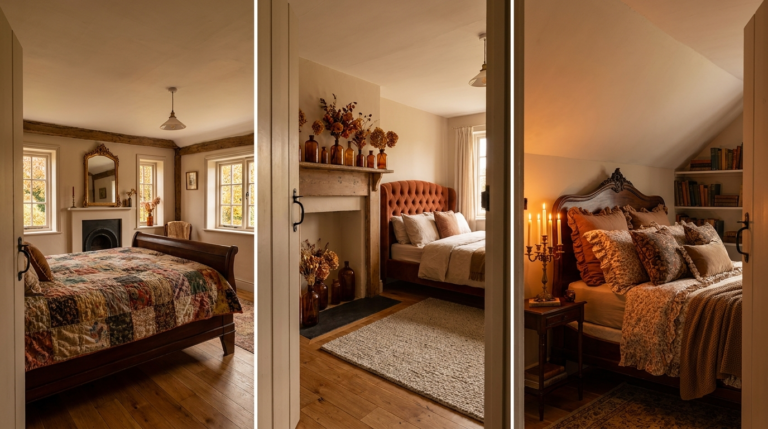
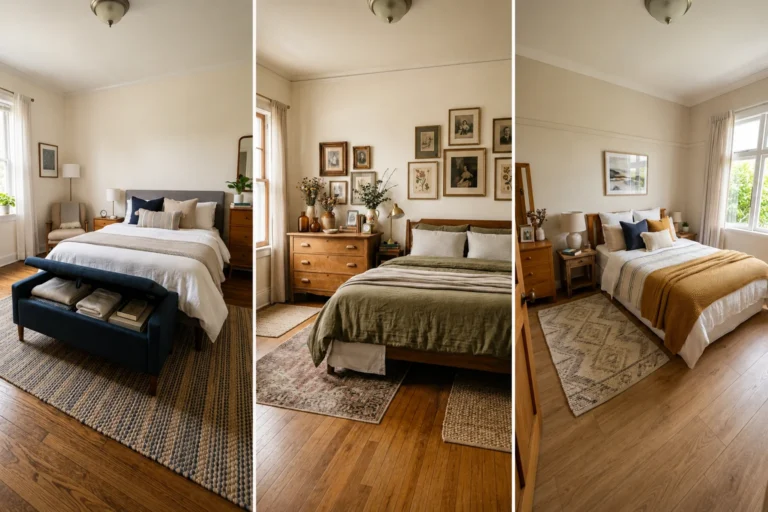
If your bedroom looks fine during the day but feels somehow uncomfortable once night falls, lighting is very often the culprit. A single bright overhead fixture, the wrong bulb temperature, or a lamp positioned in the wrong spot can quietly work against the calm, restful atmosphere a bedroom is meant to provide, even when the furniture and decor are otherwise beautifully chosen.
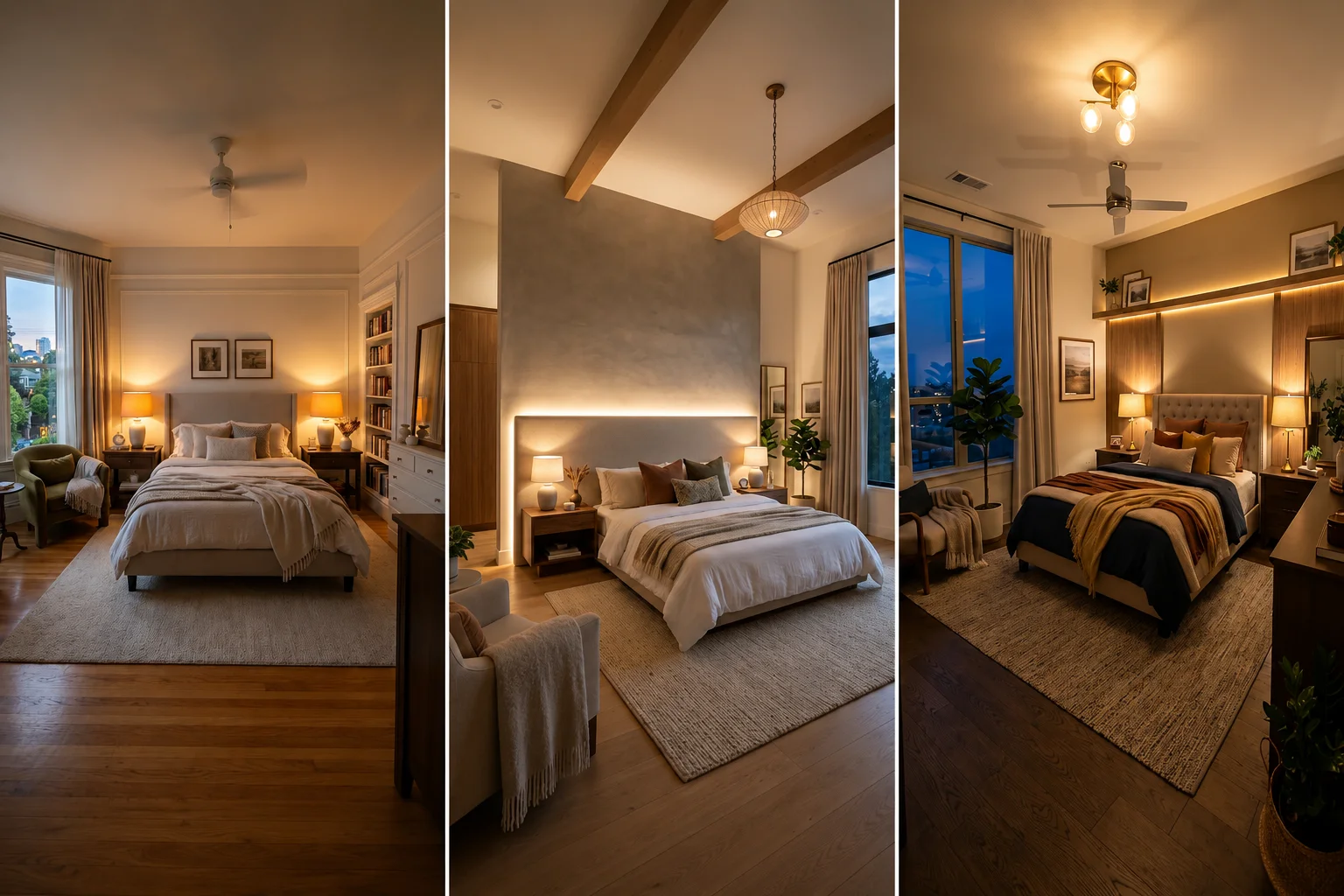
Good bedroom lighting comes down to layering three distinct types, ambient, task, and accent, rather than relying on any single source. Below are 25 lighting ideas covering lamps, sconces, pendants, and ceiling fixtures suited to nearly every bedroom aesthetic, from minimalist and modern to vintage and biophilic.
Pro Tip: Before shopping for any new fixture, identify which of the three lighting categories your bedroom is currently missing: ambient (overall illumination), task (focused light for reading or dressing), or accent (highlighting a specific feature). Most rooms that feel “off” at night are missing at least one of these layers entirely.
1. A Classic Pair of Table Lamps
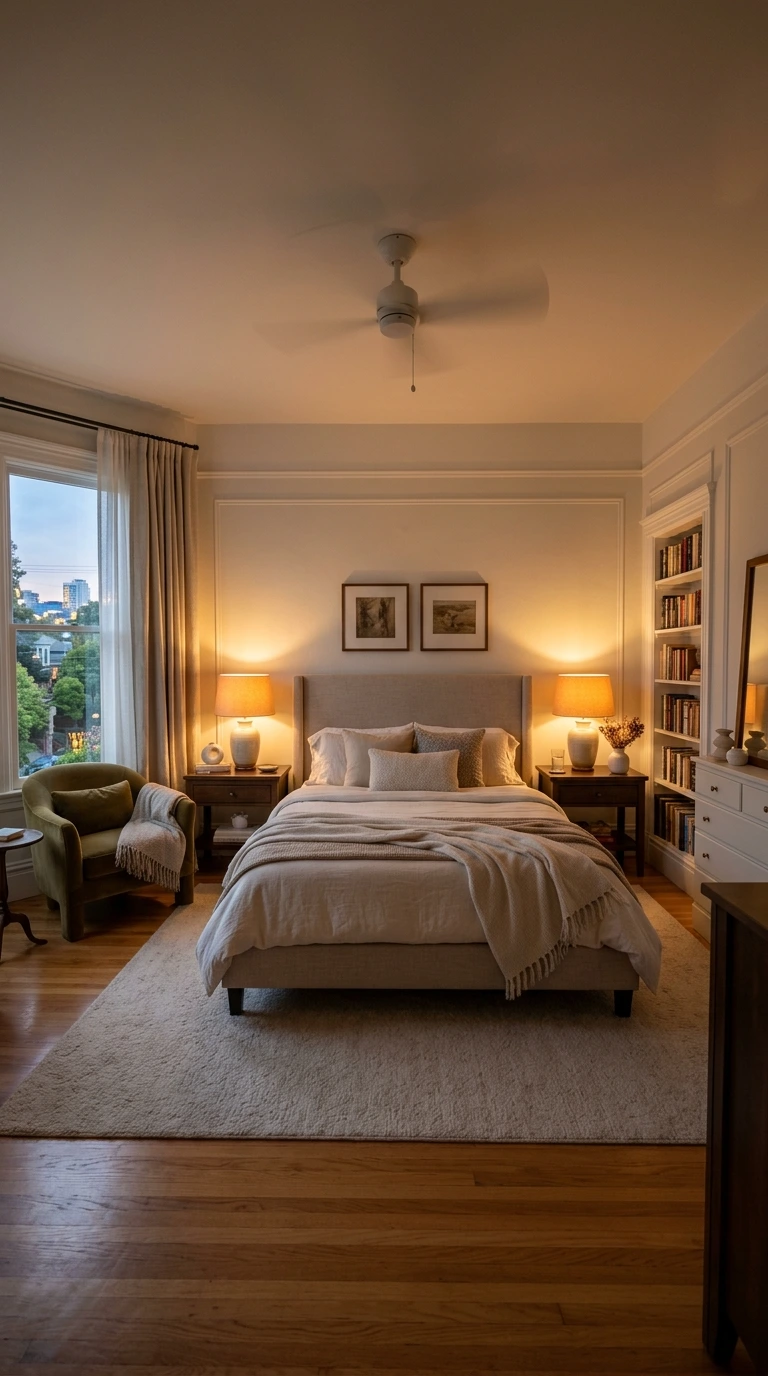
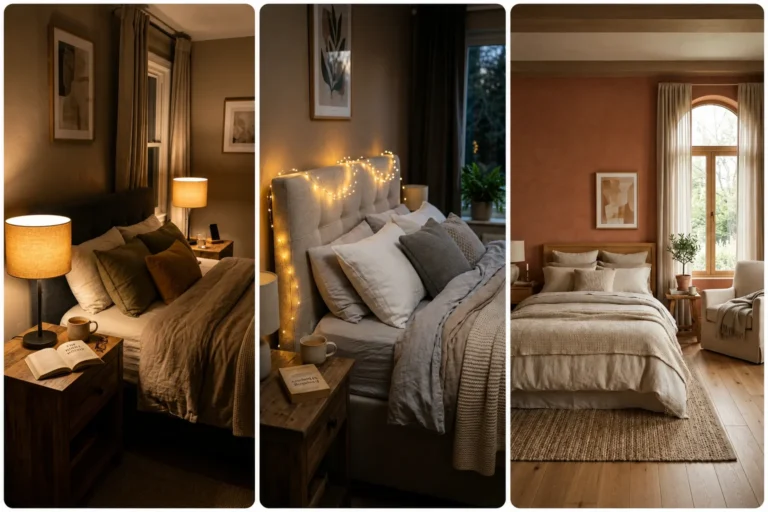
A matching pair of table lamps positioned on either side of the bed remains one of the most reliable, universally flattering bedroom lighting choices available. The symmetry alone creates an immediate sense of calm and balance before either lamp is even switched on.
Choosing lamps with warm-toned, textured shades keeps this classic setup feeling current rather than dated. This arrangement suits nearly every aesthetic, from traditional to modern, making it a safe and versatile starting point for anyone unsure where to begin.
2. A Sculptural Bedside Lamp for a Minimalist Look
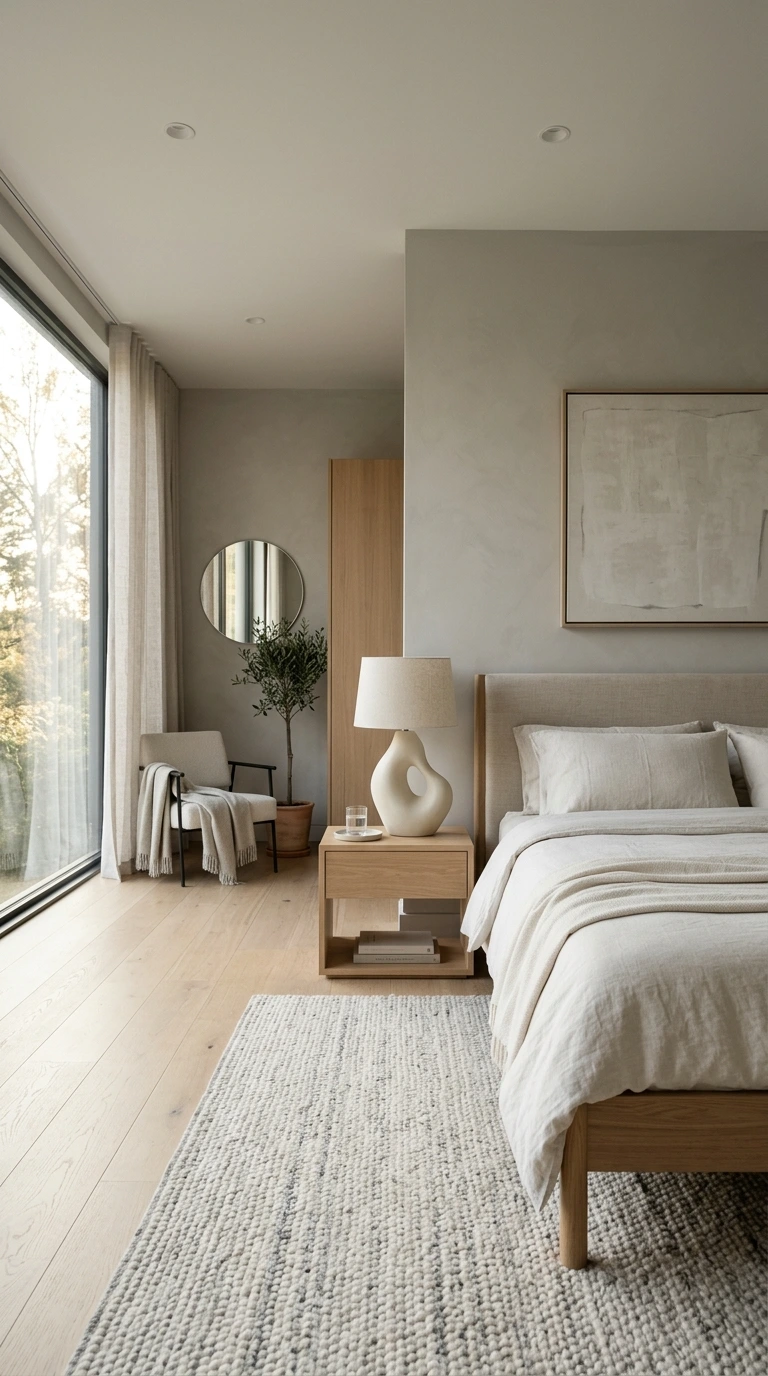
For a more minimalist or modern bedroom, a single sculptural lamp with a distinctive shape or matte finish can serve as both functional lighting and a genuine design statement. Its restrained form fits naturally into a room already built around clean lines and simplicity.
Choosing a lamp in a matte finish with a soft, diffused glow reinforces the calm, understated quality this aesthetic depends on. This piece works particularly well when the rest of the room stays similarly tonal, letting the lamp’s form speak without competing for attention.
3. Pendant Lighting Beside the Bed
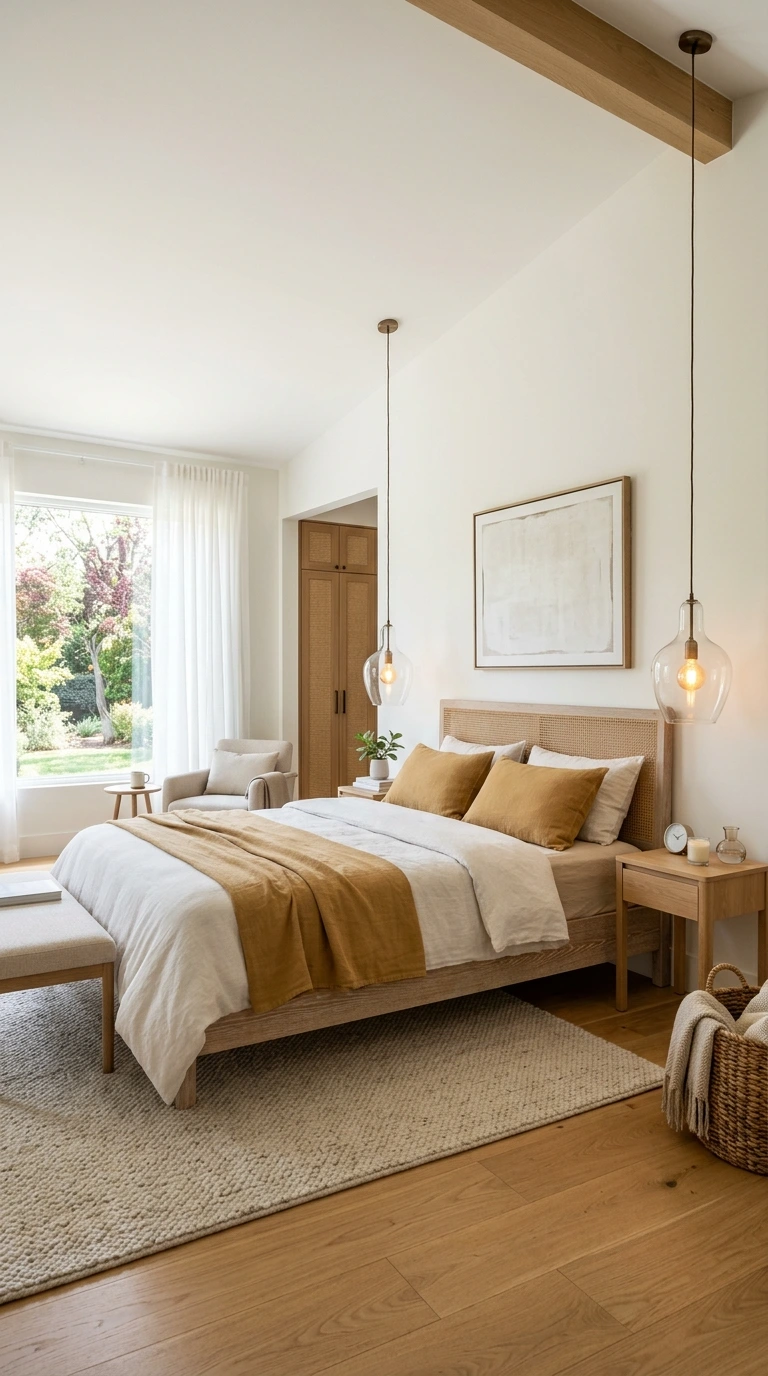
Hanging pendant lights on either side of the bed instantly feels more modern than traditional table lamps, while also freeing up valuable nightstand surface space. Clear glass pendants in particular add a light, airy quality that keeps the bedside area feeling uncluttered.
This option works especially well for bedrooms with limited nightstand surface or a smaller overall footprint. Positioning the pendants at a consistent height on both sides reinforces the same sense of symmetry a matching lamp pair achieves.
4. Wall Sconces Flanking the Headboard
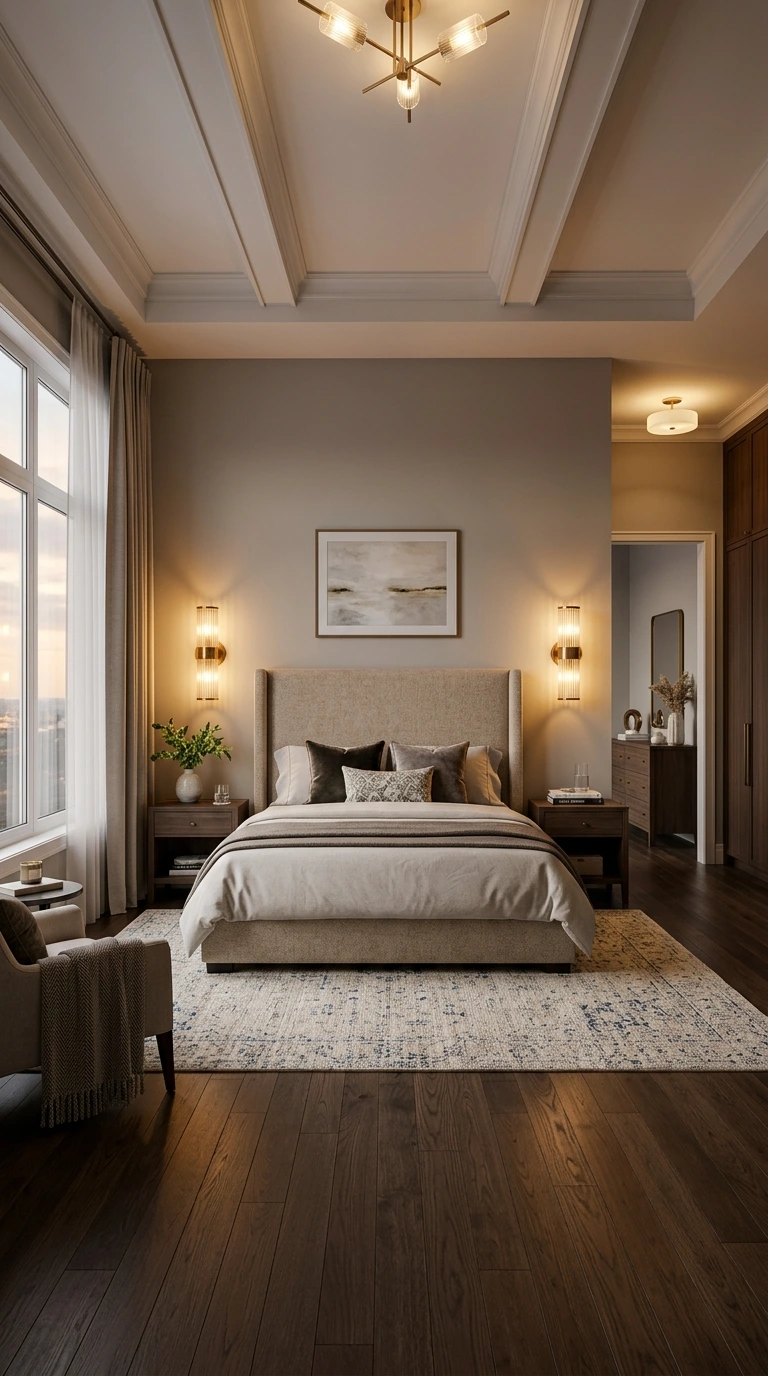
Wall-mounted sconces on either side of the headboard provide reading light without occupying any nightstand or floor space at all, making them a smart choice for smaller bedrooms. This detail also reads as a genuine architectural feature rather than a purely functional add-on.
Choosing sconces that produce a contained beam or a soft glow through a diffuser, rather than an exposed bulb, keeps the light feeling considered and gentle. This option suits both minimal modern and warmer, more traditional bedroom styles depending on the fixture’s finish.
5. Swing-Arm Reading Sconces
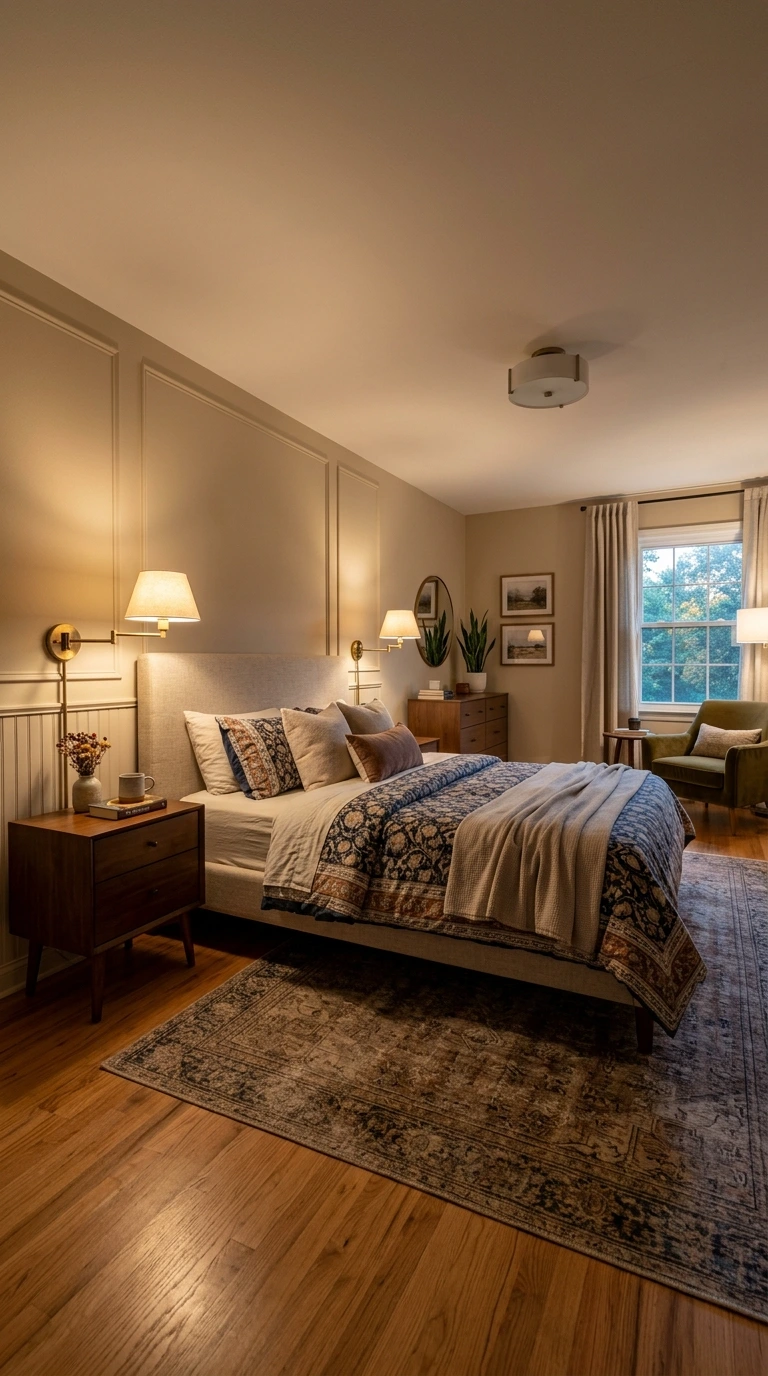
A swing-arm sconce mounted near the headboard lets you adjust the light’s exact direction, aiming it precisely at a book without brightening the entire room. This detail is especially useful for households where one partner wants to read while the other is ready for sleep.
Choosing a sconce with both a swinging arm and a rotating head maximizes this directional flexibility. This option works particularly well in bedrooms without much available nightstand space, since the light source lives entirely on the wall.
Warning: Reading sconces installed too close to the pillow can shine directly into the eyes rather than onto the page. Position and angle the fixture carefully so the light illuminates reading material without causing glare or discomfort while lying down.
6. A Crystal Chandelier as a Ceiling Statement
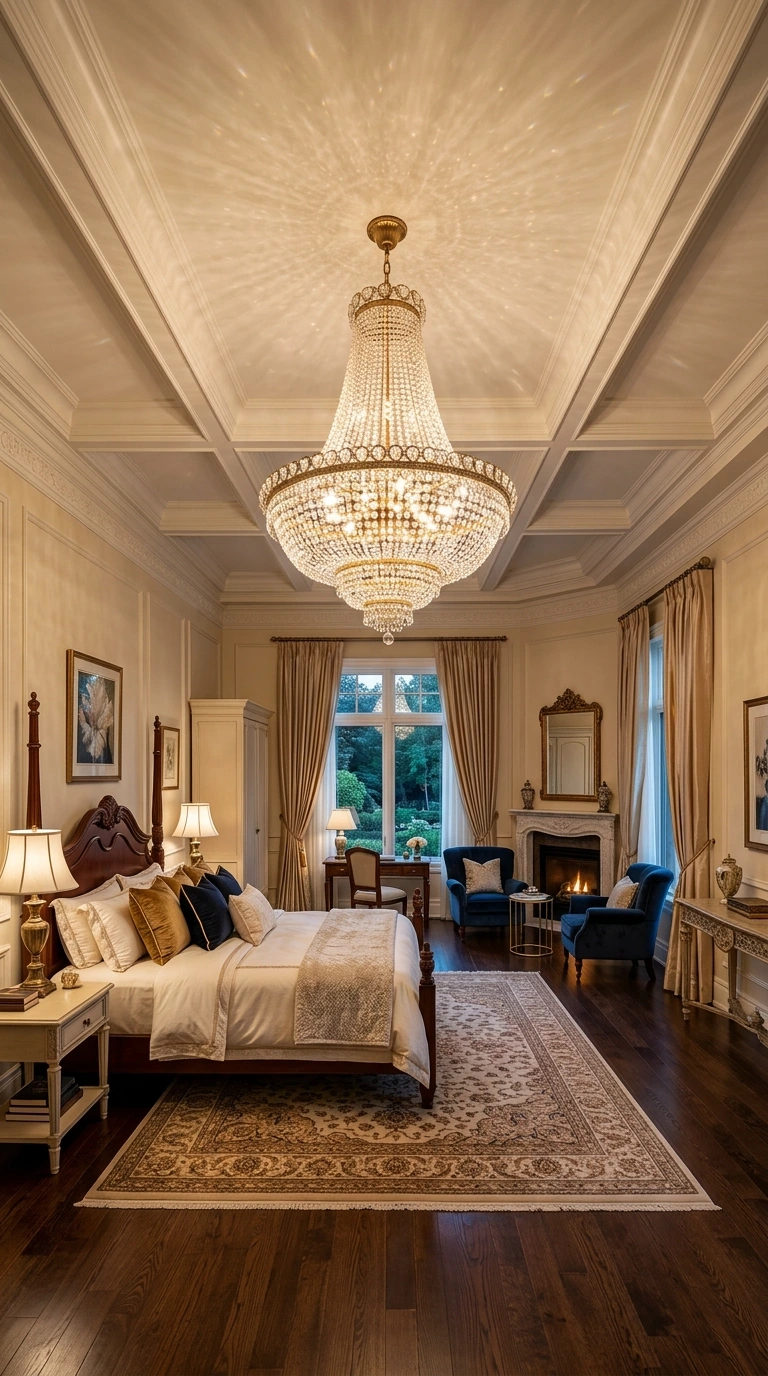
A crystal chandelier scatters light across the room in a soft, shimmering way that feels almost magical, particularly in a more traditional or glamorous bedroom. When the ceiling fixture carries this much visual weight, keeping bedside lighting understated allows the contrast to genuinely shine.
Pairing a dramatic chandelier with warm bulbs prevents the fixture from feeling harsh or overly bright once evening falls. This approach works best when the rest of the room’s lighting stays deliberately minimal, letting the chandelier remain the clear visual centerpiece.
7. A Sculptural LED Chandelier as Art
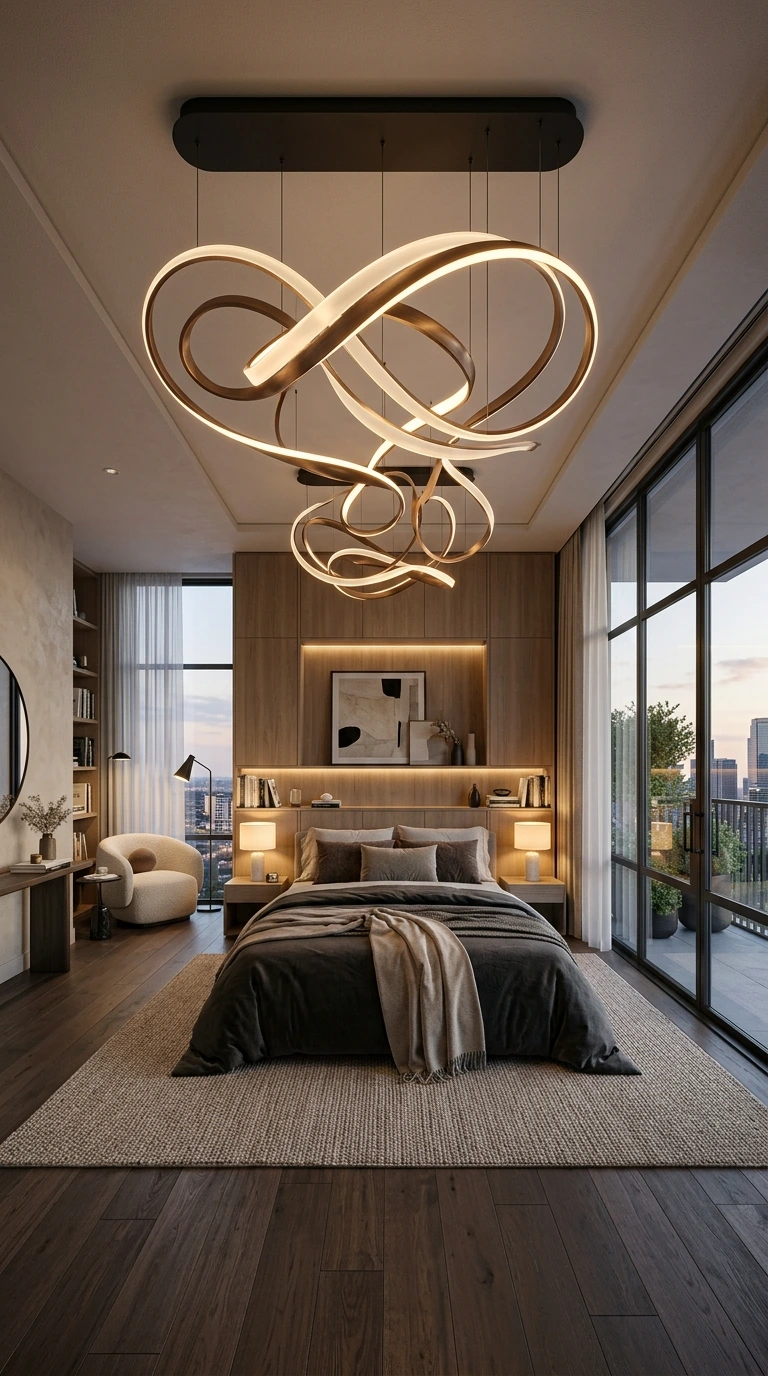
Beyond traditional crystal designs, a fluid, sculptural LED chandelier that twists overhead like a glowing ribbon adds movement and modern energy without overwhelming the space beneath it. This fixture essentially becomes the room’s art piece rather than a purely functional light source.
Choosing a design that still emits a soft, warm glow, despite its bold sculptural shape, keeps the fixture feeling inviting rather than clinical. This option suits contemporary or design-forward bedrooms looking for a genuine conversation piece overhead.
8. A Lantern-Style Ceiling Fixture

A lantern-style pendant brings a hint of rustic charm to the ceiling while still feeling clean and current, particularly when paired with warm bedside lamps and a richer wall color. This fixture suits a cozy, lodge-inspired aesthetic especially well.
The combination of a lantern overhead with warm table lamps creates a naturally layered glow that makes the whole room feel grounded and comfortable. This detail works particularly well in bedrooms already leaning into darker, moodier wall colors.
9. Cove Lighting Around the Ceiling
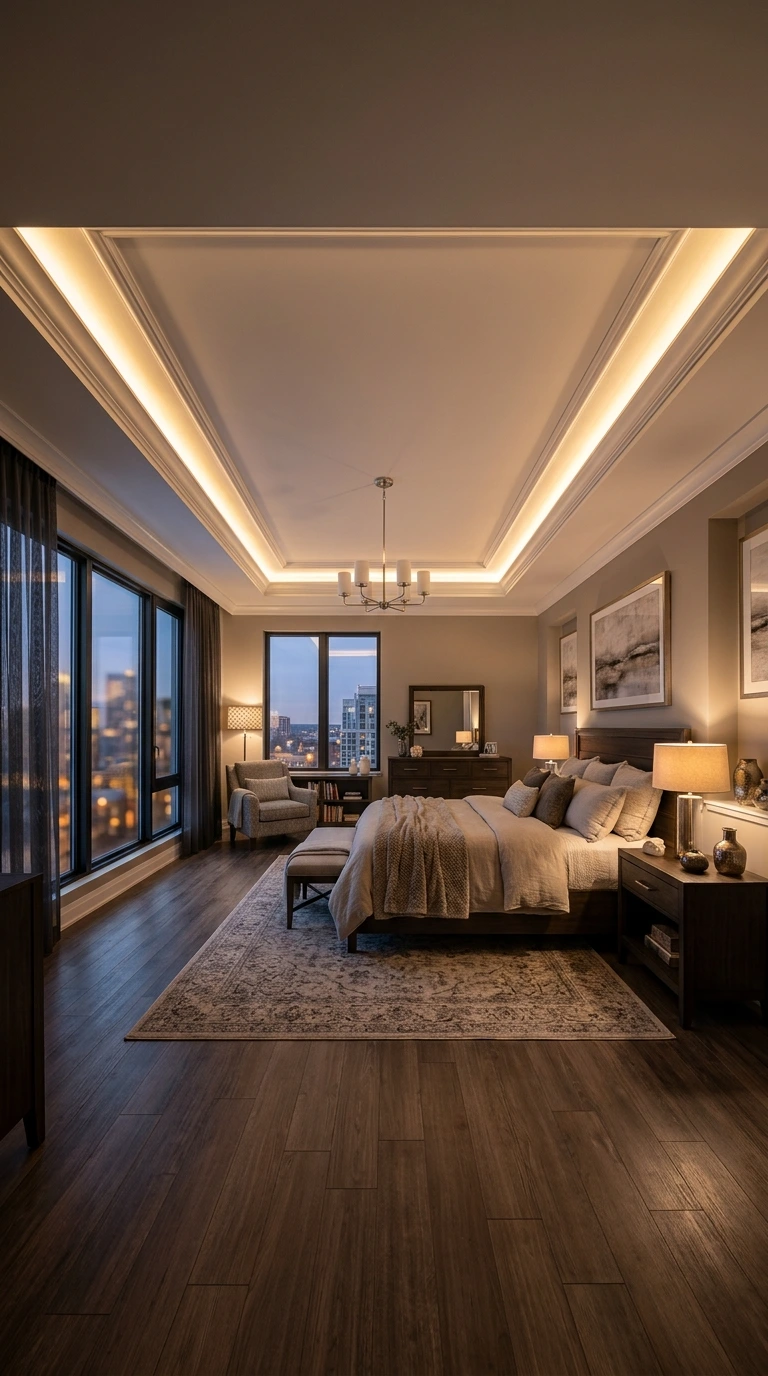
Recessed cove lighting installed around the ceiling’s perimeter creates a soft, indirect glow that wraps the entire room in warmth without any single fixture drawing attention to itself. This technique works especially well combined with warm wall sconces for a genuinely enveloping atmosphere.
This approach lets the lighting work with the room’s architecture rather than competing against it, particularly in spaces with interesting wall paneling or textured finishes. Cove lighting is a bigger installation commitment than a lamp or pendant, but it delivers a distinctly polished, professionally designed result.
Important: Cove lighting requires careful planning during construction or renovation, since the channel needs to be built into the ceiling structure itself. This option is best considered during a larger renovation project rather than added as a simple retrofit.
10. Recessed Downlights for Ambient Illumination
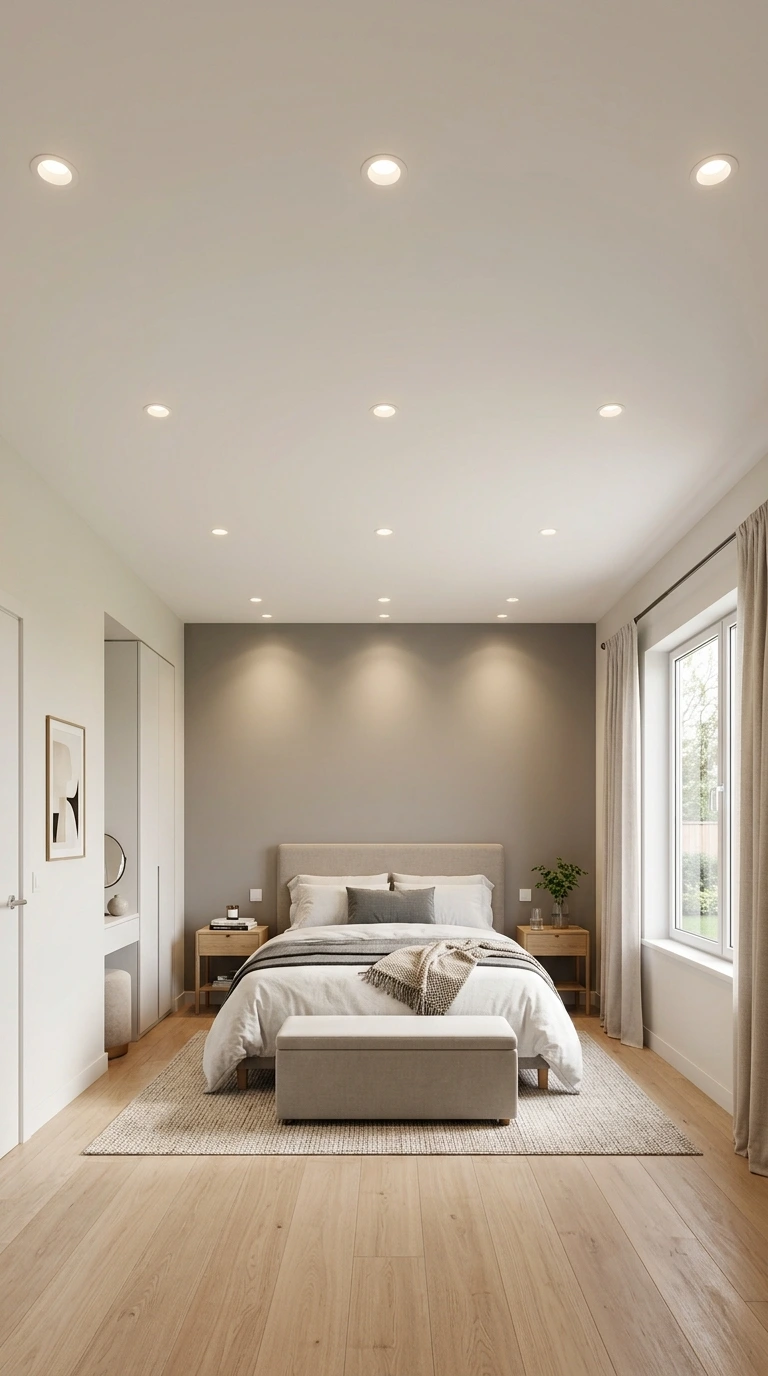
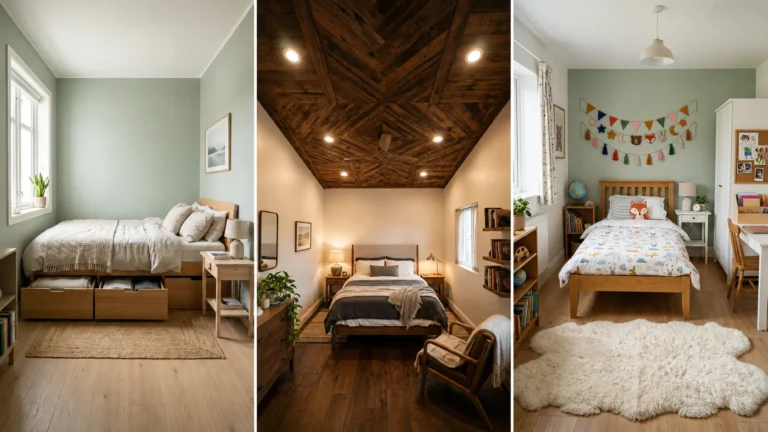
Recessed downlights installed directly into the ceiling provide clean, even ambient light without the visual bulk of a hanging fixture. This option works particularly well in bedrooms with lower ceilings, where a chandelier or pendant might feel oppressive.
Pairing recessed lighting with a dimmer switch allows the room to shift from bright, functional daytime light to a softer evening glow. This detail keeps the ceiling feeling open and uncluttered, which matters given how much time is spent looking upward while lying in bed.
11. A Flush-Mount Fixture for Lower Ceilings
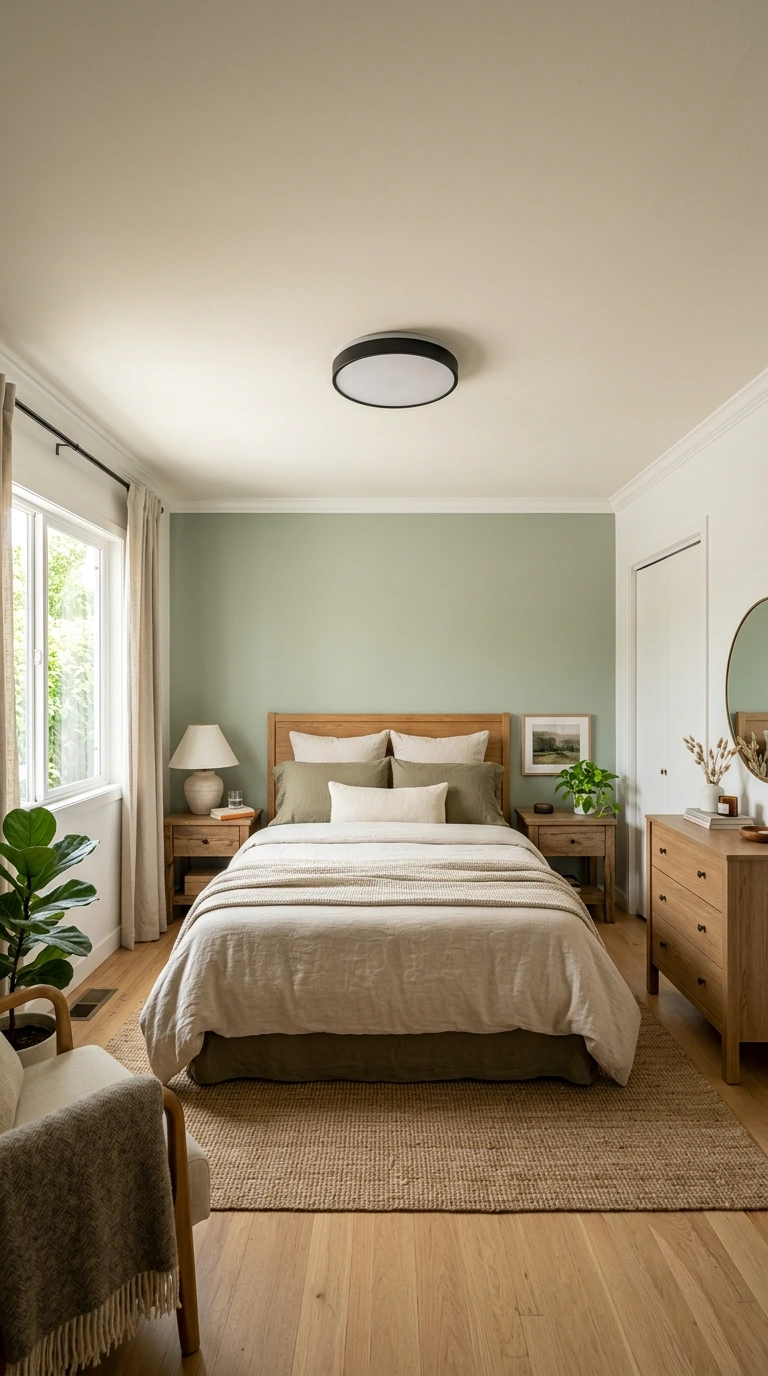
A flush-mount ceiling fixture sits close against the ceiling itself, delivering ambient illumination without the vertical drop of a pendant or chandelier. This option suits bedrooms with lower ceiling height where a hanging fixture would feel visually cramped.
Choosing a flush-mount fixture with an interesting shape or texture, rather than a purely utilitarian dome, still allows for genuine design character even within this more compact format. This detail works well across a range of aesthetics, from modern minimalist to warm contemporary.
12. A Woven Rattan Pendant Shade
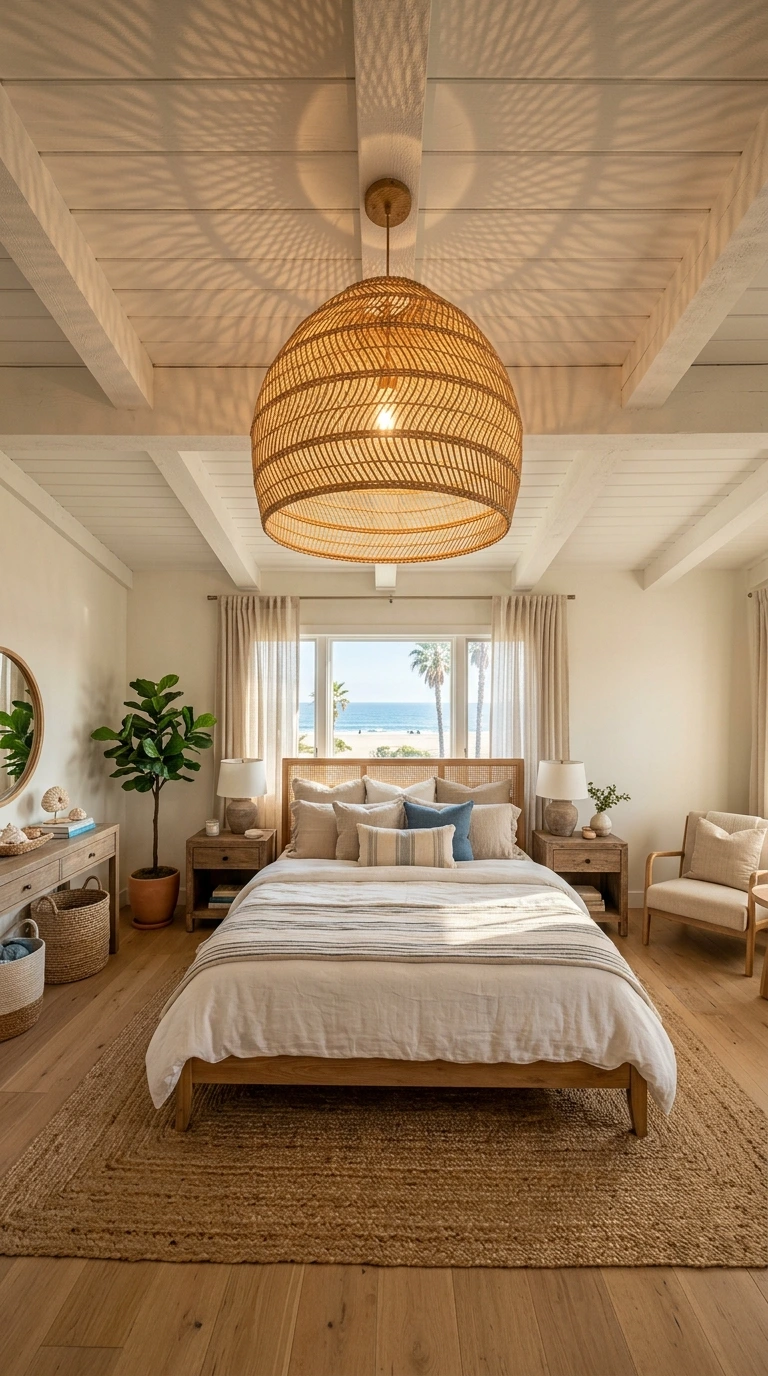
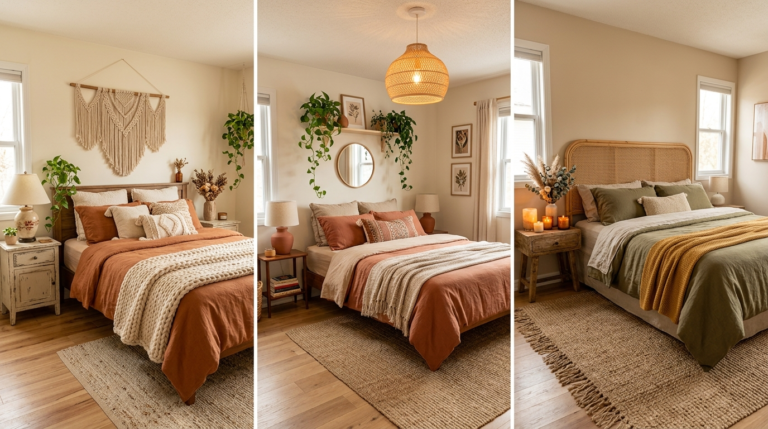
A pendant fixture with a woven rattan shade brings natural texture and a warm, dappled glow that suits the broader biophilic design movement shaping much of current bedroom styling. Light passing through the woven material casts a soft, organic pattern across nearby surfaces.
This option pairs naturally with other natural materials already present in a coastal, boho, or Japandi-inspired bedroom. Choosing a rattan pendant in a size proportional to the room keeps the fixture feeling like an intentional design choice rather than an oversized distraction.
13. A Linen Drum Pendant
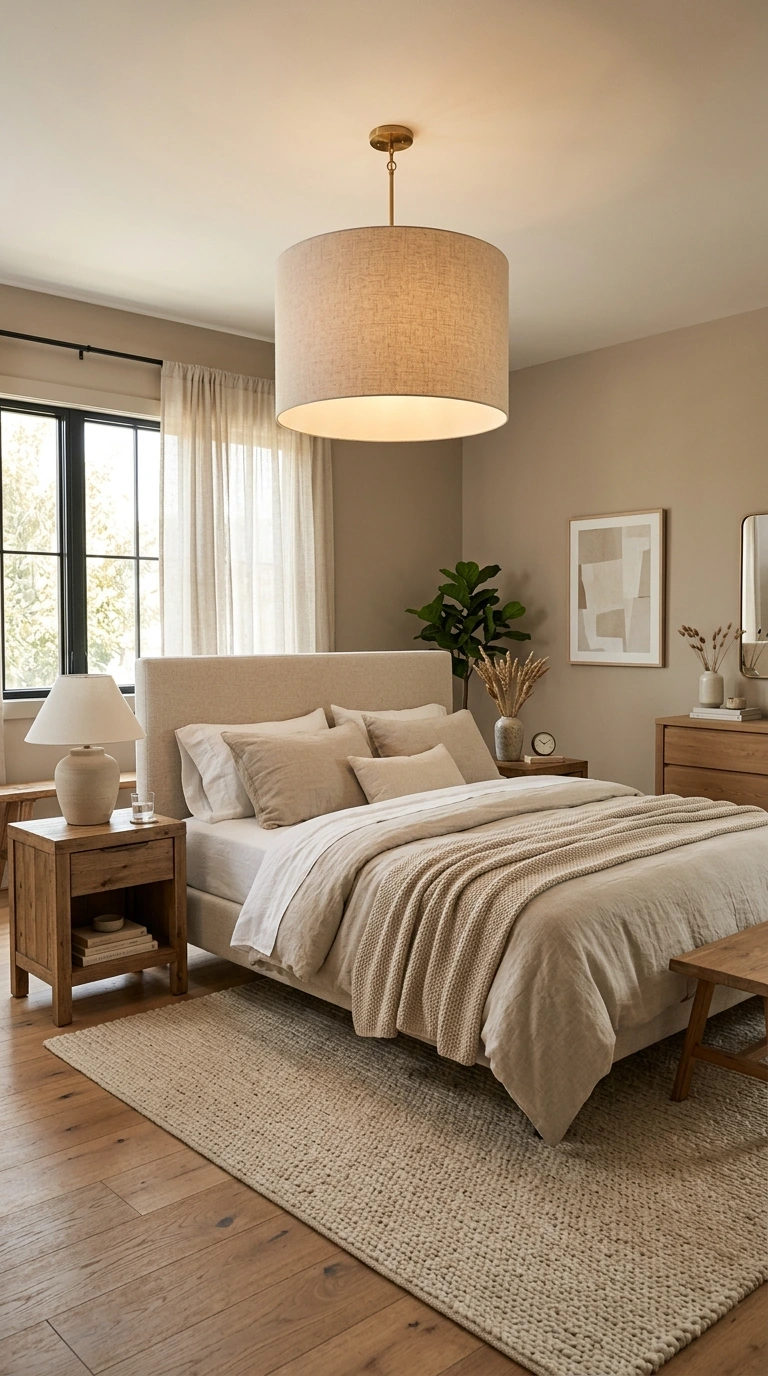
A pendant fixture with a linen drum shade diffuses light evenly and softly, casting a gentle glow that suits nearly any calm, neutral bedroom palette. This fixture reads as understated and elegant rather than overly decorative.
Choosing a linen shade in a color that closely matches your walls keeps the fixture from visually interrupting the room’s overall flow. This option works particularly well in transitional or warm minimalist bedrooms that favor soft, tonal design choices throughout.
14. A Hand-Thrown Ceramic Lamp Base
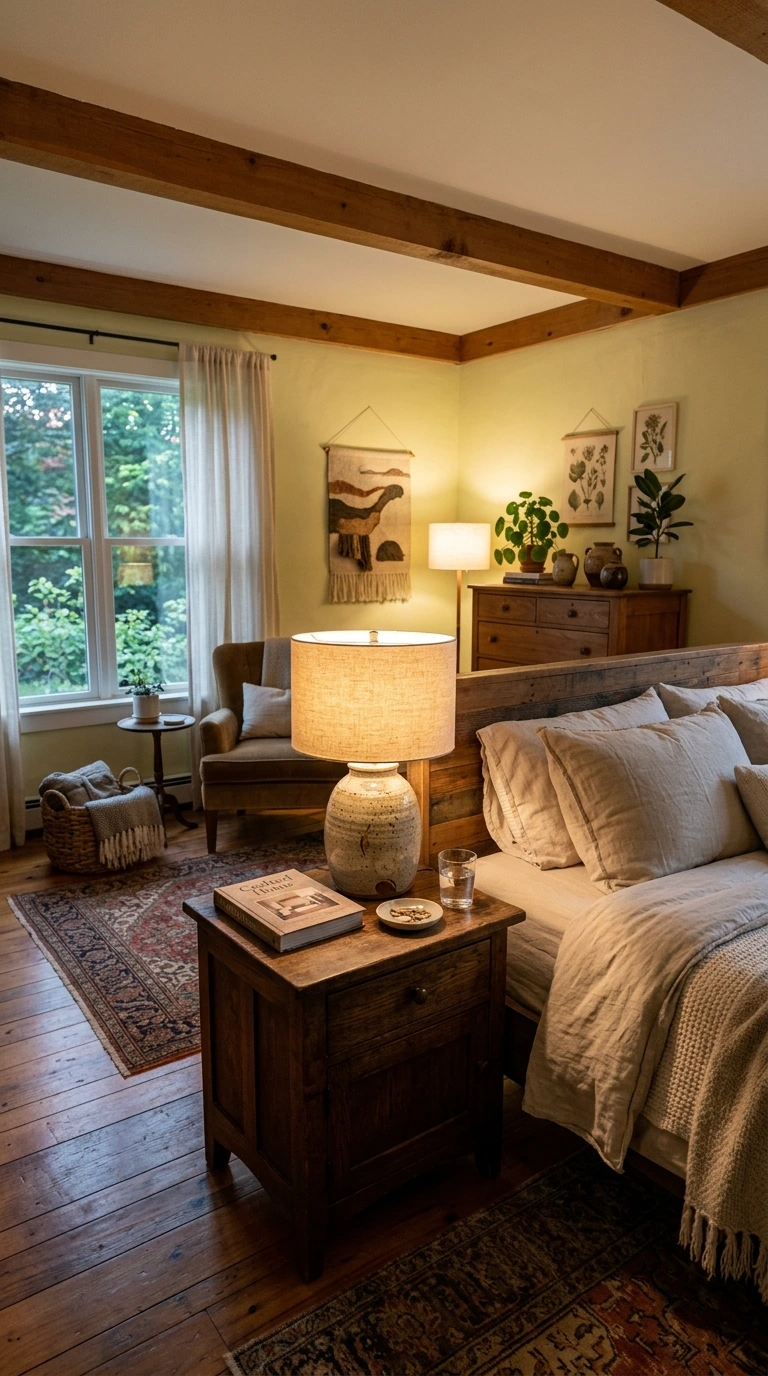
A table lamp with a hand-thrown ceramic base brings genuine handcrafted character and texture that mass-produced lamps can’t fully replicate. Small variations in glaze or shape become part of the piece’s individual charm rather than a flaw.
This option suits bedrooms embracing the broader shift toward artisan, quality-over-quantity decor rather than purely trend-driven purchases. A single well-chosen ceramic lamp often becomes a genuine focal point on its own nightstand.
15. A Driftwood Chandelier
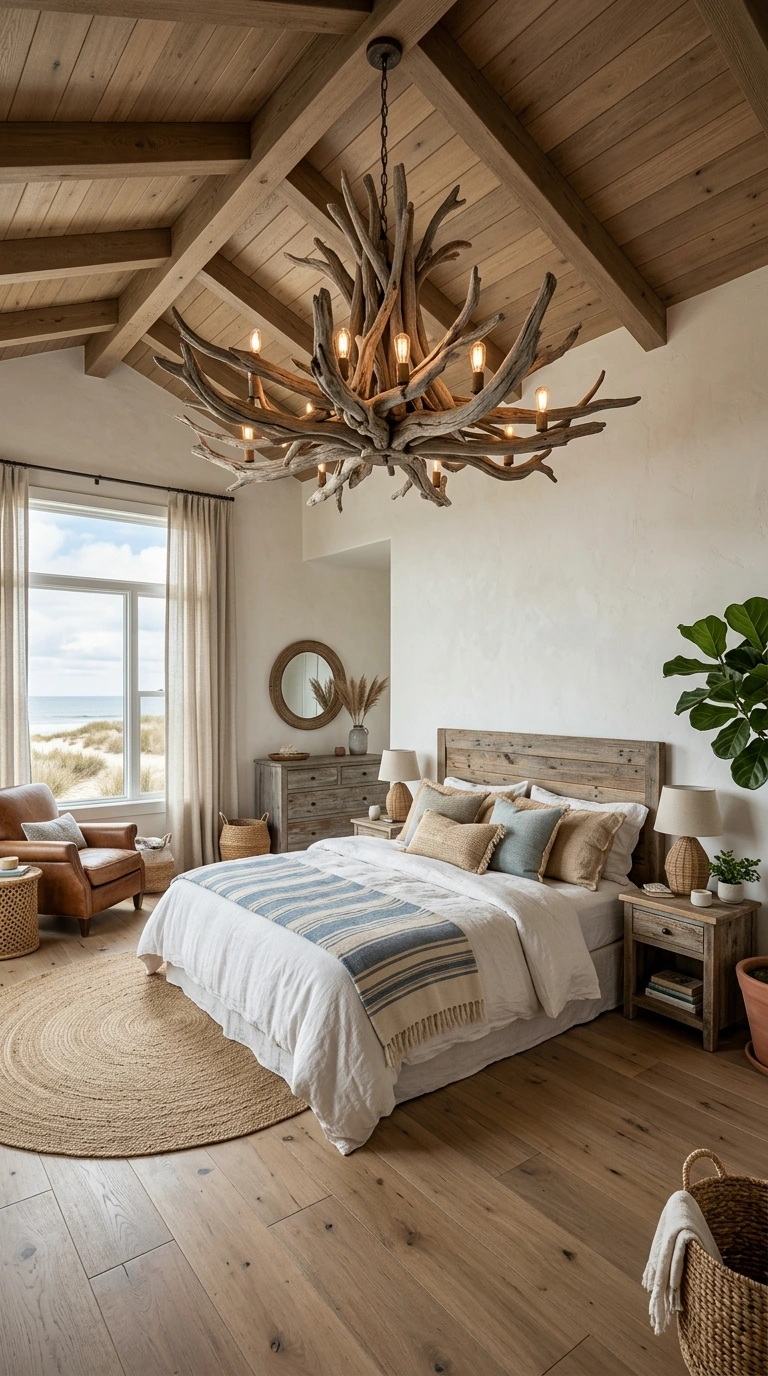
A chandelier crafted from natural driftwood brings organic texture and a distinctly grounded, biophilic quality to the ceiling. This fixture works particularly well in coastal, rustic, or nature-inspired bedroom aesthetics.
Pairing a driftwood chandelier with warm bulbs and simpler surrounding decor lets the natural material’s texture remain the clear visual focus. This option offers a genuinely distinctive alternative to more conventional metal or glass ceiling fixtures.
16. A Stone Accent Lamp
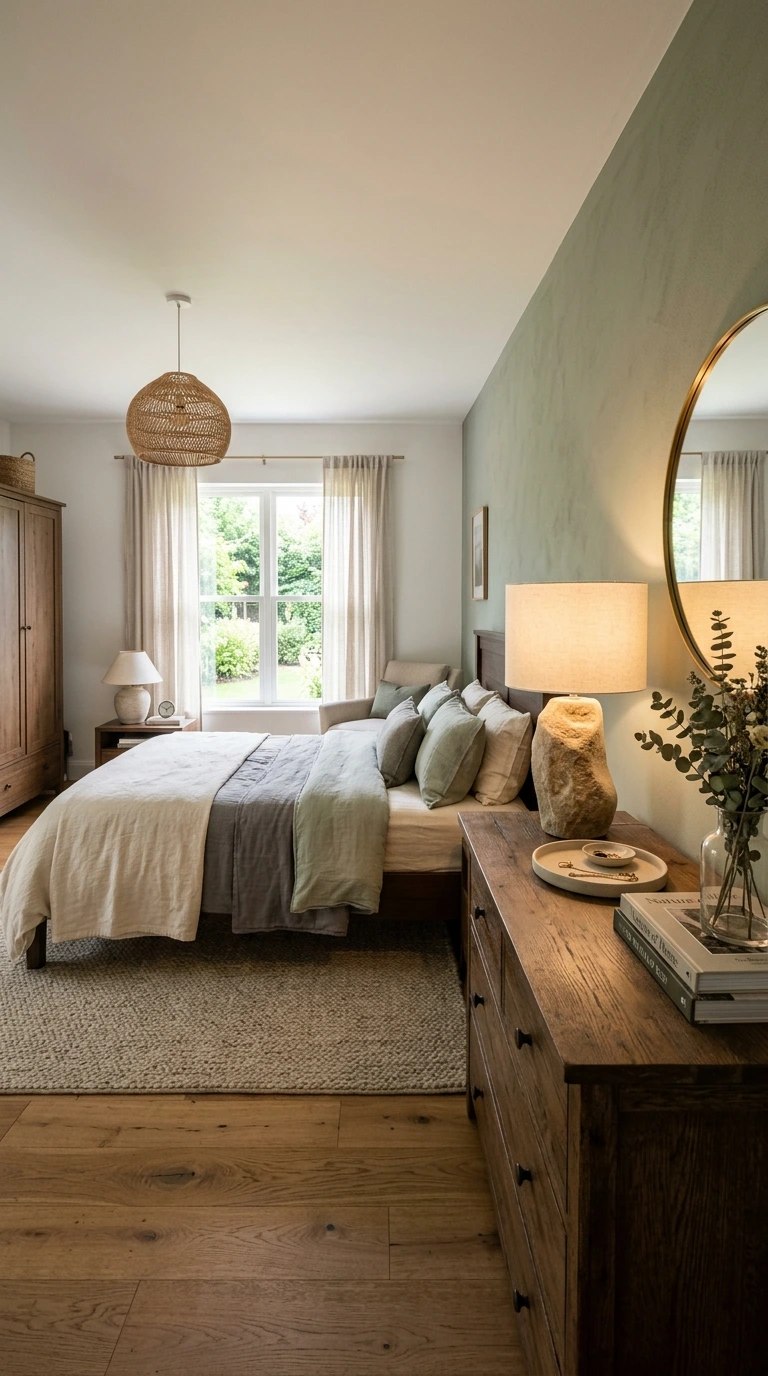
A lamp base crafted from natural stone brings weight, texture, and a quiet, grounded elegance to a nightstand or dresser. This option fits naturally into the broader trend toward tactile, natural materials throughout current bedroom design.
Choosing a stone lamp with a simple, understated shade keeps the material itself as the design focus rather than competing with an equally elaborate shade. This detail works particularly well in bedrooms leaning into a quiet luxury or organic modern aesthetic.
- ✅ Layer at least two of the three lighting types (ambient, task, accent) in every bedroom
- ✅ Choose warm bulbs in the 2700K to 3000K range rather than cooler, harsher tones
- ✅ Balance a dramatic ceiling fixture with understated bedside lighting, or vice versa
- ✅ Position reading sconces carefully to avoid glare directly into the eyes
- ✅ Add a dimmer switch wherever possible for flexible, adjustable mood lighting
17. Smart, App-Controlled Bedside Lamps
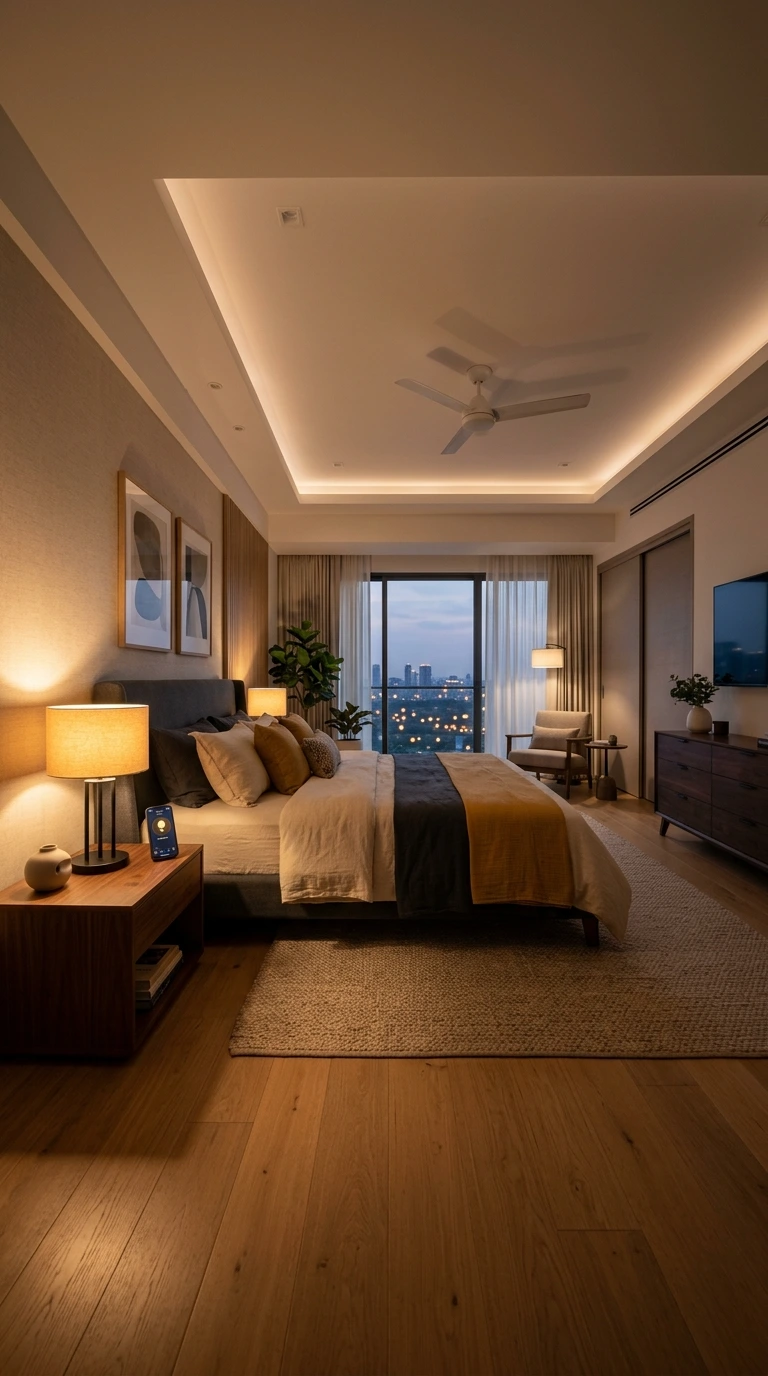
Smart lamps that connect to an app or voice assistant let you adjust brightness and color temperature without getting out of bed, adding genuine convenience to your evening routine. Some models also allow scheduling, automatically dimming as your usual bedtime approaches.
This option suits anyone who wants their lighting to adapt throughout the day without manually adjusting each fixture individually. Choosing a lamp with a reliable, straightforward app avoids the frustration some smart home products introduce when the technology itself becomes more hassle than help.
18. Dimmer Switches for Flexible Mood
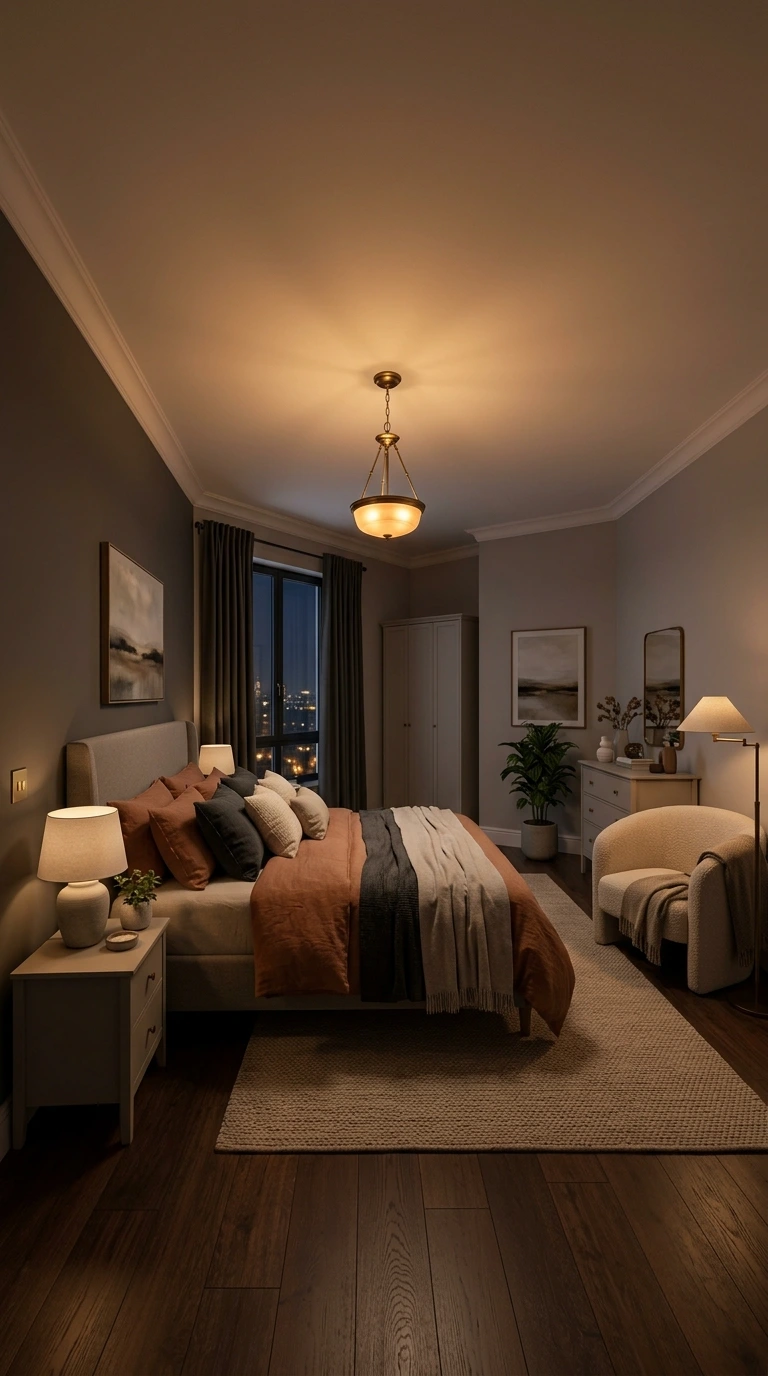
Installing a dimmer switch on your bedroom’s main overhead fixture, or any other hardwired light source, allows you to shift smoothly from bright, functional daytime light to a soft, restful evening glow. This single upgrade meaningfully improves how adaptable a room’s lighting feels throughout the day.
Pairing a dimmer with warm-toned bulbs maximizes the calming effect as bedtime approaches. This relatively small electrical update pays off every single evening, regardless of which specific fixtures or lamps you’re using elsewhere in the room.
19. Built-In Wall Wash Lighting Behind the Headboard
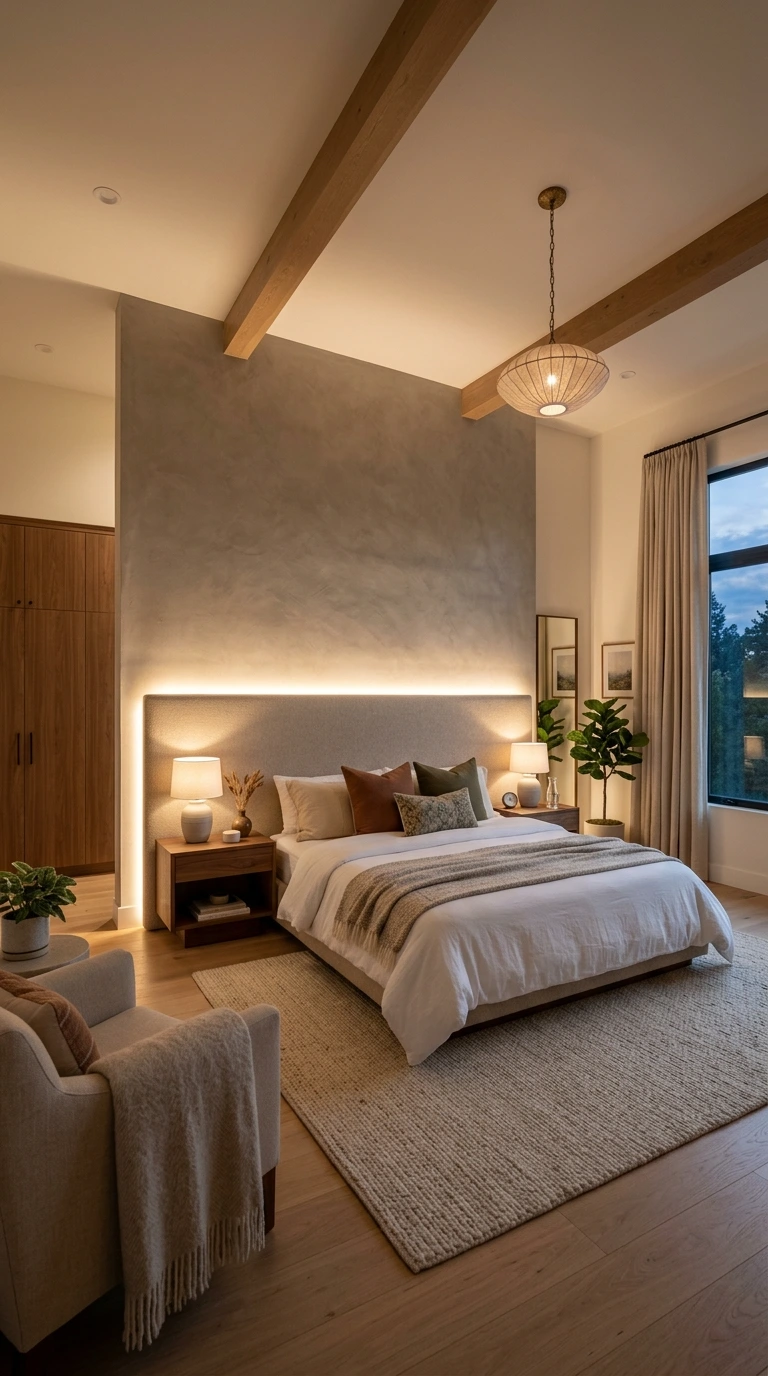
Concealed lighting built directly into the wall behind or around the headboard creates an even, shadow-free glow without any visible fixture at all. This detail changes the entire feel of the room without adding a single new lamp or sconce to the visual composition.
This soft, ambient wash works particularly well for evenings when overhead lighting feels too strong or too bright. This option requires more upfront installation planning than a simple lamp, but it delivers a genuinely seamless, architectural result.
What Type of Lighting Does Your Bedroom Actually Need?
| Lighting Type | Purpose | Common Fixtures |
|---|---|---|
| Ambient | Overall room illumination and mood | Recessed downlights, flush-mounts, chandeliers |
| Task | Focused light for reading, dressing | Bedside lamps, reading sconces, vanity lights |
| Accent | Highlights architectural or design features | Cove lighting, wall wash, sculptural fixtures |
20. A Floor Lamp in a Reading Nook
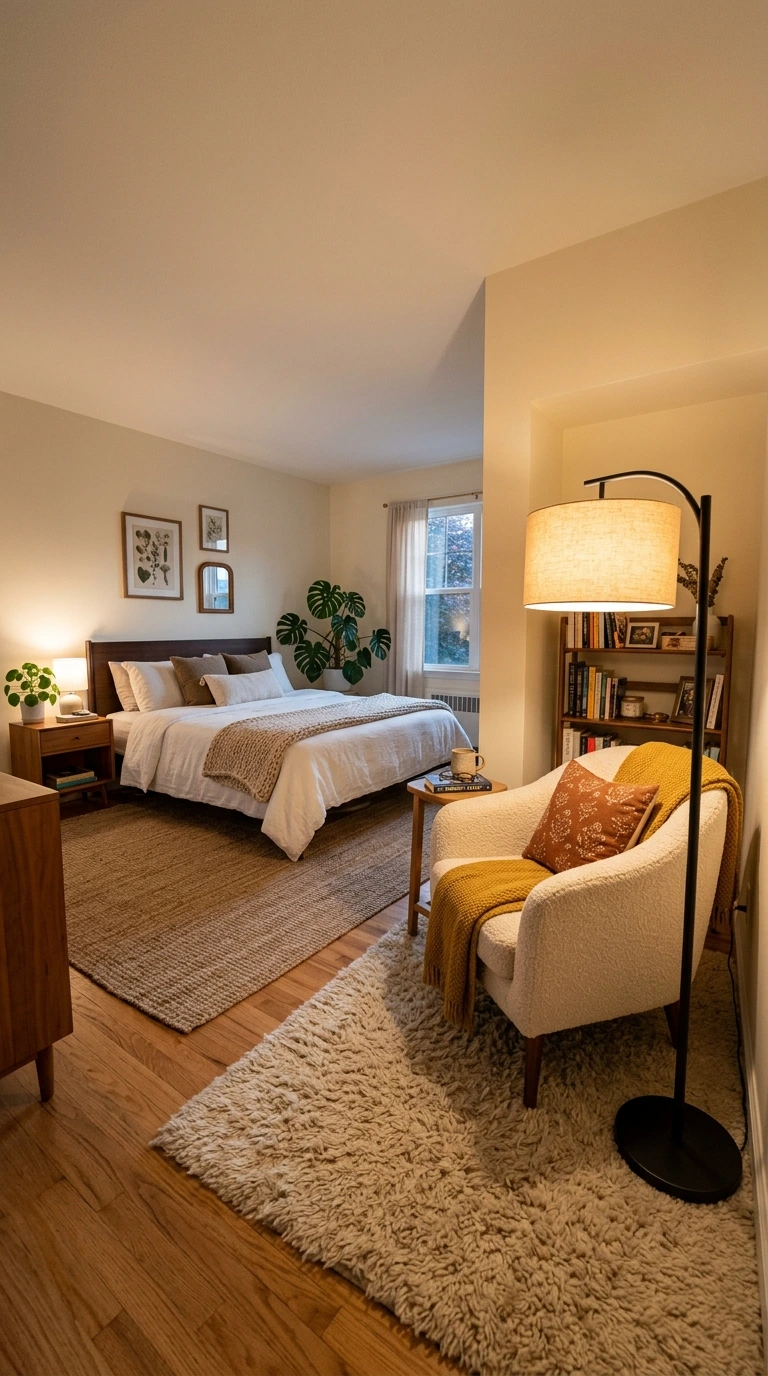
A floor lamp with warm, focused light transforms a corner accent chair into a genuine reading nook, adding a secondary purpose to the bedroom beyond just sleeping. This addition works particularly well positioned beside a boucle chair or a soft rug for an intimate, evening-unwinding atmosphere.
Choosing a lamp with an adjustable head or arm lets you direct the light exactly where needed for reading. This detail proves that even a small, underused corner can become a meaningful part of the room with the right lighting.
21. Vanity Sconces for a Dressing Area
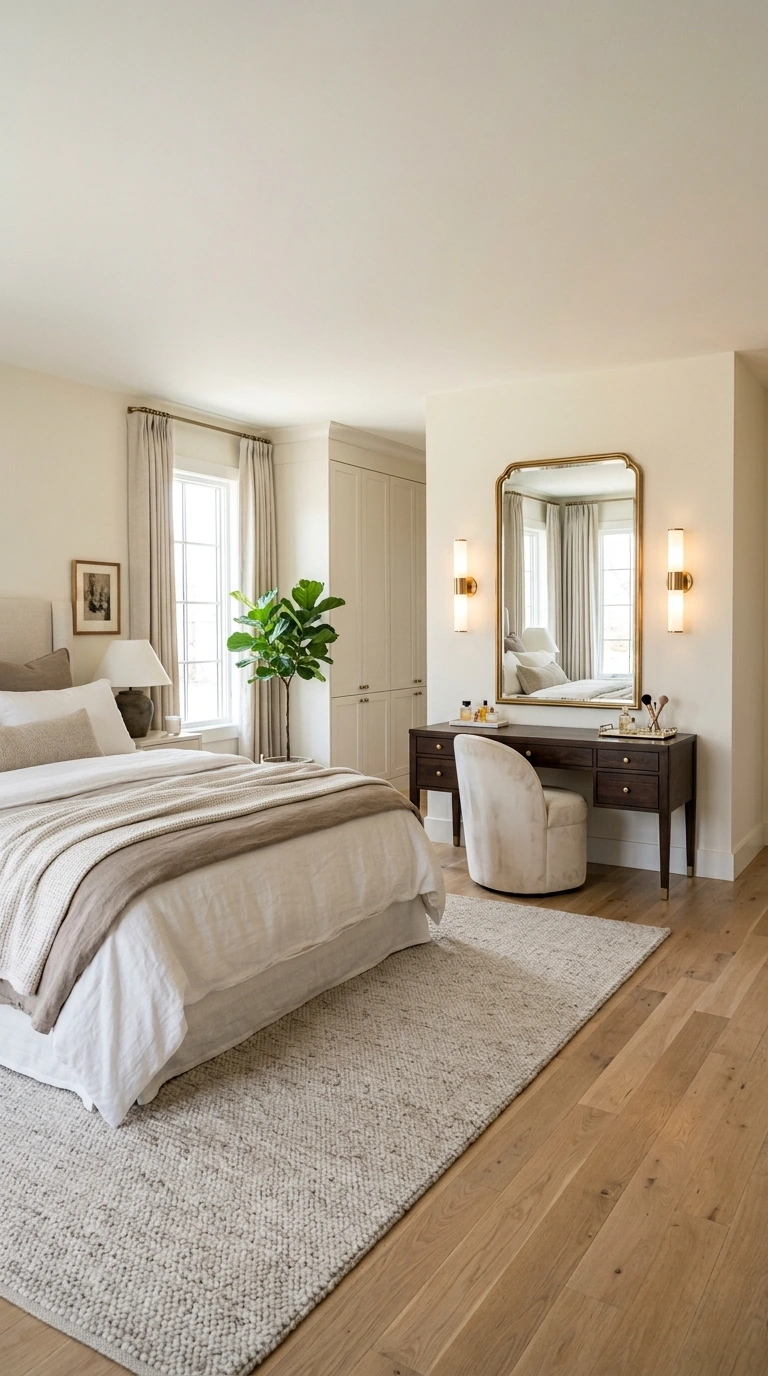
If your bedroom includes a vanity or dressing area, sconces positioned on either side of the mirror provide even, shadow-free light ideal for makeup application or getting ready in the morning. This placement avoids the harsh shadows a single overhead light often creates on the face.
Choosing sconces with a warm, diffused glow rather than a stark, bright bulb keeps this functional area feeling cohesive with the rest of the room’s overall lighting temperature. This detail is especially valuable for anyone who relies on their bedroom for daily grooming routines.
22. Cordless, Rechargeable Table Lamps
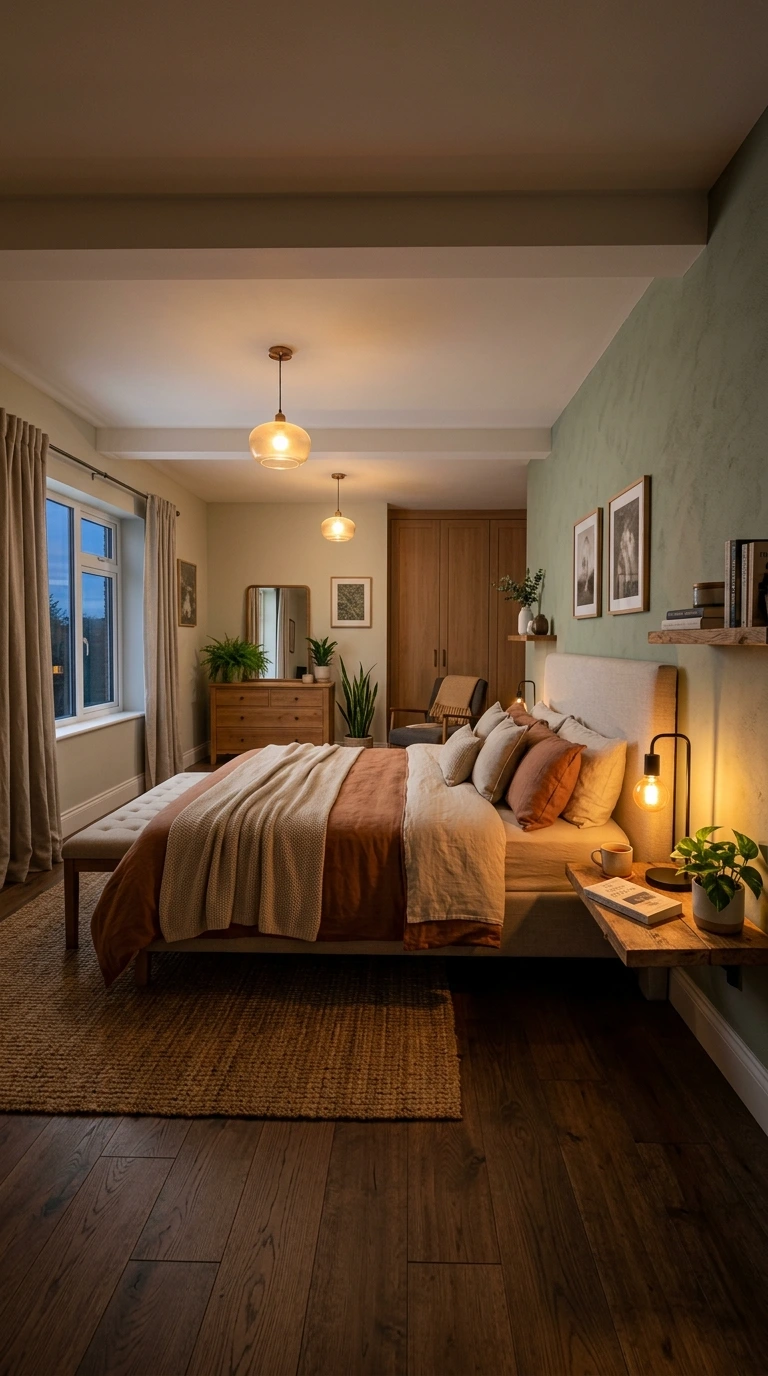
Cordless lamps offer genuine flexibility, letting you reposition lighting anywhere in the room without worrying about outlet placement or visible cords. This solution is particularly useful in bedrooms where furniture arrangement might shift over time, or in rooms with limited wiring access.
Choosing rechargeable options over disposable batteries keeps this solution more sustainable and cost-effective in the long run. This detail also allows you to add a secondary, movable light source wherever one fixed fixture simply isn’t quite enough.
⚠️ Warning: Cordless lamps still require regular charging to remain reliable, and a lamp left uncharged can leave you without light exactly when you need it most. Establish a consistent charging routine, such as recharging during the day while the lamp isn’t in active use.
23. A Globe-Style Lamp for Vintage or Compact Rooms
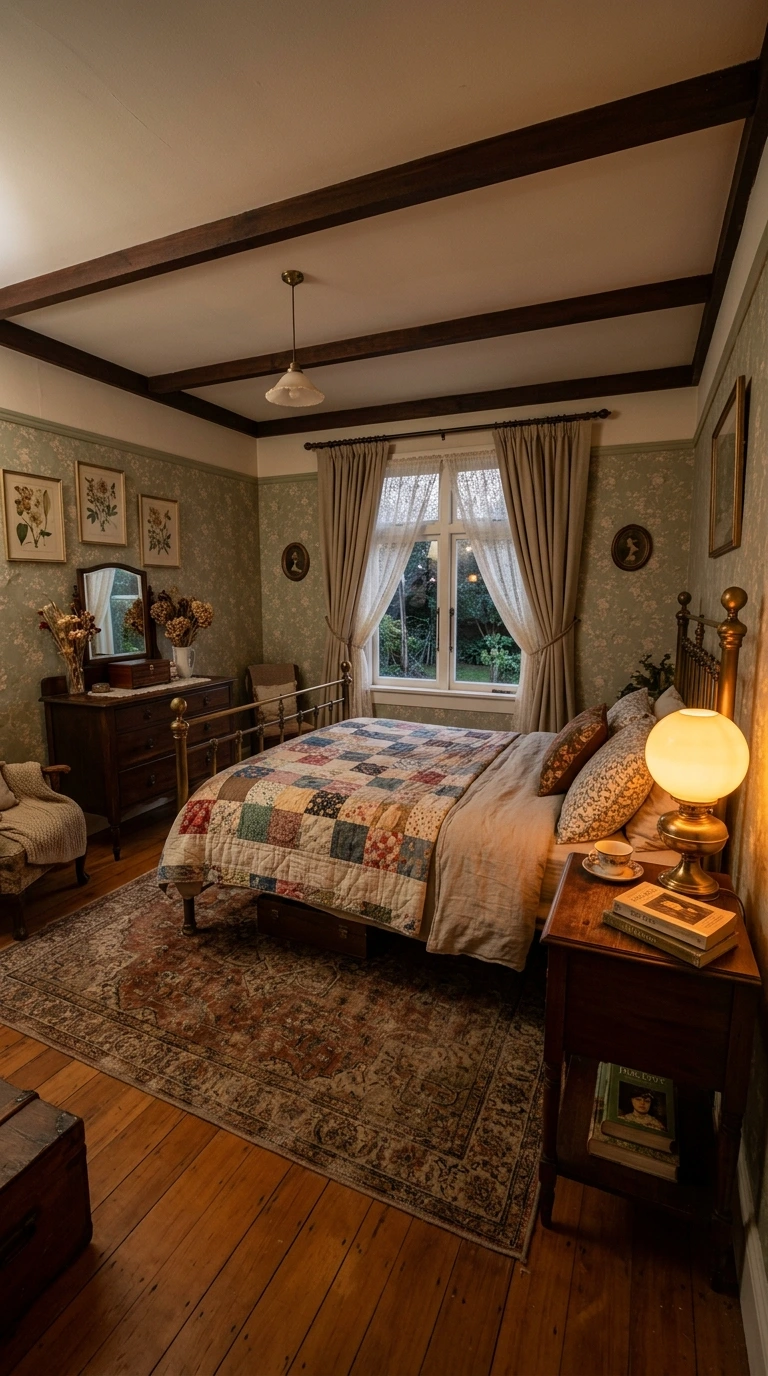
A soft, glowing globe-style lamp brings a gentle, calming quality that suits compact or vintage-styled bedrooms particularly well. Its rounded, diffused light source works well for both ambient mood lighting and light reading.
This lamp style pairs naturally with warm, muted color palettes and softer furniture silhouettes often found in vintage-inspired rooms. Its simple, unobtrusive shape also makes it a versatile choice for smaller nightstands with limited surface space.
24. Matching Symmetrical Bedside Lamps for Classic Balance
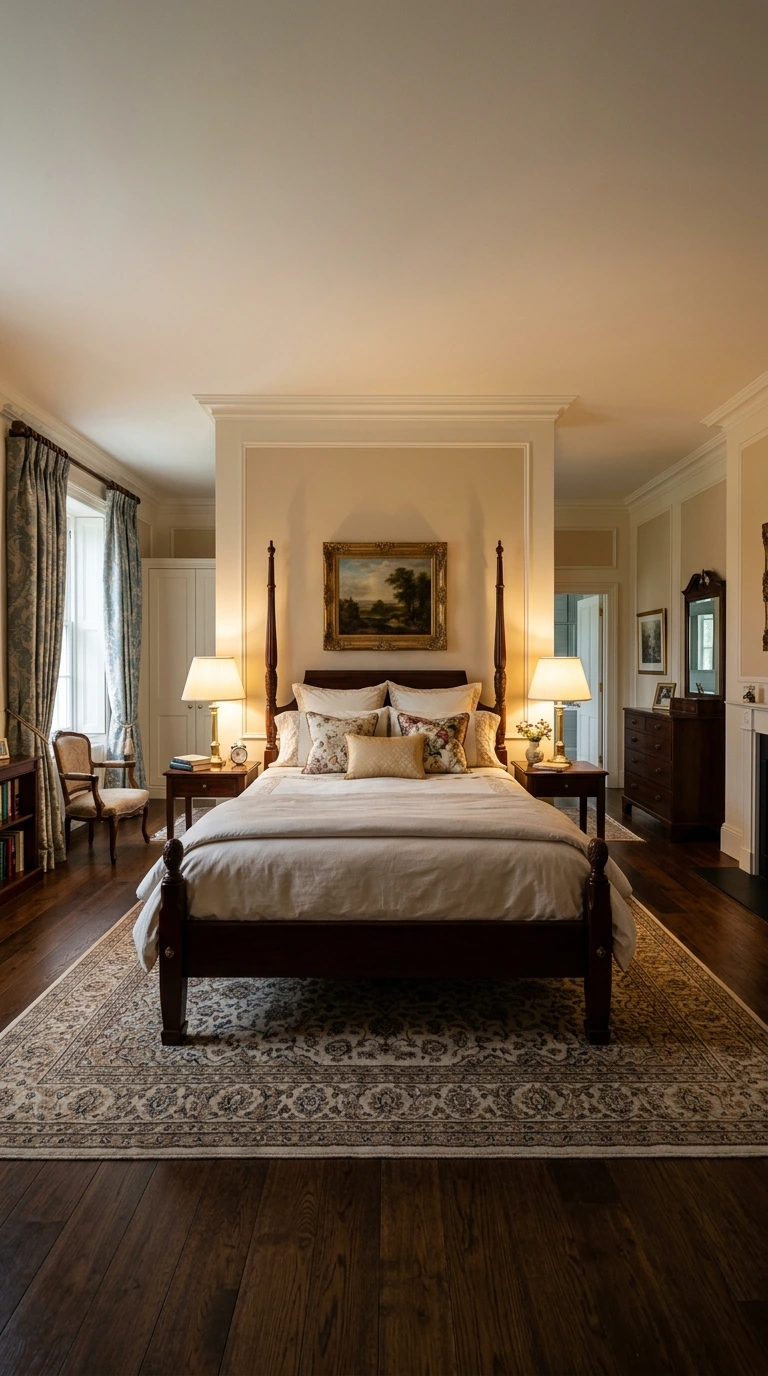
Beyond the general concept of a matching lamp pair, ensuring both bedside lamps are genuinely identical in height, shade, and light output creates a distinctly calm, ordered feeling that suits classic or transitional bedrooms particularly well. Even light distributed evenly on both sides helps the eyes relax more easily at night.
This approach works best in bedrooms where balance and symmetry are already part of the broader design language, such as a centered headboard flanked by matching nightstands. Small inconsistencies between the two lamps, whether height or brightness, can subtly undercut this intended sense of calm.
25. Layer All Three Lighting Types Together
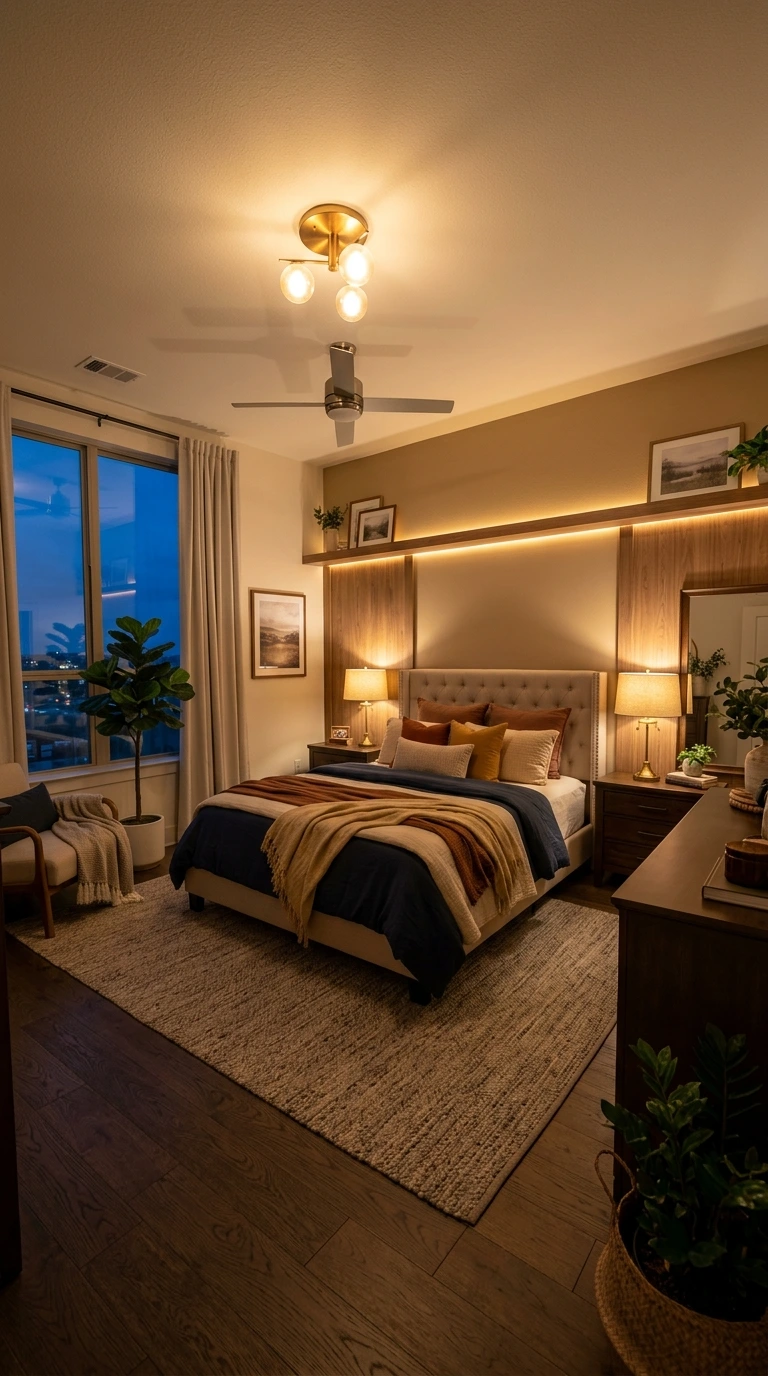
The single most important lighting principle for any bedroom aesthetic is combining ambient, task, and accent lighting together rather than relying on any one type alone. A room lit only by a bright overhead fixture will always feel less considered than one layered with several complementary light sources.
Building this layered approach doesn’t require installing every idea on this list at once; even combining a warm overhead fixture with one bedside lamp and a single accent piece creates noticeably more depth and mood than a single light source alone. Start with whichever layer your room is currently missing, and build outward gradually from there.
Frequently Asked Questions
1. What’s the most important rule for bedroom lighting?
Layering at least two or three different lighting types, ambient, task, and accent, rather than relying on a single overhead fixture is widely considered the most important overall principle. This layered approach gives you far more control over the room’s brightness and mood throughout the day and evening.
2. What bulb color temperature is best for a bedroom?
Warm bulbs in the 2700K to 3000K range are generally considered the most comfortable and calming choice for a bedroom. Cooler, blue-toned lighting can feel clinical and works against the relaxing atmosphere most bedrooms are meant to support.
3. Are pendant lights a good alternative to table lamps?
Yes, pendant lights hung on either side of the bed provide the same functional bedside lighting as table lamps while freeing up valuable nightstand surface space. This option also tends to read as more modern than a traditional lamp pair.
4. Do I need a dimmer switch in my bedroom?
While not strictly required, a dimmer switch is one of the most impactful, relatively low-cost upgrades available, letting you shift smoothly between bright daytime light and a soft evening glow. This flexibility significantly improves how adaptable a room’s lighting feels throughout the day.
5. How do I choose lighting for a specific bedroom aesthetic?
Natural materials like woven rattan, linen, or ceramic suit biophilic and organic aesthetics, while sculptural or matte metal fixtures suit more minimalist or modern rooms. Crystal chandeliers and matching lamp pairs work particularly well in traditional or classic bedroom styles.
6. Is it okay to have a dramatic ceiling fixture and simple bedside lamps?
Yes, this contrast is actually a commonly used design principle: when the ceiling fixture carries significant visual weight, like a crystal chandelier or sculptural pendant, keeping bedside lighting understated allows that contrast to feel intentional rather than overwhelming.
7. What’s a good starting point if I don’t know where to begin with bedroom lighting?
Identify which of the three lighting categories, ambient, task, or accent, your room is currently missing entirely, and address that gap first. For most bedrooms relying solely on a single overhead light, adding even one bedside lamp makes a noticeable, immediate difference.
Conclusion
The best bedroom lighting doesn’t come from a single perfect fixture; it comes from thoughtfully layering ambient, task, and accent sources so the room can shift smoothly from bright and functional to soft and restful. Whether your aesthetic leans toward a classic matching lamp pair, a sculptural LED chandelier, or a woven rattan pendant, the same underlying principles of warmth, balance, and layering apply.
Start with whichever lighting gap your room currently has, and build outward gradually from there rather than trying to implement every idea at once. A well-lit bedroom, styled thoughtfully around your specific aesthetic, does as much to create genuine comfort and calm as any piece of furniture in the room.