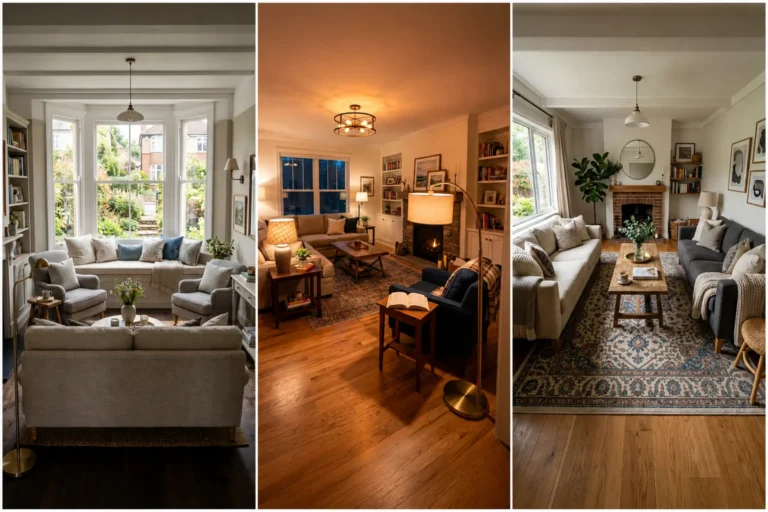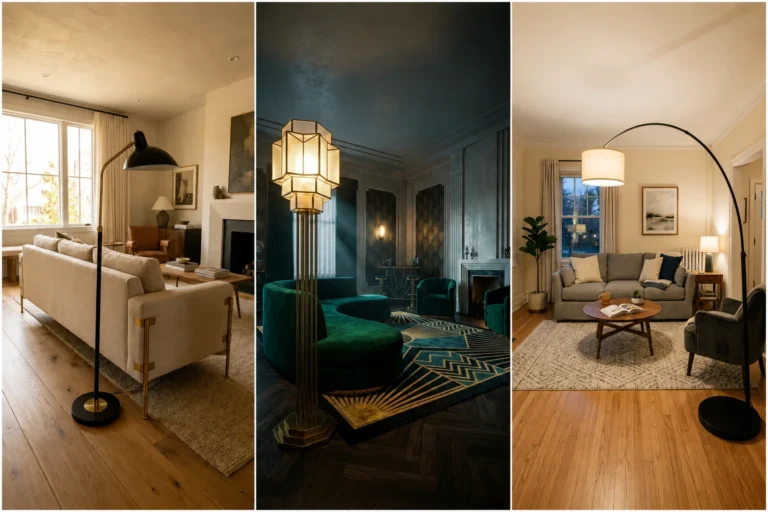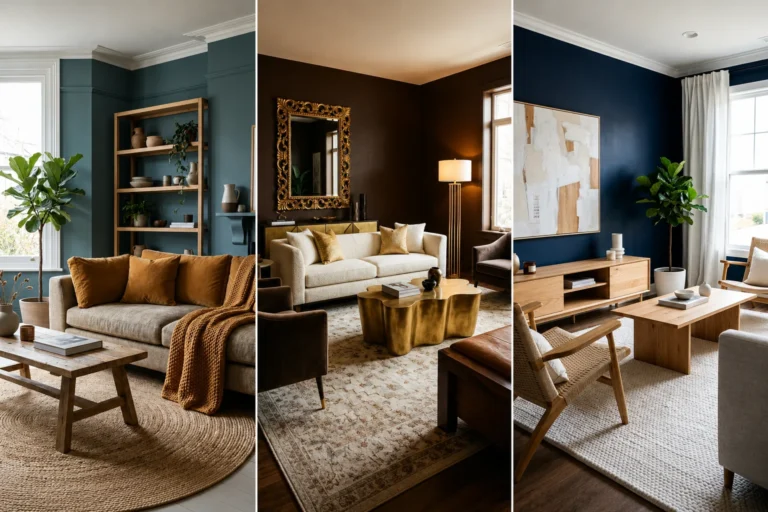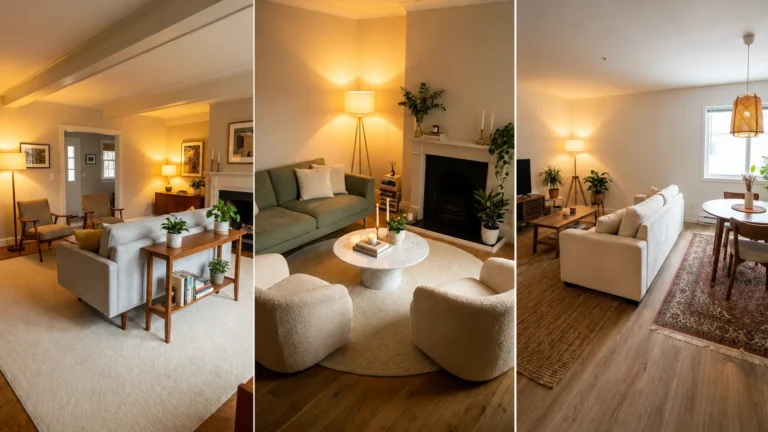
How to Choose the Right Rug Size for Your Living Room

Introduction
A rug is one of the biggest investments you’ll make in a living room, yet it’s also one of the easiest things to get wrong. Buy too small, and even a beautiful rug makes the whole room look disjointed and oddly smaller than it actually is.
The good news is that rug sizing isn’t really about guesswork or gut feeling. Interior designers rely on a handful of consistent formulas based on your furniture and floor space, and once you understand the logic, choosing the right size becomes considerably less intimidating.
In this guide, you’ll find everything you need to choose the right rug size for your specific living room, covering measurements, layout formulas, common mistakes, and the exceptions worth knowing. By the end, you’ll be able to walk into any rug showroom with real confidence instead of guessing.
Pro Tip: When you’re torn between two sizes, always size up rather than down. A slightly oversized rug reads as intentional and luxurious, while an undersized one almost always looks like a mistake, no matter how nice the rug itself is.
1. Understand Why Rug Size Matters So Much
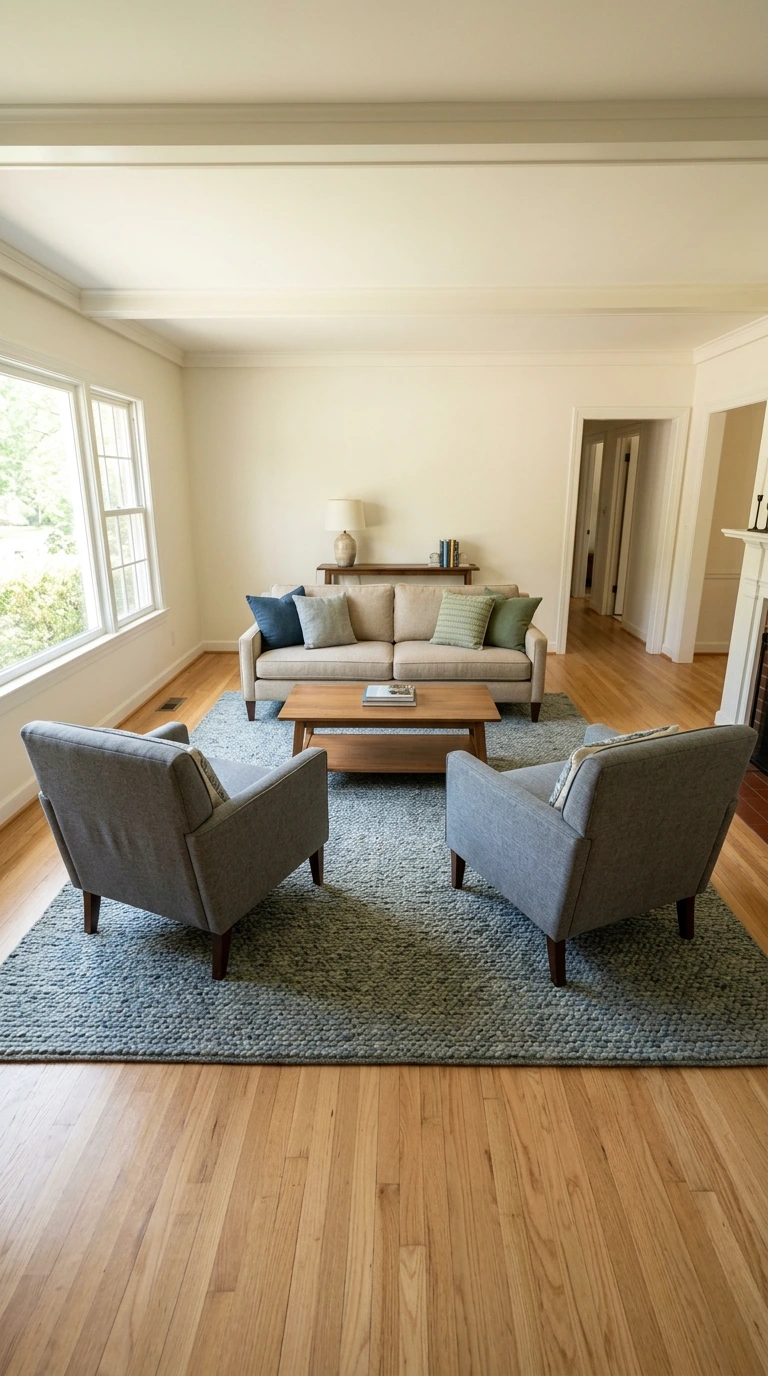
A rug’s main job is to define your seating area and visually pull furniture together into one cohesive grouping rather than letting pieces feel scattered across bare flooring. When the size is wrong, this unifying effect breaks down completely, and the room can feel disconnected even if every individual piece of furniture is beautiful.
An undersized rug in particular tends to make a room look smaller rather than larger, since it creates a visual “island” that draws attention to how much bare floor surrounds it. Getting the size right from the start solves a problem most people don’t even realize is rug-related until they see the difference a properly sized one makes.
2. Measure Your Actual Seating Area First
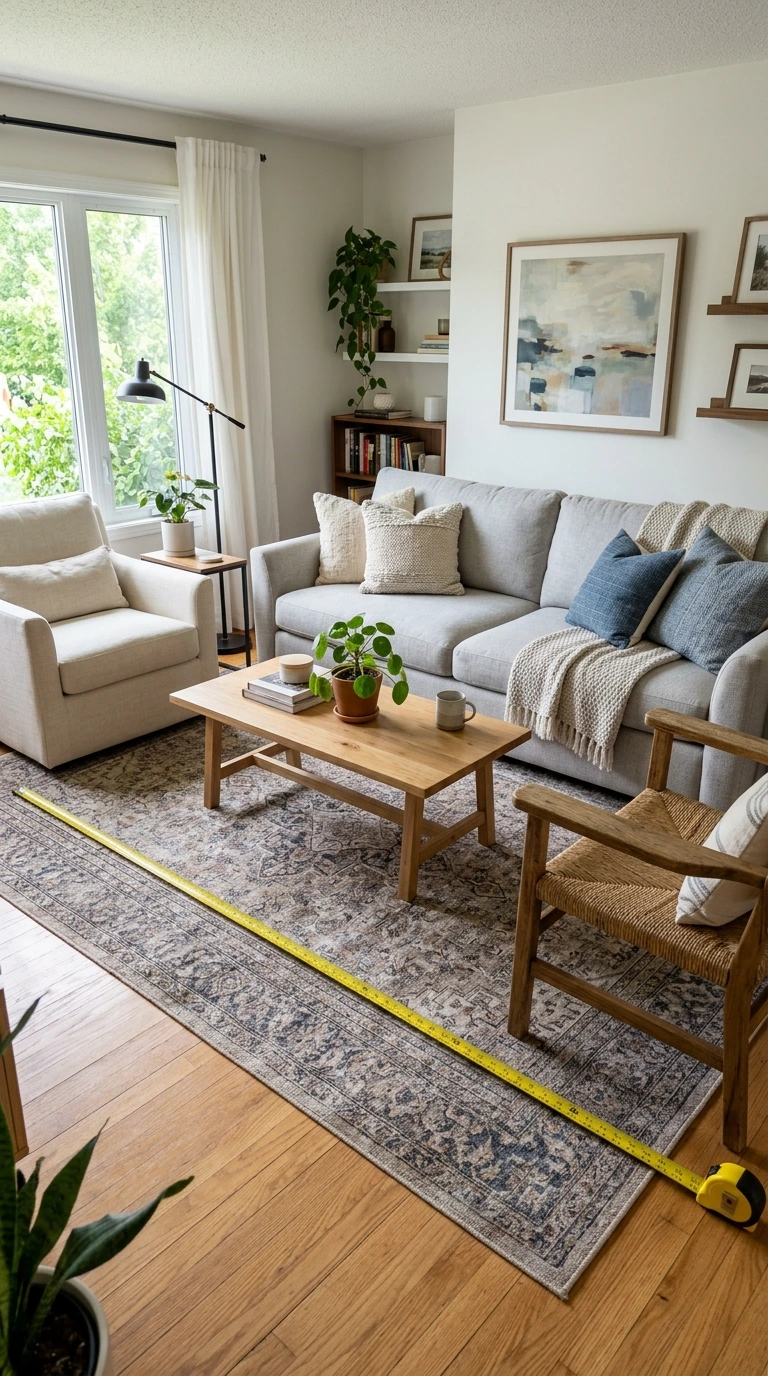
Before looking at any specific rug dimensions, measure the full footprint of your seating arrangement, from the back of your sofa to the front of your chairs, and side to side across the whole grouping. This measurement, not your room’s total square footage, is what should actually guide your rug size decision.
Many people mistakenly size their rug to their room rather than their furniture arrangement, which often results in a rug that’s technically large enough for the space but still feels disconnected from the seating itself. Taking this measurement first prevents that common and frustrating mistake.
3. Learn the Three Standard Layout Options
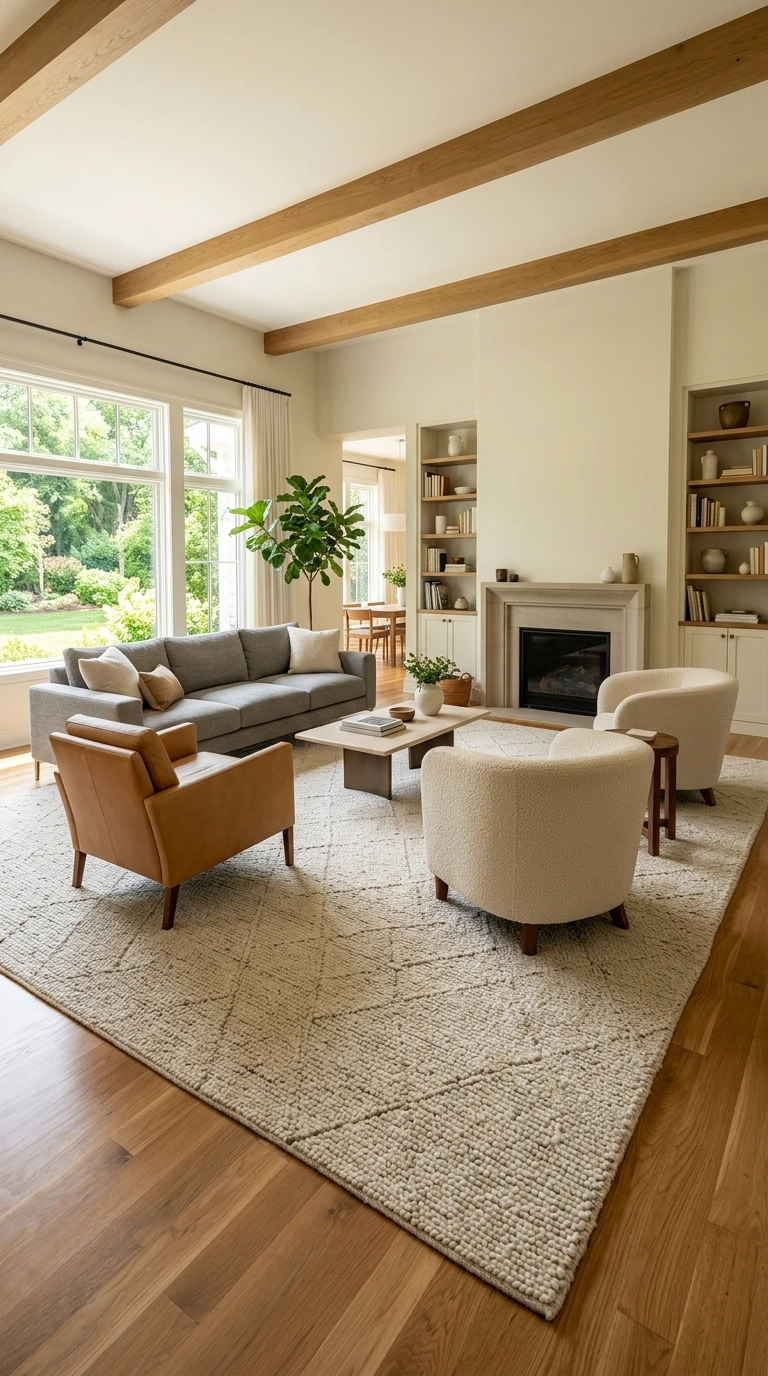
Designers generally work with three layout approaches: all furniture legs fully on the rug, only the front legs of your sofa and chairs on the rug, or a smaller rug floating in front of furniture that sits entirely on bare floor. Each option calls for a different rug size relative to your seating area.
The all-legs-on approach requires the largest rug and creates the most unified, formal look, while the front-legs-only approach is the most popular middle-ground choice among designers. The floating option works only in specific situations and generally requires the most caution to avoid looking like an afterthought.
4. Use the Front-Legs-On Formula as Your Default
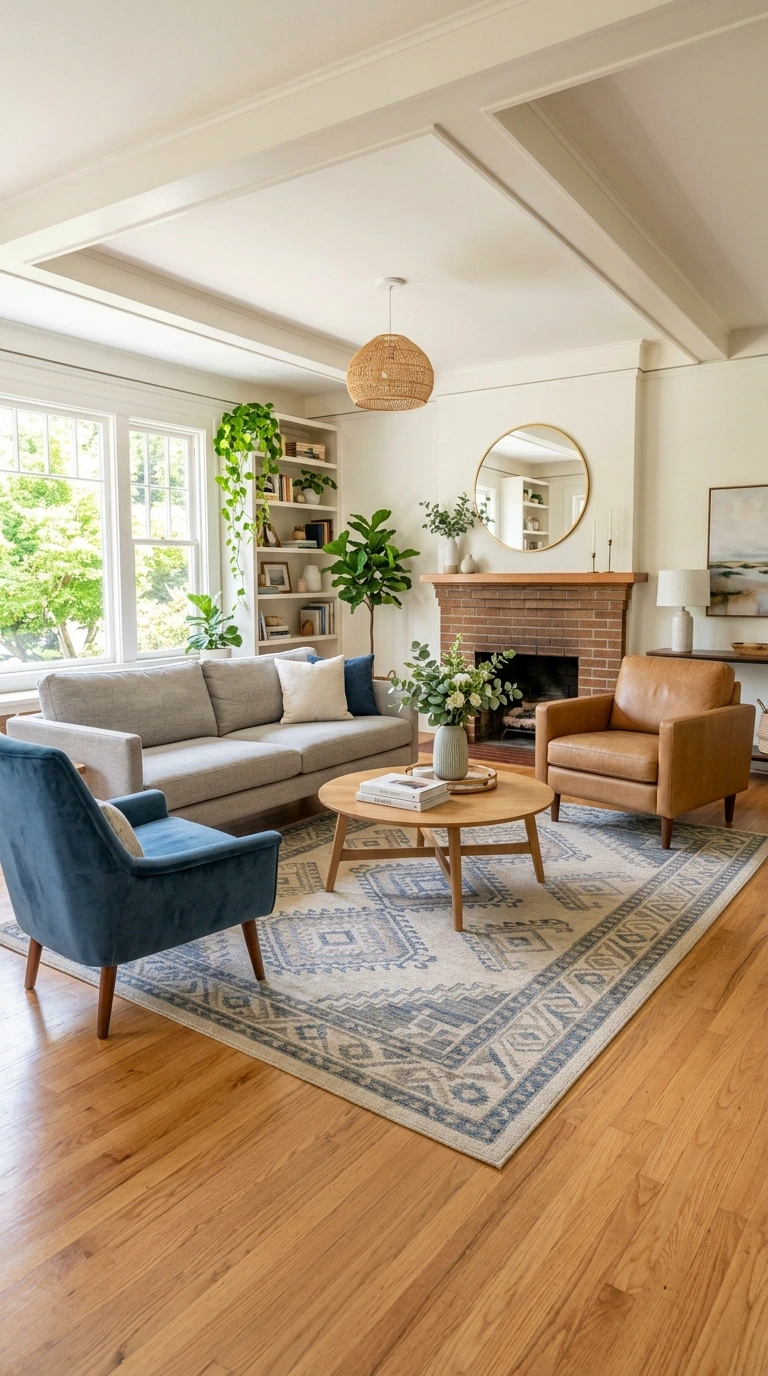
For most living rooms, having just the front legs of your sofa and chairs resting on the rug, with the back legs on bare floor, is considered the standard, designer-approved approach. This method anchors your furniture convincingly while keeping rug costs and sizing more manageable than covering an entire seating area.
To use this formula, measure your seating area’s width and depth, then choose a rug that extends at least six inches, ideally eight, beyond your sofa on each side. This single guideline resolves most of the uncertainty people feel when standing in a rug aisle unsure what size to grab.
Warning: Avoid rugs that only reach partway under your furniture’s front legs, since a rug edge cutting across a chair or sofa leg looks accidental rather than intentional. If you can’t commit to a size that fully clears the front legs, size up rather than settling for an awkward partial overlap.
5. Consider the All-Legs-On Approach for a Formal Look
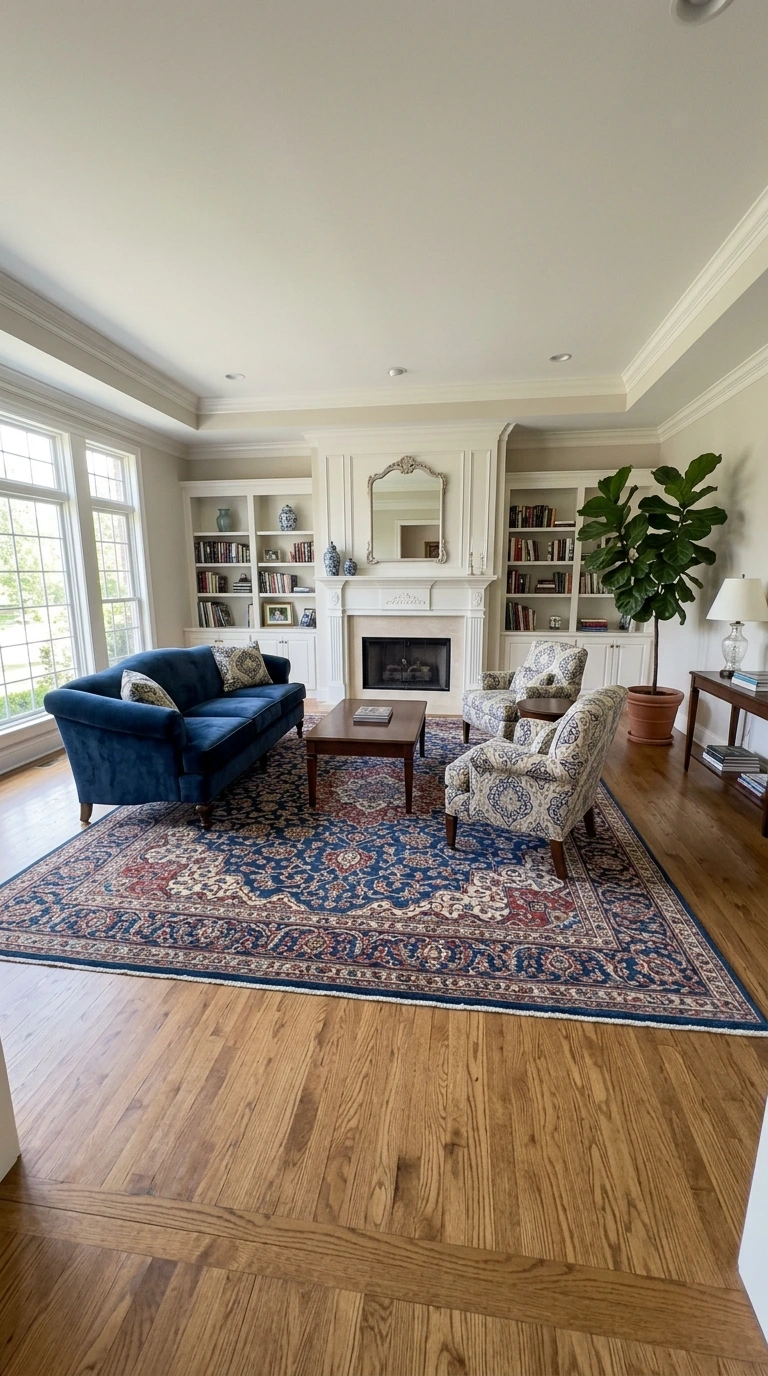
If your budget and room size allow, having every piece of seating furniture rest entirely on the rug creates the most cohesive, put-together living room look available. This approach works particularly well in larger rooms or open-concept spaces where you want the rug to visually unify a genuinely big footprint.
This layout typically requires the largest standard rug sizes, often 9 by 12 feet or larger, since the rug needs to extend well beyond your entire furniture grouping on every side. While more expensive upfront, many designers consider this the gold-standard approach whenever the room size makes it practical.
6. Know When a Floating Rug Actually Works
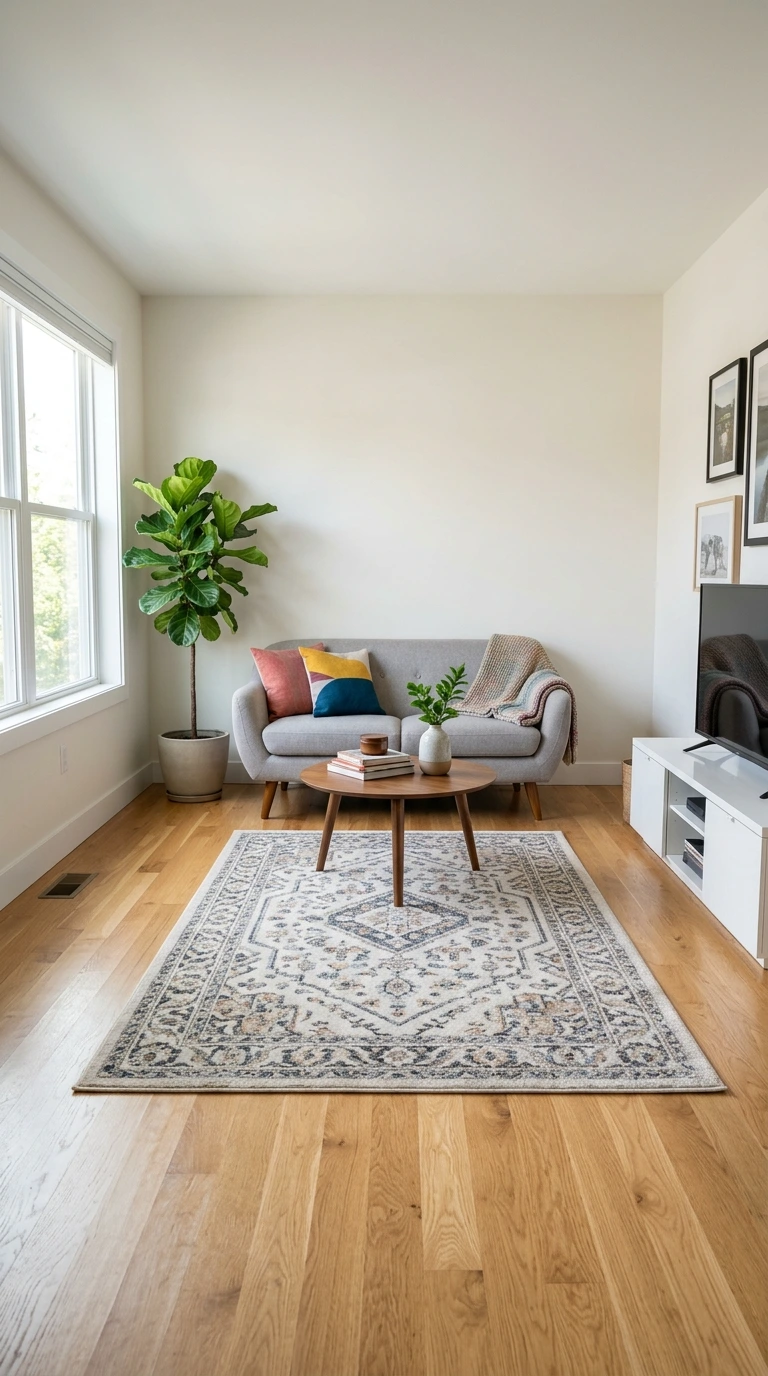
A smaller rug that floats in front of furniture, touching none of the seating pieces directly, is sometimes acceptable in a small room or tight budget situation, but it comes with real risk of looking undersized. This approach works best when the floating rug still covers a meaningful portion of the floor rather than looking like an isolated mat.
If you choose this route, make sure the rug is large enough to extend well beyond your coffee table on all sides, rather than just barely covering it. This layout is genuinely the riskiest of the three main options and should be a deliberate choice rather than a default fallback.
Important: If you already own a rug you love that’s too small for a proper furniture-anchoring layout, consider layering a larger, more affordable jute or sisal rug underneath it. This trick lets your smaller rug still contribute color and pattern while the larger base rug handles the actual furniture-anchoring job.
7. Learn the Standard Rug Size Chart
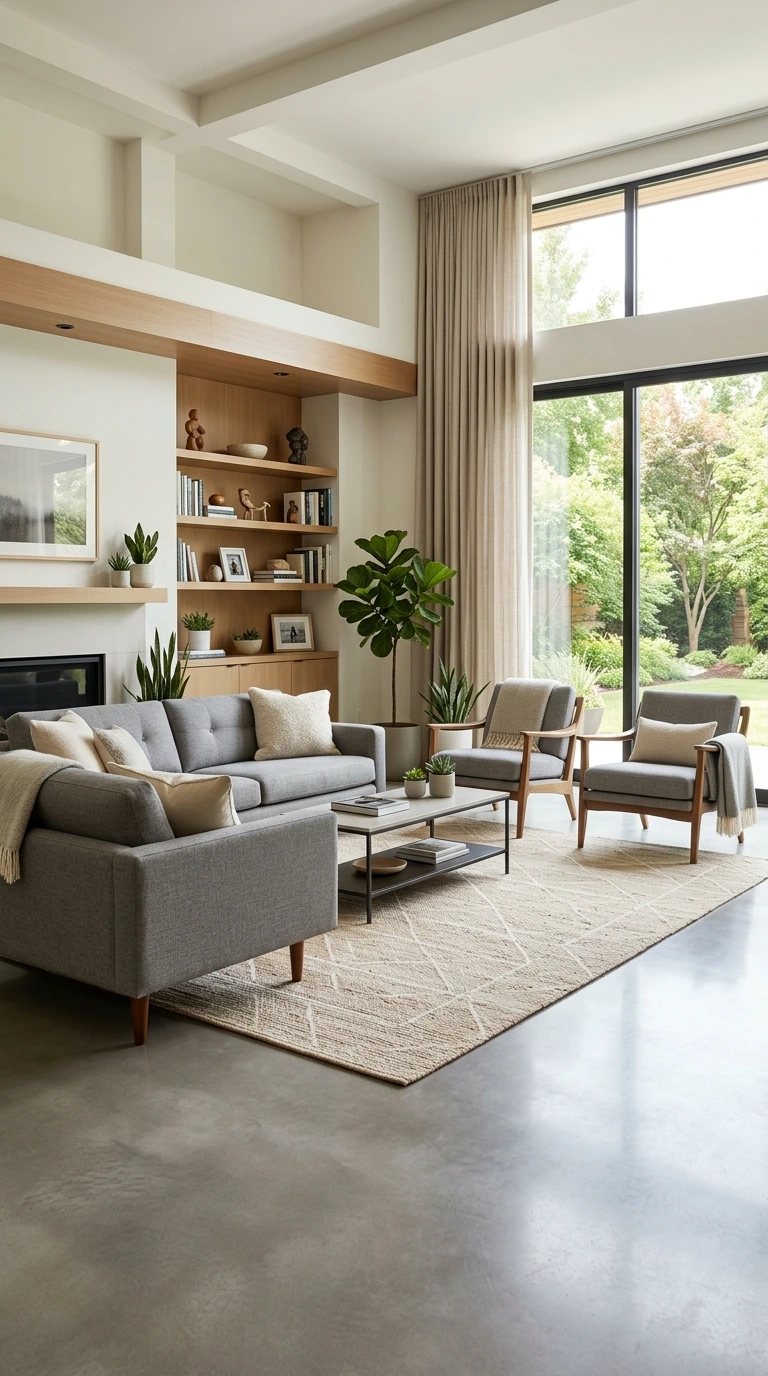
Rugs generally come in a set of common dimensions: 5 by 8 feet, 6 by 9 feet, 8 by 10 feet, 9 by 12 feet, and 10 by 14 feet, with larger custom sizes available for bigger rooms. Knowing these standard sizes helps you shop more efficiently, since most retailers stock these dimensions consistently across brands.
An 8 by 10 rug is generally considered the most versatile option, fitting comfortably in most average-sized living rooms, while a 5 by 8 should generally be reserved for genuinely small rooms or as a floating accent under a coffee table alone. Starting your search with these standard sizes in mind narrows your options considerably before you even begin comparing specific rugs.
| Room Size | Recommended Rug Size | Best Layout Approach |
|---|---|---|
| Small (under 150 sq ft) | 5’x8′ or 6’x9′ | Floating or front-legs-on |
| Average (150-200 sq ft) | 8’x10′ | Front-legs-on |
| Large (200-300 sq ft) | 9’x12′ | All-legs-on or front-legs-on |
| Very Large or Open Concept | 10’x14′ or custom | All-legs-on |
8. Leave the Right Amount of Space Near the Walls
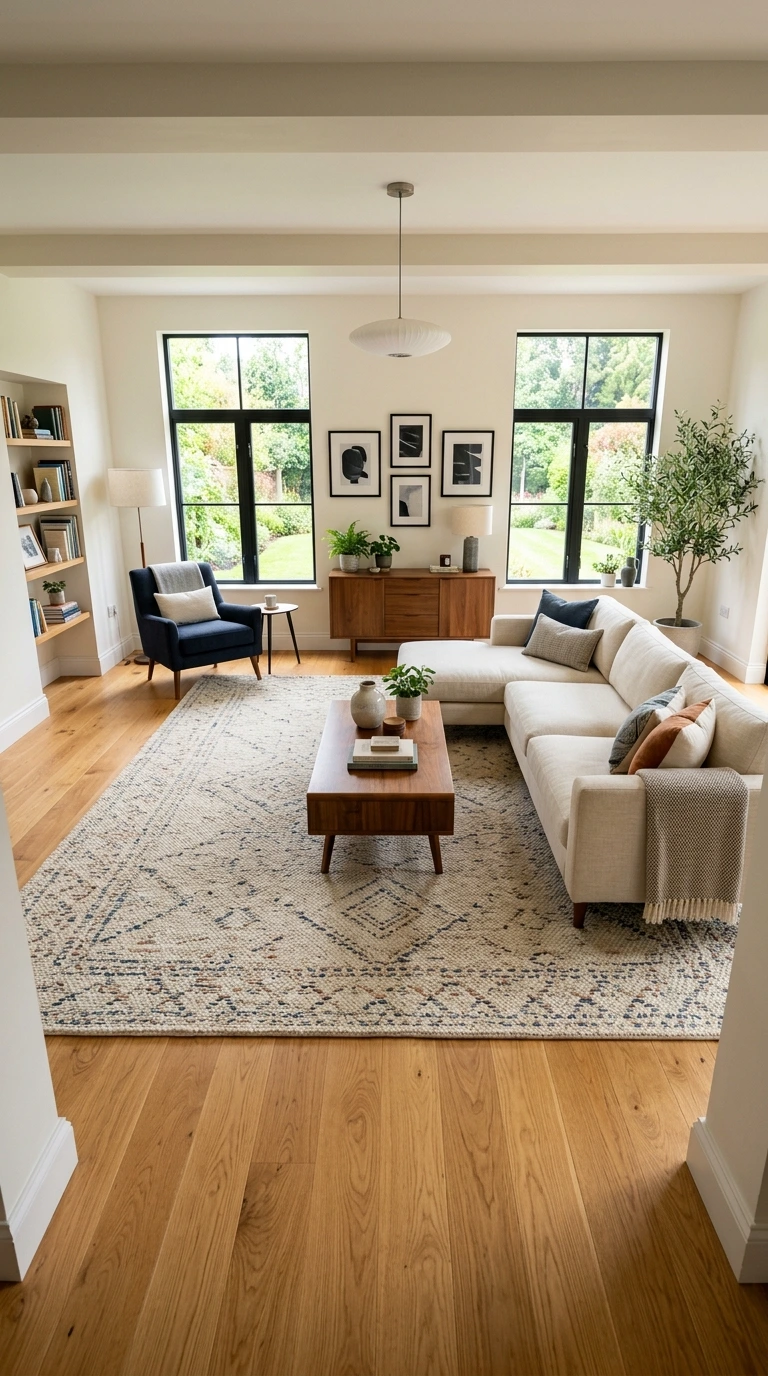
A rug should never stretch edge to edge like wall-to-wall carpet, since leaving a border of visible flooring between the rug and the walls gives the room necessary visual breathing room. Most designers recommend somewhere between 12 and 18 inches of bare floor around the rug’s perimeter, though this can flex slightly based on your room’s proportions.
In larger rooms, this border can extend up to 24 or even 36 inches without looking sparse, while very small rooms may need to keep this margin tighter to leave enough rug coverage for furniture. This detail is easy to overlook, but it meaningfully affects whether a room feels intentionally styled or simply covered.
9. Follow the Six-to-Eight-Inch Sofa Rule
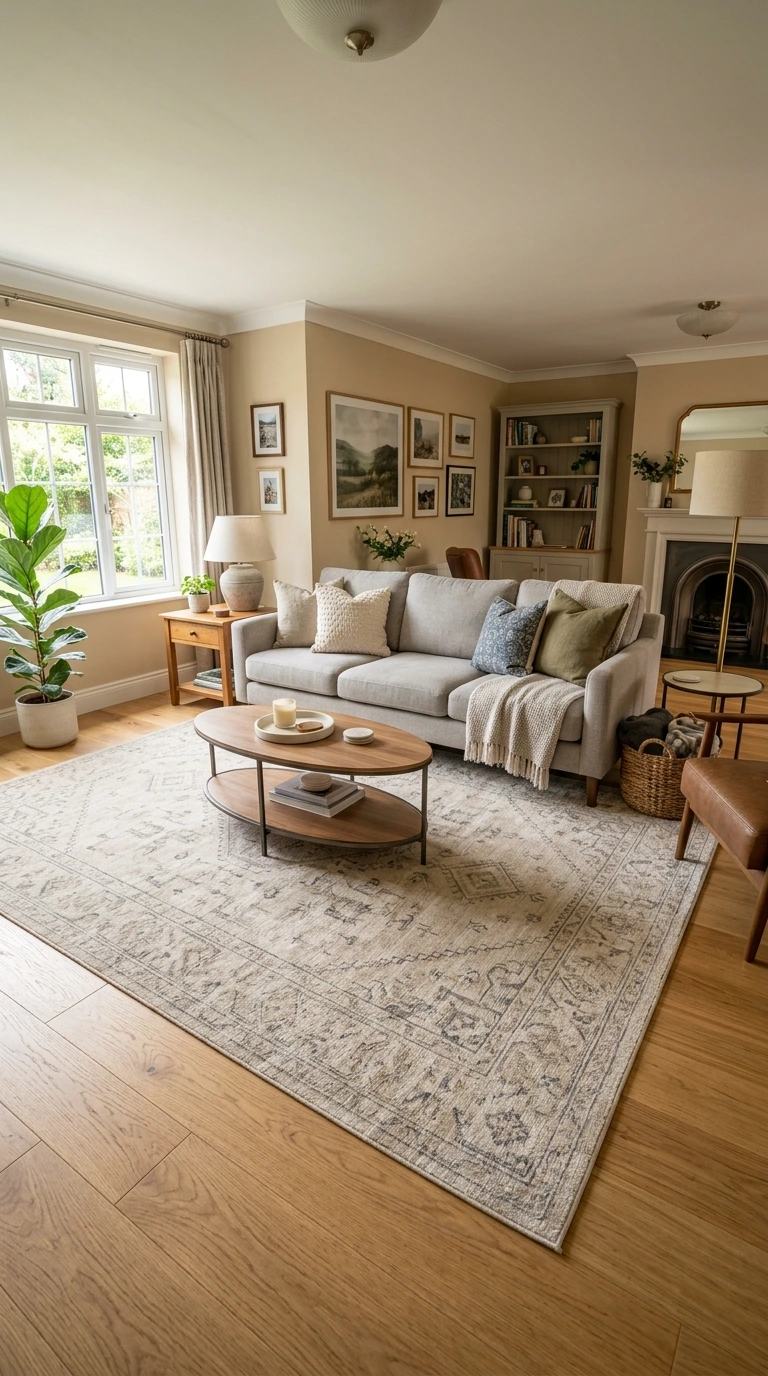
A widely used designer formula states that your rug should extend at least six inches, ideally eight, wider than your sofa on each side. This specific measurement is one of the most reliable, repeatable rules across nearly every professional rug guide, since it consistently produces a balanced, proportional result.
Measuring your sofa’s total width first, then adding this margin on both sides, gives you a precise minimum rug width to search for rather than guessing. This single formula alone resolves a huge percentage of the sizing confusion most people experience.
10. Account for Walkway Space Between Furniture
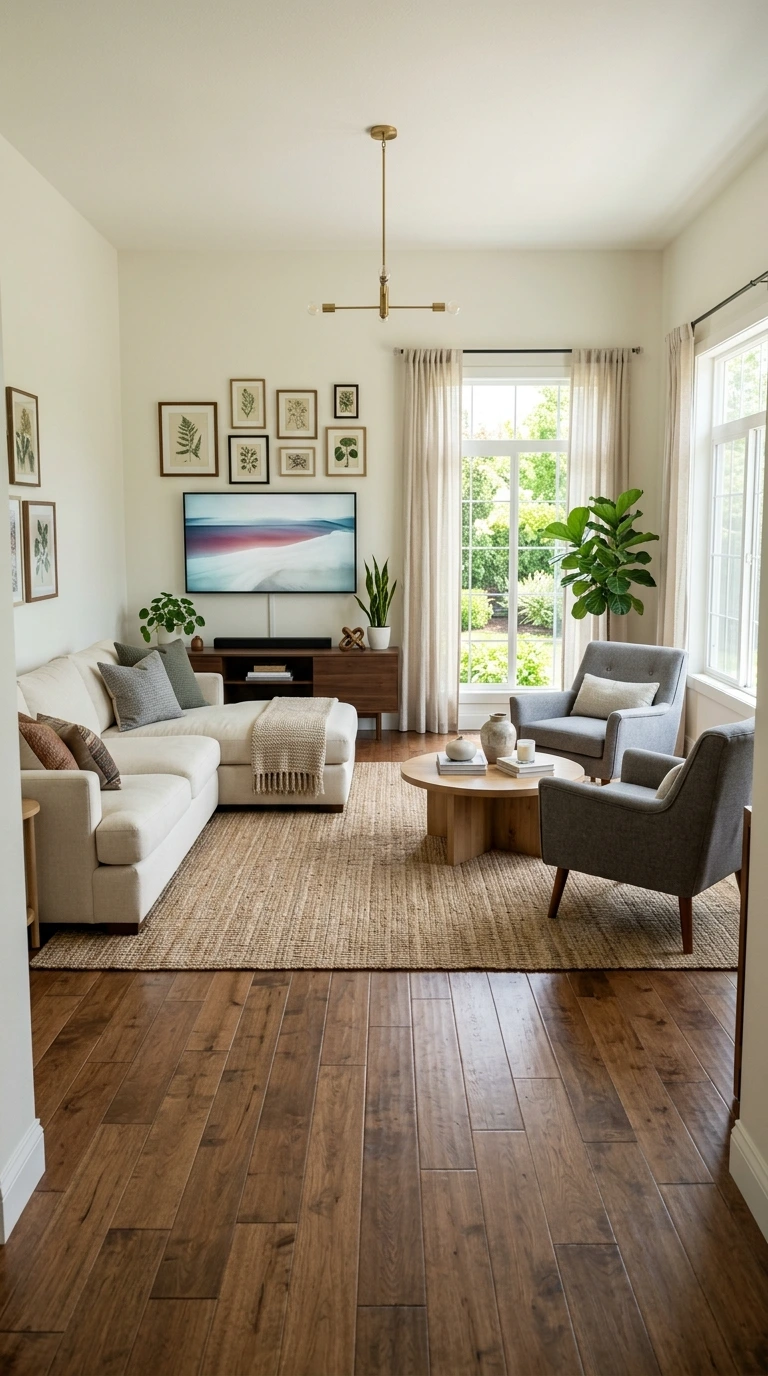
Beyond the rug itself, leaving adequate walkway space between major furniture pieces, generally 30 to 36 inches where the room allows, or at minimum 18 to 24 inches in a tighter space, directly affects what rug size actually works. A rug sized without considering these walkways can end up either too large for comfortable movement or positioned awkwardly around furniture that needs to shift.
Planning your furniture layout and walkways before finalizing your rug size prevents the frustrating scenario of buying a beautiful rug that simply doesn’t fit your room’s actual traffic flow. This step matters just as much as the rug’s raw dimensions.
- ✅ Measure your seating area’s full footprint before shopping
- ✅ Choose a rug at least six to eight inches wider than your sofa on each side
- ✅ Leave 12 to 18 inches of bare floor between the rug and the walls
- ✅ Decide on all-legs-on, front-legs-on, or floating before finalizing size
- ✅ When uncertain between two sizes, always choose the larger one
11. Orient the Rug to the Room, Not Just the Furniture
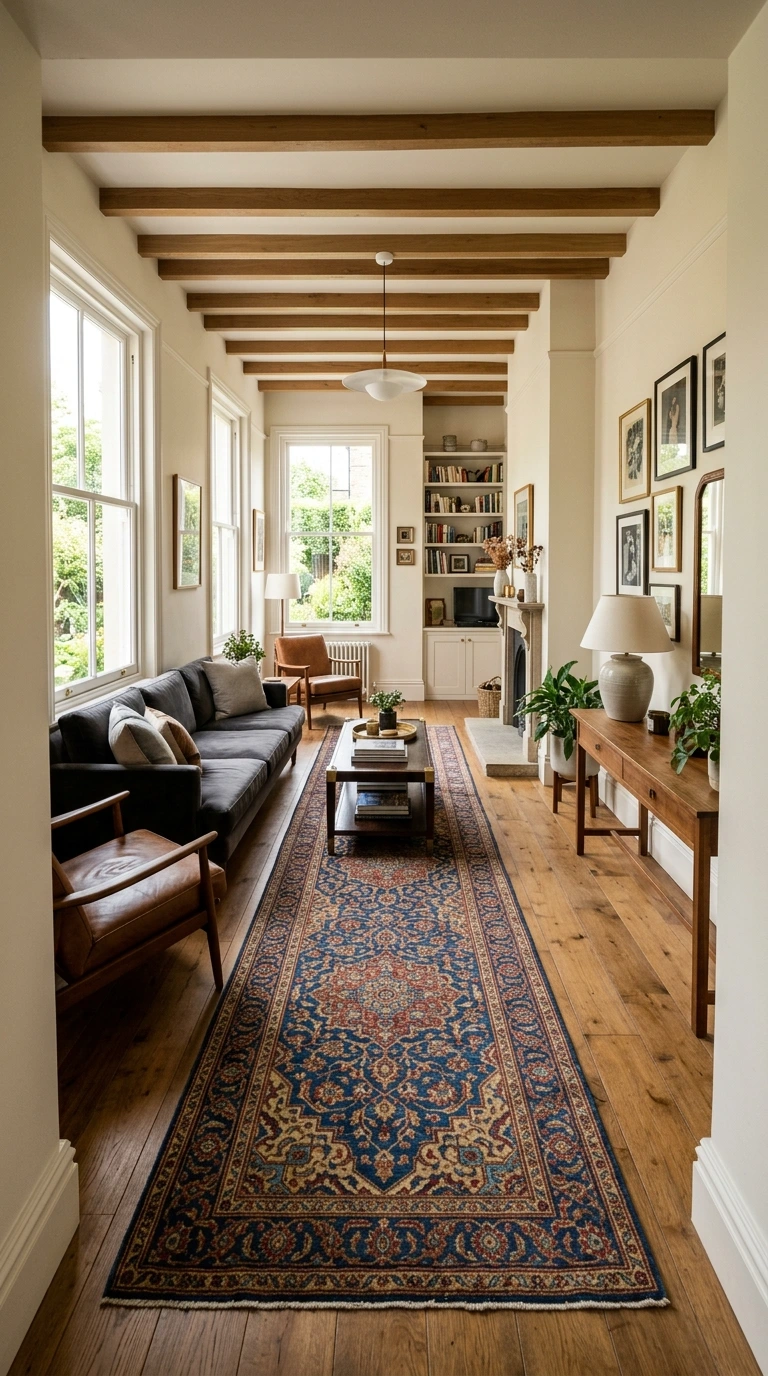
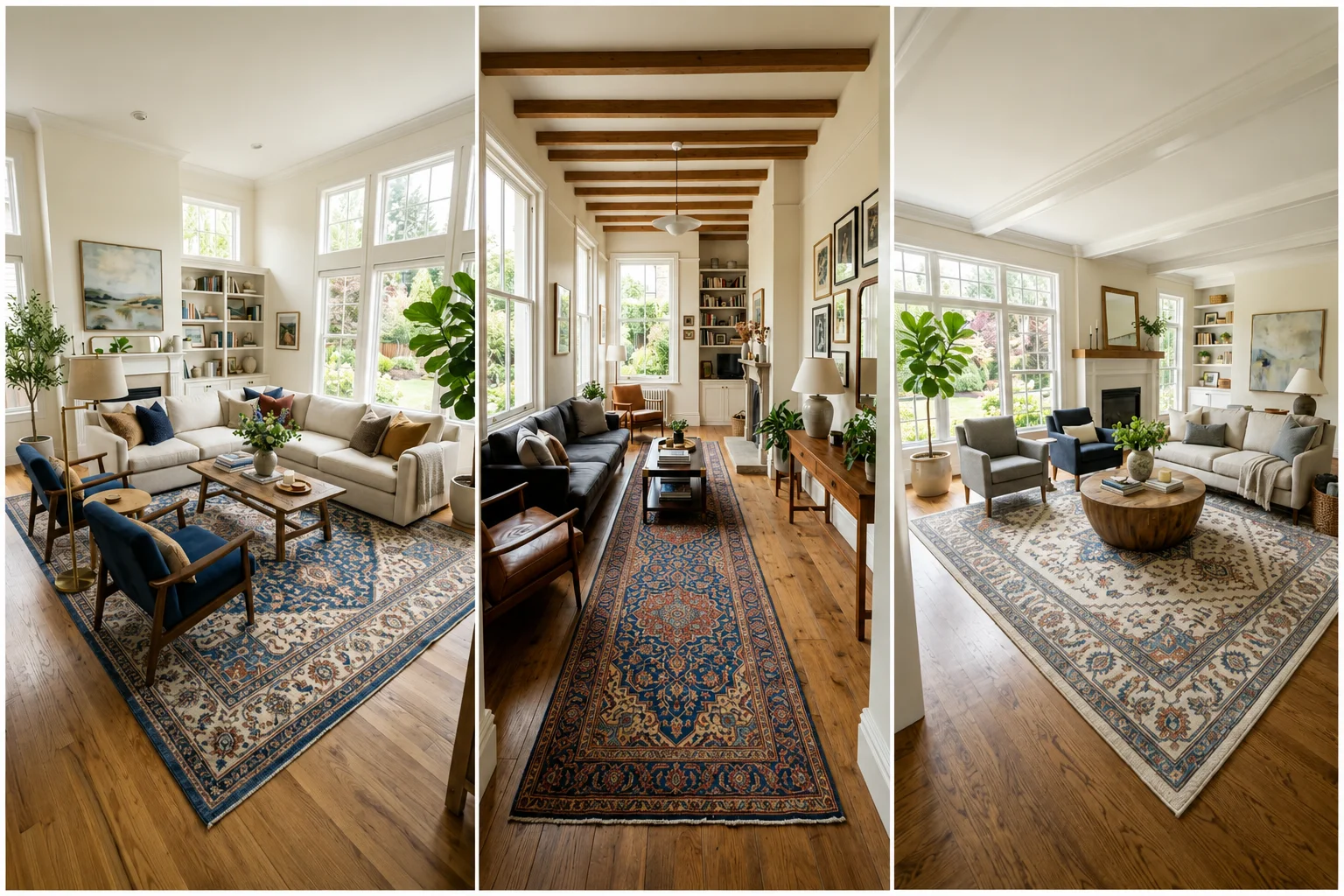
When choosing between a longer or wider rug orientation, look at your room’s actual shape rather than just your sofa’s placement, since orienting purely to furniture can sometimes cut off large sections of usable floor visually. A long, narrow room typically calls for a rug oriented lengthwise to match, while a more compact, square room usually suits a more horizontally oriented rug.
This consideration becomes especially important in oddly shaped rooms, where matching the rug to the room’s proportions, rather than strictly to the sofa, often produces a more balanced overall result. When these two considerations conflict, prioritizing the room’s shape generally wins out over furniture alignment alone.
12. Stay Consistent With Furniture Legs On or Off
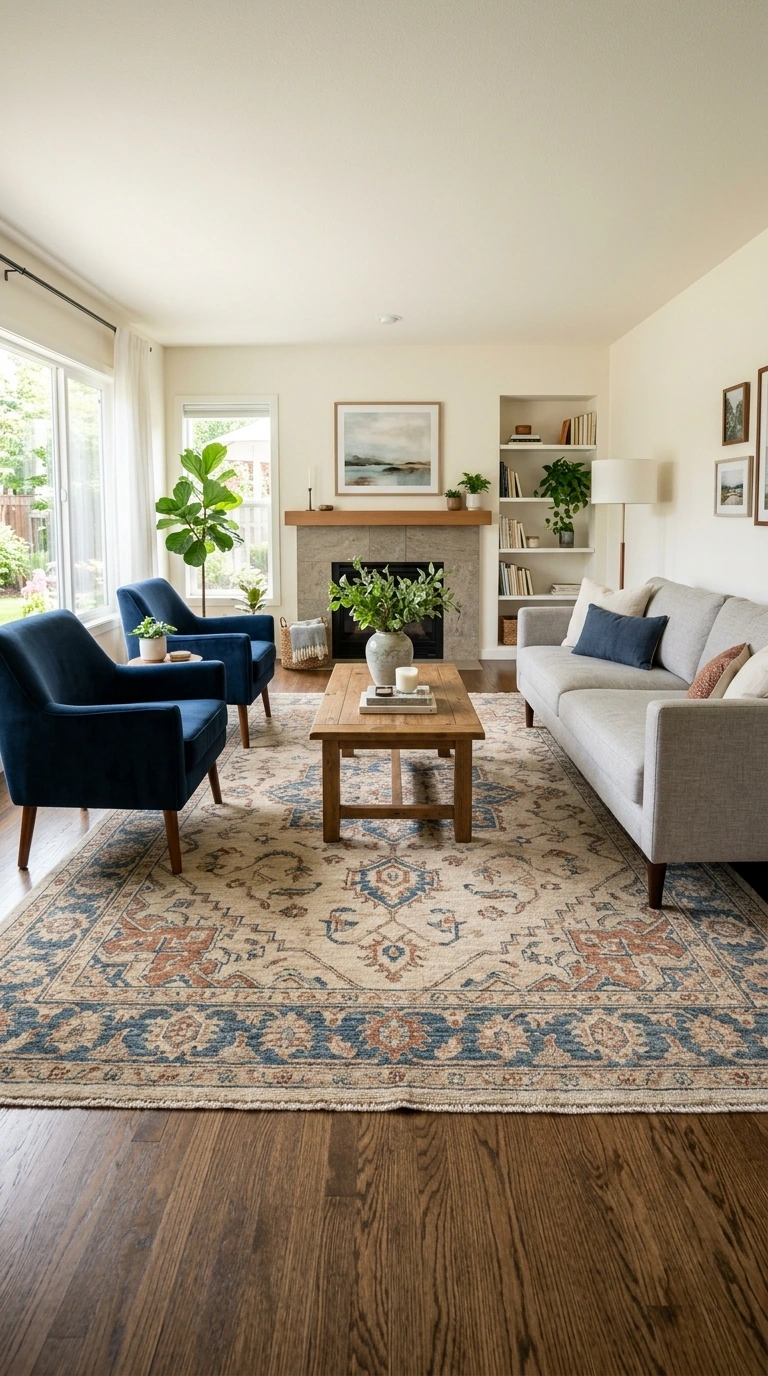
Whatever layout approach you choose, staying consistent across all your seating pieces matters more than which specific option you pick. If your sofa’s front legs sit on the rug, your accent chairs should follow the same rule, rather than having one piece fully on the rug while another floats entirely off it.
Inconsistent leg placement is one of the more subtle mistakes that can make an otherwise well-chosen rug look accidental rather than intentional. This is a free adjustment, simply repositioning furniture, that can meaningfully improve how finished a room feels without buying anything new.
13. Size Up if You’re Adding Additional Seating
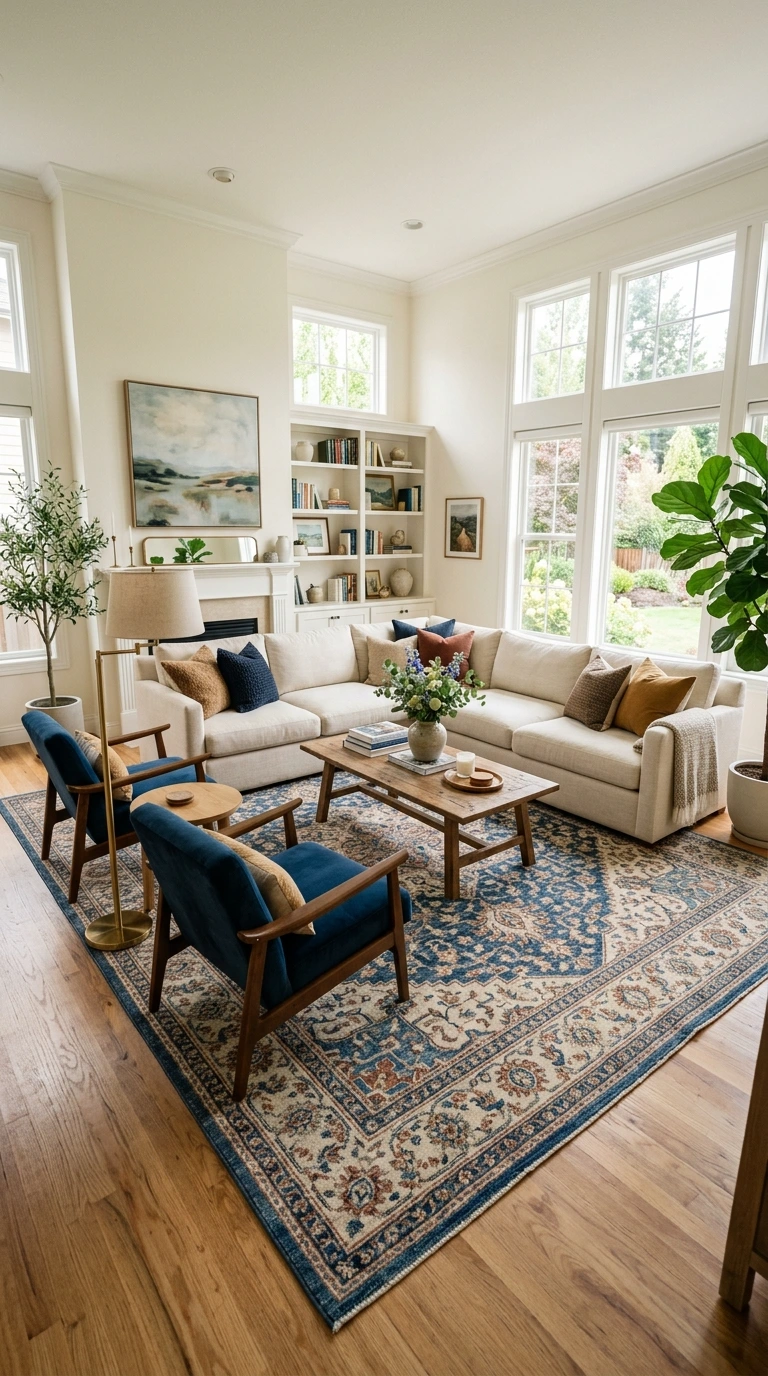
If your living room includes more than just a single sofa, extra lounge chairs, a loveseat, or additional seating pieces, you’ll generally need to size up from what a sofa-only room would require. For example, a room that would otherwise suit an 8 by 10 rug often needs a 9 by 12 once two accent chairs are added to the grouping.
Planning your rug size around your complete, final furniture arrangement, rather than just the sofa alone, prevents having to return or replace a rug once you realize it doesn’t actually cover your full seating group. This is a common oversight for anyone shopping for a rug before their furniture layout is fully finalized.
14. Consider Non-Rectangular Rug Shapes When They Fit Better
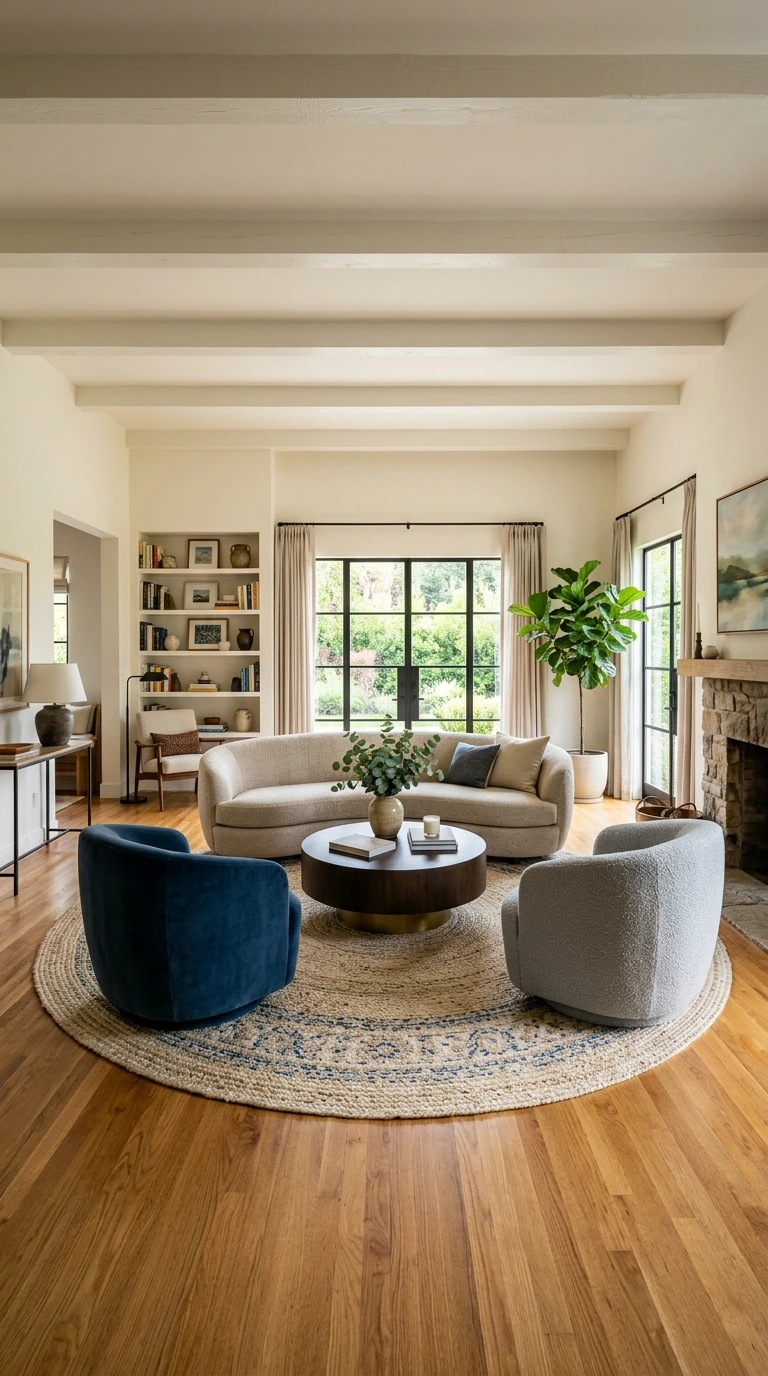
While rectangular rugs are by far the most common choice, round rugs work particularly well for smaller, more intimate seating areas or rooms with round furniture groupings, while square rugs suit naturally square rooms. These alternative shapes follow the same general sizing logic, just applied to a different geometry.
Don’t feel locked into a rectangular rug simply because it’s the default option, especially if your room’s actual layout or furniture shapes suggest a round or square rug would create better visual harmony. The same rules about extending beyond furniture and leaving wall clearance still apply regardless of shape.
Warning: Round rugs in particular require careful measurement, since their diameter needs to clear your furniture’s width on all sides, not just front to back. A round rug that works dimensionally in one direction but not the other will still look awkwardly undersized once placed.
15. Factor in Pile Height Alongside Size
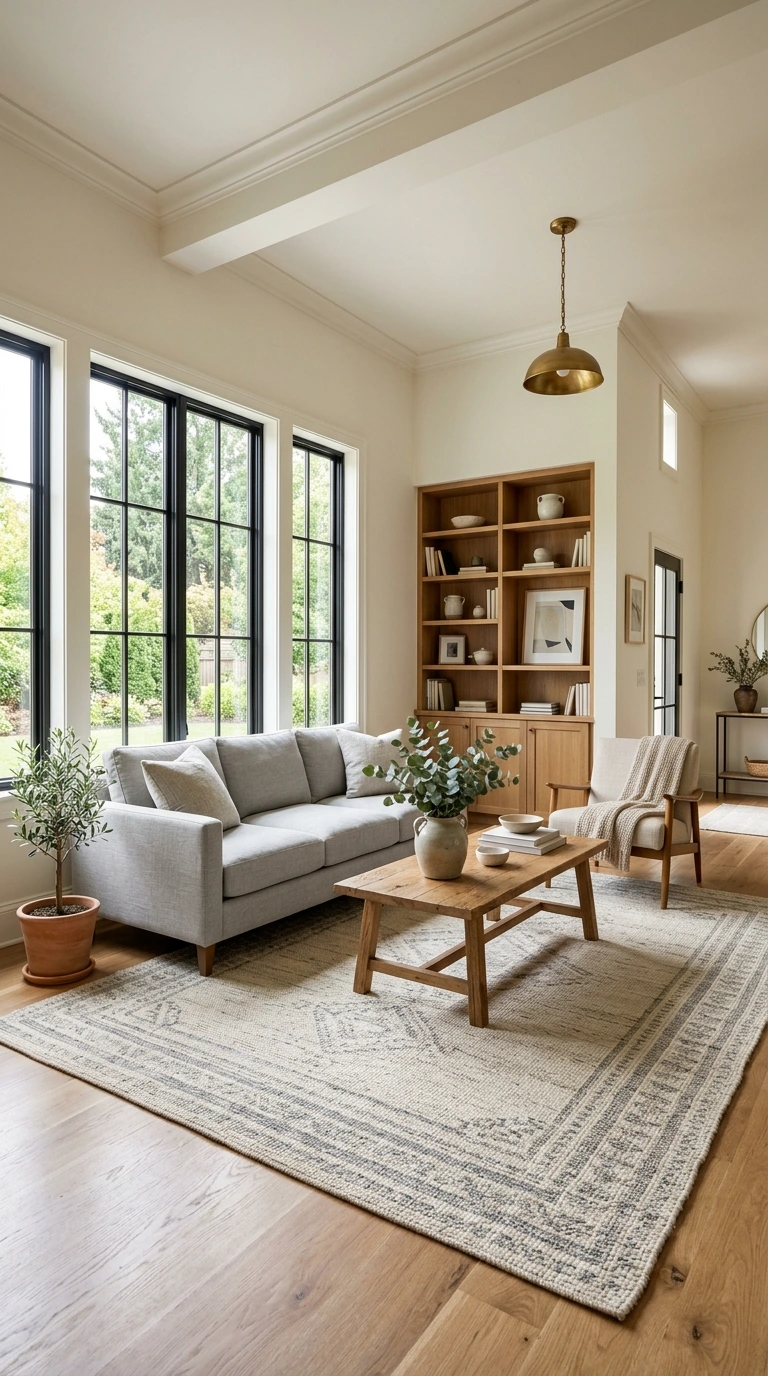
Beyond raw dimensions, a rug’s pile height affects how it actually performs once placed under furniture, with low-pile or flatweave rugs working best in high-traffic living rooms since they’re easier to clean and don’t shift under furniture legs. Higher pile or plush rugs add more softness and warmth but can make furniture placement slightly less stable if legs sink unevenly into thicker fibers.
Choosing pile height alongside size, rather than as a completely separate decision, ensures your rug performs well functionally once it’s actually in daily use. A beautifully sized rug that constantly bunches or shifts under foot traffic creates its own ongoing frustration regardless of how well the dimensions were chosen.
Important: If you have pets or young children, prioritize a low to medium pile rug in a color and pattern that can disguise occasional spills or stains, since darker tones and busier patterns hide daily wear far better than pale, solid colors. This practical consideration matters just as much as getting the size formula right.
16. Measure Twice Before You Buy
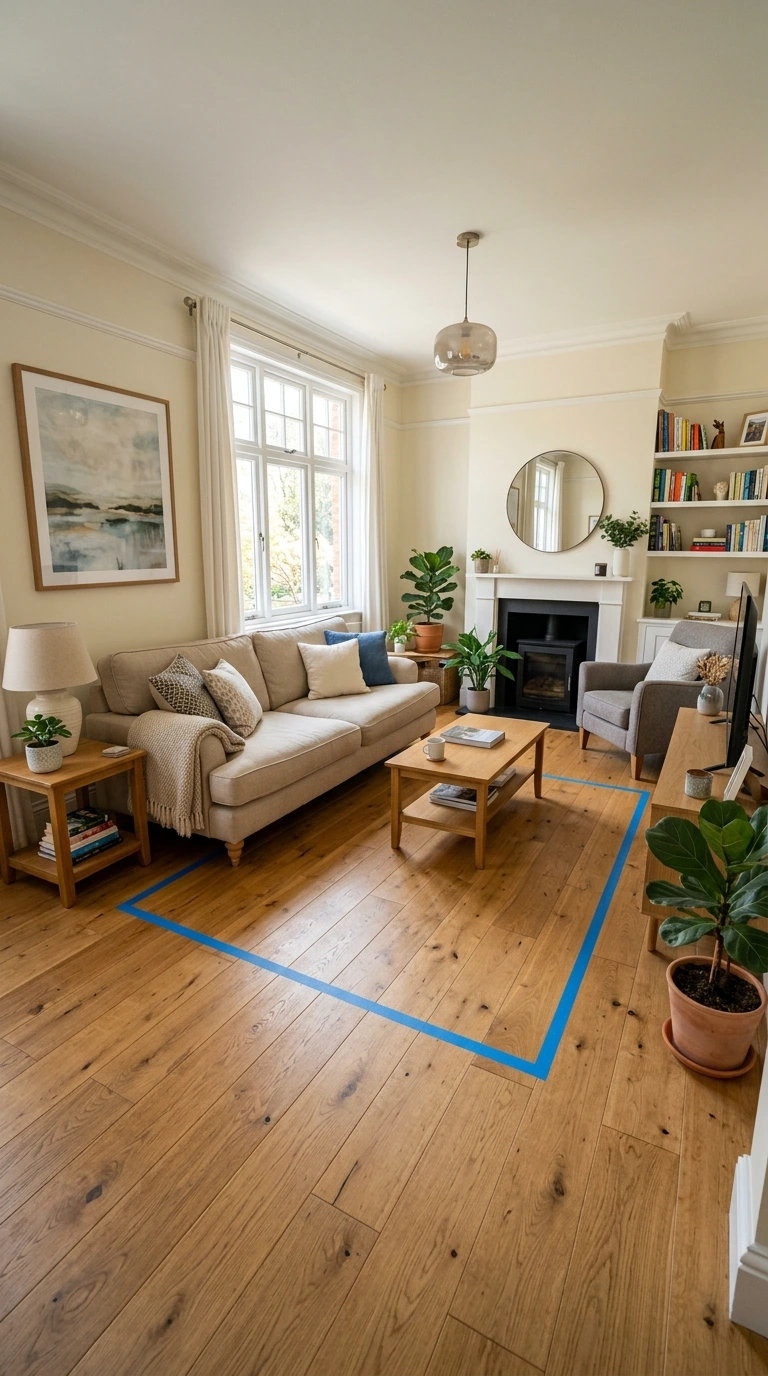
Given how expensive rugs in the sizes needed for a proper living room layout can be, and how genuinely difficult they are to return once unpacked and placed, take the time to measure your space multiple times before committing to a purchase. Use painter’s tape on the floor to map out your intended rug’s actual footprint, then live with that outline for a day or two before finalizing your decision.
This simple, free step catches sizing mistakes before they become an expensive problem, since seeing the taped-out dimensions in your actual room reveals issues that measurements on paper sometimes don’t. Many people who’ve been through a difficult rug return process specifically recommend this practice to anyone shopping for the first time.
17. Avoid the Single Biggest Rug Mistake
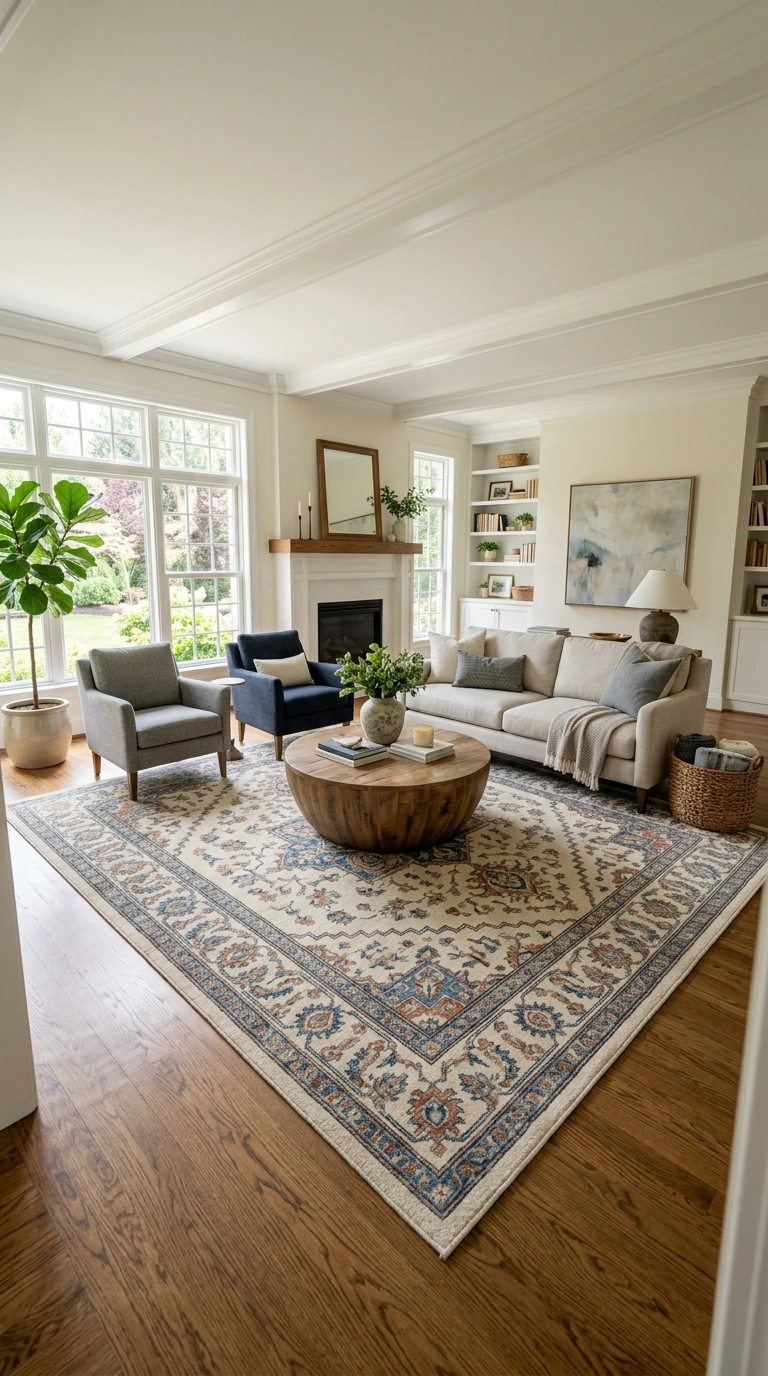
Across nearly every professional design resource, the most commonly cited living room rug mistake is choosing one that’s simply too small for the space and furniture arrangement. This single error is responsible for more disappointing rug purchases than any issue with color, pattern, or material choice combined.
If you find yourself torn between two sizes during your search, this consistent pattern of advice suggests defaulting to the larger option almost every time. A too-large rug can usually be addressed with layout adjustments, while a too-small one rarely has a good fix short of buying a second, larger rug.
18. Adjust Your Approach for Open-Concept Living Rooms
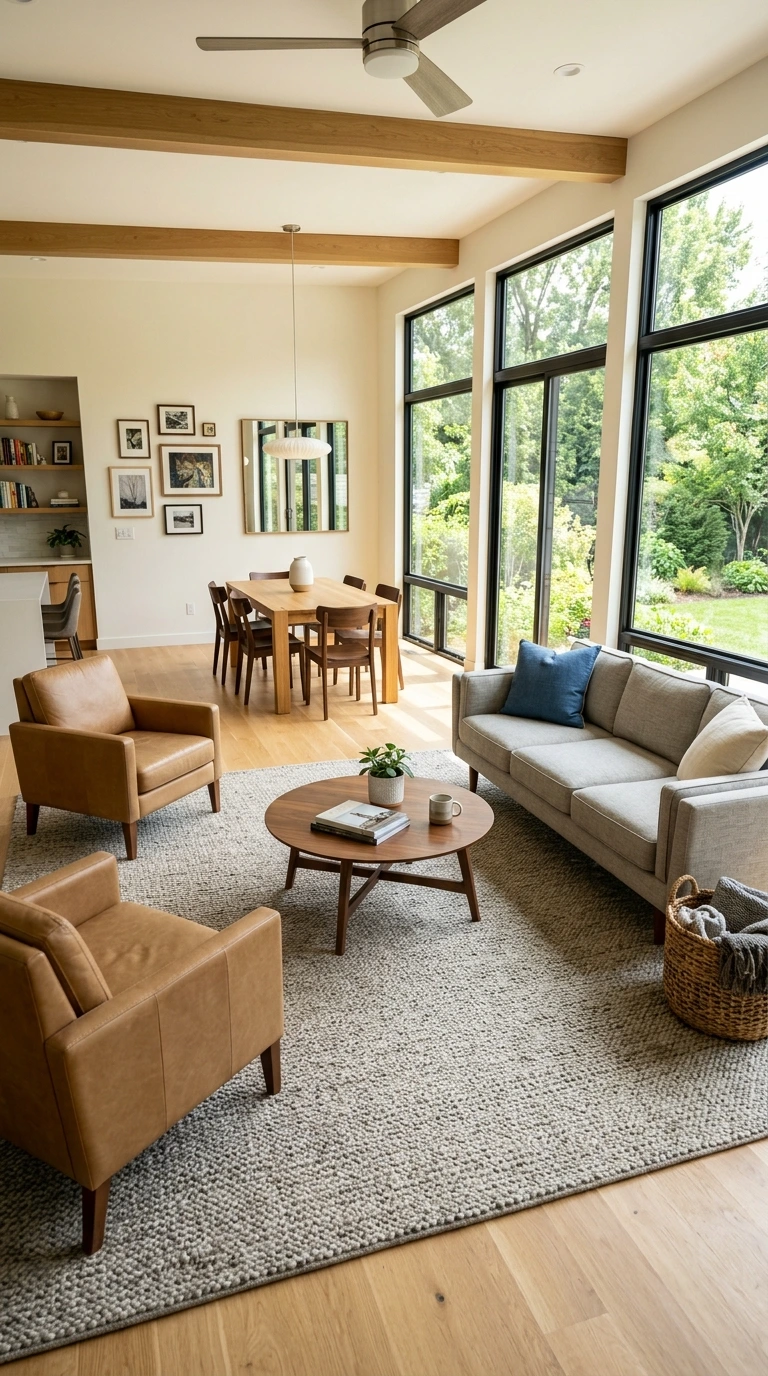
In an open-concept space where the living room flows directly into a dining or kitchen area without walls to define it, a rug takes on extra importance as the primary tool for visually separating your seating zone from the rest of the open floor plan. Sizing up in these situations, sometimes considerably beyond what a similarly furnished but wall-enclosed room would need, helps the rug do this zoning work effectively.
A rug that’s merely adequate in a fully enclosed room can end up looking lost or insufficient in a large open-concept layout, since there’s no wall boundary helping to visually contain the space. This is one of the clearest situations where sizing up isn’t just a safe default, it’s genuinely necessary for the rug to function as intended.
19. Budget Strategically for the Size You Actually Need
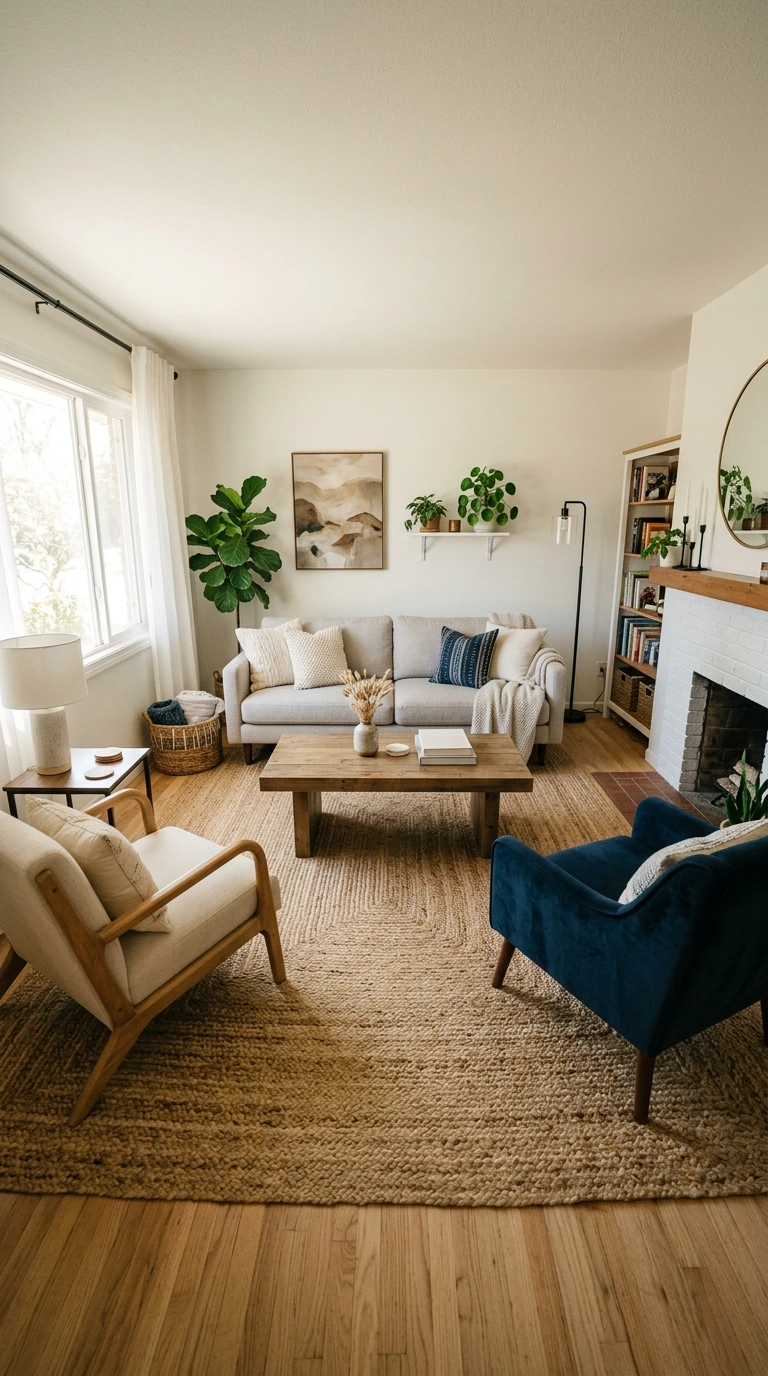
Since rug prices scale considerably with size, and the largest standard dimensions can represent a genuinely significant expense, it’s worth budgeting specifically for the size your room requires rather than compromising down to something smaller for cost reasons. A too-small rug bought to save money often ends up feeling like a wasted purchase once it’s clear the size doesn’t work.
Natural fiber options like jute, sisal, or seagrass tend to be considerably more affordable at larger sizes than wool or hand-knotted alternatives, making them a practical choice if budget is a genuine constraint at the size you need. Prioritizing getting the size right, even if it means a simpler material, generally produces a more satisfying long-term result than a smaller rug in a more expensive material.
- ✅ Orient your rug to match your room’s shape when it conflicts with furniture alignment
- ✅ Keep furniture leg placement consistent across your entire seating group
- ✅ Size up if your living room includes more than just a single sofa
- ✅ Choose pile height based on foot traffic, pets, and daily household use
- ✅ Tape out your intended rug size on the floor before finalizing any purchase
20. Trust the Formulas, But Adjust for Your Specific Room
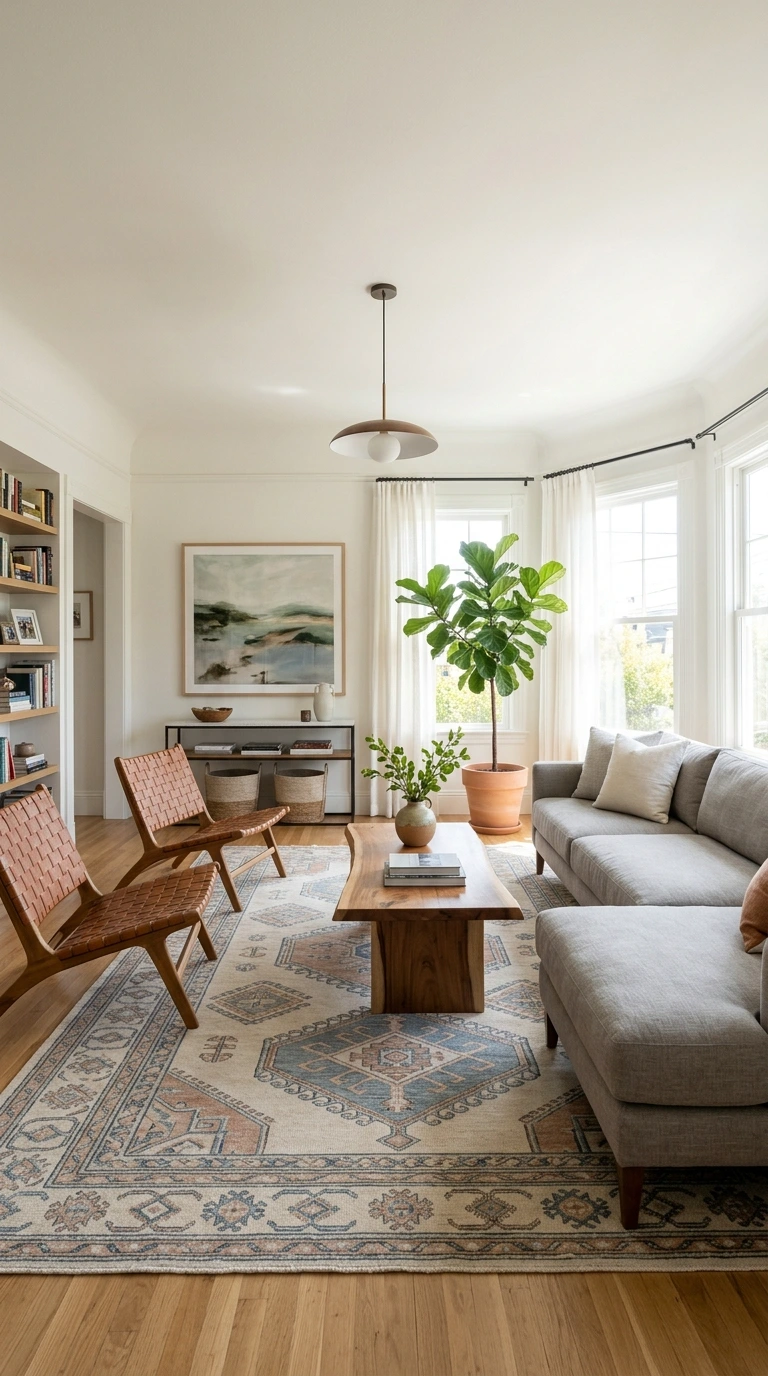
While these sizing rules and formulas provide a genuinely reliable starting point, every living room has its own quirks, an oddly placed doorway, an architectural feature, an unusual furniture piece, that might call for a slight adjustment from the standard guidance. Treat these formulas as a strong default rather than an absolute rule that overrides what actually looks and functions best in your specific space.
The goal is always a room that feels balanced, intentional, and comfortable to actually live in, not a rug that technically satisfies every measurement on a checklist. Once you understand the underlying logic behind these formulas, you’ll find it considerably easier to make a confident judgment call whenever your room doesn’t fit the standard pattern exactly.
Frequently Asked Questions
1. What’s the most common rug size for an average living room?
An 8 by 10 foot rug is generally considered the most versatile, standard choice for average-sized living rooms, working well with the popular front-legs-on layout approach. This size fits comfortably in rooms without being either noticeably oversized or undersized.
2. Should all my furniture legs be on the rug or just the front legs?
Both approaches work, but consistency matters most, whichever option you choose should apply to every piece of seating furniture in the room. The front-legs-on approach is the most common designer default, while all-legs-on works well in larger rooms where you want maximum coverage.
3. How much space should I leave between my rug and the walls?
Most designers recommend 12 to 18 inches of visible bare floor between the rug’s edge and the walls, though this can extend to 24 or even 36 inches in larger rooms. This border keeps the rug from feeling like wall-to-wall carpet while still providing adequate coverage.
4. Is it better to size up or down when I’m unsure?
Always size up when you’re torn between two options, since an undersized rug is consistently cited as the most common and most noticeable rug mistake. A slightly larger rug almost always looks more intentional than one that falls short.
5. What rug size works for a small living room?
A 5 by 8 or 6 by 9 rug typically works best in a small living room, often as a floating option under a coffee table or with just the front legs of smaller furniture resting on it. Even in a small space, avoid sizing down so far that the rug looks isolated rather than intentional.
6. Do I need a bigger rug if I have an open-concept living room?
Yes, since a rug plays a bigger role in visually defining your seating zone when there are no walls separating it from an adjoining dining or kitchen area. Sizing up beyond what a similarly furnished enclosed room would need helps the rug successfully anchor an open floor plan.
7. Can I use a rug that’s too small if I really love it?
Yes, by layering it over a larger, more affordable rug like jute or sisal that actually anchors your furniture properly. This approach lets your favorite smaller rug still contribute color and pattern while the larger base rug handles the sizing and layout job underneath.
Conclusion
Choosing the right rug size for your living room really comes down to a few reliable formulas: measuring your actual seating area, extending six to eight inches beyond your sofa, and staying consistent with how furniture legs relate to the rug’s edge. These guidelines work across nearly any style, budget, or room shape once you understand the reasoning behind them.
Measure carefully, size up when in doubt, and don’t be afraid to tape out your intended rug’s footprint before committing to a purchase. Your living room will feel considerably more pulled together and spacious once the rug beneath it is finally sized the way it should have been all along.