10 Temporary Fall Accent Wall Decor Ideas Using Peel-and-Stick Wallpaper

Introduction
An accent wall does not need to be a permanent commitment to make a real difference in a room. Peel-and-stick wallpaper gives you the same visual impact as a painted or papered wall, botanical prints, muted watercolor florals, bold jungle leaf murals, without any of the risk that comes with a rental or a decision you might want to change next season. It goes up in an afternoon and comes down just as easily.
Fall makes a strong case for this kind of low-commitment styling. Warm leaf motifs and muted earthy palettes suit the season perfectly, but they do not have to stay up past it if you would rather refresh the wall come spring. The temporary nature of peel-and-stick wallpaper means you can lean fully into a seasonal look without worrying about resale value or an awkward transition later.
This list breaks down exact pattern types, application tips, and styling choices that make a peel-and-stick accent wall look intentional rather than temporary. Some ideas are as simple as picking the right pattern scale. Others involve a full afternoon of application. Pick what fits your space and start transforming one wall from there.
1. Choose a Botanical Leaf Print for an Easy, Renter-Friendly Accent Wall

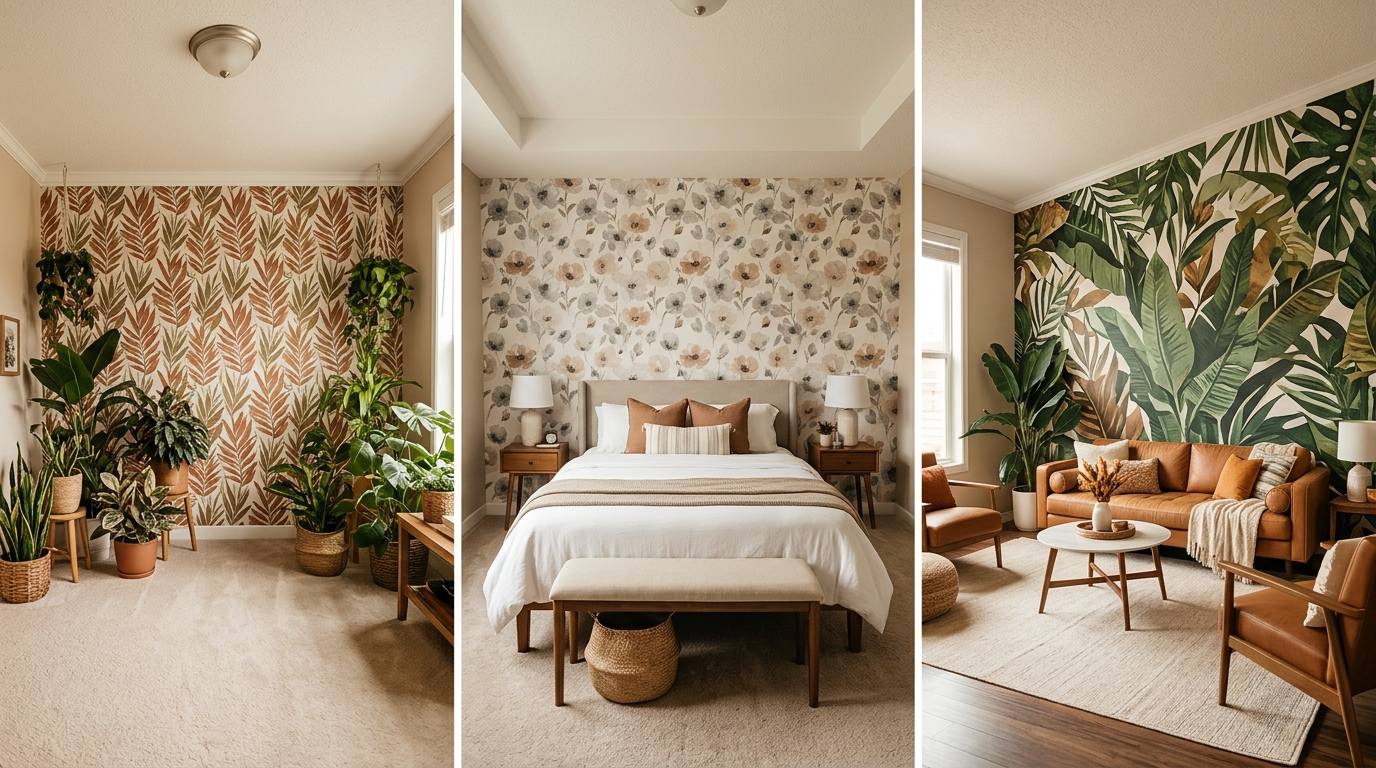
A botanical leaf print in warm rust, olive, and cream tones brings fall color into the room without leaning into anything overtly seasonal or themed. The pattern reads as a permanent design choice rather than a temporary decoration, which is exactly what makes it such a safe, versatile option for renters.
Choose a print with hand-illustrated, slightly imperfect linework over a stiff, symmetrical digital pattern, since the organic quality reads as more natural once applied to a full wall.
2. Add a Muted Watercolor Floral Pattern Behind the Bed

A crisp, saturated pattern can feel busy behind a bed, but a muted watercolor floral in soft sage, rust, and dusty blue adds color and texture without overwhelming the space. The washed-out, blended quality of watercolor patterns works especially well as a soft, quiet backdrop.
💡 Quick Tip
Choose a watercolor pattern with a light, muted background rather than a saturated one, since it keeps the wall from competing with pillows and bedding placed in front of it.
This style pairs especially well with simple, solid-colored bedding, since the wall itself already carries enough visual interest without needing a busy duvet in front of it.
3. Use a Jungle Leaf Mural for a Bold Statement Wall

A living room or entryway with tall ceilings can support a bolder choice than a small bedroom might, and a jungle leaf mural in deep greens with warm floral accents makes a real statement across a full-height wall. The scale and density of the pattern reads as intentional rather than overwhelming once it covers the entire wall.
Keep the surrounding furniture and decor simple and neutral, since a bold mural like this needs visual breathing room to stay the clear focal point of the space.
4. Choose Abstract Shapes With Leaf Accents for a Modern Look

A more contemporary take on fall styling pairs abstract organic shapes, soft circles and blobs in terracotta and sage, with simple line-drawn leaf accents scattered throughout. This style suits a modern living room better than a literal botanical print, while still nodding to the same seasonal color palette.
Before you choose this style, check for:
This pattern style tends to photograph especially well with a floor lamp or plant stand positioned in front of it, since the simple furniture silhouette contrasts cleanly against the busier wall.
5. Pick a Muted Sage and Rust Palette to Suit Any Season

Choosing a wallpaper palette in muted sage and rust, rather than bright orange or obvious pumpkin motifs, means the accent wall does not need to come down the moment fall ends. This approach gets more use out of a temporary application, since the same wall works for winter and even into early spring.
A bright orange, overtly seasonal pattern that needs removing the moment fall ends.
A muted sage and rust palette carries the room comfortably through multiple seasons.
Swap in seasonal decor pieces, like pumpkins in fall or greenery in winter, in front of the wall rather than relying on the wallpaper itself to carry the seasonal theme.
6. Apply Peel-and-Stick Wallpaper to Just One Wall for Impact

Papering every wall in a room is a bigger commitment and a bigger removal project later. Applying peel-and-stick wallpaper to just one wall, ideally the one that draws the most attention, gets the same visual impact with a fraction of the material and effort.
Choose the wall with the least furniture and outlets to keep application simple.
Clean and fully dry the wall surface before starting.
Apply from the top down, smoothing out air bubbles as you go.
The wall behind a bed, sofa, or accent chair almost always makes the best single choice, since it gets seen constantly without needing to navigate around furniture during application.
7. Layer Real Plants and Decor in Front of a Botanical Print

A botanical or jungle print wall can look a little flat if it stands entirely on its own without anything layered in front of it. Real potted plants, woven baskets, and a few dried stems placed against the wall blur the line between the printed pattern and the actual room, making the whole space feel more cohesive.
Place a few real plants directly against the wall to blend with the printed leaves.
Add a woven basket or textured object nearby to echo the pattern’s organic feel.
Leaving the wall completely bare, which can make the pattern feel flat and two-dimensional.
Placing furniture in front of it that clashes badly with the wallpaper’s color palette.
Choosing plants with a similar leaf shape to the printed pattern, like a fiddle leaf fig against broad printed leaves, creates a seamless visual transition between real and printed foliage.
8. Test a Wallpaper Sample Before Committing to the Full Wall

Colors and patterns almost always look different on a small screen than they do at full scale on an actual wall. Ordering a sample swatch first, and holding it up against the wall in different lighting throughout the day, avoids the disappointment of a full roll that does not read the way it looked online.
📌 Good To Know
Stick the sample to the wall for at least a full day, checking it in morning, afternoon, and evening light, since color temperature shifts noticeably throughout the day.
Most peel-and-stick wallpaper brands sell samples for a small fee, which is a worthwhile expense compared to the cost of an entire roll that ends up not suiting the room.
9. Choose a Pattern Scale That Suits Your Room Size

A large, dramatic leaf pattern that looks stunning in a spacious living room can overwhelm a small bedroom, while a delicate, tiny print can get lost on a tall accent wall. Matching the pattern’s scale to the actual size of the wall keeps the final result looking proportional rather than either too busy or too timid.
If in doubt between two pattern sizes, sizing up slightly for a large wall usually reads better than sizing down, since an undersized pattern can look like an afterthought once fully applied.
10. Remove and Reuse Peel-and-Stick Wallpaper When the Season Changes

One of the biggest advantages of peel-and-stick wallpaper is that a well-applied panel can come down cleanly and, in many cases, be reapplied elsewhere later. Storing the removed panels properly means this season’s accent wall investment is not a one-time use.
Peel the wallpaper down slowly, starting from one corner at a low angle.
Roll each removed panel loosely, pattern-side out, to prevent creasing.
Store the rolls flat or upright in a cool, dry spot until the next application.
Reapplication success depends heavily on the wall surface staying clean and smooth, so patch and repaint any spots that got damaged during the original application before putting the panels back up.
Conclusion
A temporary accent wall gives you the freedom to try a bolder pattern or color than you might commit to permanently, since peel-and-stick wallpaper comes down just as easily as it goes up. Start with one wall, ideally the one that gets the most attention in the room, and let that single change carry most of the season’s visual impact.
You do not need to paper every room to feel the shift. One botanical print behind the bed or one bold mural in the living room can transform the whole space within an afternoon. Test a sample first, measure your pattern scale carefully, and store the panels properly if you plan to reuse them next season.
The best accent walls are not the most permanent ones. They are the ones you can change your mind about.