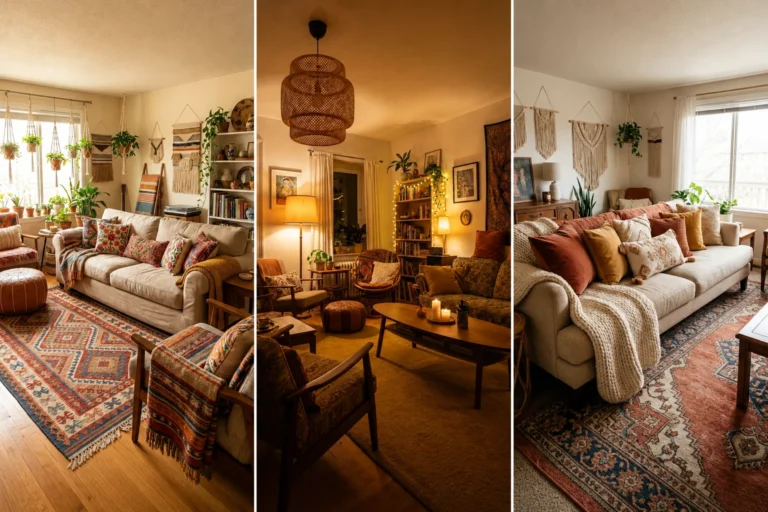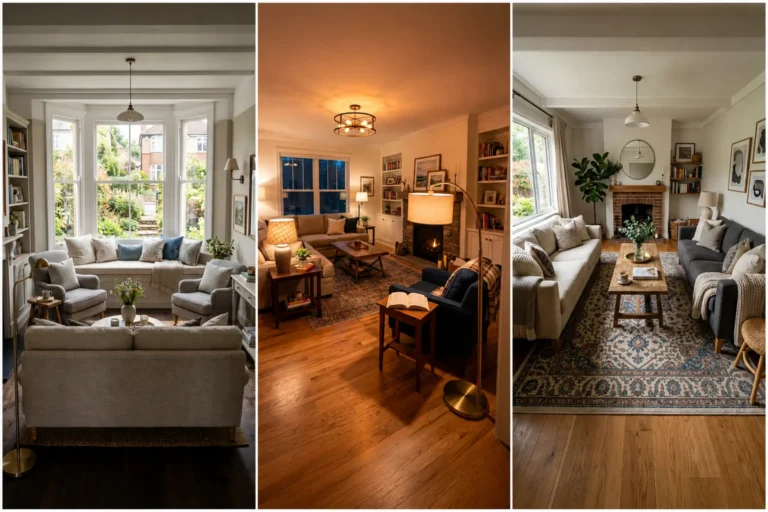
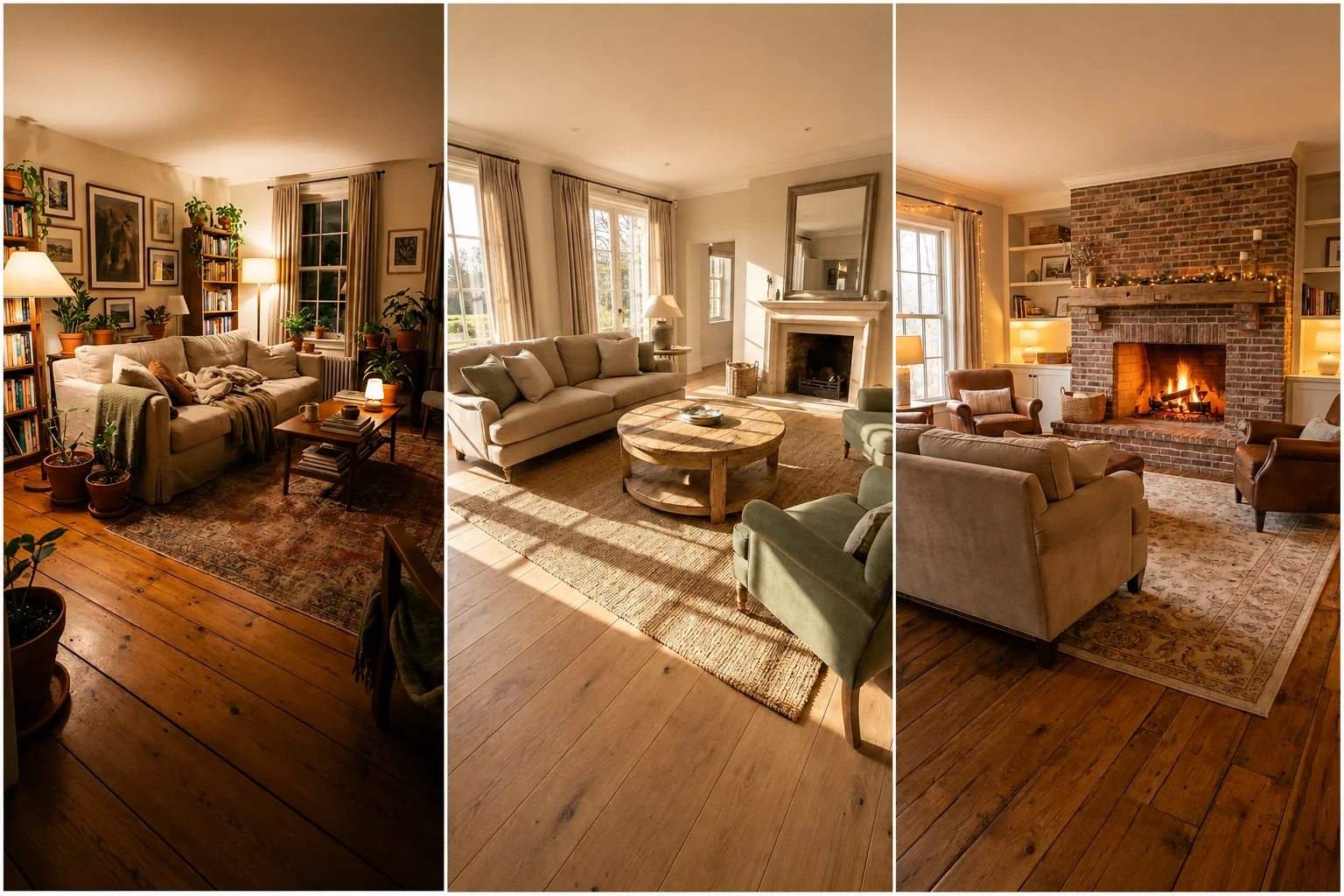
Living Room Decorating for Beginners: Where to Start When You Have No Idea

Introduction
Staring at an empty or mismatched living room with no idea where to begin is one of the most common feelings in home decorating, and it’s completely normal. Professional designers don’t start by picking out throw pillows either; they start with a process, a series of small, sequential decisions that build on each other until the room comes together. Once you understand that process, decorating stops feeling like guesswork and starts feeling like a plan you can actually follow.
This guide breaks that process down into 25 beginner-friendly steps, starting with the foundational decisions that shape everything else and moving toward the smaller finishing touches that make a room feel personal. You don’t need to tackle all 25 at once, and you definitely don’t need a big budget to get started. Work through them in order, and you’ll end up with a living room that feels intentional rather than accidental.
1. Define Your Design Style Before You Buy Anything
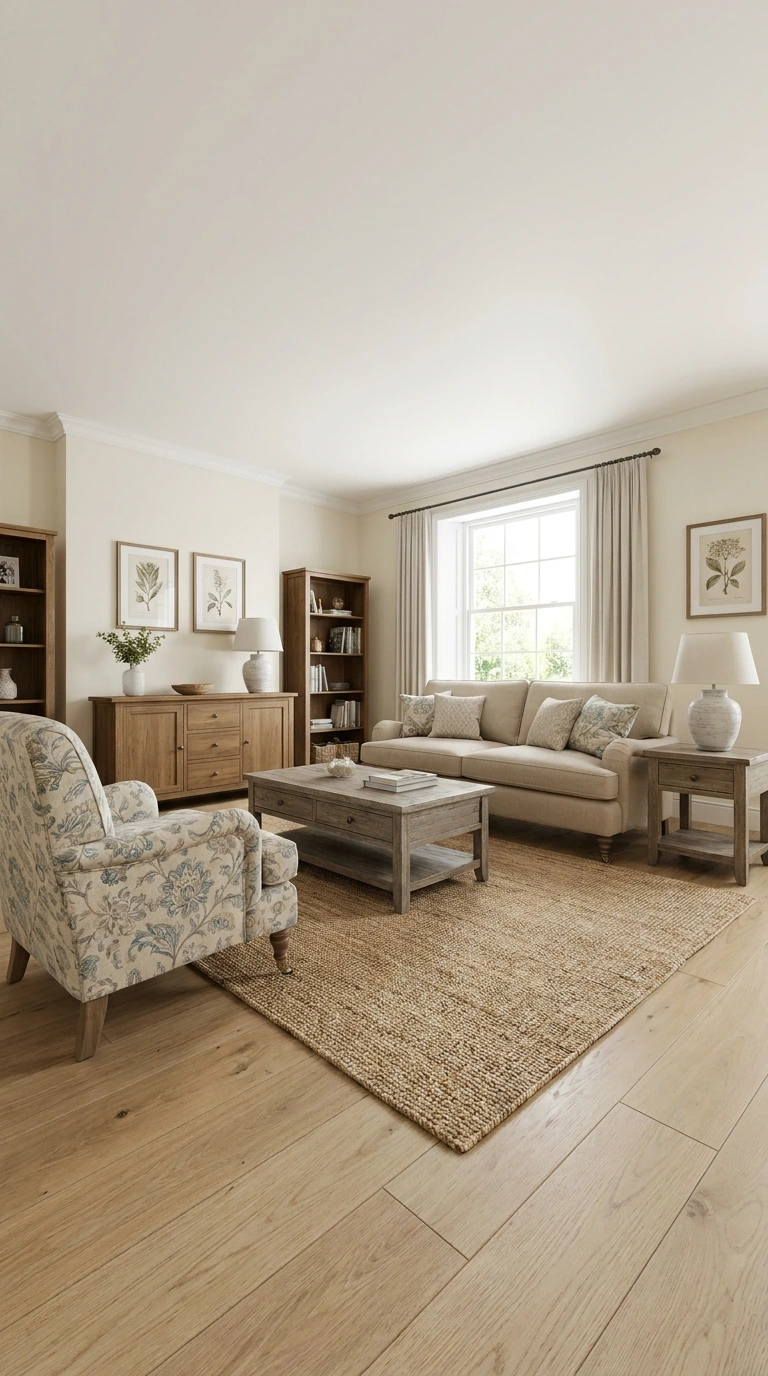
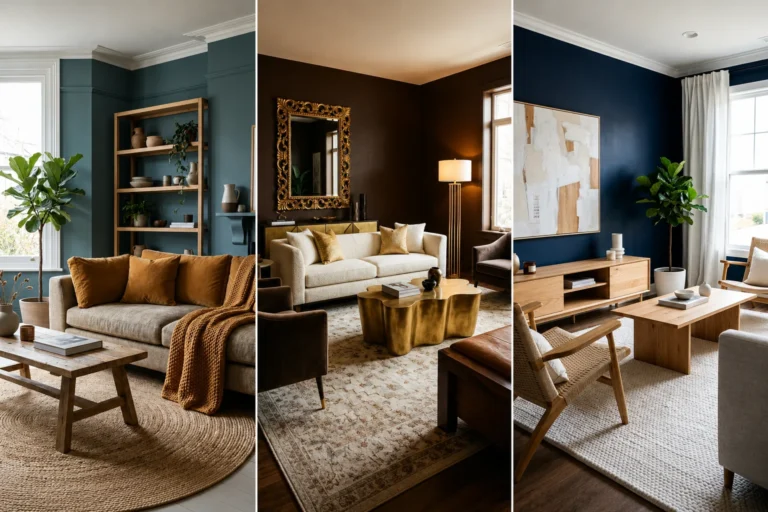
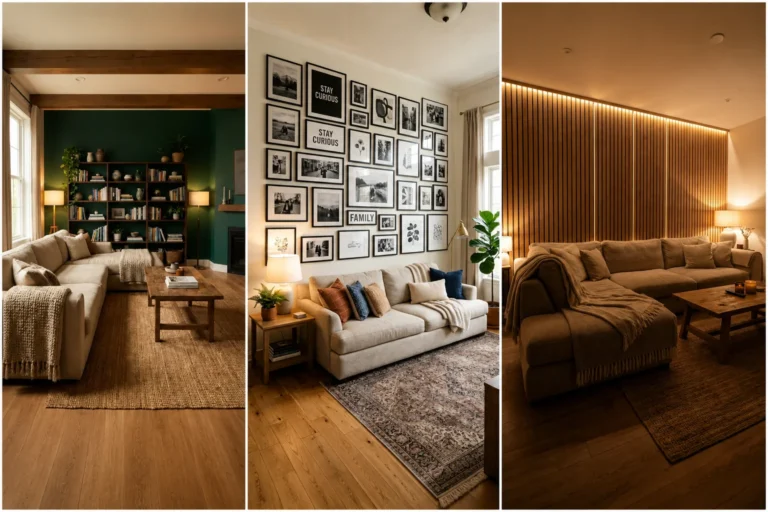
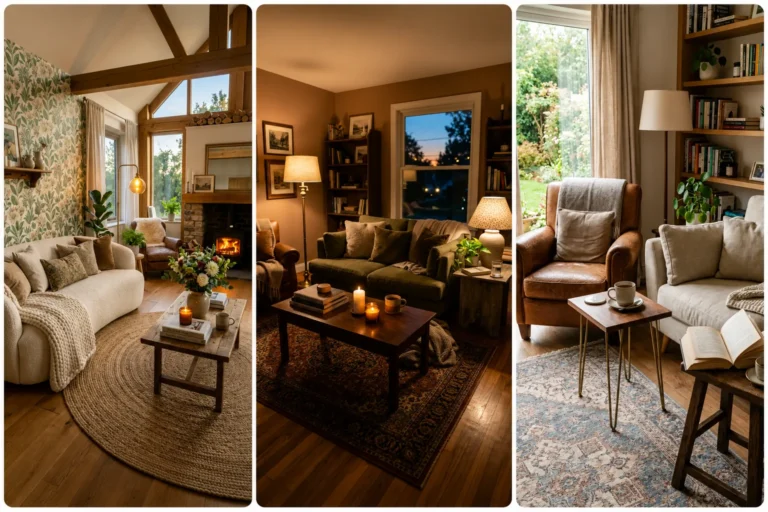
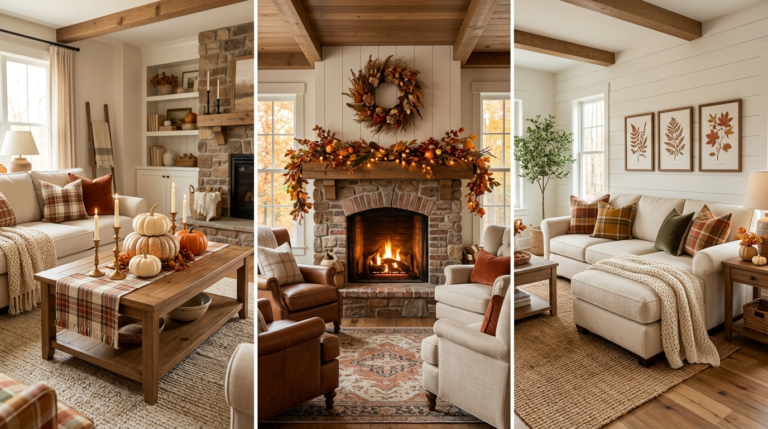
Before you buy a single item, take time to figure out what style actually appeals to you, whether that’s modern minimalism, cozy traditional, warm farmhouse, or something in between. Skipping this step is the single most common reason beginner decorating projects end up feeling disjointed, since every purchase gets made in isolation rather than working toward a shared vision.
Start by collecting images that genuinely evoke a reaction from you, not just ones that look nice in isolation. A simple Pinterest board or a folder of saved photos works fine at this stage; the goal is pattern recognition, noticing which colors, shapes, and textures keep showing up in the images you’re drawn to, so you can name your style before you start spending money on it.
2. Declutter the Room First
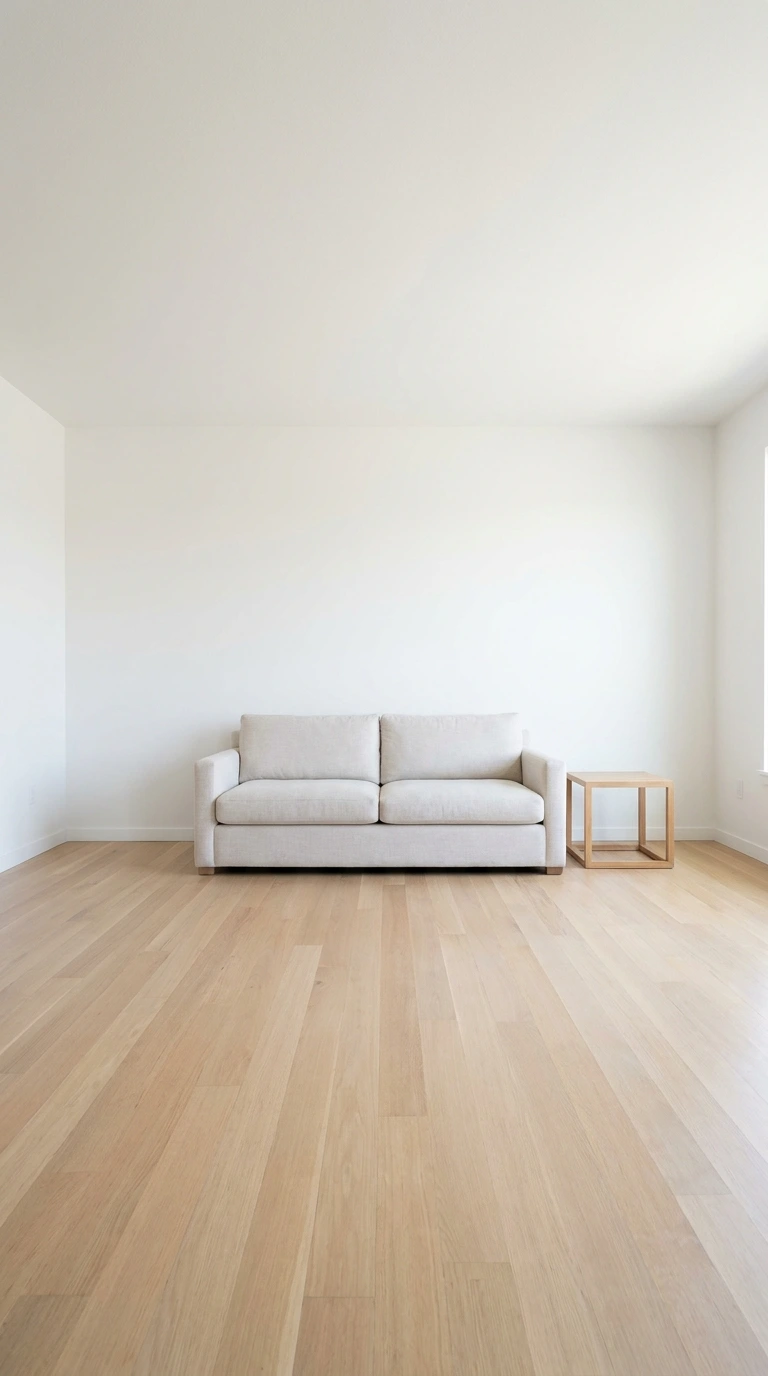
It’s tempting to jump straight into shopping for new furniture and decor, but the most effective starting point is actually removing what doesn’t belong. A cluttered room makes it nearly impossible to judge scale, flow, or what’s actually missing, since your eye is constantly distracted by things that shouldn’t be there in the first place.
Go through the room and separate items into keep, relocate, and donate piles, being honest about what you actually use versus what’s simply been sitting there out of habit. Once the clutter is gone, you’ll likely notice the room already looks and feels better, even before a single new piece has been added, which makes it much easier to see what genuinely needs attention next.
3. Set a Realistic Budget Before You Shop
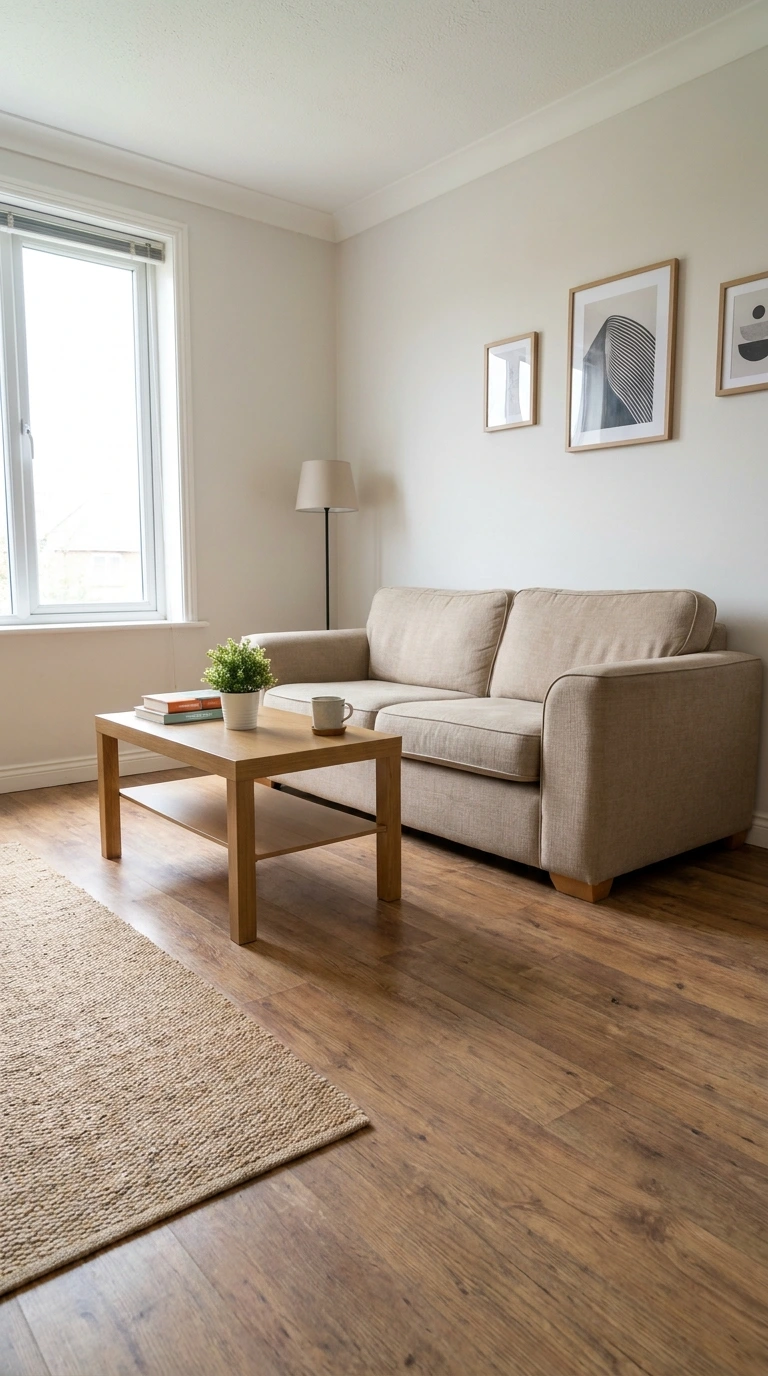
Decide on a total budget for the room before you fall in love with anything specific, and then break that total down into rough categories: furniture, lighting, textiles, and decor. Without this step, it’s easy to spend most of your budget on one statement piece and then feel stuck compromising on everything else the room needs.
A helpful rule of thumb is to prioritize your budget toward the pieces you’ll use and see the most, typically the sofa and any large rug, since these anchor the room and are the hardest to replace later. Smaller, less expensive items like throw pillows, art, and accessories are easier to swap out over time, so it’s fine to start with basic versions and upgrade them gradually as your budget allows.
4. Measure the Room and Your Furniture
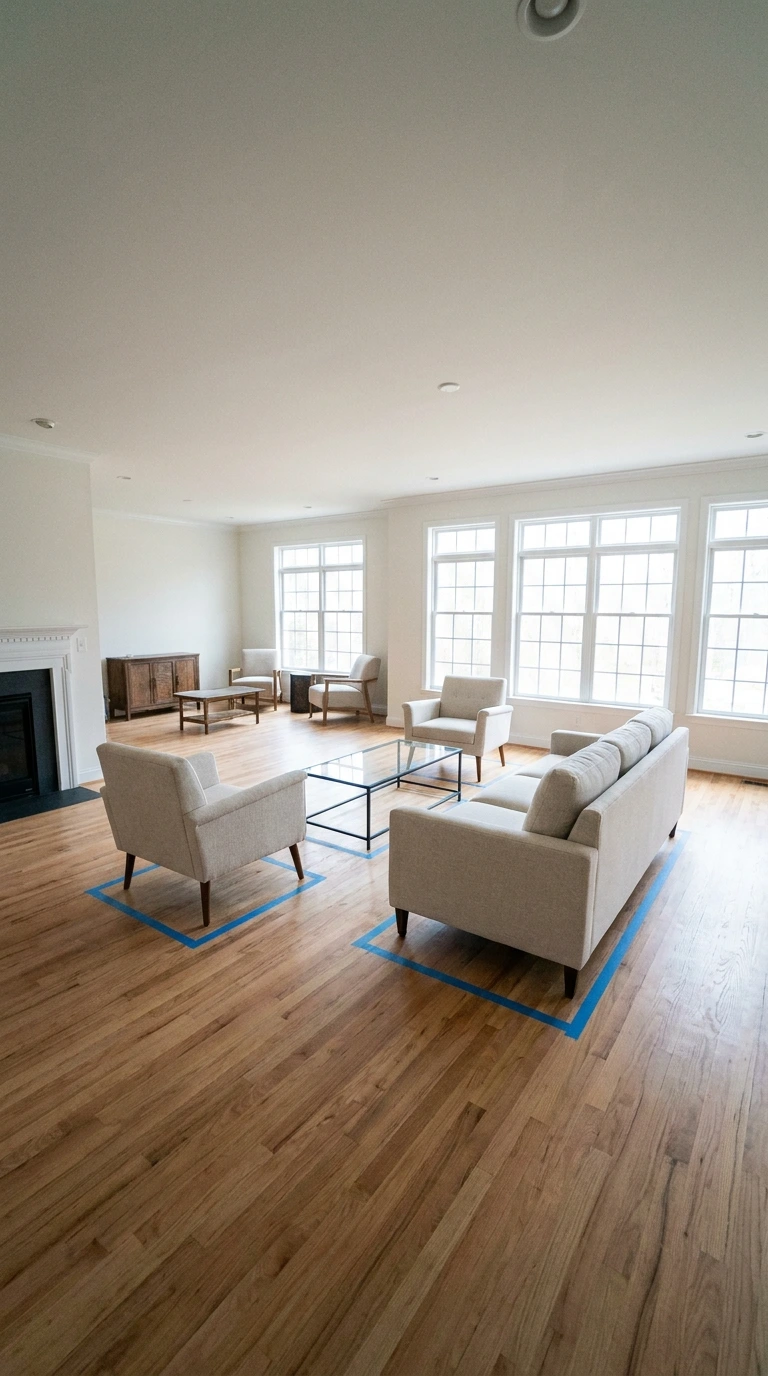
Before buying anything large, measure your living room’s full dimensions, including the placement of windows, doors, outlets, and any built-in features that will affect furniture placement. Skipping this step is one of the fastest ways to end up with a sofa that’s too big for the space or a layout that blocks natural walking paths.
Use painter’s tape on the floor to map out exactly where large pieces like a sofa or media console will sit before you buy them, since this gives you a much more accurate sense of scale than trying to picture it in your head. This same tape method works well for testing rug sizes too, letting you see exactly how much floor space a potential rug purchase will actually cover.
Pro Tip: Painter’s tape is one of the cheapest and most useful tools in a beginner’s decorating kit. Use it to test furniture placement, rug dimensions, and even artwork height before committing to a single purchase.
5. Choose One Focal Point for the Room
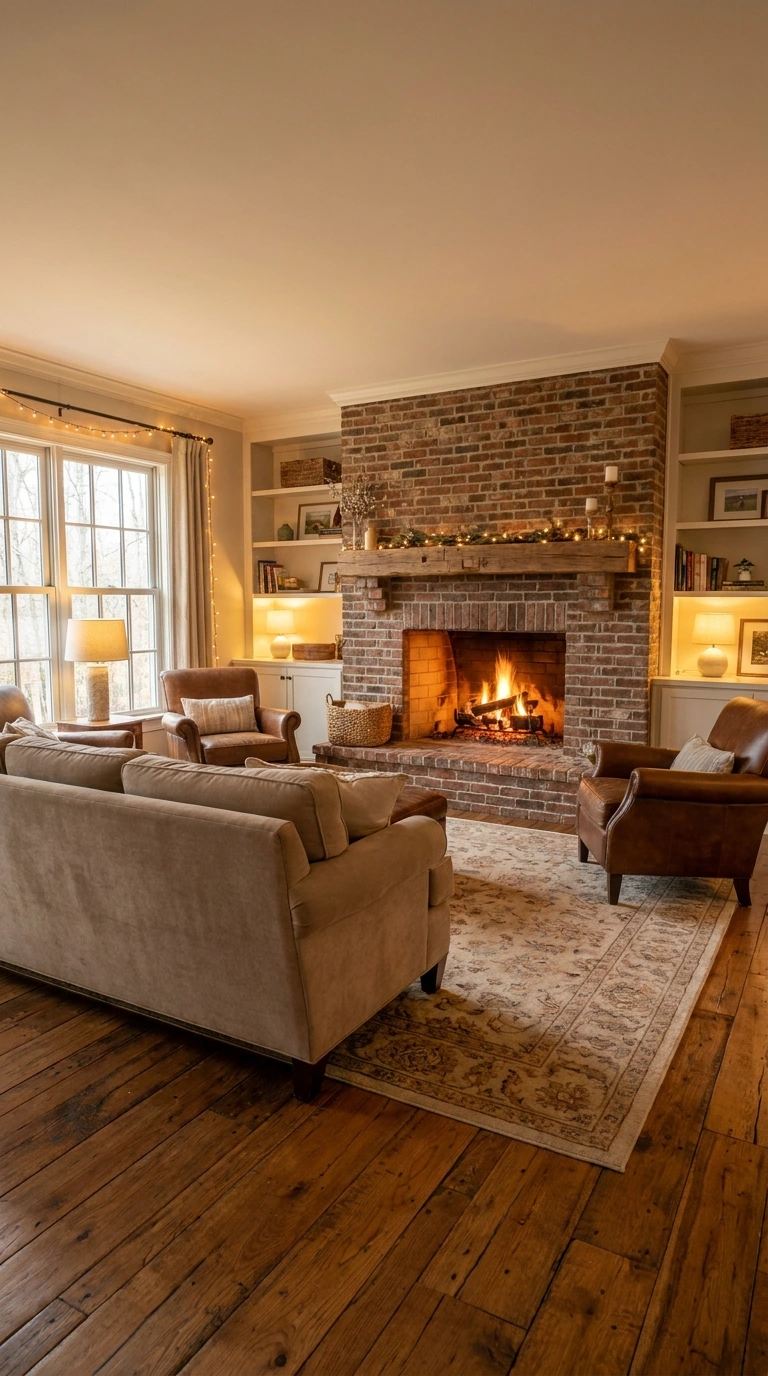
Every well-designed living room has a clear focal point, whether that’s a fireplace, a large window, a media wall, or a piece of statement furniture, and the rest of the room’s layout should be organized around it. Without a defined focal point, furniture and decor tend to feel scattered, with no clear sense of where the eye is supposed to land first.
If your room doesn’t have an obvious architectural focal point like a fireplace, you can create one deliberately, often with a bold piece of art, a striking accent wall, or even a particularly eye-catching sofa. Once you’ve chosen your focal point, arrange your main seating to face it, which immediately gives the room a sense of purpose and direction.
6. Learn and Apply the 60/30/10 Color Rule
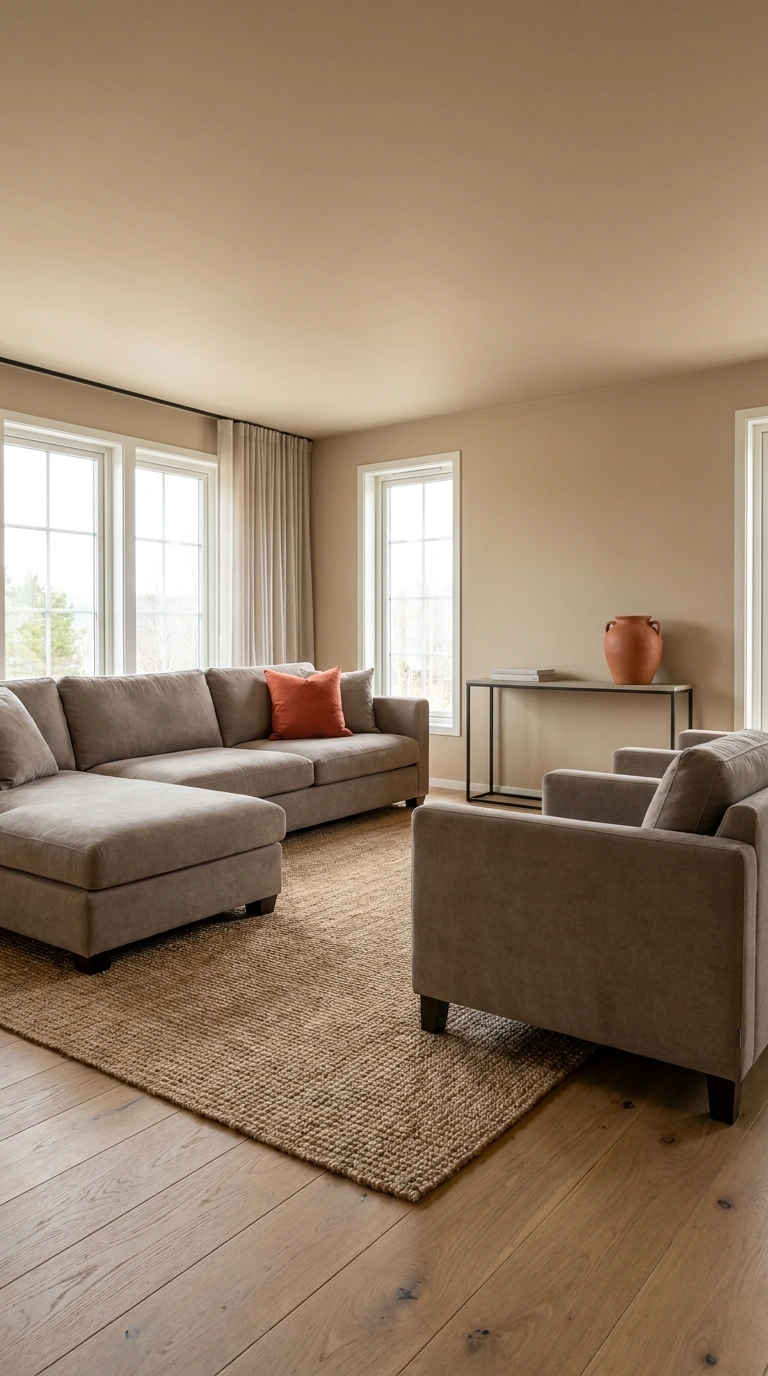
The 60/30/10 rule is one of the simplest tools for building a color palette that feels balanced rather than random: 60 percent of the room uses a dominant color, usually on walls and large furniture, 30 percent uses a secondary color or texture, and the remaining 10 percent is reserved for accent pops of color in smaller details.
Applying this rule doesn’t mean being rigid about exact percentages, but it does give you a framework to check your choices against before committing. If you notice your room is missing that final 10 percent accent color, a few throw pillows, a vase, or a piece of art in a bolder shade is usually all it takes to complete the palette without overwhelming the space.
Warning: Don’t buy a full matching furniture set just because it’s convenient. A living room where every piece comes from the same collection often ends up looking flat and impersonal rather than curated and layered.
7. Invest in a Quality, Timeless Sofa
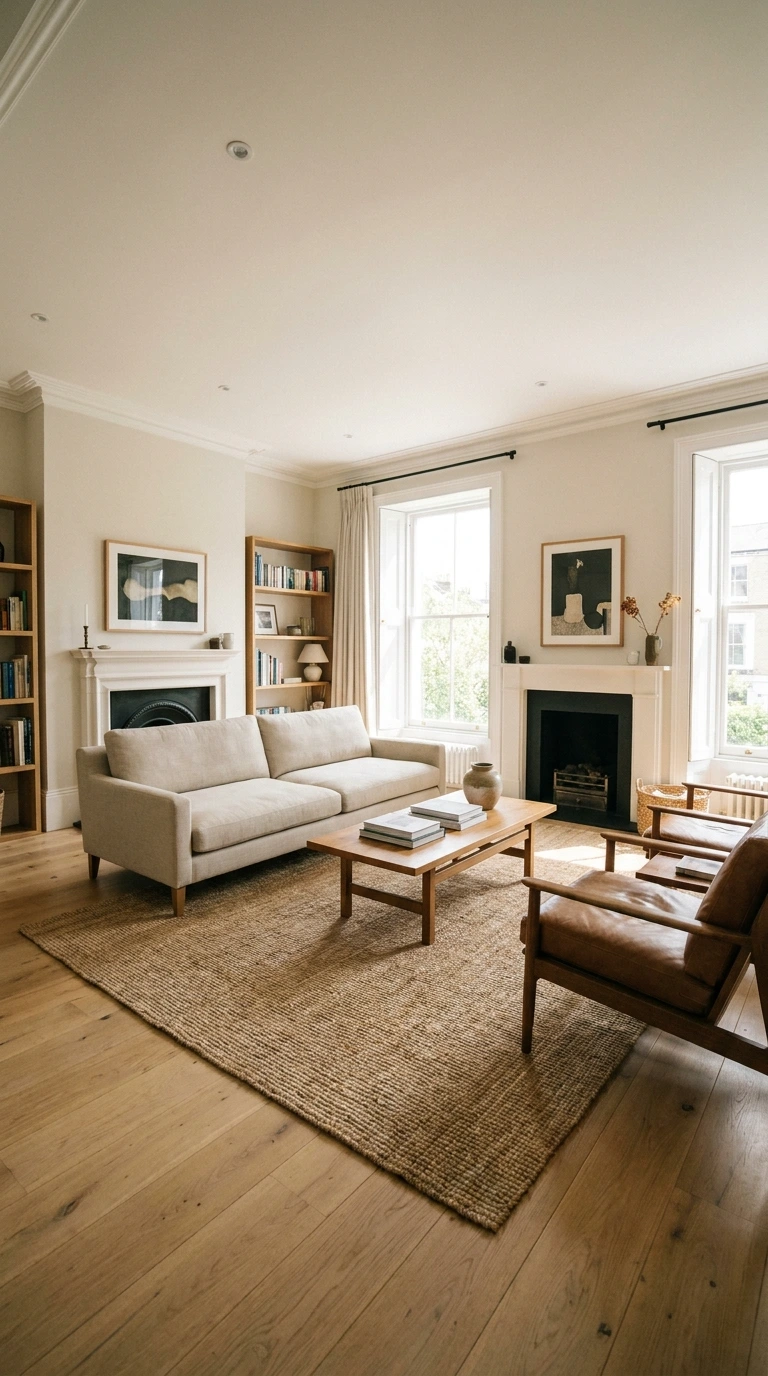
Your sofa is typically the most expensive and most-used piece of furniture in the living room, which makes it worth prioritizing quality and timeless design over chasing a passing trend. A well-constructed sofa in a classic silhouette and neutral color will still look current in five or ten years, long after a trendier option might start to feel dated.
Because the sofa anchors so much of the room’s overall look, think of it as a blank canvas you’ll layer color, pattern, and texture onto through pillows, throws, and other accessories. This approach also protects your budget over time, since it’s far cheaper to update a few pillows than to replace an entire sofa when your taste evolves.
8. Get the Rug Size Right
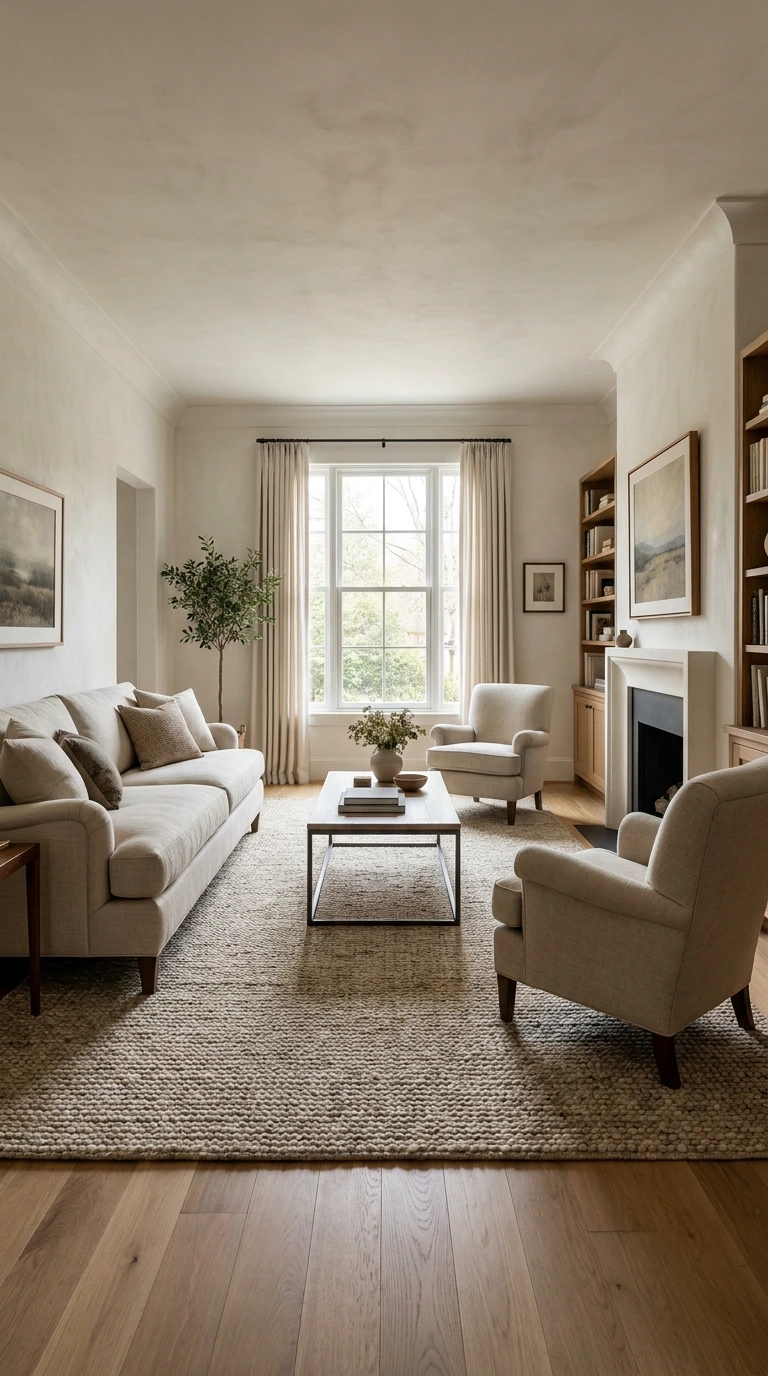
A rug that’s too small is one of the most common and most noticeable beginner mistakes in living room decorating. As a general guideline, aim for a rug large enough that at least the front legs of your sofa and chairs rest on top of it, which anchors the furniture rather than letting it float awkwardly in the middle of bare floor.
If you’re torn between two sizes, sizing up is almost always the safer choice, since an oversized rug reads as intentional while an undersized one tends to look like an afterthought. Use the painter’s tape method mentioned earlier to test your intended rug size directly on the floor before ordering, especially if you’re shopping online without the ability to see the rug in person first.
Important: A rug edge that cuts across a chair or sofa leg looks accidental rather than intentional. If you can’t commit to a size that fully clears the front legs, size up rather than settling for an awkward partial overlap.
9. Choose a Coffee Table That Fits the Scale of the Room
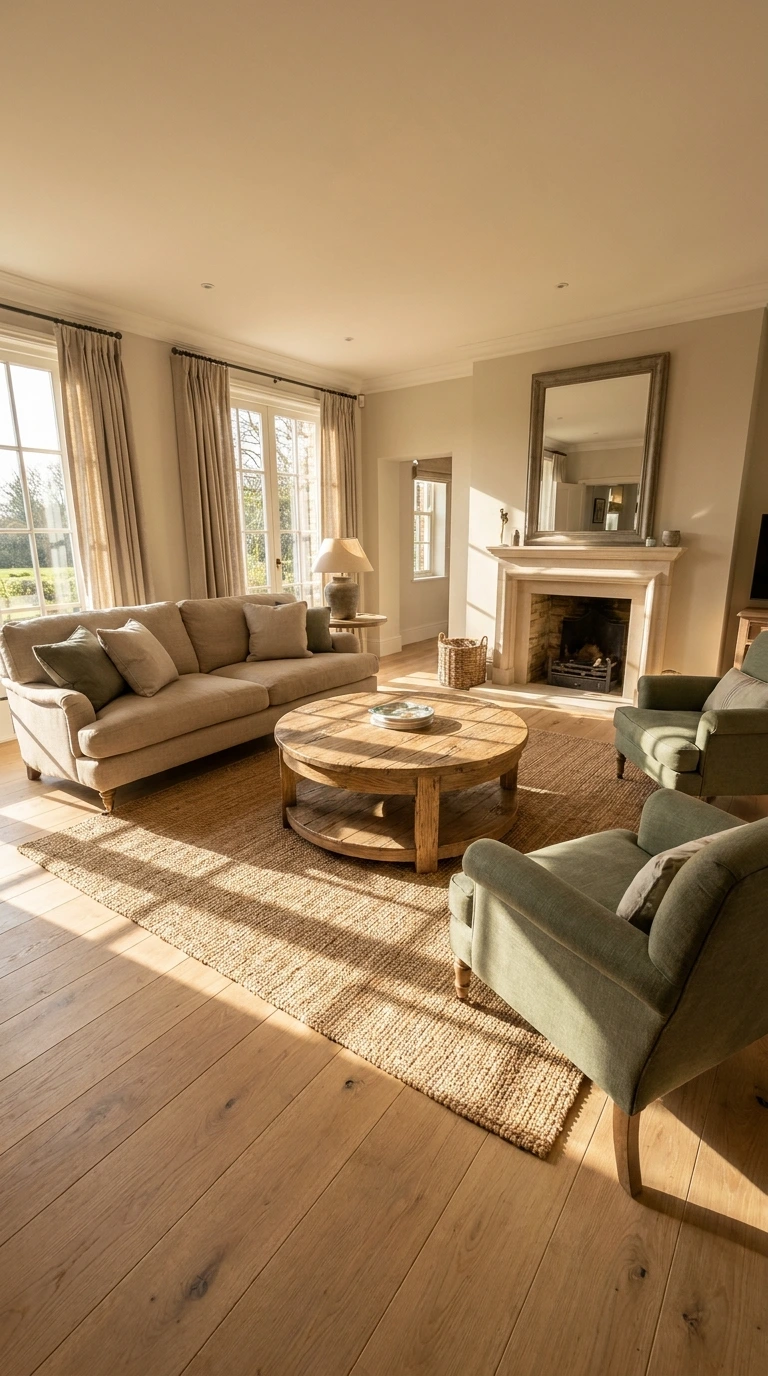
Your coffee table should match the scale of your seating arrangement, sitting roughly proportional to your sofa’s length and low enough that it doesn’t visually compete with the seat height around it. A table that’s too small can look lost in a large seating area, while one that’s too large can make the whole layout feel cramped.
As a rough guideline, leave about 14 to 18 inches of space between your coffee table and surrounding seating, which allows comfortable legroom while still keeping everything within easy reach. If you’re short on space or prefer more open floor area, consider a round coffee table instead of a rectangular one, since the softer shape can make walking paths feel less obstructed.
10. Define a Clear Conversation Area
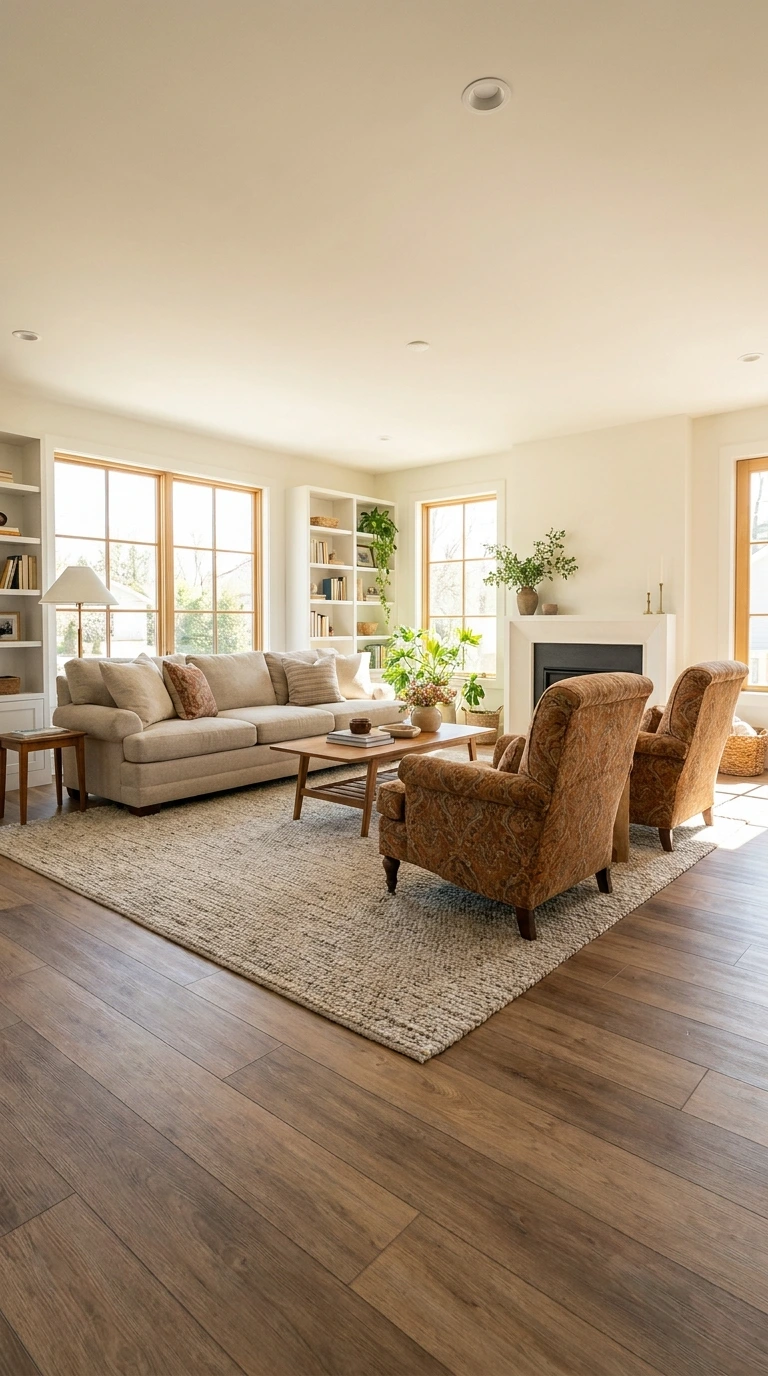
The foundation of any living room layout is a defined conversation area, typically built around a sofa and one or two chairs arranged so people can comfortably talk without raising their voices or twisting awkwardly. This core arrangement should be established before you start layering in accessories or worrying about smaller details.
If your living room is large enough, consider whether it needs more than one distinct zone, such as a separate reading nook or a dining area, and use rugs, furniture orientation, or even a room divider to visually define where each zone begins and ends. Clearly separated zones make a larger room feel organized rather than like one big undefined space.
11. Add a Second Seating Piece for Conversation
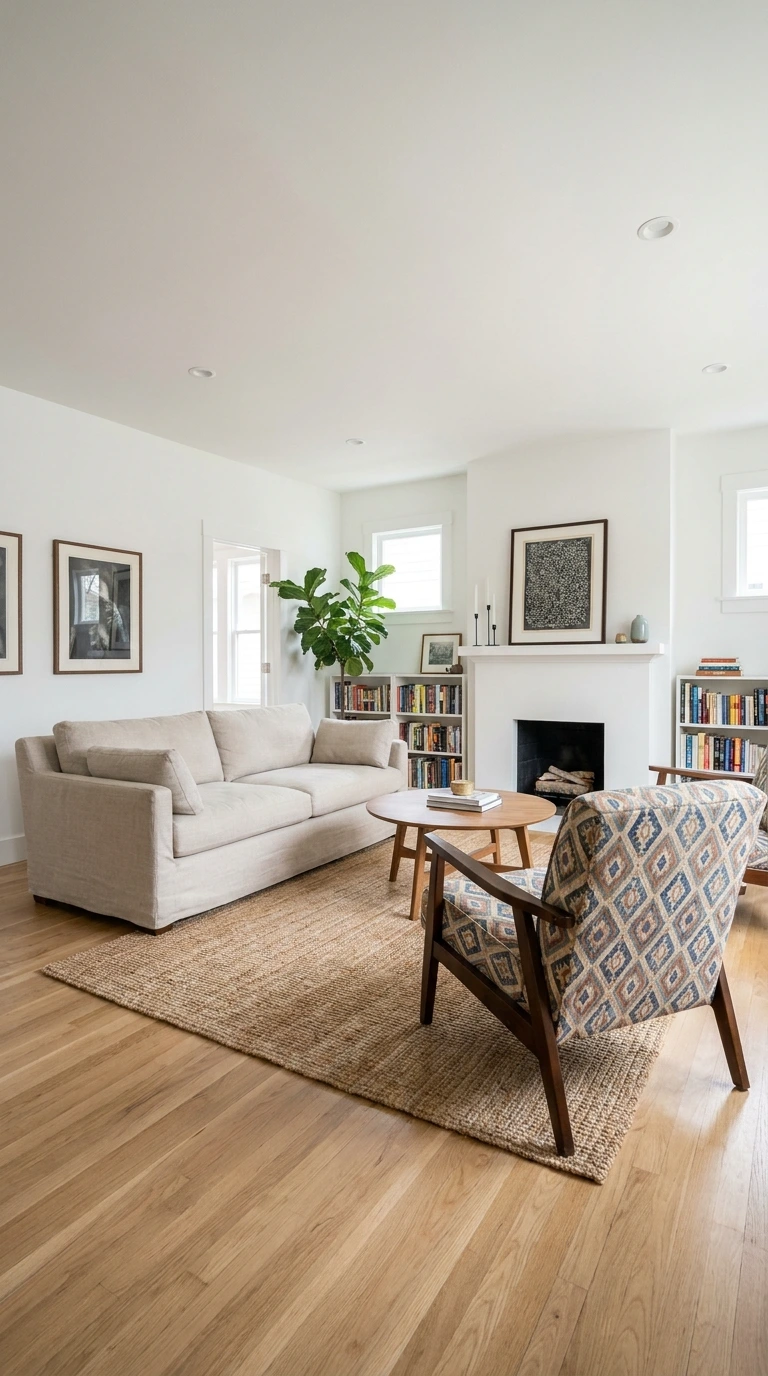
Most living rooms benefit from more than just a single sofa, since an additional chair or two makes the space significantly more conducive to conversation and accommodates guests without anyone needing to pull up a dining chair. This is especially true if your sofa faces a television, since an angled chair or two gives people an alternative seat that still faces the group.
Choose a second seating piece that complements rather than exactly matches your sofa, since a slightly different fabric, color, or silhouette adds visual interest without clashing. Just be careful not to overcrowd the room in the process; if floor space is tight, a single well-placed accent chair is usually better than squeezing in two.
- ✅ Leave at least 30-36 inches of clearance for main walking paths
- ✅ Confirm your rug is large enough for at least the front legs of major furniture
- ✅ Keep coffee tables 14-18 inches from surrounding seating
- ✅ Arrange seating to face your room’s chosen focal point
- ✅ Test large furniture placement with painter’s tape before buying
12. Layer Your Lighting Instead of Relying on One Source
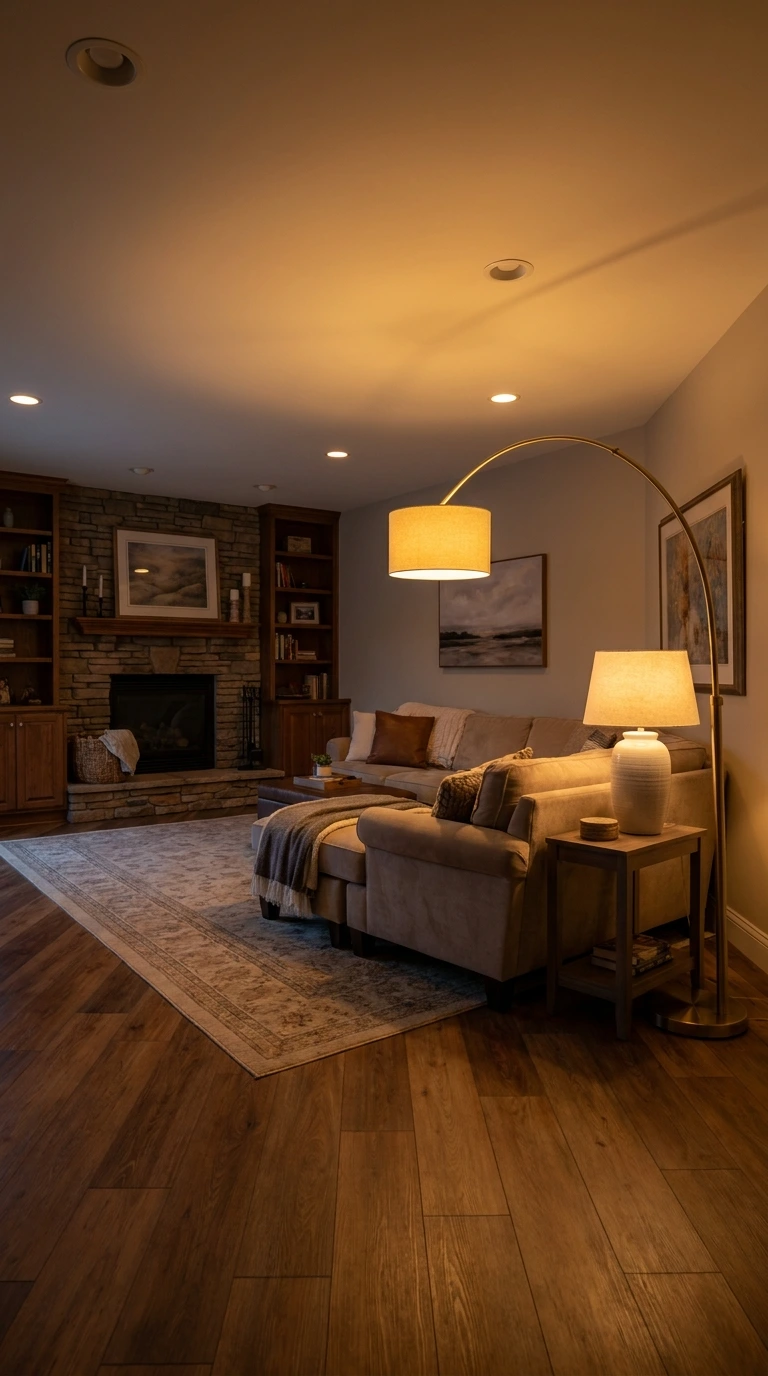
A single overhead light rarely does a living room justice, since it tends to flatten the space and leave corners feeling dark and undefined. Designers consistently recommend layering at least two or three light sources, combining ambient overhead lighting with floor lamps, table lamps, or wall sconces to create depth and warmth throughout the room.
When adding a floor lamp, position it near where people actually sit in the evening, such as beside a reading chair, rather than simply filling an empty corner for the sake of it. For bulb choice, aim for a warm color temperature around 2700K to 3000K, which creates a cozier, more inviting glow than the cooler, more clinical light of a higher Kelvin bulb.
| Starting Point | Best For | First Priority | Typical Budget Split |
|---|---|---|---|
| Empty First Home | No existing furniture | Sofa, rug, and layout | Heavy on furniture |
| Mismatched Hand-Me-Downs | Furniture from multiple sources | Declutter and define style | Heavy on textiles/paint |
| Outdated but Functional | Furniture works, look feels stale | Color, lighting, and accessories | Even split |
| Small Apartment | Limited square footage | Scale and multi-functional pieces | Heavy on smart storage |
13. Mix Wood Tones Intentionally
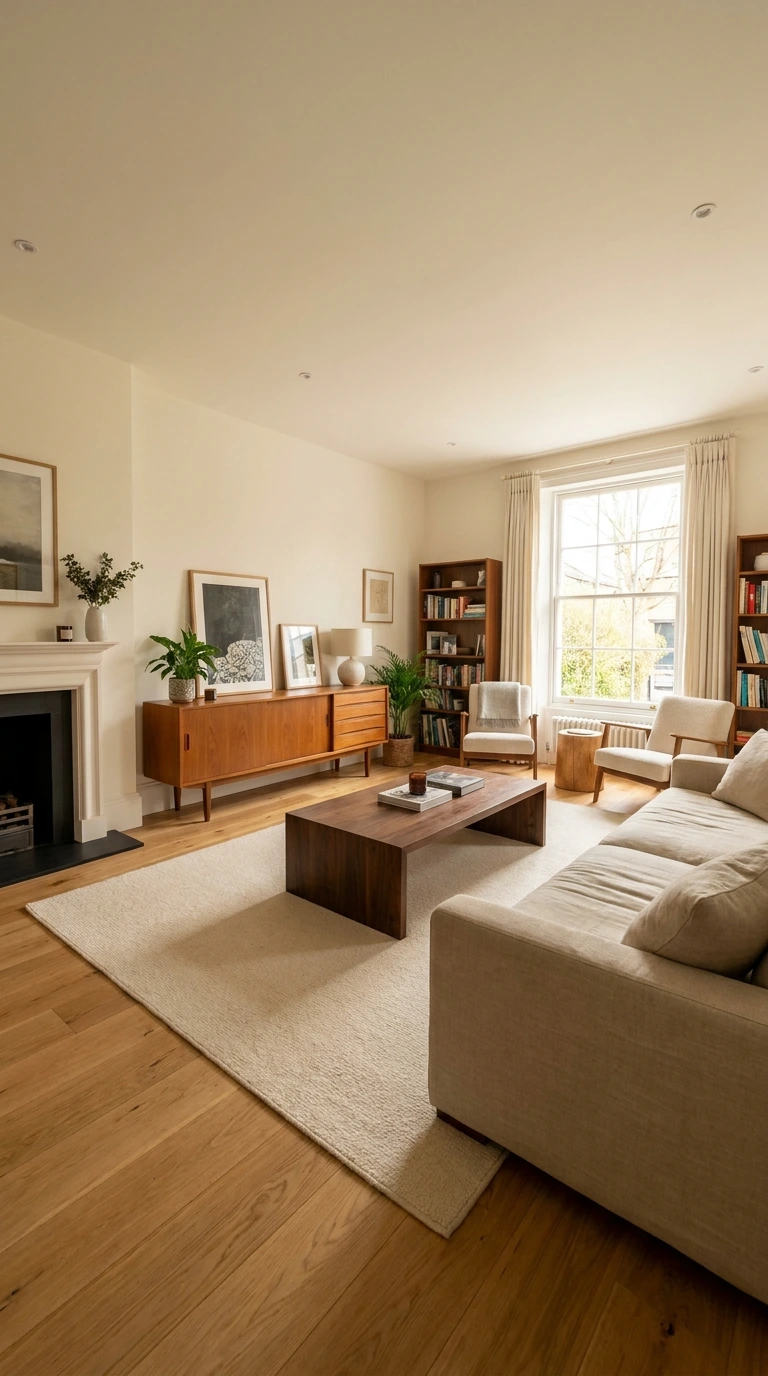
A once-common design rule insisted that all wood furniture in a room should match exactly, but current design thinking has moved firmly away from that idea. Mixing two or three complementary wood tones, such as a warm walnut coffee table alongside lighter oak flooring, actually adds depth and visual interest that a perfectly matched room lacks.
The key to mixing wood tones successfully is keeping an undertone connection between the pieces, generally staying within either warm tones or cool tones rather than combining starkly orange and gray woods in the same space. A shared color family keeps the mix feeling intentional rather than accidental.
14. Build in Hidden Storage
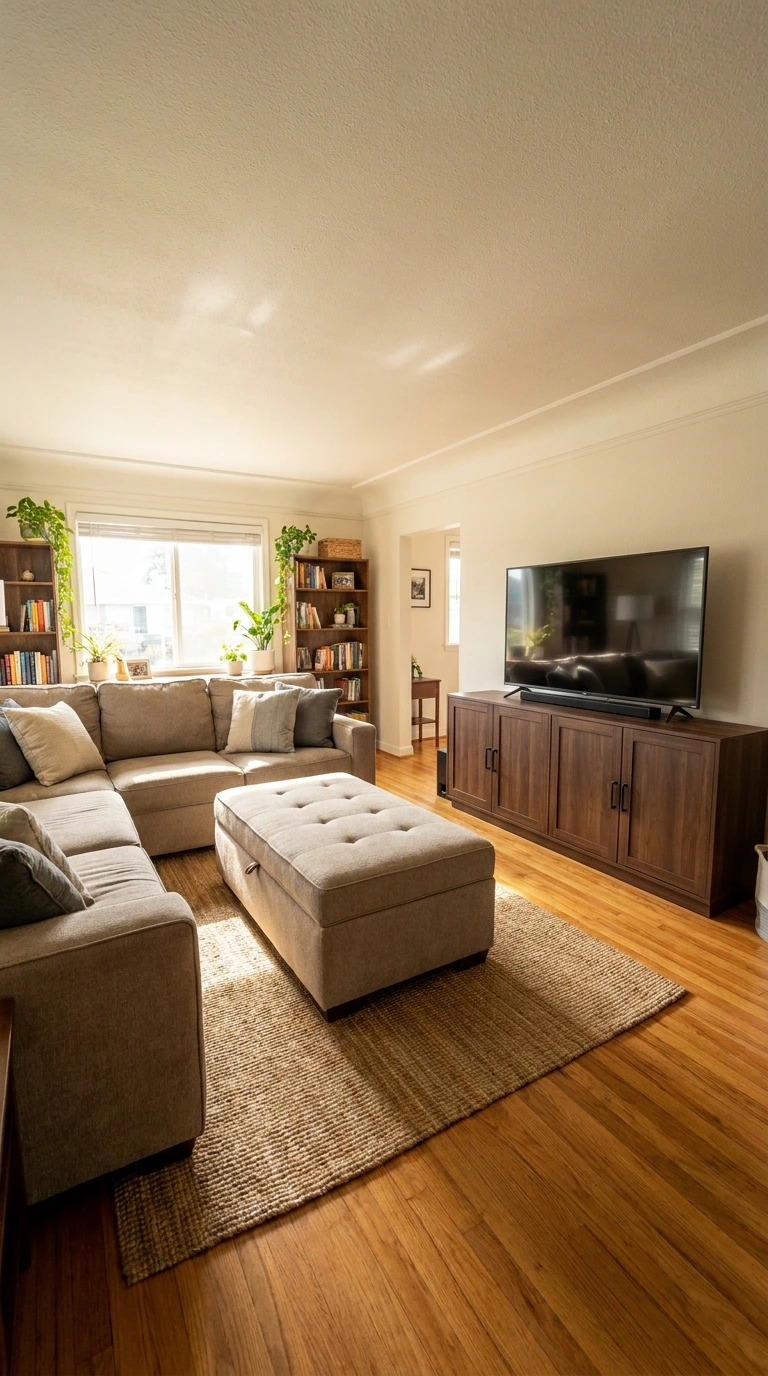
Living rooms accumulate clutter fast, from remote controls to children’s toys to stray mail, and a room without dedicated storage will always feel more chaotic than one that has a place for everything. Built-ins, storage ottomans, media consoles with closed cabinets, or even a simple storage bench all solve this problem without requiring a full renovation.
If your living room doubles as a family space, prioritizing storage early on will save you significant frustration later, since retrofitting storage into an already-decorated room is far more disruptive than planning for it from the start. A storage ottoman is a particularly beginner-friendly option, since it also doubles as extra seating or a footrest.
Warning: Open shelving looks great in photos but only stays looking great if you’re realistic about how much you’ll actually maintain it. If tidiness isn’t a priority day-to-day, lean toward closed storage instead of open shelves that will visibly collect clutter.
15. Mix Upholstery Rather Than Matching Everything
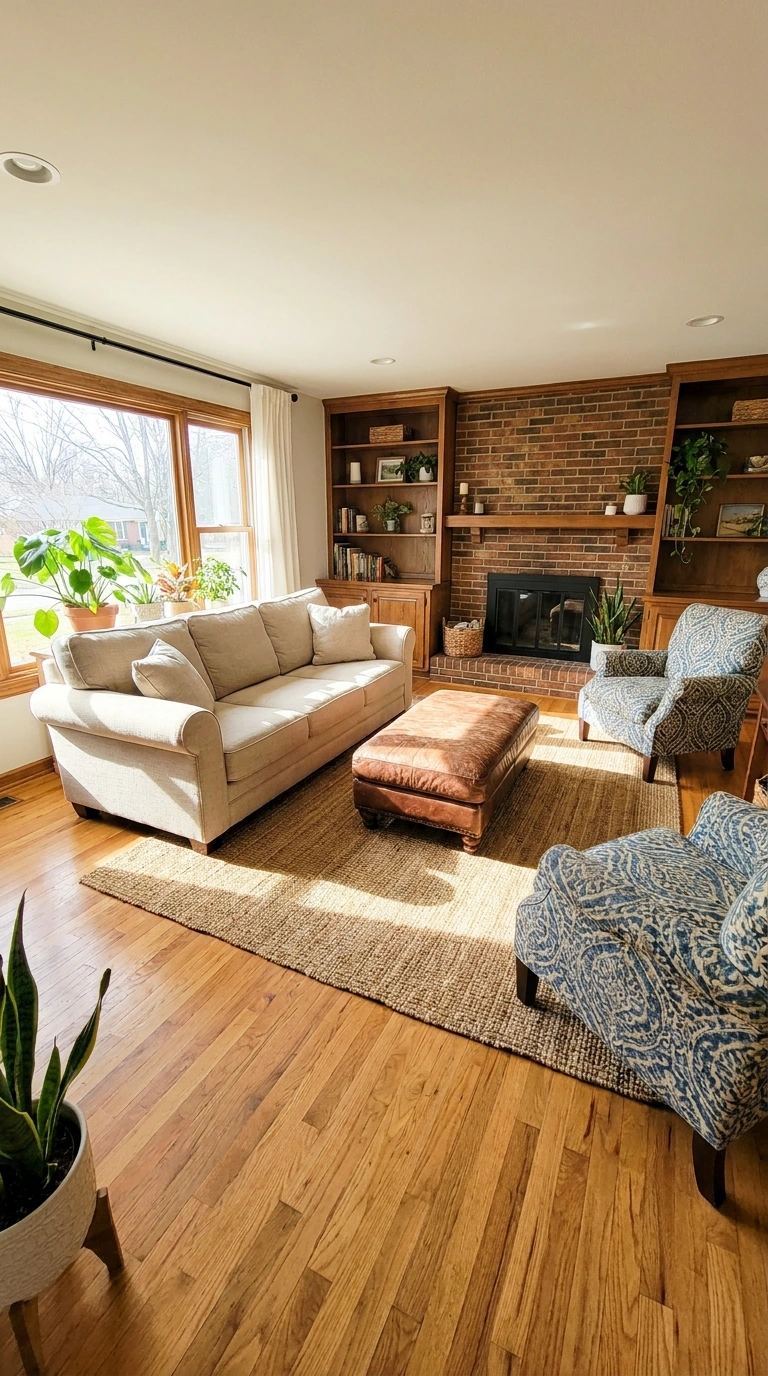
Buying a matching living room set might feel like the safest, easiest choice, but it often results in a space that looks more like a furniture showroom than a home. Mixing different upholstery fabrics, textures, and even slightly different furniture styles gives a room personality and depth that a fully matched set can’t replicate.
Start small if mixing textures feels intimidating: pair a solid-colored sofa with a patterned or differently textured accent chair, or introduce a leather ottoman into an otherwise fabric-heavy room. These small contrasts add visual interest without requiring you to rethink your entire furniture plan.
16. Choose Window Treatments That Suit the Room’s Function
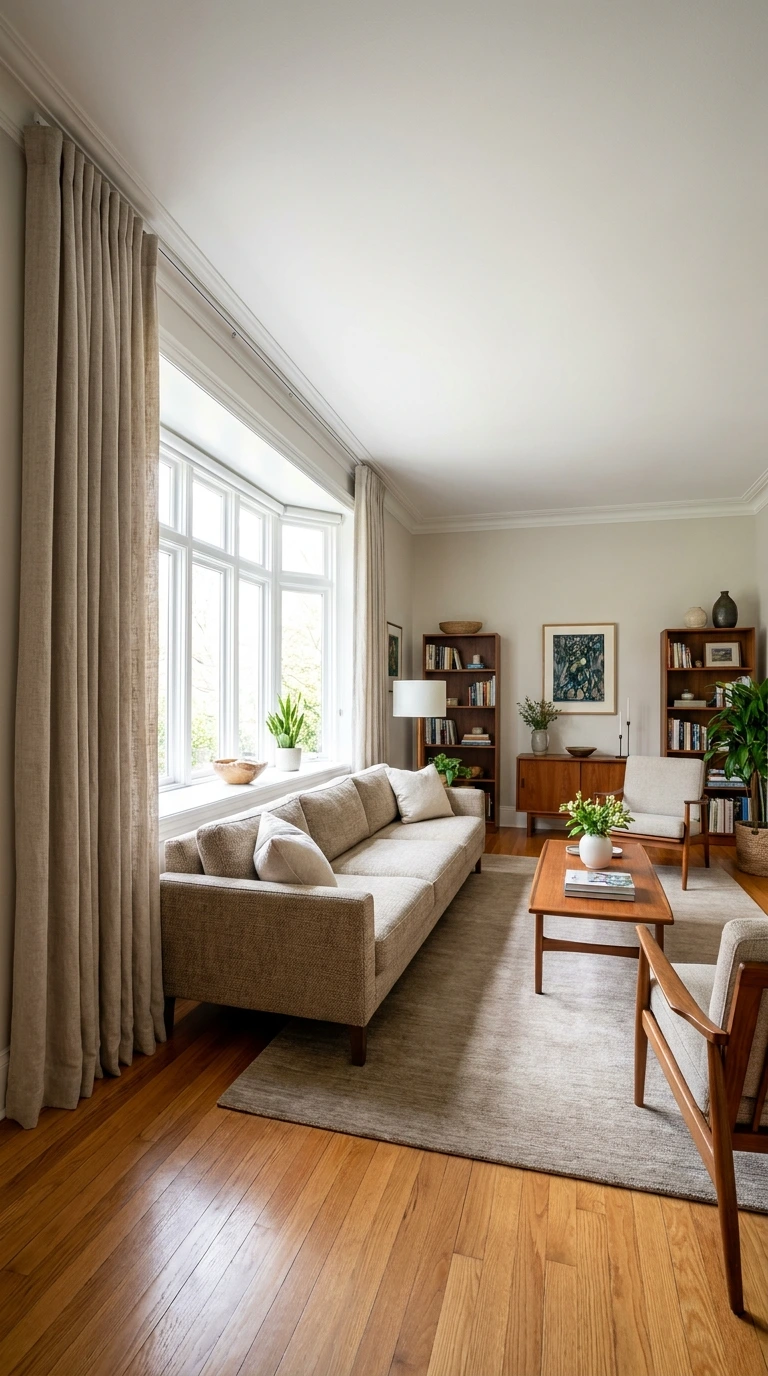
Curtains and other window treatments do more than block light; they also frame the room and can visually affect how tall your ceilings appear. Hanging curtain rods higher than the window frame itself, closer to the ceiling, is a simple trick that makes a room feel taller and more spacious than it actually is.
Beyond aesthetics, think about the room’s function when choosing fabric weight and opacity. A media-heavy living room may benefit from blackout curtains for daytime screen glare, while a room that gets a lot of natural light throughout the day might do better with a lighter, more sheer fabric that still offers privacy without blocking the light entirely.
Important: Curtain length matters as much as placement. Curtains that stop noticeably short of the floor tend to look unfinished; aim for panels that either just graze the floor or puddle slightly for a more intentional, finished look.
17. Style Shelves and Surfaces with Intention
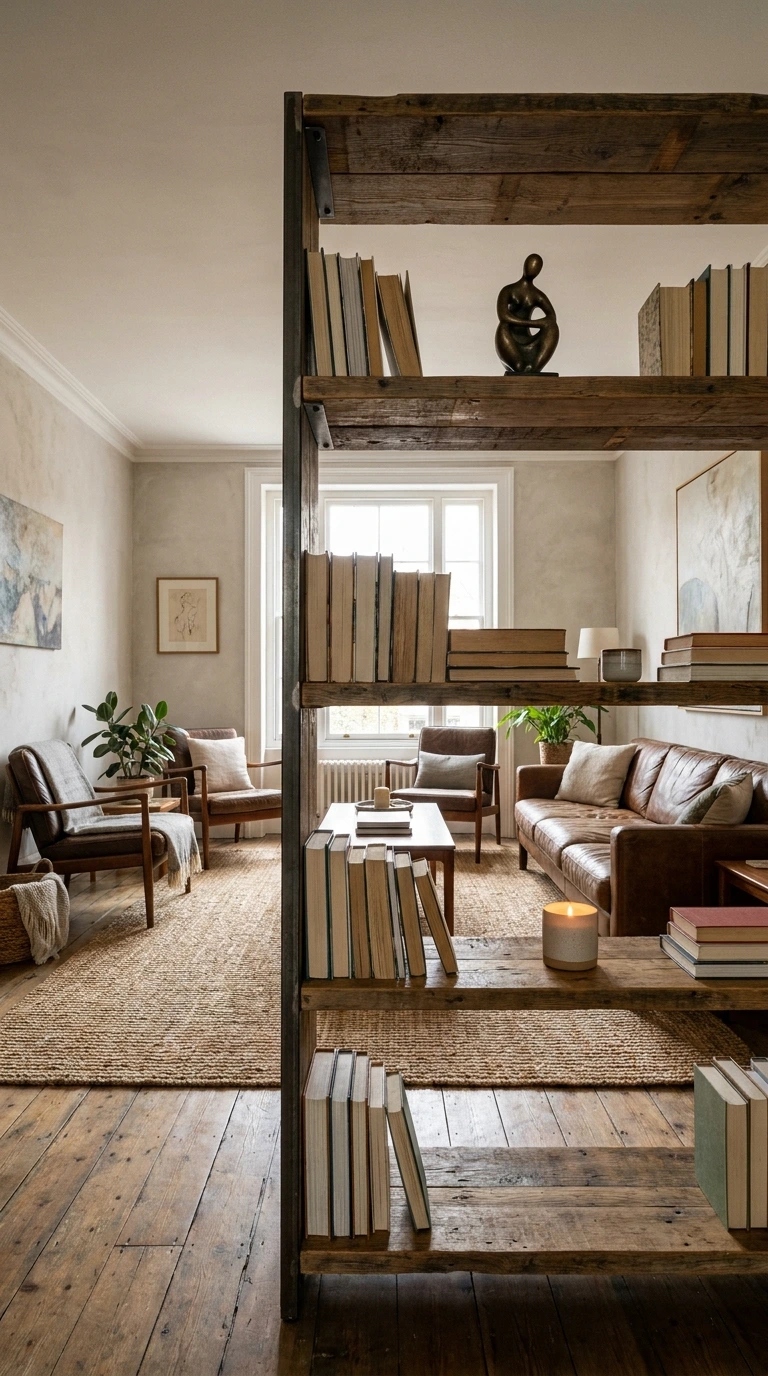
Empty shelves and bare surfaces can make a room feel unfinished, but randomly placed objects can look just as chaotic as no styling at all. The key to good shelf styling is varying height, texture, and color while grouping items in small, intentional vignettes rather than spreading everything out evenly.
A simple styling formula that works well for beginners is grouping items in odd numbers, typically three, and mixing a functional object, a decorative object, and something with height, like a small stack of books topped with a candle or a small sculptural piece. This creates a sense of curated intention rather than looking like items were placed at random.
18. Add Throw Pillows for Color and Texture
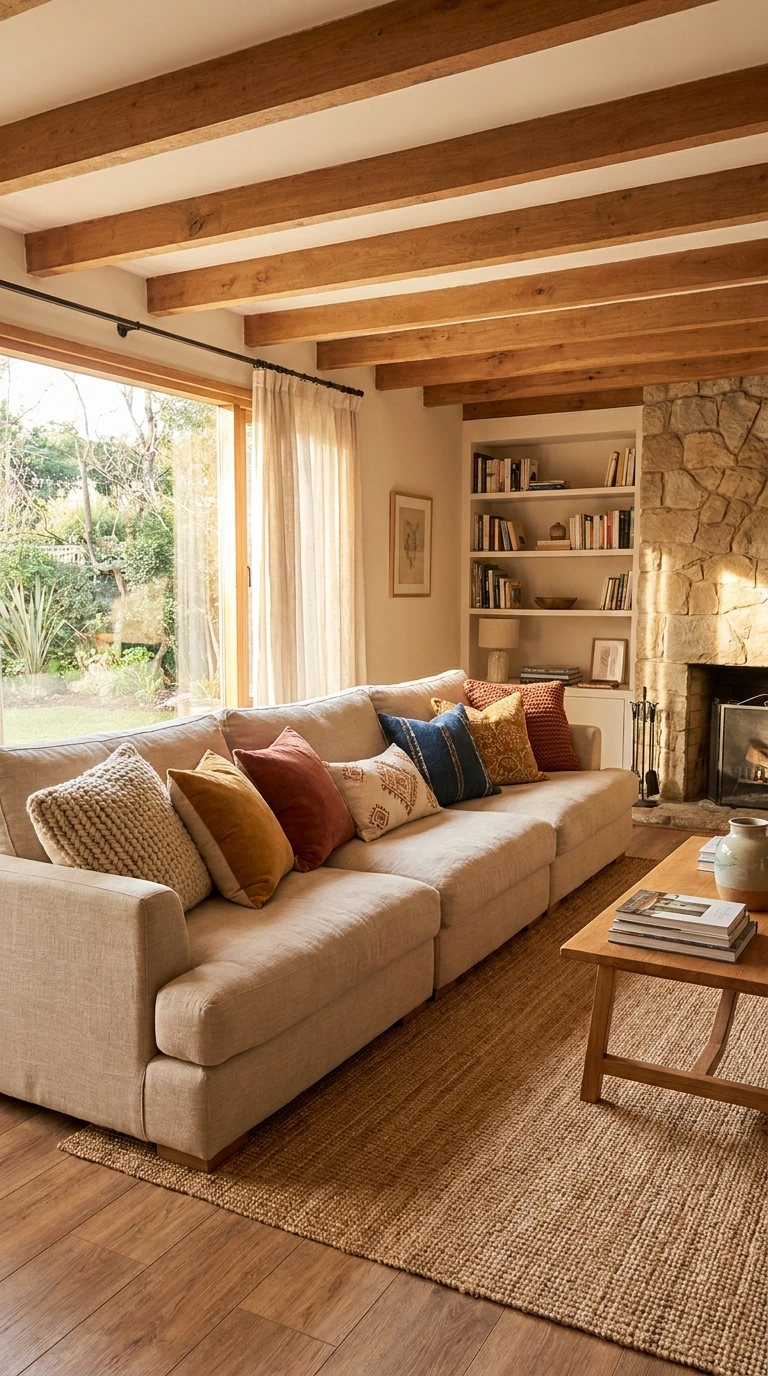
Throw pillows are one of the most affordable and effective ways to introduce color, pattern, and texture into a living room, especially if your sofa itself is a neutral, timeless color. Because pillows are inexpensive to swap out, they’re also a low-risk way to experiment with a bolder color or pattern before committing to it in a larger, more expensive piece.
Avoid using the plain pillows that came bundled with your sofa purchase, since these rarely add any real design value on their own. Instead, mix a variety of textures, patterns, and sizes, and vary the pillow arrangement slightly on each end of the sofa rather than making it perfectly symmetrical, which tends to look more natural and lived-in.
19. Layer in a Throw Blanket
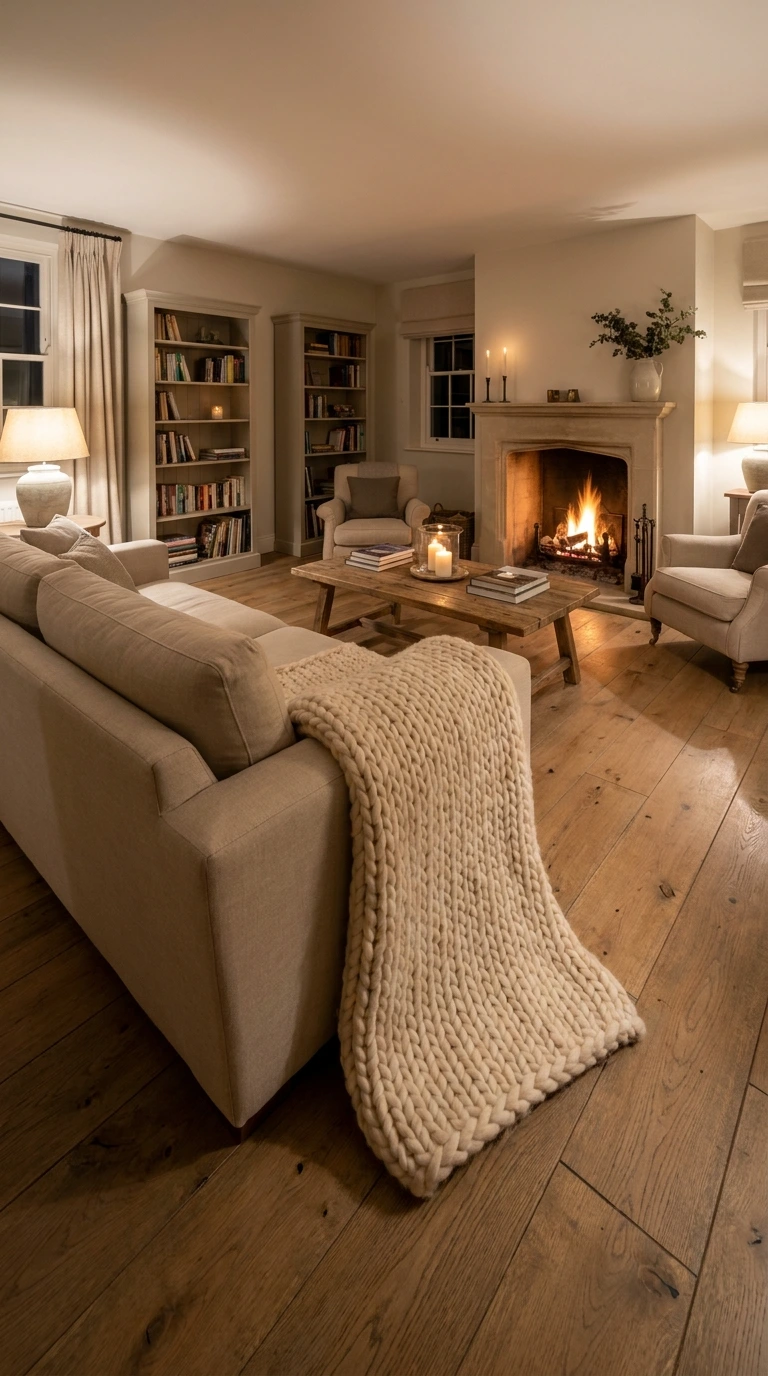
A throw blanket draped over the back or arm of a sofa or chair is a small addition that adds an immediate sense of coziness and texture to the room. Beyond the visual benefit, a throw blanket is also genuinely functional, giving anyone curled up on the sofa an easy source of warmth without needing to leave the room.
Choose a throw in a texture that contrasts slightly with your sofa’s upholstery, such as a chunky knit against a smooth fabric sofa, to add visual depth rather than blending in unnoticed. Draping it loosely and asymmetrically, rather than folding it into a perfectly neat rectangle, tends to look more relaxed and intentional.
- ✅ Group shelf and surface decor in odd numbers with varied height
- ✅ Swap out any plain pillows that came bundled with your sofa
- ✅ Add at least one throw blanket for texture and function
- ✅ Vary pillow arrangement slightly rather than making it perfectly symmetrical
- ✅ Introduce at least one accent color through smaller, swappable items
20. Introduce Greenery and Plants
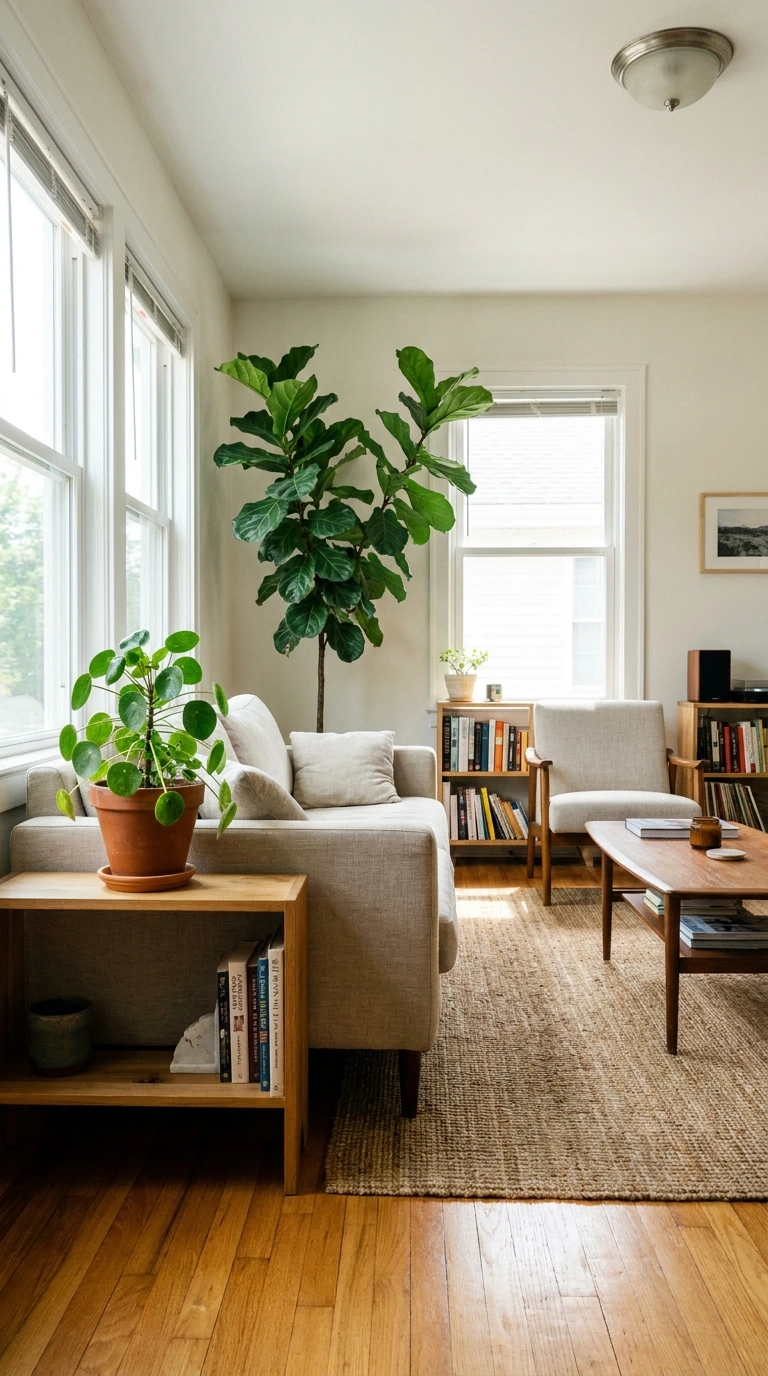
Plants bring life, texture, and a sense of freshness to a living room in a way that almost no other decor element can replicate, and they tend to work well across nearly every design style and color palette. Even a small collection of easy-care plants can make a noticeable difference in how warm and inviting a room feels.
If you’re new to keeping plants alive, start with beginner-friendly, low-light-tolerant options rather than something finicky, and vary the pot sizes and heights across the room rather than clustering every plant at the same level. A tall floor plant in an empty corner and a smaller potted plant on a shelf or side table both serve different visual purposes in the same room.
21. Hang Wall Art at the Right Height
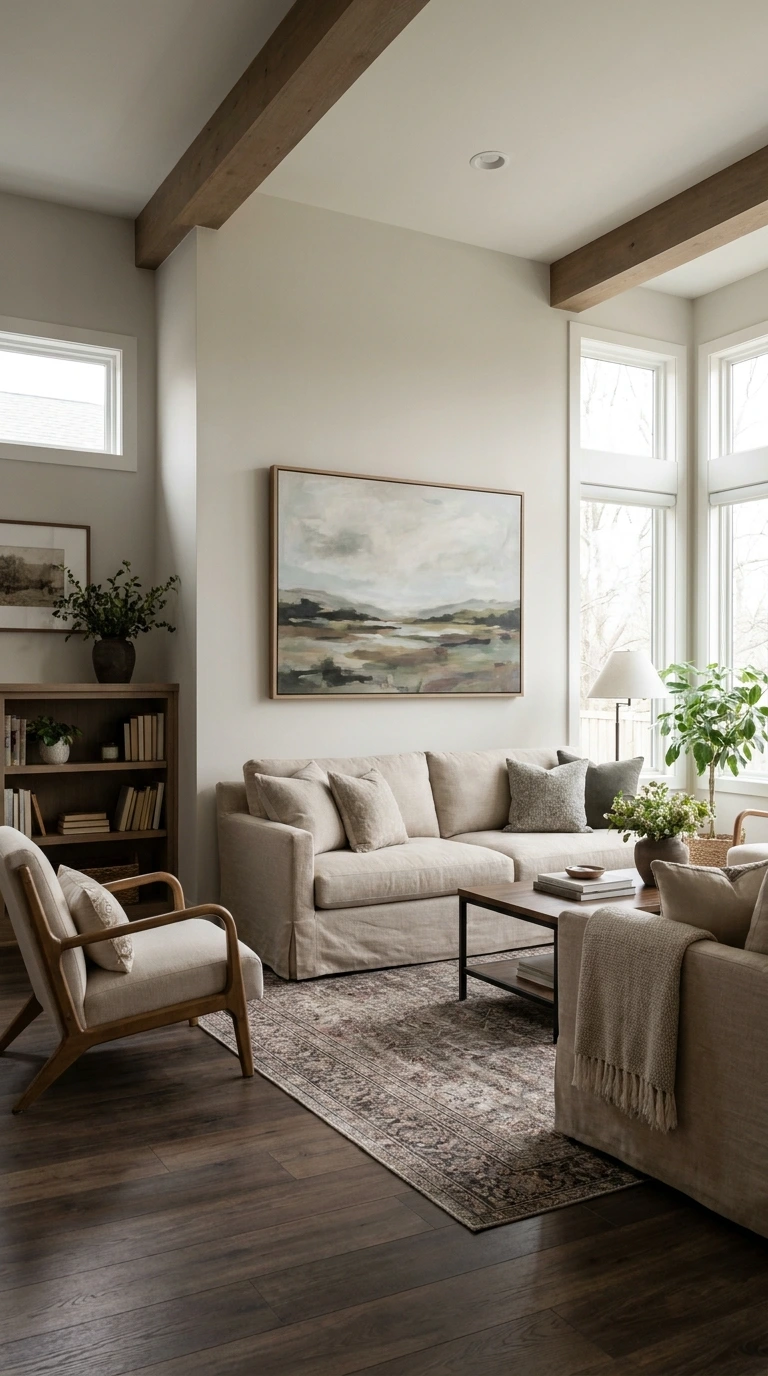
Wall art hung too high is one of the most common beginner mistakes, and it can throw off the visual balance of an otherwise well-decorated room. As a general rule, the center of a piece of art should sit at roughly eye level, which usually translates to about 57 to 60 inches from the floor to the center of the piece.
When hanging art above a sofa specifically, that eye-level rule shifts slightly lower, since the art should relate visually to the furniture beneath it rather than to the room as a whole. Leave roughly 6 to 8 inches of space between the top of the sofa and the bottom of the artwork so the two elements feel connected rather than randomly placed.
Warning: Resist the urge to hang art immediately after unboxing it. Hold the piece up against the wall first, mark the height with painter’s tape, and step back to check the placement before committing to nail holes.
22. Add a Statement Mirror
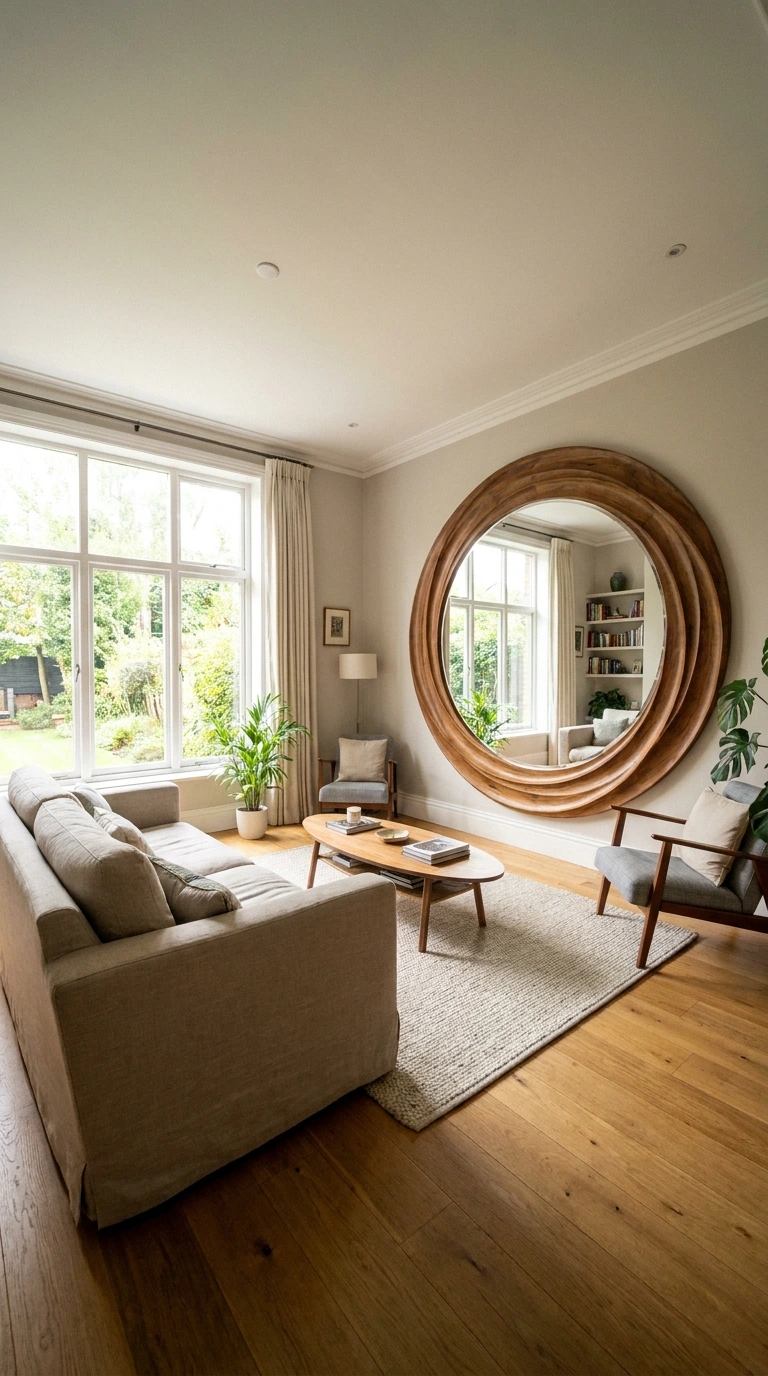
A well-placed mirror does more than serve a functional purpose; it also reflects light around the room and can make a smaller living room feel noticeably larger and brighter. Positioning a mirror across from a window is a particularly effective placement, since it bounces natural light deeper into the room throughout the day.
Beyond function, a mirror with an interesting frame can also serve as a piece of wall art in its own right, filling a blank wall without needing to commit to a large art purchase. If your living room already has a lot of hard-edged, angular furniture, consider a rounded or curved mirror frame to introduce a softer visual contrast.
23. Start With What You Already Own
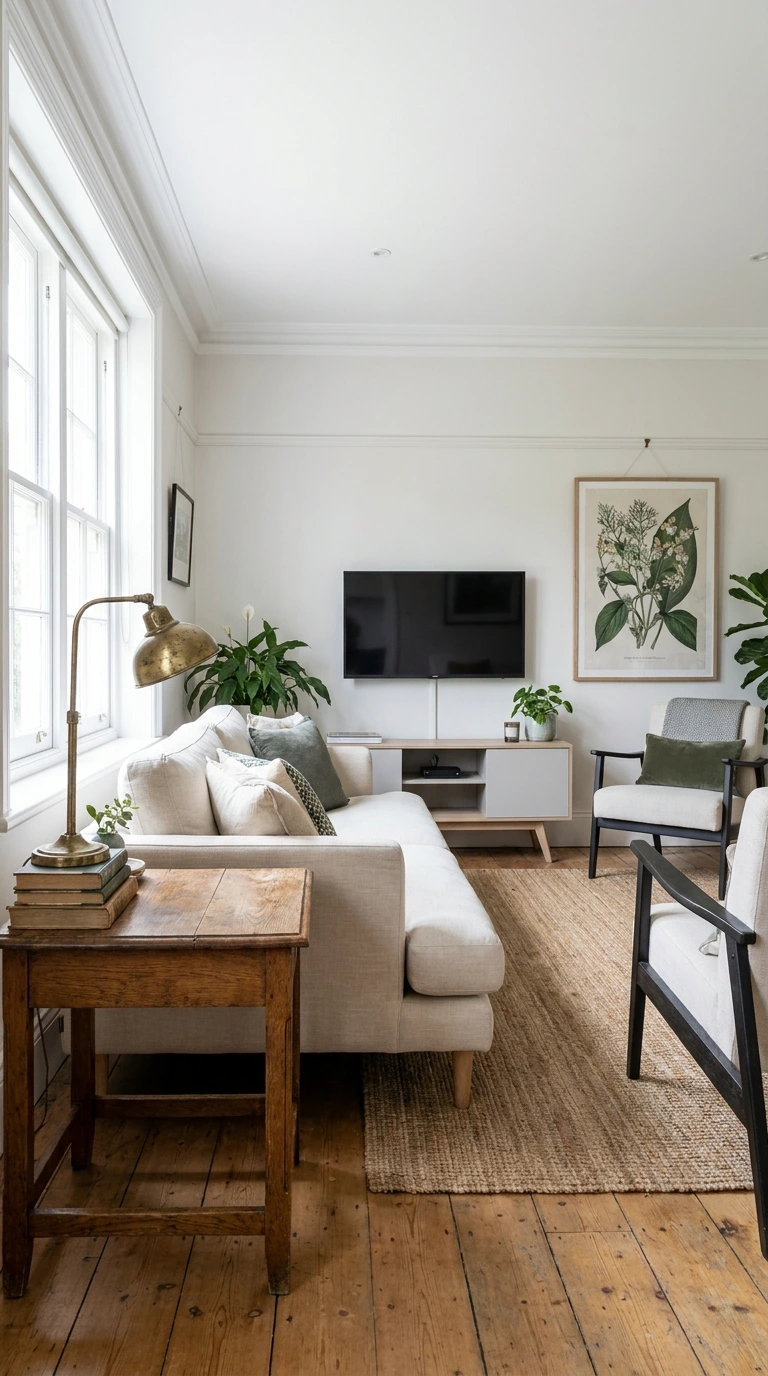
If you’re not decorating a completely empty first home, take stock of what you already own before buying anything new. Repurposing existing furniture and accessories, even if they don’t perfectly match your new direction, is one of the most affordable ways to start a decorating project, and it often reveals which pieces are actually worth keeping.
An item that felt outdated in its old context might work perfectly well once it’s paired with new colors or repositioned in a fresh layout, so don’t automatically assume something needs to be replaced. Save your budget for the pieces that genuinely don’t work in your new vision, rather than replacing everything at once out of habit.
24. Add Personal and Meaningful Items Gradually
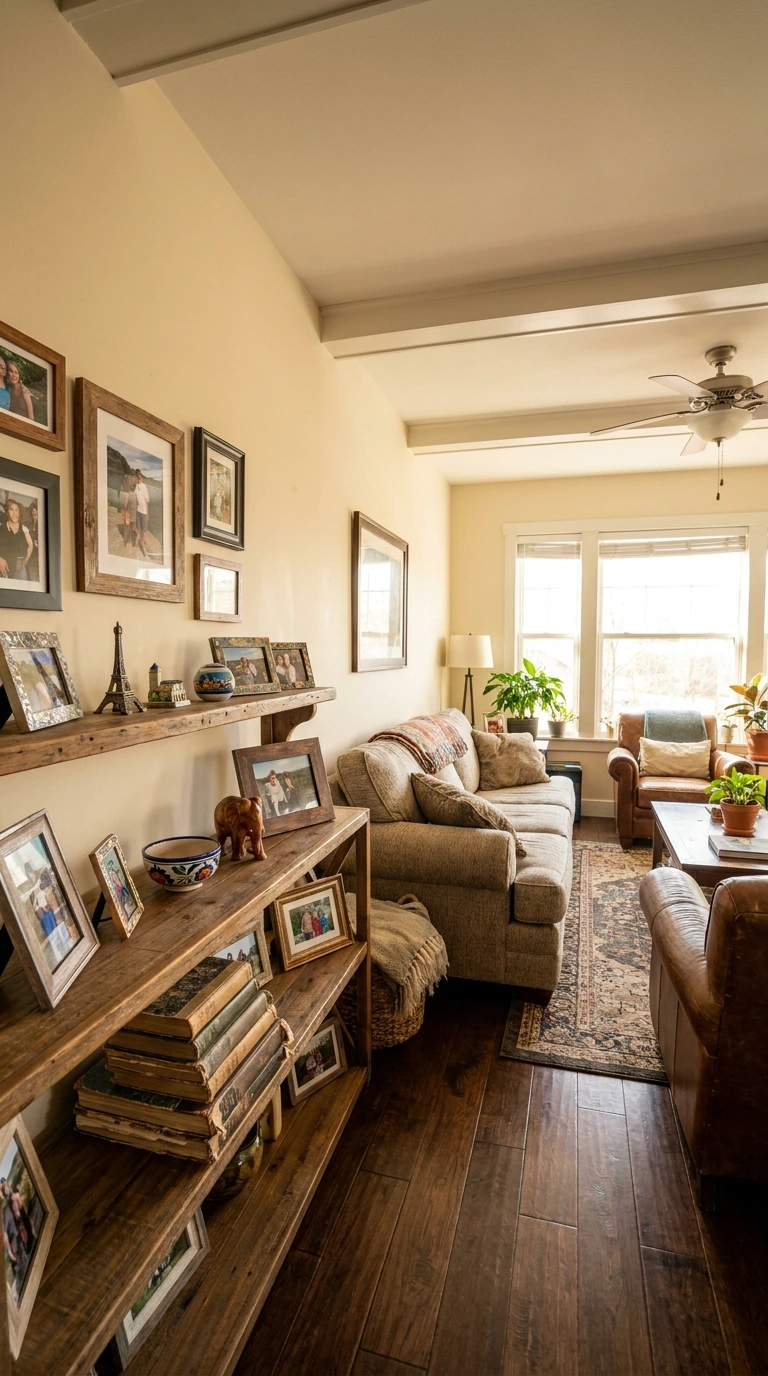
The most inviting living rooms tend to feel personal and collected rather than like they were purchased all at once from a single catalog. Photos, travel souvenirs, books you’ve actually read, and other meaningful objects tell a more authentic story than decor chosen purely because it matched a trend.
Rather than trying to fill every surface immediately, let your collection of personal items build gradually over time as you come across pieces that genuinely resonate with you. A room that evolves this way, even slowly, almost always feels more genuine than one that was decorated in a single weekend and never touched again.
Important: Resist the urge to fill every shelf and surface right away just because it looks “unfinished.” A few empty spots left for future meaningful finds look intentional, not incomplete.
25. Give Yourself Permission to Live With It and Adjust
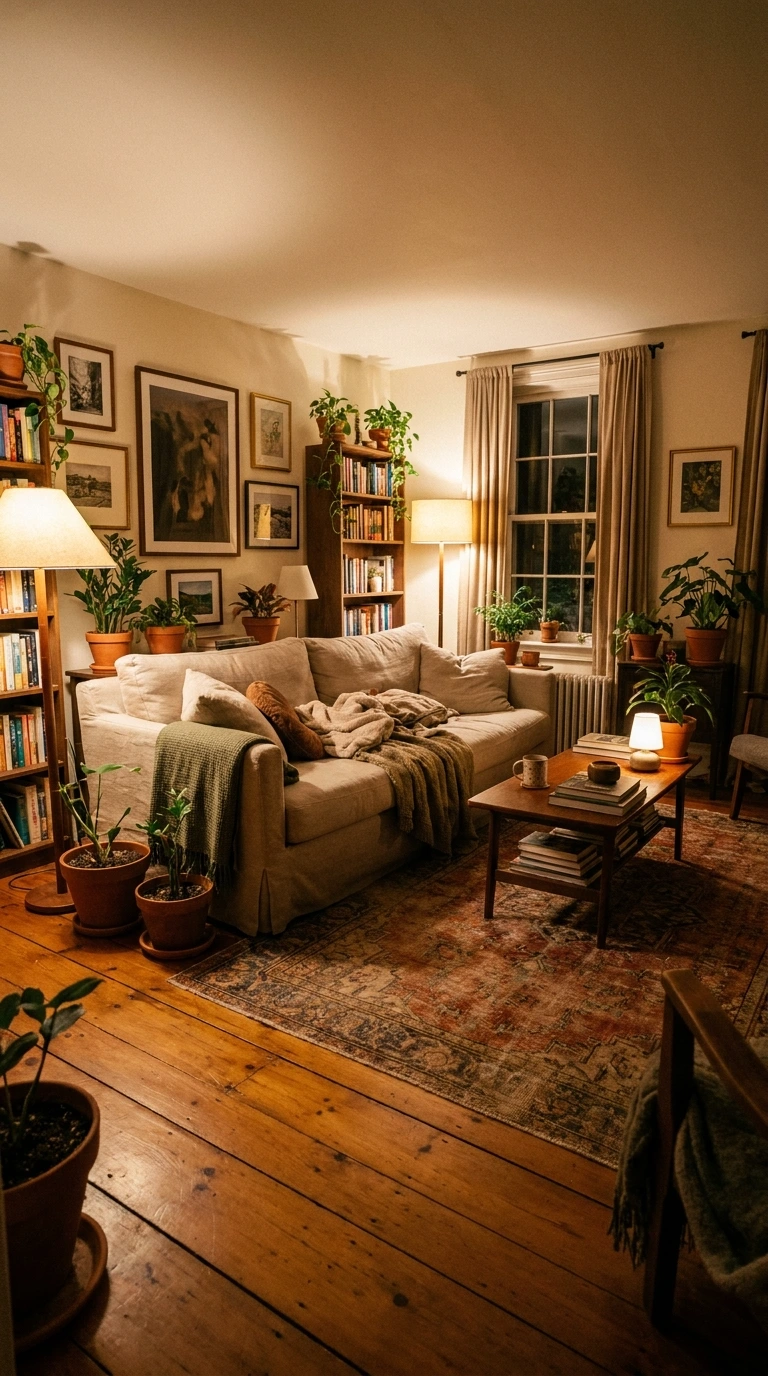
Decorating a living room isn’t a one-and-done project with a single correct answer; it’s a process that benefits from time, observation, and small adjustments. Live in the space for a few weeks after making major changes before deciding whether something isn’t working, since first impressions in an unfamiliar layout aren’t always accurate.
If a piece still feels off after giving it a fair chance, don’t be afraid to rearrange, return, or replace it rather than forcing yourself to live with a choice that isn’t working. Decorating fatigue is real and completely normal; take breaks between decisions if you need to, and remember that a beautiful room built over time will always feel more satisfying than a rushed one.
Frequently Asked Questions
1. Where should a complete beginner start decorating a living room?
Start by defining your design style through a mood board, then declutter the space before buying anything new. These two steps give you a clear direction and a clean starting point, which makes every decision after them much easier.
2. How much should I spend decorating a living room as a beginner?
There’s no universal number, since it depends heavily on your space and existing furniture, but it helps to set a total budget first and then divide it into categories like furniture, lighting, and textiles. Prioritize your budget toward the sofa and rug, since these are the most expensive and hardest to replace later.
3. Do I need to buy everything at once?
No, and most designers actually recommend against it. Building a room gradually, adding meaningful pieces over time rather than rushing to fill every surface, tends to result in a space that feels more authentic and personal.
4. What’s the biggest mistake beginners make when decorating a living room?
The most common mistake is skipping the planning stage entirely and jumping straight into buying furniture without a defined style, budget, or layout. This often results in a room that feels disjointed, since every purchase was made in isolation rather than working toward a shared vision.
5. Should my furniture all match?
No, a fully matching furniture set often looks more like a showroom display than a lived-in home. Mixing textures, wood tones, and slightly different furniture styles within a cohesive color palette tends to create a far more layered, interesting result.
6. How do I know if my rug is the right size?
As a general guideline, your rug should be large enough for at least the front legs of your sofa and chairs to rest on top of it. When in doubt between two sizes, choose the larger one, since an oversized rug looks intentional while an undersized one tends to look like a mistake.
7. How long should decorating a living room take?
This varies widely depending on budget and scope, but it’s completely normal for a living room to come together gradually over several months rather than all at once. Giving yourself time to live with changes and make adjustments generally produces a better result than rushing to finish everything in a single weekend.
Conclusion
Decorating a living room from scratch can feel overwhelming, but breaking the process down into sequential steps, starting with style, budget, and layout before moving into furniture, lighting, and finishing touches, turns an intimidating project into a manageable one. Each decision builds on the last, and you don’t need to have it all figured out before you begin.
Give yourself permission to make mistakes, live with your choices for a while, and adjust as you go rather than expecting a perfect result on the first try. The living rooms that feel the most welcoming are rarely the ones decorated all at once; they’re the ones that were built thoughtfully over time, piece by piece, until the space finally felt like home.