30 Modern Fall Table Decor Ideas for Elegant Dining Room Centerpieces

Introduction
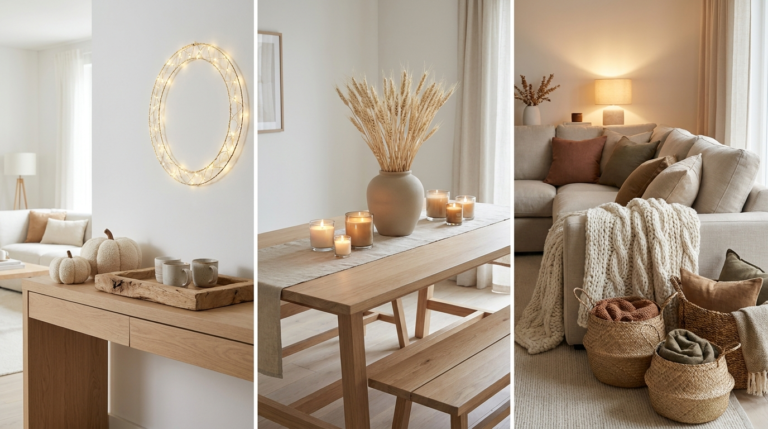
A dining table set for fall does not need every seasonal item you own crowded onto one surface. The most elegant centerpieces lean on a few repeated elements, layered candle heights, a mix of real and faux pumpkins, dried leaves and grasses, done well rather than done in excess. The tables that photograph the best are almost always the ones with restraint, where every piece earns its spot in the arrangement.
What separates an elegant fall table from a cluttered one usually comes down to structure. A runner as the base, a centerpiece built in odd-numbered groupings, and candles at varying heights give the whole table a sense of order even when the styling itself feels relaxed and natural. Height matters as much as color, since a flat centerpiece reads as an afterthought no matter how nice the pumpkins are.
This list breaks down exact centerpiece structures, lighting choices, and small styling details that turn a plain dinner table into something worth lingering at. Some ideas take five minutes with a runner and a bowl of pumpkins. Others involve building a full layered vignette. Pick what fits your table and season from there.
1. Build a Centerpiece With Mini Pumpkins Down the Table

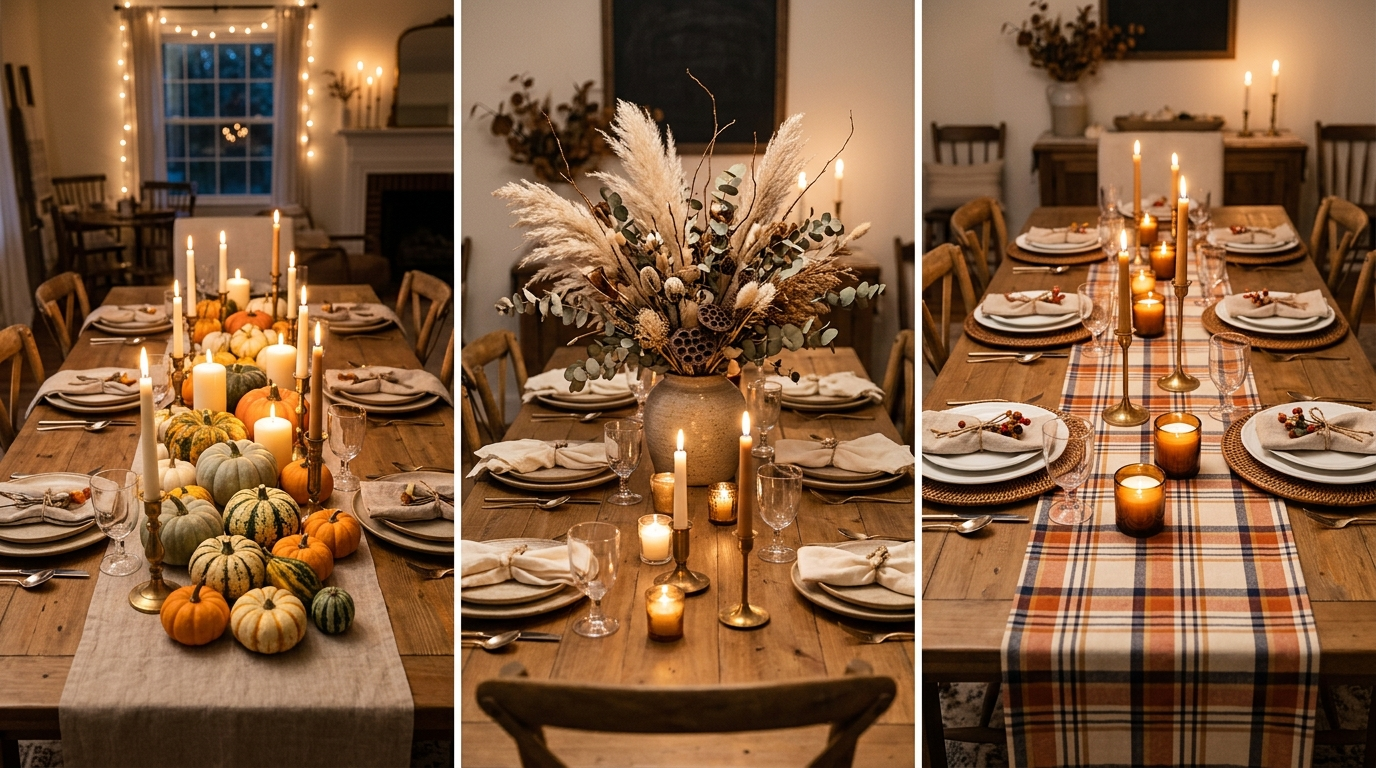
A single large pumpkin as a centerpiece leaves too much empty table on either side of it. A cluster of mini pumpkins spread down the length of the table instead fills the space more evenly and gives guests something to look at no matter where they are seated.
Vary the pumpkin sizes rather than using all the same size, since uniform mini pumpkins read as a bulk store display instead of a styled centerpiece.
2. Layer Candle Heights With Tapers and Hurricane Pillars

A row of matching candles at one height looks flat once the lights go down, no matter how many you use. Mixing tall tapers with shorter hurricane pillars creates a skyline effect down the table, and the varied heights catch light differently as guests move around the room.
💡 Quick Tip
Alternate a taper, then a hurricane pillar, then a votive down the table rather than grouping all of one type together at either end.
Use a hurricane glass around any candle placed near a runner or dried florals, since open flames near fabric or dried stems are a real fire risk on a styled table.
3. Choose a Plaid or Leaf-Print Table Runner as the Base
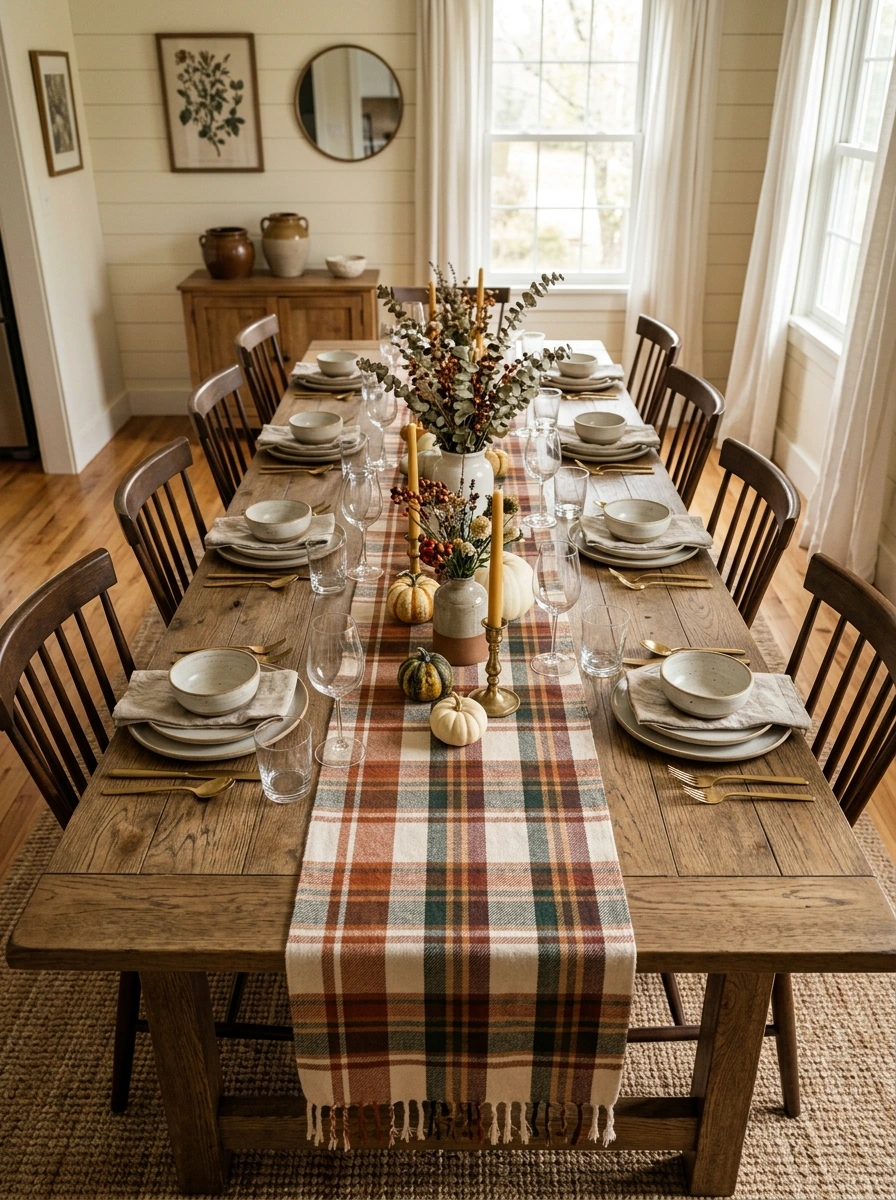
A bare wood or white table looks unfinished the moment you start adding a centerpiece on top of it. A plaid or leaf-print runner gives the whole tablescape a foundation, and it ties together mismatched dishware or glassware just by being the one consistent pattern running the length of the table.
Choose a runner with fringe or tasseled ends if the table is on the more formal side, since the frayed edge softens what could otherwise look too crisp and structured.
4. Fill a Stoneware Vase With Dried Leaves and Branches
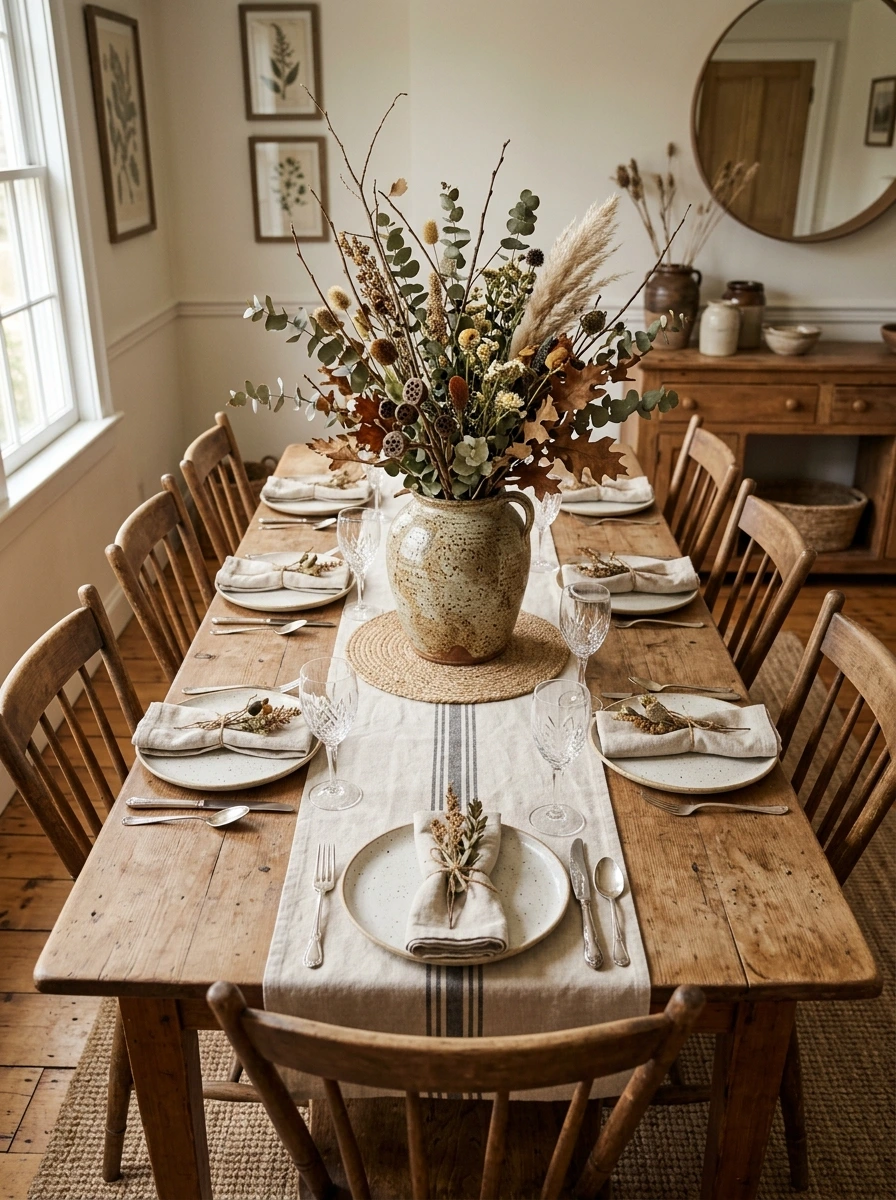
Fresh floral centerpieces wilt within days, but dried leaves and branches in a textured stoneware vase hold their look for the entire season without any maintenance. The rougher, matte surface of stoneware also suits dried stems better than a smooth glass vase would.
Before you arrange, check for:
Keep the arrangement under 16 inches tall if the table will be used for actual dining, since anything taller blocks sightlines between guests seated across from each other.
5. Tuck Pinecones Into the Gaps of Any Centerpiece
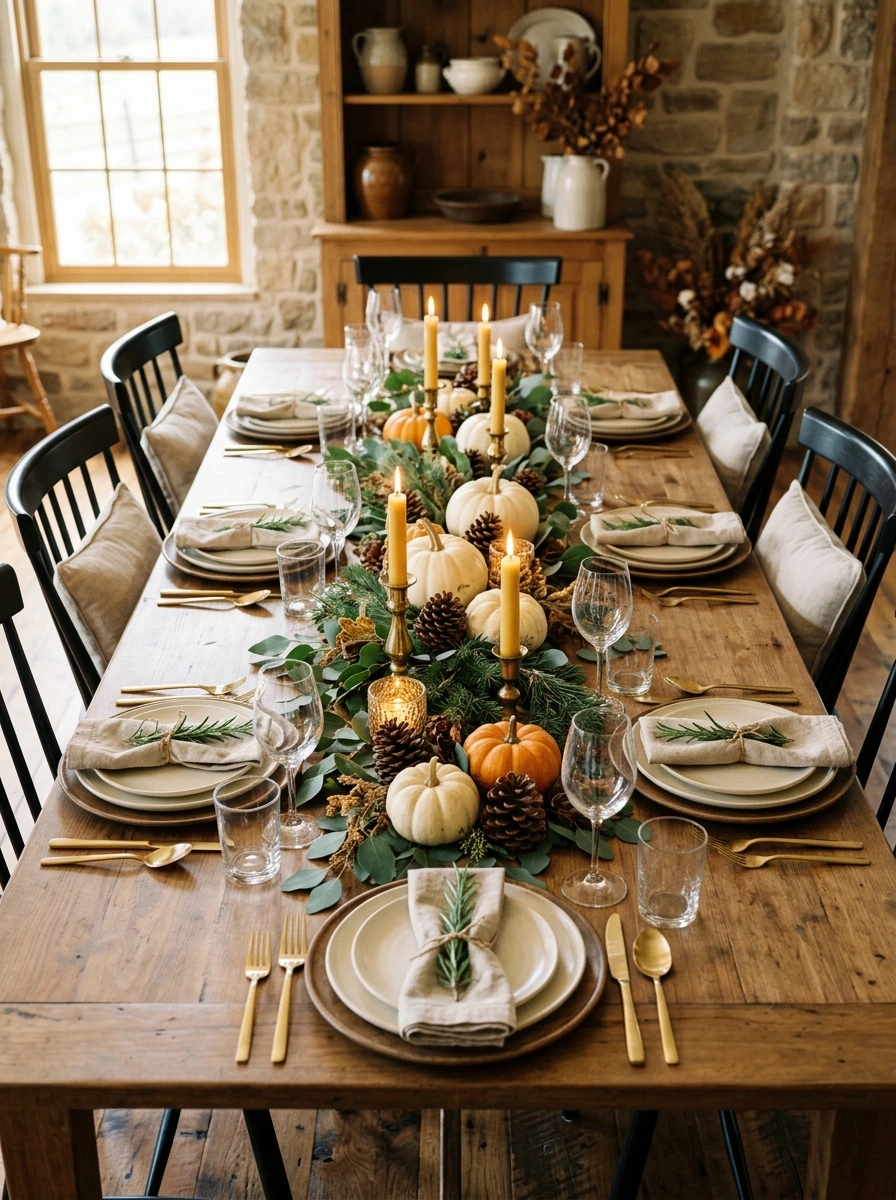
Every centerpiece ends up with small gaps between the main pieces, whether that is pumpkins, candles, or a floral arrangement, and those gaps can make the whole display look sparse. Tucking pinecones into those spaces fills them naturally without adding another competing focal point.
Gaps of bare runner showing between the pumpkins and candles in the centerpiece.
Pinecones tucked into the gaps fill the display naturally without overcrowding it.
Natural, unpainted pinecones blend into more color palettes than the frosted or glittered versions, which can clash with a warm, neutral table setting.
6. Light Mason Jars With Fairy Lights Down the Center
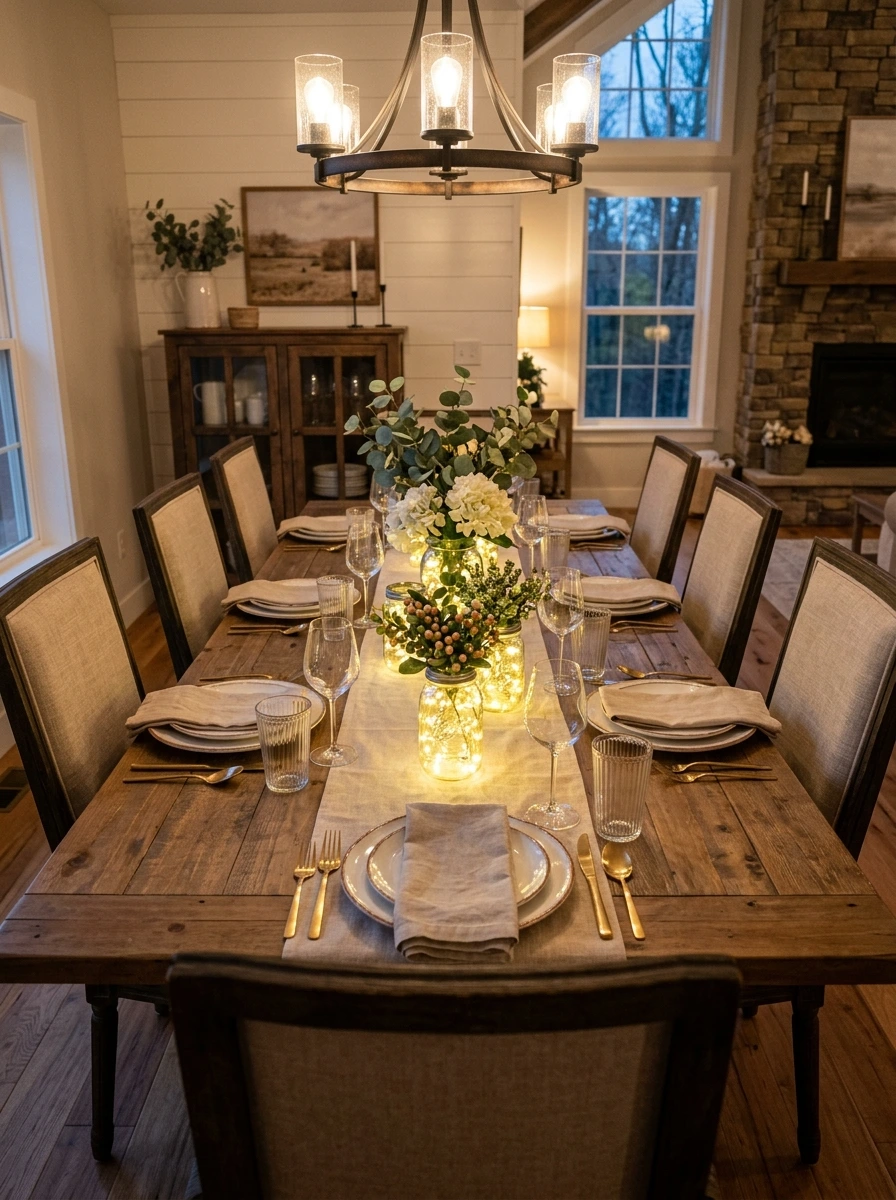
A centerpiece can look styled during the day and completely flat once dinner moves into evening, especially if the only light source is overhead. Mason jars filled with fairy lights, spaced down the center of the table alongside the florals, keep the whole display glowing once the sun goes down.
Coil a battery-powered fairy light strand loosely inside each jar before adding any florals.
Tuck a few faux roses or leaf stems into the same jar so the lights peek through the greenery.
Space three jars evenly down the runner rather than clustering them in one spot.
Use battery-operated lights with a timer feature so the jars turn on automatically each evening without needing to remember to switch them on by hand.
7. Tie Cloth Napkins With a Sprig of Dried Leaves
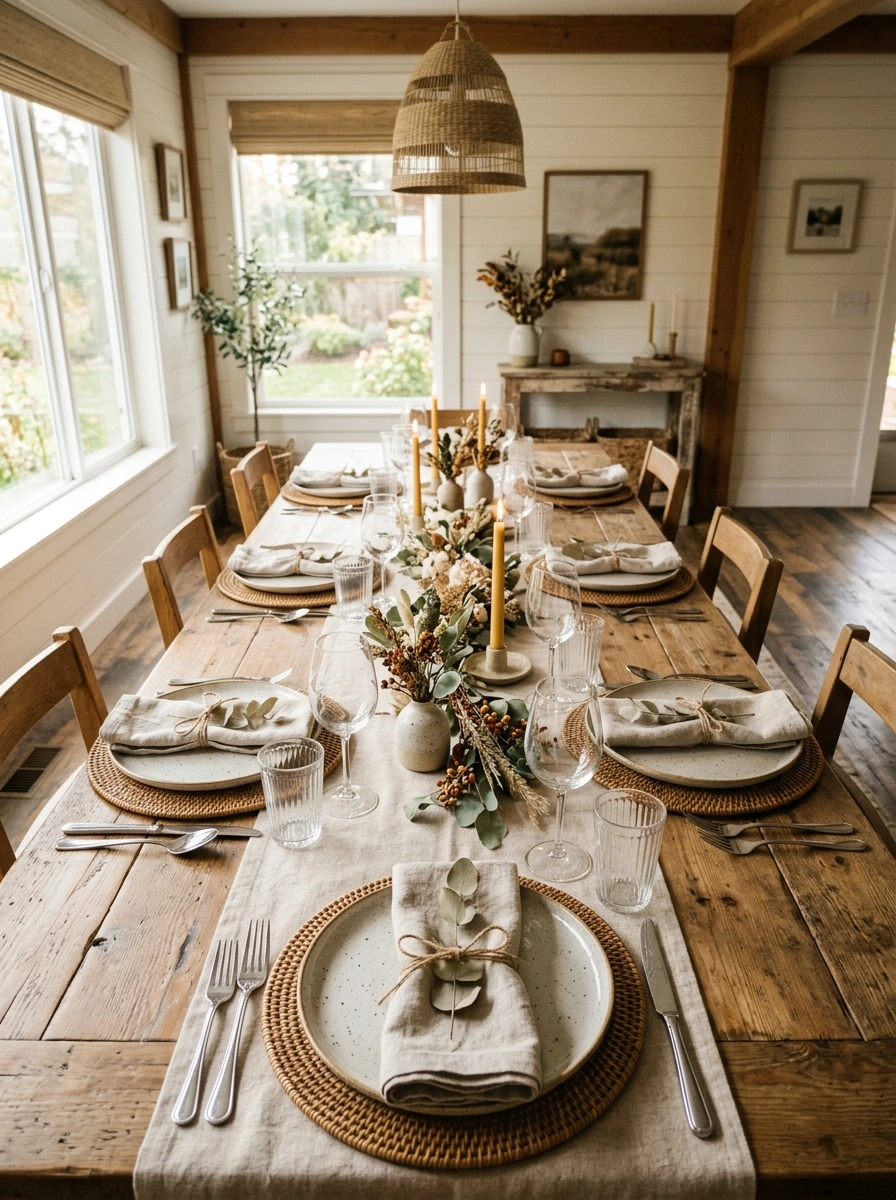
A plain folded napkin at each place setting can feel like an afterthought compared to the rest of a styled table. Tying the napkin with jute twine and tucking in a single dried leaf sprig ties each place setting back into the same seasonal theme as the centerpiece.
Use natural jute or twine rather than ribbon for a more rustic feel.
Tuck in one small leaf sprig, not a full bunch, so the napkin still lies flat.
Bulky decorative rings that overpower a simple linen napkin.
Fresh leaves, which wilt and brown before the meal even starts.
Faux dried leaves hold their color and shape far longer than fresh ones pulled straight from the yard, which tend to curl within an hour on the table.
8. Add Woven Chargers Under Every Place Setting
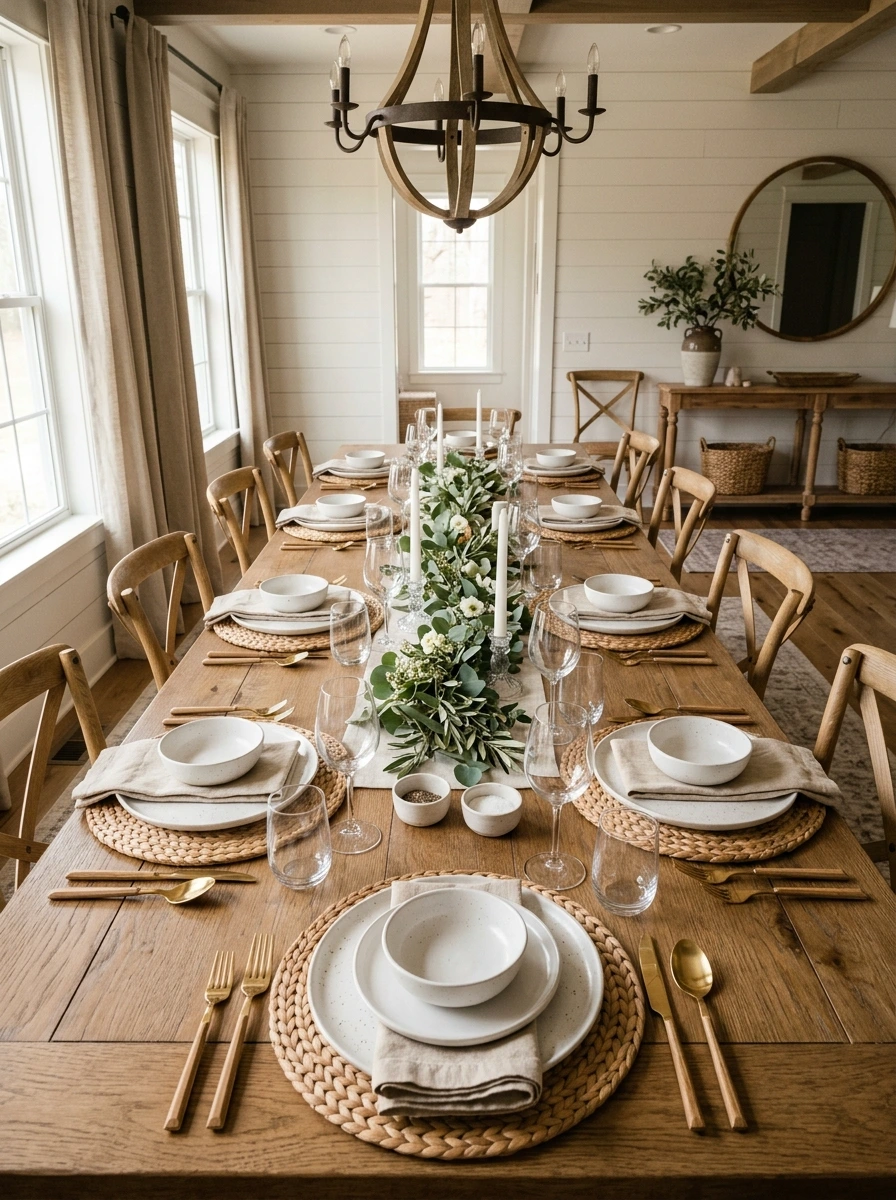
A plate set directly on the table or runner can look a little bare without something underneath to frame it. A woven rattan or seagrass charger adds texture at the base of each place setting and echoes the same natural materials used in the centerpiece above it.
Match the charger’s tone to the runner rather than the dishware, since the charger sits closer to the table surface visually and should blend with the base layer.
9. Group Small Amber Glass Votives Between Place Settings
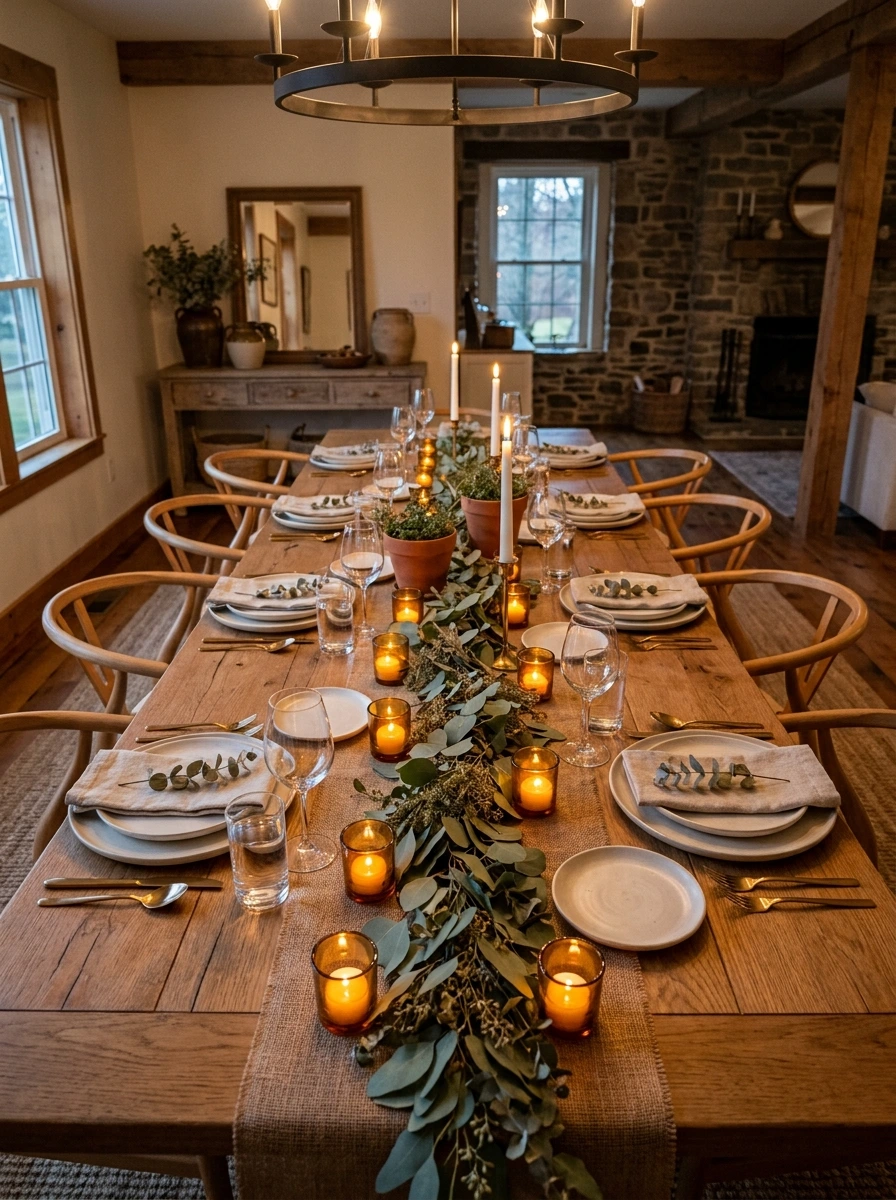
Overhead lighting alone can leave a dinner table looking flat, especially once evening sets in. Small amber glass votives placed between every second place setting add warm pools of candlelight at eye level, right where guests will actually notice them during the meal.
Flameless votives are worth using here specifically, since they sit close to elbows and sleeves during an active dinner in a way a centerpiece candle usually does not.
10. Mix Real and Faux Pumpkins for an Easy Centerpiece

Choosing only real pumpkins means replacing them if the table stays set for weeks, while an entirely faux display can look a little too uniform and plastic. Mixing the two gives you the realistic texture of a real pumpkin or two alongside faux ones that hold their look for the full season.
| Real Pumpkins | Faux Pumpkins |
|---|---|
| Authentic texture and stem detail, but soften within a few weeks. | Hold their look for the entire season, reusable every year. |
| Best used as the one or two focal pumpkins in the display. | Best used for the smaller, supporting pieces in the cluster. |
Place the real pumpkins toward the center of the arrangement, since that is where guests will notice the texture most, and let the faux ones fill out the edges.
11. Set a Wood Tray as a Base for a Grouped Vignette

Individual centerpiece pieces scattered directly on the table can shift and look disorganized every time someone reaches across for a dish. A long wood tray placed down the center of the table contains the whole vignette, pumpkins, candles, and greenery, into one defined, portable grouping.
Pumpkins and candles scattered loosely down the table, shifting whenever bumped.
A wood tray contains the whole vignette into one stable, organized grouping.
Choose a tray with slightly raised edges rather than a flat board, since the lip keeps mason jars and candles from sliding when the table gets bumped during a meal.
12. Add a Printed Runner With a Leaf or Botanical Pattern

A solid-colored runner works fine, but a printed one with a botanical leaf pattern does more visual work on its own, meaning the rest of the centerpiece can stay simpler without the table looking bare. The runner itself becomes part of the seasonal story rather than just a neutral backdrop.
💡 Quick Tip
Choose a printed runner in muted, earthy tones rather than bright orange and yellow, so it reads as elegant rather than costume-like once the rest of the table is set.
If the pattern is busy, keep the rest of the centerpiece pared down to just candles and a small vase, since a heavily printed runner can compete with a large arrangement on top of it.
13. Style a Low, Wide Floral Arrangement Instead of a Tall One

A tall, narrow floral arrangement can look dramatic in photos, but it actually blocks conversation across the table once guests are seated. A low, wide arrangement spreads across more of the table’s length while staying well below eye level, keeping both the look and the function of the centerpiece intact.
Use a shallow, wide dish or trough vase instead of a tall standard one, since the wider base naturally forces the arrangement to spread outward rather than up.
14. Use Brass Candlesticks to Warm Up the Table

Silver or matte black candlesticks can read a little cool against a warm fall table full of rust and amber tones. Brass or gold-toned candlesticks pick up the same warmth as the candlelight itself, and the metallic finish catches light beautifully once the candles are lit.
- ▸Mix two or three candlestick heights rather than a single matching set.
- ▸Choose a slightly aged or antique brass finish over polished gold for a softer look.
- ▸Pair them with ivory or cream taper candles rather than stark white for a warmer glow.
Brass candlesticks also pair well with other metallic details already on the table, like gold flatware or ribbed glassware, tying the whole place setting together.
15. Anchor the Table With a Single Statement Pendant Light

A generic flush mount fixture over the dining table does nothing to elevate the space below it, no matter how well the table itself is styled. A single woven or glass globe pendant hung at the right height becomes part of the overall tablescape, framing the centerpiece from above.
Hang the pendant so its base sits about 30 to 34 inches above the table surface. Too low blocks sightlines, too high loses the cozy, grounded feel.
A woven rattan or wicker pendant shade softens the light and ties visually into the natural textures already on the table, like the runner and chargers.
16. Scatter Loose Faux Leaves Along the Runner

A styled centerpiece can still look a little too composed and formal without something looser tying it together. Scattering a handful of loose faux leaves along the runner, outside the main grouping, gives the table a natural, slightly windswept feel that reads as effortless rather than staged.
💡 Quick Tip
Scatter the leaves in small, uneven clusters rather than spacing them evenly. Perfectly spaced leaves look arranged instead of naturally fallen.
Keep the scattered leaves away from any place setting where a plate or glass will sit, since anyone reaching for a napkin will end up brushing them onto the floor otherwise.
17. Add a Framed Sign With a Grateful or Thankful Message

A dining table can be styled beautifully and still feel like it is missing a personal, seasonal sentiment. A small framed sign with a simple word or phrase, propped at one end of the table or on a nearby sideboard, adds warmth and meaning without taking up much space at all.
A styled table with no personal touch or seasonal sentiment anywhere nearby.
A small framed sign nearby adds warmth and personal meaning to the whole scene.
Place the sign on a sideboard or console behind the table rather than directly on it, so it does not compete for space with the actual centerpiece.
18. Build the Centerpiece in Odd-Numbered Groupings

Grouping pumpkins, candles, or vases in even numbers, like two or four, tends to look more static and symmetrical than a natural gathering would. Odd-numbered groupings of three or five create a more organic rhythm down the table, which is a principle that holds true across almost every element of the centerpiece.
Group candles in threes or fives rather than pairs down the table.
Cluster pumpkins in odd numbers within each grouping, even if using several clusters total.
Apply the same rule to vases if using more than one down the runner.
This principle works even within a single vase arrangement, so aim for three or five main flower or leaf stems rather than an even, symmetrical count.
19. Style Place Settings With a Layered Plate Stack

A single plate at each place setting can look plain compared to the rest of a fully styled table. Stacking a charger, a dinner plate, and a smaller salad plate on top adds height and texture right at each seat, echoing the layered look of the centerpiece itself.
Keep the plate stack to three layers maximum, since anything taller starts to feel impractical once guests actually need to move plates during the meal.
20. Choose Warm White Candlelight Over Bright Overhead Light

Bright, cool overhead lighting flattens even the most carefully styled table, washing out the warm tones of pumpkins, wood, and brass. Dimming the overhead fixture and relying more on candlelight lets the natural warmth of the fall palette actually show once the table is fully set.
💡 Quick Tip
Dim the overhead light to about half its usual brightness rather than turning it off completely, so the room still has enough ambient light to see comfortably.
If the overhead fixture has no dimmer installed, a warm-toned bulb swap alone still softens the effect significantly compared to a standard bright white bulb.
21. Add a Few Faux Roses in Warm Rust Tones to the Centerpiece

Dried leaves and pumpkins alone can start to feel a bit rustic and one-note without something softer mixed in. A few faux roses in a warm rust or terracotta shade add a rounder, more elegant shape to the arrangement, balancing out all the pointed leaves and rough textures around them.
Choose two to three roses in a rust or burnt orange shade.
Tuck them low within the arrangement rather than as the tallest stems.
Bright pink or red roses, which clash with a warm fall palette.
Overloading the arrangement with too many roses, losing the leaf and grass texture.
Faux roses with a slightly open, imperfect bloom look more natural than the tight, uniform buds most artificial florals come with.
22. Use Crystal or Ribbed Glassware for a Touch of Shine
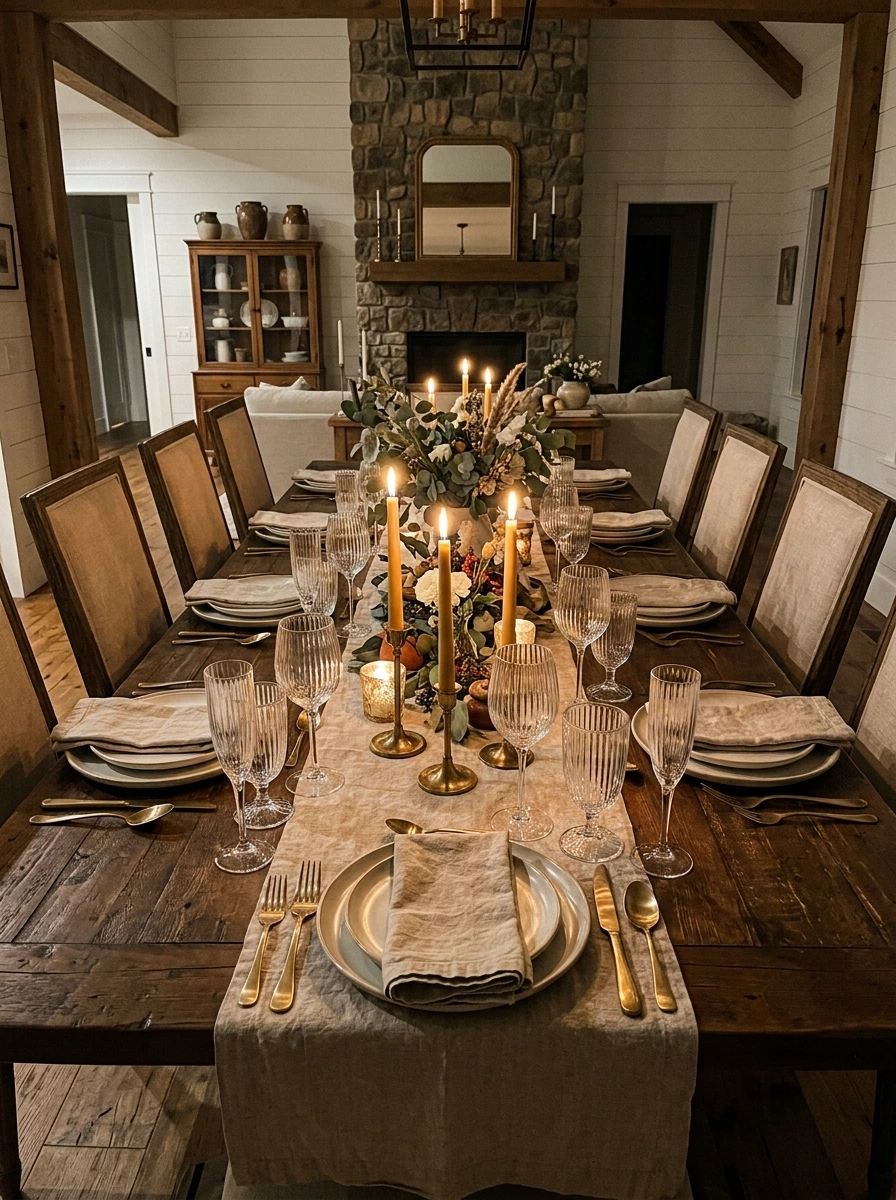
An otherwise rustic, natural-toned table can use one element of shine to keep it from feeling too matte and heavy. Crystal or ribbed glass stemware catches candlelight beautifully and adds a small formal touch without changing the overall cozy, natural feel of the setting.
- ▸Choose ribbed or faceted glass over perfectly smooth stemware for more texture.
- ▸Keep glassware clear rather than tinted, so it reflects the candlelight instead of masking it.
- ▸Pair one glass per setting rather than a full formal set of three or four.
Wash and dry glassware thoroughly right before setting the table, since even a light film shows up clearly once candlelight starts catching the glass surface.
23. Drop In a Few Walnuts or Acorns for Rustic Texture

Every centerpiece benefits from at least one small textural detail that guests notice up close rather than from across the room. A handful of walnuts or acorns scattered near the base of the arrangement adds that layer of rustic detail without introducing any new color or competing shape.
Whole, in-shell walnuts hold their shape and finish far longer than shelled ones, which can look worn or dusty after just a few weeks of display.
24. Add a Runner That Extends Past the Table’s Edge for Fringe Detail

A runner cut exactly to the table’s length can look a bit stiff and clipped once it is laid flat. Choosing one with a bit of extra length, so the fringed or tasseled ends drape slightly over the table’s edge, gives the whole setting a softer, more finished look.
📌 Good To Know
Aim for 6 to 8 inches of overhang on each end. Much more than that starts to look sloppy, and much less loses the intended drape effect entirely.
Iron out any deep creases before laying the runner down, since the fringe tends to show fold lines more visibly than the flat woven section of the fabric.
25. Finish Each Place Setting With a Handwritten Place Card

A beautifully styled table can still feel a little impersonal without something that shows real thought went into each individual guest’s spot. A small handwritten place card, propped against a glass or tucked into the folded napkin, adds warmth and a sense of occasion to every seat at the table.
Use plain cream cardstock and simple handwriting rather than a printed font. The slight imperfection of handwriting is what makes it feel personal instead of mass produced.
A small pressed leaf glued to the corner of the card ties it visually back into the rest of the centerpiece without needing any extra design work.
26. Combine Dried Pampas Grass With Fresh Greenery

An arrangement made entirely of dried stems can start to look a bit flat and one-dimensional in texture. Mixing in a few stems of fresh greenery, like eucalyptus or ferns, alongside the dried pampas grass adds contrast between soft, feathery texture and structured, glossy leaves.
- ▸Use dried pampas grass for height and softness at the back of the arrangement.
- ▸Add fresh eucalyptus or fern stems toward the front for contrast and shine.
- ▸Replace only the fresh greenery as it wilts, leaving the dried elements in place.
Keep the fresh stems in a small water tube tucked inside the vase if the dried elements are arranged dry, so you are not forced to rebuild the entire centerpiece just to swap out wilted greenery.
27. Add Small Gourds in Mixed Shapes Alongside Pumpkins

An arrangement made up entirely of round pumpkins can start to look repetitive once you look closely. Small ornamental gourds in warty, curved, or elongated shapes break up that repetition and add visual interest without introducing any new colors to manage.
A row of pumpkins that all share the same round shape, starting to look repetitive.
Mixed gourd shapes tucked between the pumpkins add variety and visual interest.
Faux gourds hold up far better here than real ones, since ornamental gourds are especially prone to soft spots and mold within a few weeks on display.
28. Style the Sideboard Behind the Table to Extend the Look
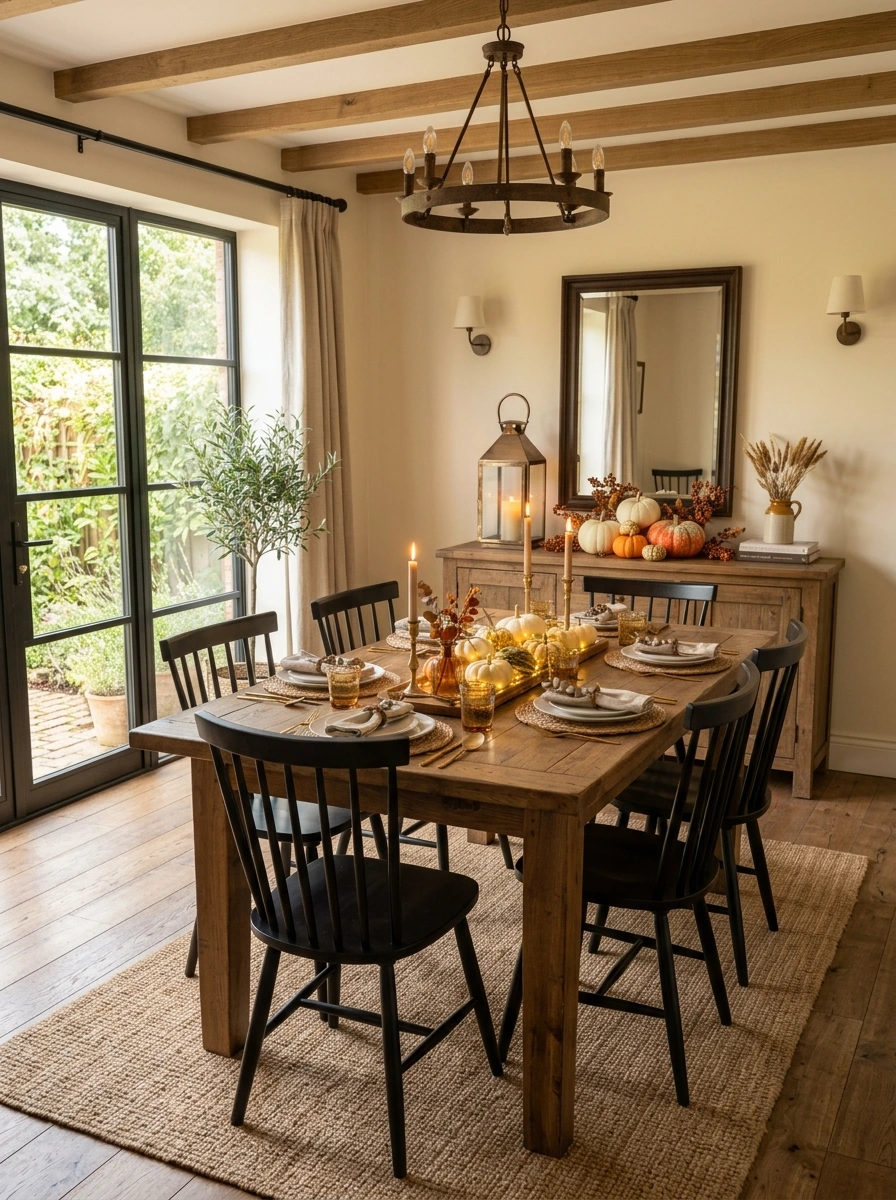
A beautifully set table can look a little isolated if the wall or sideboard behind it is left completely bare. Echoing a few of the same elements, a small pumpkin cluster, a lantern, or a framed sign, on the sideboard extends the styling beyond just the table’s surface.
Repeat one or two elements from the table, like matching pumpkins or a lantern.
Add a framed sign or small artwork to fill vertical space above the sideboard.
Keep the sideboard grouping smaller in scale than the main table centerpiece.
Repeating just one material, like the same stoneware finish or brass tone, between the table and sideboard is usually enough to visually connect the two without needing to match everything exactly.
29. Use Rope or Twine Napkin Ties Instead of Metal Rings

Metal napkin rings can look a little formal and cool against an otherwise warm, natural fall table setting. Simple rope or jute twine wrapped around each napkin ties into the same organic material palette as the centerpiece, chargers, and runner already on the table.
Wrap the twine two or three times around the napkin before tying, since a single wrap tends to loosen and slip once guests start unfolding their napkins at the table.
30. Finish With a Cluster of Votives at the Table’s Far End

Even a well-lit centerpiece can leave the far ends of a long table feeling a little dim once the sun goes down. A small cluster of votives placed at each end, past where the main centerpiece stops, keeps the light spread evenly across the entire table rather than concentrated only in the middle.
💡 Quick Tip
Group three votives together at each end rather than spacing single ones evenly down the length, since the small clusters read as intentional bookends to the centerpiece.
Match these end votives to the same amber glass used in the main centerpiece, so they read as an extension of the same styling rather than an afterthought added at the last minute.
Conclusion
An elegant fall table does not come from covering every inch in seasonal decor. It comes from a few well-chosen layers, candles at varying heights, a mix of real and faux pumpkins, dried leaves tucked into the gaps, built with intention rather than piled on all at once. Start with the pieces that solve your table’s biggest gap, whether that is a bare runner or flat, single-height candles.
You do not need all thirty ideas at once to see a difference. A runner, a low floral arrangement, and a few layered candles can transform the whole table within an afternoon. Add in the smaller details, place cards, napkin ties, sideboard styling, as you have time, and let the table build up gradually rather than all in one sitting.
The most elegant tables are not the most decorated ones. They are the ones where every piece feels like it belongs.