18 Living Room Accent Wall Ideas That Transform a Space

Introduction
One wall. That is all it takes to change the entire personality of a living room. An accent wall done well does not just add color — it creates a focal point, shifts the room’s proportions, and signals that the space was designed with intention rather than assembled from whatever was available.
The mistake most people make is treating an accent wall as a paint color decision. The best accent walls in 2025 are material decisions, texture decisions, architectural decisions. These eighteen ideas cover the full range — from a weekend DIY project to a genuine design statement that transforms the room completely.
1. A Deep, Moody Paint Color
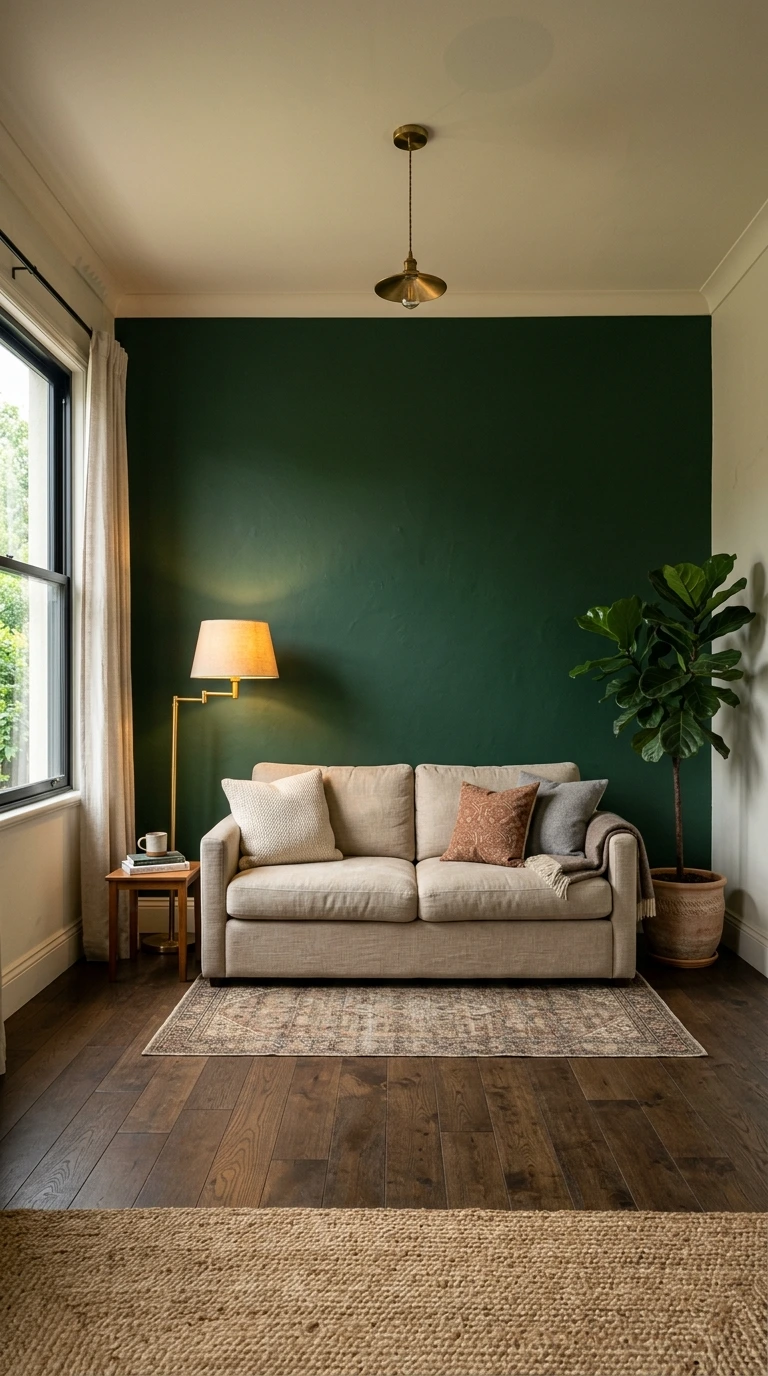
A single wall painted in a deep, saturated color — forest green, charcoal, navy, or deep burgundy — is the most accessible accent wall option available and still one of the most effective. The right dark color on the right wall creates immediate depth and atmosphere that lighter colors simply cannot achieve.
The wall behind the sofa or the fireplace wall are the most natural choices. Keep the other three walls light — warm white, cream, or soft gray — so the dark wall reads as deliberate contrast rather than an attempt to darken the whole room. Choose a matte finish for the most sophisticated result.
Best Dark Paint Colors for a Living Room Accent Wall
- Forest green — warm, organic, works with almost every style
- Charcoal — dramatic without the starkness of pure black
- Navy blue — classic, confident, pairs beautifully with brass
- Deep burgundy — rich and warm, particularly good in evening rooms
- Terracotta — earthy and warm, trending strongly in 2025
- Slate blue-gray — calm and architectural, suits contemporary spaces
2. Wood Slat or Fluted Panel Wall
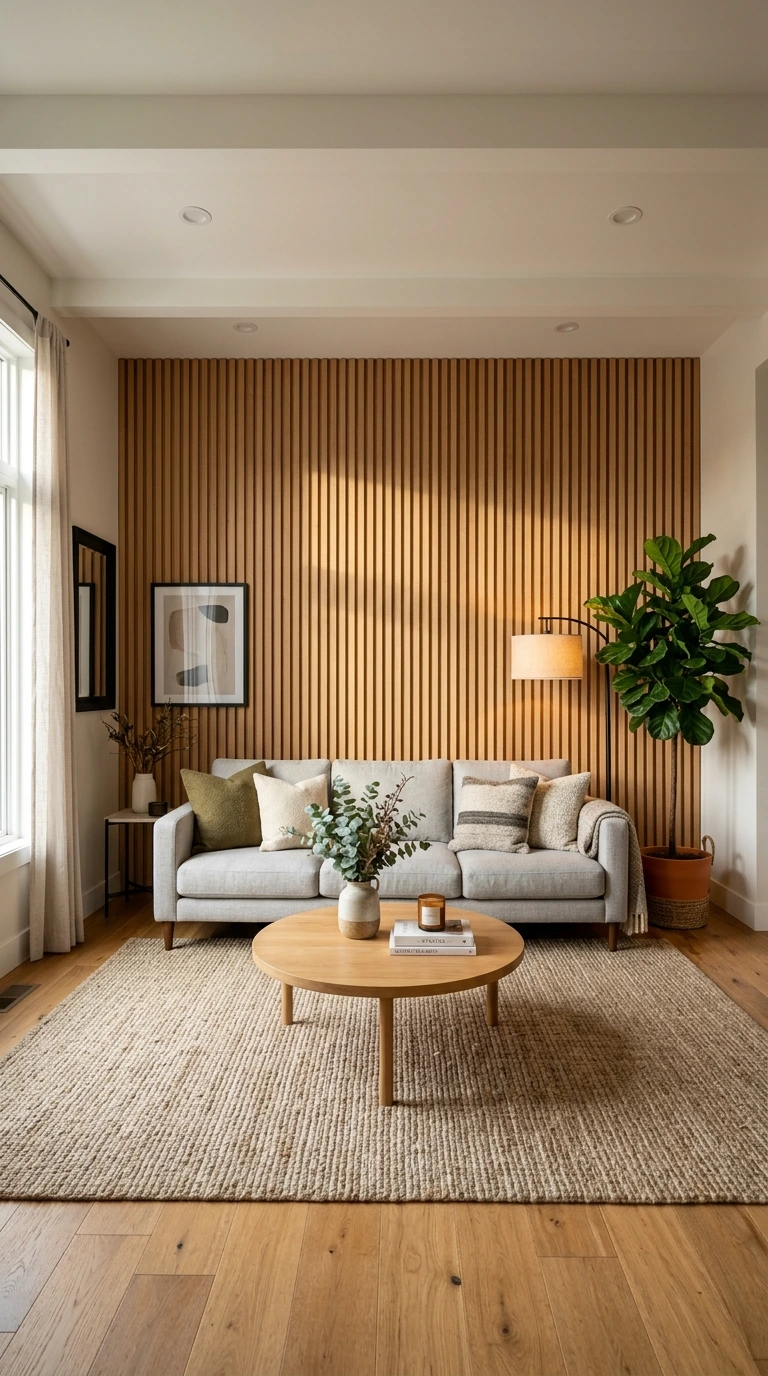
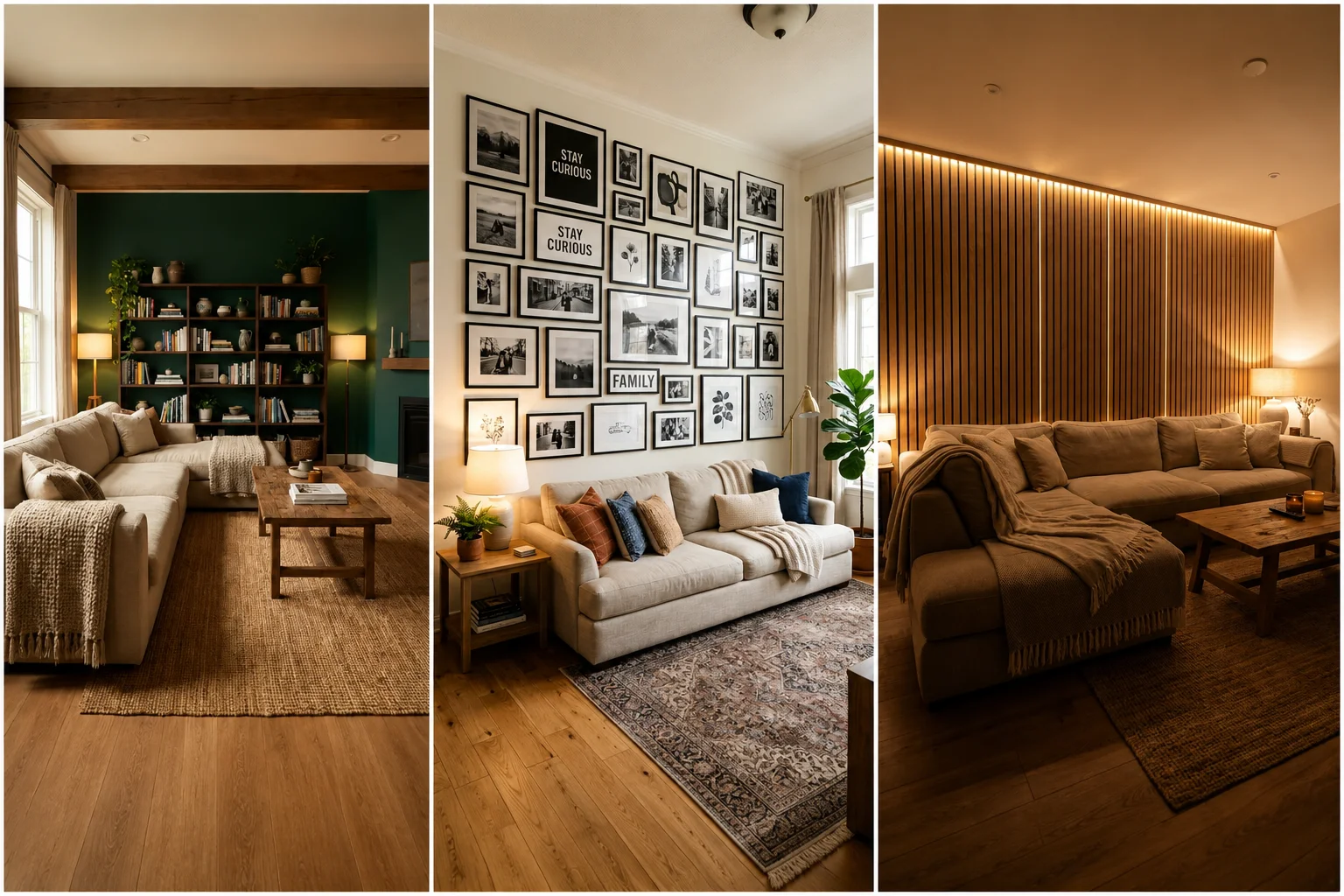
Wood slat panels — vertical strips of timber spaced with deliberate gaps between them — have become one of the defining accent wall trends of the last three years and show no sign of fading. They add warmth, texture, and a genuine architectural quality that paint alone cannot replicate. The vertical lines also draw the eye upward, making ceilings feel taller.
Install behind the sofa for the most dramatic living room impact, or as a full fireplace surround for a feature that works equally well in daylight and after dark. Natural oak or walnut finishes suit warm, organic interiors. Painted slats — in a deep green, black, or warm white — suit more contemporary directions.
Pro Tip: Leave the gaps between wood slats slightly wider than feels instinctively right. Most people underestimate how much the shadow in the gaps contributes to the depth and dimension of the finished wall. Wider gaps create more shadow, more texture, and a more dramatic result.
3. Limewash or Venetian Plaster Finish
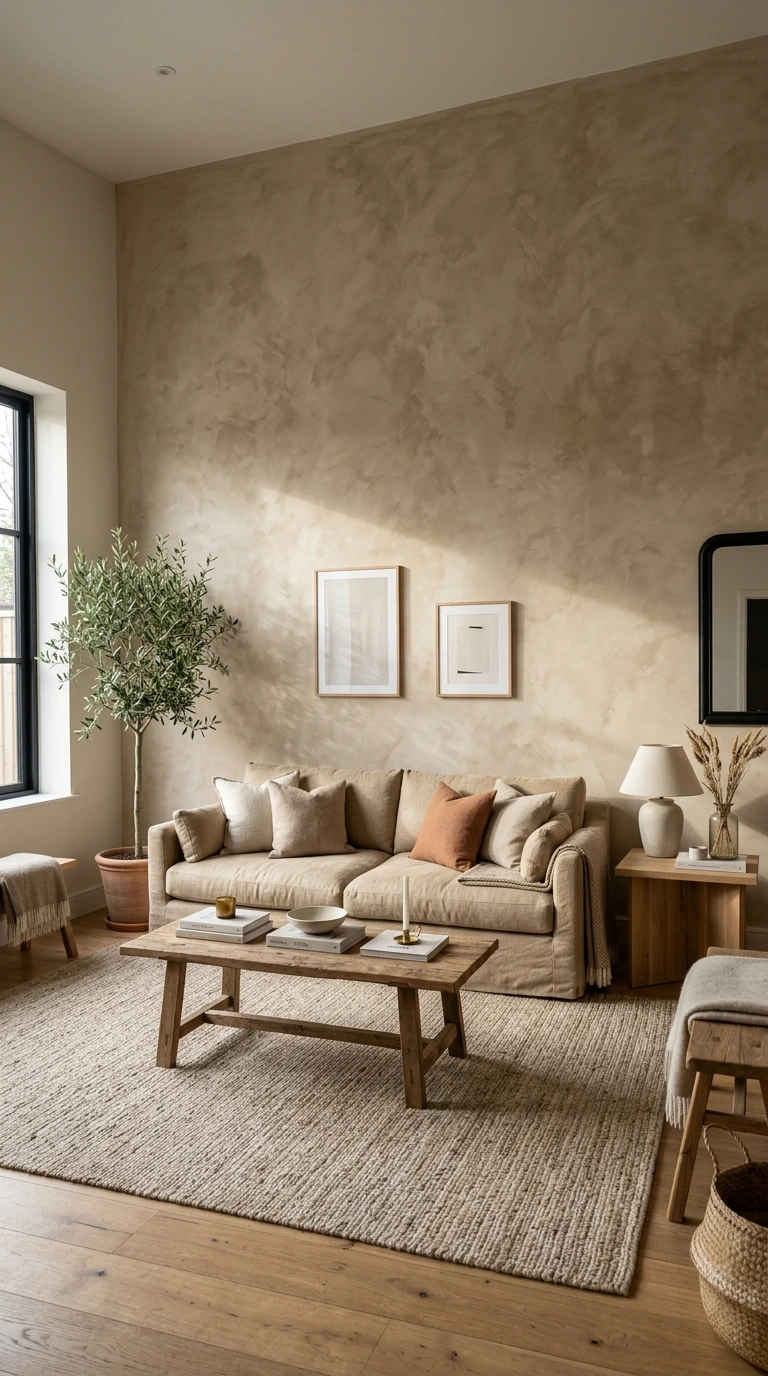
Limewash paint creates a mottled, aged, almost watercolor-like effect on a wall that reads as both artisanal and deeply contemporary. No two limewash walls look the same — the variation in tone and texture as the paint dries creates a surface with genuine depth and movement that flat paint can never match.
Venetian plaster goes further — a multi-coat application that creates a smooth, almost luminous surface with subtle tonal variation and a faint sheen. Both finishes are forgiving of imperfect walls and require no specialist equipment beyond a wide brush or trowel. They pair particularly well with natural linen furniture, warm wood tones, and Mediterranean-inspired styling.
4. Botanical or Patterned Wallpaper
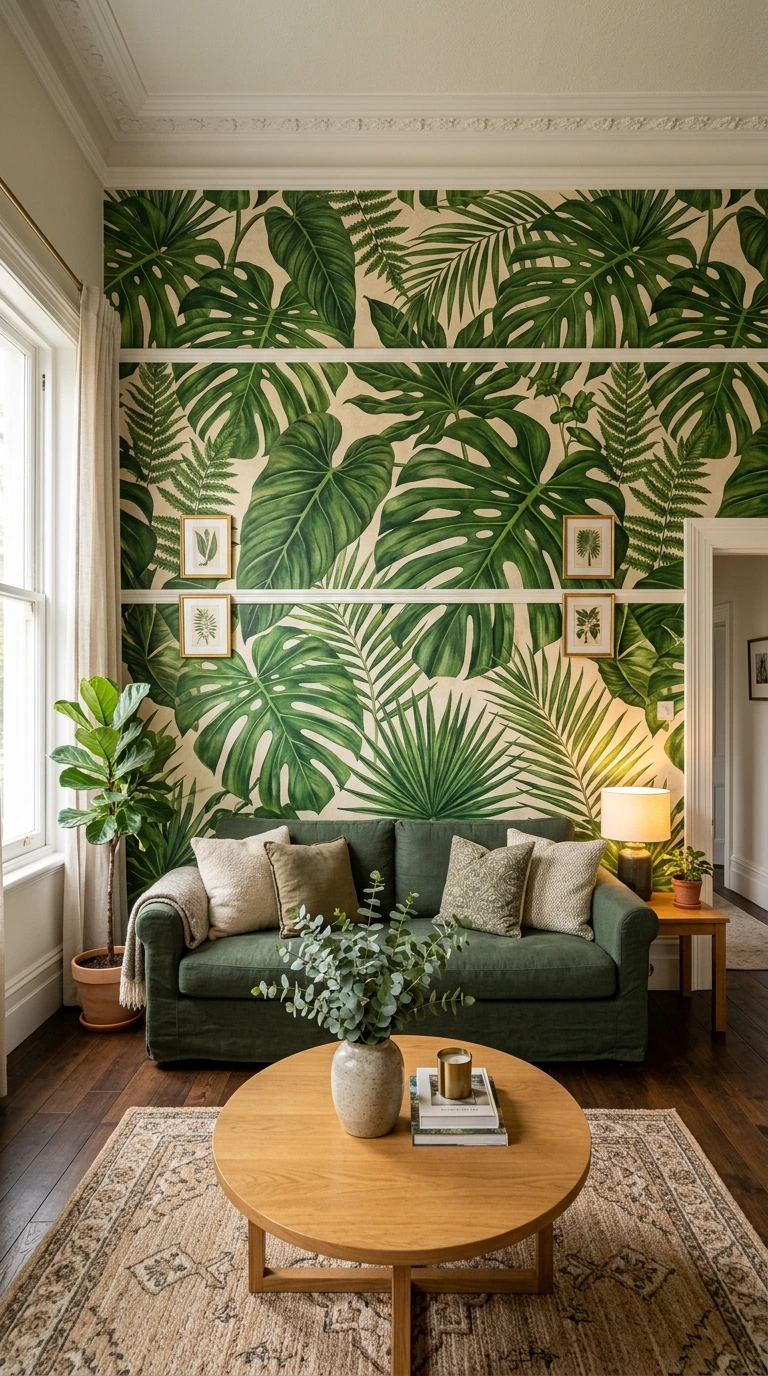
One wall of bold wallpaper in a living room creates a statement that would feel overwhelming on four walls but feels perfectly calibrated on one. A large-scale botanical print, a dramatic geometric pattern, or a hand-drawn illustration all transform the wall into something closer to art than decoration.
Choose the wall that is most visible from the main seating position — usually the wall the sofa faces or the wall behind it. Frame the wallpaper with a simple painted border or picture rail molding for an even more considered result. Peel-and-stick options make this fully renter-friendly and fully reversible.
Warning: Measure your wall precisely before ordering any wallpaper, including the position of any electrical outlets, light switches, or architectural features that will need to be cut around. Running short by a single roll is one of the most frustrating and avoidable wallpaper mistakes, particularly with patterned papers where the repeat must be matched.
5. Board and Batten or Picture Frame Molding
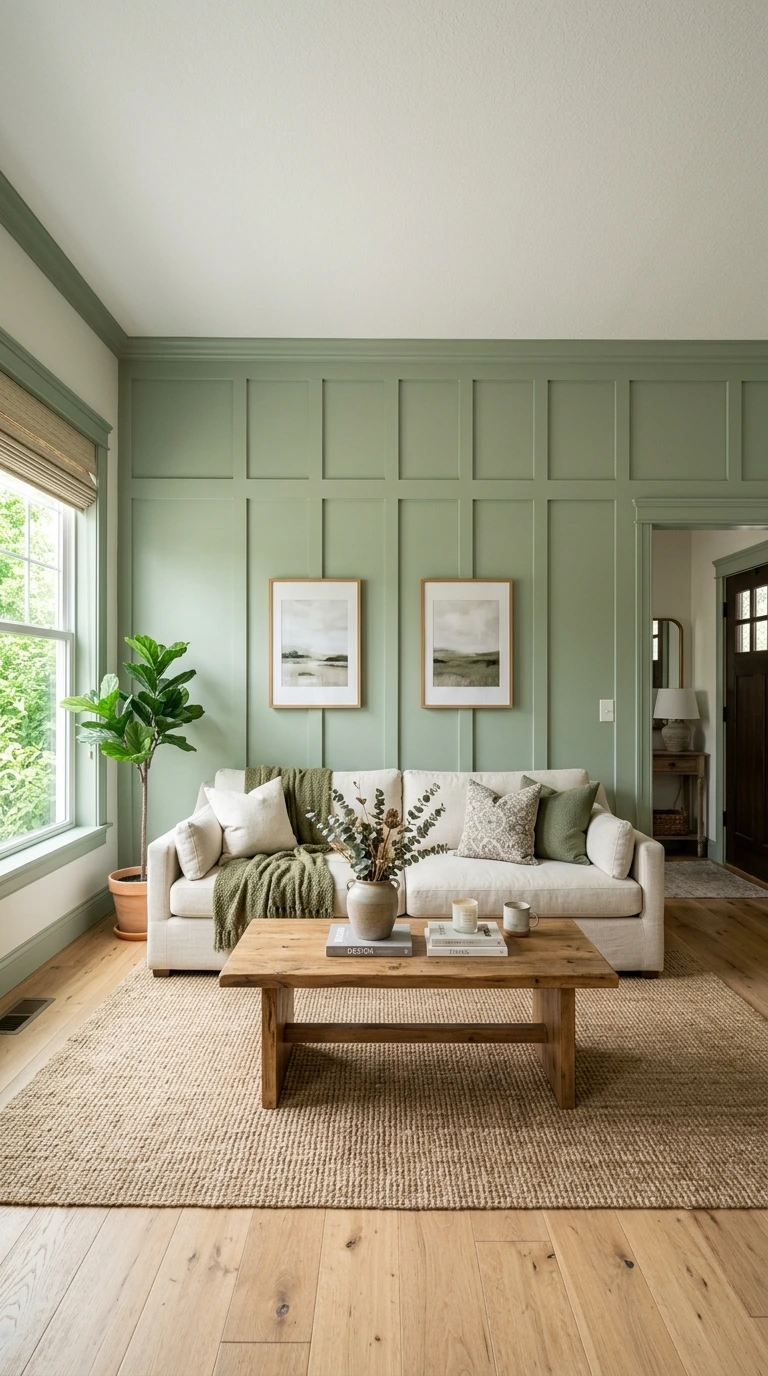
Board and batten — vertical timber strips applied in a regular pattern to the lower half of a wall — and picture frame molding — rectangular timber frames applied to the wall surface in a grid — are among the most impactful accent wall techniques available for a budget that does not stretch to new materials. Both add genuine architectural character using inexpensive timber strips from a hardware store.
Paint everything — the wall, the molding, and the trim — in the same color for a color-drenched, cocoon-like effect that feels contemporary and considered. Or paint the molding a contrasting tone to the wall for a more traditional, paneled appearance. Either approach transforms a plain wall into something that looks custom-built.
| Accent Wall Type | Budget Level | DIY Possible | Time Required | Best Style |
|---|---|---|---|---|
| Bold Paint Color | Low | Yes | Half day | Any |
| Wood Slat Panels | Mid | Yes | Full weekend | Contemporary, organic |
| Limewash Finish | Low-Mid | Yes | Full day | Mediterranean, organic |
| Wallpaper | Low-Mid | Yes | Half day | Any |
| Board and Batten | Low | Yes | Full day | Traditional, farmhouse |
6. Shiplap or Horizontal Wood Planking
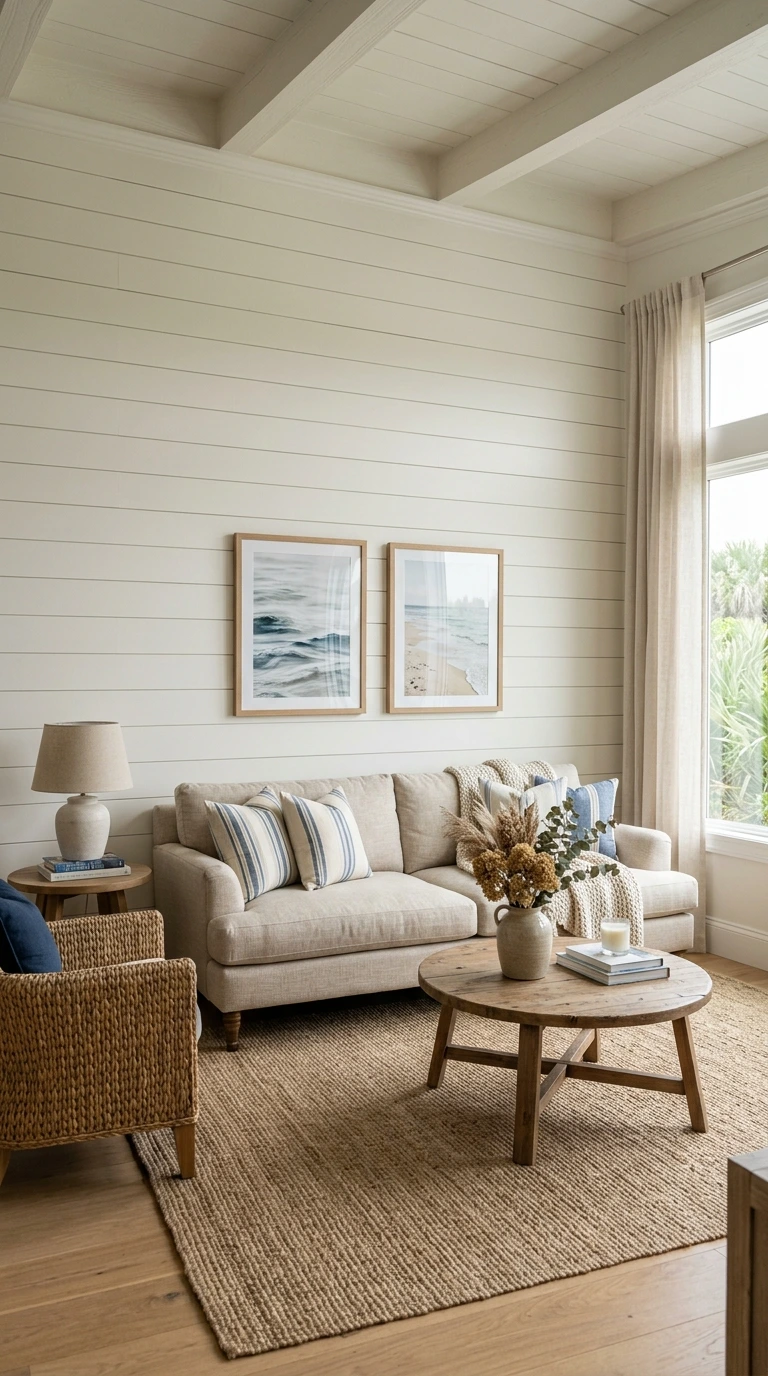
Horizontal wood planks — shiplap, tongue-and-groove boards, or simple timber lengths applied in overlapping rows — bring a warmth and texture to a living room wall that feels equally at home in a coastal cottage and a contemporary apartment. The horizontal lines also visually widen the wall, making it appear broader and the room feel more expansive.
Paint shiplap in a soft white or warm cream for a classic coastal look. Leave it in a natural wood finish for a more rustic, cabin-inspired feel. Paint it in a deep, saturated color — dark green, charcoal, or midnight blue — for a contemporary statement that retains all the texture while delivering a dramatic result.
7. Gallery Wall
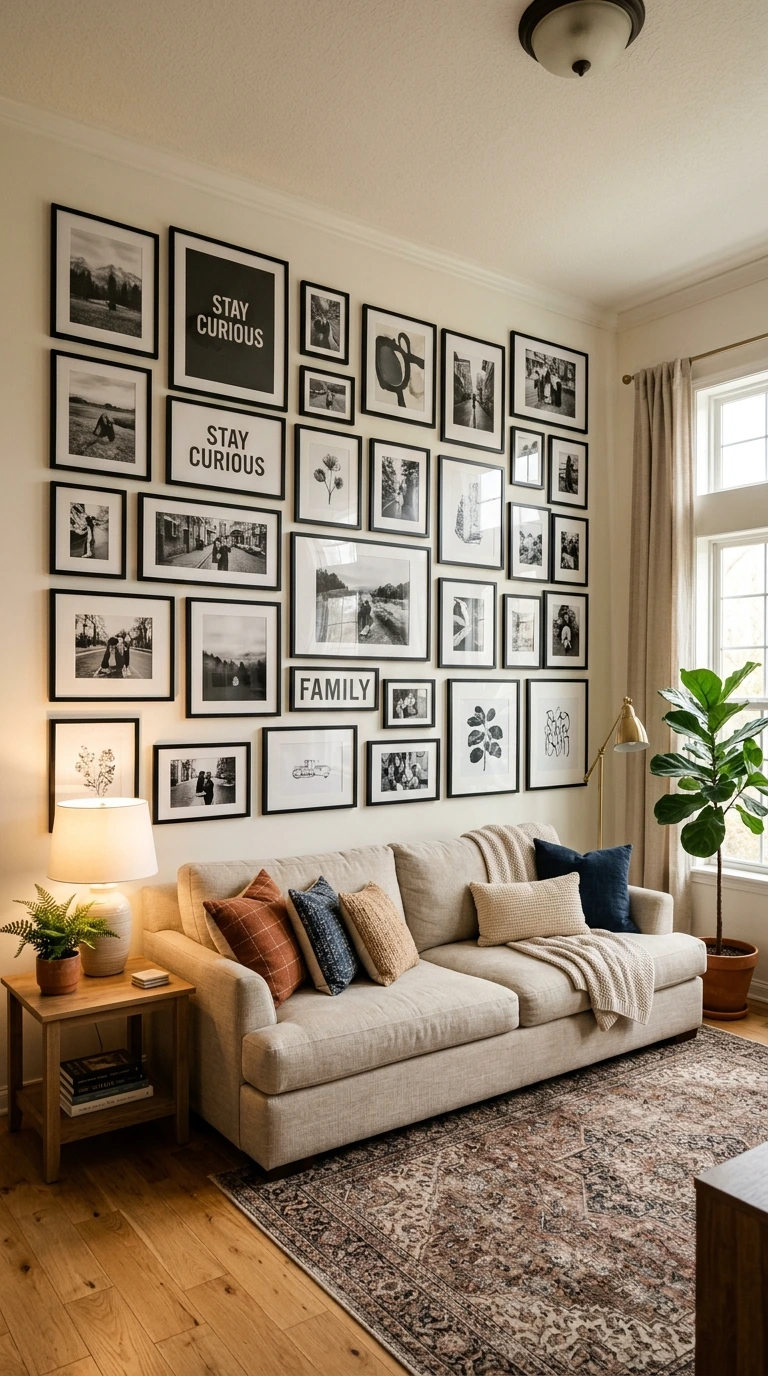
A well-executed gallery wall is not a collection of pictures hung casually — it is a curated arrangement of art, photography, and objects that collectively function as a single design statement. The wall behind the sofa is the most natural position for a gallery wall in a living room, where it creates a backdrop that anchors the seating area.
The frame finish is more important than the artwork when it comes to cohesion. A gallery wall where all frames share the same finish — all black, all white, all natural wood, all matching brass — looks designed regardless of how varied the artwork itself is. A gallery wall with mismatched frames in different colors and finishes looks like a collection regardless of how good the individual pieces are.
How to Arrange a Gallery Wall Without Getting It Wrong
- Lay the arrangement on the floor first and photograph it before hanging anything
- Start from the center and work outward — not from one corner
- Leave consistent gaps between frames — 2 to 3 inches works well
- Include at least one piece that is significantly larger than the others
- Mix frame sizes but keep the finish consistent
- Step back to the doorway regularly to check the overall arrangement
8. Faux Stone or Exposed Brick
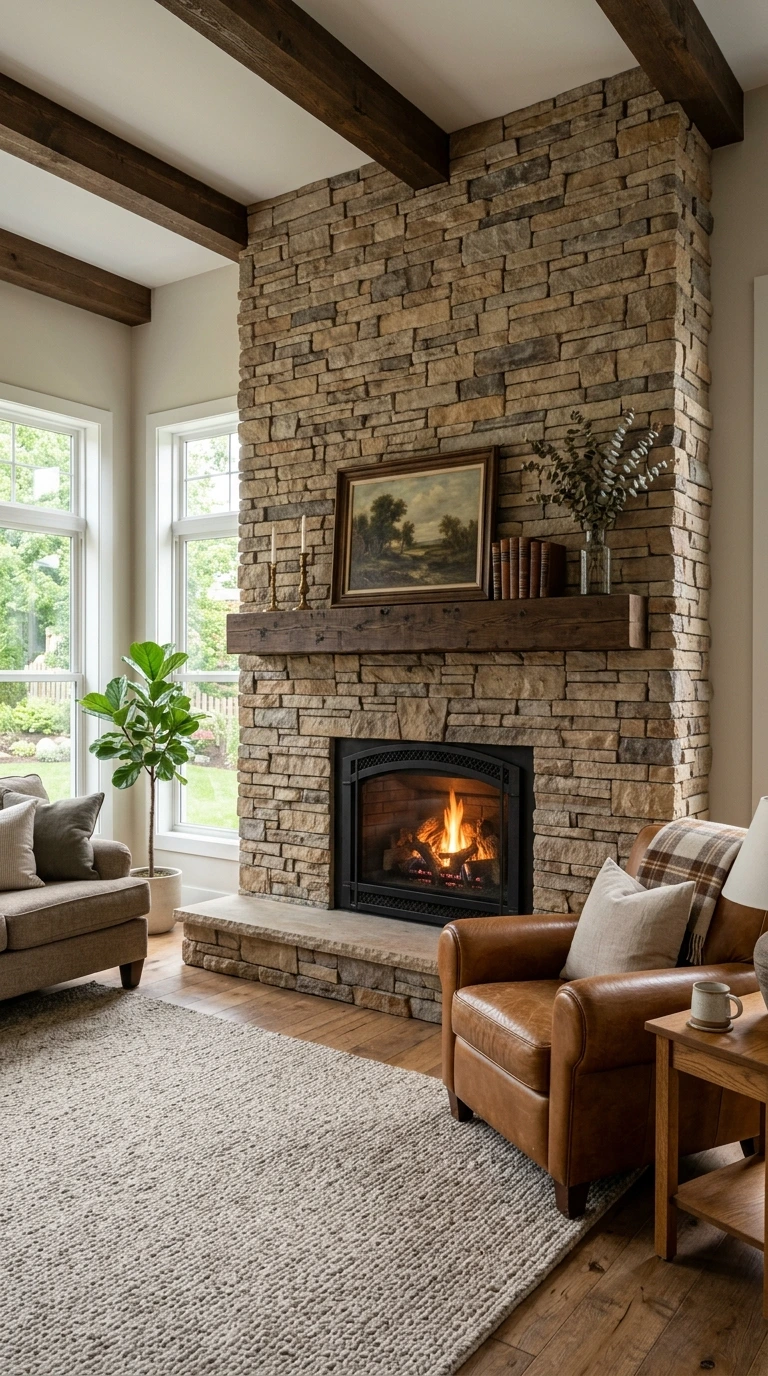
A wall of exposed brick or stone — whether genuine or a convincing faux alternative — adds a layer of material history and texture that no painted or paneled wall can replicate. In a living room, it works particularly well as a fireplace surround or as the full chimney breast wall, where the material feels architecturally appropriate.
Faux brick and stone panels now achieve a level of realism that makes the distinction between genuine and artificial difficult to identify from a seated position. Stone veneer sheets — thin panels of real stone bonded to a backing — offer a genuine material at a fraction of the cost and weight of traditional masonry. Both options install without specialist skills.
Important: Before installing any heavy wall panels, stone veneer, 3D panels, or thick timber cladding, check your wall’s load-bearing capacity and the weight rating of the fixings you intend to use. A panel installation that fails on a rental property wall or damages the structure behind it is significantly more expensive to remedy than getting the fixing specification right at the start.
9. Geometric Painted Pattern
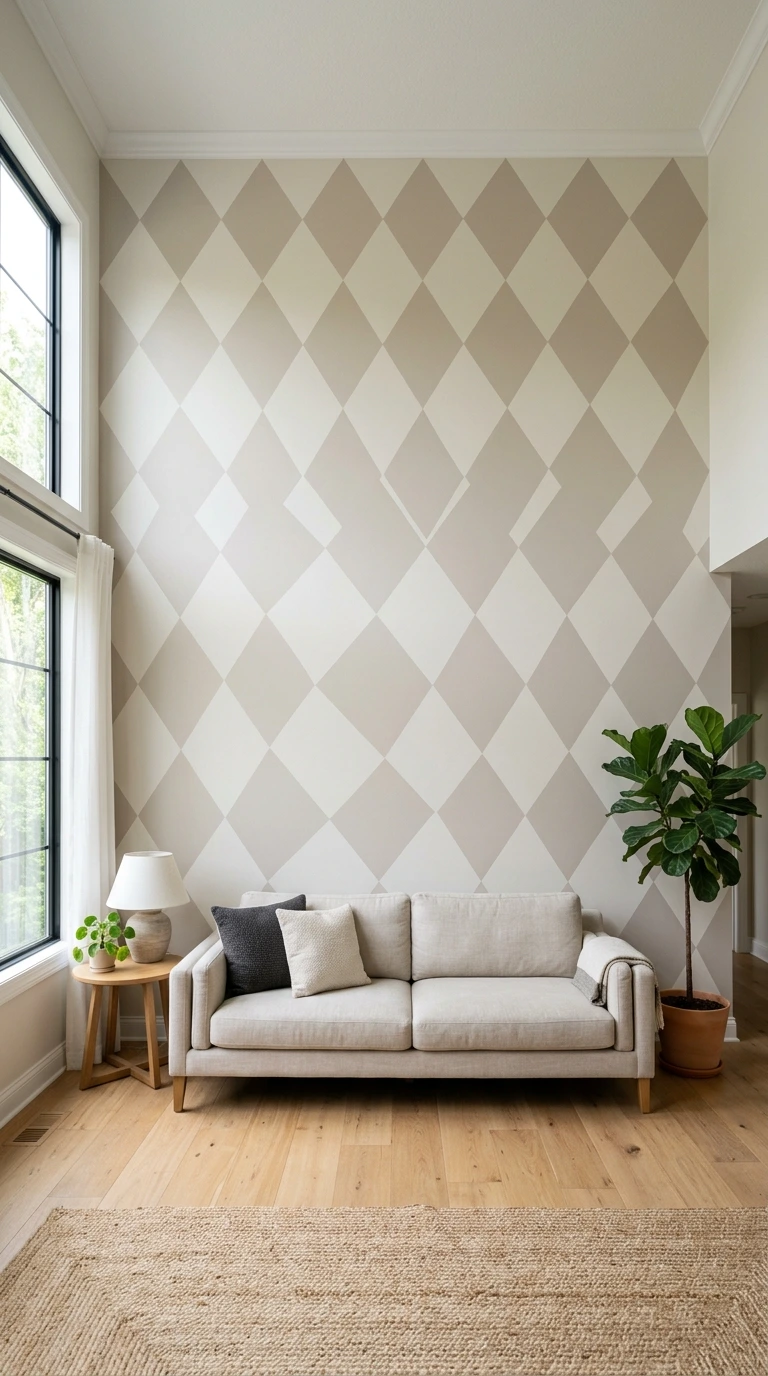
A geometric pattern painted directly onto the wall — a grid of diamonds, a chevron, a repeated hexagon, an abstract color block — adds visual complexity to an accent wall without requiring any additional materials beyond paint and painter’s tape. This is one of the most budget-friendly accent wall options on this list and one of the most visually distinctive when executed with precision.
Use a laser level or a long spirit level to ensure perfectly straight lines. Apply painter’s tape precisely and press the edges down firmly to prevent paint bleeding under the tape. Remove the tape while the paint is still slightly wet — not after it has fully dried — to achieve the cleanest possible edge.
10. Color Drenching
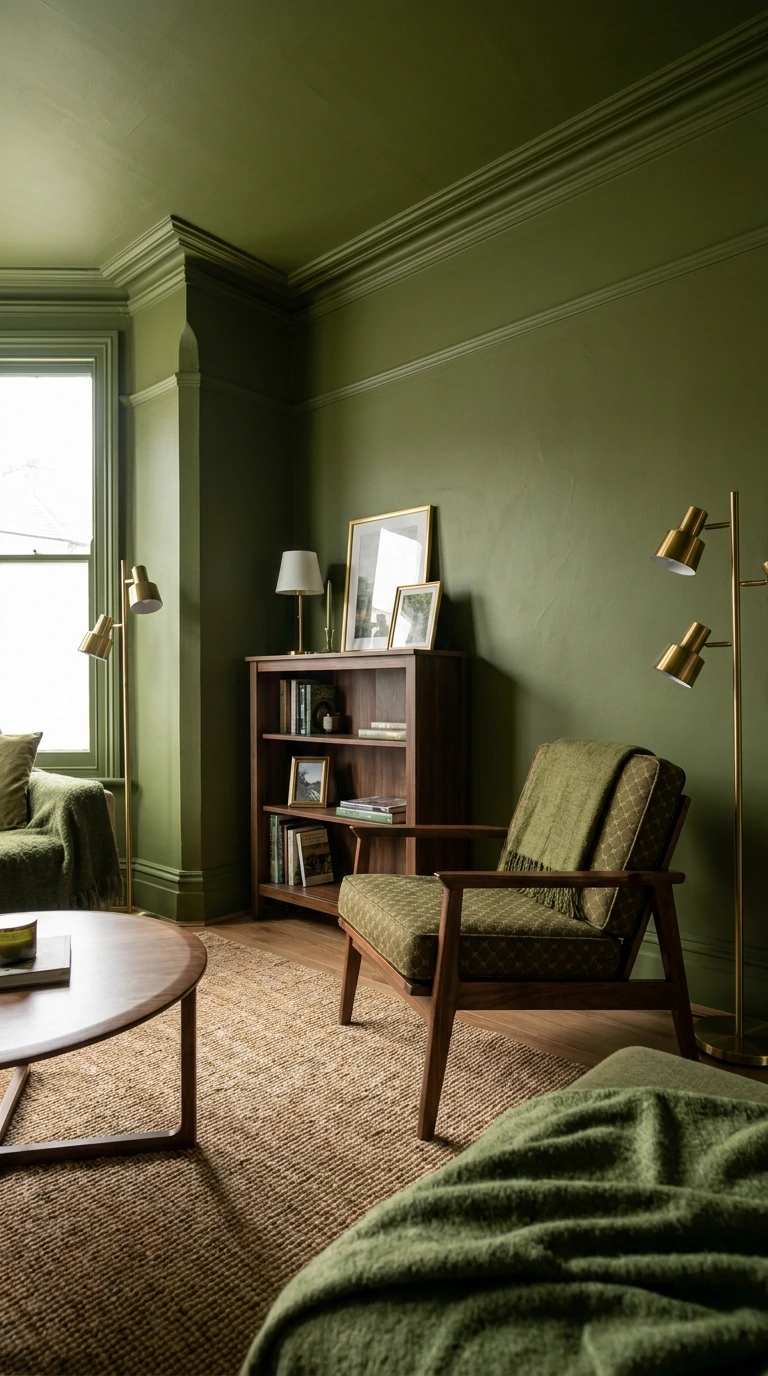
Color drenching — painting the walls, ceiling, trim, molding, and even some furniture pieces all in the same color — creates an enveloping, cocoon-like effect that is one of the most striking interior design approaches of 2025. Unlike a simple colored accent wall, a color-drenched wall treats the entire architectural envelope of one section of the room as a single surface.
Choose a warm, saturated color for the most dramatic result — deep olive green, rich terracotta, warm burgundy, or a deep teal. The key is painting everything the same color: the baseboard, the architrave, the picture rail, and the ceiling if it is above the accent wall. The absence of contrasting trim is what makes the drenched color feel architectural rather than simply decorated.
Accent Wall Checklist
- ✅ Choose the wall that naturally draws the eye when entering the room
- ✅ Test paint or wallpaper on the actual wall before committing to the full surface
- ✅ Keep the other three walls light to allow the accent wall to read as contrast
- ✅ Consider the room’s lighting, dark accent walls need good artificial lighting after dark
- ✅ Repeat one element from the accent wall in the rest of the room for cohesion
11. 3D Wall Panels
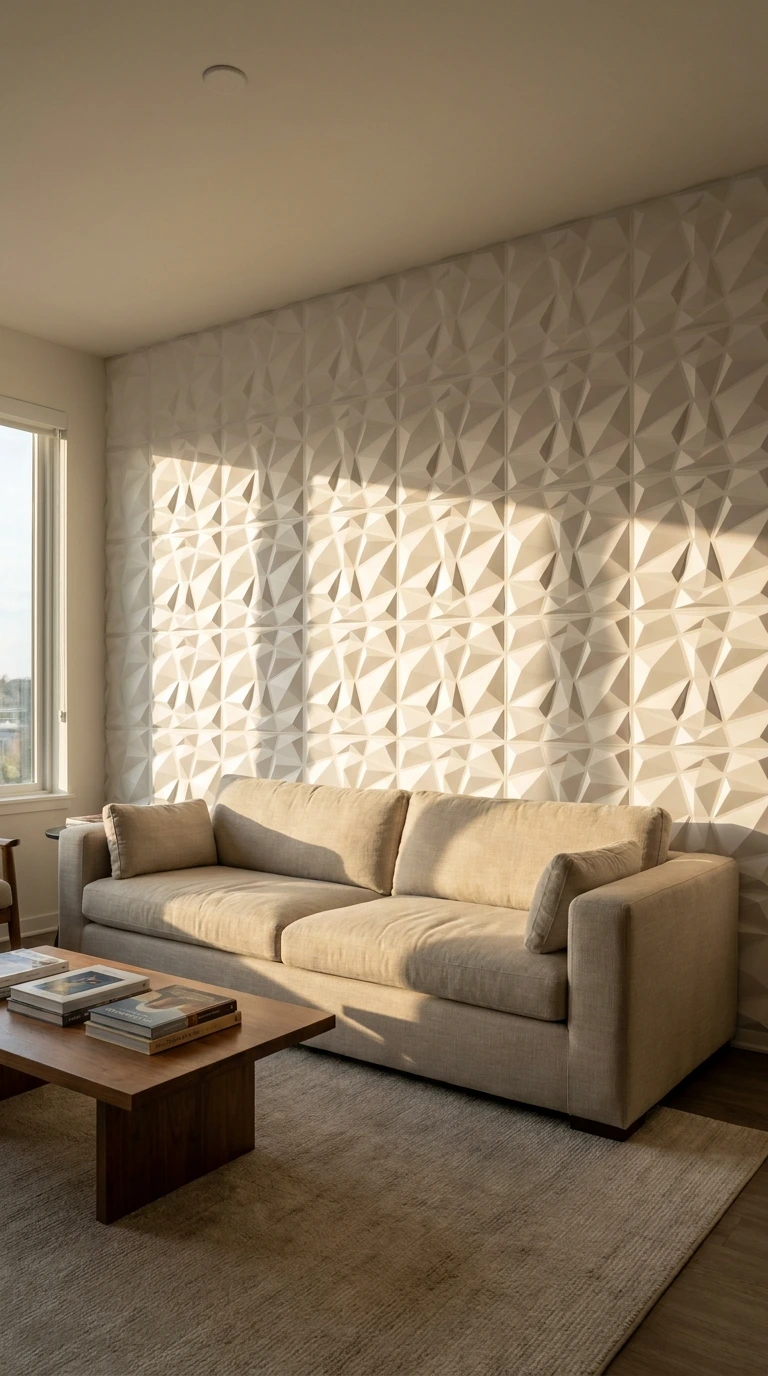
Three-dimensional wall panels — available in geometric, wave, diamond, and abstract relief patterns — add sculptural depth to an accent wall that changes appearance throughout the day as the angle of light shifts. A 3D panel wall that looks relatively flat in the morning reads as dramatically textured in raking afternoon light and almost sculptural after dark when lit from below.
Choose panels in a single color — painted the same white, cream, or pale tone as the surrounding walls — for the most sophisticated result. A 3D panel wall covered in a color that matches the wall reads as architectural rather than decorative. A 3D panel wall in a contrasting color reads as a surface treatment rather than a design feature.
12. Dark Green Statement Wall
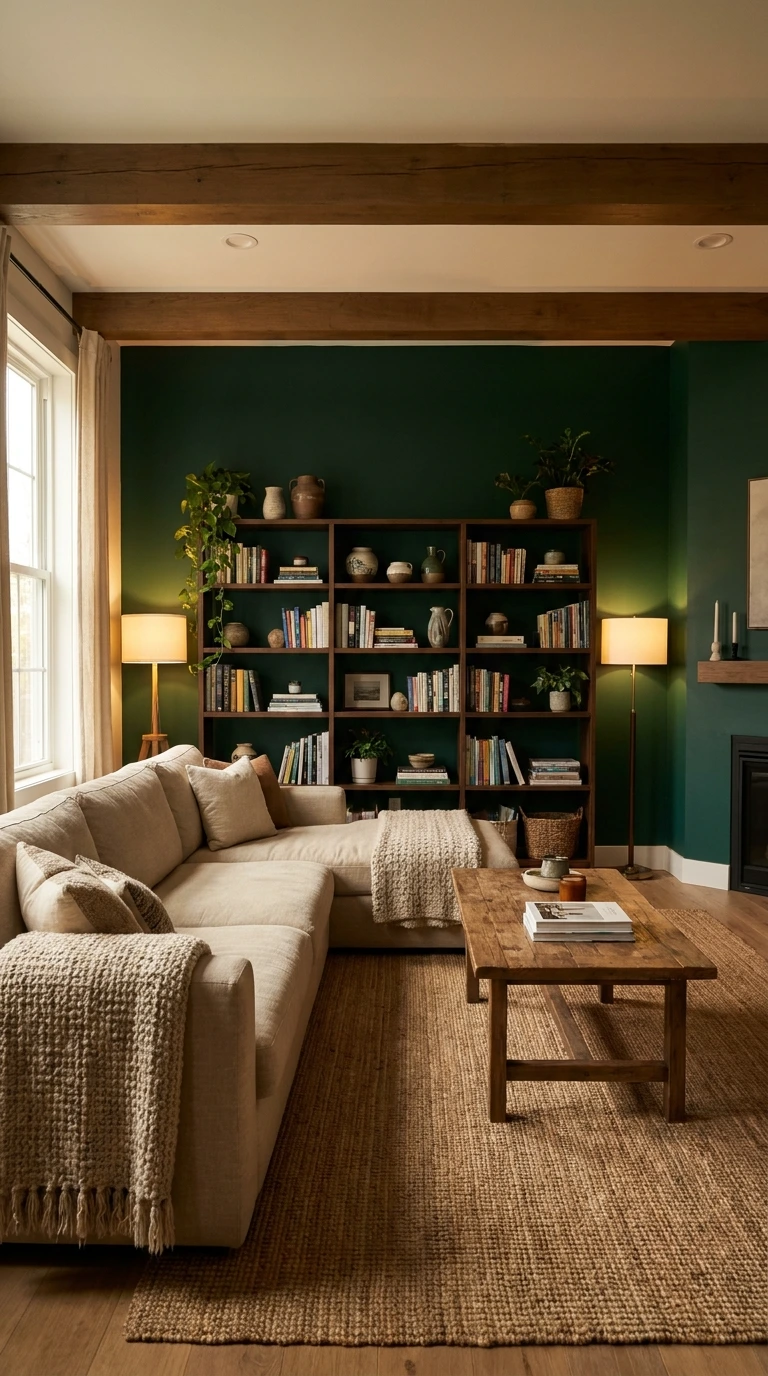
Deep green has become the most consistently requested accent wall color of the last three years — and the results consistently justify the reputation. Forest green, hunter green, and deep olive all bring an organic warmth to a living room that no other color achieves, regardless of the style direction of the rest of the room.
The reason dark green works so well as a living room accent wall is that it reads as a backdrop rather than a statement. It makes the furniture in front of it look more expensive, the plants beside it look more lush, and the artwork hung on it look more considered. It is one of the few deeply saturated colors that adds atmosphere without dominating.
Pro Tip: If you are uncertain about committing to a full accent wall in dark green, paint the wall behind your bookshelf or display unit first. The green behind the shelving creates an immediate visual impact while the furniture in front of it reduces the psychological commitment of the full wall. Most people find it convincing enough to extend the paint across the whole wall within a few months.
13. Large-Scale Mural or Botanical Art Wall
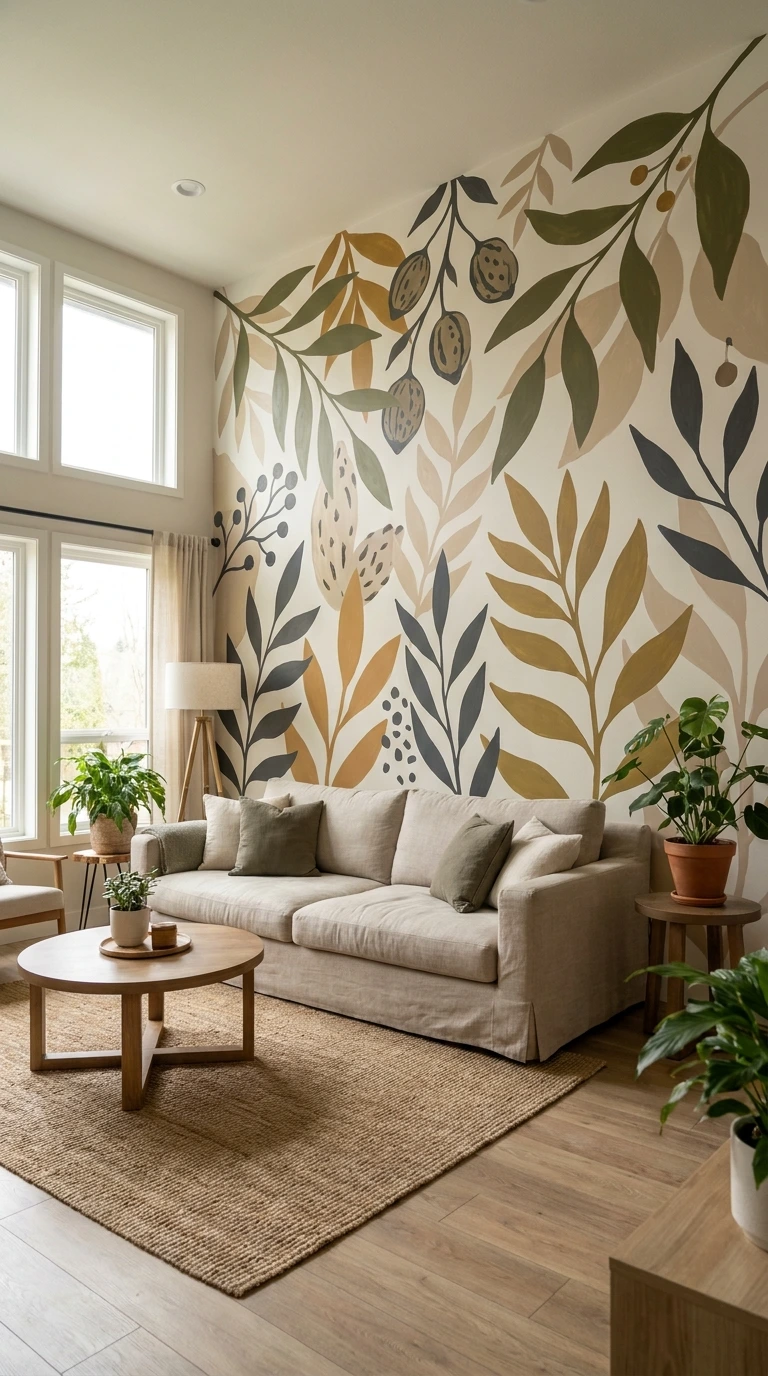
A painted mural or large-scale botanical art piece — either commissioned from an artist, purchased as a wallpaper print, or applied as a peel-and-stick panel — transforms an accent wall from a design decision into a genuine art experience. This approach works particularly well in living rooms where the ambition is for the wall to serve as the room’s primary design statement.
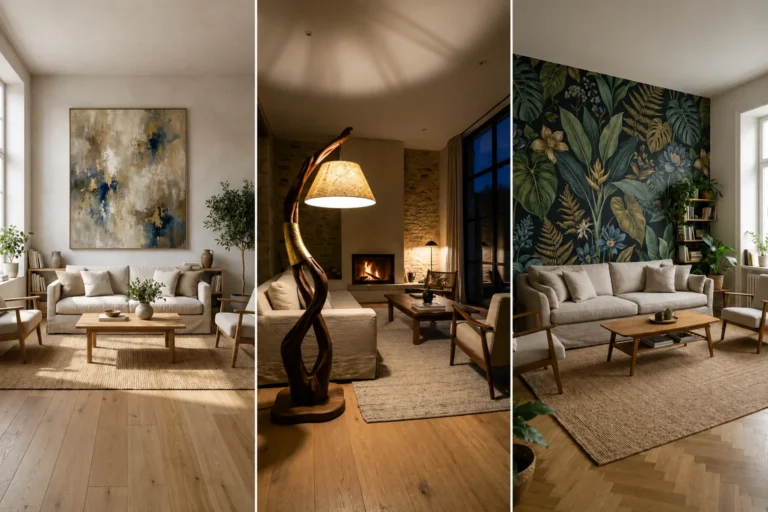
Large-scale botanical prints — overscaled leaves, tropical plants, abstract florals — are among the most popular mural wallpaper choices for living rooms because they bring organic shapes and natural color into the room without requiring any actual plants. A single large-format botanical print, well-framed or applied to a clearly defined section of wall, achieves an impact that galleries of smaller prints rarely match.
14. Tile Accent Wall
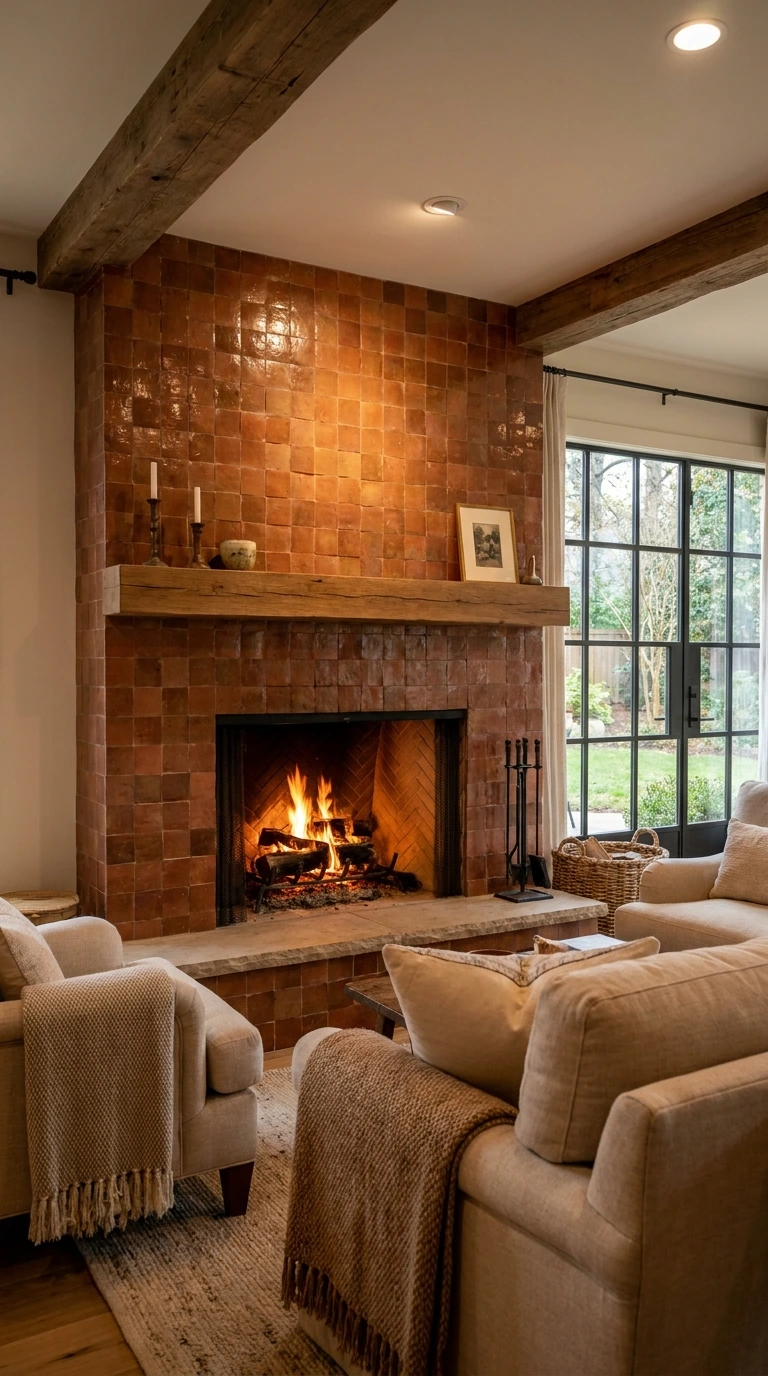
Tile is not just for kitchens and bathrooms — a tile accent wall in a living room, used as a fireplace surround, a full chimney breast treatment, or a defined section of wall behind the television, brings a material richness and texture that paint and wallpaper cannot replicate. Zellige tiles, terracotta tiles, concrete-look tiles, and handmade ceramic tiles all suit living room applications beautifully.
A tiled fireplace surround is the most natural application — the tile extends from hearth level up to mantel height or beyond, creating a self-contained material feature that defines the fireplace wall without requiring the entire wall to be tiled. Paired with warm lighting and complementary furniture, a tiled fireplace surround is one of the most effective living room transformation options available.
15. Mirrored Wall or Mirror Cluster
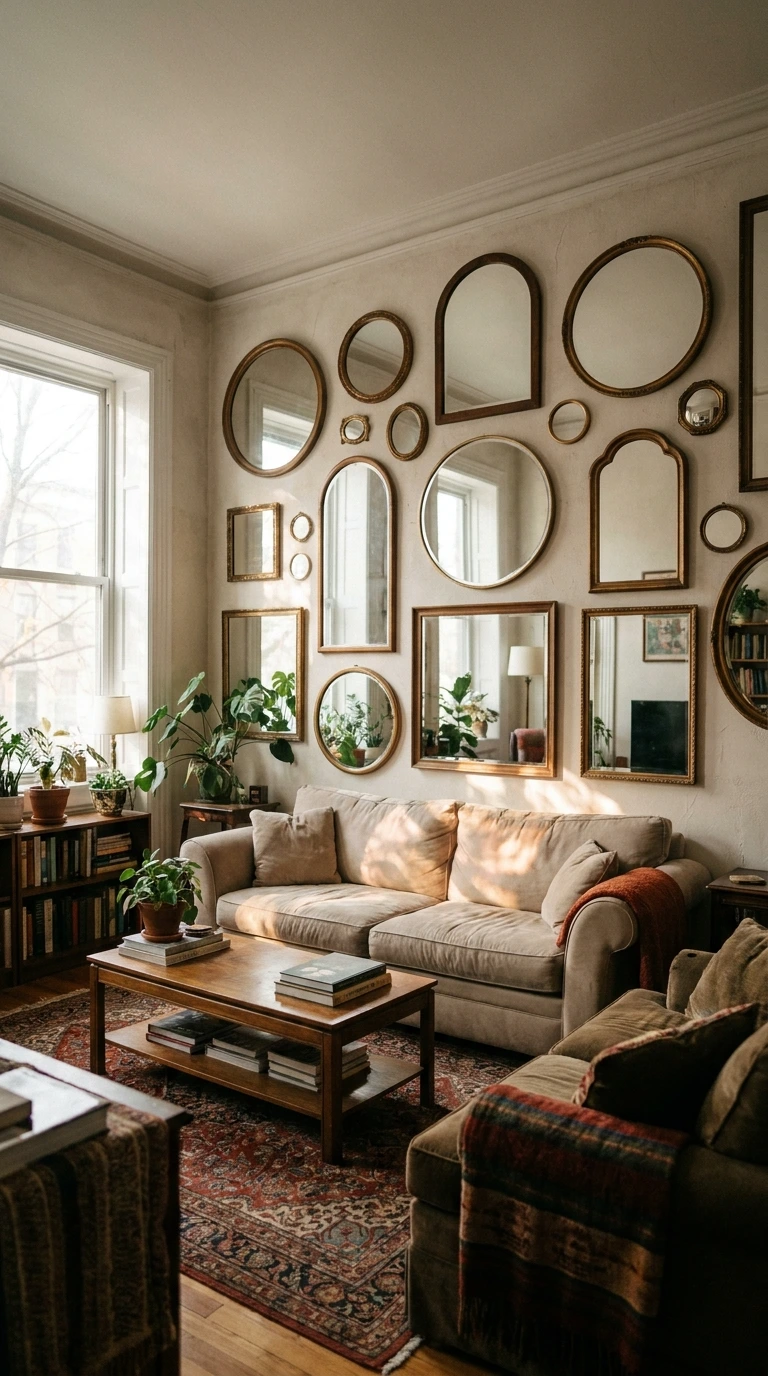
A mirrored accent wall — whether a full mirror wall or a carefully arranged cluster of mirrors in different shapes and finishes — reflects both natural and artificial light throughout the living room, creating an impression of doubled space and doubled light. This is particularly effective in north-facing rooms or rooms with limited natural light.
A curated cluster of mirrors — different shapes, different frame finishes, arranged with the same intentionality as a gallery wall — creates more visual interest than a single large mirror while avoiding the dated look of a full floor-to-ceiling mirror wall. Mix round, arched, rectangular, and hexagonal mirrors in warm metal, wood, and frameless options for the most dynamic arrangement.
16. Built-In Shelving as Accent Wall
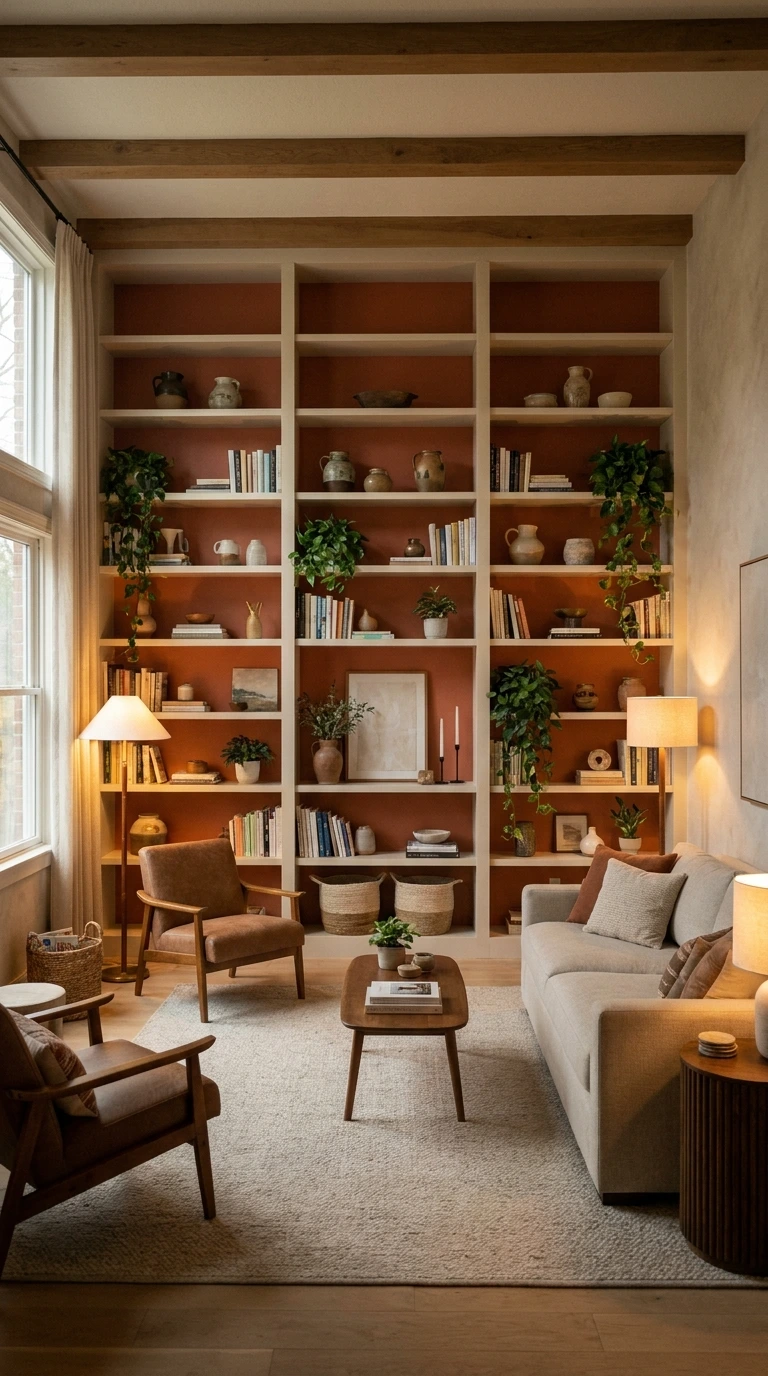
A full wall of built-in shelving — or a convincing simulation of it using freestanding units arranged side by side and finished with consistent trim — transforms the accent wall into a functional feature that adds both character and meaningful storage. Styled with books, plants, ceramics, and personal objects, a shelving wall becomes the most personal and most dynamic accent in the room.
Paint the back panel of the shelving in a contrasting color — a deep green, a rich terracotta, or a warm navy — to add depth and make the objects displayed on the shelves pop visually. This technique creates the impression of a fully finished accent wall within the shelving itself, visible between and behind the displayed items.
Warning: Freestanding shelving units used to simulate a built-in wall must be secured against tipping with anti-tip furniture straps. A full wall of books and ceramics represents significant weight at height, and an unsecured unit that topples is a genuine safety hazard regardless of how convincingly it reads as built-in. Secure first, style second.
17. Grasscloth or Fabric Wallpaper
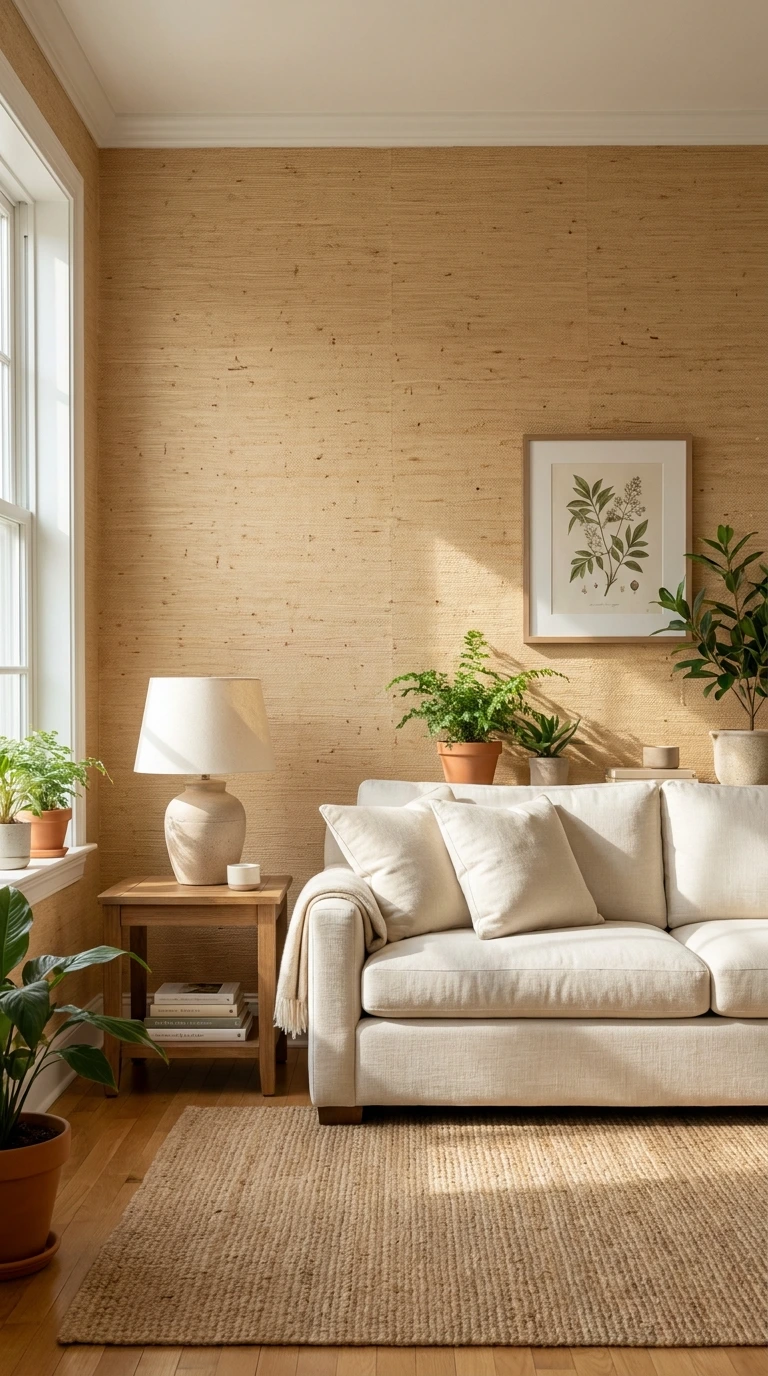
Grasscloth wallpaper — made from natural woven fibers bonded to a paper backing — brings a textural, organic warmth to a living room wall that flat paint cannot approach. The woven surface catches light differently at different angles and changes the acoustic quality of the room as well as its visual character. This is an accent wall that you feel as much as see.
Fabric panels — upholstered or simply stretched fabric fixed to a timber frame and mounted to the wall — offer a similar textural effect with the additional benefit of genuine sound absorption. In a living room that doubles as a home cinema or a room where sound quality matters, a fabric panel accent wall serves a functional purpose alongside its visual one.
18. Integrated Lighting Within the Accent Wall
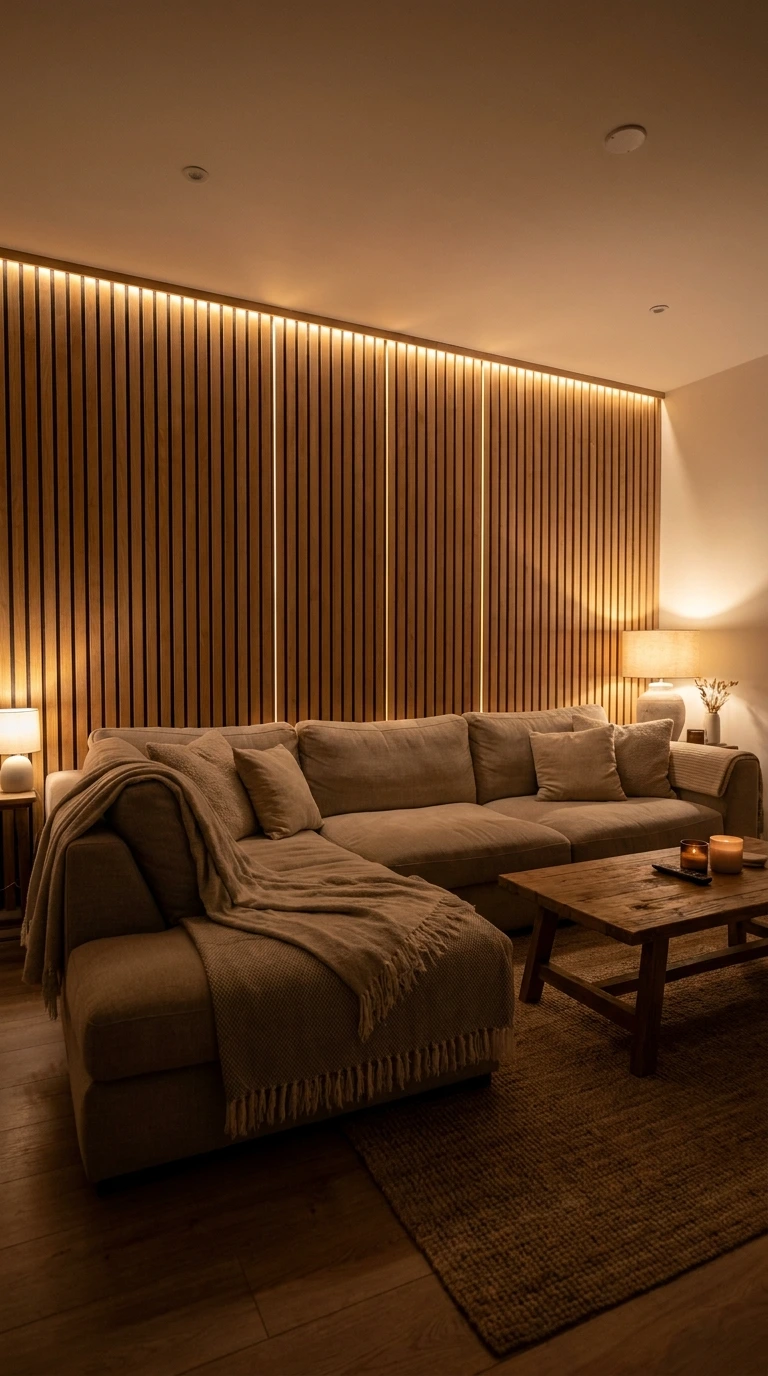
An accent wall becomes an entirely different design proposition when lighting is integrated within it — behind wood slat panels, inside recessed niches, along the floor at the base of the wall, or projected onto its surface from a concealed track. This is the technique that transforms a good accent wall into a great one, and the detail that most distinguishes a professionally designed room from a self-decorated one.
LED strip lights run behind wood slat panels create a warm backlighting effect that makes the slats appear to glow from within. Recessed spotlights positioned in the ceiling to rake across a textured plaster or limewash wall cast dramatic shadows that reveal the texture in a way that ambient overhead lighting cannot. Floor-level LED strips at the base of a dark painted wall create a floating effect that makes the wall appear to lift off the floor.
Common Accent Wall Mistakes
Mistake 1: Choosing the wrong wall
The accent wall should be the one the eye goes to naturally when entering the room — usually the wall the seating faces, the fireplace wall, or the wall behind the primary sofa. Choosing a side wall, a wall with a door, or a wall cluttered with windows reduces the accent wall’s impact significantly.
Mistake 2: Using the same finish on all four walls and calling one of them an accent
An accent wall needs to be genuinely different — in color, material, or treatment — from the surrounding walls. A wall that is only marginally darker or lighter than the others does not create a focal point. Commit to a real contrast.
Mistake 3: Not testing before committing
Painting a large color swatch, hanging a wallpaper sample, or applying a test section of limewash on the actual wall and observing it at different times of day is a step most people skip and most professionals never omit. The time saved by skipping the test is never worth the cost of discovering the choice was wrong after the full wall is done.
Mistake 4: Ignoring what is in front of the wall
An accent wall is only as good as the furniture and styling in front of it. A dramatic dark green wall behind a sofa that is the wrong scale, the wrong color, or poorly styled looks worse than a plain white wall behind the same sofa. Style the floor in front of the accent wall — the rug, the furniture, the cushions — as carefully as the wall itself.
Mistake 5: Forgetting the lighting
A dark accent wall in a room with only overhead lighting looks flat and underwhelming in the evening. Every accent wall — particularly a dark or textured one — needs directional lighting: a floor lamp positioned to wash across the surface, recessed ceiling spots angled toward the wall, or integrated lighting within the wall treatment itself.
Frequently Asked Questions
Which wall should be the accent wall in a living room?
The wall that draws the eye when entering the room is almost always the right choice — typically the fireplace wall, the wall the sofa faces, or the wall behind the primary sofa. Avoid walls with multiple windows, doors, or architectural interruptions that break up the surface.
Do accent walls make a room look bigger or smaller?
A dark accent wall on the correct wall can actually make a room feel more intimate and cozy without making it feel smaller, provided the other three walls stay light. Lighter accent wall treatments — mirrors, reflective finishes, pale limewash — can make a room feel larger by reflecting light.
What is the most popular accent wall treatment in 2025?
Wood slat and fluted panel walls, limewash finishes, and color drenching are the three most consistently requested accent wall treatments. All three add texture and depth that paint alone cannot achieve and all three have moved beyond trend into genuinely timeless territory.
Can I have an accent wall in a small living room?
Yes — a well-chosen accent wall in a small living room often makes the space feel more considered and better designed rather than smaller. The key is choosing the right wall and keeping the surrounding walls genuinely light. A mirror-based accent wall is particularly effective in a small room because it adds light rather than absorbing it.
How much does an accent wall cost?
A painted accent wall costs the price of a can or two of paint — under twenty dollars. A wood slat panel wall costs between one hundred and five hundred dollars depending on material quality and room size. Wallpaper ranges from twenty to two hundred dollars per roll. Built-in shelving ranges from a few hundred dollars for freestanding units to several thousand for genuinely custom joinery.
How do I make an accent wall look cohesive with the rest of the room?
Repeat one element from the accent wall in the rest of the room — a cushion in the same color as a painted wall, a small timber object that references a wood slat wall, a piece of artwork that picks up a color from the wallpaper. This repetition connects the accent wall to the room rather than leaving it as a disconnected element.
Is wallpaper on an accent wall a permanent commitment?
Not necessarily. Peel-and-stick wallpaper removes cleanly from most surfaces and makes an accent wall fully reversible. Traditional paste wallpaper is more of a commitment but can be removed — the effort required depends on the type of wallpaper and the surface beneath it. Always confirm with the manufacturer before choosing for a rental property.
Conclusion
An accent wall is not a trend. It is one of the most reliable tools in interior design — a way to add focal point, depth, and genuine personality to a room without touching the other three walls. The ideas in this list span every budget, every style, and every level of commitment, from a can of paint applied on a Saturday afternoon to a fully integrated lighting and paneling installation.
Choose the wall first. Then choose the treatment. Test before committing. Style what is in front of it as carefully as the wall itself. Do those four things and the transformation will be as significant as any living room change you can make without knocking down a wall or replacing the furniture.